

You may have seen accounts of attacks on Hindus in Bangladesh and wondered what you can do beyond sharing another alarming message. The useful question is not whether to speak. It is how to make your intervention safer for affected families, credible to neutral observers, and difficult for responsible institutions to ignore.
For years, recurring concerns have included attacks on places of worship, violence around festival periods, and targeted coercion that weakens community security. Effective advocacy turns such concerns into verified case records, precise requests, sustained institutional pressure, and practical protection. It does not turn suffering into unexamined social-media material.
Key takeaways
- Verify an incident before amplifying it, even when it resembles a familiar pattern.
- Protect victims and witnesses by separating confidential evidence from material cleared for publication.
- Ask each institution for an action it has the authority to perform: protection, investigation, legal assistance, monitoring, diplomacy, or public reporting.
- Name anti-Hindu persecution clearly while grounding the campaign in equal citizenship, religious freedom, and the rule of law.
- Measure progress by protection and accountability, not only by turnout, impressions, or press coverage.
Build evidence that can survive scrutiny
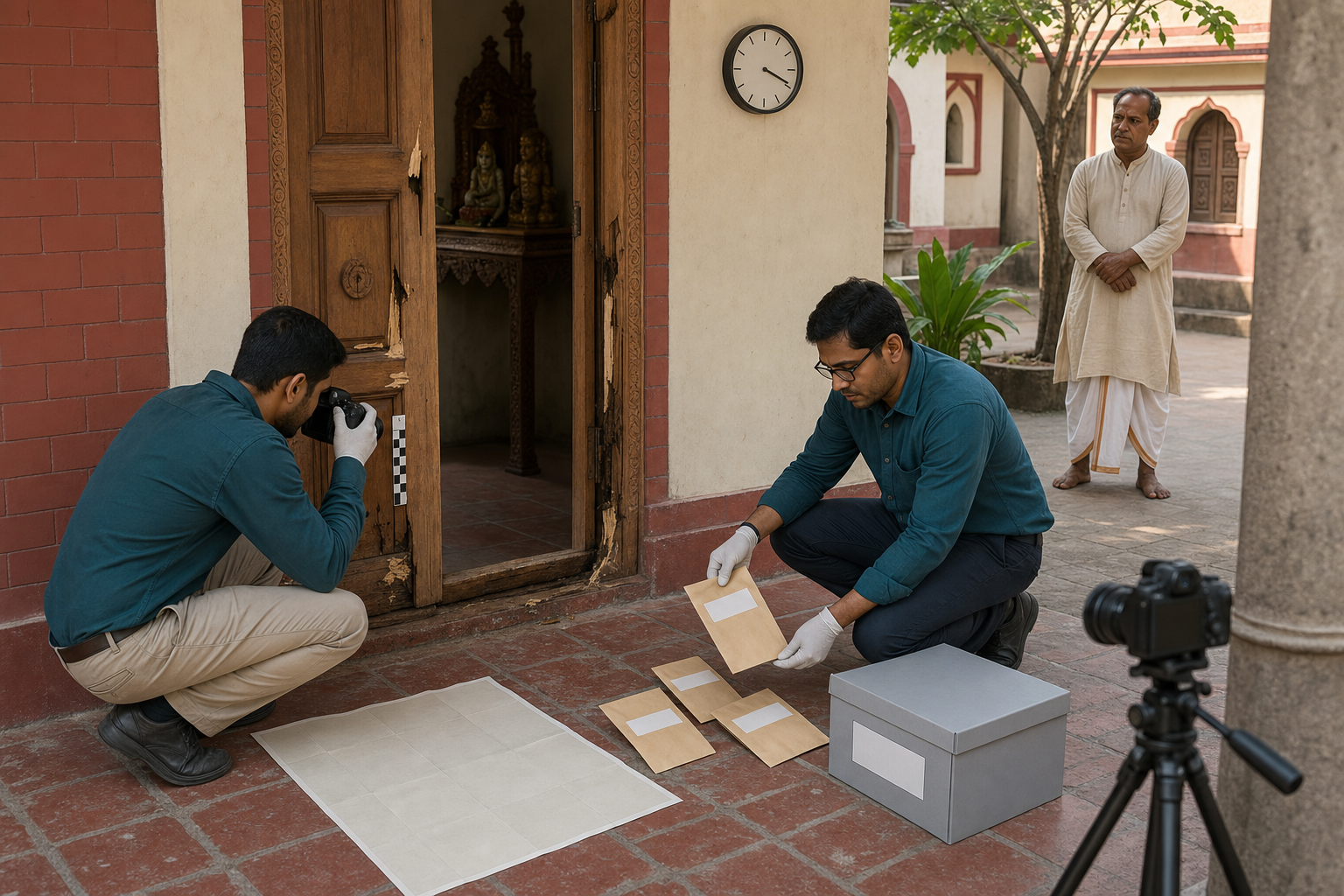
A just cause does not make every circulating claim reliable. A wrongly captioned photograph, an old video presented as new, or an unsupported identification of an alleged perpetrator can discredit genuine cases. It can also expose vulnerable people to retaliation. Evidence discipline is therefore part of protecting Hindus, not an obstacle to advocacy.
Keep three different things separate in your records:
- An incident report is an allegation tied to a particular event, place, affected person, or property.
- Corroboration means that additional material or independent testimony supports important parts of that report.
- A pattern is a recurring form of intimidation or violence established across multiple credible cases. A single incident may fit a suspected pattern, but it cannot establish that pattern by itself.
For every case you handle, record what happened, where it happened, when it happened, who supplied the information, whether that person witnessed it directly, what supporting material exists, and what remains uncertain. Preserve the original wording and files. Put translations, summaries, crops, and annotations in separate copies so that an editor or investigator can trace each public claim back to the underlying material.
Use clear internal labels such as received, partly corroborated, corroborated, and unresolved. Never upgrade a claim merely because it is emotionally compelling or consistent with previous allegations. If you later discover an error, correct it visibly and preserve the correction in the case record.
Public evidence and confidential evidence are not the same thing. Before publishing testimony, photographs, names, contact details, or locations, ask whether the affected person has given informed consent and whether disclosure could increase danger. Remove private telephone numbers, precise hiding locations, identifying details about children, and other information that is unnecessary to establish the claim. Do not distribute an unredacted case file through a large mailing list simply to demonstrate seriousness.
If someone faces an immediate threat, prioritize a trusted protection, legal-aid, or humanitarian channel chosen with the affected person. Publicity may help some cases, but it can worsen others. If an allegation identifies a particular individual as a perpetrator, seek review from qualified counsel familiar with the relevant jurisdiction before publication. A reckless identification can harm an innocent person, create legal exposure, and damage the victim’s prospect of obtaining justice.
Turn concern into demands with identifiable owners

Officials can acknowledge a broad appeal for justice without committing to anything. Give them a defined action, an accountable office, and a question that requires a substantive reply. Useful advocacy relies on verbs: protect, investigate, prosecute, assist, monitor, report, reform, and follow up.
Organize your demands into four practical lanes:
- Immediate protection: safeguard threatened families, temples, religious gatherings, and festival observances; establish credible early-warning and rapid-response arrangements.
- Accountability: investigate reported attacks impartially, preserve evidence, prosecute perpetrators where evidence supports charges, and communicate the status of cases.
- Recovery: provide victims with non-discriminatory humanitarian assistance, legal aid, and access to remedies without forcing them to surrender their identity or religious rights.
- Prevention: improve policing and legal practice, monitor risks to minority communities, protect cultural heritage, counter incitement, and maintain local dialogue among community and religious leaders.
Different institutions control different levers. Sending the same generic message to all of them wastes attention and makes follow-up harder.
| Recipient | Credible request |
|---|---|
| Relevant authorities in Bangladesh | Preventive protection, impartial investigation, prosecution based on evidence, temple security, victim assistance, and a clear account of case status. |
| France and other foreign governments | Principled diplomatic engagement, regular attention to minority protection, support for legal or policing reforms, and a written explanation of actions taken. |
| European Union and United Nations mechanisms | Sustained monitoring, appropriate fact-finding, minority-rights scrutiny, technical support, and continuing public follow-up. |
| Legal-aid and civil-society organizations | Safe case intake, counsel for victims, humanitarian referrals, rigorous documentation, and early-warning coordination. |
| Journalists and academics | Independent verification, careful context, protection of vulnerable sources, and continuing attention after public demonstrations end. |
A short briefing note should contain a factual description of the concern, the evidence that may safely be shared, the institution’s relevant responsibility, the action requested, and a request for a written response. Keep emotional language out of the evidence section. Moral urgency belongs in the case for action; it should not be used to disguise uncertainty.
A usable request might read: Please explain what steps your office will take to raise the protection of Hindus and their places of worship in Bangladesh, support impartial investigation of reported attacks, and encourage legal assistance for victims. Please identify the office responsible for follow-up and the next point at which progress will be reviewed.
Respect for Bangladesh’s sovereignty and insistence on minority rights are not opposing positions. Frame the demand around the state’s responsibility to provide equal citizenship and the international community’s legitimate role in diplomacy, monitoring, technical support, and non-discriminatory assistance. That makes the objective protection and accountability, not political humiliation.
Build a broad coalition without blurring the Hindu issue

The Paris mobilization brought thousands of participants together across Hindu, Buddhist, Jain, Sikh, human-rights, and other allied constituencies. Its most transferable lesson is not simply that a large crowd attracts notice. A coalition can widen access to institutions and demonstrate that protecting Hindus is compatible with a universal defence of religious freedom.
Clarity still matters. If a campaign refuses to name Hindus as the affected community, the specific problem disappears into generic language about harmony. If it blames an entire religion, ethnicity, or nationality, it abandons both factual precision and dharmic restraint. Name the victims, describe alleged acts accurately, seek responsibility from perpetrators and institutions, and refuse collective guilt.
Dharmic solidarity works best as a division of responsibility rather than a decorative list of traditions:
- Bangladeshi Hindu voices should shape priorities, consent boundaries, and the description of local needs wherever it is safe for them to participate.
- Diaspora organizations can translate those needs into the language and procedures of the institutions they can reach.
- Hindu, Buddhist, Jain, and Sikh organizations can ground cooperation in ahimsa, compassion, dignity, and protection of sacred life and heritage.
- Allies from other faiths and from secular human-rights communities can reinforce the principle that religious freedom cannot depend on majority status.
- Lawyers, documenters, humanitarian workers, journalists, and academics can contribute specialized work without competing to control the campaign.
Before holding a joint event, agree on the evidence threshold, public demands, speakers, media contact, victim-safety rules, and standards of conduct. Decide in advance how the coalition will handle an unverified claim, an inflammatory slogan, or a speaker who assigns collective blame. Otherwise, a preventable controversy can consume the attention meant for vulnerable Hindus.
Ahimsa is not passivity. In advocacy, it means disciplined speech, refusal to dehumanize, lawful pressure, care for those placed at risk, and persistence in seeking justice. You do not need to soften documented harm. You need to state it in a form that a fair-minded listener can examine and an accountable institution can act upon.
Convert public attention into continuing protection

A peaceful march, vigil, public meeting, or petition can open a door. It is not the whole campaign. The event becomes consequential when it creates an institutional record, brings credible testimony to responsible offices, and begins a sequence of follow-up.
Before the public action
- Select a primary demand that participants can repeat accurately.
- Name the institution that can fulfil it and prepare a short briefing note for that institution.
- Check every factual claim on signs, speeches, handouts, and social-media graphics.
- Obtain consent for testimony and images, and prepare anonymous alternatives for people who should not be identified.
- Give speakers a conduct standard that rejects threats, dehumanization, collective blame, and unsupported allegations.
- Assign responsibility for media questions, evidence inquiries, safeguarding concerns, and institutional follow-up.
During the public action
- Keep the central demand visible and consistent instead of presenting an unrelated collection of grievances.
- Make a public briefing available with citations, clear uncertainty labels, and a contact for responsible inquiries.
- Explain what attendees can do after leaving: contact a representative, submit a letter, support legal aid, assist verification, or join an organized follow-up team.
- Record speeches and official commitments accurately. Do not turn polite attendance by a public figure into a claim of endorsement.
- Intervene when rhetoric targets whole communities. De-escalation protects the campaign’s ethics, participants, and credibility.
After the public action
- Deliver the briefing and request to every named recipient through a channel that creates a record.
- Log the recipient, request, reply, responsible office, unresolved question, and next follow-up.
- Correct inaccurate coverage or campaign material promptly and in the same places where it circulated.
- Keep confidential casework separate from the publicity archive.
- Report official responses precisely. A promise to examine an issue is not an investigation, and an investigation is not a prosecution or remedy.
- Escalate unanswered requests through appropriate oversight, diplomatic, civil-society, media, or peaceful public channels without inflating the underlying facts.
Measure outputs and outcomes separately. Turnout, correspondence, meetings, signatures, and coverage are outputs. Protective arrangements, legal-aid referrals, investigations, prosecutions supported by evidence, continuing monitoring, victim assistance, and institutional reforms are outcomes. Outputs show that a campaign is active; outcomes show whether conditions are changing.
Your internal record should follow the whole chain: information received, corroboration attempted, safety reviewed, appropriate referral made, institution contacted, reply obtained, commitment tracked, and result assessed. This also reveals where cases are stalling. If reliable information repeatedly reaches your campaign but never reaches competent legal or protection channels, more publicity alone will not fix the weakness.
Online advocacy needs the same discipline. Do not publish a vulnerable person’s location, circulate graphic material without necessity, repeat retaliatory rhetoric, or treat a viral caption as verification. When material is uncertain, say so. When it cannot be responsibly verified, do not build a public accusation around it. Credibility accumulated through restraint gives verified cases greater weight.
You can begin with a manageable act: establish a written evidence-and-consent protocol, select a documented protection problem, prepare a concise demand for the institution that owns the relevant decision, and record its response. Then plan the next lawful escalation. Hindu communities in Bangladesh need attention that endures after the crowd disperses and remains accountable to the people whose safety is at stake.
References
