
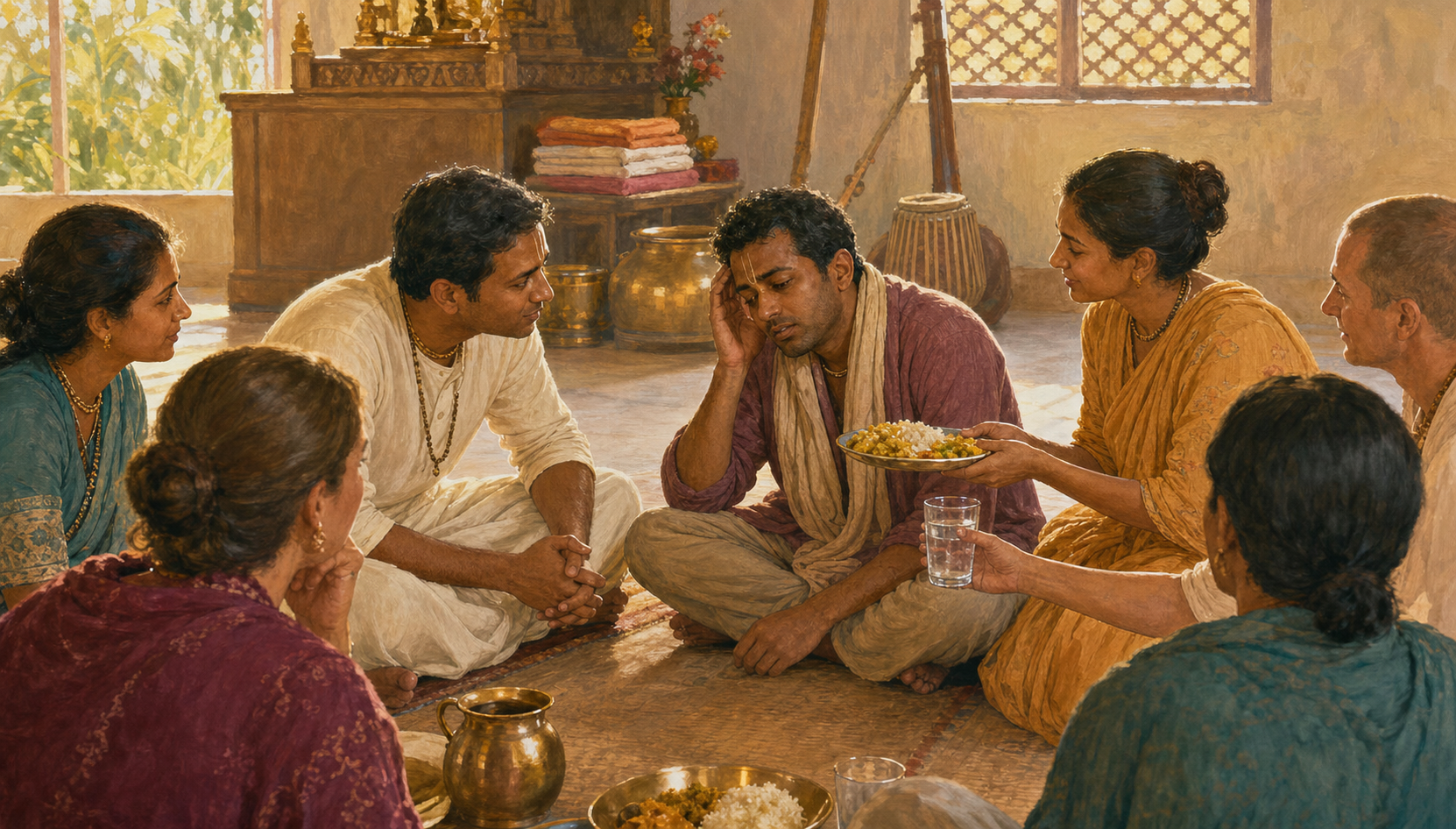
If you help lead a temple or bhakti community, the hardest decisions rarely arrive wearing the label of compassion. They arrive as a fundraising shortfall, an overfilled seva roster, an ambitious new venture, or a loyal devotee who says little while carrying too much.
You need a reliable way to distinguish meaningful sacrifice from preventable neglect. Compassionate Vaishnava leadership provides that test: protect the conditions in which people can receive prasada, sustain sadhana, speak truthfully, and serve without being treated as expendable.
Projects are means; devotees are not inputs
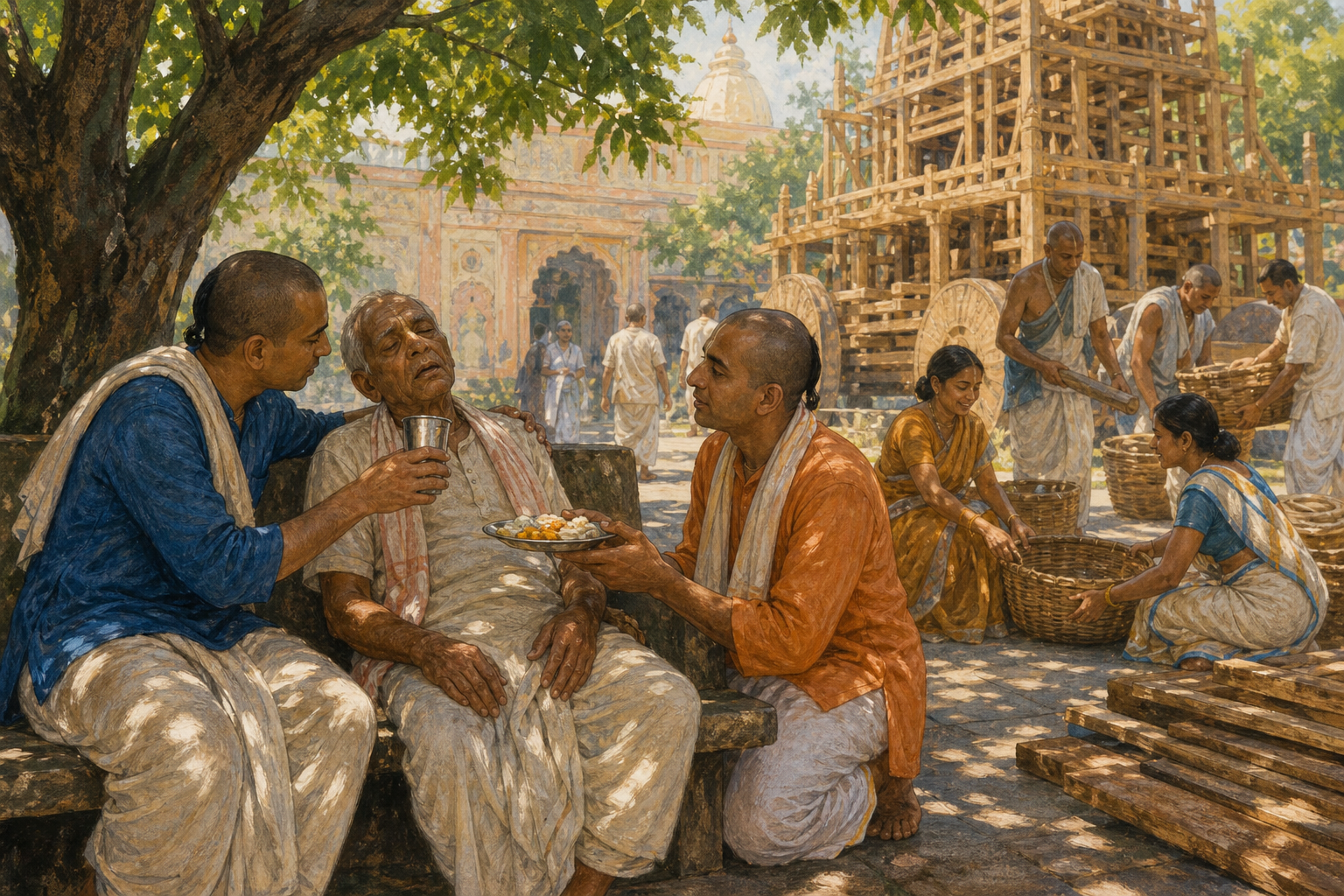
During an early phase of ISKCON’s work in India, a Calcutta temple president became absorbed in a business venture intended to generate funds. The intention was institutional growth, but resources inside the temple became desperately scarce. Sudama Vipra became so famished that he squeezed the remnants of burned arati wicks to recover a little ghee.
That image exposes a failure that financial reports can conceal. A project may have a devotional objective and still transfer an unacceptable cost to the devotees carrying it. The seriousness of a plan’s stated purpose does not make its human consequences spiritually irrelevant.
When Srila Prabhupada arrived, he made room for the devotees to speak one by one. Tamal Krishna Goswami, then the GBC for India, defended the prevailing approach by explaining that he had intended to execute his spiritual master’s will. Srila Prabhupada answered with a short question:
Is it My Divine Grace’s will that the devotees should be disturbed?
Srila Prabhupada
The question did not dismiss fundraising, enterprise, discipline, or administrative responsibility. It restored their proper order. Money, buildings, events, and outreach are instruments of seva. They cannot become ends that justify leaving Krishna’s servants hungry, unheard, or spiritually depleted.
This is why compassion is more than a leader’s pleasant temperament. It is a governing discipline. A compassionate leader asks not only, “Does this plan have a devotional purpose?” but also, “What is this plan doing to the people expected to execute it?”
Daya and seva are not decorative additions to bhakti. They become visible in the way a community treats the person whose labour is easy to overlook, whose complaint is inconvenient, or whose loyalty makes refusal unlikely. The institution serves spiritual life; spiritual lives are not fuel for the institution.
Set a floor of care before approving a project
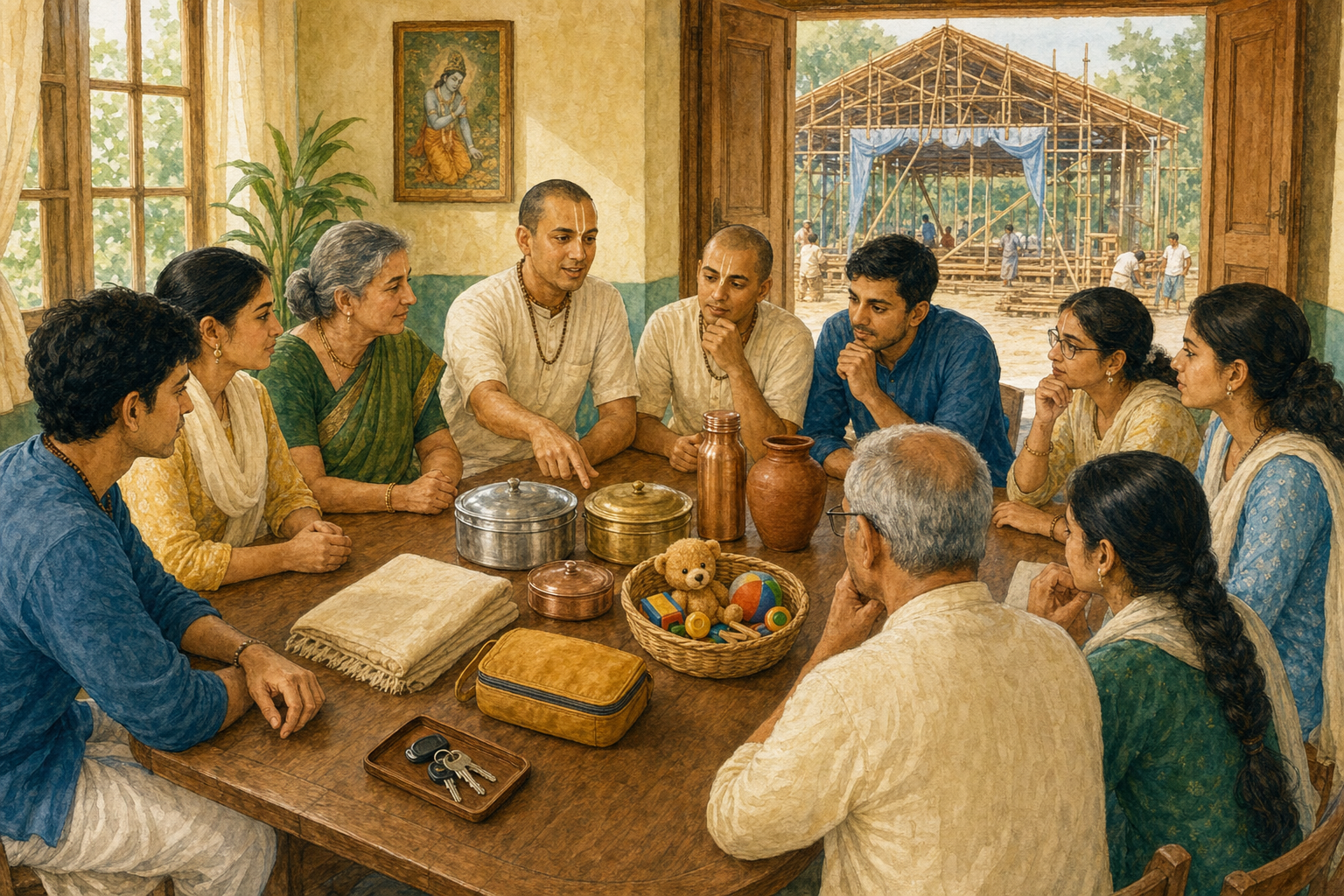
Most leadership failures of this kind begin before anyone intends harm. A goal is approved, enthusiasm rises, and the community assumes that basic care will somehow continue around it. When money or people become scarce, the burden falls quietly on those with the least authority to change the plan.
Prevent that by defining a floor of care before approving expansion. This floor is not an ideal wish list. It is the minimum below which the project must be resized, delayed, or paused.
- Prasada: Name the person responsible for confirming that residents and assigned volunteers receive adequate food. Do not use silence, attendance, or the absence of formal complaints as proof that everyone is being fed.
- Sadhana: Examine the actual seva roster. If a plan repeatedly forces devotees to choose between assigned duties and their core spiritual practice, the plan is consuming the foundation on which its service depends.
- Basic stability: Ask whether those carrying the work have adequate rest, suitable accommodation, and the ordinary necessities required to continue serving. A large objective does not turn an unattended need into a small one.
- Access to help: Give every devotee a known person to approach, including a private route for concerns that are difficult to raise in a group. The route must lead to someone who can act, not merely sympathize.
- A stop rule: Decide in advance which conditions will pause discretionary spending or expansion. Inadequate prasada, persistent disruption of sadhana, or unresolved basic needs are clear reasons to review the plan before asking for more sacrifice.
Then test the project against a disappointing outcome. If donations are lower than hoped, what gets cut first? If the first answer is food, devotee care, or the time needed for sadhana, the project is not yet responsibly designed. Reduce its scale or secure the care requirement before launch.
This does not prohibit austerity. Vaishnava communities have always understood sacrifice, simplicity, and determined service. The crucial distinction is whether a sacrifice is informed, voluntary, proportionate, and shared. A leader may freely accept austerity in his or her own life. That does not create authority to donate someone else’s well-being to an institutional objective.
Make the option to decline additional service real. If saying no predictably brings shame, suspicion, or judgments about spiritual sincerity, consent exists only on paper. Ask what a devotee can sustainably offer, state the genuine need, and leave room for an honest answer.
Listen early, then correct impact without humiliating people
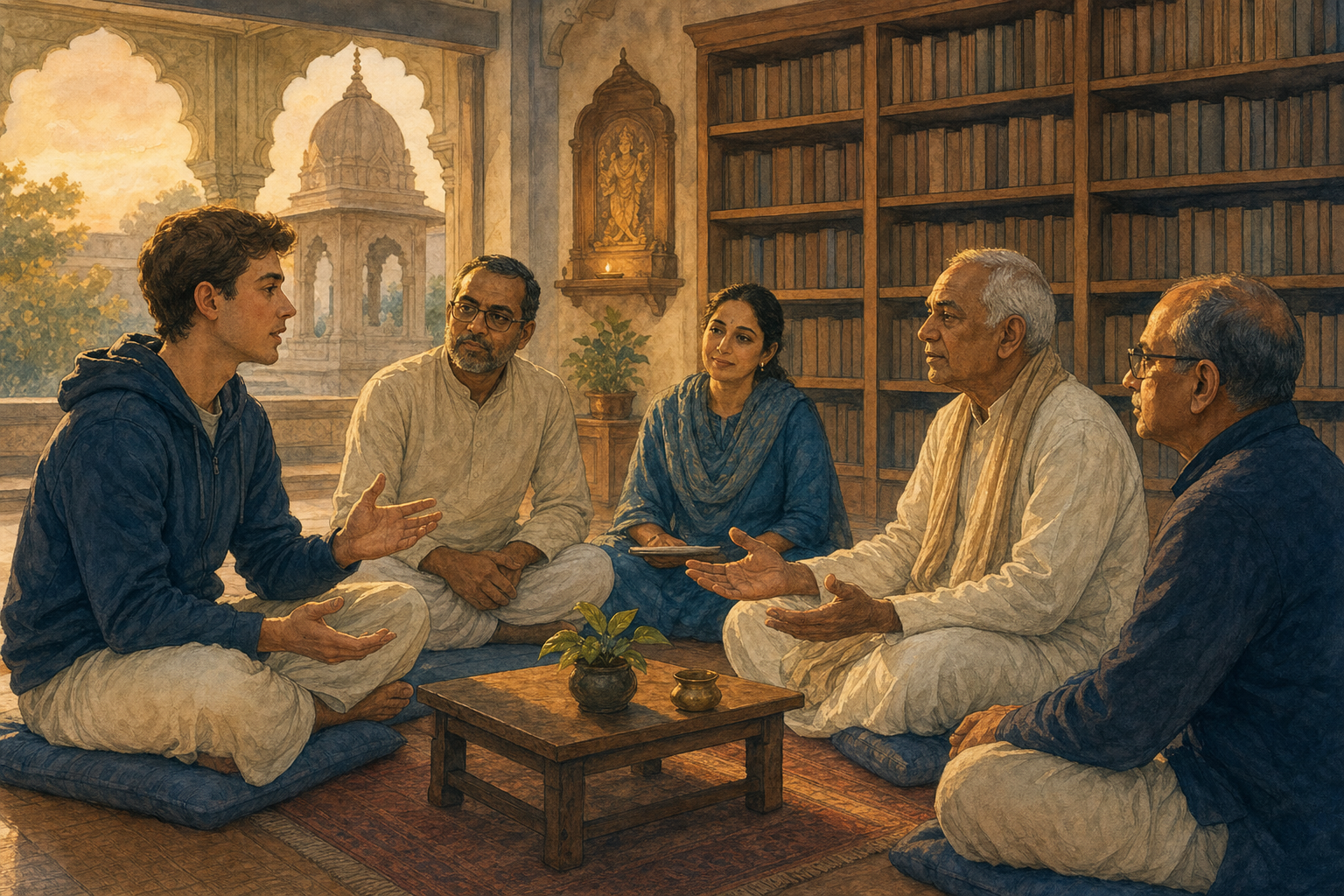
The Calcutta correction began by allowing affected devotees to describe their conditions directly. That matters. A leader who hears only from project owners receives a filtered picture: milestones remain visible, while hunger, fatigue, interrupted sadhana, and reluctance to complain stay outside the decision room.
Do not wait for a crisis or a visiting authority to create access. Build a simple listening process into ordinary community life:
- Invite the people carrying the consequences. Include residents, volunteers, cooks, pujaris, travelling preachers, and others directly affected by the decision. Officers speaking about them is not a substitute for hearing them.
- Begin with conditions, not accusations. Ask what is interfering with prasada, sadhana, rest, service, or the ability to seek help. Concrete conditions are easier to verify and correct than arguments about personalities.
- Let everyone complete a first account without rebuttal. Immediate explanations teach people that reporting a difficulty will only produce a debate. Questions can follow after the leader understands what is being reported.
- Restore urgent care before investigating motive. If someone lacks adequate food or another basic necessity, address that first. A hungry devotee should not have to wait for a committee to decide who intended what.
- Separate intent from impact. Good intentions matter when assessing character, but they do not erase the result of a decision. Harmful impact requires correction even when the original plan was sincere.
- Close the loop. State what will change, who is responsible, and when the affected devotees will hear back. If a request cannot be granted, explain the constraint plainly rather than allowing silence to become the answer.
A quiet community is not necessarily a well-cared-for community. People may remain silent because they respect authority, fear being considered ungrateful, do not want to burden others, or believe that enduring avoidable hardship proves devotion. Leaders must therefore look for conditions, not merely wait for complaints.
Spiritual vocabulary needs particular care. Appeals to tolerance, surrender, austerity, or dedication can close a conversation that should remain open. These virtues guide a devotee’s own practice; they should not be used to prevent scrutiny of a leader’s decisions. The correct question is not whether a devotee could tolerate more. It is whether imposing more is necessary, fair, and conducive to bhakti.
Accountability also need not become humiliation. Establish the facts, repair the unmet need, trace how the decision was made, and change the process that allowed the failure. If a responsible leader responds honestly and learns, correction can strengthen trust. If the same leader minimizes the hardship or refuses to revise the plan after the cost is visible, the problem has moved beyond an initial mistake to a failure of responsibility.
Turn compassion into an ordinary governance cycle

A community should not depend on the timely arrival of an unusually perceptive senior leader. Compassion becomes durable when ordinary governance makes care visible before, during, and after every substantial initiative.
Before a project begins
- Write down the devotional purpose, expected demands on people, required resources, and person responsible for devotee care.
- Protect the resources needed for prasada and basic community functioning before assigning funds to discretionary expansion.
- Ask affected devotees separately whether the proposed workload is realistic. Group enthusiasm can conceal private reservations.
- Define the conditions that will trigger a review, reduction, or pause. A stop rule established in advance is easier to apply than one negotiated during a crisis.
While the project is active
Put devotee care on the same leadership agenda as money, attendance, construction, distribution, or outreach. At every regular review, ask three plain questions:
- Is everyone carrying this work receiving adequate prasada and basic support?
- Which assignments are repeatedly disrupting sadhana, rest, or other essential responsibilities?
- Which care requests remain unresolved, and what is preventing action?
Keep the process light enough to use. The purpose is not to create paperwork about compassion. It is to ensure that the lived condition of devotees reaches the same room in which resources and priorities are decided.
Where possible, do not make the person most invested in a venture its sole judge of human cost. Project ownership naturally concentrates attention on completion. Give a devotee-care representative direct access to the leadership body and enough authority to request a review. A title without access, information, or the ability to escalate a concern will not protect anyone.
When care has already failed
- Meet the immediate need without making assistance conditional on resolving blame.
- Acknowledge the specific failure in language the affected person can recognize.
- Review the decisions, assumptions, and reporting gaps that allowed it to continue.
- Change the budget, workload, authority, or communication route responsible for the failure.
- Return to the affected devotees and verify whether the correction worked in practice.
The final step is easily omitted. Leaders may announce a remedy and assume that implementation followed. Verification turns an intention into care. It also gives devotees evidence that speaking honestly can improve community life rather than threaten their place within it.
This approach protects both people and mission. Adequate care helps devotees sustain service; open reporting reveals weak plans early; and fair correction keeps ordinary mistakes from becoming sources of lasting distrust. Compassion and administrative seriousness therefore reinforce each other when both are directed toward the actual purpose of a Vaishnava institution.
Key takeaways for your next leadership meeting
- Treat adequate prasada, basic needs, and sustainable sadhana as prerequisites for a project, not benefits to restore after it succeeds.
- Define a care floor and a stop rule before approving expansion or discretionary spending.
- Hear directly from the devotees carrying the workload; reports from project leaders are necessary but incomplete.
- Repair an urgent need before debating intentions, explanations, or responsibility.
- Evaluate motive and impact separately: sincere intent deserves recognition, while harmful impact still requires correction.
- Keep chosen austerity distinct from hardship imposed by someone else’s decision.
- Review devotee care alongside financial and operational progress, with a named person empowered to raise concerns.
- Verify that a promised remedy changed the affected devotee’s actual condition.
At your next meeting, choose one active project and ask the people doing the work whether prasada, sadhana, rest, or access to help has become harder because of it. Correct one concrete pressure before expanding the plan. That small act will tell your community more about its values than a polished statement on compassionate leadership ever could.
References
- Dandavats – Srila Prabhupada’s Compassion in Calcutta: Enduring Leadership Lessons in Vaishnava Care
