
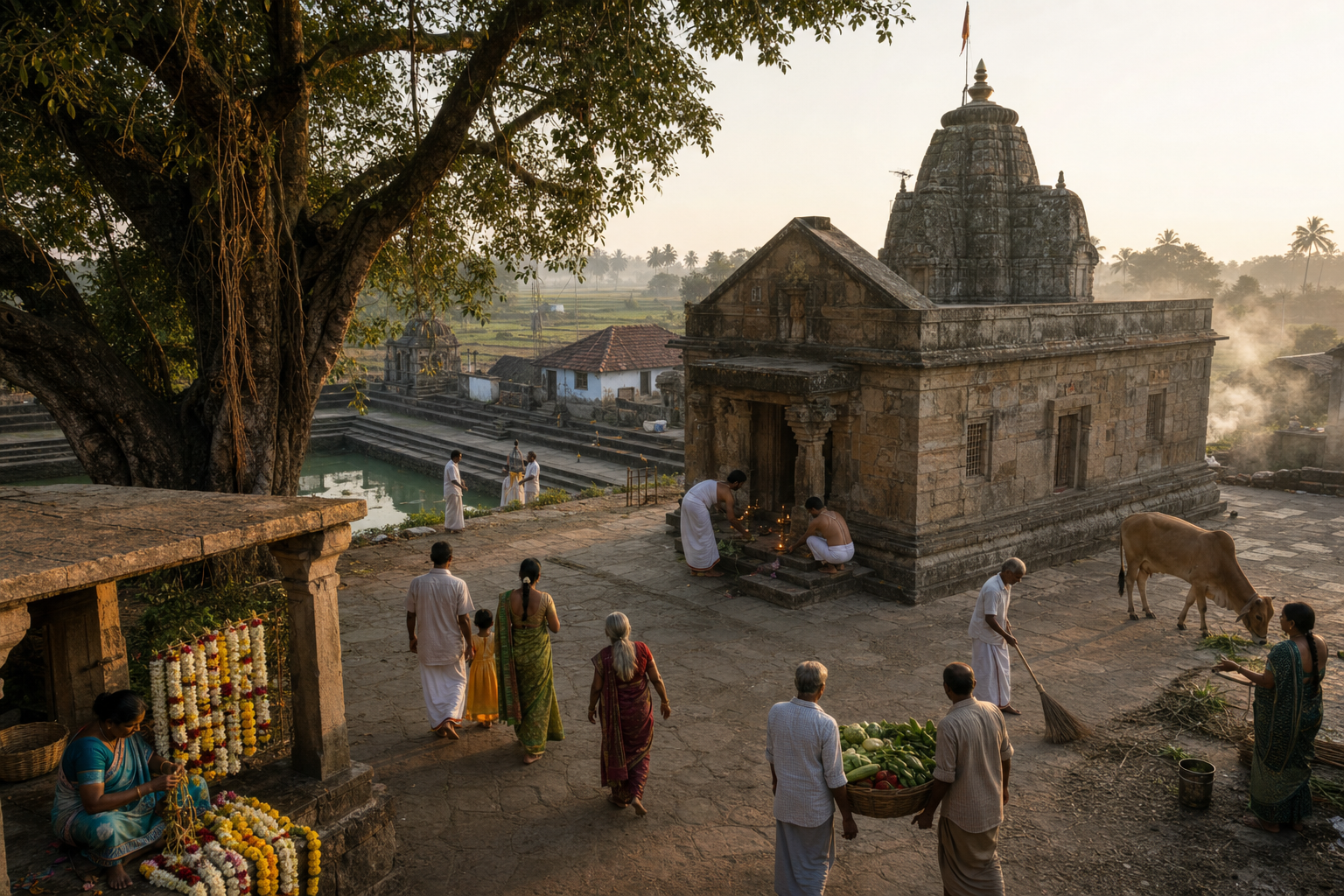
You may arrive at a temple wanting darshan, a quiet moment, or a clearer connection to your tradition. If you look only at the sanctum and its architecture, however, you can miss the community that keeps the sacred place alive after the lamps are extinguished and the visitors leave.
A living temple is more than a surviving building. It is a network of worship, memory, service, food, land, animals, paths, skills, and relationships. Learning to see that network changes how you visit, what you support, and whether your presence strengthens the place or merely consumes its atmosphere.
Look for continuity, not just antiquity
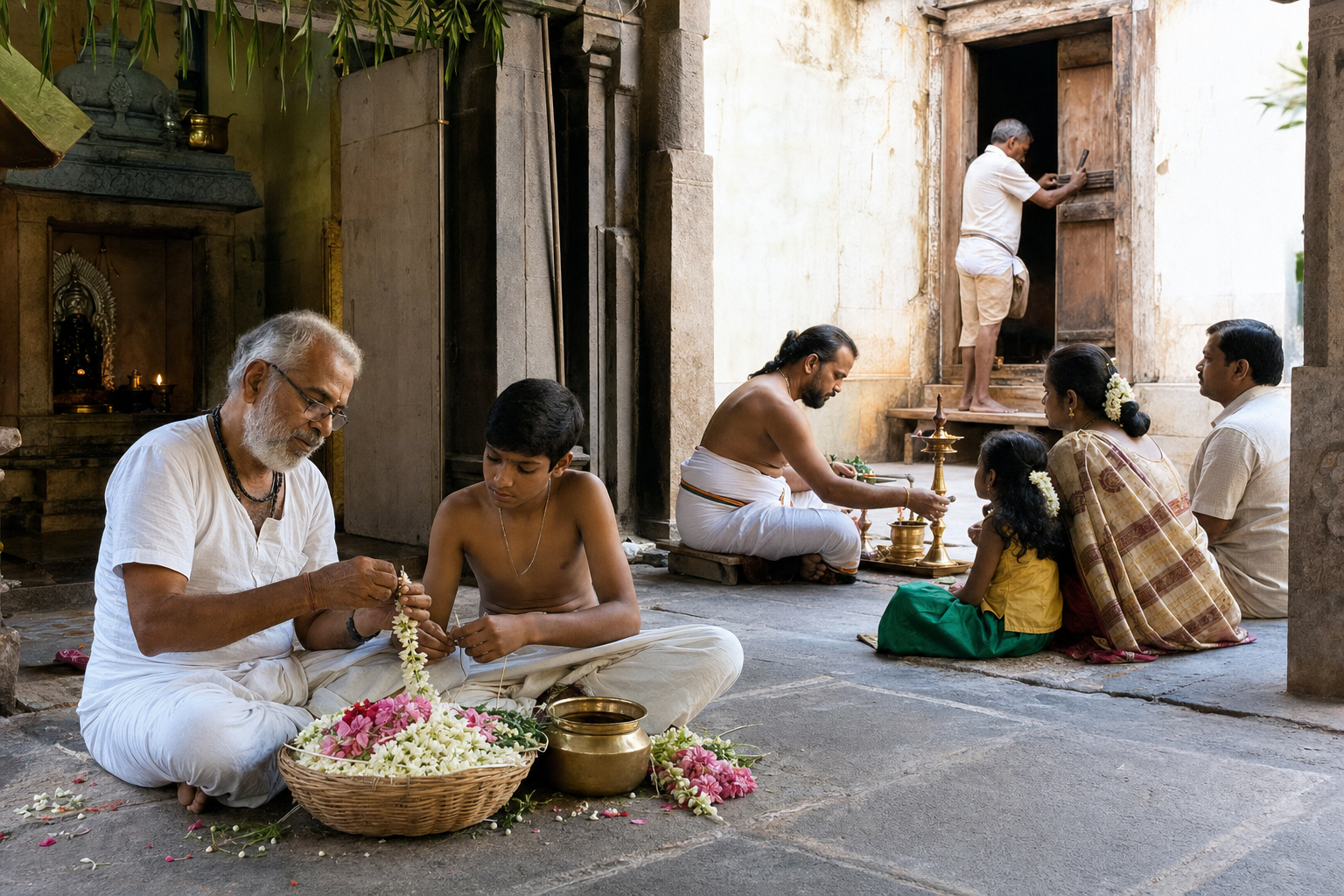
Architecture tells you what people built. Rhythm tells you what people continue to uphold. A temple becomes living heritage when worship generates recurring responsibilities: someone prepares offerings, maintains the ritual space, welcomes pilgrims, teaches the next generation, remembers local stories, and returns when a festival demands more hands.
At the Vindhyavasini Temple in Ravatle, Chiplun, continuity is visible in daily darshan and aarti, family pilgrimages, oral traditions, seasonal observances, and the intensified devotional life of Navaratri. These practices matter because they renew the relationship between the shrine and its people. A date carved in stone can establish age; it cannot perform tomorrow’s aarti.
When you want to understand whether a temple remains embedded in community life, pay attention to practical signs:
- Does worship follow a recurring rhythm, or does activity appear only when tourists arrive?
- Who carries the everyday duties around the sanctum, offerings, lamps, flowers, cleanliness, music, and hospitality?
- Do families return through generations for vows, festivals, or remembered obligations?
- Are local stories still told, corrected, and passed on by people connected to the place?
- Does a major festival deepen service as well as increase attendance?
- Can someone explain what the community must prepare next, rather than only what happened long ago?
Do not turn these signs into a rigid scorecard. An urban shrine, a rural monastery, a Jain tirtha, a Buddhist vihara, and a Sikh gurdwara will organize sacred life differently. A temple does not need farmland or a large festival to be alive. The essential question is whether recurring practice still creates responsibility, memory, and belonging.
Read the whole landscape as a system of seva
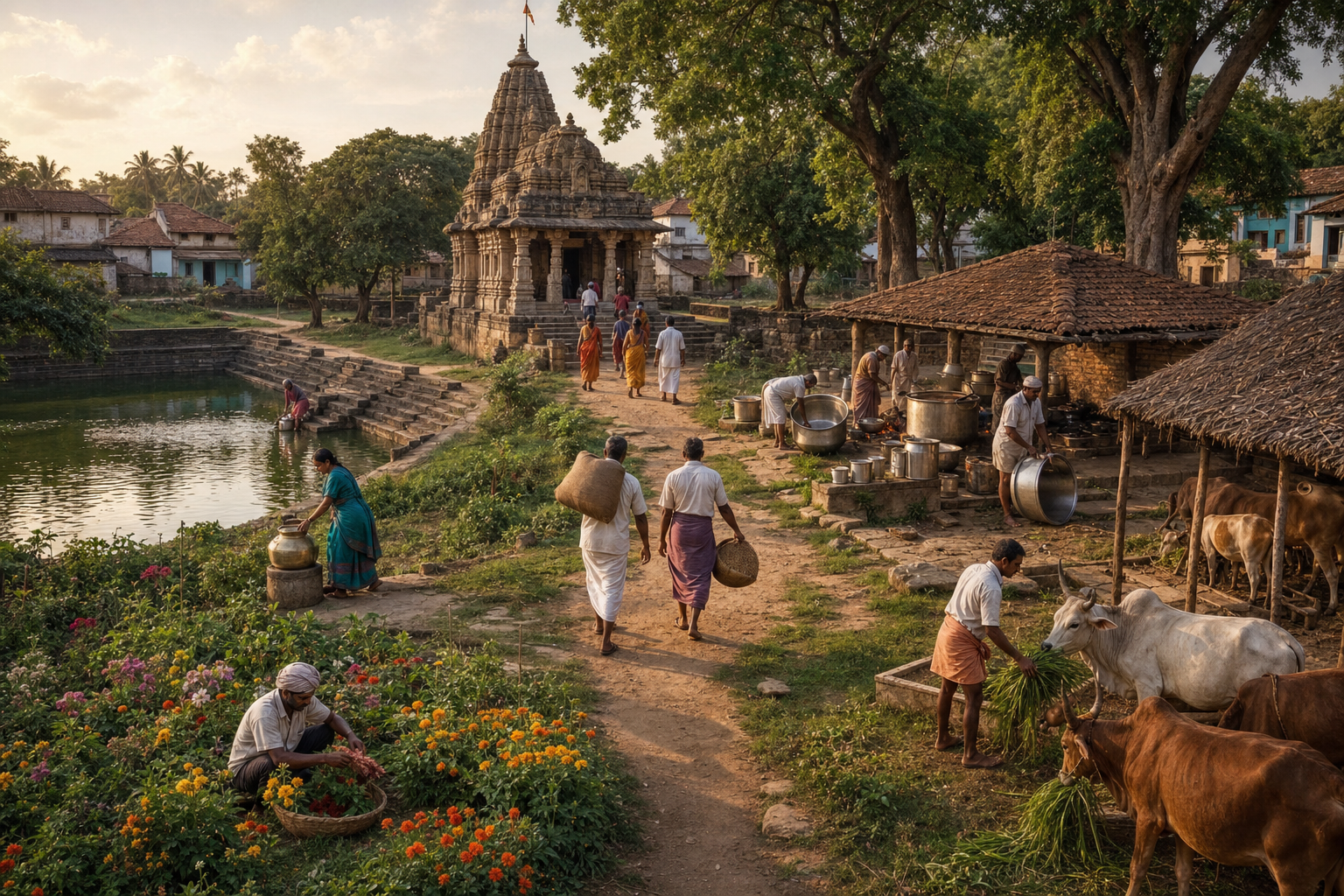
The sacred boundary rarely ends at the shrine wall. A path may organize a pilgrim’s approach. A flower bed may supply worship. A kitchen may turn hospitality into daily discipline. A cowshed may embody protection and agricultural responsibility. The landscape becomes sacred through use, care, and relationship, not merely by being picturesque.
Nueva Vraja Mandala makes this interdependence unusually easy to see. Its temple-centered farm includes flower and vegetable plots, two small greenhouses, rural pathways, a goshala across from the temple, and a larger cow shelter farther along the road. Gardening, seedling care, cultivation, cow protection, and worship are not isolated attractions there. They form one pattern of devotional work.
You can use the following sequence to read a temple landscape without treating it like an exhibit:
- Pause at the threshold. Notice where footwear is left, how people enter, which areas are quiet, and where movement is restricted. The threshold teaches you how the community distinguishes ordinary and sacred space.
- Receive darshan before documenting the visit. Let the purpose of the place set your pace. A camera-first approach can reduce worship to scenery and make residents feel observed inside their own sacred routine.
- Follow only permitted paths. As you walk, notice what moves along them: pilgrims, flowers, food, water, tools, animals, or people performing seva. Movement reveals how the temple and its surroundings depend on one another.
- Ask a question about recurring work. “What work keeps this place going between festivals?” will usually teach you more than asking only for the age of a structure.
- Match your contribution to an actual need. If you want to offer time, money, materials, or skills, ask a steward what is useful before deciding. A well-meant gift can create storage, maintenance, or disposal work that the community did not request.
This way of looking also corrects a common mistake: separating “spiritual” activity from supposedly ordinary labor. When flowers are cultivated for worship, cows are protected through disciplined care, and food is grown or prepared for the community, physical work becomes part of the devotional ecology. The sacred is not diluted by such labor. It is given a durable form.
Enter as a participant, not a consumer of atmosphere
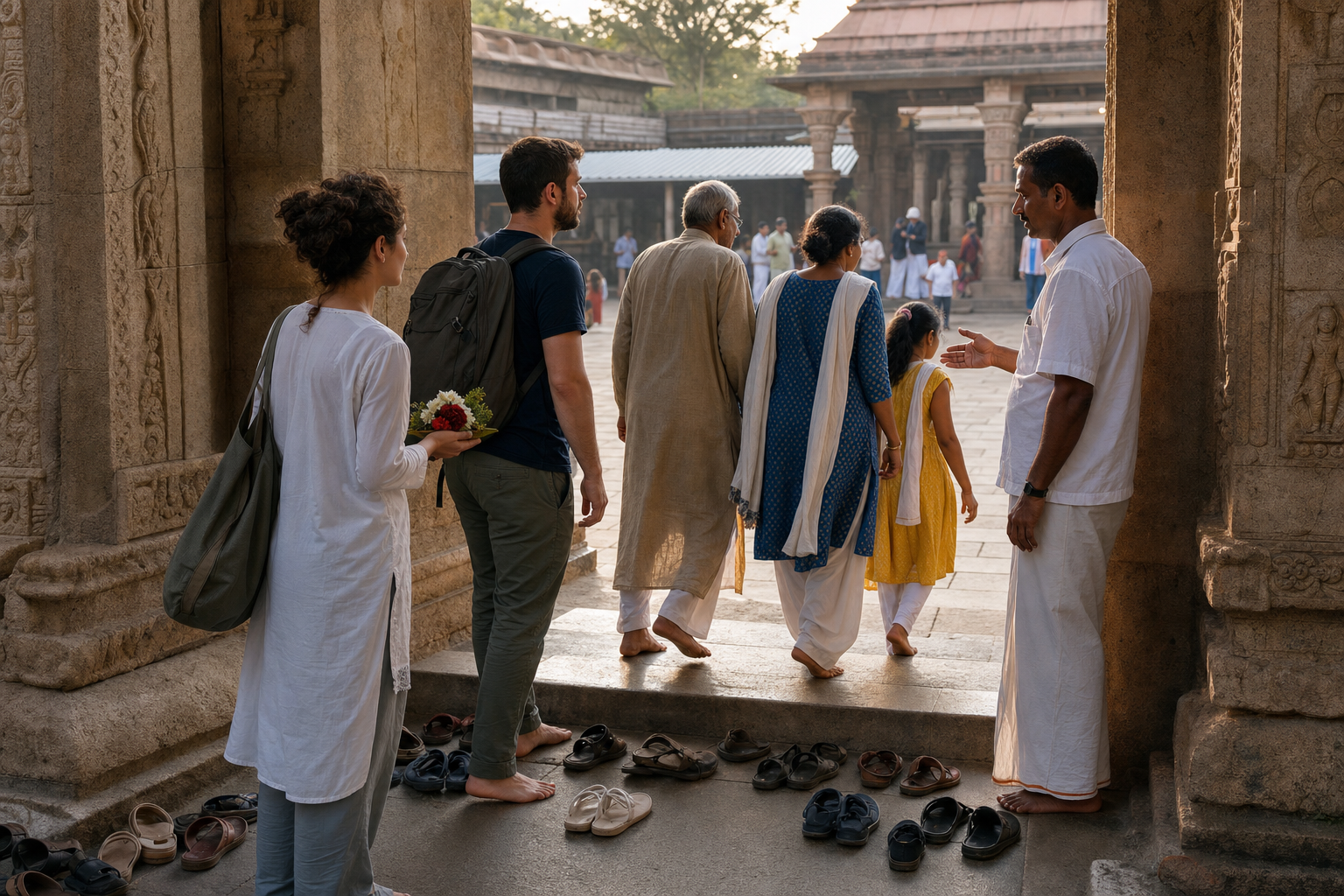
A peaceful temple can make visitors feel that everything is effortless. Usually the opposite is true. Clean paths, prepared lamps, fresh flowers, healthy animals, orderly queues, and a calm ritual environment depend on work that is easy to overlook precisely because it has been done well.
Your first responsibility is therefore restraint. Learn the local expectations before trying to improve, photograph, feed, move, or explain anything. Temple customs differ, so ask rather than relying on a rule remembered from another place.
- Confirm appropriate visiting and ritual times through the temple’s own local channels when possible.
- Follow the community’s rules for dress, footwear, circumambulation, offerings, seating, and access to the sanctum.
- Ask before photographing worshippers, priests, residents, children, kitchens, gardens, or animal-care areas. Permission to photograph a building is not permission to document every person around it.
- Do not enter a garden bed, greenhouse, kitchen, cowshed, monastic area, or service space merely because it is visible from a visitor path.
- Do not feed or handle animals unless their carers invite you to do so. Unplanned feeding can interfere with established care.
- If you are offered a task, complete the task as instructed. Seva begins with the community’s need, not with the visitor’s preferred performance of helpfulness.
- Carry away avoidable packaging and follow the site’s arrangements for flowers, food, and other ritual remnants rather than leaving them wherever seems convenient.
Slow observation is not passivity. It is how you learn where help is welcome. At a temple-centered farm, you may discover that the devotional landscape is maintained through seedling care, soil work, water-conscious cultivation, cleaning, cow care, and the movement of offerings between garden and shrine. At another temple, the essential work may be music, cooking, manuscript care, teaching, festival preparation, or hospitality.
If your visit is brief, do not force intimacy. Receive darshan, respect the rhythm, make an appropriate offering if you wish, and leave without demanding private access or an elaborate explanation. Respectful limits are themselves a form of support.
Support the duties that make the temple durable
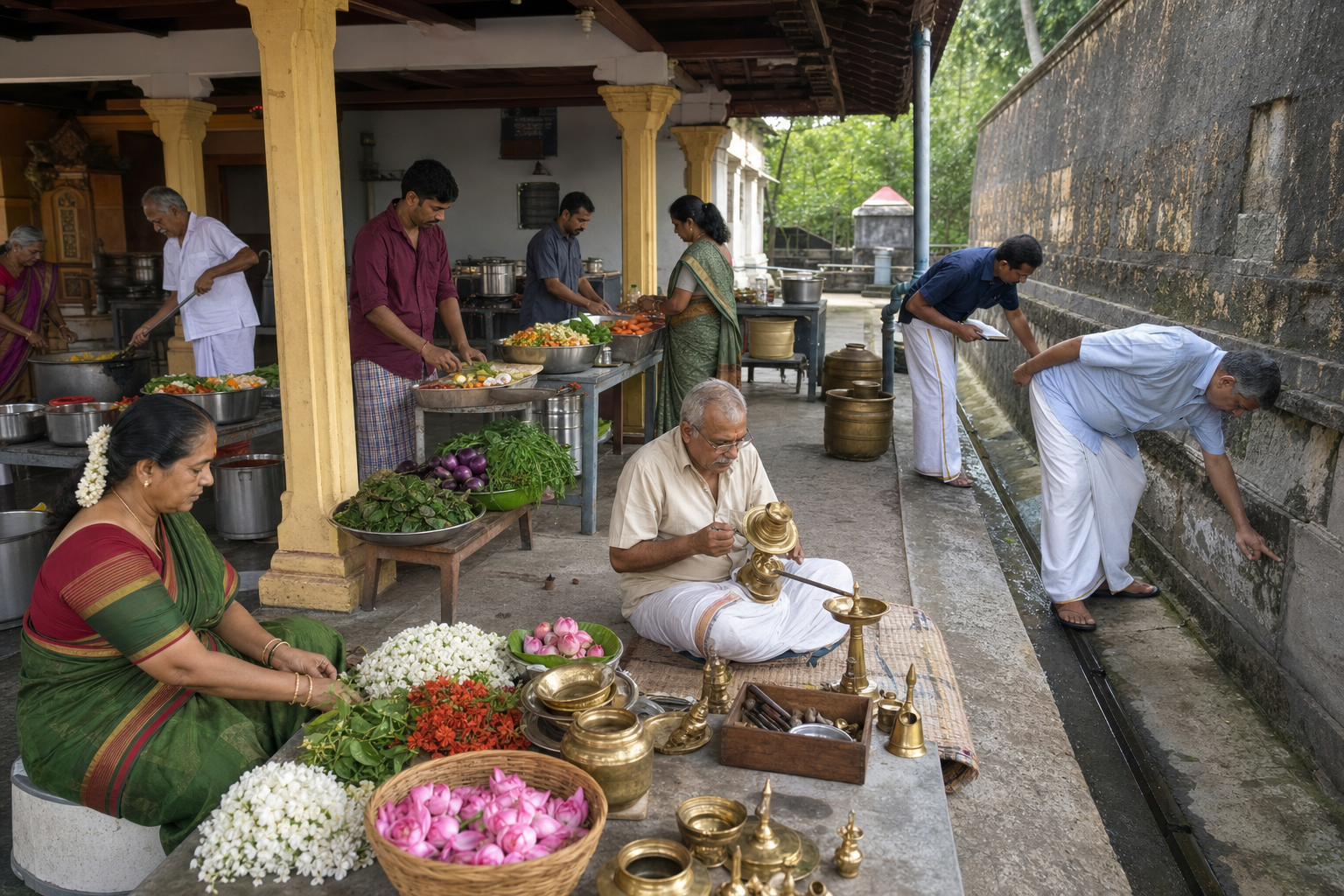
When deciding where to give money or time, do not begin with what would look most impressive in a photograph. Begin with the recurring duty that is difficult to sustain. A visible construction project may be worthwhile, but continuity often depends on less dramatic needs: ritual materials, careful maintenance, trained hands, garden work, animal care, documentation, or preparation for seasonal crowds.
Use these questions before committing support:
- Is the need recurring or one-time? Recurring work requires a plan that lasts beyond a single donation or volunteer day.
- Who will maintain the result? A new facility, tool, garden feature, or digital archive can become a burden if responsibility is unclear.
- Has a local steward identified this as a priority? Residents and regular sevaks usually understand constraints that a short-term visitor cannot see.
- Does the proposal protect ritual integrity? Convenience for visitors should not casually displace the practices that make the place sacred.
- Will it strengthen local knowledge? Support should make it easier for people to retain stories, skills, songs, procedures, and responsibilities rather than replacing them with an outside interpretation.
- Does it add hidden work? Storage, cleaning, feeding, repairs, permissions, staffing, and waste management all continue after a gift is unveiled.
For the Vindhyavasini Temple, responsible preservation includes recording local lore, maintaining the integrity of the sanctum, and supporting pilgrimage without weakening the shrine’s character. These priorities offer a useful order: preserve meaning, protect practice, and then manage access around them.
Documentation deserves particular care. Oral memory is not raw material waiting for an outsider to collect it. If you can help record local traditions, agree first on who may speak, what may be shared publicly, how names will be credited, where copies will be kept, and whether any ritual knowledge should remain within the community. Preservation without consent can become extraction.
Animal and ecological support requires the same humility. A goshala represents continuing obligations of food, shelter, cleanliness, skilled care, and attention. Gardens and greenhouses follow seasonal cycles rather than a visitor’s schedule. Ask the people doing the work what they need; do not assume that a symbolic donation addresses the practical burden.
Recognize Dharmic kinship without erasing distinct traditions
Living sacred landscapes can help you notice a family resemblance across Hindu, Buddhist, Jain, and Sikh communities. Compassion, disciplined service, responsibility toward living beings, hospitality, restraint, and the transmission of practice can all become visible in the organization of a sacred place. These affinities create room for solidarity, but they do not make every doctrine, ritual, or institution interchangeable.
The ethic of Nueva Vraja Mandala places bhakti, cow protection, agriculture, ahimsa, ecological care, and community responsibility within one lived routine. A Sikh community kitchen, a Jain commitment to careful non-harm, or a Buddhist monastic landscape may express related ethical concerns through different teachings and disciplines. The respectful comparison is between actions and responsibilities, not a declaration that all paths mean the same thing.
You can keep that distinction clear in conversation and cultural work:
- Use the names that practitioners use for their own institutions, deities, teachers, rituals, and forms of service.
- Describe a shared value only after showing how it takes a particular form in the community before you.
- Do not turn one tradition into a decorative example for another tradition’s theology.
- Let common action create fellowship: care for land, food, animals, pilgrims, elders, texts, music, or sacred spaces.
- Protect distinctive identity alongside mutual respect. Vindhyavasini remains a shrine of Shakti even when its ethos of service and harmony speaks beyond one devotional community.
This approach avoids two equal errors. Isolation ignores the ethical and civilizational relationships among Dharmic traditions. Flattening ignores the disciplines, histories, and sacred commitments that give each community its integrity. Living heritage needs both kinship and difference.
Key takeaways for your next temple visit
- Judge vitality by recurring worship, responsibility, memory, and service, not by the apparent age or grandeur of the structure.
- Read gardens, kitchens, paths, water, animal-care spaces, and festival preparations as parts of the sacred landscape when the community treats them that way.
- Receive the place before documenting it. Follow local rules and ask permission before entering service areas or photographing people.
- Offer help only after learning what work is actually needed and who will carry the responsibility afterward.
- Support ritual continuity, local knowledge, careful maintenance, ecological responsibility, and ethical care before visitor-facing display.
- Recognize shared Dharmic values through lived practices while preserving the distinct identity of every tradition and shrine.
On your next visit, delay the camera and follow the work. Notice who prepares, carries, cleans, cultivates, remembers, teaches, protects, and returns. Then ask one local steward what responsibility needs support after the visitors have gone.
That question can turn pilgrimage from momentary appreciation into a durable relationship. A living temple landscape does not need you merely to admire its sacredness. It needs visitors willing to respect the community practices through which sacredness remains alive.
References
- DharmaRenaissance Blog — Chiplun’s Vindhyavasini Temple: A Timeless Pilgrimage of Shakti, History, and Harmony
- Dandavats — Inside Nueva Vraja Mandala: A Living Temple Farm with Gardens, Goshala, and Grace
