
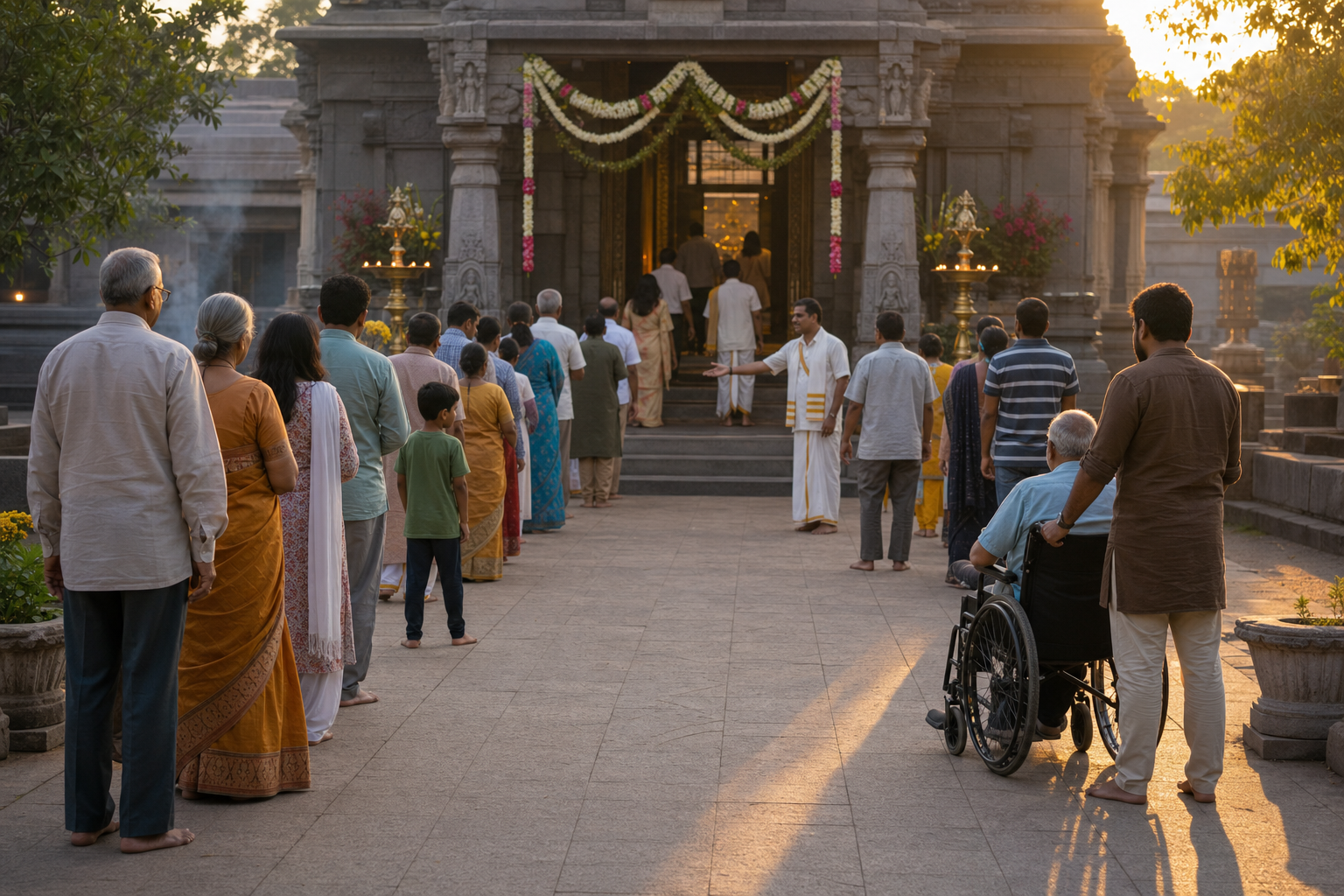
You have planned your pilgrimage carefully. Then the booking page asks you to choose between ordinary darshan, a faster paid line, a special seva, and perhaps a VIP route. The decision can make a sacred journey feel like a test of spending power before you have even reached the deity.
If you are deciding how to visit, donate, volunteer, or approach a temple committee, use one clear standard: crowd management may govern when and how devotees enter, but wealth and status should not determine whose prayer matters. Fair access and sacred calm have to be designed together. Each protects the other.
Fair access does not mean unmanaged access
Popular temples have real constraints. Administrators must protect devotees, conserve heritage structures, keep essential temple functions moving, and manage heavy footfall. Removing every queue, reservation, and restriction would not restore bhakti. It could produce more uncertainty, noise, and risk.
The question is not whether access will be managed. It is what the management system rewards. A time slot can spread arrivals across available capacity. A need-based lane can help an elderly devotee or a person with a disability. Neither arrangement has to declare one person’s devotion more valuable than another’s.
A fair darshan system has several recognizable features:
- One ordinary route remains the clear norm, rather than a deliberately inferior experience created to push devotees toward paid access.
- Time slots regulate arrival and flow without grading devotees by wealth, influence, or public position.
- Priority access is reserved for genuine needs, especially elderly devotees, people with disabilities, and essential caregivers.
- Exceptional categories are limited, clearly defined, and visible before a devotee travels or pays.
- Paid sevas are separated from physical proximity to the murti and from preferential movement through the general darshan queue.
Equal dignity does not require every visitor to follow an identical path. A devotee who needs assistance may require more time or a different entrance. A scheduled ritual may have its own practical arrangements. Equity means that every difference has a defensible purpose connected to worship, safety, accessibility, or temple operations. It does not exist merely to flatter status.
When you book, ask what the fee actually changes. Does it reserve a named seva, or does it purchase a better position in front of the deity? Does a special route answer a physical need, or does it reward influence? These distinctions are more useful than assuming that every separate lane is corrupt or that every paid option is harmless.
If the ordinary route is physically manageable for you, choosing it can be a quiet act of solidarity with other devotees. If you genuinely need an accommodation, use it without embarrassment. Need-based priority is not VIP culture. Pretending that the two are the same only makes temples less accessible to those for whom long, crowded queues can be a real barrier.
Turn waiting into part of your sadhana
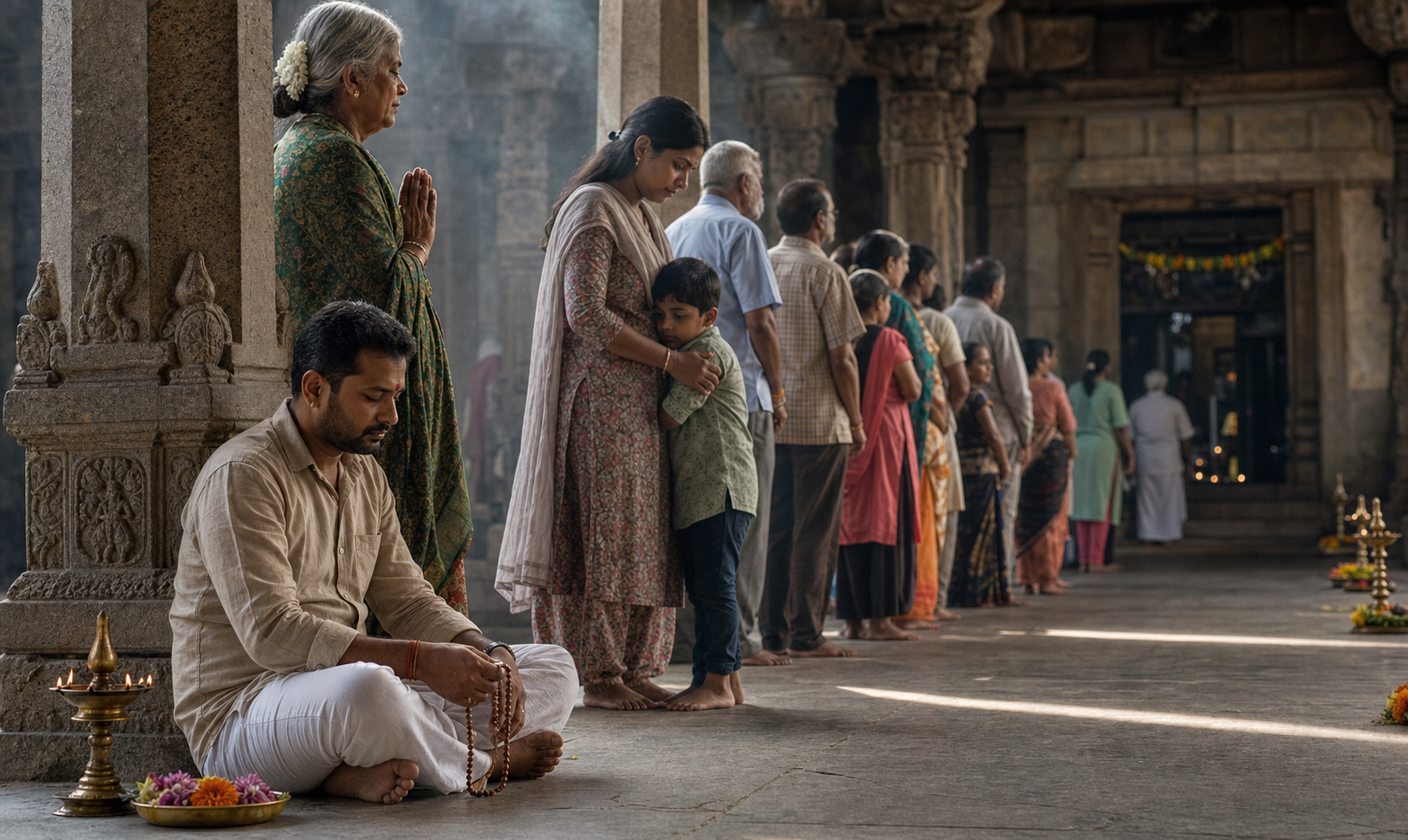
Much of the preventable disturbance begins before the sanctum. Devotees watch the neighboring line, check the time, negotiate with staff, protect a place in the queue, and reach the murti already agitated. The queue then becomes something to defeat rather than part of the pilgrimage.
You cannot redesign a temple’s access policy while standing in line. You can, however, refuse to let the line dictate the condition in which you arrive for darshan. Use this sequence:
- Choose your practice before joining the queue. Use a mantra already rooted in your practice, silent japa, or manasa-puja. Deciding in advance prevents the phone, the crowd, and the moving line from choosing your attention for you.
- Reduce unnecessary inputs. Keep your phone available if it is needed for entry, then put it away. Avoid nonessential calls, repeated photographs, and loud conversation. You do not need to police other devotees; governing your own noise is already useful.
- Stop competing with the adjacent line. Repeatedly checking whether another group is moving faster turns waiting into a status contest. Return to your japa whenever you notice yourself measuring progress.
- Move predictably and considerately. Follow volunteer instructions, avoid pushing, and leave room for elderly or differently abled devotees who need assistance. Calm movement is both a devotional discipline and a practical contribution to safety.
- Prepare for a brief darshan. Do not measure the encounter only by seconds spent near the murti. Complete longer recitations before reaching a moving zone, make your pranam without obstructing the next devotee, and allow others the same dignity you seek.
- Continue other practices only where permitted. If pradakshina, seated prayer, or a longer pause is allowed in a separate area, use that space. Do not turn the sanctum entrance into the place where every part of the pilgrimage must be completed.
This is not an argument for accepting poor administration silently. Inner composure and public accountability are different duties, and you can uphold both. During the visit, protect the atmosphere around you. Afterward, raise a specific policy concern through the appropriate channel rather than converting the queue itself into a confrontation.
Choosing an off-peak period can also give you a less hurried experience when your schedule permits. Treat it as a practical option, not a moral obligation. Devotees who can travel only during festivals, holidays, or other busy periods deserve a dignified darshan too.
Let dana remain dana, not a claim on proximity
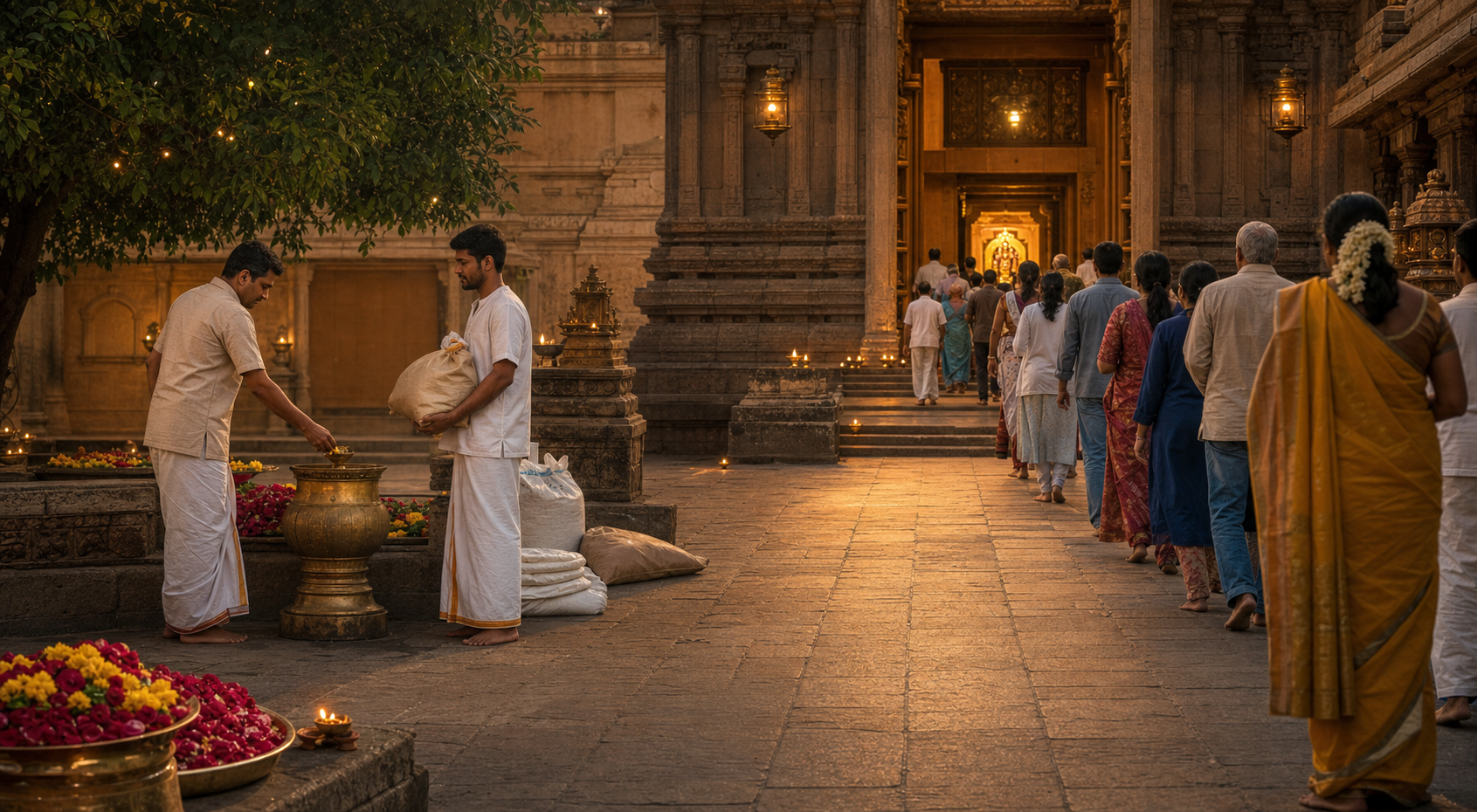
A donation and a purchase are ethically different acts. Dana releases a resource for a sacred or communal purpose. A transaction acquires a defined benefit. Confusion begins when a donation quietly becomes the price of quicker access, public recognition, or greater physical closeness to the murti.
The cleanest way to preserve the spirit of dana is to give without requesting preferential treatment. Anonymous giving is especially valuable when your purpose is to support the temple rather than strengthen your own standing within it. The amount matters less to the devotional atmosphere than the expectation attached to it.
Before paying for a seva or making a substantial donation, ask practical questions:
- What worship or temple function does the payment support?
- Does the booking alter your position in the general darshan queue?
- Is any limit based on the actual capacity of the seva, or is scarcity being used to sell status?
- Can you support accessibility, cleanliness, volunteer training, or heritage conservation without receiving priority access?
- Are the same terms visible to every devotee before payment?
A paid seva need not be treated as suspect merely because it has a fee or requires scheduling. The decisive issue is whether it remains a defined act of worship or becomes an indirect market for superior darshan. Temple administrations can protect that boundary by handling the ritual booking and the general access route separately.
Your support does not have to stop at money. Local and diaspora sanghas can organize volunteer seva, cleanliness work, and heritage preservation. Satsang, kirtan, and study circles held outside the most crowded periods can deepen community practice without adding pressure at the sanctum. These forms of contribution strengthen the temple as an institution while keeping privilege out of the darshan line.
Be equally careful not to shame someone using an accessibility arrangement. A lane for a disabled devotee and caregiver is not a reward. It is an attempt to make participation possible. Ethical reform requires a sharp distinction between accommodation based on need and preference based on status.
Ask temple administrators for rules you can see and test
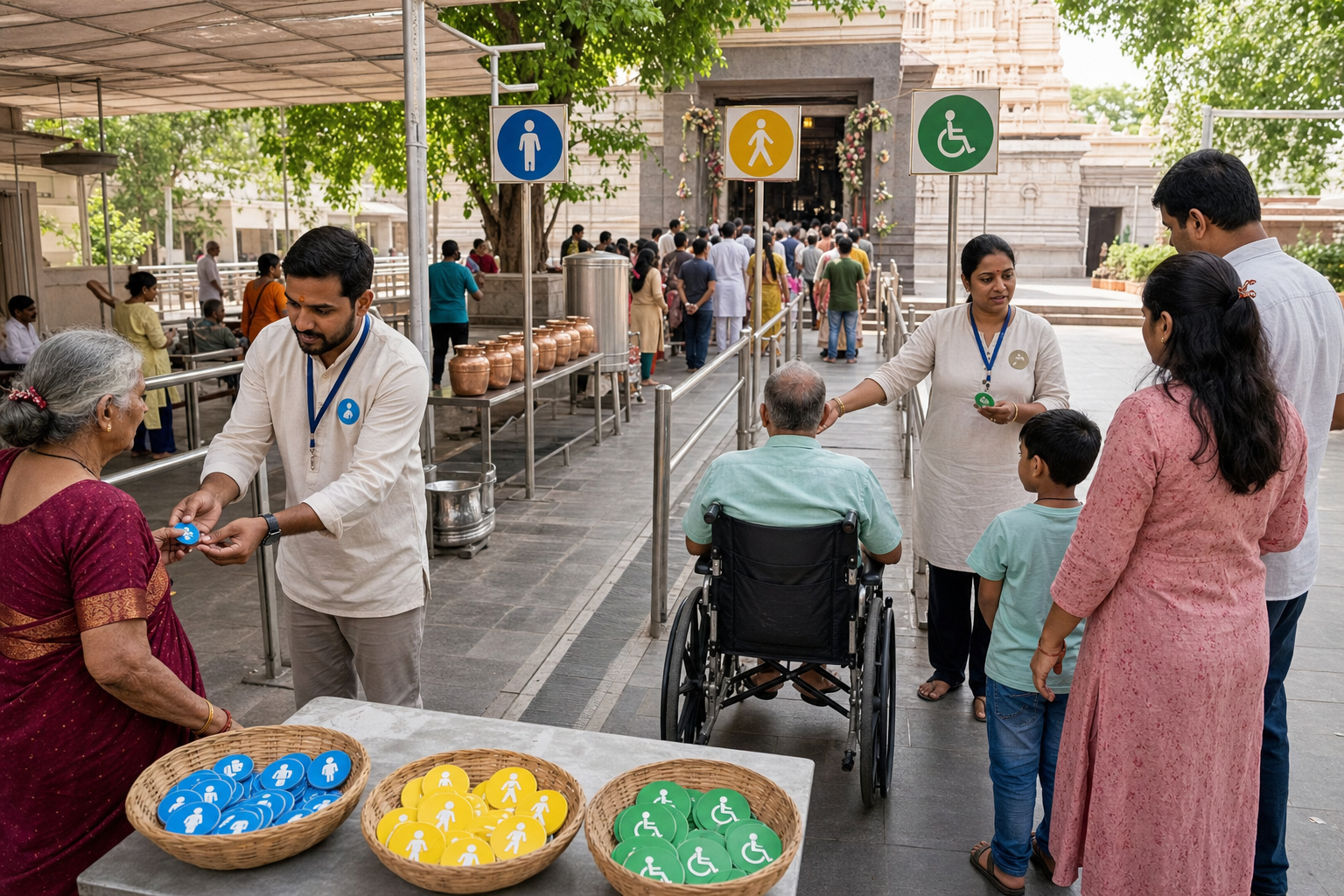
If you serve on a temple committee, volunteer through a sangha, or want to submit constructive feedback, avoid a vague demand to abolish every special arrangement. Ask for a system that can be explained publicly and evaluated in practice.
A strong proposal can include the following measures:
- Use one main queue with scheduled arrival slots. A common route expresses equal dignity, while time slots help regulate volume before congestion builds.
- Publish every access category. The booking page and entrance should explain eligibility, purpose, cost, and limits. Devotees should not discover a hidden hierarchy after arriving.
- Cap exceptional passes. An exception without a meaningful limit eventually becomes a parallel system that weakens the ordinary route.
- Keep priority need-based. Policies should identify elderly devotees, people with disabilities, and essential caregivers clearly enough for volunteers to apply the rules consistently.
- Separate paid sevas from proximity. A seva booking can reserve participation in that seva without automatically moving its purchaser ahead of general devotees.
- Make digital booking fair. Availability and rules should be presented clearly, and devotees who cannot navigate the digital system should have an assisted path rather than being excluded by technical fluency.
- Train volunteers to protect atmosphere as well as flow. Volunteers need clear rules, calm communication, and enough authority to reduce pushing, noise, and confusion without humiliating devotees.
- Place etiquette guidance where choices occur. Short prompts about soft speech, minimal phone use, orderly movement, and care for vulnerable visitors are more useful near booking and queue points than in a distant notice.
Good intentions are not enough. Temple management should audit the experience and report what it finds. Waiting time, accessibility, ambient noise, devotee satisfaction, and participation in seva offer a more complete picture than the number of people moved past the sanctum.
Measure both average waiting time and its variation. An average may look acceptable while concealing severe unpredictability for some slots or groups. Variation shows whether a devotee can make a reasonable plan or must accept an open-ended wait.
Accessibility should be evaluated separately rather than buried inside overall satisfaction. Ask whether vulnerable devotees could find the correct entrance, obtain assistance, remain with an essential caregiver, and understand the rules. A system can appear efficient for the majority while failing those who most need deliberate support.
Ambient noise deserves attention because throughput alone cannot tell administrators whether a temple still feels like a place of worship. Devotee feedback should therefore ask about clarity, fairness, quiet, volunteer conduct, and the quality of the darshan experience. Regular public reporting then gives the community something concrete to discuss.
These measures should diagnose the experience, not turn the temple into a corporate dashboard. The purpose is simple: identify where administration is creating agitation, exclusion, or mistrust, and then correct the responsible policy.
Sacred calm is a shared form of seva
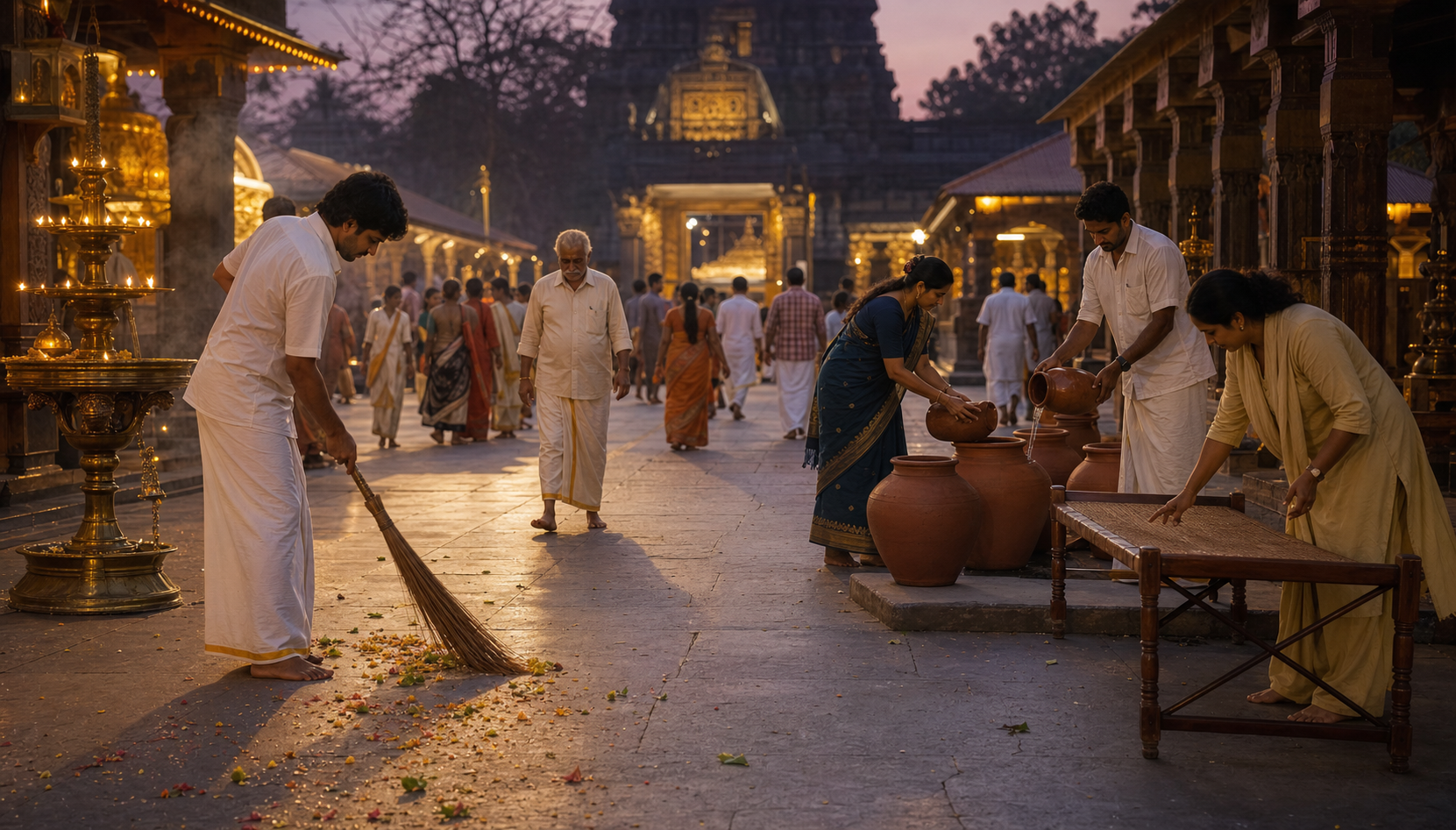
Hindu bhakti gives humility and seva a central place in devotional life. Resonant disciplines appear across the wider Dharmic family: dana and mindfulness in Buddhism, ahimsa and aparigraha in Jainism, and seva and the egalitarian spirit of langar in Sikhism. These traditions are not interchangeable, but they offer a common warning against allowing possession, display, or social rank to govern sacred life.
That warning becomes practical in a temple queue. Bhakti asks you not to confuse physical nearness with a greater claim on grace. Mindfulness asks you to notice agitation before passing it to the crowd. Ahimsa asks you not to gain your moment through another person’s discomfort. Aparigraha loosens the urge to possess the best place or longest view. Seva turns your attention toward the conditions that help everyone worship.
Sacred calm is therefore not the private mood of a few quiet devotees. It is a collective achievement. Administrators create its conditions through fair rules. Volunteers sustain it through steady conduct. Donors protect it by giving without purchasing rank. Devotees preserve it through restraint, attention, and consideration for the person behind them.
Key takeaways
- Fair access permits scheduling and safety controls, but it does not turn wealth or status into spiritual priority.
- Need-based accommodations for elderly and disabled devotees are different from VIP privilege and should be protected.
- Silent japa, manasa-puja, minimal phone use, soft speech, and predictable movement can make the queue part of your sadhana.
- Dana remains spiritually coherent when it supports the temple without buying recognition, speed, or proximity.
- Temple committees should publish access rules, cap exceptions, separate paid sevas from general darshan, and train volunteers for both safety and calm.
- Waiting-time variation, accessibility, noise, devotee satisfaction, and seva participation reveal more than throughput alone.
For your next visit, choose one personal discipline before you leave home and one constructive action for afterward. You might keep your phone away and use the queue for japa, then send the temple a focused request for published access rules or clearer accessibility arrangements. Bhakti becomes visible in public life when we protect not only our own darshan, but the dignity of the devotee beside us.
References
