
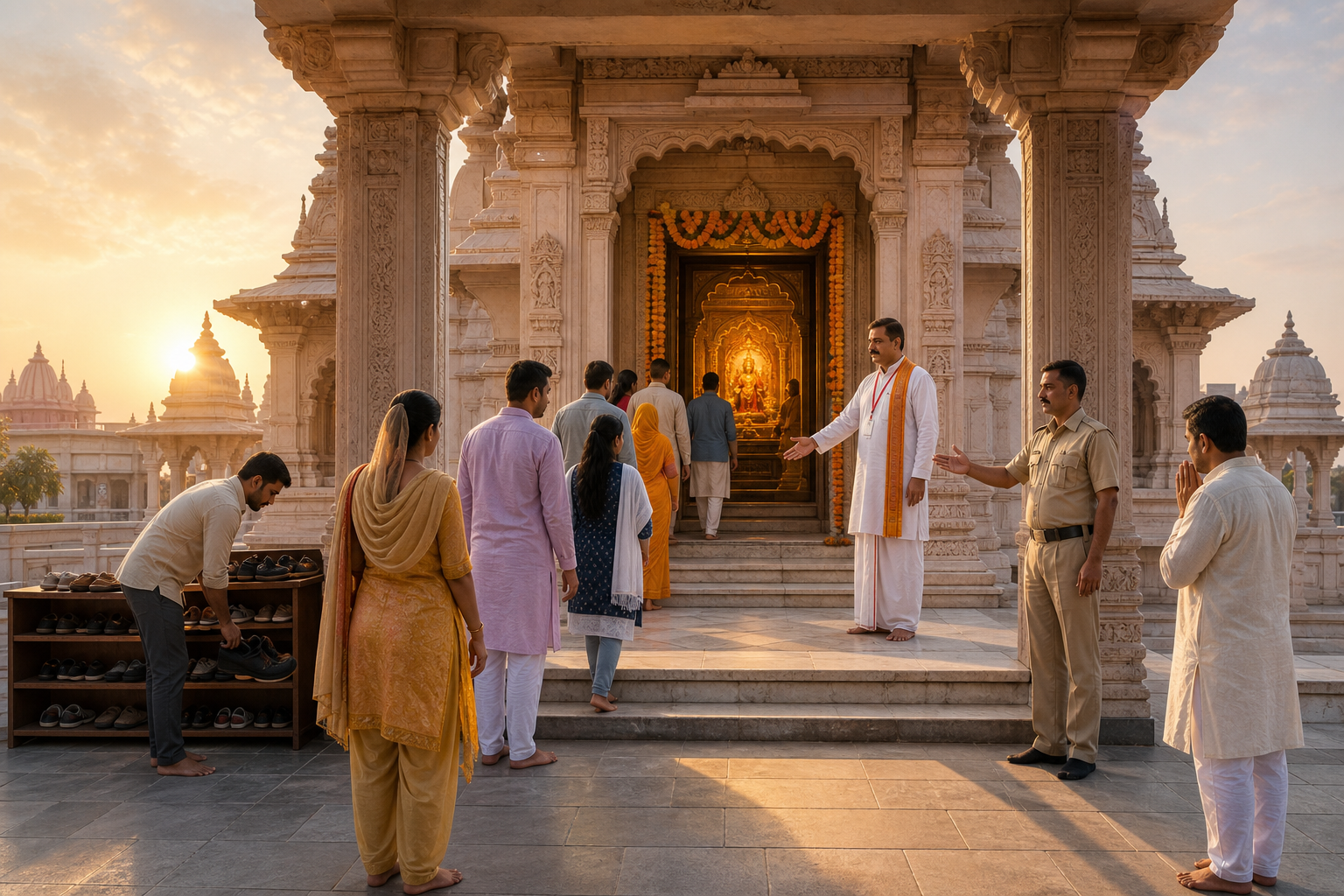
If you encountered the Ayodhya incident through a clipped video, a slogan, or an angry social-media caption, the immediate question is not whether a Hindu temple may protect its worship. It may. The harder question is how you defend that boundary without adding speculation, humiliation, or collective blame.
The sound Dharmic response is firm about maryada, careful about facts, and disciplined in public speech. That combination protects Shri Ram Janmabhoomi Mandir more effectively than either indifference or uncontrolled outrage.
Begin with the established conduct, not an invented motive
Security personnel at Shri Ram Janmabhoomi Mandir detained a visitor after he attempted to perform namaz within the temple premises. Following intervention, he reportedly raised the slogan Allahu Akbar. Personnel contained the situation and maintained order at the pilgrimage site.
That is enough to identify a breach of the host shrine’s worship protocol. It is not enough to establish the man’s motive, mental state, prior planning, organizational links, or later legal outcome. None of those unknowns needs to be filled with a theory before you can defend the temple rule.
Precision matters here. Detention is not conviction. A reported slogan is not proof of a wider conspiracy. One person’s conduct is not evidence against every person who shares his religion, region, or language. At the same time, uncertainty about motive does not make the conduct acceptable. You can say plainly that the act was improper within a Hindu temple while leaving questions of intent and legal responsibility to a fair inquiry.
Before you forward a claim about this or any similar incident, apply four checks:
- Separate observation from interpretation. Attempting a distinct religious observance is conduct. Calling it a planned provocation is an interpretation unless planning has been established.
- Use the correct procedural word. Do not turn detained into arrested, charged, or convicted unless those later steps are verified.
- Keep identity from doing the work of evidence. A person’s origin may be part of an identification, but it does not prove motive.
- Do not let a clip outrun its context. Check what happened before and after the visible moment, what security personnel did, and whether normal worship resumed.
This discipline is not timidity. It prevents an actual violation of temple protocol from being buried beneath avoidable factual errors.
A temple is a sacred host, not a religiously neutral hall
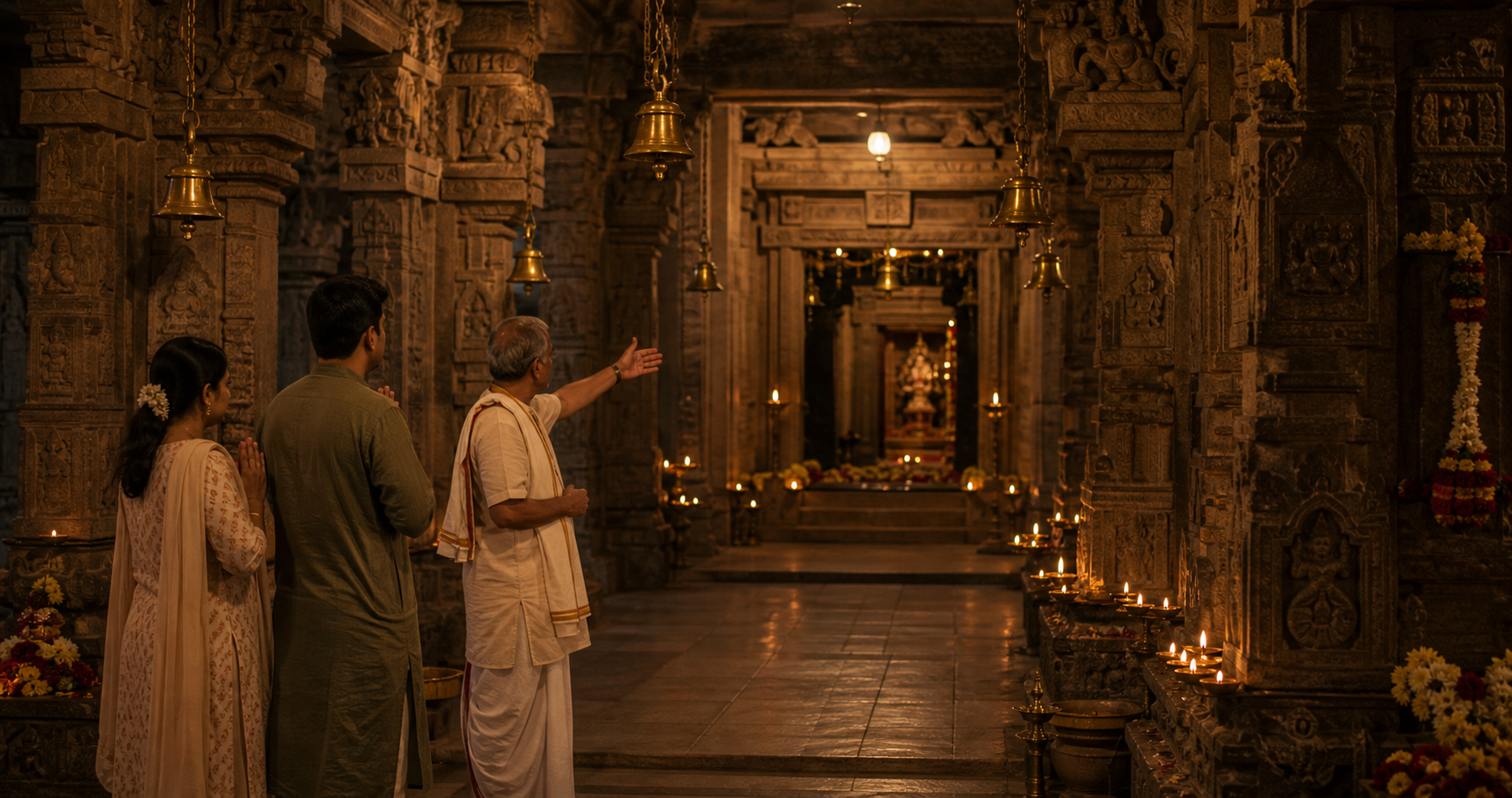
A visitor’s dignity and a shrine’s ritual integrity are not competing principles. Every person can be treated courteously while the temple retains authority over what forms of worship may occur inside its premises.
Three distinctions keep this principle clear:
- Permission to enter is not permission to conduct any rite. Access remains subject to the rules of the sacred place being entered.
- Respect does not require ritual interchangeability. Different traditions can coexist without pretending that every observance belongs in every sanctified space.
- Hospitality does not dissolve host authority. Welcoming a visitor does not transfer control over the site’s liturgical character to that visitor.
This is not a demand that visitors abandon their own faith. It is a request that they refrain from introducing an independent religious practice into a place consecrated for another tradition. The same reciprocal ethic should guide a Hindu visiting a mosque, gurdwara, Jain derasar, Buddhist vihara, church, synagogue, or any other sacred institution: learn the host’s rules and do not improvise a competing rite.
For Shri Ram Janmabhoomi Mandir, the principle carries special weight. Pilgrims do not enter merely to view a building. They come for darshan in a living Hindu sacred space. The queue, courtyard, security system, and movement of visitors all serve that devotional purpose. Treating the premises as a neutral platform for self-directed religious expression misunderstands what the place is.
Maryada is therefore not hostility. It is the boundary that lets a tradition remain itself. If every boundary is labelled exclusion, no community can preserve a distinctive sacred practice. If every visitor is treated as a threat, however, hospitality and justice also collapse. A Dharmic position must refuse both errors.
A practical protocol for visitors and temple managers
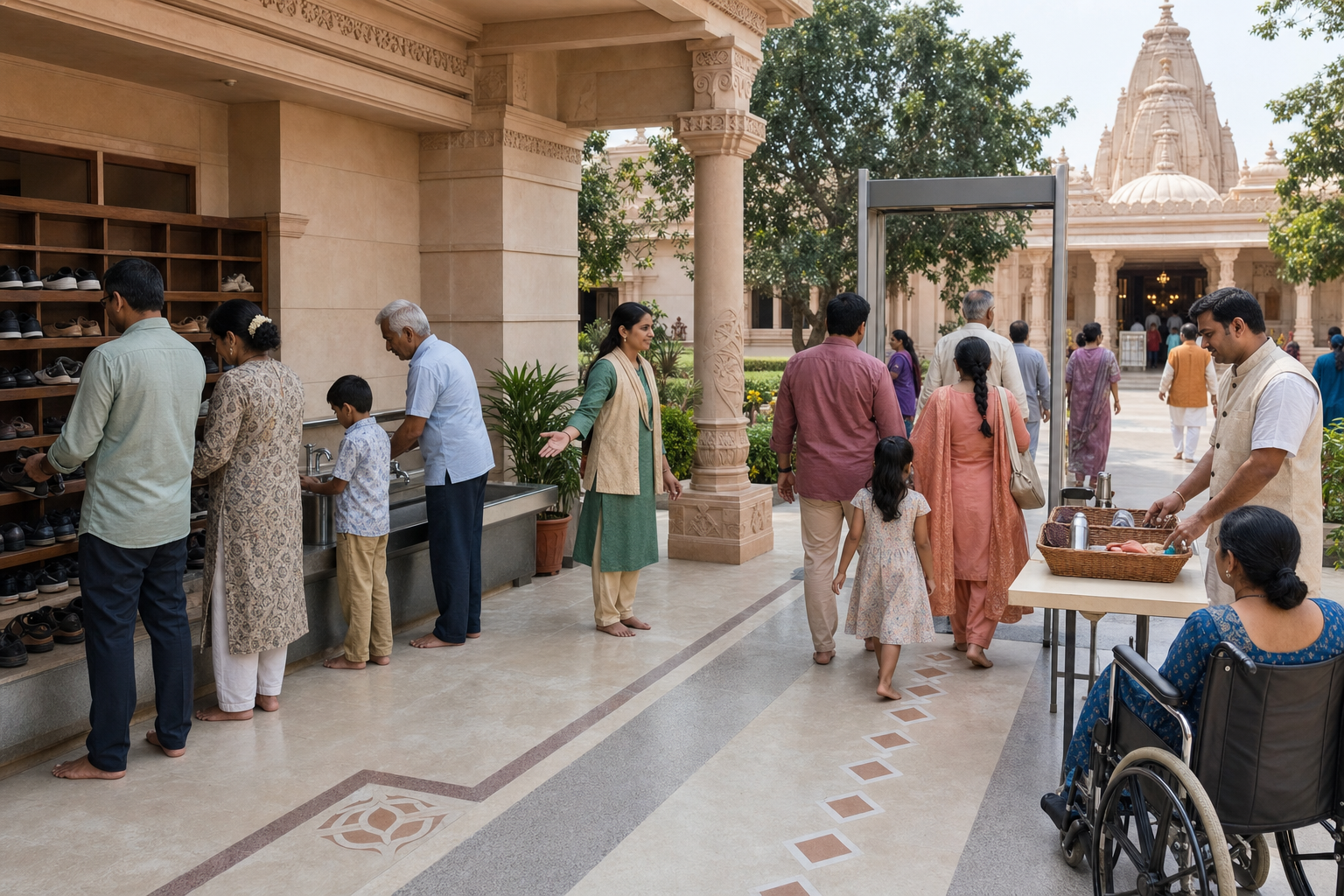
If you are visiting a sacred site
You do not need detailed theological knowledge to behave respectfully. A short sequence prevents most avoidable conflict:
- Read the rules before joining the final queue. Look for restrictions on worship, clothing, photography, offerings, bags, movement, and restricted areas.
- Ask before performing an unfamiliar or independent observance. If the posted guidance does not answer your question, speak to an authorized attendant rather than assuming silence means permission.
- Follow the site’s visible devotional pattern. Participate only where participation is invited. Otherwise, observe quietly and allow pilgrims to continue their worship.
- Comply immediately if personnel stop you. Move away from the worship area first. Ask for an explanation at the designated help point or security office after the immediate disruption has ended.
- If you witness a breach, do not form a crowd. Give security room to act, keep children and elderly companions away from the disturbance, and do not answer one slogan with another.
The crucial step is asking before acting. A private assumption becomes a public disruption the moment an independent rite begins in a busy sacred area. By then, personnel must protect both the ritual boundary and the movement of pilgrims.
If you manage a temple or pilgrimage site
A rule that exists only in an internal manual will not help a first-time visitor. Put the boundary where a visitor can see it before entering the most sensitive area. A useful notice can say: This is a Hindu temple. Worship within the premises must follow the temple’s authorized tradition. Please ask temple personnel before undertaking any independent religious observance.
That message should appear at the main approach, before the final security checkpoint, and near any point where visitors receive orientation. Use concise translations selected from actual visitor patterns, supported by recognizable pictograms. The goal is not to cover a wall with regulations. It is to make the central boundary impossible to miss.
Staff also need a shared verbal script. Under stress, improvised language can turn a correct intervention into a personal or theological argument. A calm first instruction could be: You cannot perform that observance here. Please stop and come with us. We will explain the temple rule outside the worship area.
That wording identifies the prohibited conduct, gives a clear instruction, and moves the discussion away from pilgrims. It does not insult the person’s religion or invite a debate in the queue. If the person refuses, trained personnel can follow the site’s approved security procedure and summon a supervisor or public authorities as required.
Managers should also provide an obvious help point. A visitor who can ask a question before reaching the sanctum is less likely to test a boundary inside it. This is particularly useful for first-time visitors, people arriving from other regions, and families already managing children or elderly relatives in a crowded queue.
Security should stop the breach and lower the temperature
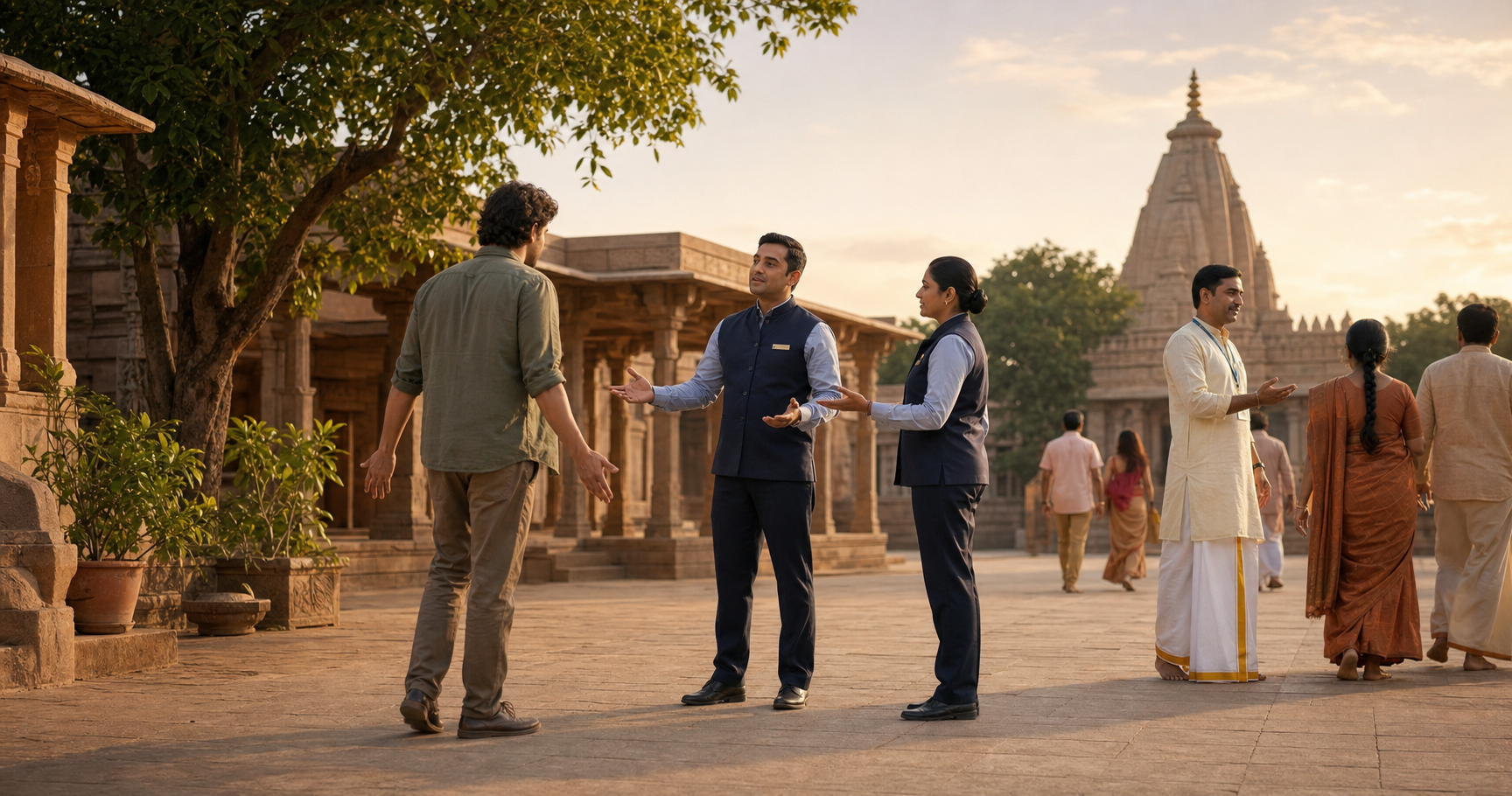
At a high-footfall pilgrimage site, security has two simultaneous duties: preserve the sanctity of worship and prevent a localized incident from becoming a crowd event. Speed matters, but so do language, proportionality, and sequence.
- Stop the unauthorized conduct. The initial instruction should be short, audible, and focused on the site rule.
- Create physical space. Move the individual away from the active worship and queue area without encouraging bystanders to surround the encounter.
- Separate facts from argument. Record what personnel observed, what instruction was given, whether the person complied, and what happened next.
- Use the established escalation path. Referral, detention, inquiry, or any further action should follow applicable procedure rather than crowd demand.
- Restore darshan and movement. Once the immediate risk has passed, return attention to pilgrims, especially those who may have become anxious or disoriented.
- Communicate only verified details. A public update should identify the conduct, the response, and whether normal operations have resumed. It should not assign an unverified motive.
Firmness and humane treatment belong in the same response. Ahimsa does not require personnel to watch passively while a sacred boundary is breached. Nor does enforcement require taunts, public humiliation, retaliatory slogans, or collective accusations. The object is to end the improper act, secure the place, and permit lawful inquiry.
Consistency is also essential. The rule should apply to unauthorized observances regardless of the visitor’s status, popularity, political usefulness, or ability to attract a crowd. Selective enforcement makes a clear temple norm look like an identity-based reaction. Even-handed enforcement shows that the protected object is the shrine’s ritual order.
Interfaith outreach has a place, but the sanctum and the active worship area are not appropriate venues for negotiating ritual boundaries. Civic halls, educational institutions, and organized community forums can host explanation and dialogue. Inside the temple, the authorized temple tradition governs.
Defend the mandir without turning one act into collective guilt

The strongest public response names exactly what was wrong: a visitor attempted a form of worship that did not belong within the host temple’s protocol, and security intervened. That sentence defends the boundary without pretending to know more than the established facts.
Collective language weakens that position. Statements about what an entire religion, region, or population supposedly intends invite an argument that the incident itself cannot prove. They also shift attention away from the rule that can be defended consistently: no visitor may impose an unauthorized rite on a sacred host.
Restraint should not become euphemism either. You do not have to call every breach a misunderstanding. The conduct can be described as deliberate in the limited sense that an action occurred, while its larger motive remains undetermined. You can demand investigation without announcing the verdict. You can support security intervention without celebrating degradation of the person detained.
When assessing a public statement, speech, or social-media message about such an incident, use four tests:
- Truthful: Does it distinguish confirmed conduct from allegation, inference, and rumor?
- Proportionate: Does it condemn the breach without assigning guilt to uninvolved people?
- Reciprocal: Would the same principle make sense when a Hindu visits another community’s sacred place?
- Restorative: Does it help the temple resume worship safely, or merely prolong the spectacle?
Key takeaways
- Shri Ram Janmabhoomi Mandir has the right and responsibility to preserve worship according to its Hindu tradition.
- Entry into a sacred site does not authorize a visitor to perform an independent religious rite there.
- The reported conduct can be condemned without inventing a motive or treating detention as conviction.
- Clear multilingual notices, pre-sanctum orientation, and a standard staff script can prevent confusion and improve enforcement.
- Security should stop the act, create space, document observable facts, follow due process, and restore darshan.
- Ahimsa and maryada work together: restraint governs how a boundary is enforced, not whether the boundary exists.
The next time a sacred-site incident reaches your phone, pause before joining its emotional momentum. Verify the conduct, name the violated rule precisely, support calm and consistent enforcement, and refuse claims the known facts cannot carry. That sequence serves the mandir, the devotees, and the wider civic peace.
References
