
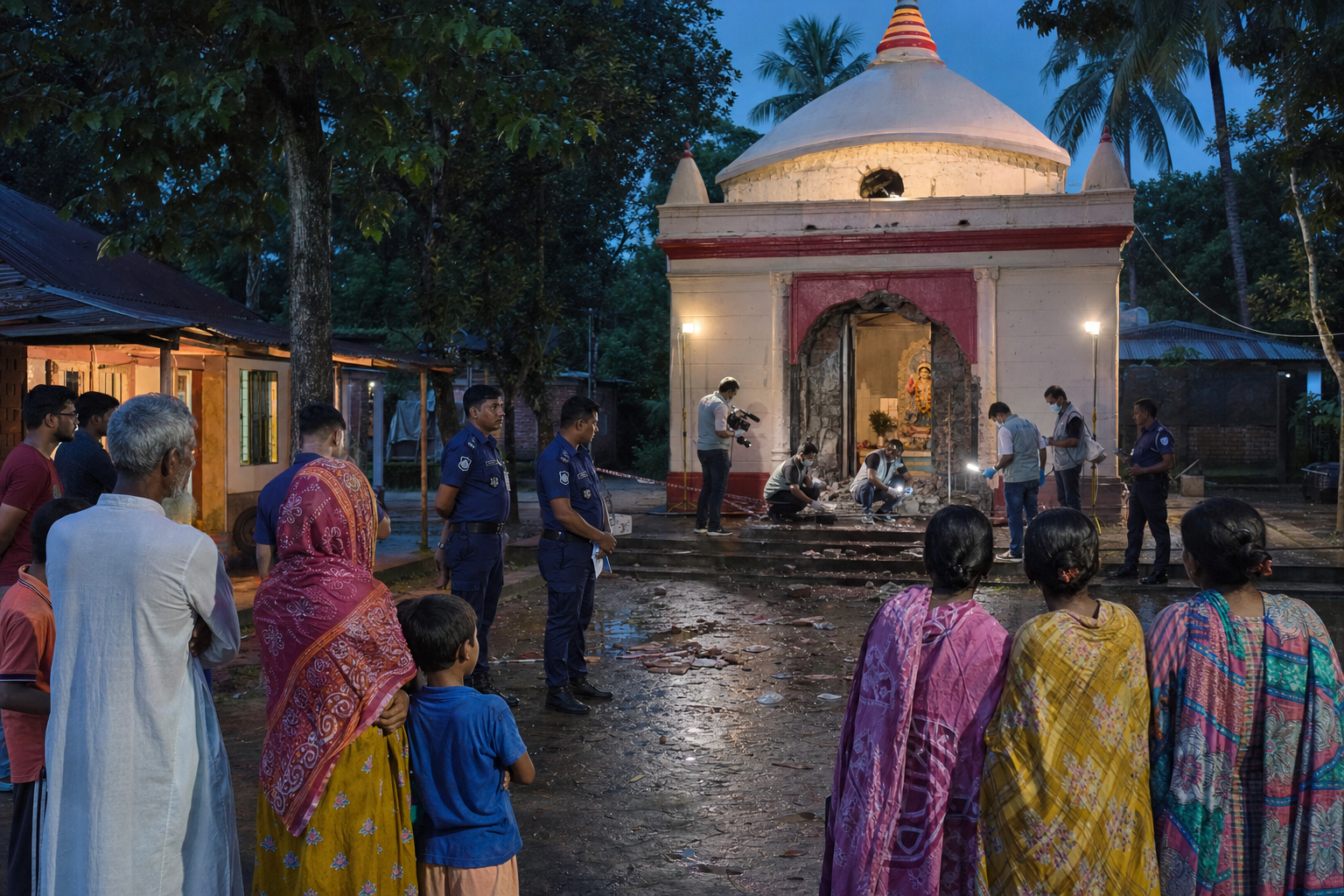
If you are watching reports of Hindus being killed or attacked in Bangladesh, the urgent question is not whether anger is justified. It is what kind of response can protect someone now, establish the truth, and make the next attack less likely.
The useful standard has four parts: immediate safety, impartial investigation, credible prosecution, and safeguards that can be checked after public attention moves on. Anything less risks turning the suffering of a vulnerable community into another cycle of outrage without protection.
Demand protection, investigation, prosecution and guarantees
A killing cannot be reduced to a diplomatic talking point. At the same time, urgency does not excuse careless claims. Each reported crime needs fact-finding strong enough to identify the victim, determine what happened, test whether religious targeting was involved, and support a lawful prosecution.
That produces a clear sequence of demands:
- Protect people who may still be at risk. Authorities should secure threatened Hindu homes, temples and businesses rather than waiting for another incident before acting.
- Open prompt and impartial investigations. Investigators must follow evidence wherever it leads and distinguish a suspected communal motive from a motive established by evidence.
- Prosecute perpetrators credibly. An arrest is not the same as accountability. The relevant test is whether cases proceed through a fair justice process without political protection, intimidation or selective enforcement.
- Provide verifiable minority-rights guarantees. General promises should become named responsibilities, accessible reporting channels, protection plans and public progress updates consistent with Bangladesh’s constitutional commitments and international obligations.
When officials announce action, ask concrete follow-up questions. Has the case been formally recorded? Which authority is responsible for investigating it? Are witnesses and affected families protected from intimidation? Have charges been filed, and what safeguards have been introduced for the surrounding community? Public reporting should reveal institutional progress without exposing victims’ addresses or other information that could put them in further danger.
This distinction matters because a government can condemn violence immediately, but deterrence depends on what happens after the cameras leave. Protection interrupts an imminent threat. Investigation establishes facts. Prosecution assigns legal responsibility. Long-term safeguards reduce the opportunity for repetition. Treating one of these steps as a substitute for the others leaves the response incomplete.
Build protection before political volatility becomes violence

Periodic attacks on Hindu homes, temples and businesses have been reported during periods of political volatility. Volatility may help explain when danger rises, but it does not excuse perpetrators or relieve the state of its duty to protect citizens. The practical lesson is that minority protection cannot begin only after a death, a burned property or a desecrated place of worship.
A workable preventive system needs several connected parts:
- A clear local escalation route: a community member who receives a threat should know which number or office to contact, what information to provide, and who must respond if the first contact fails.
- Protection plans for religious sites: law-enforcement personnel need training and assigned responsibilities for protecting temples and other vulnerable locations when tensions rise.
- Early-warning channels: community hotlines should route credible threats to people able to act, not merely collect complaints after harm has occurred.
- Reliable documentation: civil-society organizations need safe ways to preserve case details, damage records and witness accounts so that abuse cannot disappear into rumor or administrative delay.
- Victim support: families facing injury, bereavement, displacement or property damage need accessible routes to protection and justice, not only public sympathy.
- Community mediation: trusted interfaith leaders can help stop rumors and intimidation from spreading, provided mediation never replaces a criminal investigation or pressures victims to abandon a complaint.
These measures work only if responsibilities are assigned before a crisis. A hotline without a response protocol merely records fear. Training without deployment plans produces certificates rather than safety. Interfaith meetings without access to justice may lower the temperature temporarily while leaving perpetrators untouched.
If you support a temple committee, diaspora association or human-rights group, ask whether its work fills one of these specific gaps. Do not publicly circulate the address of a threatened family, the movements of a witness, or an unverified identity of an alleged perpetrator. Useful documentation preserves evidence and privacy at the same time.
Speak accurately without diluting the anti-Hindu violence
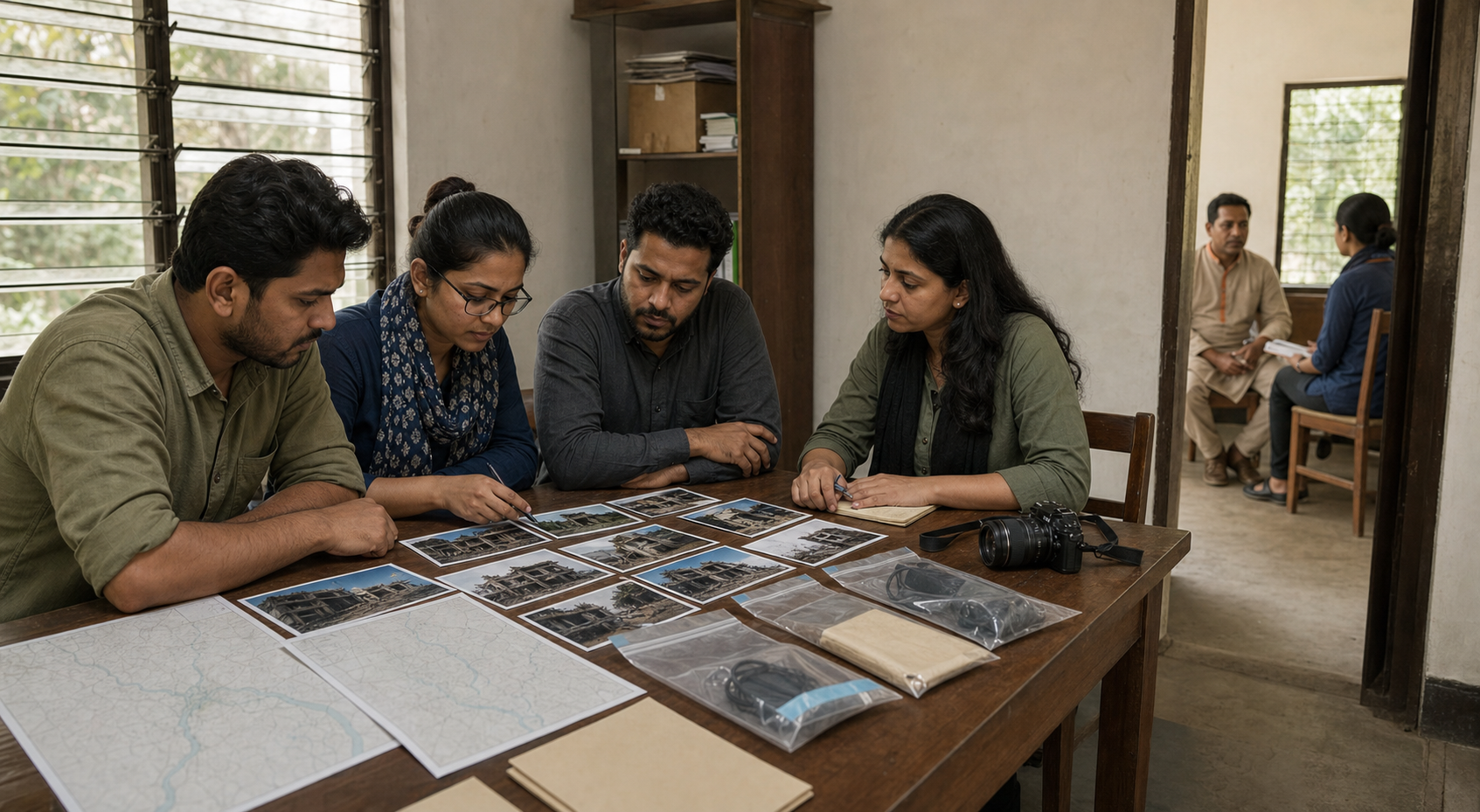
False certainty does not strengthen advocacy. It gives opponents an easy reason to dismiss genuine cases and can place innocent people in danger. Before sharing a claim, separate the elements that require verification: whether a death or attack occurred, the victim’s identity, the location and timing, the alleged motive, the status of any investigation, and the authority responsible for the case.
A Hindu victim and a proven anti-Hindu motive are related claims, but they are not automatically identical. Use phrases such as "reported killing," "alleged communal targeting," or "investigators have not yet established the motive" when that is all the available information supports. When evidence does establish religious targeting, name it plainly. Precision is not timidity; it is what allows a demand for justice to survive scrutiny.
- Share the original report or the closest available record rather than a cropped image with no date or location.
- Keep verified facts separate from commentary, especially when a case is developing.
- Do not publish graphic images, private family information or witness identities merely to make a message more emotionally forceful.
- Correct a mistaken detail openly while preserving any part of the case that remains supported.
- Ask for accountability from named institutions and decision-makers instead of assigning guilt to an entire religious population.
A pro-Hindu position also requires moral discipline. Collective blame confuses perpetrators with millions of people who did not commit the crime. Muslim neighbors have also stood with threatened communities against intimidation and mob violence. Recognizing that solidarity does not minimize anti-Hindu violence. It helps isolate those responsible and protects the possibility of local cooperation when vulnerable families need it most.
Ahimsa does not require silence in the face of adharma. It requires that resistance avoid producing new victims. The disciplined position is therefore demanding but coherent: protect Hindus without hesitation, prosecute perpetrators without favoritism, and refuse retaliation against people who bear no individual responsibility.
Turn diaspora concern into diplomacy that can be measured

On 11 January 2026, UK MP Priti Patel called the reported killings "unacceptable" and pressed for stronger, coordinated British diplomacy. The word conveys necessary moral clarity. The more important test is what governments do with that clarity.
Diplomatic pressure becomes meaningful when it produces observable work. That can include a high-level demarche, bilateral follow-up with Bangladesh, sustained human-rights monitoring, action in multilateral forums, support for credible civil-society documentation, and cooperation on training law enforcement to protect religious sites. Engagement with India and other relevant partners can keep minority safeguards present in discussions about regional security, trade and development.
If you are writing to an elected representative, avoid sending only a general demand to "do something." Ask for a response to these points:
- Will the government press for prompt, impartial investigations into reported killings and attacks against Hindus?
- Will it seek transparent information about prosecutions and the protection of witnesses and affected families?
- Will bilateral engagement include concrete safeguards for Hindu homes, businesses and places of worship?
- Will it support sustained monitoring and credible documentation instead of reacting only when a case attracts international attention?
- Will development, security and trade engagement keep accountability, inclusion and minority rights on the agenda?
A concise message could read: "Please ask the government to press Bangladesh for prompt and impartial investigations into reported killings and attacks against Hindus, credible prosecutions, protection for affected communities and religious sites, and public follow-up on the measures taken." Add only case details that you can verify. A representative can act more effectively on a defined request than on a long message built around uncertain claims.
Development cooperation also needs care. The purpose of linking assistance with accountability and inclusion should be better governance and stronger protection, not abandonment of vulnerable citizens. Ask how programs support equal access to justice, responsible policing, early warning and civil-society capacity. Those are more revealing questions than whether a government has issued another condemnation.
Key takeaways
- The minimum credible response is immediate protection followed by impartial investigation, prosecution and verifiable safeguards.
- Political volatility is a reason to prepare protection plans early, not an excuse for attacks or official inaction.
- Accurate wording strengthens Hindu advocacy: distinguish a reported incident, a suspected motive and a motive established by evidence.
- Rejecting collective blame does not weaken the demand for justice; it focuses responsibility on perpetrators, enablers and failed institutions.
- Diplomacy should be judged by measurable follow-up, including monitoring, case progress, protection of religious sites and support for accountable institutions.
If you take one step now, make it specific. Send a representative the five questions above, support a credible group that documents abuses without exposing victims, or replace an unverified social-media claim with a carefully sourced account. Sustained, precise pressure gives threatened Hindus more than a moment of attention: it keeps protection and accountability on the agenda after the outrage fades.
References
