

Suppose a family tells your temple committee that money or aid was tied to changing faith. Within minutes, the allegation can become a forwarded message, a crowd, and several incompatible versions of what happened. Your first responsibility is to keep the family safe, preserve what can actually be established, and stop one grievance from producing another act of violence.
That discipline is not a weak response. It is how you defend Hindu religious freedom in West Bengal and protect a vulnerable Hindu minority in Bangladesh without sacrificing truth or the rule of law. If danger is immediate, move people to safety, seek local emergency, police, or medical assistance, and do not confront suspected actors yourself. Evidence collection comes after personal safety.
The decisive question is whether consent was free
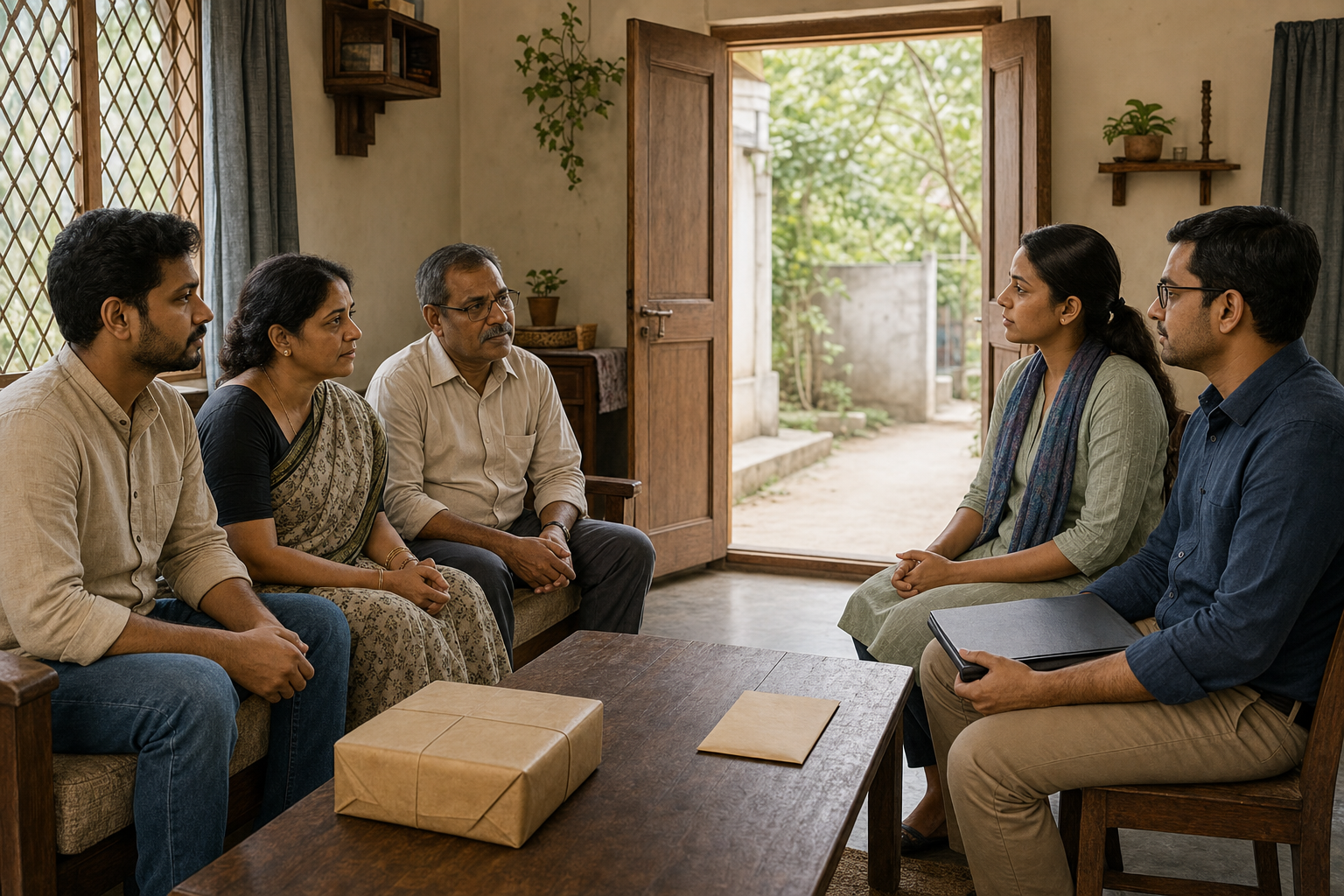
Freedom of religion has two inseparable sides. A person must be free to practise, discuss, adopt, reject, or leave a faith according to conscience. The same person must also be free from threats, deception, violence, and material pressure that turns vulnerability into leverage.
The useful test is therefore not, “Was religion discussed?” It is, “What would have happened if the person said no?” An invitation that can be declined without penalty is different from money explicitly offered in exchange for conversion. Aid that remains available regardless of belief is different from aid withheld until a religious condition is accepted. A threat is different again, and an assault must be investigated as violence regardless of the dispute surrounding it.
| What happened | What you need to establish | Safe next step |
|---|---|---|
| A religious invitation was made | Could the person decline without losing aid, safety, work, access, or standing? | Do not treat an unwanted invitation alone as proof of coercion. Record repeated harassment if it occurs. |
| Aid and religious activity appeared together | Was aid available on the same terms to people who refused to participate? | Ask the provider for a clear written non-coercion policy and an independent grievance route. |
| Money was allegedly offered for conversion | What exact benefit was offered, what exact condition was stated, and who heard it directly? | Preserve the original testimony and seek a lawful, impartial inquiry. Do not turn an allegation into a public verdict. |
| A person was threatened or intimidated | What was said or done, by whom, where, and whether the threat is continuing? | Prioritise protection and report the narrow, specific conduct to the appropriate local authority or qualified legal adviser. |
| Assault or property damage occurred | Who was harmed, what damage is visible, and what medical or official records exist? | Seek emergency or medical help, preserve evidence safely, and reject retaliatory mobilisation. |
As of January 2026, West Bengal had no specific anti-conversion statute. That does not leave assault, intimidation, or fraud beyond the law, and it does not erase India’s constitutional protection of conscience and worship. It does mean that a community should document the conduct complained of rather than assume that the label “conversion” by itself settles the legal question.
Bangladesh has its own legal and institutional framework, including a constitutional commitment to protect minorities. A complaint there must be pursued through Bangladeshi institutions and locally qualified assistance. In either jurisdiction, a community classification is not a judicial finding. Its purpose is to identify danger, preserve facts, and route the matter responsibly.
Do not turn two Bengals into one undifferentiated story

The civilisational region is connected, but the incidents and legal systems are not interchangeable. In Amta, West Bengal, residents reportedly protested an alleged attempt to induce conversion with money, followed by clashes. Important details remained under verification. In Bangladesh, the reported deaths of Samir Das and Pralay Chaki in separate incidents within a 24-hour period intensified fear, while the circumstances were still being investigated.
Those facts do not establish a shared operation, a common motive, or even the same kind of offence. Joining them into a sweeping theory would outrun the available evidence. Ignoring the fear they produced would be equally irresponsible.
Minority safety is not measured only by whether a death or attack has been officially classified as communal. It is also visible in the contraction of ordinary life. In Bangladesh, anxiety was reflected in reluctance to travel after dusk, lower temple attendance, and greater vigilance around schools and markets. These behaviours do not prove the motive behind any particular incident. They do show that trust in everyday safety has weakened.
If you help run a temple, school, neighbourhood association, or civil-society group, watch for that contraction. Record cancelled worship, avoided routes, early shop closures, disrupted schooling, and requests for accompaniment as community-safety indicators. Keep vulnerable individuals’ names confidential. Share aggregated patterns with responsible authorities and legal or civil-society partners instead of publishing a list that could expose frightened families.
Keep the categories separate. A verified assault belongs in an incident record. A family avoiding evening travel belongs in a community-climate record. A forwarded claim with no direct witness belongs in an unverified-information file. Treating all three as confirmed attacks corrupts the evidence; treating only the first as relevant misses the way insecurity spreads.
Use a disciplined protocol when an allegation reaches you
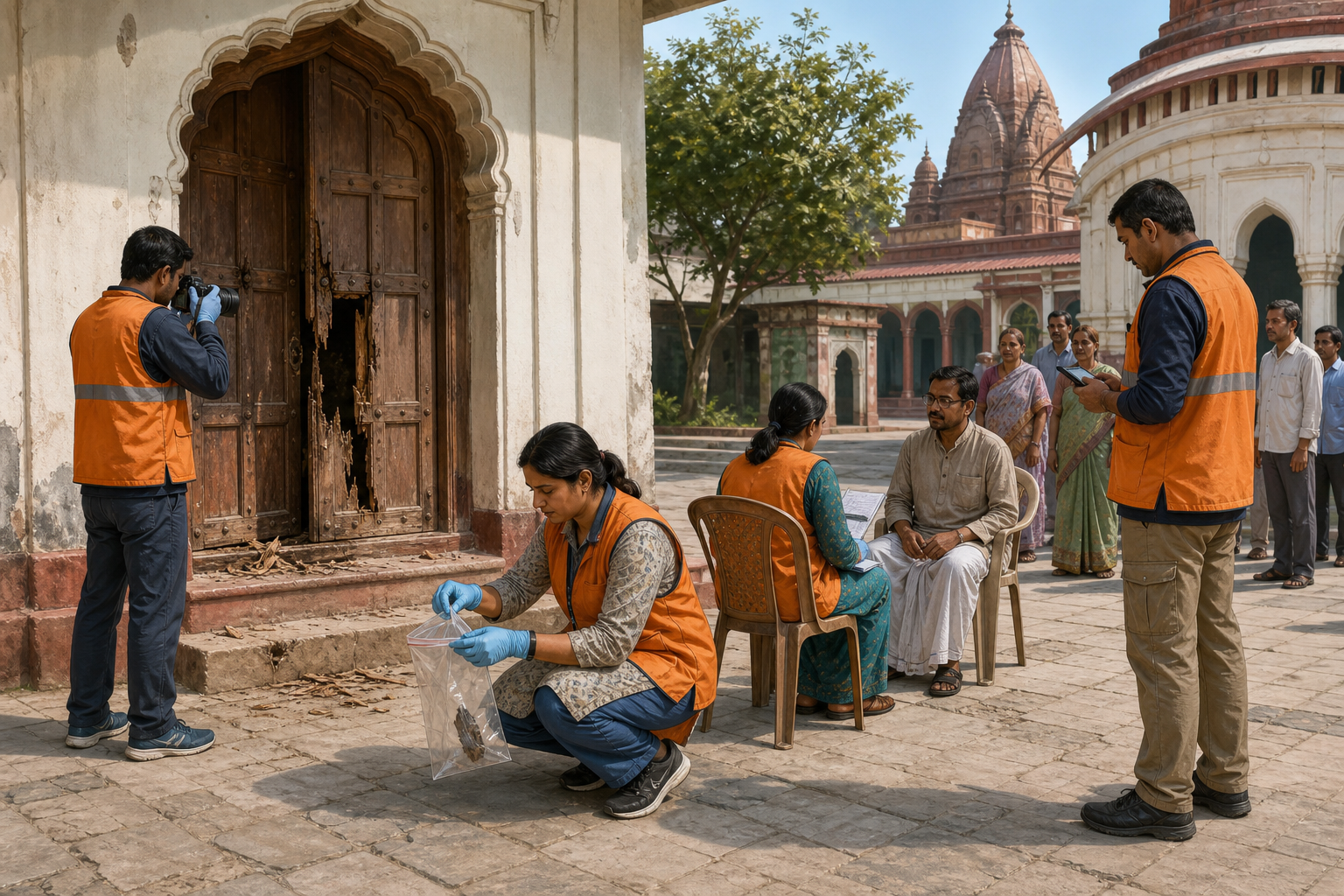
A good response slows down the claim without slowing down protection. The sequence matters: danger first, facts second, publication last.
- Check immediate safety. Ask whether anyone is injured, being followed, confined, threatened, or unable to return home safely. Contact the appropriate local emergency, police, or medical service when the danger is active. Do not send community volunteers to confront an alleged offender.
- Preserve the original wording. Save the first message, complaint, photograph, or document available. Note when and where it was received. A copied social-media caption is not independent confirmation of the event it describes.
- Separate direct knowledge from repetition. Mark what the affected person experienced, what a direct witness saw, what another person relayed, and what the community infers. Never merge those layers into one confident narrative.
- Document the condition attached to aid or money. Write down the benefit allegedly offered, the religious action allegedly requested, the exact link between them, and what happened when the recipient refused. The condition is the central fact in an inducement claim.
- Document violence separately. Record injuries, property damage, threats, medical treatment, and official complaint details independently of the conversion allegation. Violence does not become permissible because the underlying grievance is sincere.
- Protect complainants and witnesses. Do not publish home addresses, private phone numbers, school details, or identifying information that could invite retaliation. Obtain consent before sharing a person’s account outside the reporting or legal process.
- Report only what you can support. Use “alleged” or “reported” while verification is pending. Name the disputed conduct rather than assigning collective guilt to a religion, village, or organisation.
- Correct publicly if you amplified an error publicly. Quiet deletion rarely reaches everyone who saw the original claim. A visible correction protects innocent people and strengthens the credibility of genuine complaints.
Do not secretly record a conversation if doing so may be unlawful or place someone in danger; recording rules differ by jurisdiction. A locally qualified lawyer can advise on evidence and complaint procedures. Community leaders can preserve information, but they should not present themselves as investigators, prosecutors, or substitutes for legal counsel.
This protocol also protects Hindus from a familiar failure of public debate: a weak or exaggerated claim can discredit a real pattern of intimidation. Precision is therefore part of advocacy. The stronger the allegation, the more carefully its factual boundary should be drawn.
Build safety before the next rumour, threat, or attack
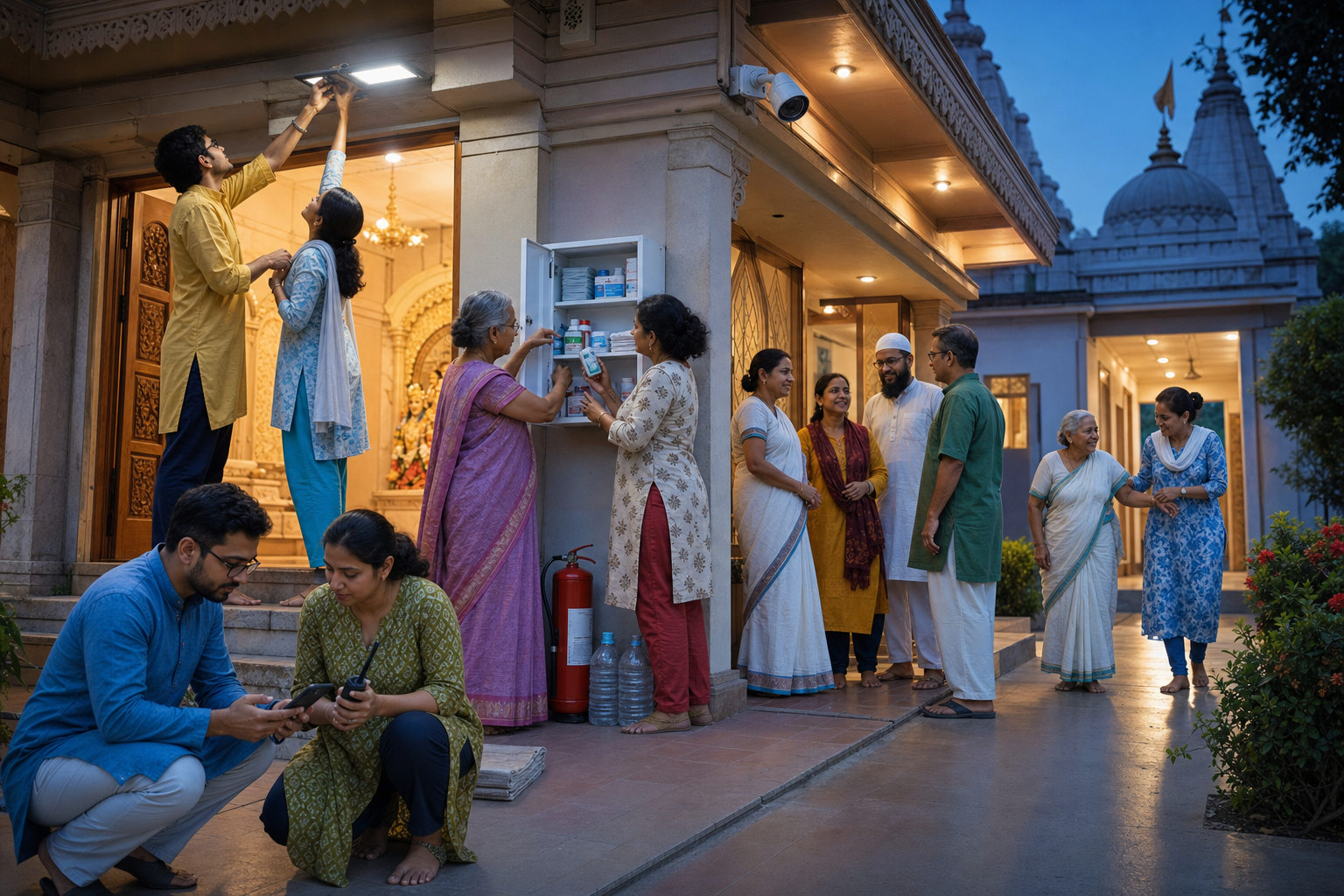
What temples and neighbourhood committees can prepare
A temple committee should have a written intake method, a confidential contact for threatened families, and a verified referral path to police, medical help, and qualified legal aid. Check that each service actually exists in your locality before printing or circulating its details. A proposed minority liaison desk or hotline is not useful if residents are directed to a number that has never been established.
Review the physical routes people use to reach temples, schools, and markets. Poor lighting, isolated entrances, and the absence of safe transport can turn general anxiety into withdrawal from public life. Requests for improved street lighting, lawfully governed CCTV, visible community policing, and rapid response around places of worship should identify the vulnerable location and the problem to be solved. Surveillance must have access controls and privacy safeguards; otherwise, it can create a new risk for the very minority it is meant to protect.
A local peace committee can provide an early channel for a complaint, but it must have limits. It must not pressure a victim to withdraw a lawful complaint, replace an investigation with a private compromise, or declare an accused person guilty without evidence. Mediation can reduce tension; it cannot erase violence or coerce silence.
What seva and outreach organisations should disclose
Every organisation distributing food, medicine, educational help, or livelihood support should state plainly that assistance is not conditional on religious participation or a change of faith. Refusing a prayer, meeting, ritual, text, or religious conversation must not reduce a person’s access to aid.
Make that promise operational. Keep aid eligibility separate from religious participation, explain the purpose of each activity before consent is sought, and provide a grievance route outside the staff member delivering the service. A community-observed social audit can examine whether the written promise matches actual practice. These safeguards defend recipients from pressure and protect ethical outreach from false accusation.
What authorities and public communicators owe the community
Authorities should investigate the specific allegation impartially, protect complainants, identify perpetrators of violence, and communicate the status of the case without exposing witnesses. Minority liaison functions, rapid response for threats to places of worship, community hotlines, better lighting, and appropriately controlled CCTV are practical measures communities can ask officials to establish. Periodic public briefings should distinguish verified developments from rumours and explain what remains unresolved.
Newsrooms, community pages, and religious organisations should follow the same information standard. Verify before amplification, avoid incendiary headlines, and centre the safety of affected people. When the motive is unknown, say so. When an allegation changes, update it. When violence is confirmed, do not bury it under vague language about “tension.”
What a dharmic response requires
Ahimsa does not require passivity in the face of intimidation. It forbids turning protection into revenge. Satya does not require silence while officials investigate. It requires us to label what is known, what is alleged, and what remains uncertain. Seva and dana do not become tools for acquiring religious allegiance; they remain unconditional expressions of duty and compassion.
Hindu, Buddhist, Jain, and Sikh leaders can defend these standards together without dissolving the specific vulnerability of Hindus. Interfaith solidarity is meaningful when it protects a Hindu family’s right to worship, refuse pressure, report violence, and receive aid without changing belief. It becomes hollow when “harmony” is used to suppress a complaint or demand that the vulnerable side absorb the cost of peace.
Key takeaways for community action
- Test for coercion by asking what happens when the person refuses. Discussion is not the same as inducement, and inducement is not the same as violence.
- Respond in the right order: protect people from immediate danger, preserve direct evidence, seek lawful review, and publish only verified facts.
- Keep West Bengal and Bangladesh legally distinct. Do not transfer procedures, institutional promises, or conclusions across the border without local verification.
- Treat reduced temple attendance, avoided travel, and disruption around schools or markets as warning signs of weakened community confidence, not as proof of a particular offender’s motive.
- Make seva visibly unconditional. Separate aid decisions from religious participation and provide an independent way to report pressure.
- Demand case-specific accountability, transparent public updates, and protection for complainants while rejecting vigilantism and collective blame.
If you hold responsibility in a temple or community organisation, write the local protocol now. Name the intake contact, the facts to record, the safety and legal referral routes, the privacy rule, and the correction process. Verify every contact before distributing it.
Religious freedom is real only when a Hindu can worship openly, decline an invitation, accept help without surrendering conscience, and seek justice without fearing retaliation. Bengal deserves institutions and community leadership strong enough to uphold all four.
References
- DharmaRenaissance Blog – Amta, West Bengal: Alleged Conversion Inducements Spark Violence – A Call to Protect Freedom of Faith
- DharmaRenaissance Blog – Two Hindu Deaths in 24 Hours in Bangladesh Ignite Fear – and Urgent Calls for Protection
