
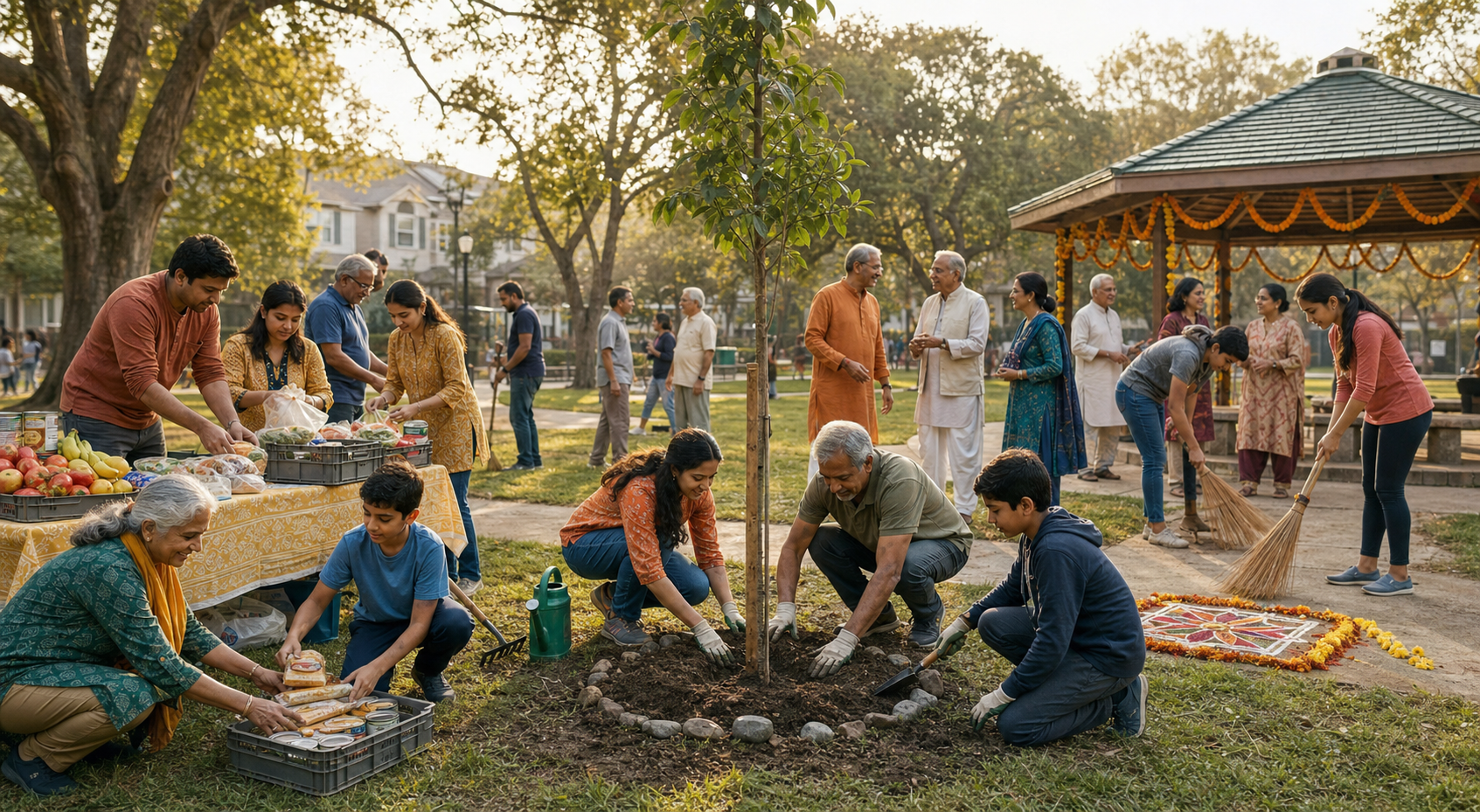
You can fill a hall for a festival, heritage campaign, youth programme, or temple concern and still have no durable community when everyone goes home. The difficult question is what happens after the shared emotion: who serves, who decides, how disagreement is handled, and whether anyone outside the room has reason to trust the group.
If you are trying to form a Dharmic civic community, begin with those practical questions. A strong identity should help people preserve an inheritance, accept public duties, and cooperate without demanding religious uniformity. This gives you a community that can act, not merely an audience that can applaud.
Turn belonging into a clear civic promise
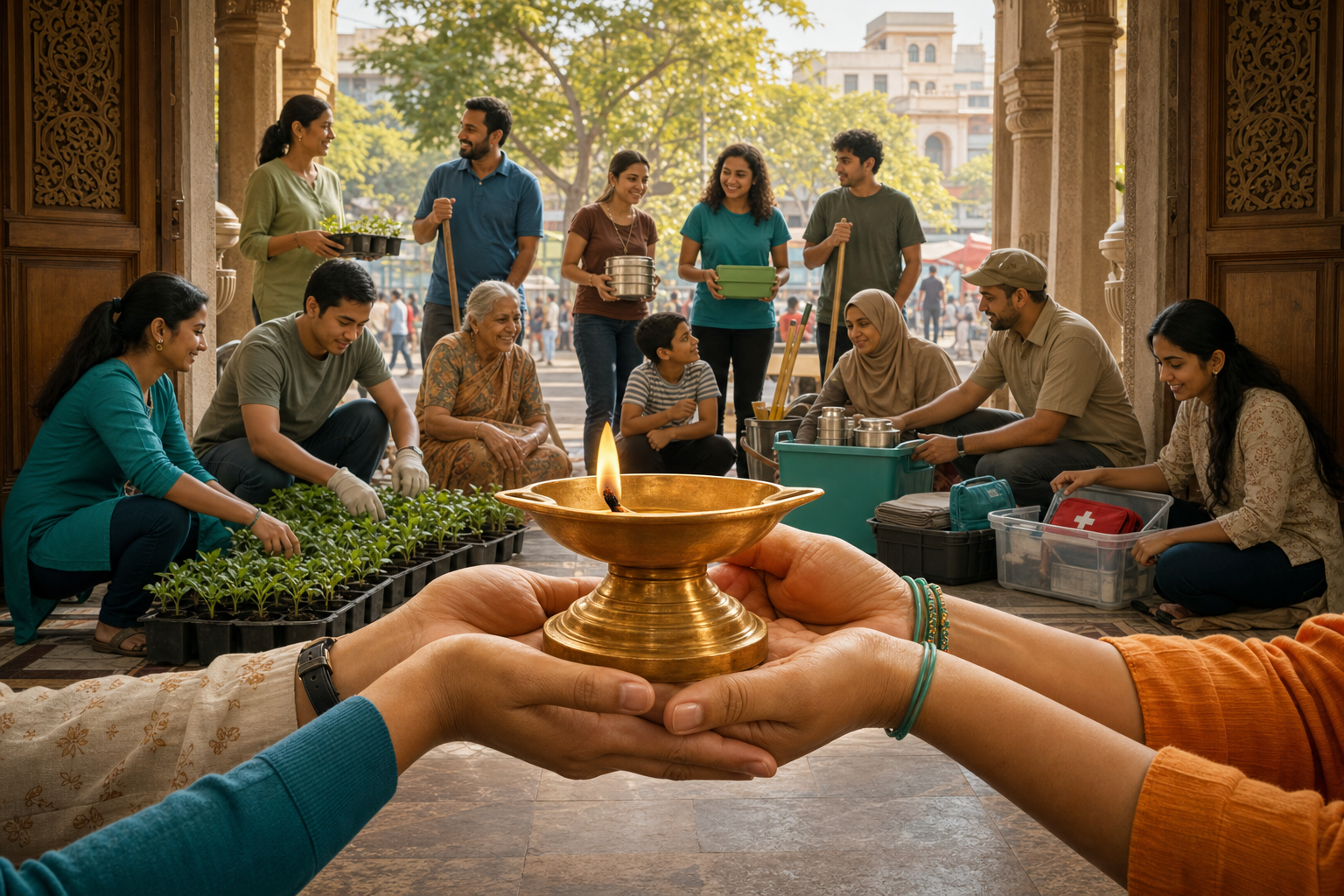
Dharmic civic identity is an identity expressed through public conduct. It includes devotion, memory, philosophy, and ritual, but it becomes civic when it shapes how members care for places, use authority, resolve disputes, and treat people who follow another path.
Hindu, Buddhist, Jain, and Sikh traditions should not be flattened into interchangeable versions of one religion. Their scriptures, institutions, metaphysical teachings, and practices remain distinct. The common civic floor is narrower and more practical: compassion, ahimsa, seva, truthfulness, self-restraint, and care for inherited places. Members can cooperate through these duties without pretending that every doctrine means the same thing.
Before choosing a name, logo, or public slogan, ask your founding group three questions:
- What are we responsible for preserving: a shrine, a language, a local tradition, a body of knowledge, a sacred landscape, or the conditions in which families can practise Dharma?
- Whom will we serve: only registered members, the wider Dharmic family, a neighbourhood, pilgrims, young people, elders, or everyone affected by a local problem?
- What limits bind us: lawfulness, non-coercion, truthful communication, financial transparency, respect for distinct traditions, and a defined process for correcting mistakes?
A workable purpose statement might be: We preserve inherited sacred and cultural life, form disciplined people, serve our neighbours, and pursue these duties through lawful, transparent, and non-coercive means. Rewrite that sentence for your place. Name the inheritance, the people served, and the conduct expected. If your statement only says who you are, it is an identity label. If it also says what you owe and what you will not do, it is the beginning of a civic covenant.
Build unity in layers instead of erasing differences
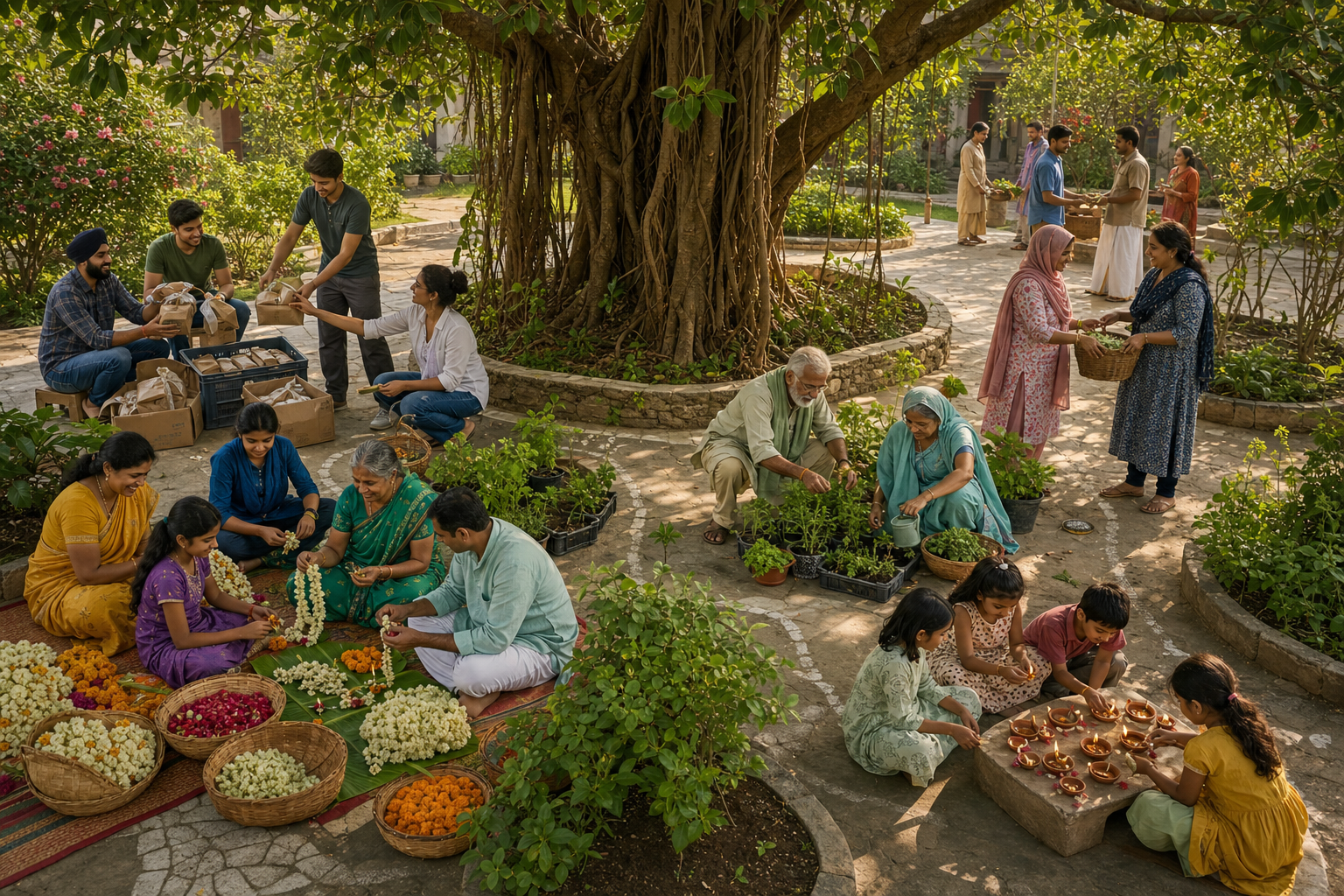
Community founders often fall into one of two traps. A group can become so narrow that cooperation is treated as theological compromise, or so vague that Dharma means little more than goodwill. A layered covenant avoids both.
- Name the particular inheritance. Record the sampradaya, shrine, teaching lineage, local history, language, festival, or practice that gives the group its actual character. Do not ask a majority vote to merge distinct doctrines or ritual authorities.
- State the shared public duties. Identify the conduct on which participants can cooperate: seva, truthful speech, non-cruelty, stewardship, disciplined learning, protection of the vulnerable, or responsible care for a shared place.
- Choose the civic method. Write down how decisions are recorded, how money is approved, how conflicts of interest are disclosed, how complaints are heard, and which decisions require consultation with affected custodians.
- Select outward work. Attach the identity to a visible responsibility such as heritage care, youth formation, neighbourhood service, ecological stewardship, or accurate public education.
This structure lets a Jain participant retain a Jain understanding of ahimsa, a Sikh participant retain Sikh authority and practice, a Buddhist participant retain Buddhist teaching, and a Hindu participant retain a particular Hindu sampradaya. Cooperation occurs at the level of chosen civic duties. It does not require a fabricated theological consensus.
Apply the same discipline to charged civilizational language. If your organisation uses Hindu Rashtra, for example, define what the phrase requires in practice. It may be presented as an ethical-cultural horizon of Dharmic unity and lawful plural coexistence, but a label cannot establish that character by itself. Your rules must show whether dissent is permitted, whether minorities retain equal civic standing, whether law constrains allies as well as opponents, and whether service is offered without coercion.
Use an operational test for every slogan: What must a member do because of it? What right does a non-member retain? What behaviour does it forbid when the group is angry? If the answers are unclear, the phrase is not yet a civic principle.
Form community through repeated public work
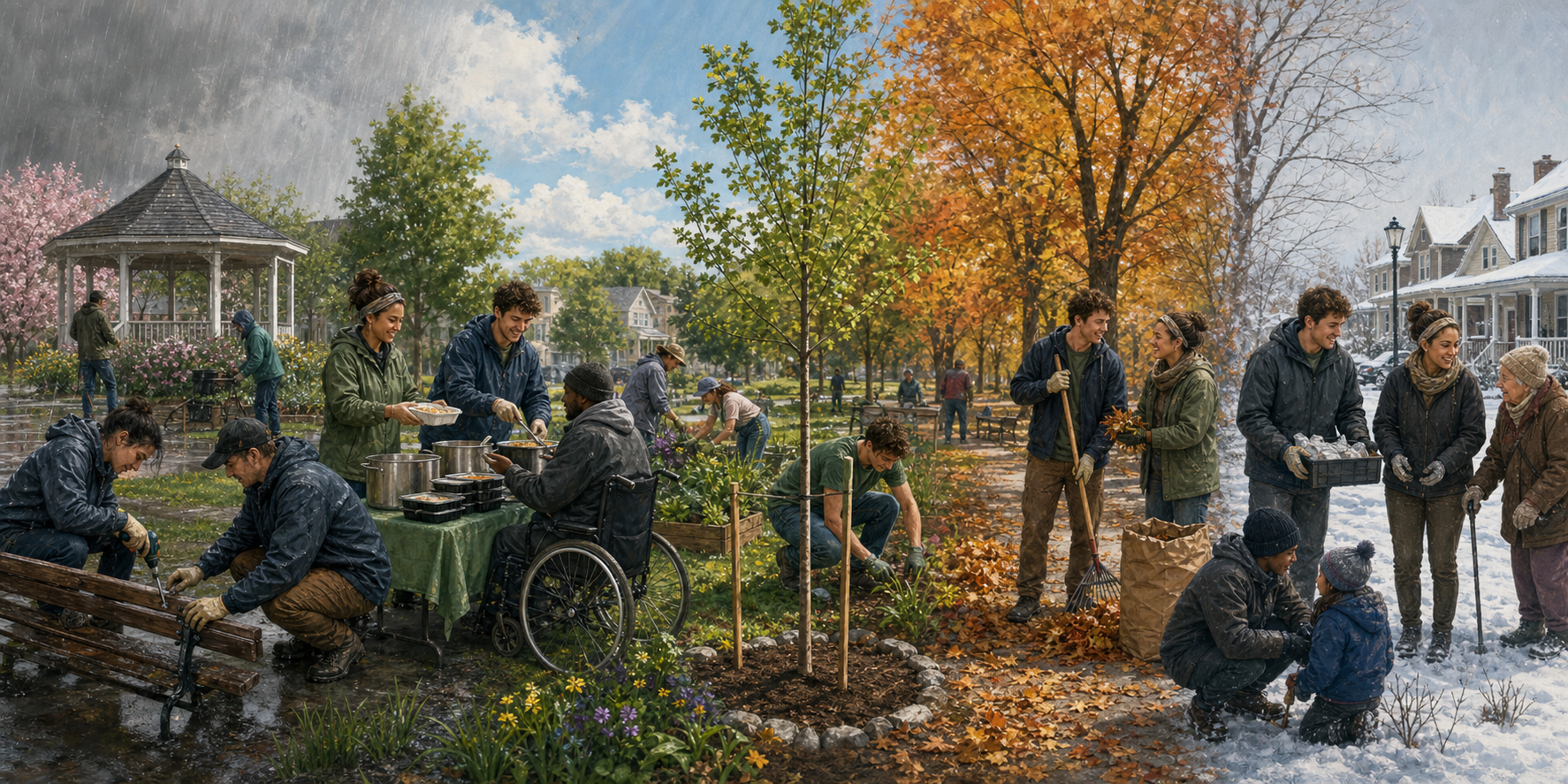
An event creates contact. Repeated responsibility creates community. People begin to trust one another when promises survive inconvenience, roles can be handed over, and standards remain in force after the excitement fades. Three kinds of work are especially useful because each joins identity to a practical obligation.
Seva with a defined beneficiary and finish line
Do not announce that your group will serve society in general. Choose a bounded promise: care for an agreed area near a shrine or ghat, make local heritage information accessible, support a defined neighbourhood need, or provide a structured learning activity. Confirm permission, identify the beneficiary, assign a responsible steward, list the materials required, and state what completion will look like.
After the activity, record what was completed, what remains unresolved, what was spent, and who accepted responsibility for maintenance. This simple record distinguishes seva from a photo opportunity. It also lets a future volunteer continue the work without depending on the founder’s memory.
Sacred geography treated as a living responsibility
A sacred place is more than property or scenery. The cultural framing of Goa as Parshuram Bhoomi offers a useful civic mechanism: memory can turn land and sea from objects of consumption into responsibilities of stewardship. That approach can support heritage conservation without dismissing visitors, development, or local livelihoods.
Sacred memory does not by itself give a volunteer group authority over a place. Begin with its actual custodians and affected residents. Create a place ledger containing:
- The sacred or cultural significance, described as the relevant community understands it.
- The recognised custodian and every group whose regular use will be affected.
- The immediate pressure, such as neglect, insensitive visitor behaviour, pollution, loss of knowledge, or development that may disrupt continuity.
- The action that is permitted and the permission still required.
- The person or institution responsible for maintenance after the initial activity.
This ledger prevents a common failure: invoking a grand civilizational memory while overlooking the people who quietly care for the site. It also gives tourism and development discussions a concrete basis. You can ask which economic activities support local custodianship, which degrade the place, and which visitor practices need clearer guidance.
Youth formation that joins courage to restraint
Youth programmes should form people who remain useful under pressure, not merely people who enjoy the appearance of strength. A free two-day training format in Durg centred on physical fitness, mental resilience, and values-led leadership illustrates how limited duration and no participation fee can lower practical barriers. The deeper test is whether the training connects capability to ethical responsibility.
Pair physical challenge with teamwork, calm decision-making, conflict de-escalation, reflection, and a service assignment. End by giving participants a defined public responsibility with a named steward and review point. Otherwise, the energy generated by training has no reliable path into community life.
If minors or strenuous physical activity are involved, obtain appropriate consent, competent supervision, safeguarding procedures, and an emergency plan. Seek qualified local guidance where the activity requires it. Courage training is not a reason to improvise with safety.
A repeatable formation cycle
- Listen: ask custodians, residents, participants, and intended beneficiaries what is actually needed.
- Define: choose a bounded duty and state what successful completion means.
- Govern: appoint a steward, record permissions, set conduct rules, and disclose how resources will be handled.
- Act: complete the duty without turning beneficiaries into scenery for publicity.
- Review: record results, complaints, expenses, unfinished work, and lessons for the next cycle.
- Hand over: give the records and next responsibility to a capable person so continuity does not depend on one personality.
Run this cycle again before expanding the organisation’s scope. A group that can reliably keep a modest promise has a stronger civic foundation than a large network whose commitments disappear between gatherings.
Govern the community so trust survives disagreement

The real test of governance arrives when a respected insider is challenged, money is disputed, or a neighbouring group objects. Values become credible when they constrain your own side. Put the safeguards in place before the first serious disagreement.
- Practise precise pluralism. State which activities are common civic work and which belong to a particular tradition. Participation in seva should not be misrepresented as assent to another path’s theology.
- Apply parity. Use the same standard of evidence, permission, accountability, and respectful conduct for temples, mathas, gurdwaras, viharas, and other places of worship.
- Make money legible. Record the purpose of each collection, who approved spending, what was received, what was spent, and what balance remains. Do not mix personal and community funds.
- Protect voluntariness. Do not condition ordinary service on ritual participation, political allegiance, public praise, or acceptance of a religious claim.
- Create a disagreement path. Name where a complaint goes, who must recuse because of a conflict, how the affected person is heard, and how a decision can be reconsidered.
- Separate strength from intimidation. Physical capability, disciplined speech, restraint, and de-escalation belong together. Humiliation, threats, and collective blame corrode the civic identity the group claims to defend.
In debates involving the Waqf Board, the Places of Worship Act, or stewardship of sacred sites, keep civic principle distinct from a legal claim. Transparency, accountability, and parity before law can guide your public position, but they do not decide the legal facts of a particular dispute. When work involves donations, entity formation, property rights, permits, minors, or litigation, obtain advice from appropriately qualified local legal, accounting, or safeguarding professionals before collecting funds, making ownership claims, or organising a confrontation.
After each activity, measure trust rather than relying on attendance. Ask whether the promised work was completed, whether participants were treated according to the stated rules, whether decisions and expenses can be checked, whether complaints were addressed, and whether another person can carry the work forward. Rising attendance with falling accountability is not community growth. It is merely a larger governance risk.
Key takeaways
- A Dharmic identity becomes civic when it defines duties, limits, and public conduct, not only ancestry or belief.
- Unite traditions around chosen civic responsibilities while preserving their distinct teachings, institutions, and practices.
- Translate every civilizational slogan into observable obligations, protected rights, and rules that also constrain insiders.
- Build community through repeated seva, sacred-place stewardship, and youth formation with clear owners and review points.
- Judge growth by kept promises, transparent decisions, safe conduct, resolved complaints, and successful handovers.
Before your next gathering, put a blank sheet on the table. Write the inheritance you will preserve, the public duty you will undertake, the limit you will not cross, the person responsible, and the point at which the group will review what happened. If you cannot agree on those matters, postpone the branding and resolve the covenant. If you can agree, begin with a modest duty and keep the promise well. That is where a civic community starts becoming real.
References
- Hindu Jagruti Samiti — Reclaiming Goa as Parshuram Bhoomi: A Sacred, Inclusive Vision Beyond Indulgence
- Hindu Jagruti Samiti — Free Two-Day Shaurya Jagruti Camp in Durg: Build Strength, Resilience, and Leadership
