

If you came looking for a clear account of the Feni killing, the verified core is narrow but grave: Samir Kumar Das, a 28-year-old Hindu auto-rickshaw driver, was killed in Bangladesh’s Feni district. The demand for justice should begin with his name, his livelihood and the basic right he was denied: the right to work and return home alive.
You do not have to choose between taking anti-Hindu insecurity seriously and speaking with factual discipline. In fact, those duties reinforce each other. A precise public case is harder to dismiss, harder to manipulate and more likely to keep attention on the investigation, the bereaved family and the safety of other vulnerable citizens.
Start with what is known, and mark what remains unverified

Das’s Hindu identity matters. So does the wider anxiety among Bangladeshi Hindus and other minorities amid reported incidents affecting vulnerable communities. But identity, context and criminal motive are three different questions. Collapsing them into a single claim before evidence is available can weaken the pursuit of accountability.
- Established in the available account: the victim was Samir Kumar Das, he was 28, he was Hindu, he worked as an auto-rickshaw driver, and he was killed in Feni district.
- Relevant context: the killing has intensified concern about minority security and the adequacy of institutional protection in Bangladesh.
- Not established by the information available to us: the identity of the perpetrator, the sequence of events, the motive, the status of any arrest or charge, and whether investigators have found evidence of targeted anti-Hindu hostility.
That distinction gives you a reliable way to discuss the case. Say, “A Hindu driver was killed in Feni, and the case requires an impartial investigation that examines every possible motive, including targeted hostility.” Do not turn an allegation into a finding, name an unverified suspect or describe a communal motive as proven when the available facts do not establish one.
This is not timid language. It places the burden where it belongs: investigators must determine who killed Das, why he was killed and whether his identity influenced the crime. If credible evidence establishes an anti-Hindu motive, authorities should acknowledge and address it plainly. If the evidence establishes another motive, justice still requires a truthful finding and lawful prosecution.
Justice must be credible, not merely announced

A public promise to investigate is only the beginning. Credibility comes from a chain of actions: evidence is preserved, witnesses can speak safely, investigators follow facts without political or communal pressure, prosecutors use legally supportable charges, and the public receives accurate updates that do not compromise the case.
When you assess the response, look for substance rather than ceremony:
- Impartial investigation: Are all plausible motives being examined, including personal, economic and identity-based motives?
- Witness protection: Can witnesses and relatives cooperate without intimidation, exposure or retaliation?
- Transparent communication: Are authorities distinguishing confirmed developments from rumor while explaining what procedural stage the case has reached?
- Due process: Are accusations supported by evidence rather than by pressure to produce a quick scapegoat?
- Independent scrutiny: If the investigation stalls or confidence collapses, is there credible judicial, parliamentary or civil-society oversight?
An arrest alone is not the same as accountability. Neither is prolonged official silence. A credible process must protect the innocent from false accusation while giving the victim’s family a realistic path toward truth and adjudication. Those are not competing goals; they are the two sides of lawful justice.
Das’s occupation also matters to the human consequences. Families supported by informal transport work often depend on modest daily earnings. When a young driver is killed, the damage continues after public attention moves on: income disappears, dependants face uncertainty, and colleagues may begin working under fear. Any humane response should therefore distinguish immediate family assistance from the criminal investigation. Support cannot purchase silence, and compensation cannot replace accountability.
Minority protection has to begin before the next killing

The central policy question is not only whether one crime will be solved. It is whether institutions can recognize danger early enough to prevent another family from suffering the same loss. Preventive policing, rapid-response arrangements, intelligence-sharing, community liaison and better recording of suspected hate crimes are practical tests of that commitment.
Local implementation should be concrete. Police need trusted contacts within minority neighborhoods, a clear way to receive and escalate threat reports, and response protocols for periods or places where communal tension is rising. Community representatives need to know whom to contact and what information will help authorities act. Authorities should record suspected bias indicators without prematurely declaring a motive, then update that classification as evidence develops.
Data quality matters because isolated case files can conceal a pattern. Consistent records can show whether threats, assaults, vandalism or killings are clustering around a locality or community. But a hate-crime label must remain evidence-based. Recording a suspected bias element for investigation is responsible; announcing a settled conclusion before the evidence supports it is not.
Equal protection is the standard to insist upon. Minority citizens should not have to demonstrate political usefulness, numerical strength or international visibility before the state protects their lives and livelihoods. A Hindu driver’s safety on a public road is not a concession to a community. It is a basic measure of whether citizenship has equal meaning.
Turn concern into responsible, sustained advocacy
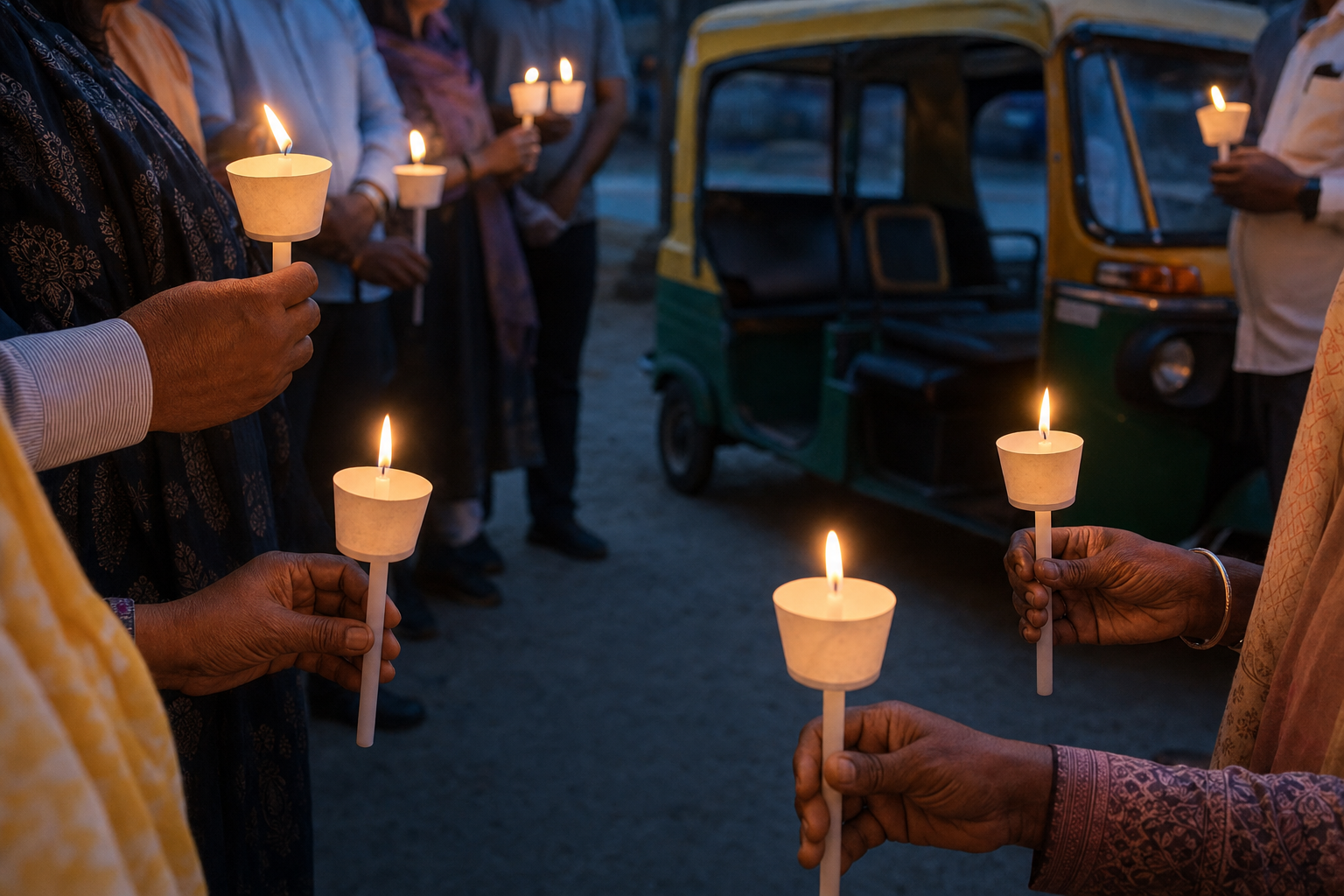
You can help without becoming an investigator, exposing a witness or amplifying claims that no one has verified. The most useful advocacy keeps attention on answerable demands and preserves the distinction between evidence and inference.
- Share the verified minimum. Use Das’s correct name, age, occupation and location. Label any additional claim as unverified until credible confirmation appears.
- Ask procedural questions. Focus on the investigation, witness safety, public updates, family support and preventive measures rather than circulating speculative narratives.
- Protect people, not just information. Do not publish a relative’s address, a witness’s contact details or an unverified suspect’s identity. Such disclosure can cause retaliation, harassment or wrongful accusation.
- Handle distressing media carefully. A video connected with the case has been made available for awareness and documentation with a viewer warning. Share a stable contextual link and a clear warning rather than reposting graphic material as spectacle.
- Correct the record visibly. If a claim you shared is contradicted by reliable evidence, update or remove it and state the correction. Quiet deletion leaves the false version circulating without repair.
- Keep the campaign specific. Demand justice for Das and equal protection for Bangladeshi minorities. Do not assign collective guilt to an entire religious or national population.
Dharmic solidarity can give that advocacy moral clarity. Hindu, Buddhist, Jain and Sikh communities can stand together around ahimsa, compassion, human dignity and civic responsibility while welcoming support from every person committed to equal protection. Ahimsa does not require passivity toward violence. It requires that the means used to oppose injustice do not reproduce indiscriminate hatred.
Holding institutions accountable is different from treating whole populations as guilty. The first presses for lawful reform; the second creates new targets and distracts from the people who actually bear responsibility. If your aim is the safety of Hindus in Bangladesh, accuracy, restraint and persistence are strategic strengths as well as ethical duties.
Key takeaways
- Samir Kumar Das was a 28-year-old Hindu auto-rickshaw driver killed in Bangladesh’s Feni district.
- His Hindu identity and the insecurity felt by minorities deserve serious scrutiny, but the available facts do not establish the killer or motive.
- Credible justice requires impartial investigation, witness safety, due process, transparent communication and independent scrutiny when confidence fails.
- Prevention depends on community liaison, early warning, rapid response and consistent recording of suspected bias indicators.
- Responsible advocacy shares verified facts, protects vulnerable people, handles distressing media carefully and refuses collective blame.
If you speak about this case, make your next message useful: name Samir Kumar Das, state only what is known, ask what investigators and authorities have done, and keep asking until there is a credible answer. Public memory becomes protection only when it is disciplined enough to sustain a demand for justice.
References
