

If Kali draws you and unsettles you at the same time, Kamalakanta Bhattacharya offers a way into devotion that does not require you to hide either response. His Kali bhakti begins with relationship: you approach the Divine Mother as you are, speak without disguise, and keep returning even when your mind moves between trust, fear, longing, and protest.
Born in 1769 in Bardhaman, Kamalakanta Bhattacharya belonged to the late eighteenth- and early nineteenth-century devotional world of Bengal. His songs brought Shakta theology into the language of intimate address. For you, their value is not limited to literary appreciation. They show how song can become sadhana within household life, emotional difficulty, and ordinary moral responsibility.
Key takeaways for approaching Kamalakanta’s Kali bhakti
- Hold both dimensions of Kali together: she is cosmic power and compassionate Mother. Reducing her to either tenderness or terror misses the devotional tension in Kamalakanta’s vision.
- Do not treat complaint as the opposite of devotion. Honest protest can remain inside a relationship of surrender when it ends in renewed remembrance rather than self-enclosure.
- Let repetition do the work. A song becomes sadhana when you return to it attentively and allow its images to examine your habits.
- Read miracle traditions as spiritual instruction, not as promises that devotion will produce a particular extraordinary result.
- Test bhakti through conduct. Humility, compassion, self-discipline, service, and non-harm reveal more than the intensity of a passing devotional emotion.
Hold Kali’s terror and tenderness together

The first mistake is to make Kali emotionally comfortable before approaching her. If her fierce form is softened into a generic image of kindness, something essential disappears. Kali confronts the limits of control, the instability of worldly security, and the parts of existence that polite spirituality often avoids. Her form can disturb precisely because it does not flatter the ego’s demand for permanence.
The opposite mistake is to see only dread. In Kamalakanta’s devotional world, this formidable power is also Mother: near enough to hear frailty, grief, confusion, and even argument. The maternal relationship does not make Kali small. It makes cosmic power personally approachable. The devotee does not claim equality with the Divine; the devotee claims the intimacy of a child who knows where to turn.
That distinction matters when you encounter a Kali song or murti. Ask what in the image resists your preference for a manageable deity. Then ask what becomes possible when the same power is addressed as Mother. The first question reveals attachment and fear. The second opens refuge. Keeping both questions alive prevents devotion from collapsing into either sentimentality or fascination with darkness.
The child-Mother relationship also changes the standard by which prayer is judged. You do not need to manufacture elevated feelings before speaking. A child comes because help is needed, because something hurts, because gratitude overflows, or simply because the Mother is the child’s home. In this bhava, spiritual honesty is not a preliminary exercise that you complete before devotion begins. Honesty is part of the devotion itself.
Honest complaint can remain inside surrender

Kamalakanta’s devotional mode moves between surrender and protest, longing and confidence, confession and affectionate familiarity. These are not signs that bhakti has failed to become serene. They show a relationship strong enough to contain the devotee’s unedited condition.
There is an important boundary here. Devotional protest is not a demand that the Divine obey the ego. Nor is surrender passive fatalism. Surrender means giving up the fiction that control makes you self-sufficient. It does not require you to ignore a remedy, excuse adharma, or abandon responsible action. You can ask the Mother why a burden remains while still doing the dharmic work placed before you.
When your prayer feels false because you are angry, ashamed, or afraid, use a simple movement. Name the condition plainly. Admit the reaction it produces in you. Ask for the clarity or courage needed for the next rightful action. Then return to the divine name or to a familiar song. The return is crucial: it turns emotional disclosure into remembrance instead of allowing it to become rumination.
You can also notice the two ways people censor themselves. Some hide anger because they think a devotee must sound composed. Others cling to anger because it feels more authentic than surrender. Kamalakanta’s mode gives neither performance the final word. The feeling is spoken, but the relationship with Kali remains larger than the feeling.
Turn a Kali song into a repeatable household sadhana

Shyama Sangeet can be heard as music, studied as Bengali devotional literature, or practiced as remembrance. These approaches can support each other, but they are not identical. Musical appreciation becomes sadhana when attentive repetition changes the quality of your awareness and eventually your conduct.
- Choose a composition carefully. Use a dependable Bengali text, a translation if you need one, and a recording that lets you hear the words clearly. Verify the attribution where practical rather than assuming every Kali song circulating under a famous name belongs to that poet.
- Understand the devotional situation. Before singing, identify who is speaking to Kali and what kind of relationship the words enact. Look for the movement between dependence, protest, humility, affection, and trust.
- Listen before trying to perform. If Bengali is not your first language, careful listening and attention to meaning are better starting points than anxious imitation. Let pronunciation improve through respectful repetition.
- Sing or recite without staging an emotion. You do not need to feel overwhelmed for the practice to be sincere. Offer the attention you actually have. The discipline of returning is itself meaningful.
- Pause where resistance appears. A phrase about surrender, helplessness, grace, or the Mother may comfort you or irritate you. Notice the response without rushing to resolve it. That reaction often reveals the attachment the song is bringing into view.
- Carry the song into conduct. Select a concrete expression of its bhava: restrain a harsh reply, complete a neglected duty, help someone without display, or acknowledge a fault. This prevents devotion from remaining an aesthetic mood.
Do not keep changing songs merely to recover novelty. Familiarity can expose layers that a first hearing cannot. A repeated image may first seem poetic, later become consoling, and eventually challenge how you behave. That deepening is one reason song is suited to household sadhana: the same words can accompany different conditions without requiring you to withdraw from ordinary responsibilities.
Nama-japa can support the same rhythm of return. Use a divine name already established in your practice, or follow the guidance of a trusted tradition where initiation is relevant. The point is remembrance, not the collection of increasingly exotic formulas. Kamalakanta’s devotional intimacy directs attention toward Kali, not toward the devotee’s spiritual self-image.
Keep grace, miracle stories, and ethics in the right order
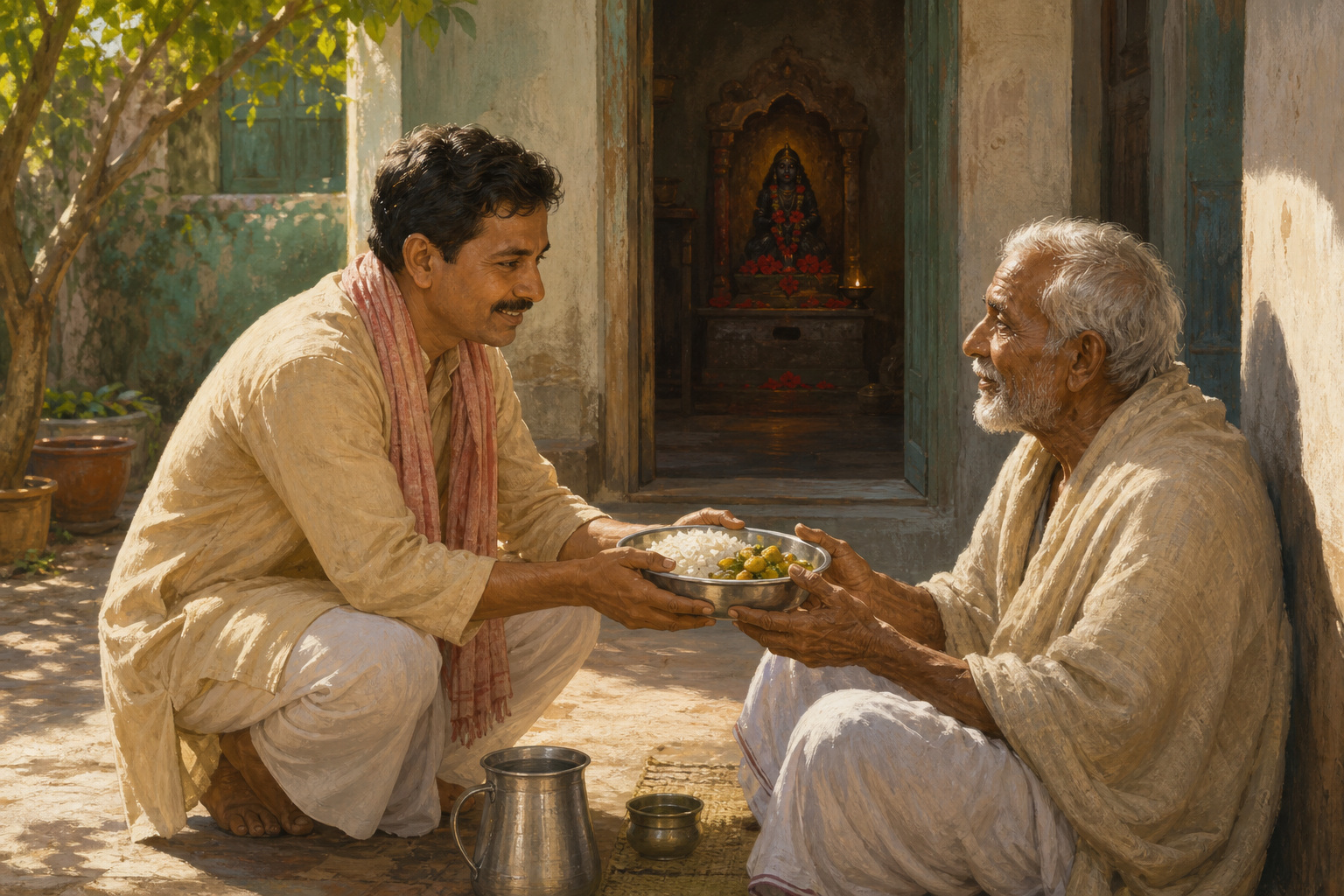
Hagiographic traditions associate Kamalakanta with Kali’s protection, relief in hardship, and inner restoration. Such accounts belong to the inherited memory of a saintly devotee, but they should not be turned into guaranteed predictions. Bhakti is not a transaction in which the correct song obliges the Mother to remove a chosen difficulty.
A more grounded reading asks what the obstacle reveals, what change of heart occurs, and how grace loosens the obstacle’s rule over the devotee. Sometimes the deepest transformation is not that every difficult circumstance disappears. It is that fear, pride, or despair no longer possesses unquestioned authority. Read the extraordinary event as spiritual pedagogy before using it as an argument about what must literally happen in your own life.
This approach preserves reverence without demanding credulity. You need not mock a sacred narrative to read it discerningly, and you need not exaggerate its historical certainty to receive its teaching. The proper fruit is a steadier orientation toward the Divine Mother, not a hunger for spectacle.
The ethical test is even clearer. If devotion makes you more self-important, indifferent to suffering, or careless about duty, strong emotion has outrun sadhana. Kamalakanta’s legacy directs bhava toward humility, service, self-examination, and recognition of the sacred in other beings. Compassion, self-discipline, and non-harm also resonate across Hindu, Buddhist, Jain, and Sikh paths. That kinship should encourage mutual respect without pretending that distinct doctrines and forms of worship are interchangeable.
Begin with a Kamalakanta song you can understand well enough to address Kali through it. Return to it when your mind is calm and when it is not. Then let the next truthful prayer lead to the next dharmic action. That is where Kali bhakti stops being an idea about a Bengali mystic and becomes a practice you can actually live.
References
