
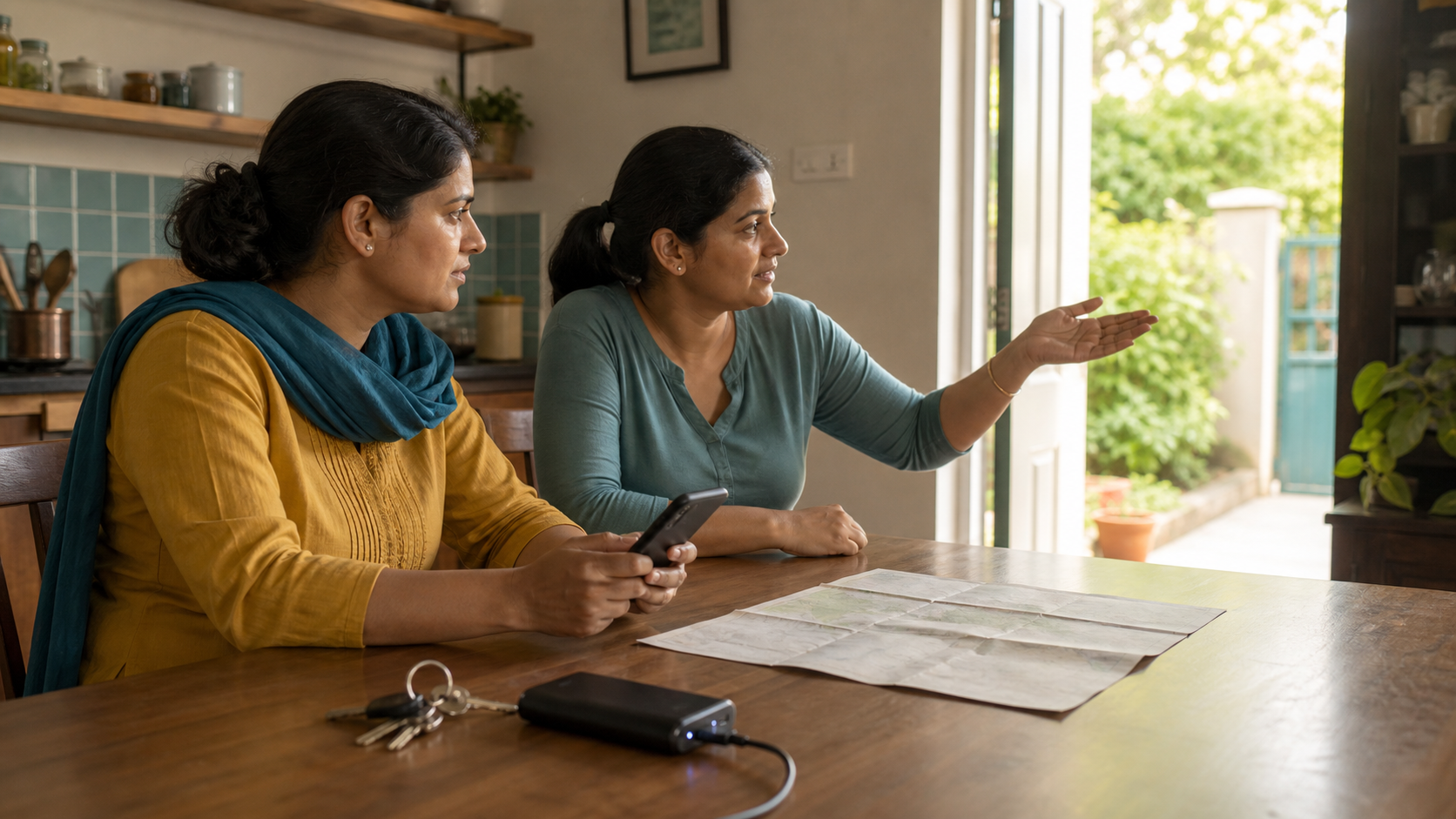
If a daughter, sister, friend, or colleague has accepted a vague job offer, entered a secretive online relationship, or been asked to take a cab to an unfamiliar address, you need a plan that protects her without pushing her further into secrecy. Panic, public accusations, or an attempted confrontation can increase the danger and destroy evidence that investigators may need.
Your immediate task is narrower: notice patterns, verify what can be verified, create a safe way out, preserve information, and involve qualified authorities when the risk becomes credible. You do not have to prove trafficking before asking for help.
Spot the pattern, not one unusual message

Online grooming rarely announces itself as abuse. A person may begin with attention, sympathy, romance, friendship, work, accommodation, or an offer of independence. The danger grows when trust is used to produce secrecy, dependency, isolation, sexual pressure, financial control, or movement to a place where leaving becomes difficult.
Not every false profile or troubling relationship is trafficking. A single inconsistency proves little. Look for several connected changes, especially when an online contact is trying to control the woman’s decisions faster than trusted people can verify the situation.
| What you notice | What to check or do |
|---|---|
| The person uses different names, accounts, or personal histories | Verify identity independently. Do not treat photographs, identity images, mutual follows, or a confident video call as conclusive proof. |
| A job, room, audition, marriage proposal, or travel offer must be accepted immediately | Slow the decision down. Contact the employer, property, institution, or organizer through contact details found independently of the person making the offer. |
| She is told to hide the relationship or opportunity from everyone who cares about her | Ask what explanation was given for the secrecy. Re-establish one calm, non-judgmental line of contact instead of surrounding her with accusations. |
| The contact requests identity documents, money, sexual images, passwords, or control of her phone | Stop sending additional material. Preserve the requests and seek help if threats, blackmail, or coercion have begun. |
| A car or cab is arranged to take her to a changed, private, or poorly explained destination | Do not let urgency substitute for verification. Confirm the address, purpose, people present, return plan, and vehicle details before travel. |
| The contact insults family and friends or demands that she cut them off | Treat isolation as a serious warning when it appears alongside deception, threats, dependency, or pressure to travel. |
One Indian police investigation arose from allegations that a website and cab services were used to connect clients with young women. The claims remain allegations until investigators test the evidence. That distinction matters: an unresolved case can justify better precautions, but it cannot justify declaring named people guilty or blaming an entire community.
Build a safety check before work, travel, or a meeting

A safety plan works best before anyone is frightened. It should feel like a normal family or community habit, not surveillance imposed only on young women. If the rule is sensible, apply it consistently to unfamiliar jobs, rides, accommodation, and in-person meetings arranged online.
- Verify through a separate channel. If a recruiter supplies a telephone number, do not use that number as your only confirmation. Find the organization’s public contact information independently and ask whether the offer, role, location, and named representative are genuine.
- Know the actual destination. Record the full address, the stated purpose of the visit, the names of the people expected there, and any last-minute change. An unexplained change from a workplace or public venue to a room, flat, or isolated location is a reason to stop and reassess.
- Arrange check-ins. Agree on when she will confirm arrival and departure. Share the vehicle registration, driver’s details, booking record, and route with a trusted person when appropriate. Location sharing can help, but it should supplement a plan rather than create false confidence.
- Choose a code phrase. Use an ordinary sentence that means she cannot speak freely and needs help. Decide beforehand whether it means call her, arrange a pickup, or contact emergency services. A code without an agreed response creates confusion at the worst moment.
- Keep control of essentials. She should retain her phone, identification, money, medication, and a way to leave. Do not surrender original documents or unlock a device merely because someone describes it as a routine requirement.
- Create an independent exit. A meeting is safer when leaving does not depend on the same person who arranged it. Identify a public, staffed place nearby and a trusted contact who can help if the plan changes.
If concern already exists, do not stage a secret test by sending the woman into the situation while others watch from a distance. A live exploitation risk is not an opportunity for amateur evidence gathering.
When danger may be immediate, reduce contact and call for help

Treat the situation as urgent if she says she cannot leave, is being transported against her will, has been threatened, is being watched, has had her documents or phone taken, or believes violence is imminent. Move to a public, staffed place if that can be done safely. Contact police or local emergency services rather than travelling to confront the suspected offender.
Use an emergency number or women’s safety and trafficking helpline published by the relevant government authority. Do not rely on a telephone number copied from an anonymous social-media account. If the situation is serious but not immediate, local police and credible survivor-support organizations can help assess reporting and protection options.
- Give the exact location, direction of travel, vehicle details, account names, telephone numbers, and the last confirmed contact time available to you.
- Describe what you directly observed before stating what you suspect. For example, report that a person threatened to publish private images, not merely that the person seemed dangerous.
- Tell responders whether the woman is a minor, injured, unable to speak freely, or believed to be under physical control.
- Follow official instructions about contact. Repeated calls or messages from family can expose a hidden attempt to seek help.
- Do not chase a vehicle, enter a suspected premises, detain someone, or organize a crowd. Physical intervention can injure the woman, bystanders, or the interveners and can complicate the police response.
If the woman is an adult and no immediate danger is evident, do not confiscate her phone, lock her inside, or threaten her relationship. Protection that removes her agency can reproduce the control you are trying to prevent. State the specific concern, keep communication open, offer safe transport and professional help, and make clear that she can call without first admitting that the family was right.
If she is a minor, contact police, the appropriate child-protection channel, and a demonstrably safe guardian. Requirements differ by jurisdiction, so urgent professional guidance is safer than trying to negotiate privately with the suspected groomer.
Preserve digital evidence without spreading the harm

Digital material can disappear quickly, but preservation does not mean publication. Publicly naming suspects, forwarding private images, or posting dramatic claims can expose the woman, alert the suspected offender, invite harassment, and interfere with a fair investigation.
- Capture context. Save screenshots that show the account name, visible date or time, URL where available, and the messages immediately before and after the threatening or deceptive statement.
- Keep originals. Retain original messages, audio, files, booking confirmations, job advertisements, payment requests, ride details, and photographs when they are already lawfully accessible to you. Cropping or editing can remove useful context.
- Write a chronology. Record what happened in order, including changes of name, destination, offer, demand, or threat. Separate what you personally saw from what another person told you.
- Limit access. Store a protected copy and share it only with the woman, a trusted support person, police, a lawyer, or an appropriate survivor-support professional. Do not circulate it through neighborhood or messaging groups.
- Do not hack, bait, or impersonate. Access only accounts and material you are entitled to access. Do not continue a dangerous conversation solely to obtain a confession.
- Handle sexual material with particular care. Do not redistribute intimate content. If a minor may be depicted, contact police or the relevant child-protection authority and ask how the material should be preserved without making additional copies.
Reporting rules and evidence procedures vary. Ask the assigned investigator or a qualified lawyer how to transfer files and retain originals. Community members can document credible information and hand it to authorities; they should not conduct a parallel public trial.
A dharmic response protects dignity as well as life
The first useful question for a woman returning from coercion is not why she trusted someone. Ask what she needs to be safe now. She may need secure accommodation, medical attention, a trained counselor, legal advice, replacement documents, or help communicating with police. Offer choices wherever immediate safety permits them.
- Do not force her to repeat the entire experience to every relative or community leader.
- Do not expose her name, image, address, messages, or sexual history to prove that a crime occurred.
- Do not make family acceptance conditional on a police complaint, prosecution, or public denunciation.
- Do not promise absolute secrecy if she or another person faces immediate danger. Explain clearly whom you need to contact and why.
- Ask before arranging non-emergency counseling, legal help, religious support, or media contact. Recovery should not become another sequence of decisions made over her head.
Ahimsa requires preventing further injury, not merely condemning the first wrong. Karuna requires rejecting stigma when a survivor has been deceived or coerced. Justice requires evidence, due process, and accountability through law. These principles are at home across Hindu, Buddhist, Jain, and Sikh traditions.
A suspect’s name, alias, caste, or claimed faith is not evidence against a whole population. Communal accusations make innocent people targets while shifting attention away from conduct that police can investigate: deception, threats, movement, payments, confinement, and exploitation. A pro-dharma response should be firm about crime and equally firm about truth.
Community organizations can make this practical by naming one person to receive safety concerns, one to communicate with authorities, and one to connect survivors with professional support. The roles should be confidential and should exclude public naming, intimidation, and physical enforcement. This prevents a frightened family from having to invent a response in the middle of a crisis.
Key takeaways
- Look for a pattern of secrecy, isolation, dependency, coercion, and pressured movement rather than treating one odd message as proof.
- Verify jobs, accommodation, identities, and destinations through channels the online contact does not control.
- Agree on check-ins, a code phrase, retained documents, and an independent exit before an unfamiliar meeting or journey.
- Call police or local emergency services when a person cannot leave safely, is being threatened, or may be moved against her will.
- Preserve complete digital context privately; do not dox, hack, bait, circulate intimate material, or organize a confrontation.
- Support the woman’s immediate safety and agency while leaving guilt, legal classification, and punishment to evidence-based investigation.
Before you close this page, choose two trusted contacts, agree on a code phrase, and decide where travel details and digital evidence would be stored. A safety plan becomes useful only when everyone knows it before urgency takes away the time to think.
References
