
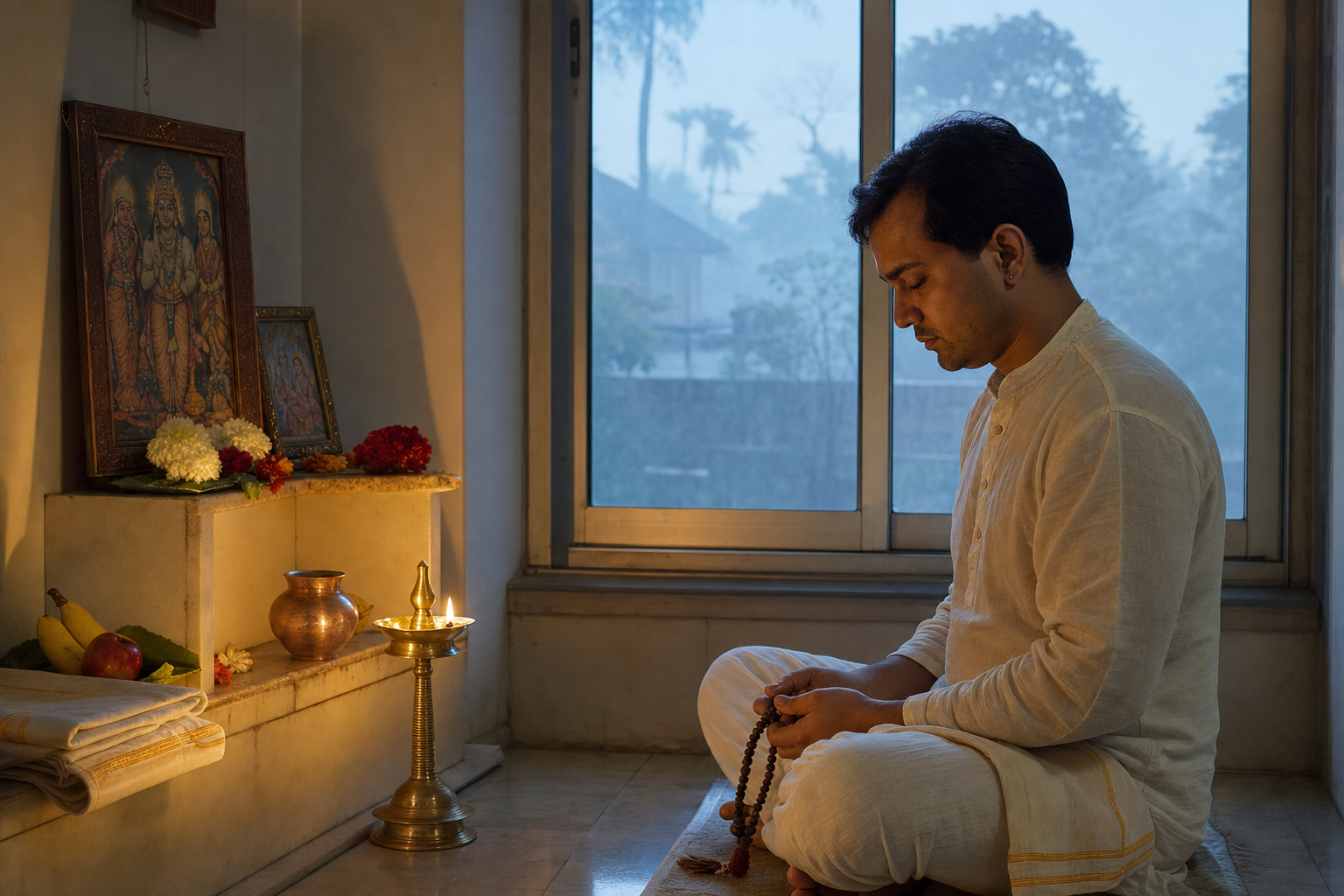
If you are trying to decide whether Mauni Amavasya requires a journey to Prayag, a complete fast, or an entire day without speaking, begin with a simpler question: what promise can you keep with steadiness? Mauni Amavasya in 2026 falls on January 18. A modest observance carried through with attention is better than an ambitious programme abandoned before the day is over.
The practical core is clear: bathe early, quiet your speech and distractions, undertake japa or contemplative practice, and give something through dana or seva. Prayag Snan holds a special place in the observance, but you can honour the day meaningfully at home.
What Mauni Amavasya asks you to practise
Mauni Amavasya is the no-Moon day of the Magh month. Its name comes from mauna, sacred silence. That silence is not merely the absence of audible speech. It is a discipline of refusing to feed every impulse, argument, distraction, and reaction that asks for your attention.
You can remain verbally silent while spending the day scrolling, messaging, or rehearsing grievances in your mind. That may reduce noise around you, but it does not fulfil the deeper purpose of mauna. Give the silence a spiritual direction through mantra japa, meditation, pranayama, scriptural contemplation, or simran according to your path.
The day is commonly organised around three complementary acts: snan, japa, and dana. Snan prepares the body and marks a conscious beginning. Japa gathers the mind around a sacred remembrance. Dana prevents an inward practice from becoming self-absorption by turning attention toward another person’s need.
Dharmic traditions do not reduce inner stillness to one identical ritual or theology. Hindu disciplines of mauna and japa, Buddhist mindfulness, Jain reflection shaped by ahimsa, and Sikh simran retain their own forms. Their meeting point here is practical: restrain what is restless, observe the mind honestly, and allow clearer awareness to produce more compassionate conduct.
Choose a vow of silence you can actually protect
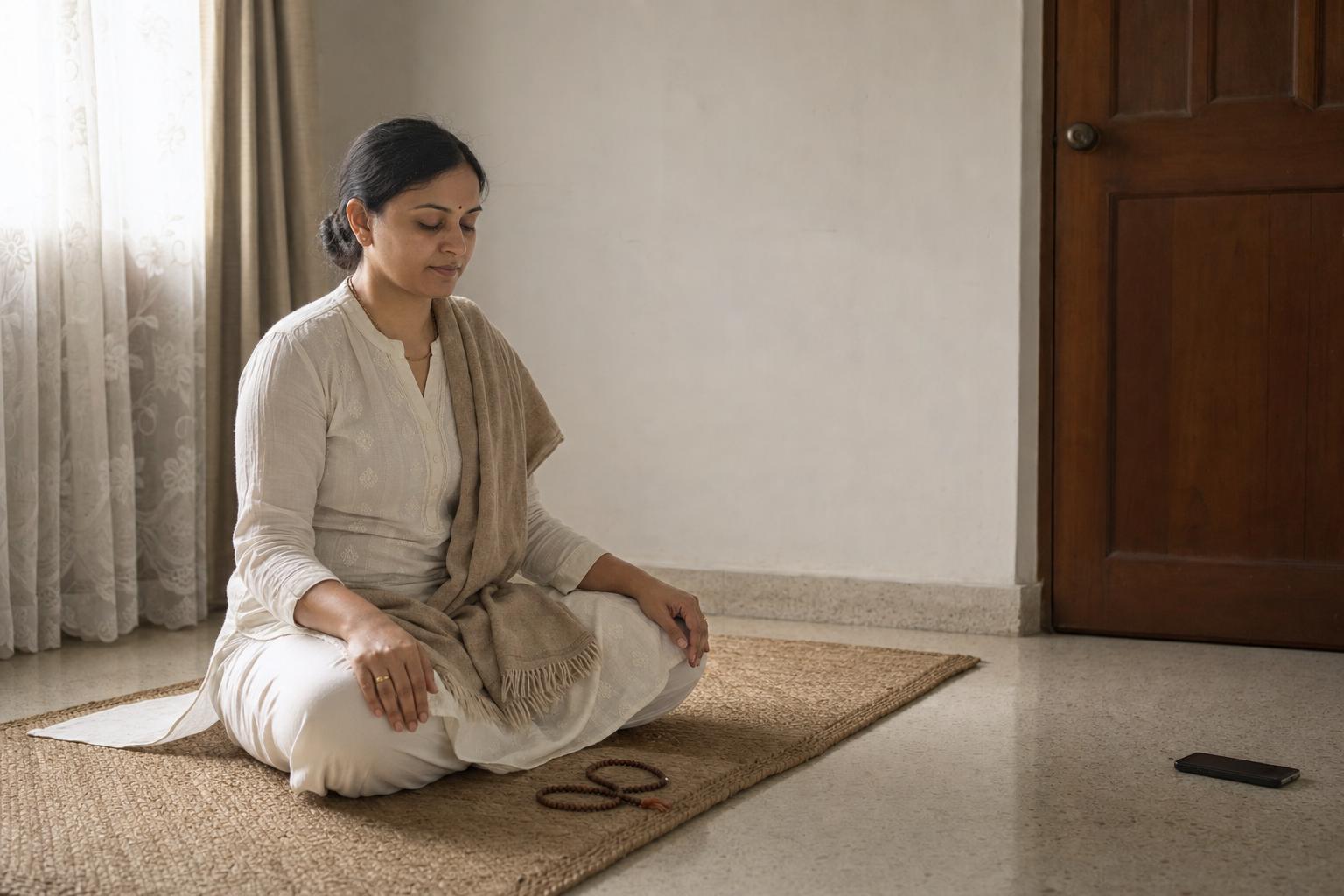
Decide the boundaries of your mauna before the observance begins. If you leave the decision vague, every interruption becomes a fresh negotiation. Choose one of these workable forms:
- Essential-speech mauna: Speak only when required for caregiving, work, health, safety, or an unavoidable household responsibility. Do not use the exception for casual conversation.
- Morning mauna: Remain silent from waking through bathing, worship, japa, and scriptural reading. End the vow deliberately after completing the practice.
- Full-day mauna: Keep silence throughout the day while maintaining necessary duties. Arrange practical matters beforehand so that avoidable questions do not repeatedly break the vow.
Mauna should make you more responsible, not less. Break silence when someone needs urgent help, when safety is at stake, or when a duty genuinely requires speech. Sacred restraint is not an excuse to ignore a child, a dependent person, a medical need, or an emergency.
Prepare the vow with a short checklist:
- Write down when your silence begins, when it ends, and what counts as necessary speech.
- Tell the people around you in advance so that silence does not appear hostile or confusing.
- Silence notifications and step away from entertainment, social feeds, and unnecessary messaging.
- Place your prayer materials, clean clothing, water, chosen text, and anything needed for dana where you can reach them without fuss.
- Select one devotional anchor: a mantra from your sampradaya, meditation, simran, or a short passage for repeated contemplation.
Avoid converting mauna into a performance. You do not need to advertise the vow or keep checking whether other people have noticed it. Its measure is whether your attention becomes less scattered and your conduct becomes gentler.
A complete Mauni Amavasya observance at home
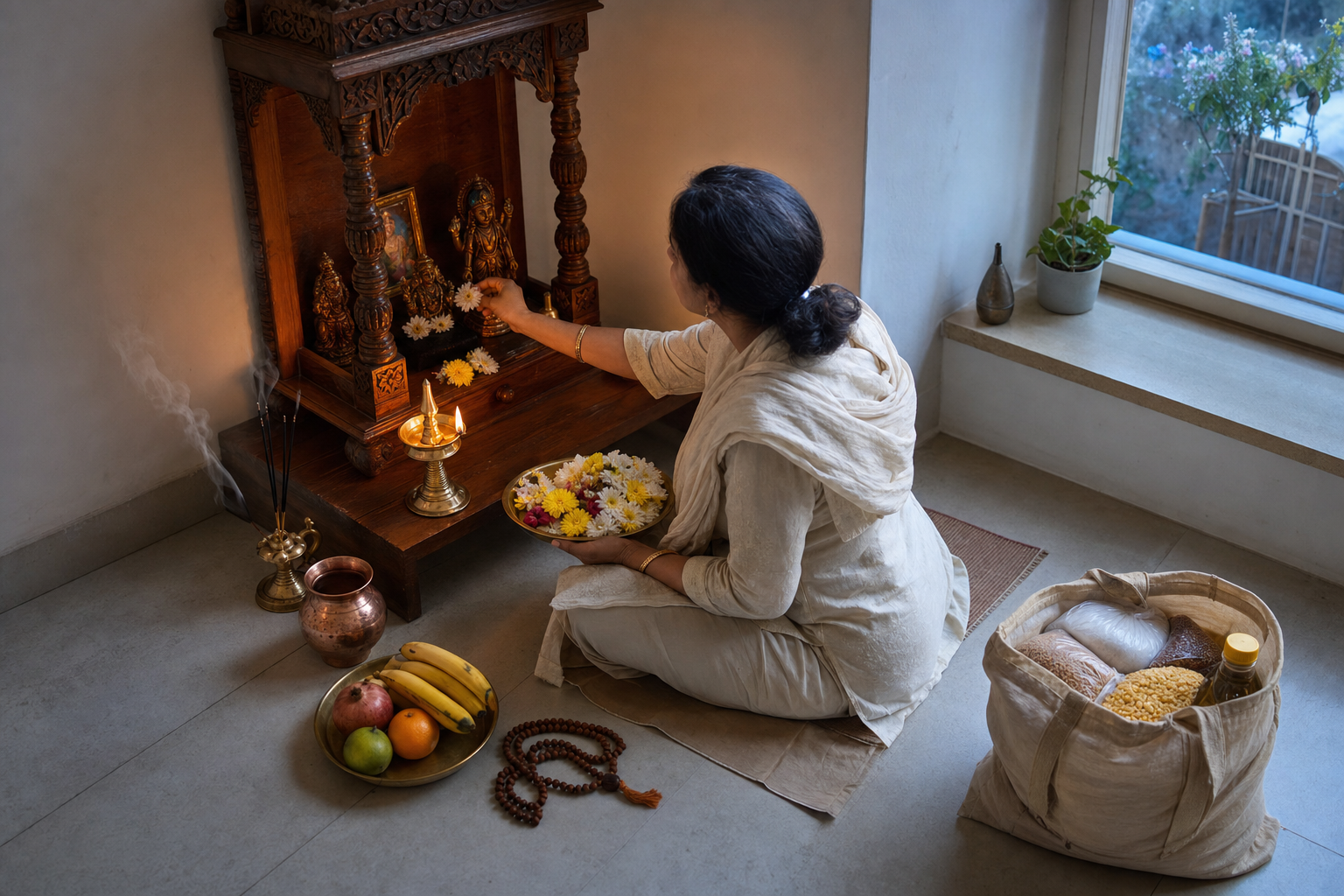
If you cannot travel, do not treat the home observance as a lesser imitation of pilgrimage. It has its own integrity when bathing, silence, remembrance, study, and giving are joined with sincere intent.
- Begin with an early bath. Bathe at dawn, preferably near sunrise. If Ganga jal is available, the customary practice is to add a few drops to the water. If it is not available, continue the observance rather than allowing its absence to become an obstacle.
- Enter silence consciously. State your sankalpa inwardly before beginning mauna. Keep it simple: establish the period of silence and dedicate the practice to clarity, devotion, compassion, or universal peace.
- Settle the breath and attention. Sit in a clean, quiet place for gentle pranayama, meditation, mantra japa, or simran. Do not keep changing practices when the mind becomes restless; returning to the chosen anchor is itself the discipline.
- Read a small portion slowly. The Bhagavad Gita, the Dhammapada, Jain devotional or ethical literature, and Sikh devotional literature can support the day according to your lineage. Choose a passage you can contemplate rather than trying to cover a large amount of text.
- Complete an act of dana or seva. Decide the recipient or purpose beforehand, then carry out the act. Money, food, useful material support, or direct service can all turn inward discipline into practical care.
- Eat simply, if you eat. A sattvic diet or fasting may be included as health permits. Keep food uncomplicated and avoid turning the meal into the main event of the day.
- End mauna deliberately. Close with prayer, gratitude, or another brief remembrance. Notice what the silence exposed before returning to ordinary conversation.
Fasting is not a test you must pass. If fasting conflicts with a medical condition, medication requirements, pregnancy, or a history of disordered eating, do not improvise. Choose simple sattvic meals instead and seek advice from a qualified health professional if you are unsure what is safe for you.
Families can create a shared period of quiet without trying to impose adult austerity on everyone. Children can participate through a brief prayer, respectful quiet, or helping prepare a donation. The aim is to cultivate reverence in the household, not to spend the day policing one another.
If you are observing at the Triveni Sangam

Mauni Amavasya is closely associated with Magh Mela and ritual bathing at the Triveni Sangam in Prayag, now Prayagraj. The confluence of the Ganga, Yamuna, and subtle Saraswati is regarded as an especially sacred place for Magh Snan, prayer, and the renewal of spiritual intent.
A pilgrimage can become so dominated by transport, crowds, possessions, and the search for a preferred position that the inner observance disappears. Protect its purpose with a few practical decisions:
- Follow local crowd-management and bathing instructions. Do not force your way toward the water or disregard a restriction in the name of ritual urgency.
- Travel with companions who understand your vow. Agree beforehand how necessary communication will be handled.
- Carry only what you can manage securely and without repeatedly interrupting your practice.
- Pause for prayer or japa before and after snan so that the bath does not become a hurried physical act detached from sankalpa.
- Carry out everything you bring to the riverbank. Reverence for a sacred river is incompatible with leaving waste behind.
- Do not allow silence to override safety. Speak when directions, health, separation from companions, or an emergency require it.
If travel is impractical, unsafe, or beyond your means, observe at home without spiritual self-reproach. Dawn bathing, mauna, japa, contemplation, and dana give you a coherent observance wherever you are. Pilgrimage is sacred; it is not a licence to neglect your actual responsibilities.
Key takeaways for choosing your observance
- If this is your first observance: Keep mauna through the morning and anchor it with one form of japa, meditation, or simran.
- If work or caregiving makes complete silence impossible: Take an essential-speech vow and remove casual speech and digital noise.
- If you cannot reach Prayag: Bathe near sunrise, use Ganga jal if available, and complete the practice at home.
- If fasting may affect your health: Eat simple sattvic food. Do not make physical risk the measure of devotion.
- If you are going to the Sangam: Preserve the connection between snan and sankalpa while following safety instructions and protecting the river environment.
- Whatever form you choose: Join silence to dana or seva so that inward discipline produces an outward good.
Before the day begins, make three decisions: the boundary of your silence, the devotional practice that will hold your attention, and the act of giving you will complete. Once those are settled, Mauni Amavasya becomes less about managing a complicated ritual and more about keeping one clear promise with sincerity.
References
