

If you are looking for one clock time that will make every Ayilyam day auspicious in 2026, the honest answer is that no such universal time exists. Your usable window depends on your city, the Moon’s exact Ayilyam interval there, the Tithi and Paksha operating during that interval, your birth-star calculations, and the day’s inauspicious periods.
You can still plan confidently. Start with a locally calculated Ayilyam interval, apply the Panchang filters in the right order, and define the precise action you intend to begin. That gives you a defensible muhurta instead of a date copied from a calendar prepared for another place.
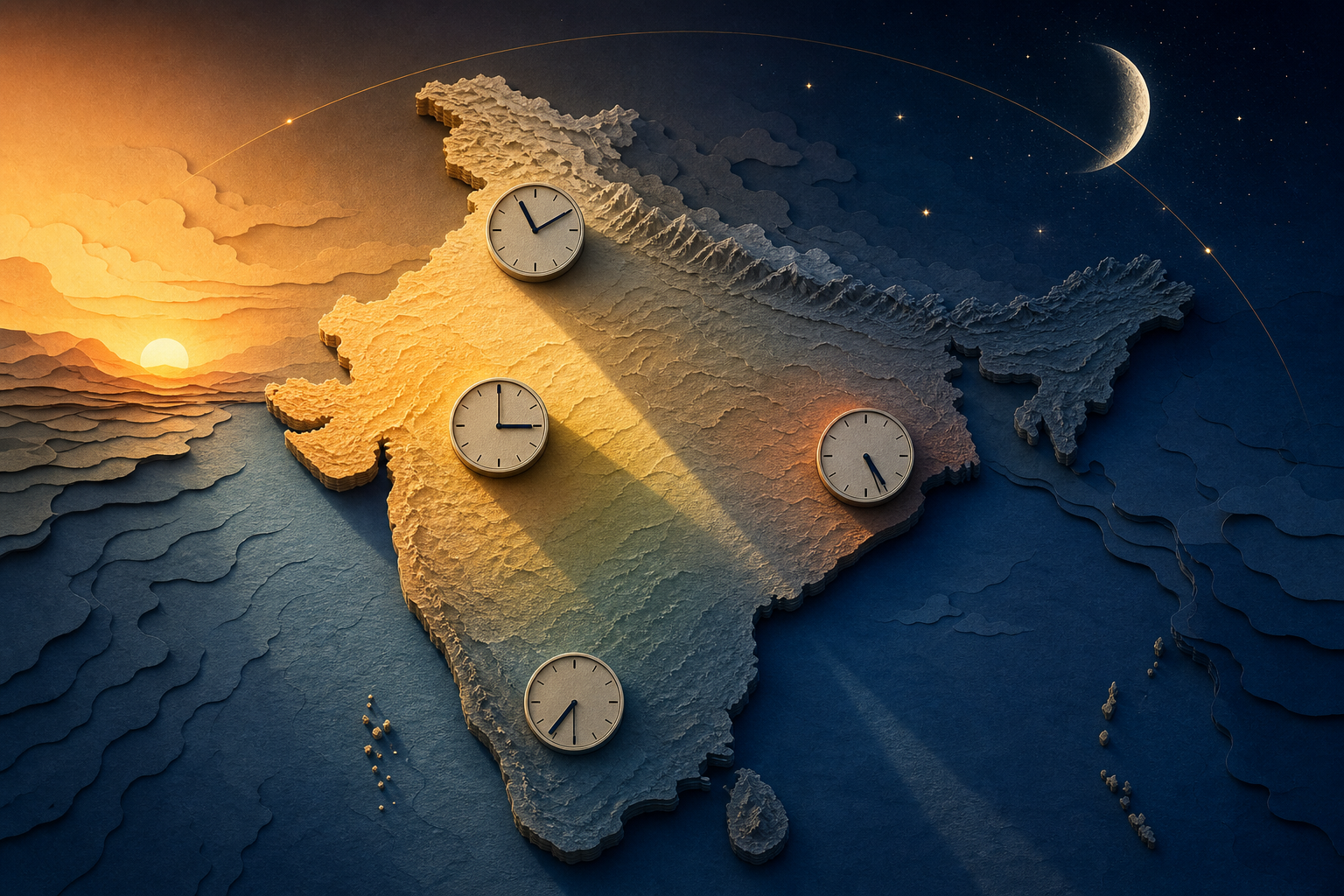
Why a nationwide list of 2026 clock times would mislead you
Ayilyam, also called Ashlesha, is the ninth of the 27 Nakshatras. It is ruled by Budha, or Mercury, and is traditionally associated with the Nagas. For someone born under Ayilyam, the Moon’s return to this Nakshatra is a natural place to begin searching for a suitable time. It is a starting condition, however, not an automatic declaration that the whole civil day is auspicious.
A Nakshatra can begin after sunrise, continue across midnight, or end partway through the date shown on a wall calendar. Your relevant interval is the period between the Moon’s local entry into and exit from Ayilyam. A calendar label saying only “Ayilyam day” does not tell you whether a morning appointment, an afternoon signature, and an evening observance all fall inside that interval.
Location matters because Panchang times are calculated for a place. Outside Bharat, daylight-saving rules introduce another conversion risk. Almanacs can also differ at boundaries because they use different ayanamsa settings. Do not take a time printed for an Indian city, subtract a time-zone offset, and assume the result is sufficient for Toronto, London, Singapore, or another location. Set the Panchang to the city where the action will actually begin.
If two reliable local Panchangs disagree near a boundary, do not average their times. Check their location and ayanamsa settings, then use one consistent calculation system for the Nakshatra, Tithi, Hora, and daily exclusions. For a consequential ceremony or transaction close to a disputed boundary, move comfortably inside the agreed interval or ask a qualified Jyotisha practitioner to calculate the muhurta.
Use these six filters to choose your Ayilyam muhurta

The strongest timing is an intersection of conditions, not a single favorable label. Work through the filters below in sequence so that an attractive Hora or weekday does not distract you from a more fundamental problem.
- Define the action and its starting moment. “Start a business” is too vague. Decide whether you are timing the registration, the first binding agreement, the public opening, or the first client meeting. For study, choose whether the beginning means submitting enrollment or commencing the first lesson. One muhurta should govern one clearly identified act.
- Find the local Ayilyam interval. Record both the entry and exit times for your city. Confirm that the intended action falls inside the interval rather than relying on the date heading alone.
- Check Paksha and Tithi. Prefer Shukla Paksha, the waxing fortnight, when possible. Supportive Tithis named for this planning method include Dwitiya, Tritiya, Panchami, Dashami, and Ekadashi. Verify which Tithi is active at the actual start time because a Tithi can change during an Ayilyam interval.
- Calculate Tarabalam and Chandrabalam. These are personal filters, not properties you can infer from the date alone. Tarabalam evaluates the relationship between the day’s Nakshatra and your birth Nakshatra. Chandrabalam evaluates the Moon’s support relative to your natal Moon placement. Being born under Ayilyam does not remove the need to check them separately.
- Remove the prohibited periods. Cross out Rahu Kalam, Yamagandam, and Gulika Kaal exactly as shown for your location and weekday. If one of them overlaps part of the Ayilyam interval, use only the clean remainder. Do this before considering Abhijit Muhurat or a favorable planetary Hora.
- Refine the remaining window. Look for an established shubha muhurta, a suitable Abhijit interval, an action-appropriate Hora, and, where the stakes justify it, a congenial Lagna. These refinements strengthen a window that has passed the earlier checks; they should not be used to conceal a failed personal calculation or an inauspicious overlap.
Shukla Paksha and the listed Tithis are preferences within a larger calculation. Do not describe a time as fully suitable merely because it satisfies one of them. Conversely, if no Ayilyam interval meets every preferred condition, do not quietly ignore the conflict. Choose another Ayilyam transit, consider another properly calculated shubha muhurta, or obtain personal guidance.
Match the supporting Hora and weekday to your purpose
The intended work determines which supporting layer deserves attention. Use the Hora times calculated by the same local Panchang; do not assume that a favorable Hora occupies the same clock period every day.
| What you are beginning | Conditions to prioritize | Moment to define in advance |
|---|---|---|
| Business meeting or financial decision | Strong Chandrabalam, a clean Ayilyam interval, and, where available, Thursday for Guru’s counsel or Friday for Shukra’s prosperity | The first consequential meeting, binding approval, or signature rather than the time you begin preparing documents |
| Course, examination preparation, or certification | Budha Hora, Mercury’s support, a suitable Tithi, and favorable personal Bala calculations | Enrollment submission or the first deliberate study session, whichever your Sankalpa identifies as the beginning |
| Learning, consultation, or receiving counsel | Guru Hora, especially when wisdom, teaching, or advice is central to the activity | The formal opening of the lesson or consultation |
| Creative work or a relationship-related beginning | Shukra Hora, with Shukla Paksha and a supportive Tithi where possible | The first formal or outward act, not a private rehearsal |
| Travel or a new partnership | Ayilyam transit where feasible, Shukla Paksha, and complete avoidance of Rahu Kalam, Yamagandam, and Gulika Kaal | Actual departure for travel, or the agreed act that formally begins the partnership |
| Sacred observance | The local Ayilyam interval, family or temple tradition, and a carefully selected clean muhurta | The Sankalpa or opening rite recognized by your lineage |
Thursday, Friday, Budha Hora, Guru Hora, and Shukra Hora are not interchangeable decorations. Mercury is relevant to study and communication; Guru supports learning and counsel; Shukra is associated with prosperity, arts, and relationships. Choose the support that fits the act instead of collecting every favorable-sounding factor.
For contracts, investments, or major purchases, complete the legal and financial review first. An auspicious time cannot repair unsuitable terms, missing due diligence, or a decision you cannot afford. Time the execution only after the underlying decision is sound. For a consecration, major purchase, binding contract, or similarly consequential beginning, personal Lagna, planetary periods, and current transits warrant professional muhurta guidance.
Know what to do when the Panchang factors conflict
Not every Ayilyam interval in 2026 will also occur in Shukla Paksha, carry one of the preferred Tithis, support your Tarabalam and Chandrabalam, avoid all three prohibited periods, and contain the ideal Hora. Treating every preference as equally decisive can leave you either paralyzed or tempted to select only the convenient indicators.
A practical hierarchy is to establish the local Ayilyam interval first; calculate the personal Bala factors; remove Rahu Kalam, Yamagandam, and Gulika Kaal; then compare Paksha and Tithi; and finally refine the surviving window with Abhijit Muhurat, weekday, Hora, and Lagna. This is a planning hierarchy, not a substitute for the rules of your family, sampradaya, temple, or Jyotisha tradition.
If your birth time or natal Moon placement is unavailable, do not label Tarabalam or Chandrabalam favorable by guesswork. You can still identify a general Panchang window, but describe it honestly as general rather than personally validated. When the matter is important, a practitioner can determine which personal factors can be calculated reliably from the information you have.
Key takeaways
- There is no single Ayilyam clock time for every city in 2026; use the Moon’s local entry and exit times.
- For an Ayilyam native, the Moon’s Ayilyam transit is the beginning of the calculation, not the end of it.
- Prefer Shukla Paksha and supportive Tithis such as Dwitiya, Tritiya, Panchami, Dashami, or Ekadashi when the other factors also agree.
- Tarabalam and Chandrabalam require personal birth information and must be checked independently.
- Remove Rahu Kalam, Yamagandam, and Gulika Kaal before using Abhijit Muhurat or a favorable Hora to refine the window.
- For a binding, expensive, or sacred undertaking, match the objective with Lagna and personal planetary factors through qualified guidance.
Prepare the action before the auspicious window opens
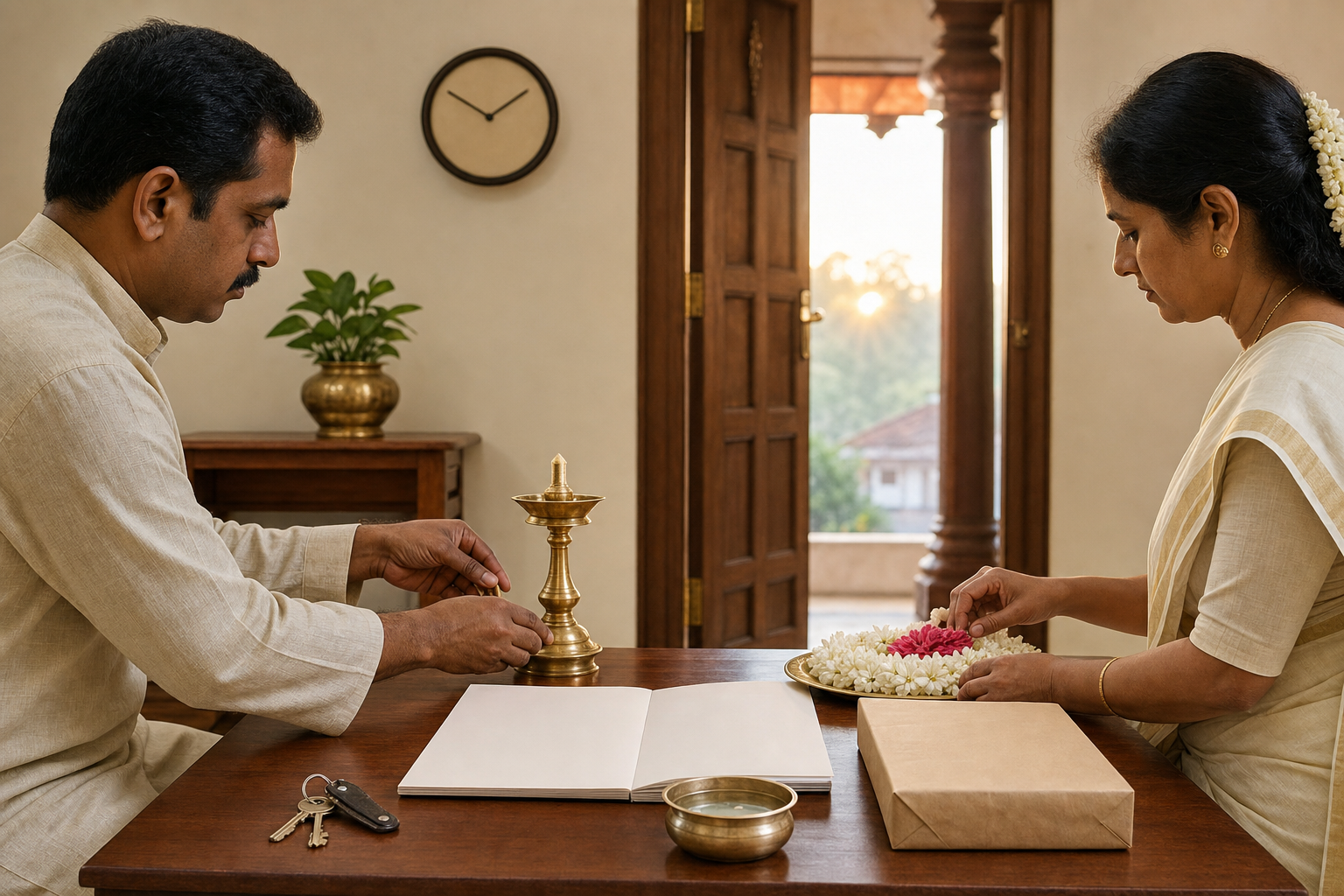
A carefully chosen muhurta loses much of its practical value if the window arrives while you are still searching for a document, waiting for another person, or deciding what counts as the start. Prepare a short timing brief with the city and time zone, the intended act, Ayilyam entry and exit, Paksha, Tithi, Tarabalam, Chandrabalam, excluded periods, chosen Hora or muhurta, primary start time, and fallback window.
Complete the preparatory work beforehand. Have the contract reviewed, the application checked, the travel arrangements ready, the lesson materials open, or the ritual requirements confirmed. When the selected time begins, perform the defined act rather than beginning its administration. If other people are involved, tell them which event is being timed so that everyone works toward the same moment.
Use muhurta as disciplined alignment of intention, time, and action, not as a promise that effort or ethical judgment no longer matters. Karya-siddhi still depends on the quality of the work, the fitness of the decision, and the Dharma with which you carry it out.
Open a trusted Panchang set to your city and record the 2026 Ayilyam entry and exit times first. Shortlist the Shukla Paksha intervals with supportive Tithis, apply the personal and daily exclusions, and only then place a clock time on your calendar.
References
