
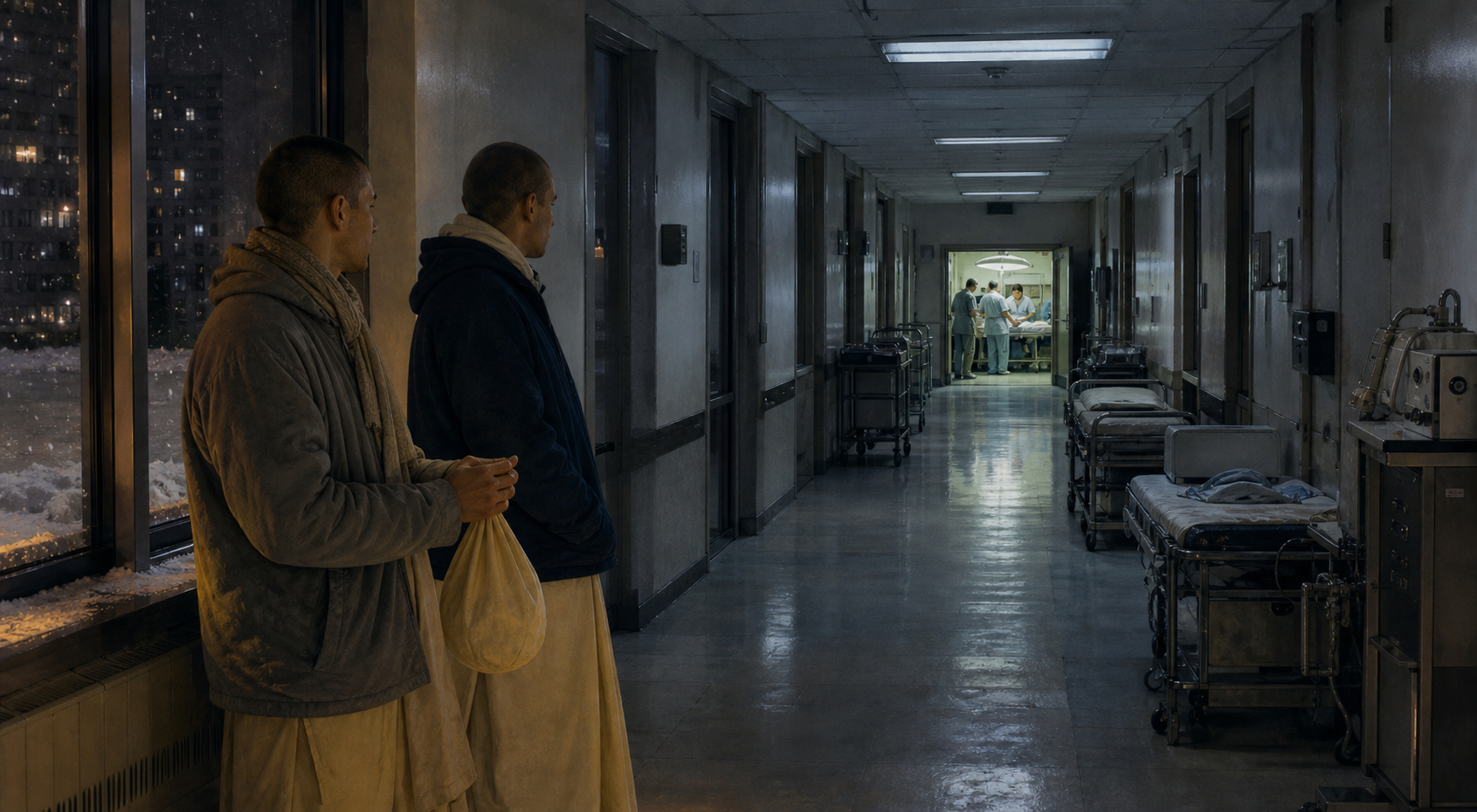
If you have heard that ISKCON disciples were with John Lennon in his final moments, you probably want to know how literally to take the claim. The careful answer is that disciples of Srila Prabhupada were present in the hospital during the emergency, and Haridas saw medical staff working around Lennon. They are not described as standing at his bedside, speaking to him, chanting to him, or receiving his final words.
That distinction does not drain the event of spiritual meaning. It protects the meaning from exaggeration. You can recognize a striking providential pattern while remaining exact about what was witnessed, what was inferred, and what was accepted through faith.
The hospital visit began with a newborn’s cough
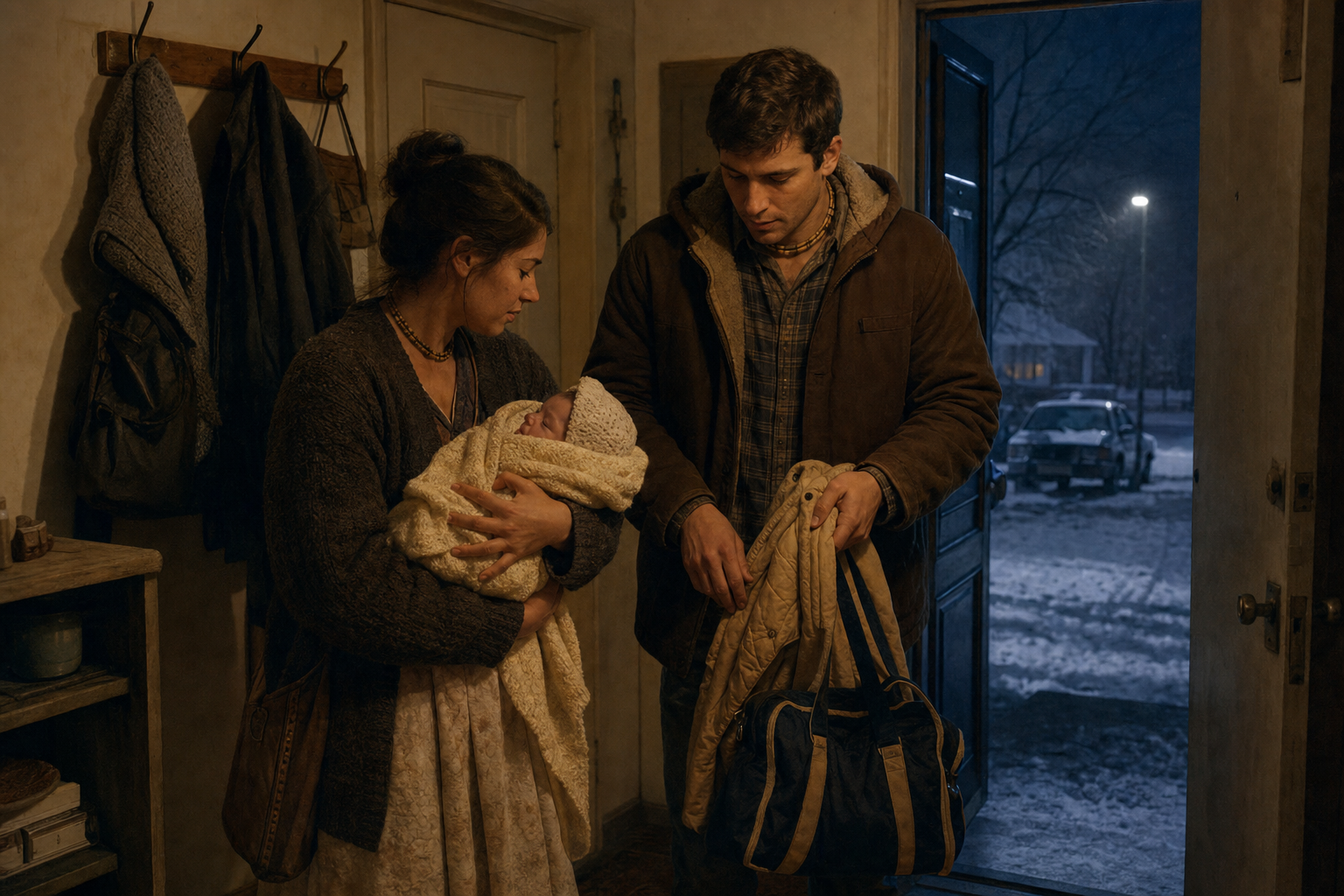
The reason Bakula Devi Dasi and her husband, Haridas, reached the hospital had nothing to do with John Lennon. In December 1980, their newborn second daughter, Shringar, had developed a persistent cough. A doctor who regularly attended the temple’s Sunday feast became concerned and told Haridas to take the baby to a hospital immediately.
Adikeshava Maharaja lent the family a temple car, and another devotee drove them to the emergency room. After a long wait, Bakula and the baby were finally taken into an examination room. They had barely settled when an urgent hospital-wide call drew their doctor away.
Haridas followed the doctor through the swinging emergency doors. He saw medical personnel working around a man who had just arrived on a stretcher. Haridas initially did not know who the patient was. Someone then identified him as John Lennon, who had been shot outside his apartment building across from Central Park and rushed to the hospital.
The family’s ordinary medical visit was suddenly surrounded by a public tragedy. Television crews and reporters arrived. Fans gathered outside and repeated the refrain from Give Peace a Chance. The hospital was eventually locked down because so many people were trying to enter. Haridas was interviewed about what he had witnessed, and another devotee present at the hospital was also interviewed.
This sequence matters because it shows what brought the disciples there: parental responsibility, help from the temple community, and timing they had not planned. There was no arranged meeting, preaching visit, or attempt to reach a celebrity. A sick child placed them in the hospital at the decisive moment.
At the hospital is not the same as at Lennon’s bedside
The phrase present during John Lennon’s final moments can carry two very different meanings. In the broad sense, Bakula and Haridas were in the hospital while the emergency unfolded. In the narrower sense of being beside Lennon as he died, only Haridas is explicitly described as entering the emergency area, and even he is described as observing the medical response rather than interacting with Lennon.
Bakula remained at the hospital with the newborn. She later understood herself and Haridas as witnesses to the event, but witnessing a historic emergency from within the same hospital is not identical to witnessing a patient’s last conscious moments. Haridas saw the medical team around Lennon; Bakula experienced the surrounding emergency, lockdown, reporters, and crowds.
There is also a modest ambiguity around the interviews. Bakula remembers that Haridas and another devotee were interviewed, but she does not identify that second person or say that the person entered the treatment area. A responsible retelling should not fill that gap with a guessed identity.
If you repeat the story, the most defensible formulation is simple: disciples of Srila Prabhupada were at the hospital when Lennon was brought in, and Haridas witnessed the emergency treatment. Saying that devotees spoke to Lennon, chanted for him at his side, administered a final rite, or heard his last words would add events that are not described.
Prabhupada’s earlier connection gives the moment its weight

The timing carried special meaning because Lennon was not a stranger to Srila Prabhupada. Years earlier, Prabhupada had stayed at Lennon’s home in England, taught Krishna consciousness there, and given Lennon and Yoko Ono his personal association.
That earlier contact is the spiritual hinge of the hospital story. Without it, the disciples’ presence would remain an unusual coincidence involving a famous musician. With it, a devotee can see an arc: the spiritual master entered Lennon’s life personally, and disciples connected with that same spiritual lineage were unexpectedly near when his life ended.
The devotional significance does not depend on a secret deathbed conversation. It rests on the Gaudiya Vaishnava understanding that contact with a pure devotee is spiritually consequential even when its full effect is invisible. Bakula therefore understood the timing as a sign that Srila Prabhupada’s concern for a soul did not end when their outward association ended.
That is a devotional interpretation, not a medical observation or a publicly verifiable explanation of causation. It does not prove why Krishna allowed the shooting, what Lennon experienced inwardly, or what his next destination was. Those claims would go beyond the witnessed event. The restrained conclusion is also the stronger one: earlier spiritual association remained meaningful to the devotees who recognized the later pattern.
How to preserve both historical honesty and devotional faith
You do not have to choose between dismissing the event as meaningless chance and presenting every devotional inference as established history. Keep three layers distinct.
- What was witnessed: Bakula and Haridas arrived because their newborn needed medical care. Haridas entered the emergency area and saw personnel working around Lennon. Reporters interviewed him, and crowds gathered outside.
- What was inferred: The unplanned timing appeared extraordinary because the couple could easily have arrived earlier or later and missed the emergency.
- What was believed: Bakula understood their presence as Krishna’s arrangement and as evidence of Srila Prabhupada’s continuing care.
The verbs you use will keep these layers clear. Say that Haridas saw the emergency response. Say that Bakula interpreted the timing as providential. Say that devotees believe the spiritual master’s mercy can extend beyond visible contact. Do not silently change interpreted into proved, or was present into gave Lennon his final spiritual remembrance.
This discipline is not a concession to scepticism. It is part of speaking truthfully. Bhakti does not become stronger when history is stretched, and a witness’s faith does not become weaker when its theological dimension is identified honestly.
Key takeaways
- ISKCON disciples reached the hospital through an unplanned chain that began with a newborn’s persistent cough.
- Haridas is the person explicitly described as entering the emergency area and seeing the medical response around Lennon.
- No conversation, bedside chanting, final rite, recognition, or message between Lennon and the devotees is described.
- Srila Prabhupada’s earlier personal association with Lennon and Yoko Ono is what gives the later hospital presence its devotional significance.
- Krishna’s arrangement and Prabhupada’s continuing mercy are matters of devotional interpretation; they should not be presented as medically or historically demonstrable causes.
The right response is practice, not speculation

The least useful way to handle this event is to speculate about Lennon’s spiritual destination. The known events do not give us access to his final consciousness, private encounter with Krishna, or future journey. Turning the story into a confident verdict about his fate would replace humility with imagination.
A more useful response begins with the setting. Bakula and Haridas were not pursuing a sign. They were caring for their daughter, accepted medical advice, borrowed a temple car, and received help from another devotee. An extraordinary moment entered through ordinary duty. That is something you can act on without solving the mystery of providence.
First, tell the story without adding a bedside encounter. Second, let the possibility of unseen mercy deepen your own remembrance rather than your curiosity about another person’s karma. Third, do the service already in front of you. The event’s practical lesson is not to wait for a dramatic final moment, but to keep spiritual association, truthful speech, and responsible service present in daily life.
The next time you hear that ISKCON disciples were there when John Lennon died, preserve both halves of the truth: their hospital presence was real and unexpected, while its ultimate meaning belongs to faith. Speak precisely, remember Krishna now, and let the mystery make your own service steadier.
References
