
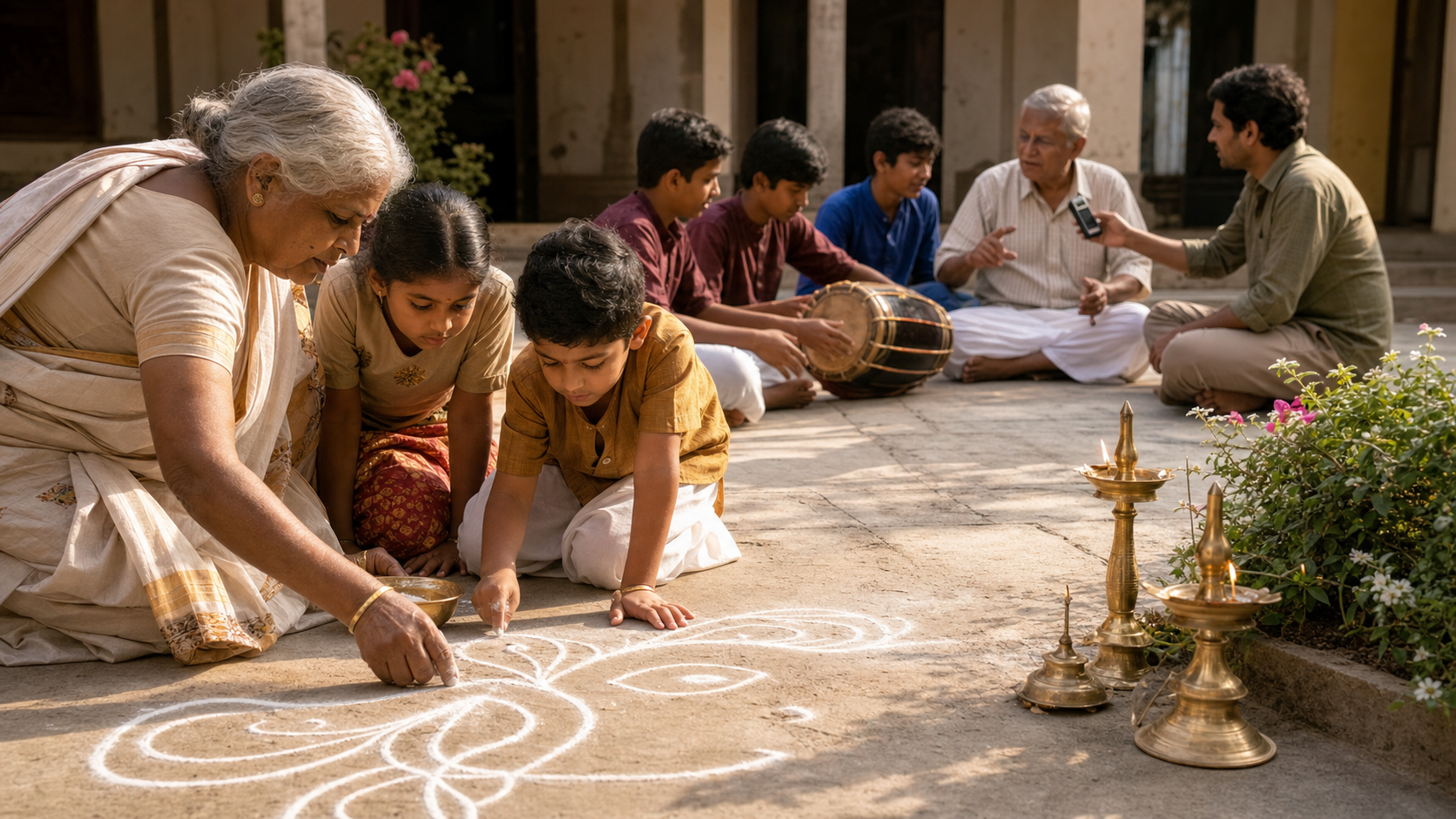
You may already have photographs from festivals, recordings of bhajans, a box of family objects, or children who can perform a dance beautifully. What you may not have is a record that helps them explain what they are doing, why it matters, which community it belongs to, and how they can carry it forward. That is the gap where living inheritance can become visually impressive but culturally unreadable.
You do not need to begin with a museum-scale project. Begin by connecting practice, explanation, participation, and memory. Philosophy, folk and classical arts, children’s teaching, kolam, mehendi, and community gathering can all serve that work. When you pair such experiences with careful writing, attentive photography, and reliable context, you create something that can be learned from rather than merely looked at.
Choose what you want someone to be able to carry forward
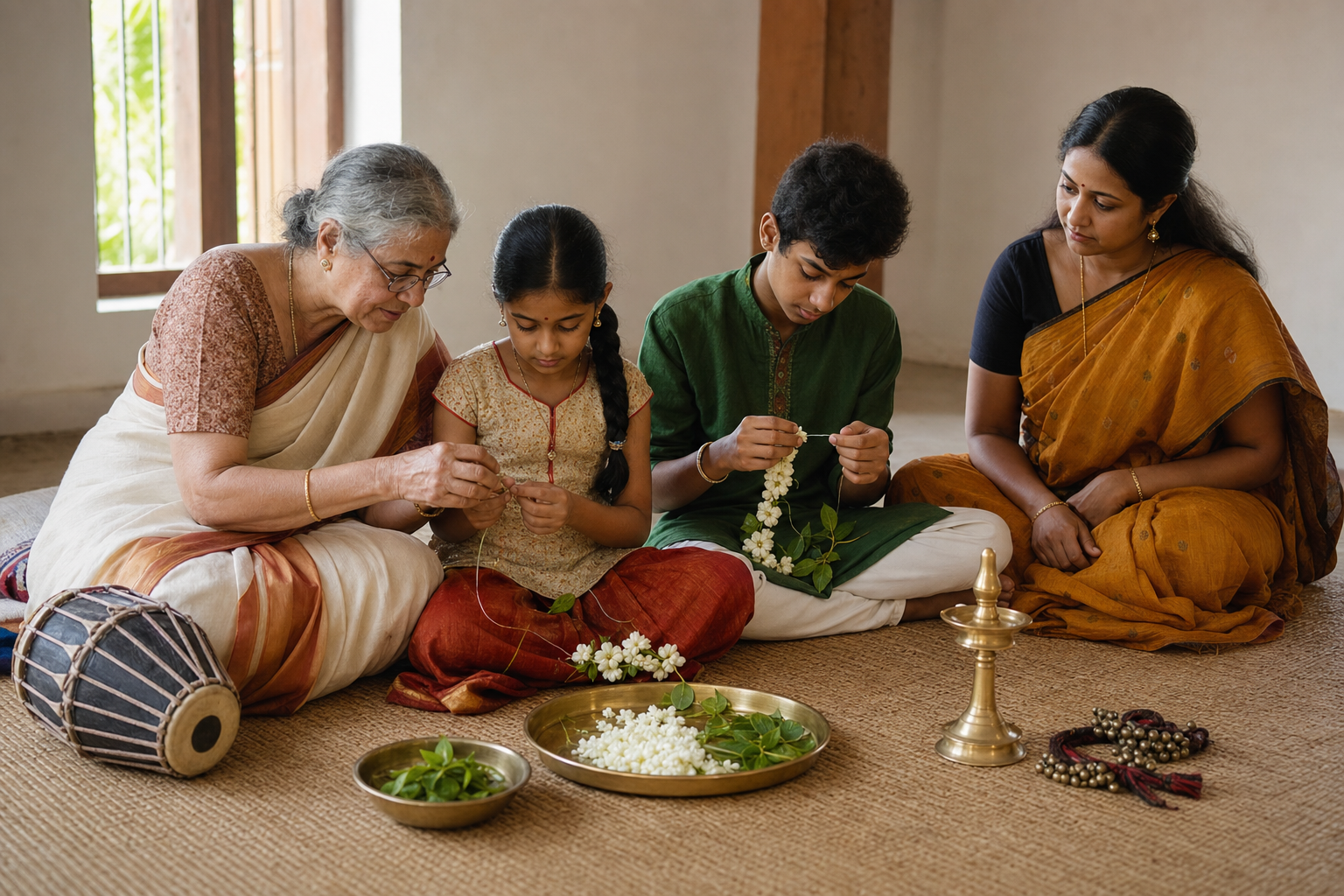
“Preserve our culture” is too broad to guide a family or community team. Choose a practice with a clear human action: preparing for a vrata, organizing langar, drawing a kolam, singing a particular composition, teaching a sequence of gestures, caring for a sacred space, or explaining the order of a festival observance. A defined practice gives you something that can be demonstrated, documented, taught, and repeated.
For that practice, preserve more than its visible form. Record:
- What people do, including the order of actions and the materials involved.
- What participants understand those actions to mean.
- Who teaches, prepares, performs, serves, or receives.
- Which language, region, lineage, sect, or local community gives the practice its particular form.
- Which elements may be adapted and which should not be separated from their religious setting.
- What should remain private, unphotographed, or restricted to practitioners.
This prevents a common failure: saving the surface while losing the knowledge that makes it intelligible. A photograph of a lamp, mudra, meal, procession, or musical instrument is not yet cultural memory. The record becomes useful when a future reader can identify the action, hear the preferred name, understand its setting, and know whom to ask for deeper instruction.
Shared Dharmic values can connect Hindu, Buddhist, Jain, and Sikh communities without making their practices interchangeable. Anekantavada, ahimsa, seva, and karuna offer complementary ways to think about plurality, responsibility, service, and compassion. Use those values as bridges. Still name a mandir, vihara, derasar, or gurudwara accurately; identify the community whose practice you are presenting; and let practitioners describe its meaning in their own terms.
Document meaning as carefully as beauty
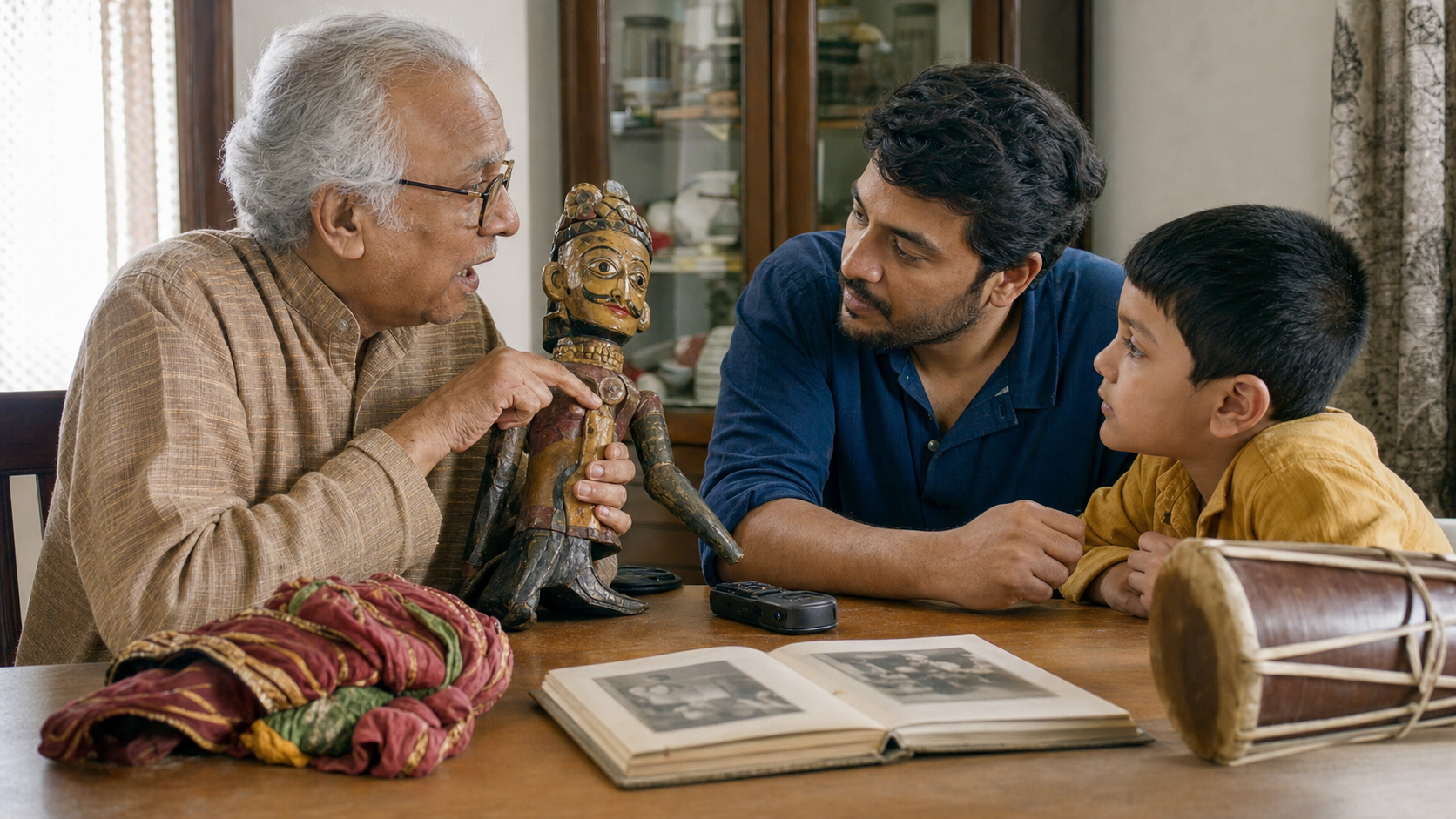
A beautiful image attracts attention, but a beautiful image without context can mislead. The most durable method pairs a camera with field notes. Dates, locations, vernacular terms, captions, and relevant textual references turn disconnected media into an archive that families, teachers, students, and community institutions can actually search and interpret.
Prepare the record before the gathering begins
Create a basic event record before anyone takes a photograph. Include the event name, date, place, organizer, participating traditions or communities, contact person, preferred spellings, publication permissions, and any restrictions on recording. Assign responsibility for this record. If everyone assumes someone else will collect the details, filenames and captions will be reconstructed later from memory.
Ask a knowledgeable participant a compact set of questions:
- What is the correct name of this practice in the language used by its practitioners?
- What is happening, and in what sequence?
- Why is it done in this setting?
- Does this form belong to a particular region, lineage, sect, family, or institution?
- Are there variations that should be acknowledged?
- What may be photographed, quoted, translated, or published?
- Who should review the description before it becomes public?
Do not force an immediate answer when the person is serving, performing, or worshipping. Note the question and arrange a suitable time to confirm it. Accuracy is part of hospitality.
Photograph relationships, actions, and teaching
Do not spend the entire event searching for a single dramatic image. Build a visual sequence: the setting, preparation, the central action, significant details, service, teaching, participation, and the gathering’s close. Hands preparing food, a teacher correcting a movement, a child listening to an elder, or volunteers arranging a space may reveal more about transmission than a posed group photograph.
Details matter when permission allows them: the soot on a lamp, the grain of an instrument, a threshold design taking shape, or the arrangement of offerings. Such images should support the documented practice, not isolate sacred objects as unexplained decoration.
Write captions that can stand on their own
A useful caption answers who is doing what, where and when it is happening, what the practice is called, and why the moment matters. “Dance at cultural event” will not help a future student distinguish a devotional invocation from a regional folk form. Record the form’s proper name, the community’s preferred terminology, the occasion, and the meaning supplied by a qualified participant.
Use descriptive filenames rather than leaving the camera’s default codes. Keep original files separate from edited versions, preserve the associated notes, and maintain a backup outside the organizer’s primary device. Add alt text that describes what is visibly present. A caption may explain cultural meaning, while alt text should first help a person understand the image itself. Clear filenames, structured captions, metadata, and alt text also make the collection easier to discover and reuse responsibly.
Make consent and sacred boundaries part of the archive
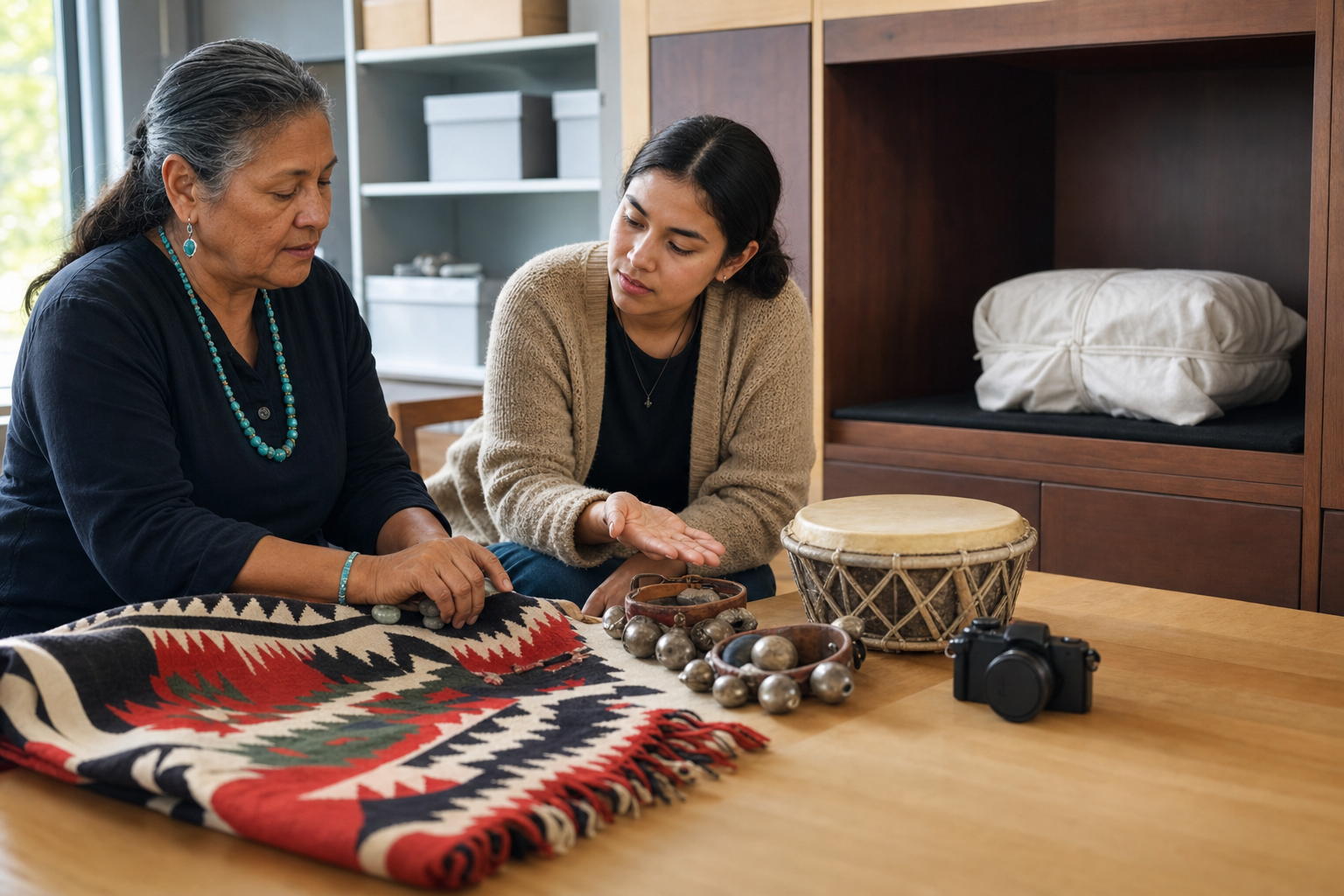
Being present at a public celebration is not the same as agreeing to appear in a permanent online collection. Tell participants what you are recording, where it may be published, and whether it will enter a long-term archive. When children are involved, coordinate with their guardians and respect the young participant’s own willingness to be photographed or identified.
Ask separately about recording, public posting, naming, quotation, and later reuse. Someone may welcome a family photograph but not want it used in publicity. A practitioner may permit an image of a hall but not of a sacred act. A teacher may approve a summary but want a mantra, lineage instruction, or private explanation omitted. Keep those distinctions with the file so that future volunteers do not mistake possession for permission.
Use these editorial checks before publication:
- Has a knowledgeable person confirmed names, spellings, and the description of the practice?
- Does the image preserve the dignity of the people shown?
- Does the caption distinguish observation from interpretation?
- Have regional or sectarian variations been presented as variations rather than errors?
- Could cropping or an isolated quotation create a meaning the participants did not intend?
- Is there a clear way for a participant to request a correction or a change in identification?
If you cannot establish permission or context, do not publish the material merely because it is striking. Consent, accurate captions, community voices, and resistance to sensationalism express Dharmic ethics in the method itself: service through responsible preservation, non-harm through dignified representation, and openness to multiple perspectives without careless relativism.
Design celebrations that create participants, not spectators
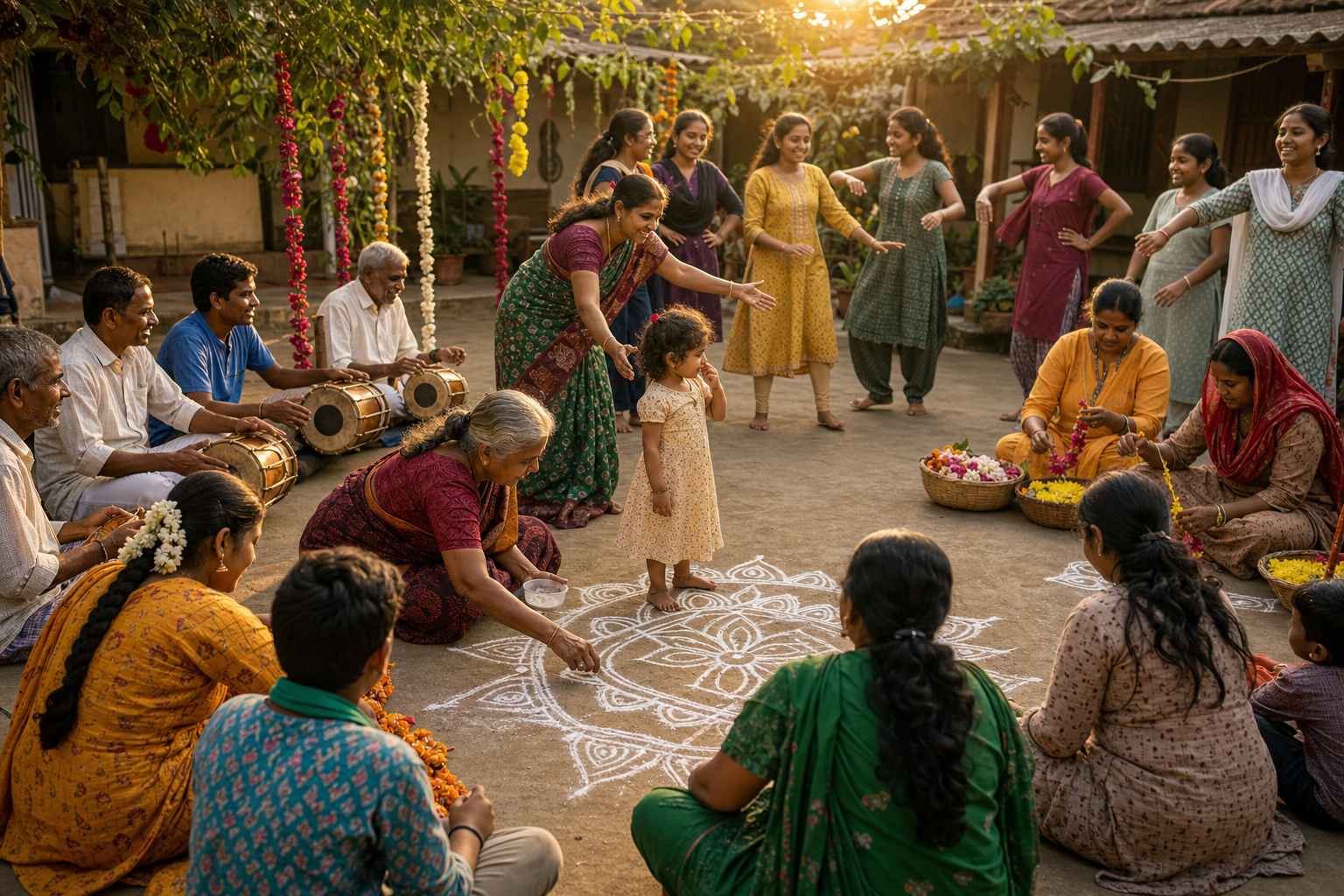
A stage can display excellence, but transmission requires a way in. If visitors only watch, they may leave impressed without knowing what to practice, notice, ask, or teach. Give every major part of the program a learning doorway.
- Before a performance, name the form, its cultural setting, and the devotional or narrative frame relevant to that presentation.
- During a demonstration, direct attention to a meaningful gesture, rhythm, material, or sequence rather than asking the audience merely to admire it.
- Afterward, offer a suitable action: a guided question, supervised practice, conversation with the teacher, or access to a reviewed explanatory record.
- For philosophy, connect a principle to conduct such as self-inquiry, service, compassion, restraint, or respect for differing paths.
- For ritual or sacred practice, let an authorized practitioner define the boundary between respectful learning and participation.
Use several modes of learning. Kolam and mehendi can move heritage from observation into guided participation. Folk and classical performance can carry regional memory, devotion, narrative, gesture, and rhythm. A children’s play can help young people explain customs to peers and parents. Langar makes service visible through a shared human action, provided the religious and community context is not reduced to food alone.
Give young people substantive roles. They can interview an elder, confirm a vernacular term, help prepare a demonstration, write a draft caption, narrate a custom, or record what they still do not understand. The goal is not to use children as symbols of continuity. It is to let them practice the work of continuity.
Assign equally clear adult roles: a tradition steward to protect accuracy, a consent coordinator, a photographer, a note-taker, a language reviewer, and an archive custodian. One person may hold more than one role in a small gathering, but the responsibilities should remain visible. Before material is published, the tradition steward and relevant participants should have an opportunity to review it.
In diaspora settings, cultural celebration can affirm civic belonging while retaining religious and regional specificity. A program that joins reflection, regional arts, youth participation, hands-on traditions, and civic recognition can build connection across a diverse society. The durable lesson is not to place every tradition under a vague cultural label. It is to make each contribution understandable enough that genuine respect becomes possible.
Key takeaways for your next heritage project
- Start with a defined practice that someone can learn, teach, or repeat.
- Preserve action, meaning, community, variation, and boundaries together.
- Pair images with names, dates, places, sequences, vernacular terms, and reviewed captions.
- Record permissions with the material instead of relying on memory.
- Use shared Dharmic values to build relationships without erasing differences among traditions.
- Turn performances and displays into learning through context, guided attention, participation, and conversation.
- Give children and young adults real responsibility for interviewing, explaining, documenting, and reviewing.
- Treat the archive as part of the gathering’s purpose, not as an afterthought.
At your next gathering, select a single practice, ask a knowledgeable custodian to guide its description, and create a reviewed record that a young person can use to learn or teach. Then repeat the process with care. Living heritage remains alive through dependable acts of practice, service, explanation, and attention.
References
- SikhNet – The Confluence of Pen and Camera
- CoHNA – Celebrating Hindu Heritage Month in Edmonton, Canada
