
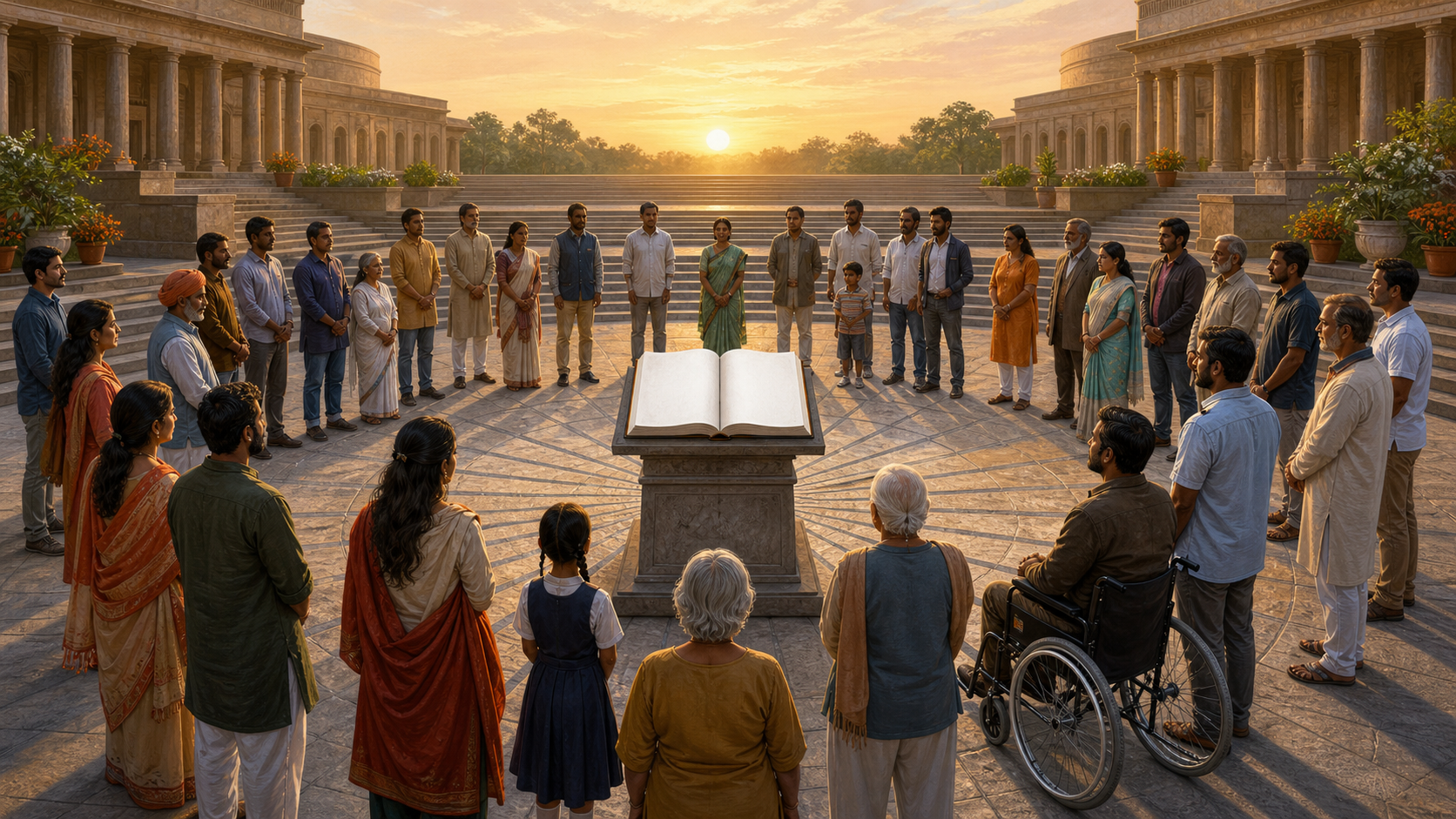
Perhaps you need to explain Republic Day to a child, plan a community observance, or decide what the occasion means after the flag has been raised and the anthem has ended. The useful question is not how loudly you celebrate. It is what distinguishes a republic from a free country, and what that distinction asks of you.
India’s 77th Republic Day gives a clear answer. Political freedom becomes durable when citizens, institutions, rights, and responsibilities are held within a constitutional order. Ganatantra Divas therefore belongs not only to the parade ground. It belongs in the ordinary choices through which you either strengthen or weaken the republic.
What the 77th Republic Day actually marks
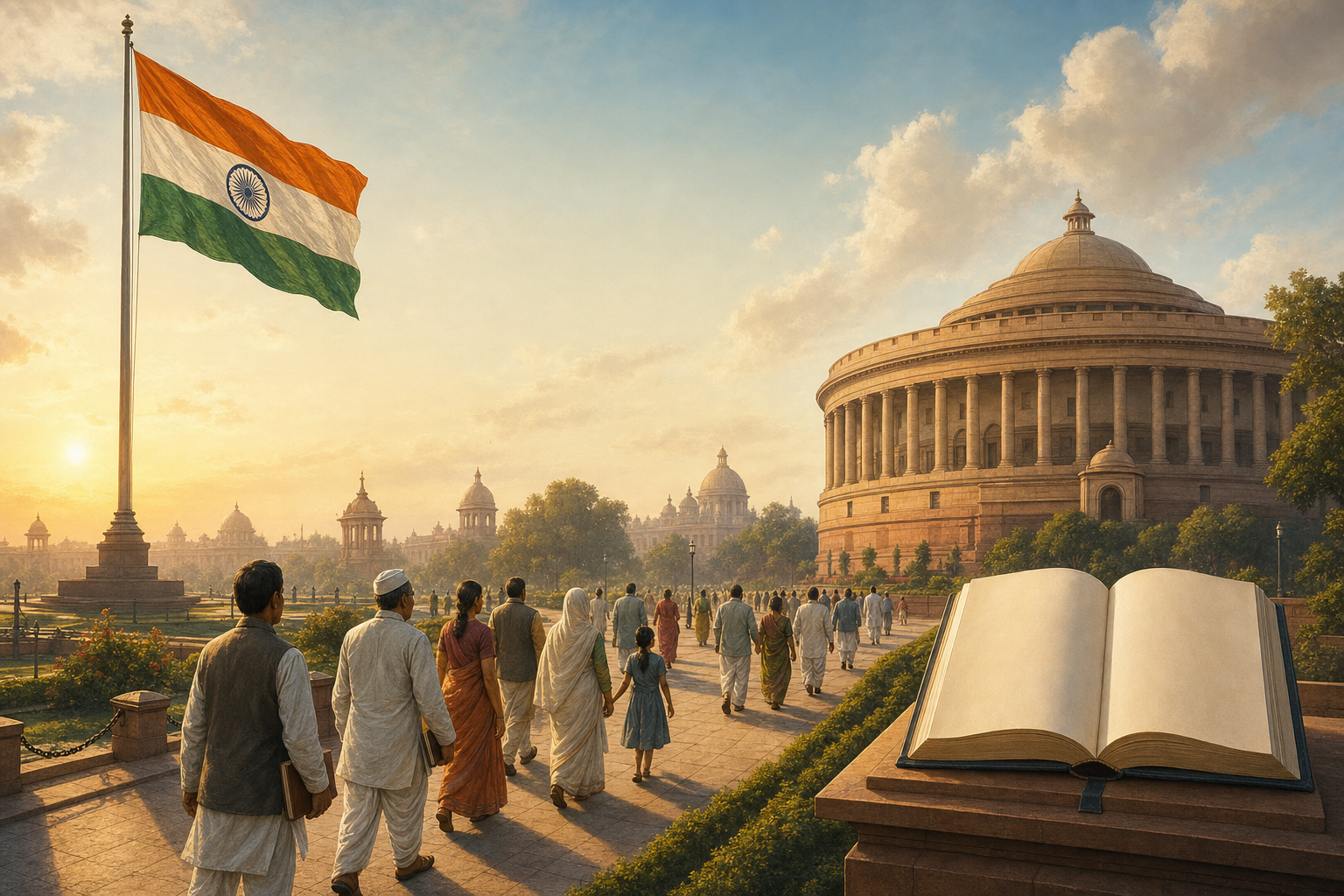
On 26 January 2026, India observes its 77th Republic Day, marking the coming into force of the Constitution on 26 January 1950. Counting 1950 as the first Republic Day makes the anniversary number easier to understand: 2026 is the 77th observance.
A reliable one-sentence explanation is this: Independence Day marks freedom from colonial rule; Republic Day marks India’s life as a constitutional republic. The first answers the question of foreign domination. The second asks how free citizens will govern themselves, distribute public authority, protect liberty, and live with one another despite profound differences.
The date carries an earlier memory as well. The choice of 26 January recalls the Purna Swaraj resolve of 1930. Republic Day thus connects the demand for complete independence with the harder work that follows independence: building institutions and civic habits capable of sustaining self-rule.
This is also why Republic Day stands with Independence Day and Gandhi Jayanti as one of India’s three national holidays. It is not merely an anniversary of a legal event. It renews a constitutional compact in which justice, liberty, equality, and fraternity must govern more than official speeches.
When you explain the day, begin there. Do not reduce the Constitution to a book kept in courts, or citizenship to the possession of rights. A constitutional republic depends on both protections and restraint: citizens must be able to claim dignity, while public power and social majorities must accept limits on how they treat others.
How to read the parade without reducing it to spectacle
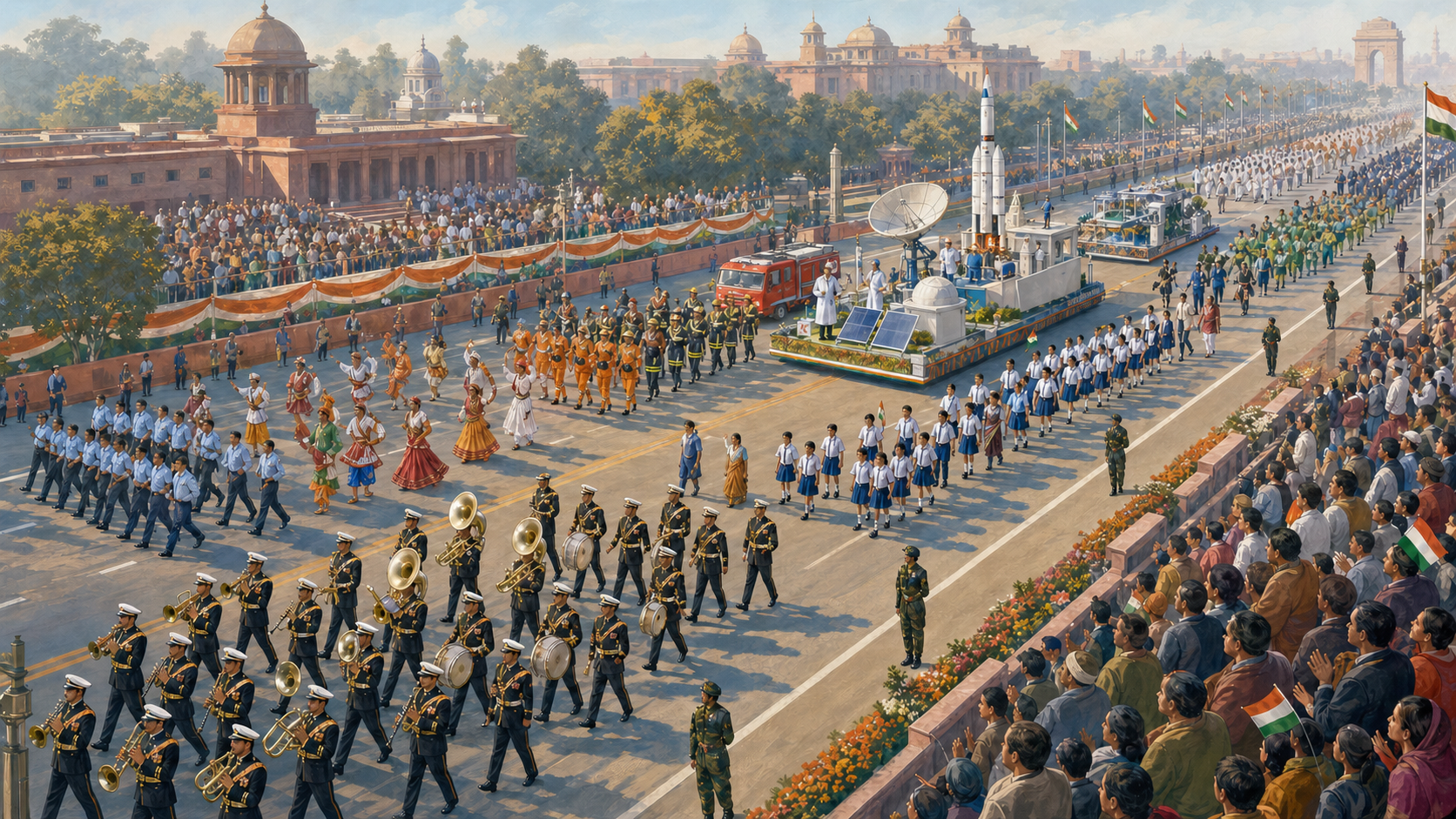
The Republic Day parade at Kartavya Path is easy to consume as a sequence of uniforms, formations, machinery, music, and colour. It becomes more meaningful when you read each part as an answer to a civic question.
- The ceremonial salute and National Flag: What commands allegiance in a republic? Let the flag direct attention beyond any temporary officeholder toward the nation and its constitutional life.
- The display of defence capabilities: What capacity does the state maintain to protect the country? Military strength matters, but the republican frame also asks whether public power is disciplined by responsibility and lawful purpose.
- The tableaux of states and Union Territories: What does unity look like when people do not share one language, region, custom, or artistic form? The answer is not cultural sameness. It is a national structure broad enough to make plurality visible.
- Scientific and artistic achievements: What else constitutes national strength? Knowledge, creativity, technical competence, and civilisational confidence belong beside physical security.
If you are watching with children or students, ask them to identify these layers. Which display represents protection? Which represents cultural inheritance? Which points toward future capability? What does the order of ceremony communicate about the relationship between the state, the people, and the nation?
Avoid turning the tableaux into a contest over which region received the most attention. Their deeper value lies in showing that a republic can possess a shared civic identity without erasing local identities. That is a more demanding form of unity than uniformity because it requires mutual recognition rather than mere conformity.
The same discipline applies to the defence display. Pride in national capability need not become fascination with force for its own sake. Ask what the capability protects: citizens, borders, institutions, freedom, and the conditions under which civilisational life can continue. That question keeps strength connected to purpose.
Where constitutional citizenship and dharmic ethics meet
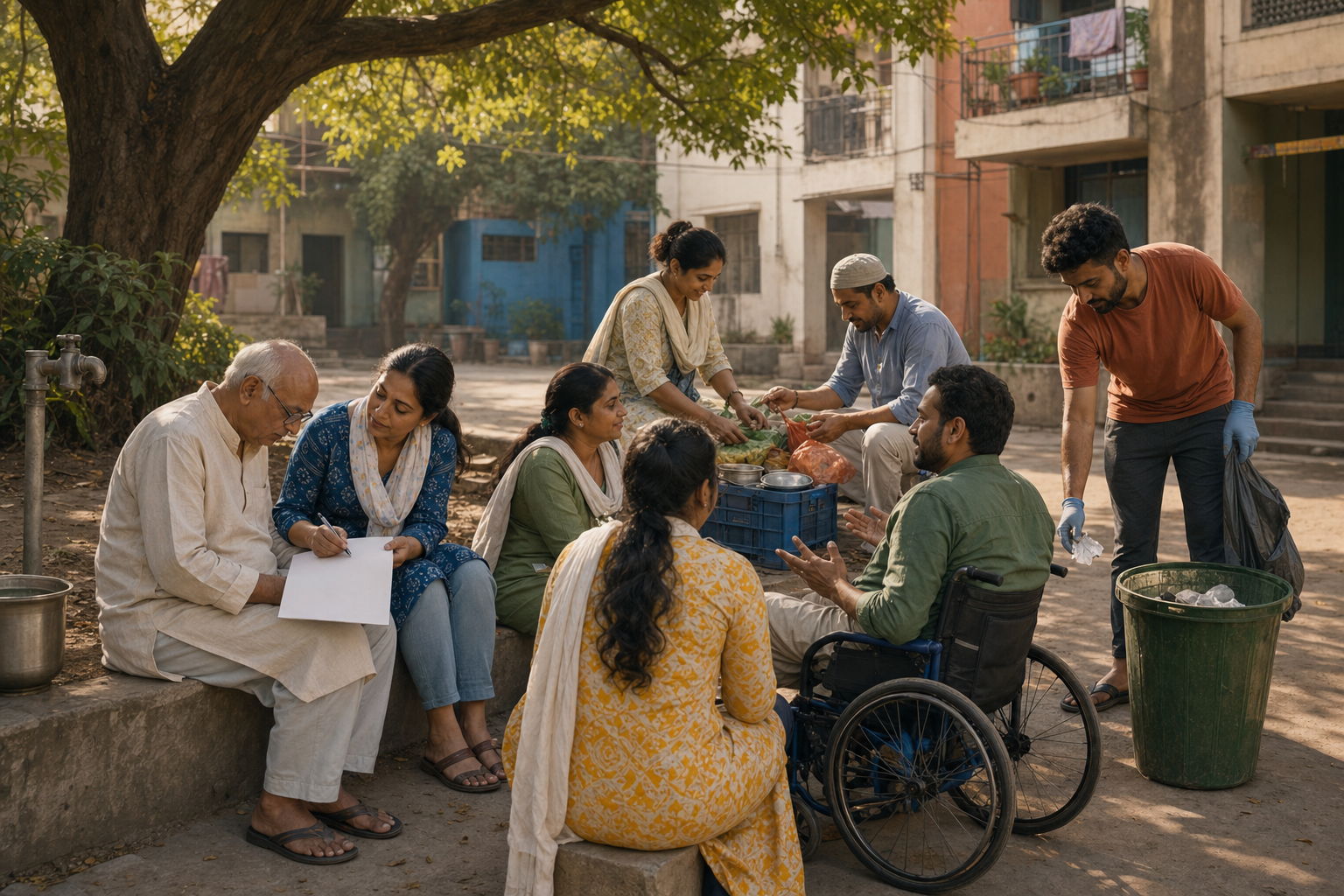
Republic Day is not a religious festival, but a dharmic reader need not approach it as culturally empty. Hindu, Buddhist, Jain, and Sikh traditions offer ethical vocabularies that can deepen civic conduct. The relationship must be stated carefully: constitutional principles and dharmic teachings can resonate without being treated as identical.
The Constitution establishes a public framework for citizens of every faith and for those who follow no religious path. Dharmic traditions cultivate moral disciplines within their own distinct philosophies and communities. One must not be used to swallow the other. The more useful task is to notice where they call for compatible habits.
- Dharma and responsibility: Treat your civic role as an ethical obligation, not merely an opportunity to demand benefits. Follow fair procedures even when bypassing them would favour your own side.
- Ahimsa and disagreement: Reject humiliation, dehumanisation, and needless hostility. Nonviolence is not passivity; it places discipline on the methods used while resisting what you believe is wrong.
- Karuna and dignity: Ask whose hardship or exclusion is invisible in a public decision. Compassion becomes civic when it affects how neighbours, institutions, and communities respond to vulnerability.
- Seva and participation: Do work that the community genuinely needs without turning the beneficiary into a prop. Service makes citizenship tangible because it converts concern into responsibility.
These are ethical applications, not legal definitions. Their value lies in helping you carry constitutional commitments into places where law alone cannot manufacture trust: the family, neighbourhood, classroom, place of worship, workplace, and public conversation.
Freedom of conscience and religion allows communities to practise and celebrate their paths while sharing the responsibilities of citizenship. That freedom is not weakened when traditions speak confidently from their own foundations. It is strengthened when confidence is joined to restraint, reciprocity, and respect for another person’s dignity.
For a pro-dharma public culture, this distinction matters. Civilisational confidence should produce steadiness rather than insecurity. You can defend a tradition, correct misrepresentation, and argue firmly about national questions without treating every disagreement as proof that coexistence is impossible. Dharma loses public credibility when invoked only as an entitlement and never as a standard applied to one’s own conduct.
Turn the day into a practice, not a performance
A Republic Day program becomes useful when participants leave knowing what happened, why it matters, and what they will do differently. Whether you are organising at home, at school, in a place of worship, or through a community association, use a sequence that joins memory, understanding, and action.
- Begin with respectful national observance. Hoist or honour the National Flag appropriately and participate in the national anthem with attention. Explain that the ceremony is not decorative; it signals membership in a common civic order.
- Read the Preamble slowly. Do not race through familiar words. Pause at justice, liberty, equality, and fraternity. Ask participants what each would require in a real disagreement, not merely what each means in a textbook.
- Explain the date clearly. Connect the Purna Swaraj resolve of 1930 with the Constitution coming into force on 26 January 1950. This prevents the common mistake of treating Republic Day as another name for Independence Day.
- Choose service that meets an actual need. Mentor a young learner, assist a neighbour, or accept a neglected community responsibility. Decide who will do the work and how you will know it was completed. A vague promise of service usually disappears with the decorations.
- Write one civic commitment. Make it observable and close enough to begin immediately: listen before forwarding an inflammatory claim, attend a local meeting, help someone understand a public process, or correct unfair conduct within your own circle.
If the gathering includes people from different religious traditions, use dialogue for a defined purpose. Ask how each path understands responsibility, dignity, restraint, compassion, or service. Do not ask one participant to defend an entire community, and do not flatten distinct teachings into the claim that every tradition says exactly the same thing. Mutual respect is more credible when difference can be acknowledged without hostility.
For younger learners, test understanding with a simple distinction: freedom was not the end of the national task; it created the responsibility of self-government. Then ask for an example from daily life. Following a fair rule when no authority is watching often teaches more about republican character than memorising another ceremonial slogan.
For adults, make the test sharper. Consider the constitutional value you invoke most often for yourself, then ask whether you extend it to someone with whom you disagree. Liberty claimed only for allies, equality applied only when convenient, and fraternity limited to one’s own group are not stable foundations for a republic.
Key takeaways
- India’s 77th Republic Day commemorates the Constitution coming into force on 26 January 1950.
- The date also recalls the Purna Swaraj resolve of 1930, joining the aspiration for freedom to the discipline of constitutional self-rule.
- The Kartavya Path parade can be read as a civic map of national allegiance, protective capacity, regional plurality, scientific achievement, and artistic inheritance.
- Dharma, ahimsa, karuna, and seva can support constitutional citizenship when they shape conduct rather than serve as ceremonial labels.
- A meaningful observance should end with a specific act of service or civic responsibility that continues after Republic Day.
Choose one commitment before the program ends and keep it visible afterward. The republic is renewed when the dignity honoured beneath the tricolour becomes the standard you carry into the next disagreement, duty, and act of service.
References
