
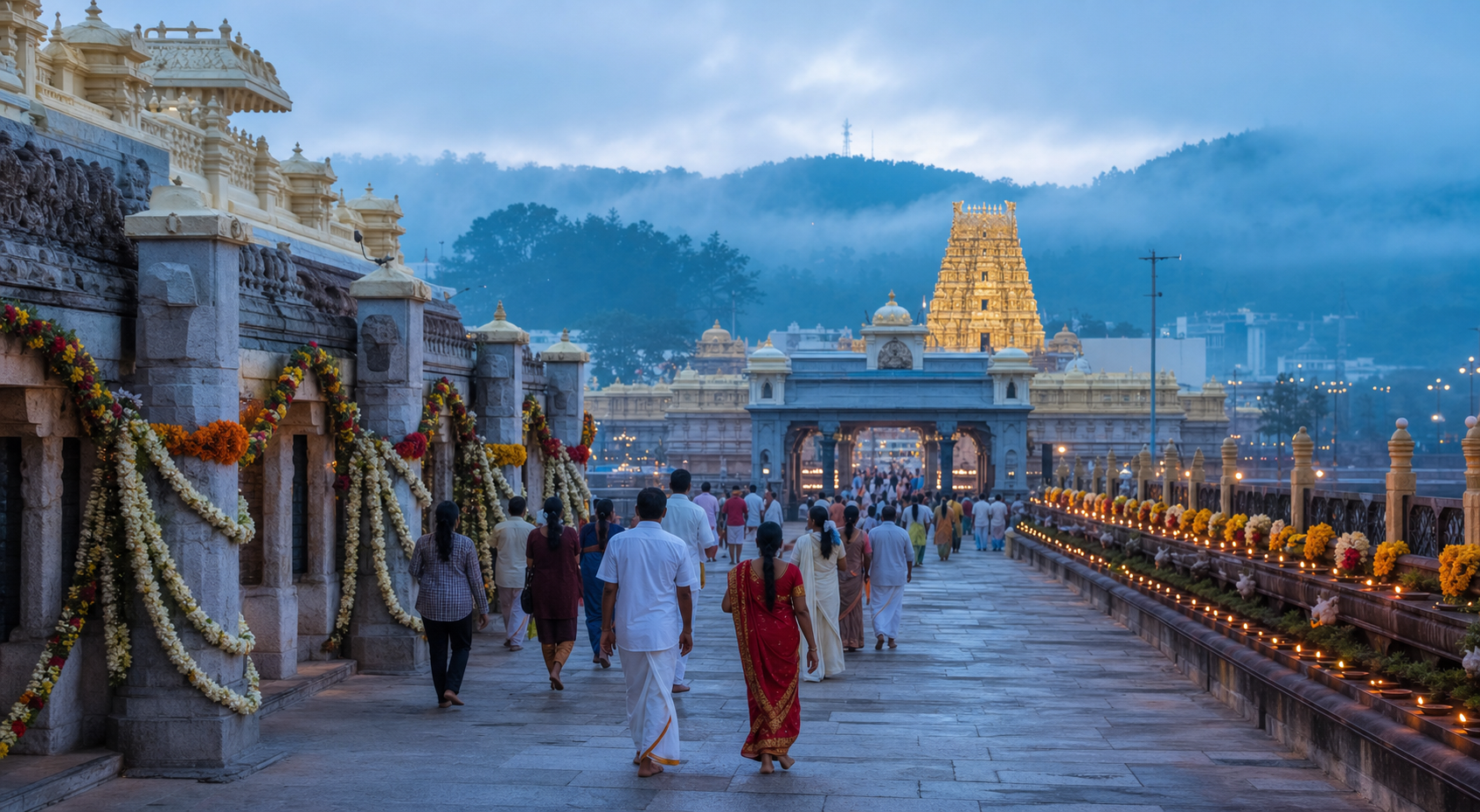
If you want to experience a temple festival in February 2026, do not begin by choosing a convenient weekend. Begin by choosing the shrine and the observance. Tirumala’s Sri Venkateswara Temple and Tirupati’s Sri Govindarajaswamy Temple belong to the same sacred landscape, but they do not have interchangeable calendars.
The safest plan separates the regular worship conducted throughout the month from festivals governed by lunar tithis. Daily kainkaryams give you a meaningful pilgrimage on any properly planned day. Ekadashi, Dwadashi, Pournami, Ratha Saptami and Teppotsavam require date-specific confirmation.
Key takeaways
- Decide whether your priority is Sri Venkateswara darshan at Tirumala, a visit to Sri Govindarajaswamy Temple in Tirupati, or both.
- February 2026 falls within the Magha-Phalguna devotional period, but the Gregorian month alone does not determine a lunar observance.
- Suprabhatam, Thomala Seva, Archana and other recurring services sustain Tirumala’s daily rhythm, although participation in a particular seva remains subject to the official schedule and admission arrangements.
- Ekadashi, Dwadashi and Pournami are the clearest observances to watch for at Sri Govindarajaswamy Temple.
- Treat Ratha Saptami and a February Teppotsavam as conditional until the TTD Panchang and temple announcements confirm the date and venue.
- Reserve darshan and accommodation through official TTD channels, then recheck timings and crowd instructions near your visit.
First decide which Tirupati pilgrimage you mean
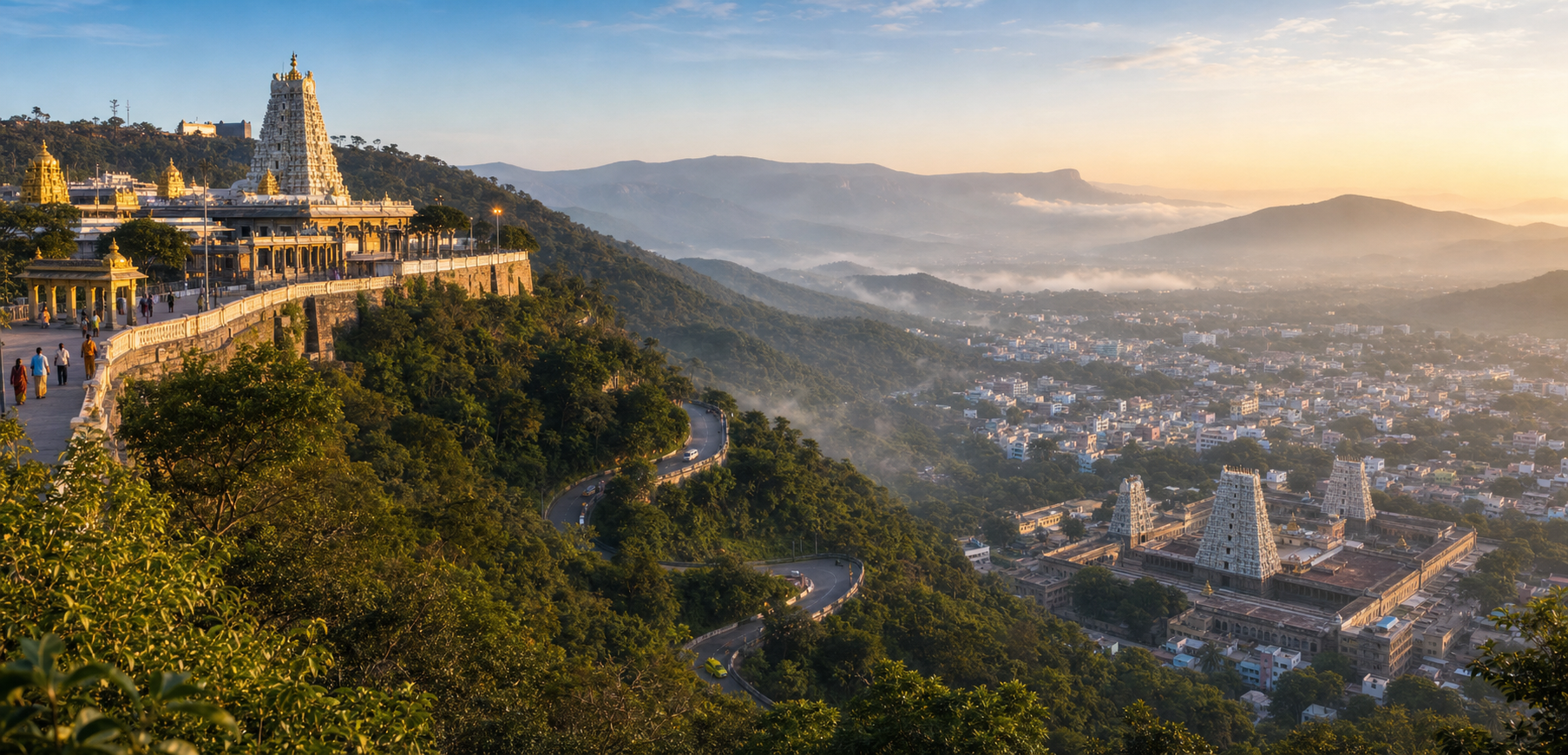
Sri Venkateswara Temple at Tirumala
If your non-negotiable purpose is darshan of Sri Venkateswara, make Tirumala the anchor of the trip. The temple’s nitya kainkaryams include Suprabhatam, Thomala Seva and Archana. Scheduled offerings may also include Visesha Puja, Sahasra Kalasabhishekam, Tiruppavada, Nijapada Darshanam and the evening Sahasra Deepalankarana.
These names should not be read as a promise that every pilgrim can attend every service. A ritual may be on the temple calendar while access to it remains separately scheduled or restricted. Check three things before arranging travel around a seva: whether it will occur on your date, whether pilgrims can participate, and whether separate admission is required.
Sri Govindarajaswamy Temple in Tirupati
Sri Govindarajaswamy Temple is the better city-based choice when you want Vaishnava worship, heritage and a less compressed visit. Its towering gopuram is a major Tirupati landmark, and the shrine was consecrated by Sri Ramanujacharya in 1130 CE. February’s Magha-Phalguna setting gives particular relevance to Ekadashi and Dwadashi vrata observances, Pournami alankarams and enhanced evening worship with mantra and music.
If you intend to visit both temples, do not treat the city temple as an item to squeeze into spare minutes around a fixed Tirumala slot. Give it a separate block of time. This protects your principal darshan from delays and lets you attend the city temple as a shrine rather than as a checkpoint.
Read the February calendar in three layers
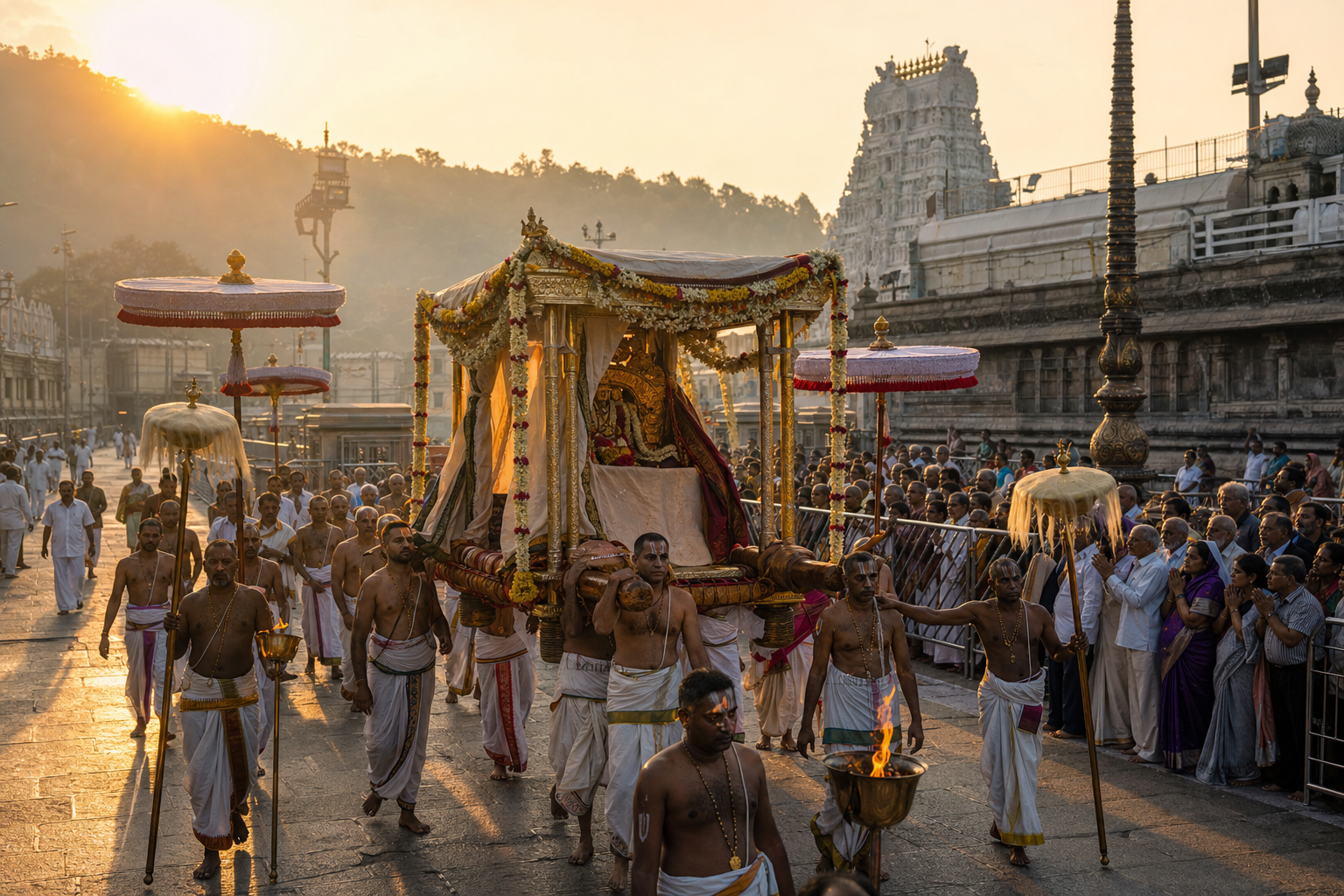
February intersects the Hindu lunisolar months of Magha and Phalguna. That makes a month-only festival list inherently incomplete: the operative tithi and the temple’s announced schedule determine the actual observance. Use the following distinction whenever you see a February festival name.
| Calendar layer | What belongs here | How you should plan |
|---|---|---|
| Recurring worship | Daily kainkaryams and scheduled weekly or arjitha sevas at Tirumala | Choose your travel dates around confirmed darshan arrangements, then check which services operate that day. |
| Tithi observances | Ekadashi, Dwadashi and Pournami worship, including special alankarams at Sri Govindarajaswamy Temple | Match the observance to the official TTD Panchang rather than assuming a Gregorian date. |
| Conditional festival possibilities | Ratha Saptami and a possible approach to Teppotsavam season | Do not book specifically for either event until an official notification confirms the date, temple and programme. |
Ratha Saptami can fall in February and may bring heightened Surya-related worship across Tirupati’s sacred landscape. That makes it a date to investigate, not a February guarantee. The same discipline applies to Teppotsavam. A late-February Phalguna Pournami may bring the calendar toward float-festival season; if the lunar alignment falls in March, the related observance moves with it.
This distinction prevents the most common planning error: confusing the possibility of an observance with confirmation of its date. Confirmation of a festival is also different from confirmation of your access. Verify the calendar first and participation arrangements second.
Build an itinerary that survives schedule changes
A workable pilgrimage plan has one fixed anchor and enough flexibility around it. Use this order:
- Name your primary purpose. Choose Sri Venkateswara darshan, a particular tithi at Sri Govindarajaswamy Temple, or a confirmed festival as the event that the rest of the trip must protect.
- Confirm the lunar date. Check the official TTD Panchang and current temple notifications. Do not rely on a generic festival calendar when the tithi controls the observance.
- Secure the controlled parts of the visit. Arrange darshan and accommodation through official TTD channels. A festival date does not replace a darshan reservation or other admission requirement.
- Ask which shrine hosts the programme. Tirupati and Tirumala are often used loosely in travel descriptions. Confirm the exact temple before planning transport or accommodation.
- Separate fixed and flexible activities. Place your allocated darshan slot first. Keep heritage visits, shopping and non-ticketed temple visits in blocks that can move without threatening it.
- Recheck close to departure. Look for altered timings, crowd-management measures, seva availability and local transit instructions.
If you have only one day, choose one principal temple and regard anything else as optional. If you have two days, a cleaner arrangement is to devote one block to Tirupati’s city temples and the other to Tirumala. If a specific festival is the entire reason for travelling, retain flexibility until its exact programme is confirmed.
If your travel dates are already fixed, do not regard the pilgrimage as unsuccessful when a hoped-for festival falls elsewhere. The continuing cycle of worship, Vedic recitation and evening lamps is not a substitute programme. It is the devotional foundation on which the special utsavams rest.
Prepare for worship, not only for the event
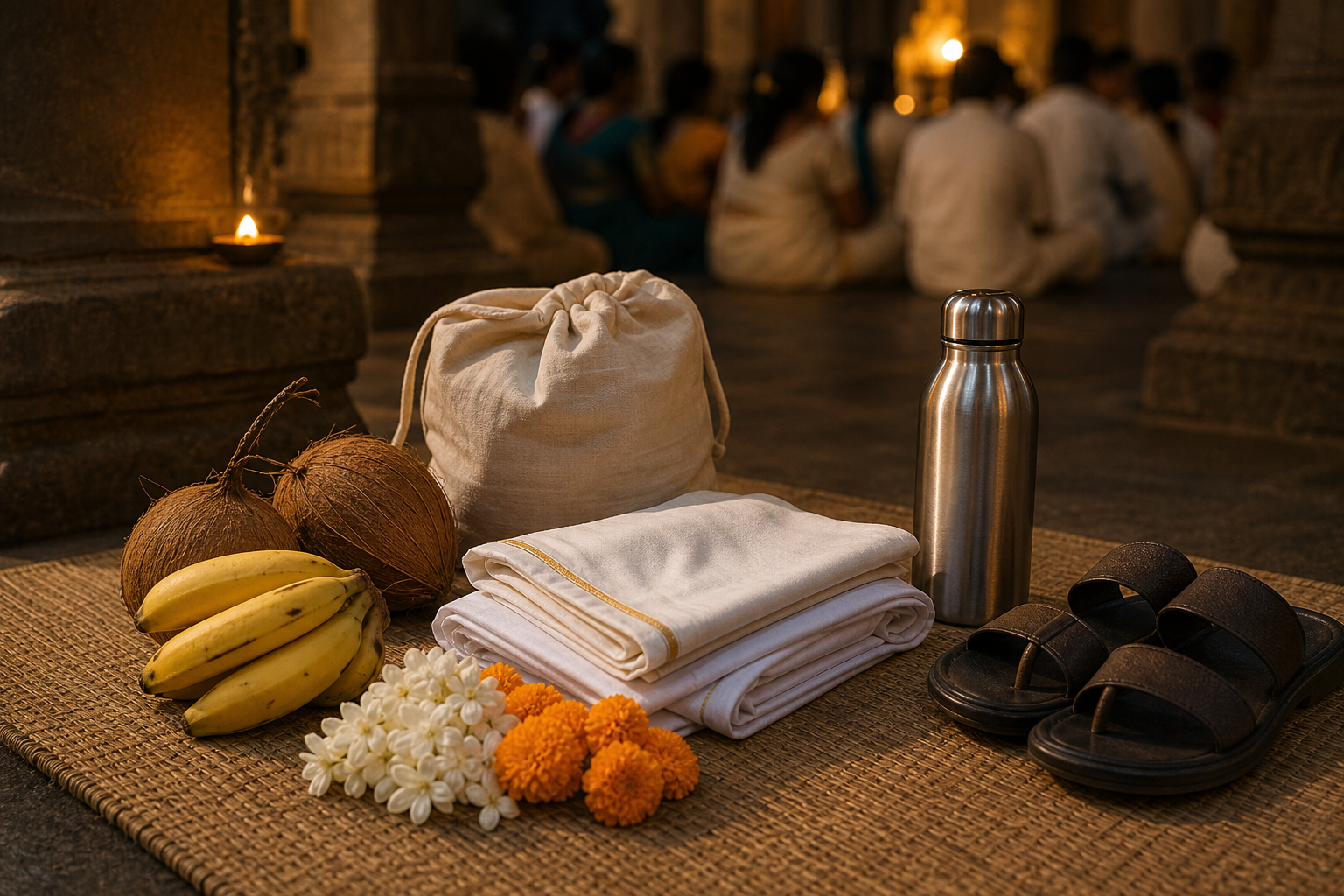
Good logistics protect your attention. A small amount of preparation can determine whether you enter the temple composed or spend the visit solving avoidable problems.
- Dress for the temple and the hour. Follow the applicable dress code and carry a light layer for an early-morning visit. February conditions are generally moderate, but the pre-dawn hills can still feel cool.
- Respect your allocated timing. Reach the correct reporting point with enough margin to follow local instructions. Do not build a second fixed commitment immediately against the end of a darshan slot.
- Plan for footwear before entering the queue. Check the current footwear rules and locker arrangements before approaching the temple entrance.
- Carry water appropriately. Hydrate before long waiting periods and follow restrictions at controlled entry points.
- Keep documents and booking details accessible. Every member of the group should know which temple, slot and booking applies, especially when family members become separated in a crowd.
- Let queue discipline become part of the vrata. Follow directions, avoid pressing ahead and make room for elderly pilgrims and families managing children.
The deeper choice is whether you are travelling to collect a festival sight or to participate in a rhythm of seva. A special alankaram, a line of lamps or a moment of darshan becomes more meaningful when the practical work has already been settled and your attention is available for worship.
Your next move is simple: choose the shrine, identify the observance, and verify its tithi and access conditions through official TTD information before committing to a festival-specific date.
References
- DharmaRenaissance Blog – Sri Govindarajaswamy Temple, Tirupati: Sacred February 2026 Festivals – An Insightful Guide
- DharmaRenaissance Blog – TTD Festivals in February 2026: A Comprehensive Guide to Sacred Tirumala Utsavams
