

If you are asking how to remain dharmic when your family, community, or freedom is threatened, you probably do not need another appeal to be fearless. You need to know what to do when fear has already arrived. The immediate task is to keep fear from choosing for you.
Dharmic resilience is disciplined continuity: protect life, preserve moral agency, coordinate with trustworthy people, and refuse actions that make survival dependent on needless harm. It cannot guarantee safety. It gives you a way to act without letting an aggressor dictate either your movement or your character.
In the first moments, make fear slow down
Acute danger compresses attention. You can become fixated on the most visible threat, miss a safer route, misread another person’s movement, or act merely to escape the discomfort of uncertainty. Under pressure, deliberate breathing and present-moment awareness can create enough mental space for clearer observation and measured choice.
Safety comes first. If danger is immediate, move toward the safest available place and seek emergency or trusted local help when possible. Do not remain exposed to finish a breathing exercise, retrieve replaceable belongings, record evidence, or prove your courage. Inner discipline is supposed to support protective action, not delay it.
- Get out of direct danger. Use the nearest safer option you can identify. Do not wait for a perfect plan while the present position is clearly unsafe.
- Take three slow breaths when there is enough safety to pause. Use them before a consequential choice, not as a ritual you must complete regardless of circumstances.
- Read conditions rather than your assumptions. Notice people, routes, terrain, sounds, unusual silence, and changes since you last looked. Fear tells stories; awareness checks them against what is actually present.
- Choose the next necessary action. Do not try to solve the entire crisis at once. Select the move that protects life, limits exposure, and preserves useful options.
- Reassess after moving. A route that was safe can become unsafe. A delay that was prudent can become dangerous. Resilience depends on adaptation, not attachment to the first plan.
Mindfulness in this setting is not inward withdrawal. It is accurate contact with changing conditions. Threat can make every delay feel cowardly and every movement feel courageous, but neither judgment is reliable. A well-timed pause may reduce exposure, while impulsive movement may carry danger toward other people.
Practise the three-breath pause during ordinary decisions. The point is not to manufacture constant vigilance. It is to make a calm beginning familiar enough that you can reach for it when attention contracts.
Use dharma as a decision filter, not a slogan
In calm times, it is easy to confuse integrity with rigid consistency: always confront, never retreat, never hide, never ask for help. Under threat, that self-image can become a liability. Dharma asks for right action in context. The same duty may require speaking openly in one situation, leaving quietly in another, and remaining still in a third.
Before a choice that could expose other people, run it through these questions:
- Does this action protect life and dignity, or only relieve my anger?
- Will it transfer danger to an uninformed bystander, neighbour, driver, host, or helper?
- Can the same objective be achieved through waiting, leaving, concealment, quiet coordination, or de-escalation?
- Am I responding to verified conditions, or to a conclusion fear has supplied?
- What information must be shared now, and what information would endanger someone if repeated?
- Could I explain this choice afterward without concealing the harm it caused?
Use the answers to choose a course, not to decorate a decision already made in anger. Courage is not the absence of fear, and it is not the performance of fearlessness. It is the ability to carry fear without handing it control of your judgment.
Ahimsa disciplines the method as well as the intention. Wanting to protect your community does not justify redirecting danger toward someone else, spreading an unverified accusation, or escalating a confrontation for revenge. At the same time, minimizing harm does not require remaining exposed to preventable danger. Distance, silence, concealment, altered timing, and a changed route may be morally preferable to a dramatic confrontation.
Compassion does not require naivety. You can refuse to dehumanize an aggressor while also refusing that person access, trust, information, or proximity. Many-sided understanding can correct a hasty judgment without turning obvious danger into an endless philosophical debate. Ethical clarity must remain connected to the conditions in front of you.
If every available option appears likely to create serious danger for other people, seek trained local assistance whenever it is safely available. A general spiritual framework cannot resolve the physical, legal, and operational facts of a particular emergency.
Prepare a trusted network before anyone needs rescuing
The heroic individual is a poor resilience plan. A frightened person without verified information can move into danger. Helpers who cannot communicate can duplicate effort, expose a safe location, or leave a vulnerable person unaccounted for. Social trust becomes useful only when it has a simple form people can follow under stress.
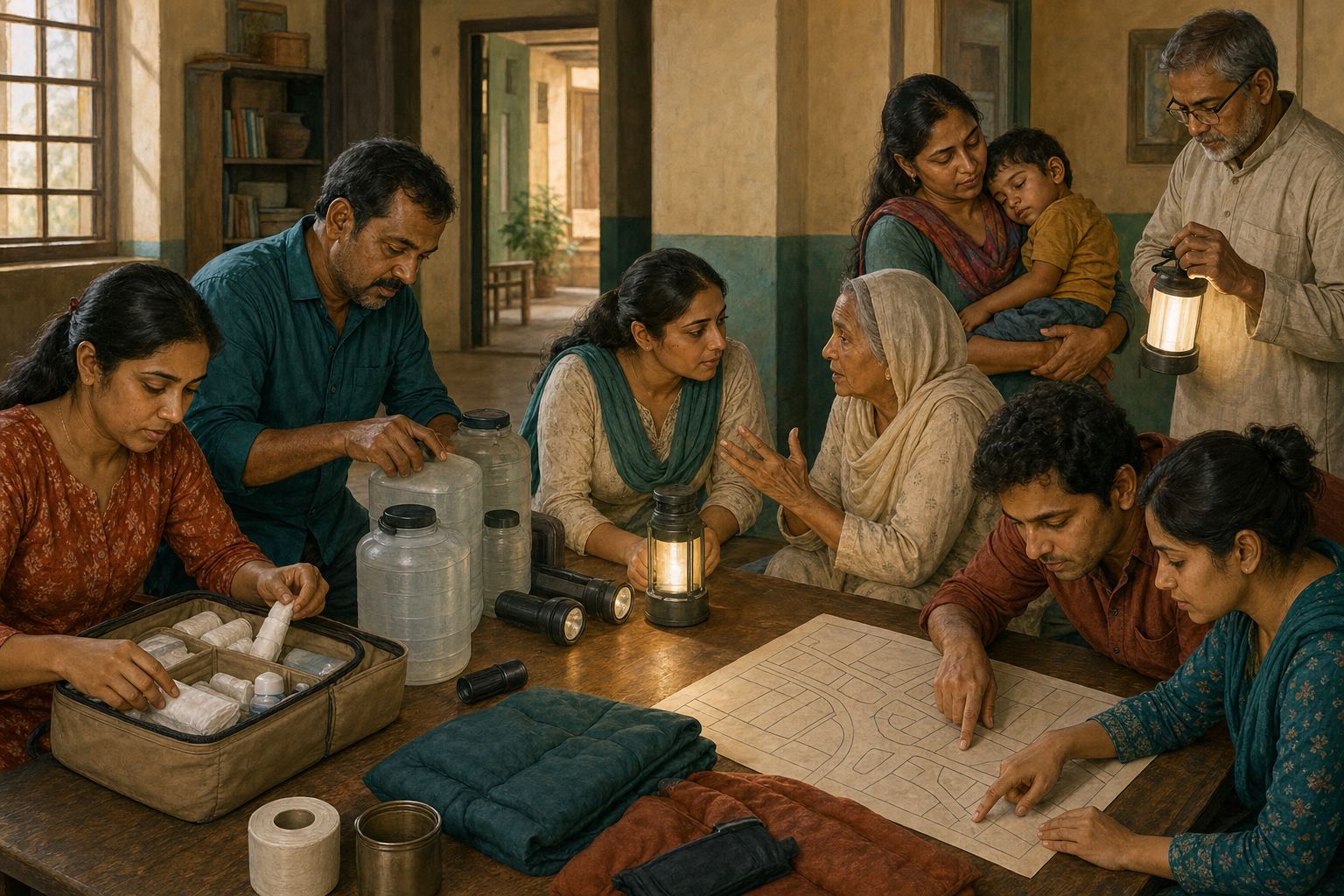
- Identify trusted contacts. Know who can verify conditions, who can provide practical help, and who should be informed if normal communication stops. Do not assume that a large contact list is the same as a reliable network.
- Agree on low-profile signals. Establish how someone will indicate that they are safe, delayed, or in need of help. Keep sensitive details out of public channels and avoid improvising ambiguous messages during a crisis.
- Map more than one route. Include alternative corridors, checkpoints, and places where the situation can be reassessed. Treat an old plan as a hypothesis, not a promise that conditions have remained unchanged.
- Assign care responsibilities. Decide who will help anyone unable to move, navigate, or communicate without assistance. A plan that works only for the fastest and most connected members is not a community plan.
- Make de-escalation the default. Nobody should initiate confrontation merely to display resolve. Movement, timing, restraint, and quiet coordination often protect more people than spectacle does.
- Review what failed. After a drill, disruption, or actual emergency, correct outdated contacts, confusing signals, unsafe assumptions, and gaps in care.
Information discipline matters as much as movement. Share a warning when doing so is safe and useful, but do not broadcast names, locations, routes, or unverified allegations simply because urgency makes immediate publication feel necessary. A message can protect one person while exposing another.
Do not build the network entirely around formal identity boundaries. A dependable neighbour, friend, driver, colleague, or stranger of conscience may become part of the protective fabric. Trust should be earned rather than assumed, but dharmic solidarity is weakened when we refuse help solely because it crosses a sectarian line.
Leave a place safer when circumstances allow. Close a gate, remove an avoidable hazard, communicate a verified warning, or prevent a frightened person from walking into the same danger. Never redirect a threat toward bystanders to create your own opening. Survival that casually spends another person’s safety has abandoned the ethic it claims to preserve.
Train distinct dharmic virtues, then repair after the crisis
Hindu, Buddhist, Jain, and Sikh traditions do not become interchangeable because they share moral concerns. Their disciplines have distinct meanings and settings. Yet each offers a practical safeguard against a familiar failure under pressure.
| Dharmic frame | Discipline under threat | Failure it helps check |
|---|---|---|
| Hindu | Dharma directs right action in context; dhyana supports clarity; shraddha steadies resolve. | Impulsive action or paralysis caused by losing sight of duty. |
| Buddhist | Mindfulness keeps attention with present conditions; karuna preserves concern for living beings. | Panic, fixation, and the dehumanization of everyone associated with a threat. |
| Jain | Ahimsa presses action toward the least harmful course; Anekantavada checks one-sided judgment. | Needless escalation and certainty built from an incomplete view. |
| Sikh | Seva turns courage toward service, solidarity, and the protection of dignity. | Self-protective isolation and courage reduced to personal display. |
Choose practices rooted in your own tradition rather than assembling these words into a generic spiritual mixture. The shared grammar is useful because it helps communities cooperate: clarity before reaction, protection without cruelty, restraint without surrender, and service without self-advertisement. It does not erase differences in doctrine or discipline.
You can rehearse that grammar in ordinary life. Before a consequential choice, take three slow breaths and ask: What did I actually observe? What story did fear or anger add? Which available action reduces harm? Who needs service from me now? Repetition turns an admired value into a usable habit.
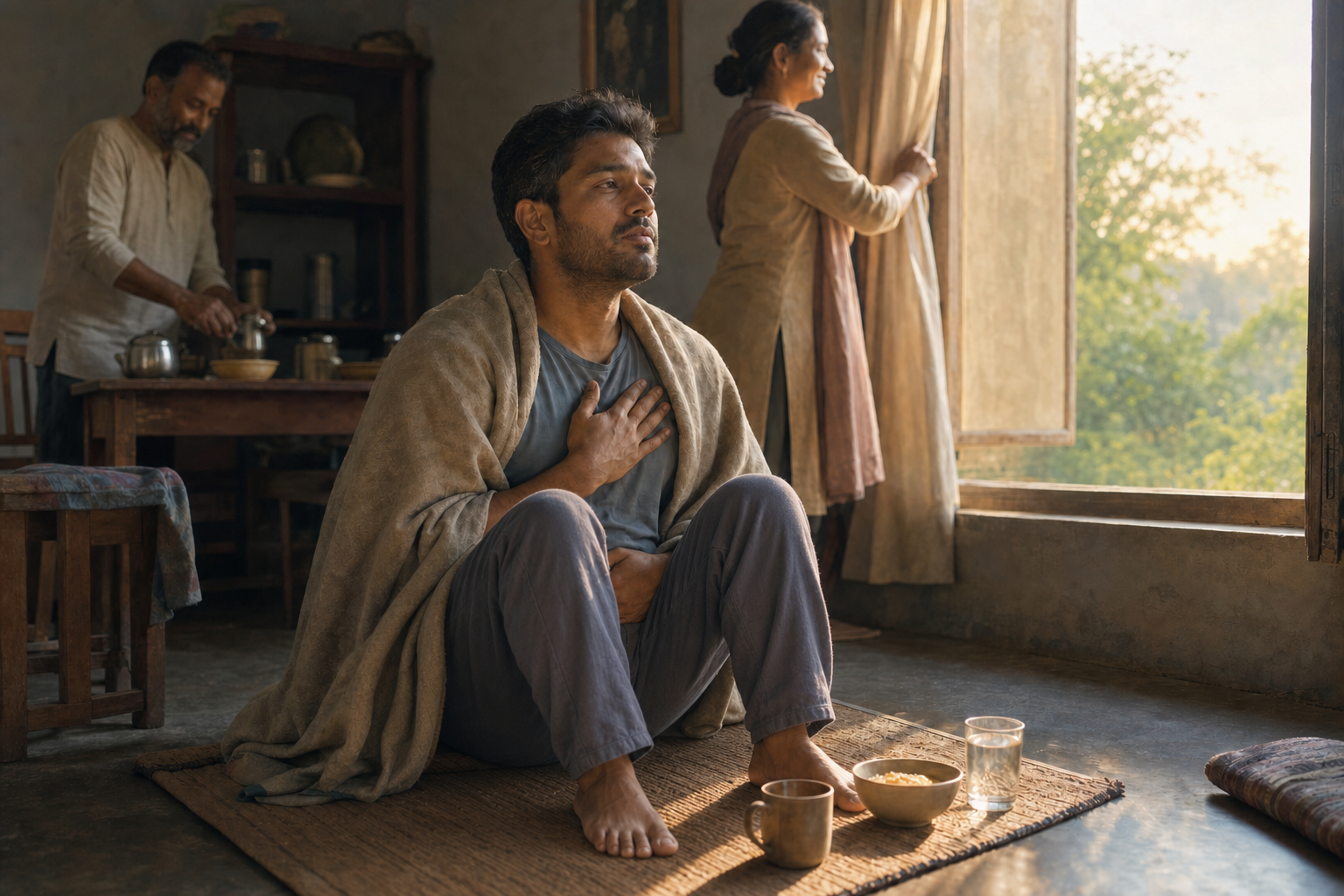
Recovery is part of resilience. Once immediate safety has been restored, reconnect with trusted people and record a factual account of what happened. Separate observations from assumptions. Note which contact, route, signal, or decision helped and which created confusion. Use the review to improve the plan, not to find a convenient person to blame.
Prayer, breathwork, mindfulness, reflective journaling, and gratitude can help integrate the experience. Gratitude need not pretend that an injustice was good. It can acknowledge the people, decisions, and inner capacities that preserved life within something that should not have happened.
Spiritual discipline is not a substitute for clinical care. If distress persists or interferes with daily life, seek a qualified mental-health professional; spiritual care can accompany that support. The goal is not to turn vigilance into a permanent identity. It is to let vigilance mature into discernment and to turn what was learned into safer service for others.
Key takeaways
- Move out of immediate danger before attempting any reflective practice.
- Use three slow breaths, when it is safe to pause, to recover enough attention for a consequential choice.
- Judge an action by whether it protects life, limits exposure, and avoids transferring danger to bystanders.
- Prefer de-escalation, timing, quiet coordination, and adaptable routes over performative confrontation.
- Prepare trusted contacts, clear signals, alternative routes, and care responsibilities before a crisis.
- Draw from your own dharmic discipline while cooperating through shared commitments to clarity, compassion, restraint, and service.
- Treat recovery, honest review, and appropriate professional support as part of resilience.
Begin with the smallest useful preparation: agree how your household or community will check in, identify alternative routes, and rehearse the three-breath pause during ordinary decisions. The aim is not to live in anticipation of attack. It is to become harder to panic, harder to isolate, and harder to provoke into abandoning dharma.


References
