
If you are trying to work out whether Holi means the Holika Dahan observance, the next day’s colors, a temple celebration, or all of them, begin by separating the moments. Holika Dahan comes first. Dhuleti is the colorful celebration that follows it.
That distinction helps you do more than read the calendar correctly. It lets you preserve the movement of the festival: a threshold is marked, spring is welcomed, and joy is then shared with the wider community. You can celebrate fully without turning Dhuleti into a disorderly free-for-all.
Read Holi as a sequence, not a single event
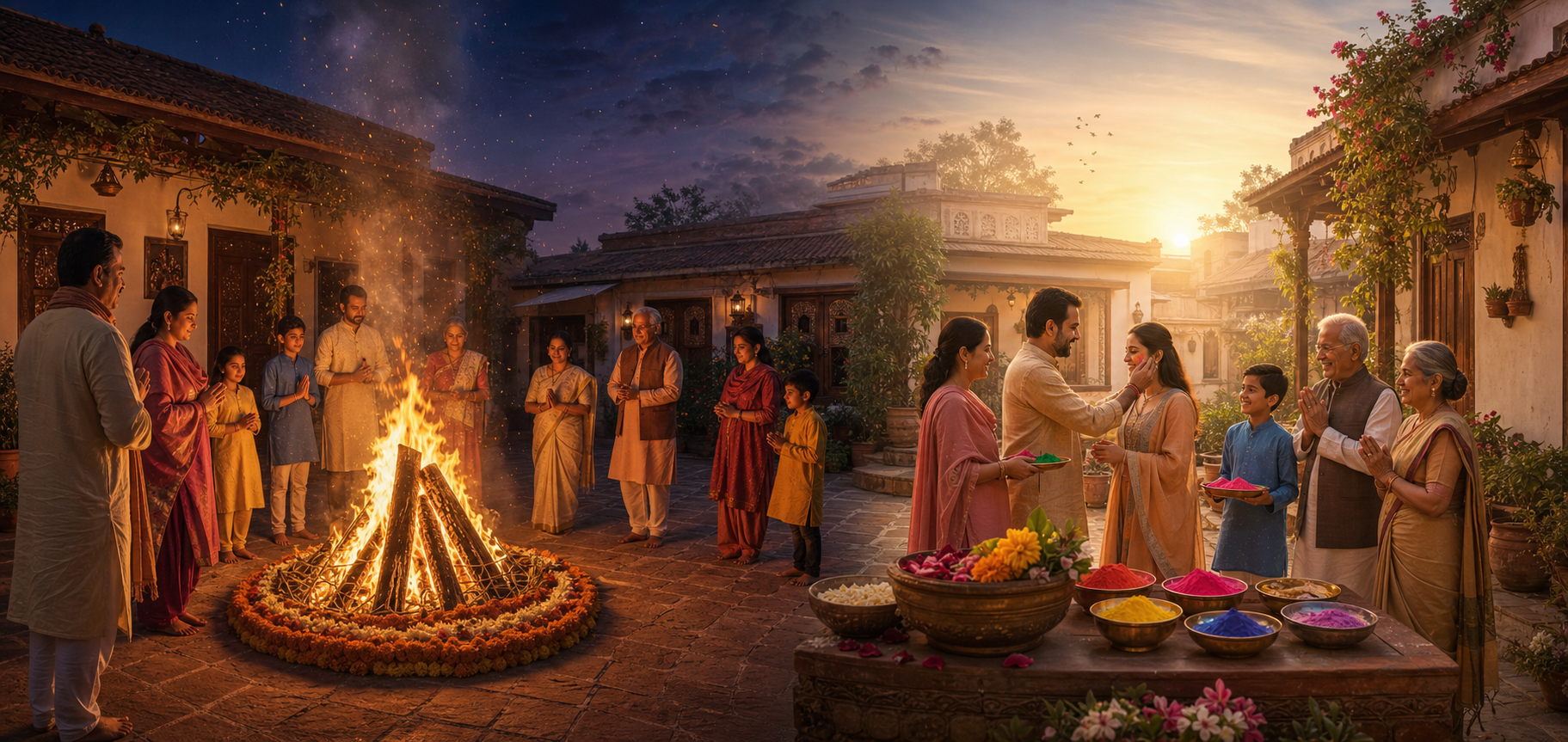
Holika Dahan comes before the colors
Holi can appear under one date in a general calendar even though its observance unfolds in stages. Holika Dahan precedes the day of color. The following celebration is called Dhuleti, Holi Dhuleti, or Dhuleti Holi in different communities.
Keep that order clear when planning a family or community gathering. Do not move every activity into one undifferentiated party simply for convenience. If you participate in Holika Dahan, let that observance retain its own focus. Bring out the colors on Dhuleti unless your local tradition directs otherwise.
Dhuleti is the outward, communal culmination
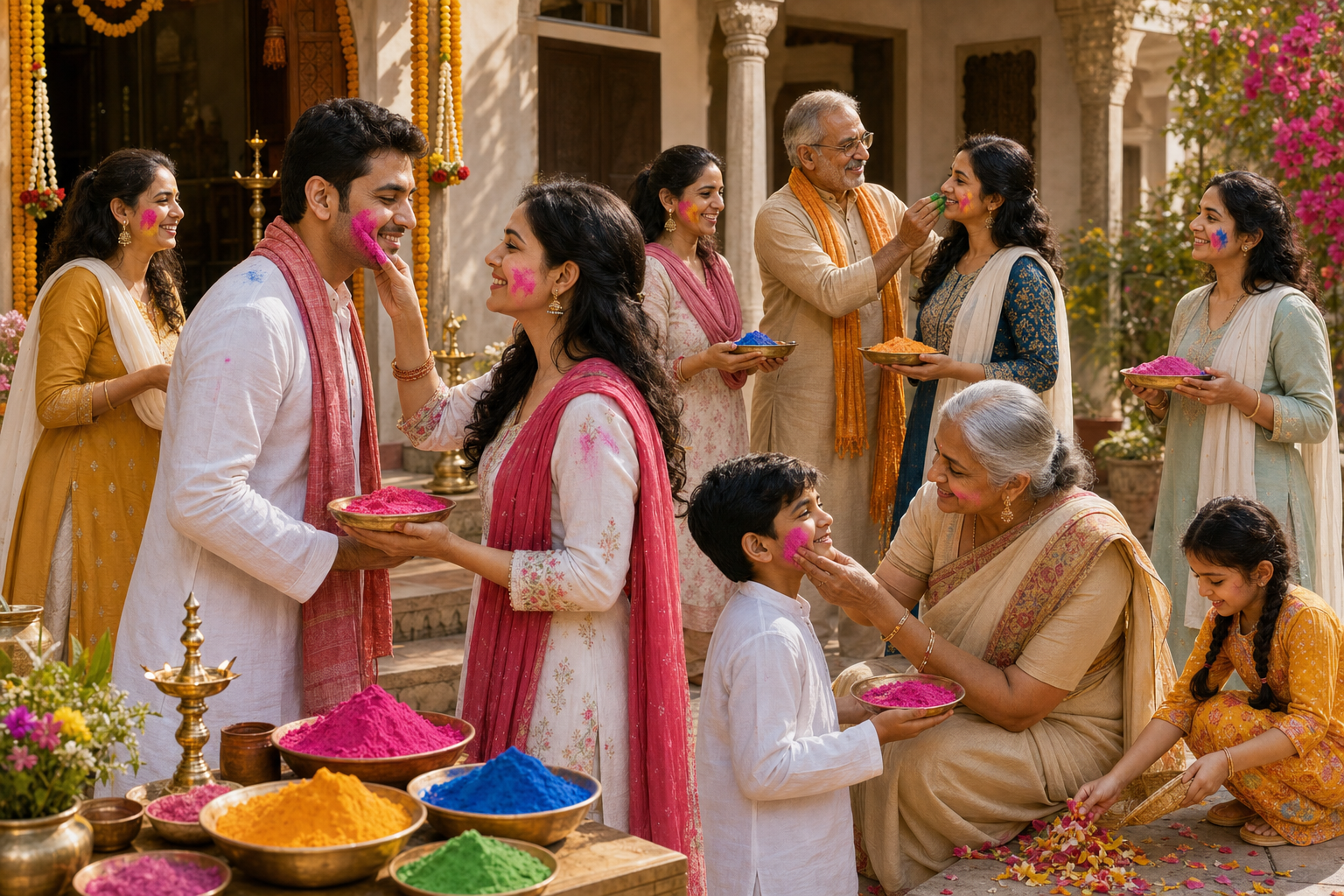
Dhuleti carries the festival into shared space through color, sweets, music, dance, and friendly participation. It welcomes the changing season while allowing ordinary social distance to soften for a time. In some regional and temple traditions, it also concludes an extended eight-day observance associated with Holi.
For the 2026 observance, Dhuleti falls on March 4 in India. If you live outside India, do not assume that an Indian calendar image settles the local schedule. Time zones and community calendars can produce a difference, so check the panchang used by your household or the published program of a nearby temple.
Let color express joy without overriding dignity
The loosening of social boundaries is one of Dhuleti’s charms, but it is temporary warmth, not permission to ignore another person. A color celebration remains dharmic only when joy and restraint stay together. Someone’s reluctance is not a challenge to overcome, and surprise does not become harmless merely because it happens during Holi.
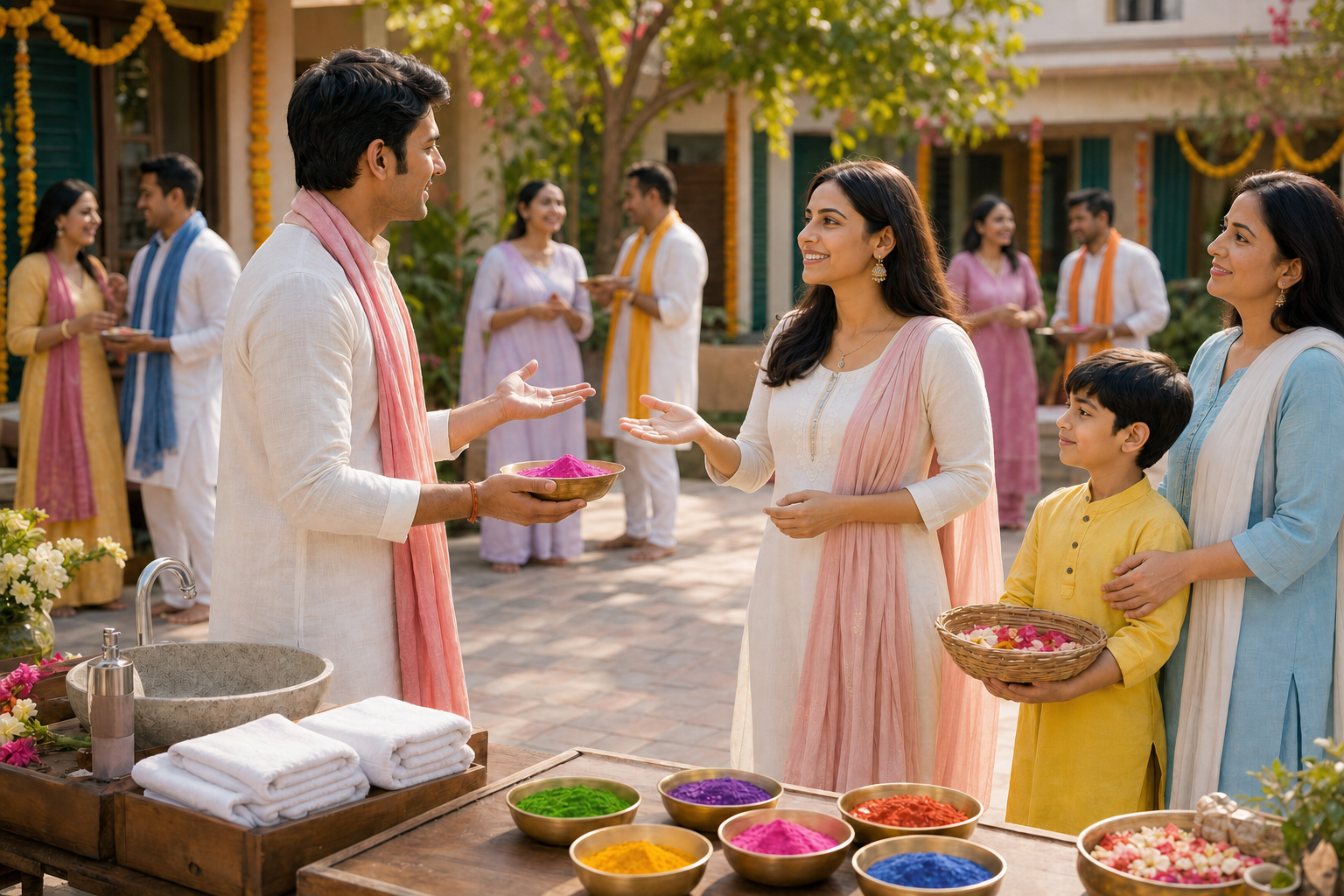
Make consent visible rather than assumed. Ask before applying color, especially to a person’s face or clothing. Accept a refusal immediately. Give guests a way to join the music, food, darshan, or conversation without being colored. Children should also learn that participation is mutual: enthusiasm does not cancel another child’s choice.
The same principle applies to materials and water. Choose herbal or natural colors when available, provide a dry-celebration option, and avoid wasteful water use. These are not modern additions that weaken the festival. They are practical ways to protect the dignity, inclusiveness, and environmental responsibility of the gathering.
Dhuleti can also create an opening for goodwill. A warm greeting or shared sweet may repair ordinary distance between friends and neighbors. It should not, however, be used to pressure someone into contact where a serious boundary exists. Harmony grows through willing participation, not forced familiarity.
Plan an observance that keeps devotion at its center
You do not need an elaborate program to give Dhuleti spiritual and cultural depth. You do need to decide what kind of gathering you are hosting and tell people clearly. A temple-centered observance, a family celebration, and an open neighborhood color event can all be appropriate, but guests should not have to guess which one they are entering.
- Confirm the local date and time through your household panchang, temple, or community calendar. This matters especially outside India.
- Choose the center of the gathering: family worship, temple darshan, devotional music, community color play, or a deliberate sequence of these activities.
- Describe the format in the invitation. State whether colors and water will be used and whether guests can participate without either.
- Set the consent rule before play begins. Color is applied only after permission, and declining color does not exclude anyone from the celebration.
- Prepare herbal or natural colors, sweets, music, and an area where people can remain color-free. Use water mindfully rather than making excess part of the spectacle.
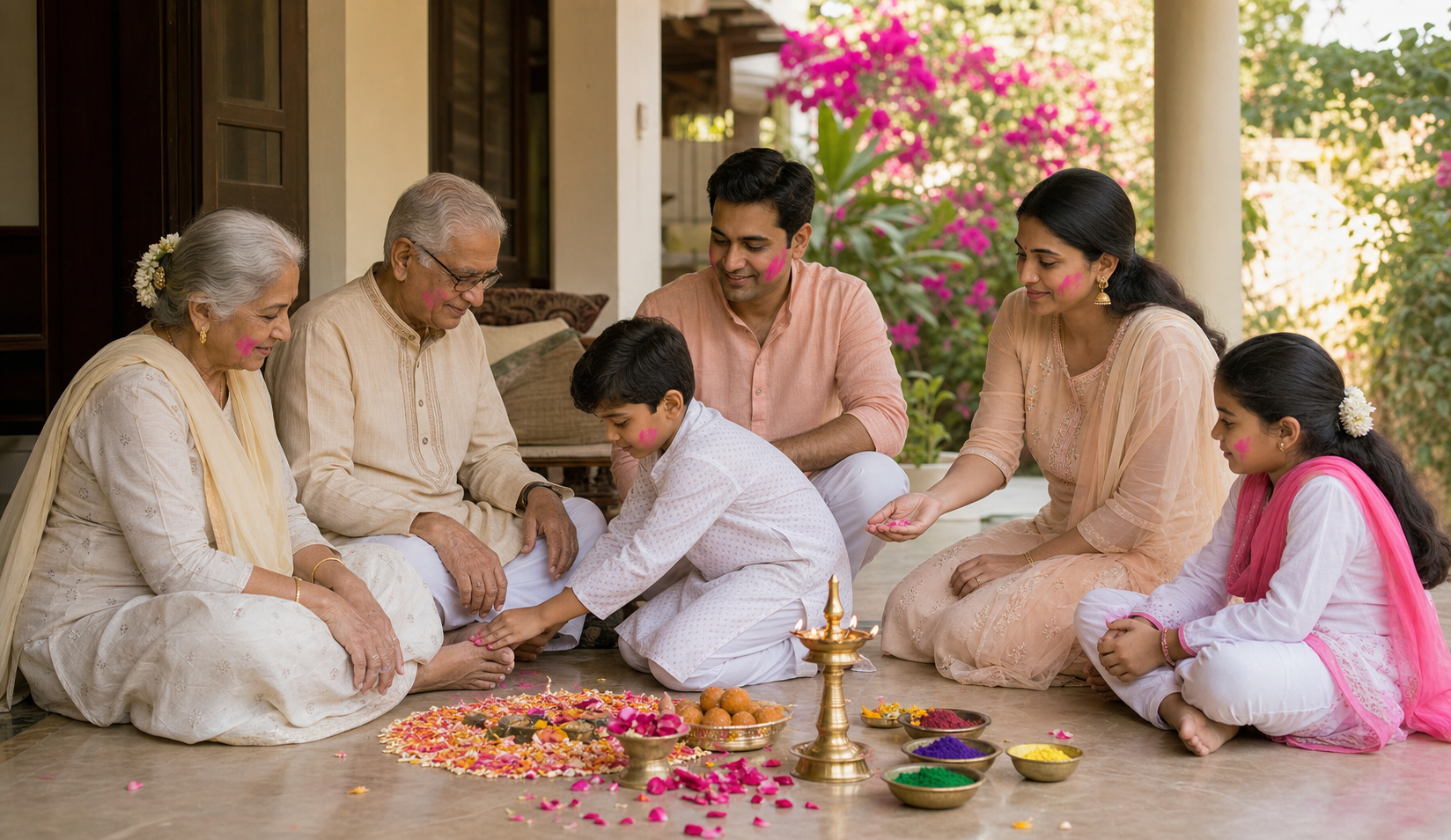
- Begin with a grounding moment appropriate to your tradition, such as darshan, prayer, or devotional music. This keeps the celebration connected to bhakti rather than reducing it to entertainment.
- Close with gratitude and goodwill. Do not let the event trail into unwanted color play after participants have indicated that they are finished.
If you are attending rather than hosting, ask about the format in advance. You can say that you welcome dry color but not water, that you prefer color away from your face, or that you will participate without color. Clear expectations prevent resentment and make it easier for everyone to relax.
Recognize regional forms without flattening them
Dhuleti does not look identical across Bharat. Several North Indian Krishna temples observe the day as Vasanatotsav, welcoming spring through devotional music, floral decoration, and serene darshan. In parts of western India, the name Dhulivandan carries a respectful and cheerful acknowledgment of the festival’s conclusion. Elsewhere, the public play of color may be the most visible element.
These names should help you listen, not tempt you to impose a universal script. When visiting a temple or joining another region’s community, ask what the local name signifies and follow the host tradition. Do not assume that every Dhuleti event must be noisy, that every Vasanatotsav centers on public color play, or that one household’s custom defines Holi for everyone.
Holi remains rooted in Hindu tradition, even though its emphasis on friendship, compassion, peace, and social harmony can resonate across the wider dharmic family. Buddhists, Jains, Sikhs, and neighbors from other backgrounds may participate in open cultural gatherings, but inclusion should not be achieved by pretending that every tradition has the same ritual calendar. Describe the occasion accurately as a Hindu festival, welcome guests respectfully, and keep every form of participation voluntary.
This balance matters in the diaspora, where a single gathering may introduce Holi to people who have never encountered it. Explain the sequence, the meaning of the colors, and the rules of participation before the play starts. A short, accurate introduction serves the tradition better than either embarrassment about its Hindu roots or exaggerated claims that erase genuine differences.
Key takeaways
- Holika Dahan and Dhuleti are connected but distinct: the color celebration follows Holika Dahan.
- Dhuleti falls on March 4 in India in 2026; outside India, confirm the date with a local panchang or temple calendar.
- The colors express renewal, springtime joy, friendship, and a temporary easing of social distance.
- Consent is part of a dignified celebration. Ask before applying color and provide a genuine way to participate without it.
- Natural or herbal colors and mindful water use preserve enjoyment while reducing avoidable harm and waste.
- Vasanatotsav and Dhulivandan reflect regional and temple traditions; follow local practice rather than treating one form as universal.
If you are preparing for Dhuleti, settle three things now: verify the local date, tell guests exactly what kind of observance you are holding, and make the permission rule explicit. Once those foundations are in place, color can do what it does best: turn shared joy into friendship without costing anyone their dignity.
References
