
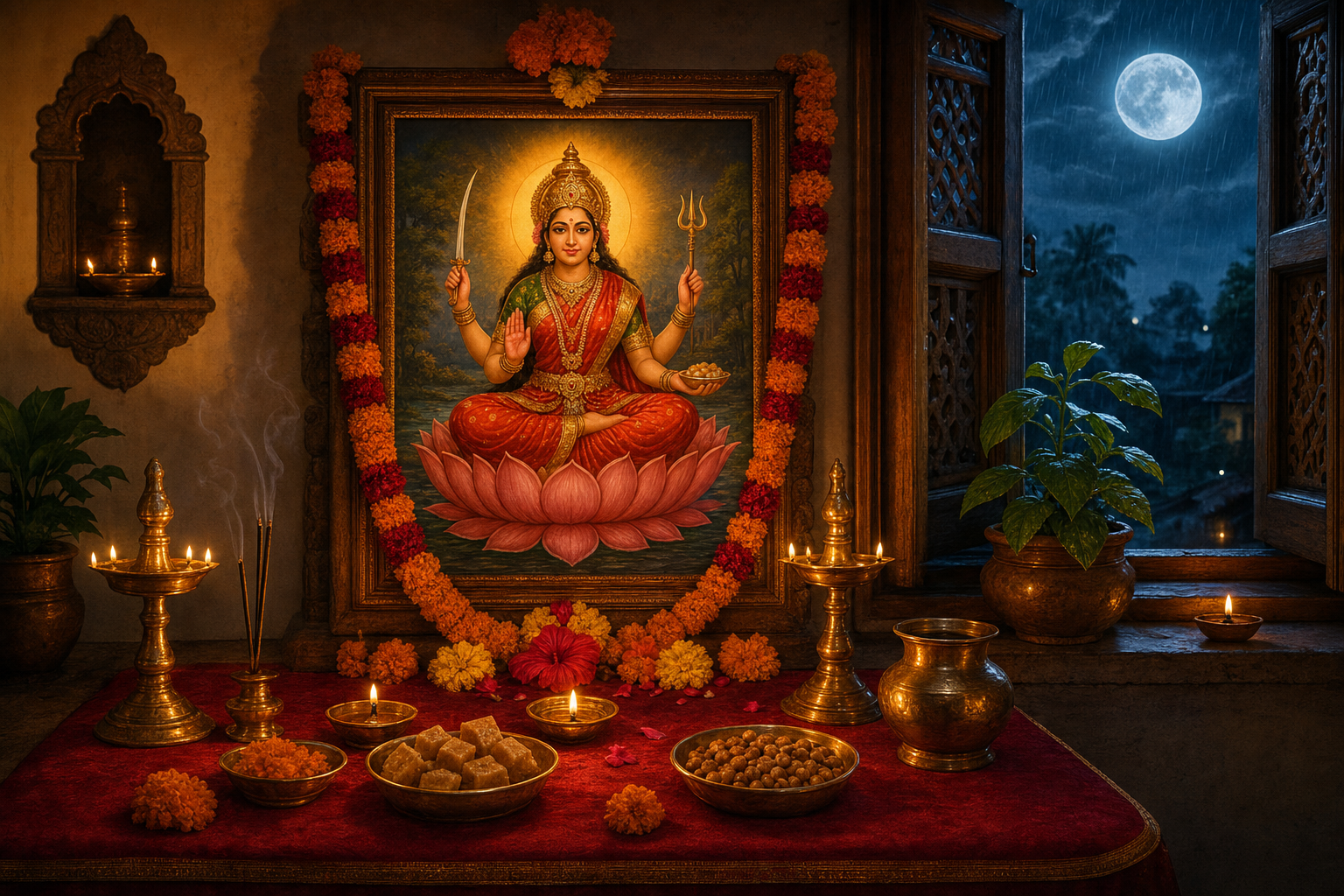
If you are arranging your family’s 2026 calendar, set aside August 28 for Santoshi Mata Jayanti. Because the observance shares Shravan Purnima with Rakhi Pournima, decide in advance how prayer, temple attendance, and family commitments will fit together.
You do not need to turn the day into a collection of rules gathered from different traditions. Start with the established date and devotional purpose, follow your household or temple practice where one exists, and keep contentment at the center of your sankalpa.
The date and calendar anchor for 2026

Santoshi Mata Jayanti commemorates the birth of Goddess Santoshi Maa. In 2026, it falls on August 28 and is observed on Shravan Purnima, also called Rakhi Pournima.
- Civil date: August 28, 2026.
- Calendar basis: Shravan Purnima, the full-moon tithi of the Shravan period.
- Associated name: Rakhi Pournima.
- Purpose: The Jayanti, or birth observance, of Santoshi Maa.
Put the civil date in your calendar now. If you plan to attend a temple, check that temple’s announced worship hours before fixing the rest of the day. A festival date tells you which day to reserve; the local schedule tells you when a particular puja or gathering will actually take place.
Choose an observance you can follow with integrity
The soundest practice is the one rooted in a tradition you actually know. If your family already has a Santoshi Maa observance, ask the person who maintains it which prayers, offerings, and sequence belong to that practice. If you worship at a temple, follow its instructions about timing and what devotees should bring.
If you have neither an inherited household method nor temple guidance, keep the home observance deliberately simple. Prepare a clean worship space, use the image or murti with which you ordinarily pray, make your sankalpa, offer prayer and gratitude, and conclude respectfully. Familiar family prayers are better than an elaborate procedure assembled from unrelated customs.
This distinction matters: a personal devotional act can be sincere without being presented as a mandatory rule for every devotee. Say plainly when something is your household custom. That protects both freedom of bhakti and the integrity of established traditions.
If your family also observes Rakhi, plan both commitments before the day arrives. Decide when the Santoshi Maa prayer will take place, who needs to be present, and whether temple travel affects the family gathering. Sharing a calendar date does not require collapsing two observances into one indistinct event.
Make contentment more than the theme of a prayer
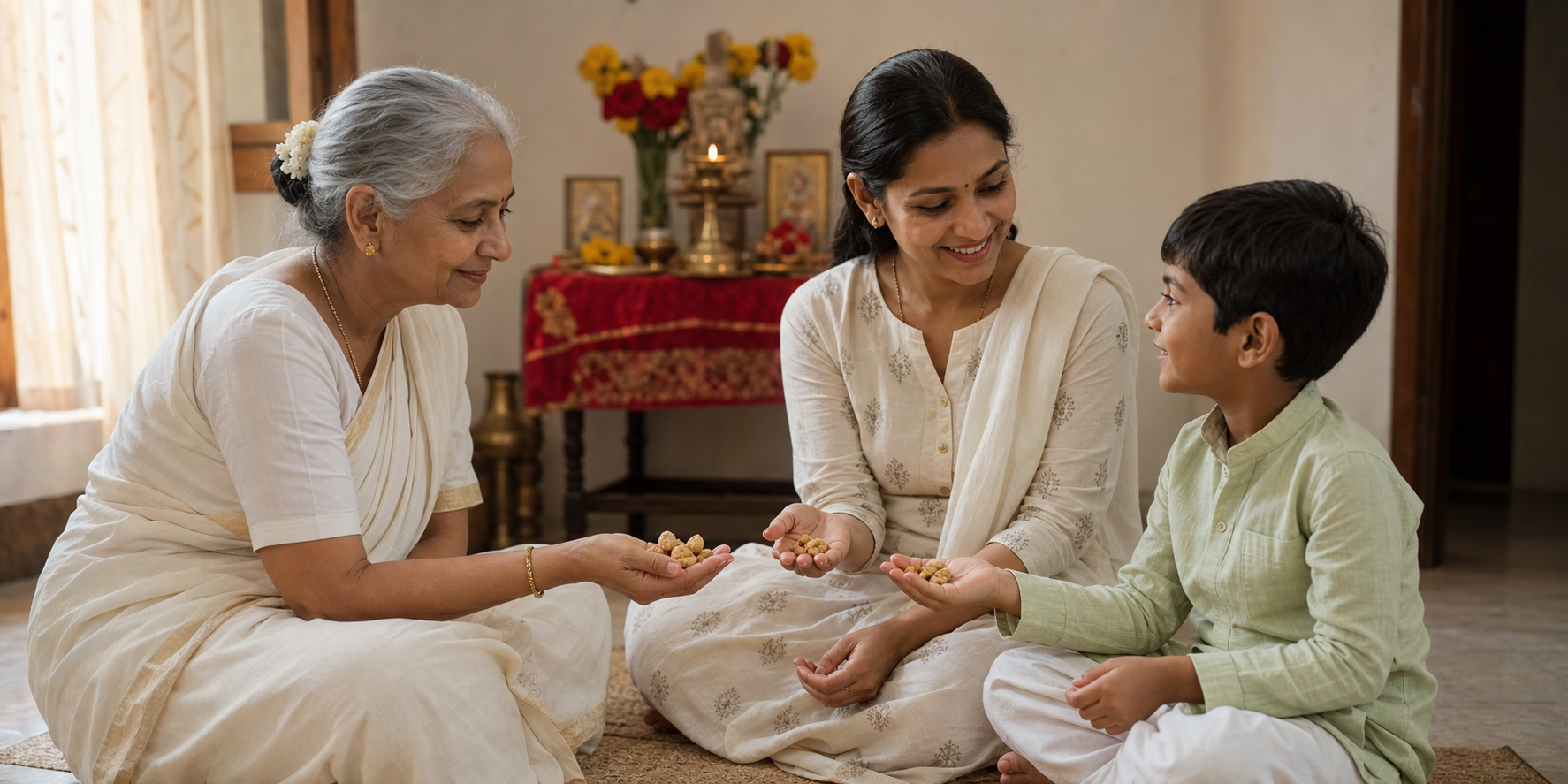
Santoshi Maa is revered as an emblem of contentment and is worshipped for contentment and prosperity. That pairing gives you a practical way to shape the day. Prosperity without contentment can become an endless demand for more; contentment without responsible effort can become an excuse for passivity. Hold the two together.
Before the observance, write a short sankalpa that you can understand and act upon. Use this three-part structure:
- Name what is already sufficient. Identify a relationship, responsibility, ability, or provision for which you are genuinely grateful.
- Name one restless habit. Choose a pattern of comparison, complaint, or unnecessary acquisition that you are willing to restrain.
- Name one responsible action. Decide how you will care for what you already have, assist someone, repair a neglected duty, or use your resources more wisely.
Keep the sankalpa small enough to remember after the puja. A promise that changes one recurring action is more useful than a grand declaration forgotten the next morning. If you pray for prosperity, name the duty that should accompany it: honest effort, careful stewardship, generosity, or support for your family.
Avoid treating worship as a bargain in which an offering guarantees a material result. Ask for grace, clarity, and well-being, but let your own commitment address the conduct that is within your control. The observance then becomes a discipline of contentment rather than another occasion for anxious acquisition.
A recent deity can still inspire serious bhakti
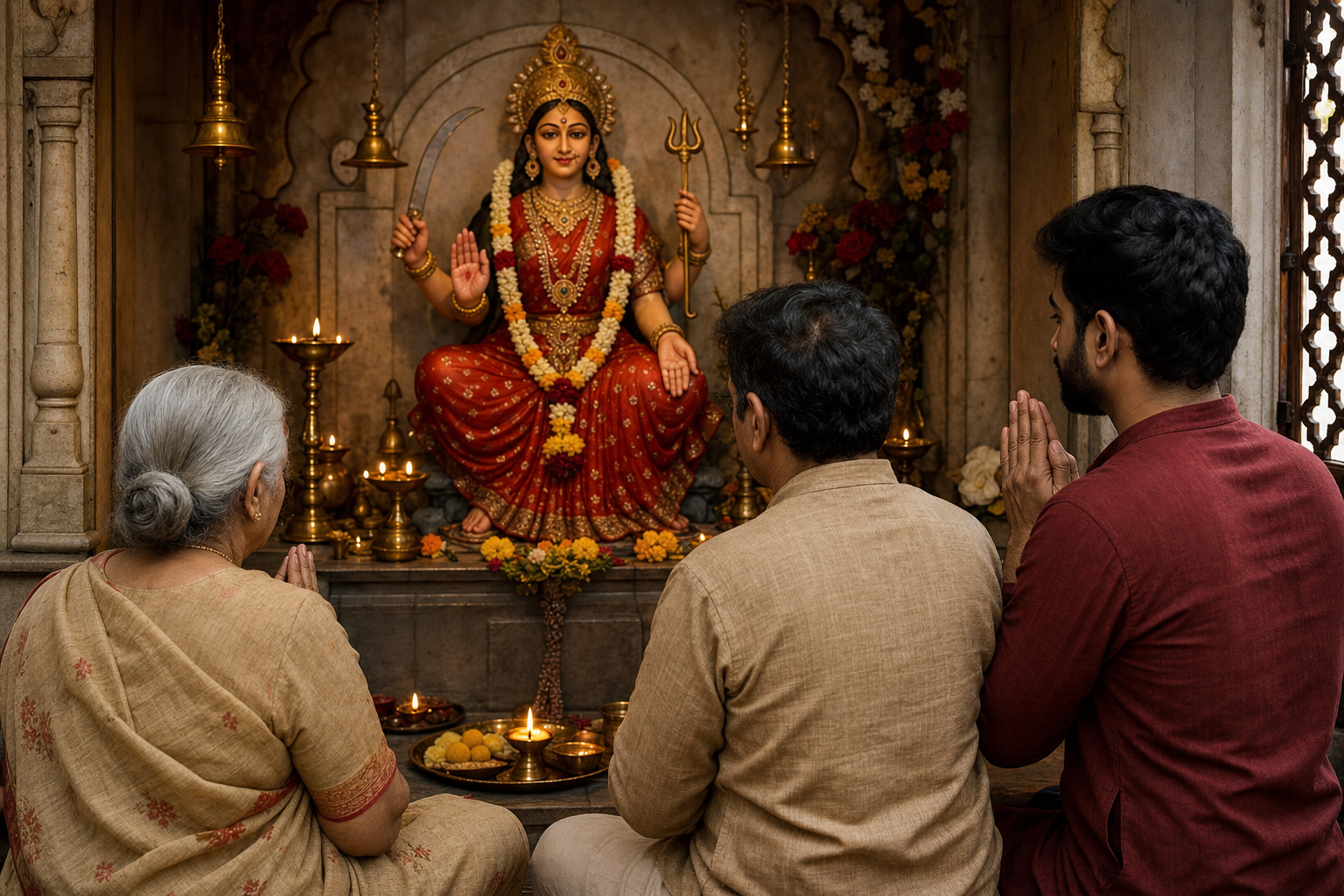
Santoshi Mata is commonly described as a recent Hindu goddess with a popular devotional following. Acknowledging that description need not diminish anyone’s worship. Chronology and devotional meaning answer different questions: one concerns when a form of worship became prominent, while the other concerns how devotees encounter and honor the Divine.
You do not need to manufacture an unsupported claim of antiquity to make the observance respectable. Nor should novelty be used as a shortcut for dismissing sincere bhakti. The more honest course is to describe the tradition without exaggeration and then judge its practice by the dharmic qualities it cultivates. In this case, the central quality is contentment joined to a prayer for flourishing.
This is also useful when explaining the day to children or relatives unfamiliar with Santoshi Maa. Tell them whom the family is honoring, why August 28 has been set aside, and what contentment should look like in conduct. That gives them something clearer to carry forward than an unsupported origin story or a list of prohibitions without context.
Key takeaways for Santoshi Mata Jayanti 2026
- Santoshi Mata Jayanti falls on August 28 in 2026.
- The observance is associated with Shravan Purnima, also known as Rakhi Pournima.
- Check your temple’s own schedule if you intend to participate there.
- Follow your established family or temple paddhati instead of combining unverified rules from several traditions.
- If you are observing at home without an inherited method, keep the worship simple, respectful, and centered on prayer and gratitude.
- Turn contentment into one concrete practice by restraining a restless habit and caring better for something already entrusted to you.
- If Rakhi is also part of your family’s day, arrange the sequence of both observances in advance.
Mark August 28 now, ask your temple or family elders about the practice you will follow, and prepare one honest sankalpa before the day arrives. Let the observance leave you not merely asking for more, but recognizing enough and using it well.
References
