
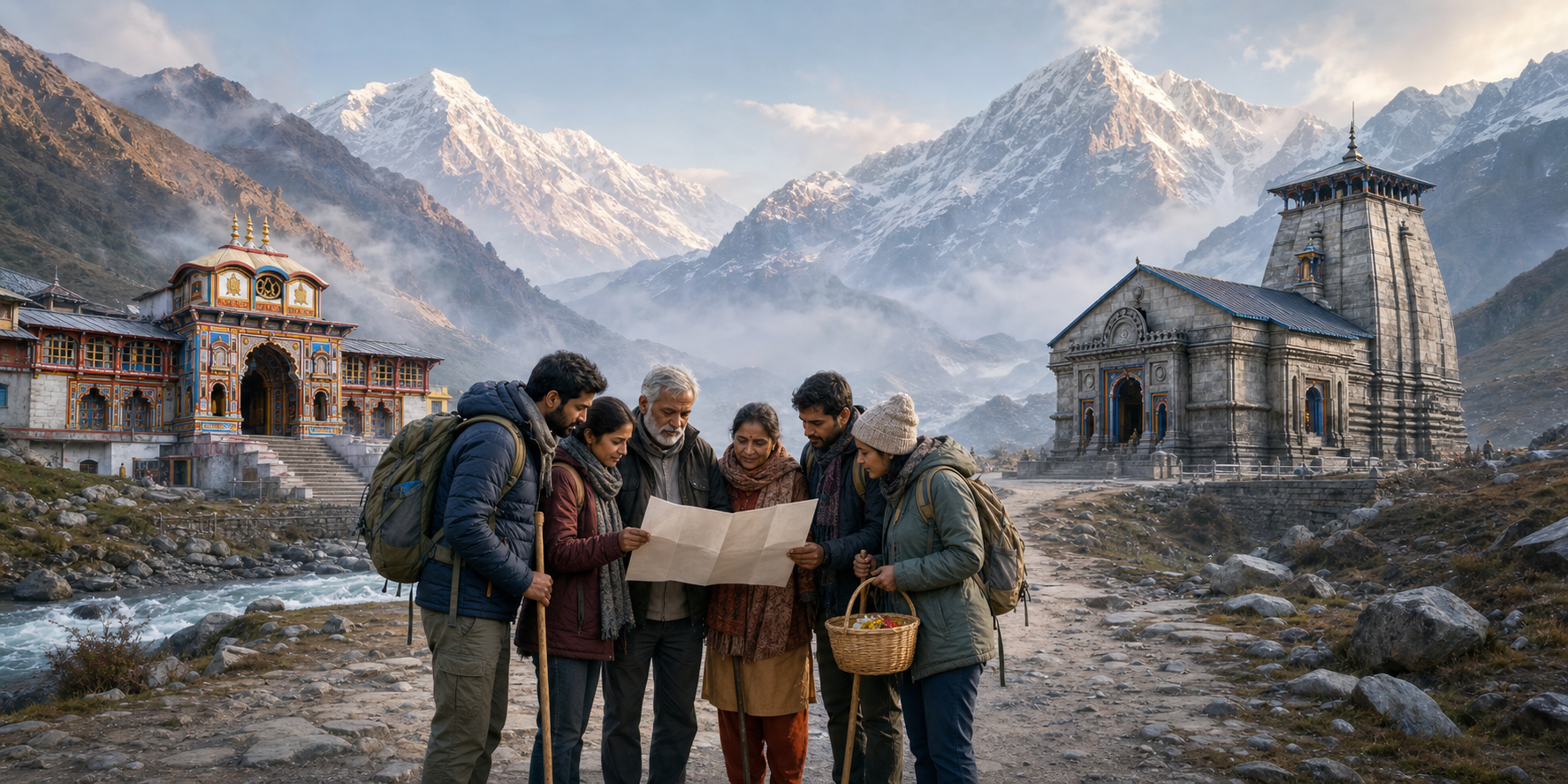
If you are arranging a Badrinath or Kedarnath pilgrimage for a mixed-faith family or tour group, settle the access question before you book the final itinerary. The important distinction is not simply who may enter the two principal shrines, but which other temple stops fall under the same committee and how affected travelers will be accommodated.
Start with what has actually been confirmed, identify what remains unanswered, and make a separate plan for the ritual and non-ritual parts of the journey. That will help you respect the temples without creating an avoidable confrontation at their entrances.
What the restriction covers – and what it does not establish
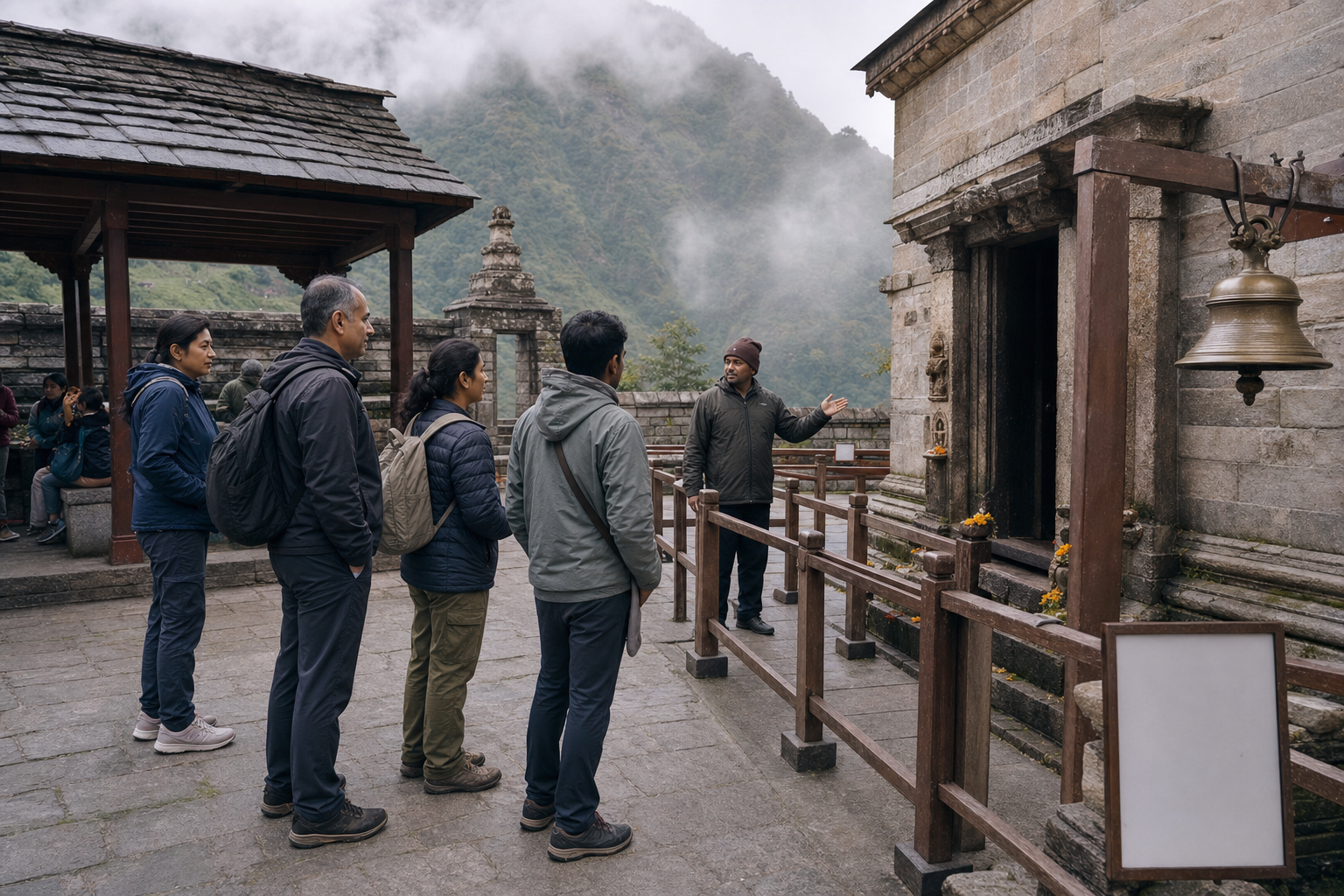
Badrinath-Kedarnath Temple Committee Chairman Hemant Dwivedi has confirmed that non-Hindus will be prohibited from entering Badrinath, Kedarnath, and all temples under the committee’s jurisdiction. This is broader than a rule affecting only the two best-known shrines. If your route includes smaller or associated temples, you need to establish who administers each one.
At the same time, do not turn a rule for specified temples into a claim that an entire town, road, valley, or Himalayan region is closed. The stated scope concerns entry to Badrinath, Kedarnath, and other temples governed by the committee. The precise boundary at each location still matters: a gate, queue, courtyard, or other controlled area may be treated differently in practice, so ask where the restriction begins rather than guessing.
You should also avoid shrinking the rule to the garbhagriha or innermost ritual area. The confirmed wording concerns entry to the shrines and committee temples, not merely access to a particular sanctum. Unless the committee gives a narrower local instruction, plan on the stated restriction rather than the interpretation most convenient to your group.
Several operational questions still require a current answer before travel:
- When will the restriction be applied to your particular visit?
- Which additional temples on your itinerary are under the committee’s jurisdiction?
- Where does the restricted precinct begin at each location?
- How will eligibility be determined, and will any document or declaration be requested?
- Are there stated procedures for mixed-faith families, organized groups, researchers, or other visitors?
- Where may a traveler who cannot enter wait and reunite with the rest of the group?
Do not invent answers from social-media claims or from another shrine’s practice. This is particularly important for Sikh, Jain, and Buddhist travelers. These traditions share a Dharmic ethos of reverence for sacred places, but the restriction has been expressed in terms of Hindu and non-Hindu entry. Shared Dharmic affinities do not by themselves tell you how the committee will administer that classification.
A practical plan for Hindu and non-Hindu travelers
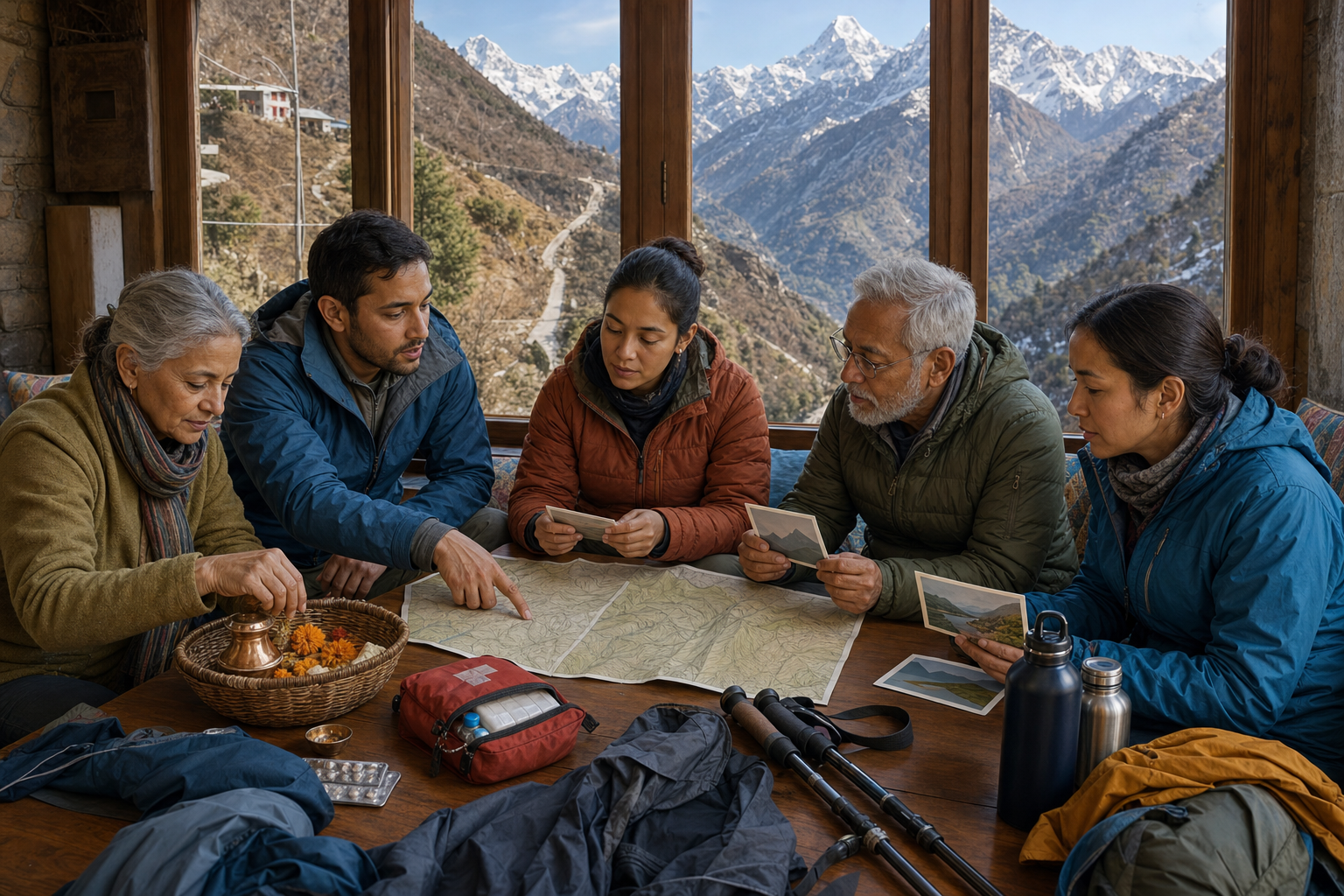
A mixed-faith group does not necessarily have to abandon the whole Himalayan journey. It does, however, need an itinerary that does not depend on everyone crossing the same temple threshold. Complete these steps before paying for arrangements that cannot be changed:
- Write down every temple on the route, not just Badrinath and Kedarnath. Ask the organizer which of those temples is administered by the Badrinath-Kedarnath Temple Committee.
- Ask one exact question in writing: “Does the non-Hindu entry restriction apply at this temple on our planned visit, and where is the permitted waiting or meeting point?” A general assurance that the trip is operating is not an answer to an access question.
- Request the current verification procedure. Do not assume that a person’s name, appearance, dress, or government identification will determine the outcome. Do not ask anyone in your group to conceal or misstate a religious identity.
- Create a fork in the itinerary. Hindu pilgrims can proceed toward darshan where permitted, while companions follow a separately confirmed plan. Fix the reunion point before the group separates; do not choose a place that may itself fall inside the controlled precinct.
- Tell the guide or tour operator about the mixed-faith composition before departure. Ask who will assist travelers who cannot enter and how long they should expect to remain apart, without demanding a precise queue time that local conditions may not support.
- Reconfirm the arrangement close to the visit. A policy statement can be clear while signs, checkpoints, queue routing, and staff instructions are still being standardized locally.
If temple entry is the central purpose of a non-Hindu traveler’s trip, the restriction materially changes the decision. Confirm the position before making a non-refundable booking, then reroute or postpone if the essential experience will not be available. If the purpose is a broader journey through the region’s sacred geography, history, culture, and landscape, the trip may remain meaningful with an honest separation between pilgrimage access and other activities.
Sanctity requires a clear boundary, not a surprise at the gate
A Hindu temple is not merely an old structure that happens to contain religious art. It is a living sacred institution shaped by worship, inherited customs, consecration, and the responsibilities of its custodians. A committee that reserves entry for adherents can understand that boundary as protection of the devotional environment rather than as a statement of hostility toward every person outside it.
Respect works in both directions. Visitors should not treat a sacred threshold as a rule to outwit, a stage for confrontation, or a test of how far staff can be pressured. Temple administrators, local authorities, and operators should not let an ineligible traveler complete a long queue before discovering a restriction that could have been communicated earlier.
Restricted ritual access is not unique to Hindu institutions. Sacred communities across traditions distinguish between hospitality toward people and admission to every consecrated space. Interfaith goodwill does not require all ritual precincts to operate like public monuments; equally, protection of sanctity does not require humiliation, careless language, or hostility.
For you as a pilgrim or trip organizer, clarity is the useful test. A competent operator should be able to provide:
- A temple-by-temple account of where the committee’s rule applies.
- The point at which access becomes restricted, as understood from current local instructions.
- The verification process, or an explicit admission that it has not yet been clarified.
- A lawful and respectful meeting plan for travelers who will remain outside.
- The person or office from whom the operator obtained its current information.
- A procedure for updating the group if the on-site instructions differ from the earlier briefing.
An operator who can repeat only that “non-Hindus are barred” has repeated the headline rule without solving your travel problem. You need to know which stop, which boundary, which procedure, and which alternative arrangement. If those answers remain vague, do not build a tightly timed or non-refundable itinerary around an assumption.
Good administration follows the same logic. Signs should appear before the final queue, terminology should remain consistent across booking information and entry points, and staff should be able to direct affected visitors without improvising. A clearly explained boundary strengthens ritual integrity. A boundary revealed through confusion invites an argument that earlier communication could have prevented.
If you cannot enter, decide what the journey is still for

Not entering a temple does not make the surrounding history, architecture, music, scholarship, landscape, or sacred geography meaningless. It does change the nature of your participation. Do not describe an outside cultural activity as a substitute for darshan, and do not promise a companion an unobstructed view or access point unless local staff have confirmed it.
A respectful parallel plan can include learning the history and theology of the shrines, observing architecture from areas open to the public, engaging with publicly accessible cultural or educational material, and spending time with the Himalayan landscape. Every activity remains subject to the boundaries and local instructions in force at the location.
Choose among three practical options. Proceed if the group accepts separate arrangements and the non-Hindu travelers value the wider regional journey. Reroute if admission to the temple is the main purpose and the traveler will not be eligible. Postpone the decision if the committee’s jurisdiction, the physical boundary, or the classification relevant to a member of your group has not been clarified.
Whatever you choose, do not manufacture a confrontation at the shrine. A Hindu pilgrim can defend the autonomy of a living temple while expecting its rules to be communicated consistently and courteously. A visitor who cannot enter can respect the threshold without pretending that exclusion from ritual space erases every other way of encountering the region.
Key takeaways
- The confirmed restriction covers Badrinath, Kedarnath, and all other temples under the Badrinath-Kedarnath Temple Committee.
- Do not assume that the rule covers an entire town or region, but do not reduce it to the innermost sanctum either. Confirm the actual boundary.
- Mixed-faith groups should identify every committee-administered stop and arrange separate routes and reunion points before travel.
- Sikh, Jain, and Buddhist visitors should seek an explicit operational answer rather than assuming that shared Dharmic identity creates an exception.
- Ask tour operators about jurisdiction, verification, access perimeters, and waiting arrangements before making non-refundable commitments.
- Respect for temple sanctity and courteous treatment of visitors are compatible. Clear communication is what allows both to be upheld.
Your next step is simple: send your exact temple list and travel date to the responsible organizer, request a written access answer for each stop, and revise the itinerary wherever the reply is incomplete. Resolve the uncertainty before the road narrows and the group reaches the temple queue.
References
