
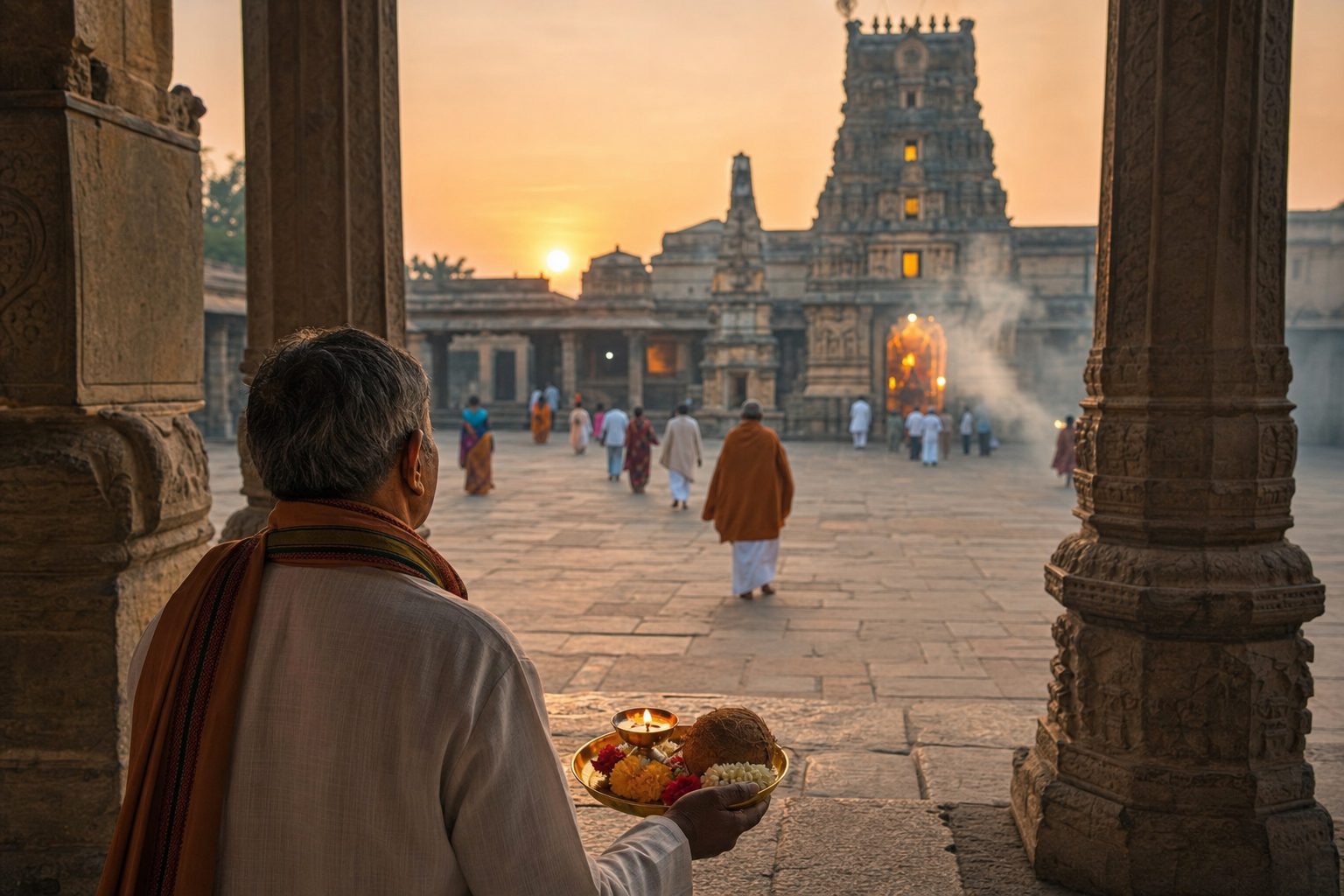
An astrologer or family elder has named a dosha, and now you are trying to decide what to do. Which temple is appropriate? Is a particular pooja necessary? How do you avoid turning a serious spiritual practice into an anxious search for increasingly expensive remedies?
Use the diagnosis as the beginning of discernment, not as a verdict on your future. A temple remedy is most meaningful when you identify the karmic concern clearly, verify the relevant vidhi, and carry its discipline into daily life.
Separate the karmic concern from the fear around it

Doshas are traditionally approached as karmic imbalances that may appear through obstacles in health, relationships, livelihood, or inner peace. That framework calls for purification and responsible action. It does not require you to believe that every setback proves a curse, or that one ceremony guarantees a desired result.
Three broad categories appear frequently in temple parihara traditions:
- Navagraha Dosha concerns planetary afflictions associated with timing, circumstances, and the unfolding of results. Rahu-Ketu and Kala Sarpa remedies fall within this field.
- Pitru Dosha concerns ancestral imbalance, unfulfilled obligations to forebears, and difficult patterns carried through a family.
- Sarpa Dosha concerns serpent-related karma and is commonly associated with lineage, land, family welfare, and the human relationship with nature.
These categories can overlap. Trimbakeshwar, for example, is approached for both Kaal Sarp and Pitru-related rites. Do not select a ceremony merely because its name sounds comprehensive. Ask what has actually been identified, which rite addresses it, and why that rite is being recommended.
Key takeaways
- Identify the dosha and the exact rite before selecting a destination.
- Choose a kshetra for its established ritual tradition, not because it is the most famous or most expensive option.
- Confirm timing, eligibility, materials, fees, and post-ritual observances directly before travelling.
- Treat pooja as the beginning of correction through japa, dana, seva, restraint, and compassionate conduct.
- Never substitute a temple remedy for medical, psychological, legal, or financial help when the underlying problem requires it.
Match the dosha to the temple’s established remedy
The right question is not simply, Which temple removes doshas? It is, Which kshetra has an established vidhi for the particular concern you are bringing? This comparison gives you a practical starting point.
| Concern | Kshetra | Established remedy | When it may fit |
|---|---|---|---|
| Rahu-Ketu or Kala Sarpa | Sri Kalahasteeswara Temple, Srikalahasti | Rahu-Ketu Dosha Shanti and Kala Sarpa parihara | When the recommendation is specifically centered on Rahu and Ketu |
| Navagraha imbalance | Navagraha shrines near Kumbakonam | Worship at shrines associated with particular grahas | When guidance identifies one or more planetary concerns rather than a general fear of bad luck |
| Sarpa-related karma | Kukke Subramanya or Mannarasala Sree Nagaraja Temple | Sarpa Samskara, Ashlesha Bali, or the applicable serpent-related temple observance | When the concern is specifically connected with sarpa karma, lineage, land, or family welfare |
| Pitru-related imbalance | Gaya or Rameswaram | Pind Daan, Pitru Tarpan, and related ancestral observances | When the purpose is remembrance, gratitude, and ancestral peace |
| Kaal Sarp and ancestral concerns | Trimbakeshwar | Kaal Sarp Dosh Puja, Narayan Nagbali, or Pitru Shanti | When qualified guidance identifies the specific rite required rather than treating the rites as interchangeable |
At Srikalahasti, Rahu-Ketu Pooja is traditionally undertaken with a clear sankalpa and may be performed during Rahu Kalam. Do not assume that a calendar app tells you everything needed for attendance. Confirm the temple’s reporting time and procedure because the operative schedule is the temple’s, not your private calculation.
If the guidance concerns individual grahas, the Kumbakonam region offers a more differentiated pilgrimage. Named stops include Suriyanar Koil for Surya, Thirunallar for Shani, Thirunageswaram for Rahu, Alangudi for Guru, Kanjanoor for Sukra, Thingalur for Chandra, Vaitheeswaran Koil for Angaraka, and Keezhaperumpallam for Ketu, along with associated shrines. Confirm the complete route and current timings locally instead of assuming that every Navagraha itinerary uses the same order.
For sarpa concerns, Kukke Subramanya is especially associated with Sarpa Samskara and Ashlesha Bali under qualified priestly supervision. Mannarasala offers another devotional setting for serpent-related prayer, lineage welfare, household wellbeing, and ecological harmony. The two destinations need not be treated as competing cures. Let the named rite, your family’s tradition, and competent guidance determine the choice.
For pitru observances, Gaya centers the pilgrimage on Vishnupad Temple, the Falgu River, Pind Daan, and Pitru Tarpan. Rameswaram combines ancestral observance at Agni Theertham with Shiva worship; its traditional movement through snana, sankalpa, tarpanam, and darshan gives the pilgrimage a defined sequence. Choose according to the rite you are undertaking and the guidance available to your family. There is no need to declare one sacred place universally superior to the other.
Trimbakeshwar requires particular clarity because Kaal Sarp Dosh Puja, Narayan Nagbali, and Pitru Shanti have distinct names and purposes. Do not book a generic package that blurs them together. Ask the officiating priest which vidhi has been selected and what makes it applicable.
Verify the vidhi before paying or booking travel
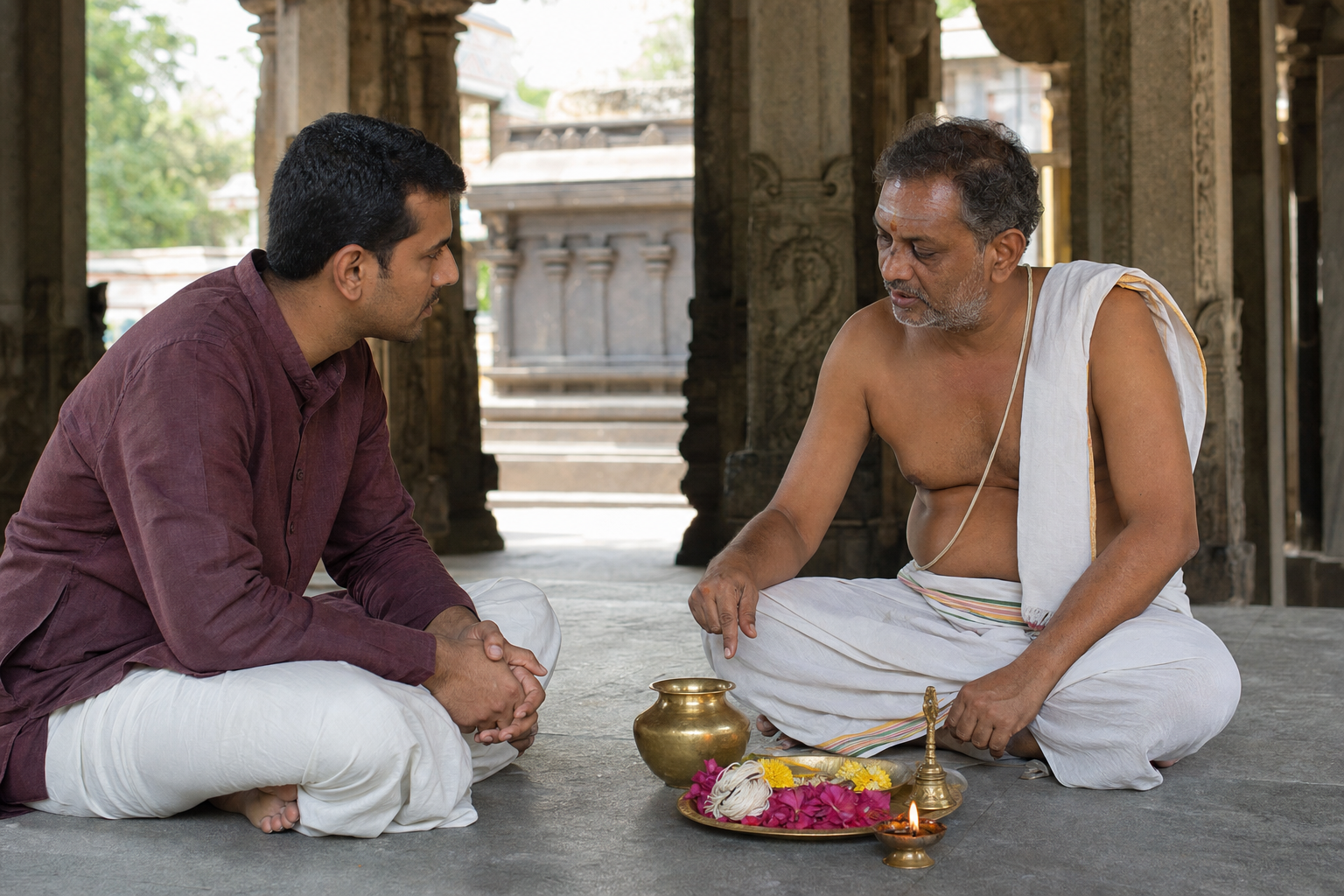
A temple name and a pooja name are not yet a plan. Procedures can involve particular timings, preparatory rules, personal attendance, and conduct after the ceremony. Resolve these points with the temple office or a trusted priest before you buy tickets or transfer money.
- Ask for the exact name of the rite. Record it rather than relying on a vague phrase such as complete dosha removal.
- Ask why this rite applies. If an astrologer made the recommendation, request a plain explanation of whether the concern is Navagraha, Rahu-Ketu, Pitru, Sarpa, or an overlap. A frightening prediction without a coherent explanation is not enough.
- Confirm who must attend. Ask whether the person named in the sankalpa must be physically present and what family information the priest requires. Do not guess missing details or present speculation as family history.
- Confirm the schedule. Ask for the date, reporting time, starting point, and expected sequence. For a rite associated with Rahu Kalam or a specific temple schedule, follow the instructions issued for that observance.
- Confirm preparation. Ask about bathing, dress, food, materials, and any temple-specific restrictions. Undertake fasting or other austerity only when it is appropriate for you and clearly required; do not invent harsher rules in the hope of obtaining a stronger result.
- Confirm fees and the payment channel. Get a clear account of what is included. If someone uses threats of immediate catastrophe to pressure you into several costly rites, pause and verify independently.
- Ask what follows the ceremony. Some observances include post-ritual instructions. Learn them before the pooja so that work, caregiving, travel, or health needs do not force an avoidable conflict.
Consultation should reduce confusion, not multiply fear. A competent guide should be able to distinguish the central remedy from optional observances. If every question produces a new dosha and another urgent payment, seek a second opinion before proceeding.
A dosha label is also not a medical or psychological diagnosis. Persistent pain, severe distress, dangerous behavior, or a serious family crisis warrants the appropriate professional help. Likewise, pooja cannot replace legal advice, debt planning, or careful financial decisions. You may undertake a remedy alongside practical care, but delaying necessary help can deepen the very suffering you hope to address.
Build the remedy around sankalpa and changed conduct
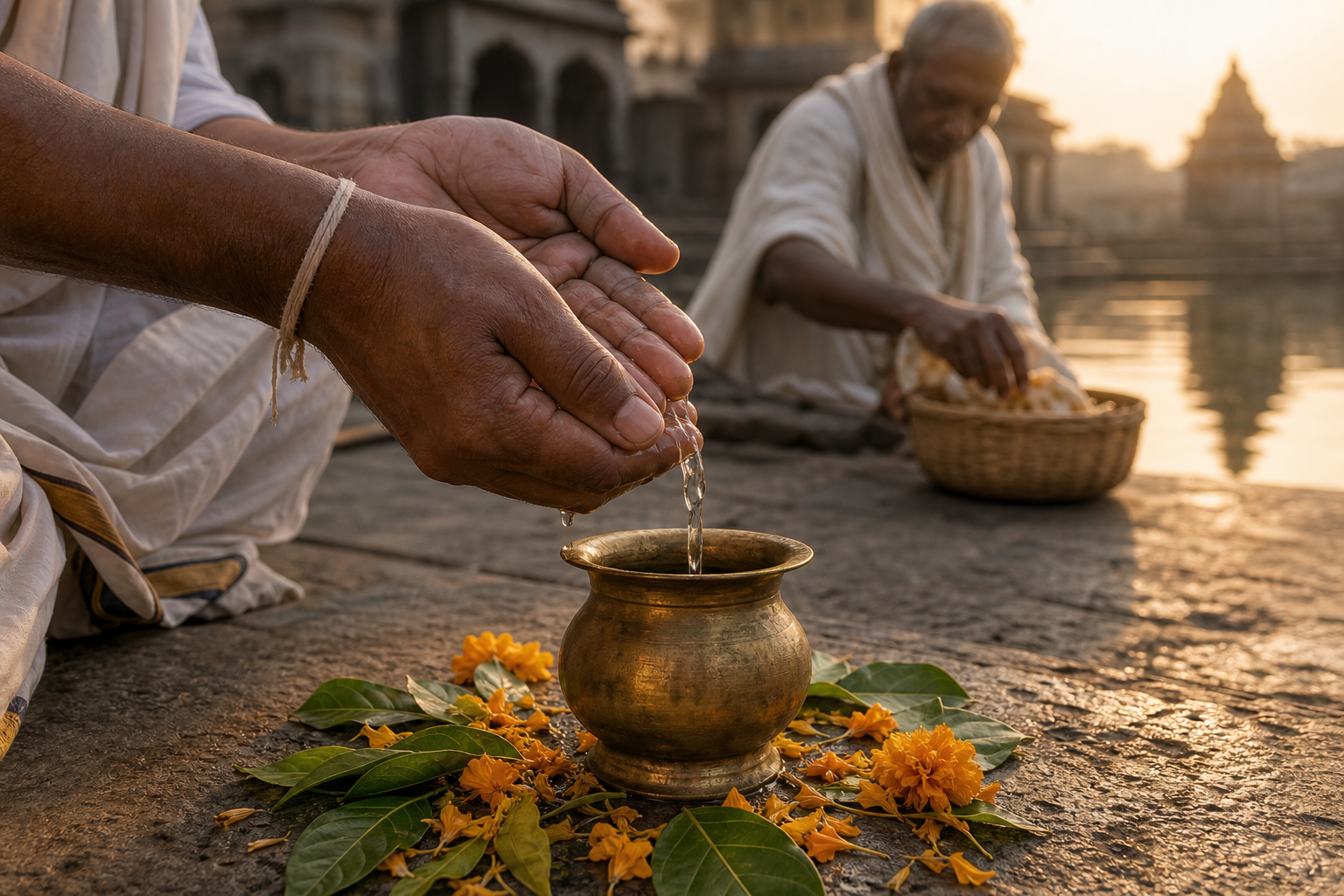
Dosha Nivarana becomes spiritually coherent when the outer rite and inner correction point in the same direction. The ceremony gives your intention sacred form. Your conduct determines whether that intention remains alive after you leave the temple.
Write a sankalpa you can live
Before travelling, state your purpose in one sentence. A useful personal preparation might be: May this observance support purification in relation to the named karmic concern and give me steadiness to fulfil my dharma. This is not a substitute for the formal words given by the priest. It is a way to prevent your private intention from dissolving into panic, bargaining, or a demand that another person be controlled.
Keep the intention centered on purification, clarity, gratitude, and right action. If the obstacle concerns marriage, ask for wisdom and dharmic resolution rather than possession of a particular person. If it concerns work, ask for clear effort and an honest livelihood rather than immunity from every consequence. If it concerns ancestors, approach with gratitude and responsibility rather than blame.
Give each remedy an ethical counterpart
- For Navagraha concerns: pair the temple observance with disciplined routines, truthful decisions, and regular japa already given by your guru, lineage, or priest. Do not collect mantras indiscriminately because they appear in remedy lists.
- For Pitru concerns: make remembrance tangible through gratitude, respectful family conduct, dana, or service. Where a harmful family pattern can be repaired safely, take the practical step instead of asking ritual alone to carry the burden.
- For Sarpa concerns: connect prayer with ahimsa, respect for living beings, care for land and water, and environmentally responsible offerings. A nature-related remedy loses coherence if the pilgrimage itself becomes careless toward the natural world.
Across these forms, the durable foundation is sattvika conduct: truthfulness, restraint, compassion, mindful living, seva, and dana within your means. Dana is not a spiritual auction in which the largest amount purchases the largest result. Give without neglecting dependents or taking on harmful debt.
Protect your attention at the temple
- Arrive at the instructed time so haste does not dominate the sankalpa.
- Listen to the priest’s sequence and ask for clarification when you genuinely do not understand.
- Follow the temple’s rules on dress, phones, photography, movement, and offerings.
- Do not improvise additional substances or leave non-biodegradable material at a sacred site.
- Do not allow an unsolicited intermediary to add another rite while you are emotionally vulnerable. Pause, verify, and proceed only with clarity.
- Complete the instructed observance with humility, including any reasonable post-ritual discipline you accepted in advance.
Judge the remedy first by what changes in you
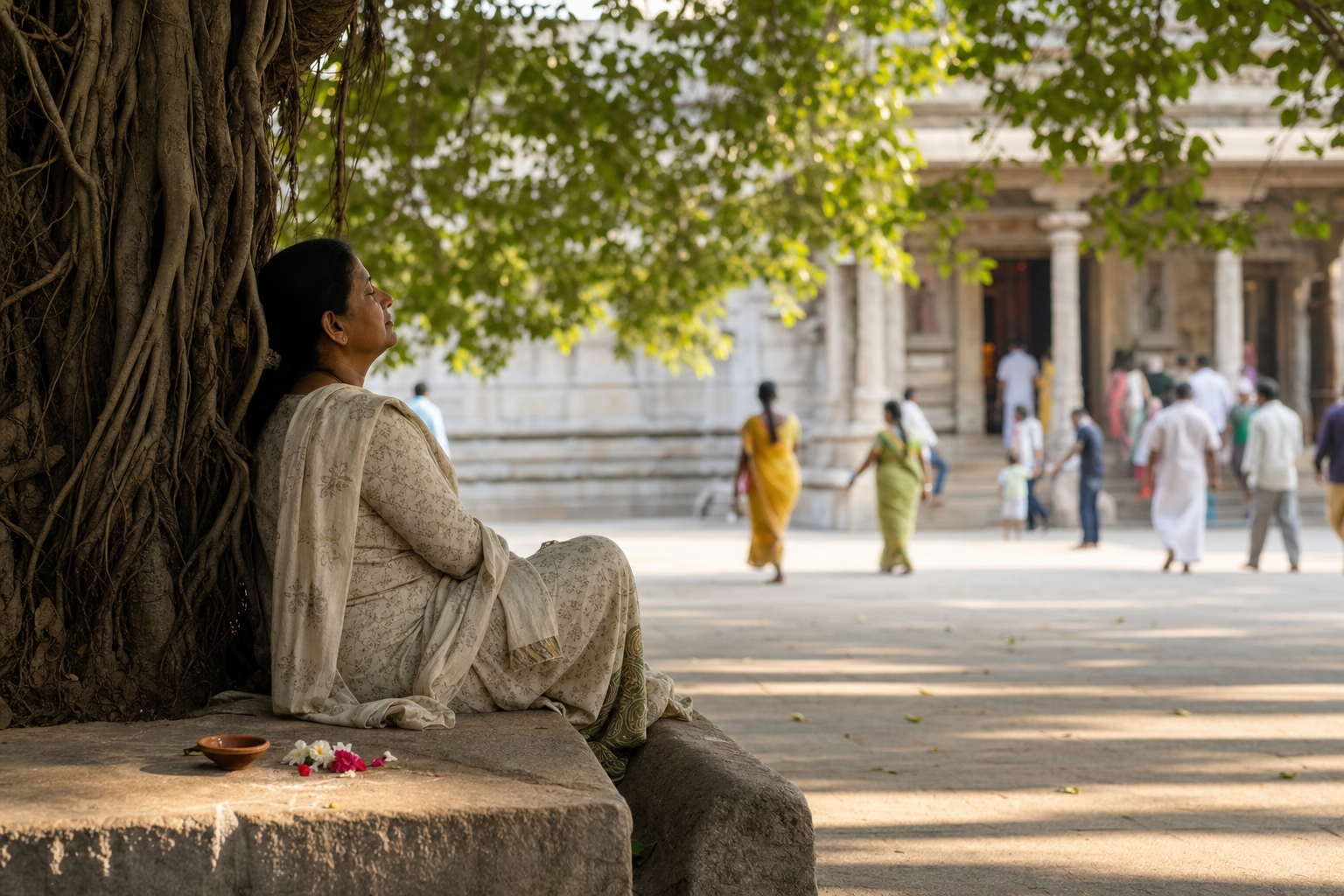
Devotees often describe greater calm, clearer decisions, improved family rapport, and renewed momentum after Dosha Nivarana observances. Receive such accounts as descriptions of devotional experience, not as promises that every delay will disappear or every desired event will occur.
The first evidence available to you is the quality of your own response. After the pilgrimage, notice:
- Are you less governed by fear of the dosha?
- Are your decisions steadier and less impulsive?
- Are you fulfilling family, work, and spiritual duties more consistently?
- Have you begun the needed conversation, apology, professional consultation, or practical repair?
- Are japa, seva, dana, and ethical restraint becoming regular rather than occasional?
- Can you face an obstacle without immediately purchasing another remedy?
An external difficulty may take time to resolve, may resolve differently than expected, or may remain. The pooja still has spiritual value when it reduces fear, sharpens responsibility, and turns you toward dharma. It loses that value when it becomes permission to repeat harmful conduct while expecting ritual to erase the consequences.
Your next step is small and concrete: write down the exact dosha and proposed rite, then use the verification questions before arranging the pilgrimage. Begin one matching discipline – japa, seva, gratitude, restraint, or ecological care – before you travel. That sequence turns a temple visit from a fearful transaction into sadhana.
References
