

If you are worried about religious conversion in Odisha, the Nabarangpur incident presents a hard but necessary test: can you take that concern seriously without treating an accusation as proof or a crowd as a court?
You do not have to choose between opposing coercive conversion and defending a Christian community’s right to worship. A principled Dharmic position protects freedom of conscience, demands evidence for allegations, and keeps enforcement in lawful hands.
Separate the conversion allegation from the disruption

On 1 February 2026, reports from Nabarangpur said that a church service was disrupted by a group described as Hindutva activists amid allegations of religious conversion. Worship reportedly stopped, tensions rose, and law enforcement intervened. The precise sequence of events and the underlying conversion claim remained under verification.
That uncertainty is not a minor detail. It determines how a responsible person should speak and act. There are two separate questions:
- Did any identifiable person use coercion or inducement in connection with religious conversion, and what verifiable evidence supports that allegation?
- Did any identifiable person obstruct worship, intimidate participants, threaten safety, or otherwise disturb public order?
Evidence for one claim does not automatically prove the other. An allegation about conversion cannot become an instant suspension of worship. Conversely, describing an activity as religious outreach cannot shield unlawful conduct if a proper inquiry establishes coercion or inducement.
Article 25 of India’s Constitution protects freedom of conscience and the right to profess, practise, and propagate religion, subject to public order, morality, and health. Odisha also has the Odisha Freedom of Religion Act, which regulates conversion and requires compliance with its procedures. These protections and restrictions must be read together.
Religious liberty is not an exemption from generally applicable law. Objection to conversion is not a licence for private enforcement. If evidence points to an offence, it belongs before the authorities. If the evidence does not support the allegation, peaceful worship must not remain hostage to rumour.
What to do when a religious confrontation begins
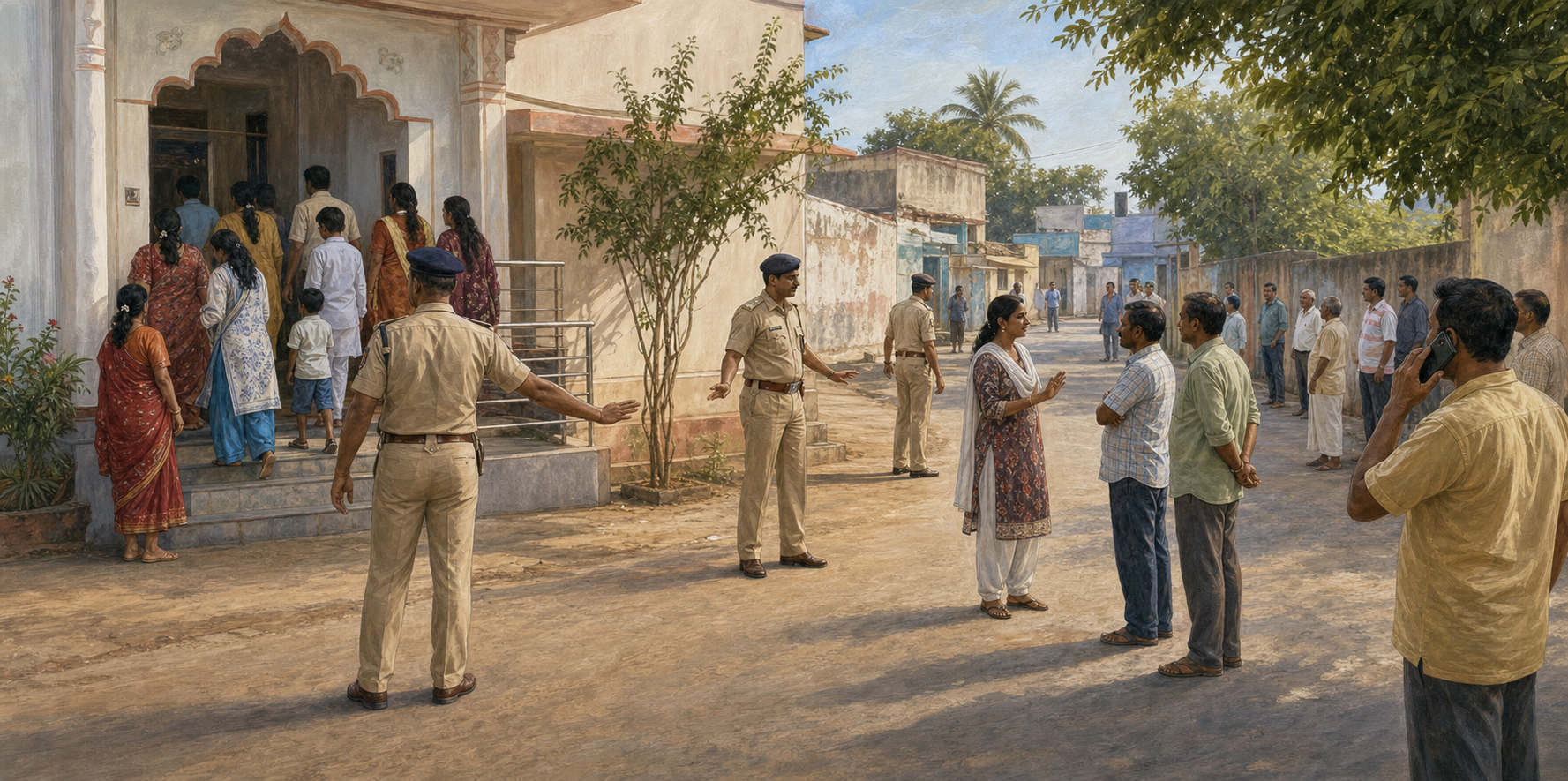
If you are present during a dispute, your first task is not to win the argument. It is to reduce the chance of injury, preserve reliable information, and move specific complaints into a lawful process.
- Create physical distance. Move children, older people, and anyone visibly distressed away from the confrontation. Do not build a counter-crowd or block an exit.
- Record observations, not conclusions. Note the place, approximate time, sequence of events, words you personally heard, and actions you personally saw. Distinguish direct observation from something another person told you.
- Preserve original material. Keep unedited photographs, videos, messages, and documents with their original dates and context. A clipped video may hide what happened immediately before or after the visible confrontation.
- Define the allegation precisely. If the concern is conversion, identify the alleged act of coercion or inducement, the person said to be responsible, and the available evidence. A general claim that conversion is occurring is not enough to establish what any individual did.
- Use a traceable reporting channel. Give the factual account and preserved material to the appropriate local authorities, retain a copy, and ask how the complaint will be followed up. Do not demand punishment before the facts have been examined.
- Do not publish identities casually. Naming worshippers, alleged converts, complainants, or accused people before verification can expose families to harassment and can contaminate a fair inquiry.
If you are accused of an offence, detained, injured, or asked to sign a statement you do not understand, seek advice from a lawyer qualified to practise in Odisha. Social-media commentary is not a safe substitute where liberty, reputation, or criminal exposure may be involved.
The same discipline applies online. Before forwarding a video, check whether you know its location, date, full sequence, and original uploader. If you cannot verify those basics, do not attach a communal conclusion to it. A few minutes of virality can create fear that takes months of local work to undo.
Authorities and community leaders need a two-track response

A credible response must protect worship and investigate the conversion allegation at the same time. Treating either task as optional tells one community that its rights depend on political pressure.
- Protect immediate safety and lawful worship. Prevent further confrontation, keep access routes open, and ensure that no private group decides whether a service may continue.
- Open a focused, time-bound inquiry. Examine the alleged conduct, available records, witness accounts, and relevant legal procedures without presuming that the allegation is true or fabricated.
- Communicate without prejudging. Authorities should say what is being examined, what safety arrangements exist, and where evidence can be submitted. They should not announce guilt through slogans or vague communal labels.
- Keep responsibility individual. If evidence establishes a violation, the remedy should address the responsible people and conduct. Neither Christians as a whole nor Hindus as a whole should bear collective blame.
- Protect future normality. If the allegation is unsupported, regular worship should continue peacefully. If a violation is established, lawful remedies should proceed without turning every congregation or outreach activity into a permanent suspect.
Local religious and civic leaders can reduce recurring suspicion by agreeing to a clear code for outreach and social service. Organisers should identify themselves, explain the purpose of an activity, make participation voluntary, disclose any religious component, and provide a way to raise complaints. Assistance should not carry hidden religious conditions, but neither should an organisation’s religious identity make every act of service presumptively unlawful.
Dialogue works best when it has a practical agenda. A local forum can review recurring complaints, identify people authorised to de-escalate a confrontation, and maintain contact with law enforcement before a crisis develops. Joint seva such as health camps, blood-donation efforts, and disaster relief can also create working relationships that survive periods of tension.
Dharmic restraint is strength, not surrender
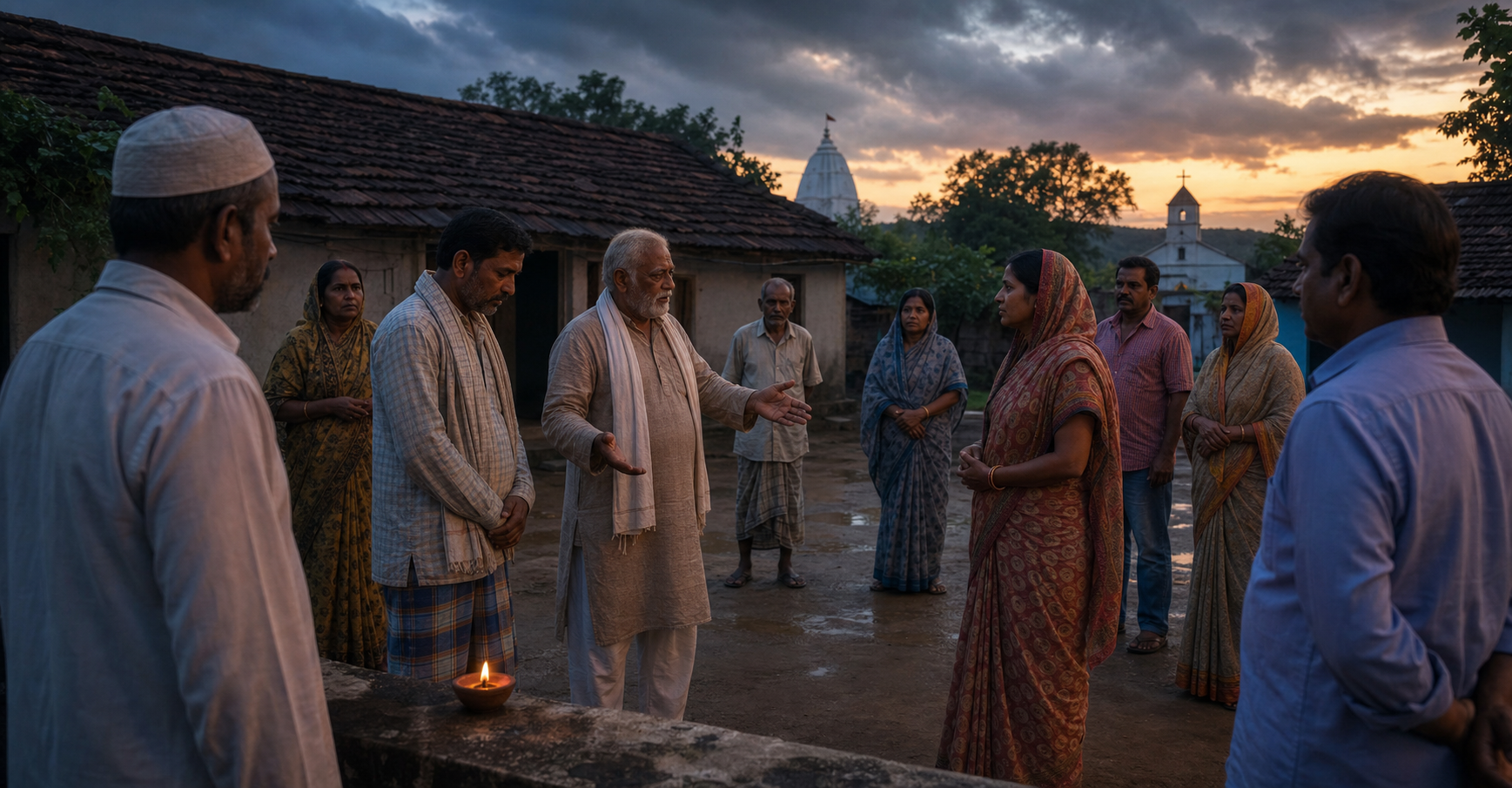
A confident Hindu response does not require indifference to aggressive evangelism, cultural insensitivity, or unlawful conversion. It requires enough self-command to insist on consent, transparency, equal enforcement, and evidence. Anger may signal that a community fears losing something valuable, but anger cannot determine another person’s guilt.
Ahimsa is more than refraining from physical violence. In a communal dispute, it also means refusing intimidation, humiliation, collective accusation, and reckless speech that predictably places ordinary families at risk. It does not demand passivity. You can document an alleged wrong, file a complaint, seek legal review, organise public education, and advocate firmly without interrupting prayer.
Karuna asks you to see all the people who bear the cost of escalation: Hindu families anxious about conversion, Christian families afraid that worship may be stopped, police expected to control a volatile crowd, and children who may carry the resulting suspicion into school and neighbourhood life. Compassion does not settle the legal question. It prevents the question from becoming an excuse to dehumanise people.
Sarva-dharma-samabhava does not require you to pretend that every theology, missionary method, or social practice is identical. It requires civic even-handedness: apply the same standard of consent to every outreach effort, the same protection to every lawful place of worship, and the same demand for evidence to every accusation.
Hindus, Buddhists, Jains, and Sikhs express these principles through distinct traditions, but their shared emphasis on restraint, compassion, and disciplined conduct offers a public ethic for moments like this. Dharmic unity is most credible when it limits our own side as well as criticising another.
Key takeaways for a lawful and Dharmic response
- A conversion allegation and a worship disruption are separate matters; investigate each through evidence.
- Article 25 protects conscience, religious practice, and propagation subject to public order, morality, and health.
- Odisha’s conversion law should be enforced by lawful authorities, not by a crowd interrupting worship.
- Eyewitnesses should protect people, preserve original evidence, and report only what they can verify.
- Community leaders should combine security, a time-bound inquiry, restrained public communication, and a transparent code for outreach.
- Ahimsa does not silence legitimate Hindu concerns; it determines how those concerns are pursued without creating another wrong.
Your next action should match your role. If you only encountered the incident online, verify before sharing. If you witnessed relevant conduct, preserve the original record and report it. If you lead a local organisation, ask for a joint safety protocol, a transparent inquiry, and a clear outreach code. If you face legal exposure, obtain qualified counsel rather than arguing the case in public.
Nabarangpur can still choose a durable path: worship protected, conversion complaints examined, offenders held individually accountable where evidence warrants it, and neighbours spared the punishment of collective suspicion. That is not a compromise between Dharma and freedom. It is how both are defended.
References
