
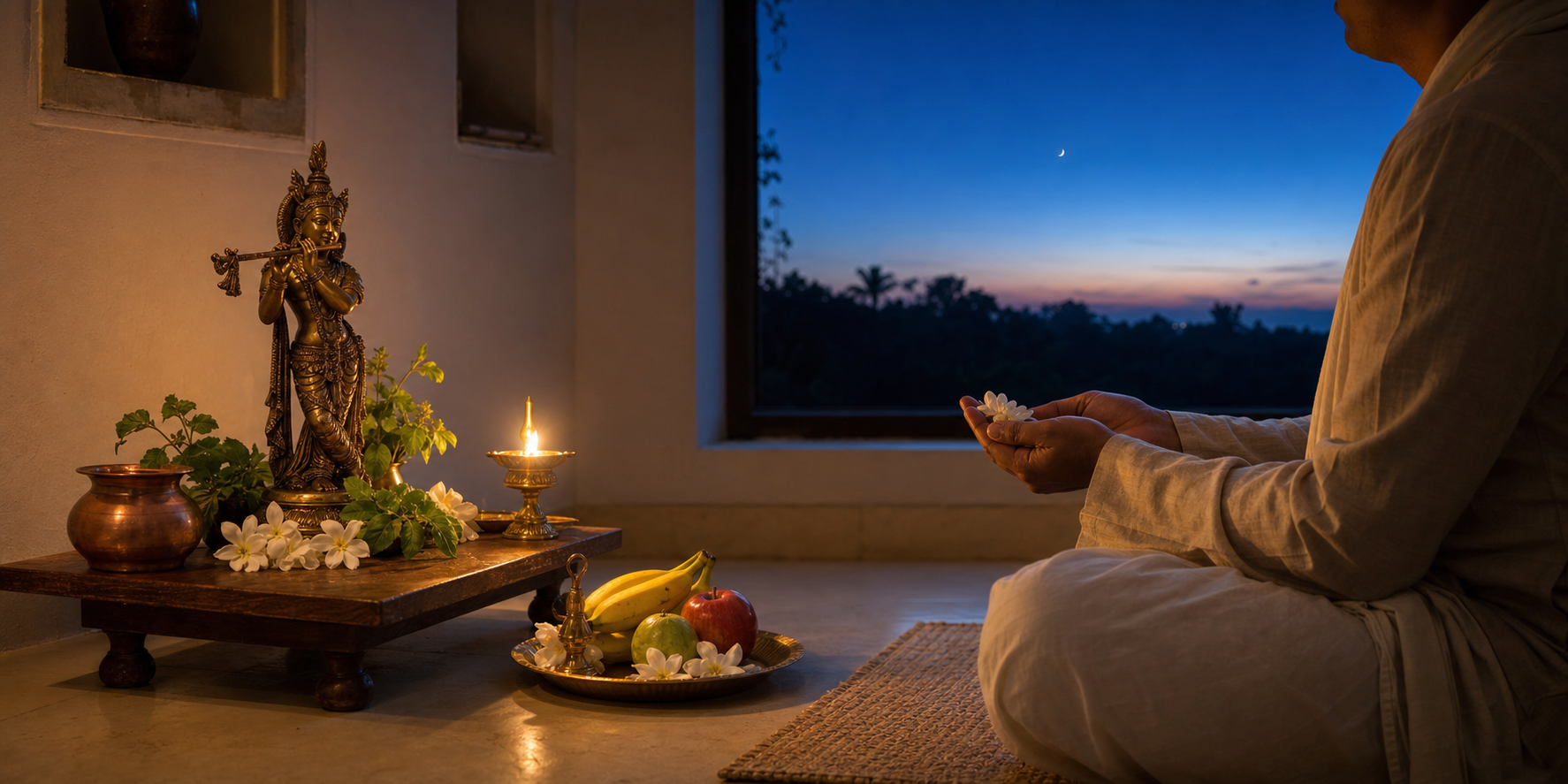
If you are planning a vrata, puja, temple visit, or quiet personal observance on February 9, the important detail is not the civil date alone. The tithi changes early that morning, so the time at which you begin your sankalpa matters.
The practical approach is simple: treat 5:18 AM as the working transition time, confirm the boundary for your own location, and begin your Ashtami-specific observance only after the locally calculated change.
The date is fixed, but the tithi boundary is local

Monday, February 9, 2026 begins under Krishna Paksha Saptami. The working Panchang timing places the end of Saptami at 5:18 AM, with Krishna Paksha Ashtami continuing for the rest of the day.
That gives you a clear planning distinction:
- Before 5:18 AM under the working timing, the prevailing tithi is Saptami.
- After 5:18 AM, the prevailing tithi is Ashtami.
- If your local Panchang gives a different transition time, follow the local calculation rather than the general reference.
This distinction matters most when you are making a formal sankalpa or beginning a vrata specifically for Ashtami. Starting before the transition places that act within Saptami. If you normally wake after 5:18 AM and your local calendar confirms the change has already occurred, you can simply begin your observance then. There is no need to be awake for the transition unless your own tradition requires it.
Panchang timings can shift with location because the calculations are sensitive to local sunrise and longitude. A time copied from a calendar prepared for another city should therefore be treated as a reference, not as a minute-exact instruction for your home.
A simple Ashtami observance you can complete with attention
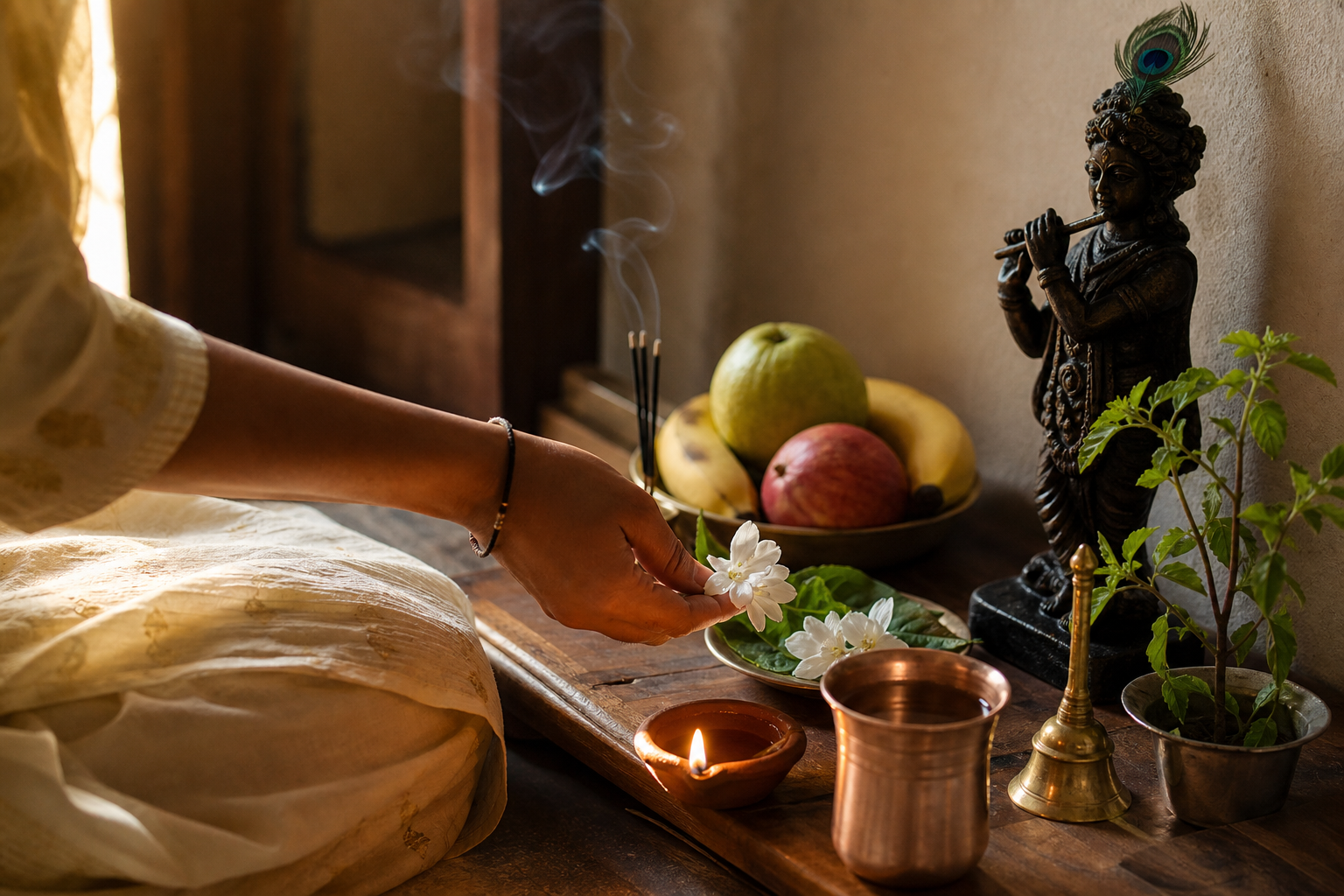
Krishna Paksha Ashtami carries the inward-facing quality of the waning lunar fortnight. You do not need to fill the day with a complicated programme. A smaller practice performed steadily is more meaningful than an ambitious list completed in haste.
Use this four-part plan if your family or sampradaya has not prescribed a more specific observance:
- Confirm the tithi. Check a Panchang configured for your location or consult your temple before fixing the start of an Ashtami sankalpa.
- Choose one principal upasana. Japa is well suited to a quiet observance. Use a mantra that is already familiar to you or has been given within your tradition, and choose an amount you can complete without rushing.
- Read one bounded passage. Select a manageable portion of a sacred text before you begin. Reading a short passage slowly, then sitting with its meaning, is more useful than turning pages merely to finish a large target.
- Keep food simple. If you are eating, choose an uncomplicated satvik meal consistent with your household practice. Do not assume that the date by itself imposes one universal fasting rule.
If you want to make a sankalpa, state exactly what you intend to do after Ashtami has begun locally. It can be plain and specific: the practice you will undertake, the period for which you will keep it, and the dharmic quality you wish to cultivate. You do not need to improvise a Sanskrit formula when your tradition has not taught you one.
A temple visit can also anchor the day. If the visit is meant specifically as your Ashtami observance, schedule it after the locally confirmed transition. If your temple announces a programme or vrata procedure, its location-specific notice should take priority over a generic online calendar.
Let the Panchang determine when, and tradition determine how
A tithi calculation answers a timing question. It does not, by itself, establish a universal deity, mantra, meal, or fasting discipline for every Hindu household. Krishna Paksha Ashtami practices can differ by region, lineage, temple, and family custom.
Keep these sources of guidance in the right order:
- Use a location-specific Panchang to determine when Ashtami begins.
- Use your kula, sampradaya, guru, or established household custom to determine what form the observance takes.
- Use a temple notice when participating in that temple’s worship or community programme.
- Use a general calendar only as a planning reference when no local instruction is available.
This prevents two common mistakes. The first is beginning an Ashtami vow while Saptami is still running. The second is copying a strict practice from another tradition and treating it as compulsory. You can respect the tithi without erasing legitimate differences in acharana.
The same caution applies to nakshatra, rashi, and other Panchang elements. If your intended ritual depends on one of them, verify it for your location rather than assuming that the Ashtami timing supplies every other calendrical detail. For a straightforward day of japa, sacred reading, and satvik food, there is no benefit in adding calculations that your practice does not actually require.
Prepare on February 8 so the morning remains devotional
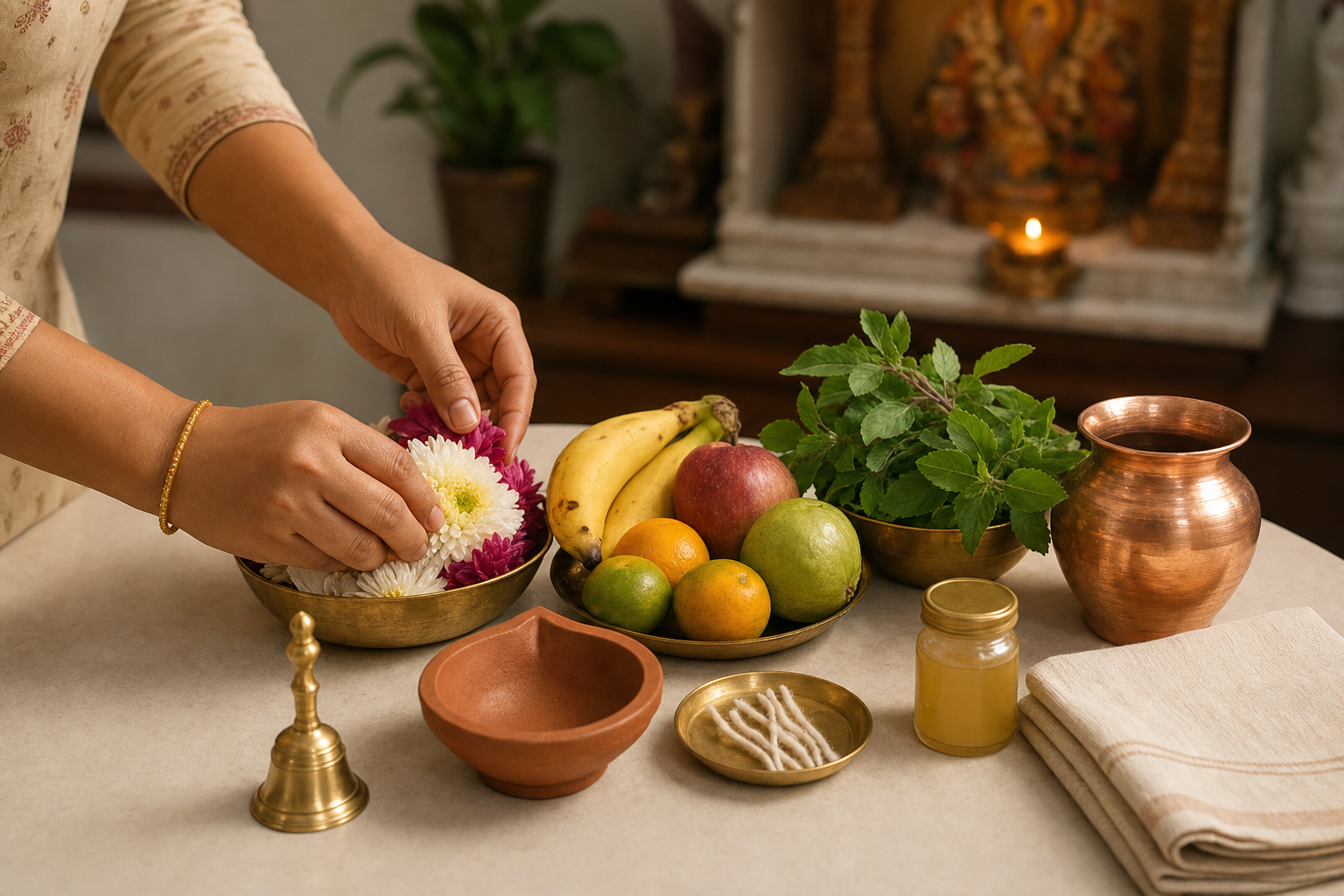
Most avoidable confusion occurs when the devotee tries to choose a practice and verify the calendar at the same time. Make the practical decisions on the previous evening:
- Set your city correctly in the Panchang you trust.
- Record the local end time of Saptami and start time of Ashtami.
- Choose your japa or sacred reading in advance.
- Arrange any simple satvik food you intend to prepare.
- Check whether your temple has issued a separate local schedule.
- Decide whether you are following a personal observance, a household custom, or a temple vrata; do not combine rules casually.
Once those decisions are made, February 9 does not need to become an exercise in clock-watching. Continue your ordinary morning worship before the boundary if you are awake, then begin the explicitly Ashtami practice after the transition. If Ashtami has already begun when you rise, verify the tithi and proceed.
Key takeaways for February 9
- February 9, 2026 falls on a Monday.
- Krishna Paksha Saptami continues until the working reference time of 5:18 AM.
- Krishna Paksha Ashtami begins after that transition and continues through the remainder of the day.
- Confirm the exact boundary with a regional Panchang or temple because the timing is location-sensitive.
- Begin an Ashtami-specific sankalpa or vrata only after Ashtami starts locally.
- Japa, unhurried sacred reading, and simple satvik food offer a manageable observance when no more specific family or sampradaya rule applies.
Before February 8 ends, save the correct local timing and choose one practice you can perform with full attention. When Ashtami begins, you will be ready to observe it as sacred time rather than spend it deciding what to do.
References
