
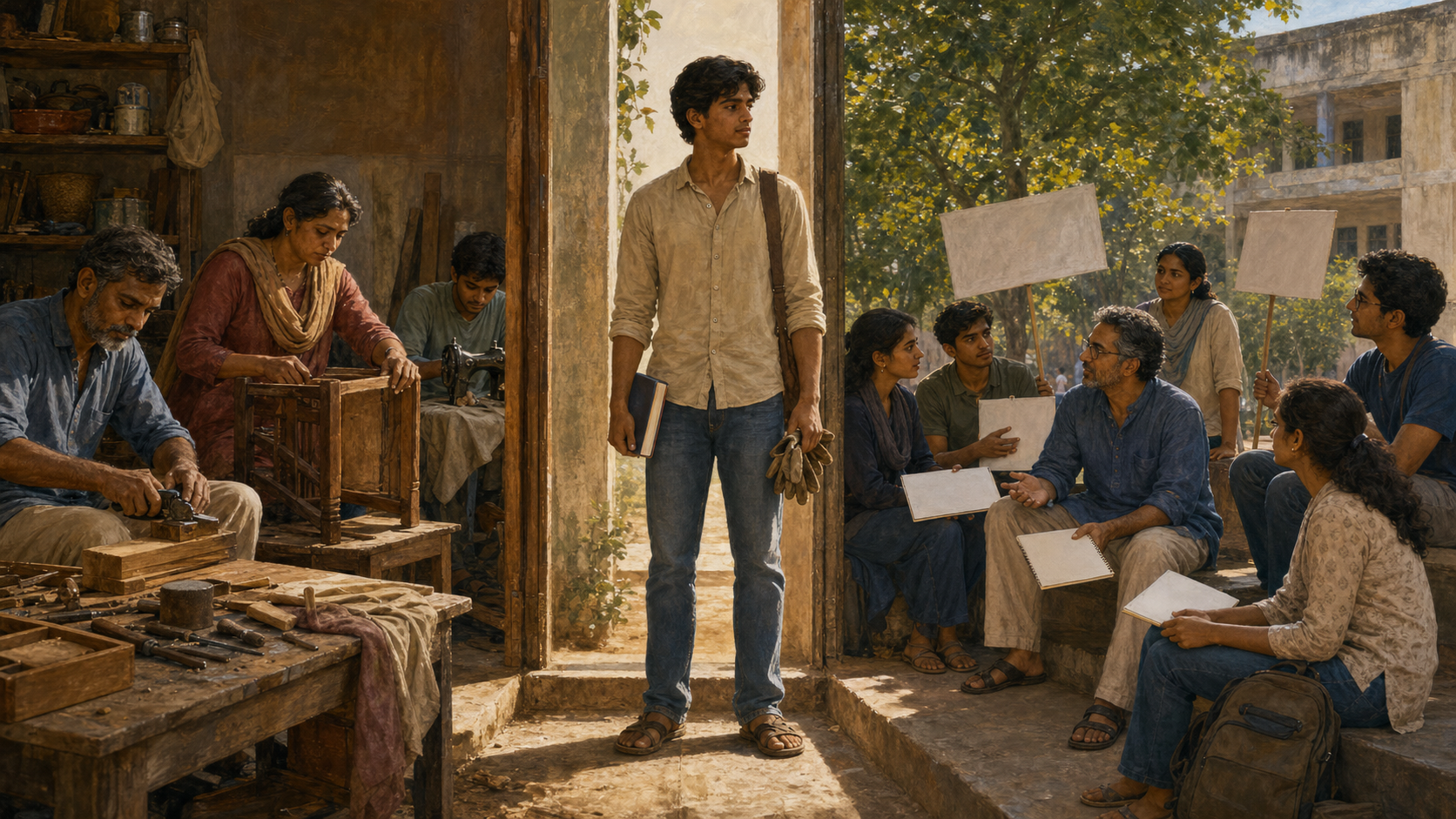
Your son says the work that sustained the family is degrading. Your student can repeat a movement’s slogans but cannot name its precise demand. Or you are the student: you care about injustice, yet every argument at home becomes a test of loyalty. The real question is not whether the young should obey or rebel. It is whether education is building judgement or replacing it with status and political identity.
The answer is not to keep youth away from public life. It is to make public action answerable to satya, ahimsa, competence and duty. Parents, teachers and students can do that without silencing legitimate dissent or treating inherited occupations as compulsory.
The first warning sign is contempt, not disagreement
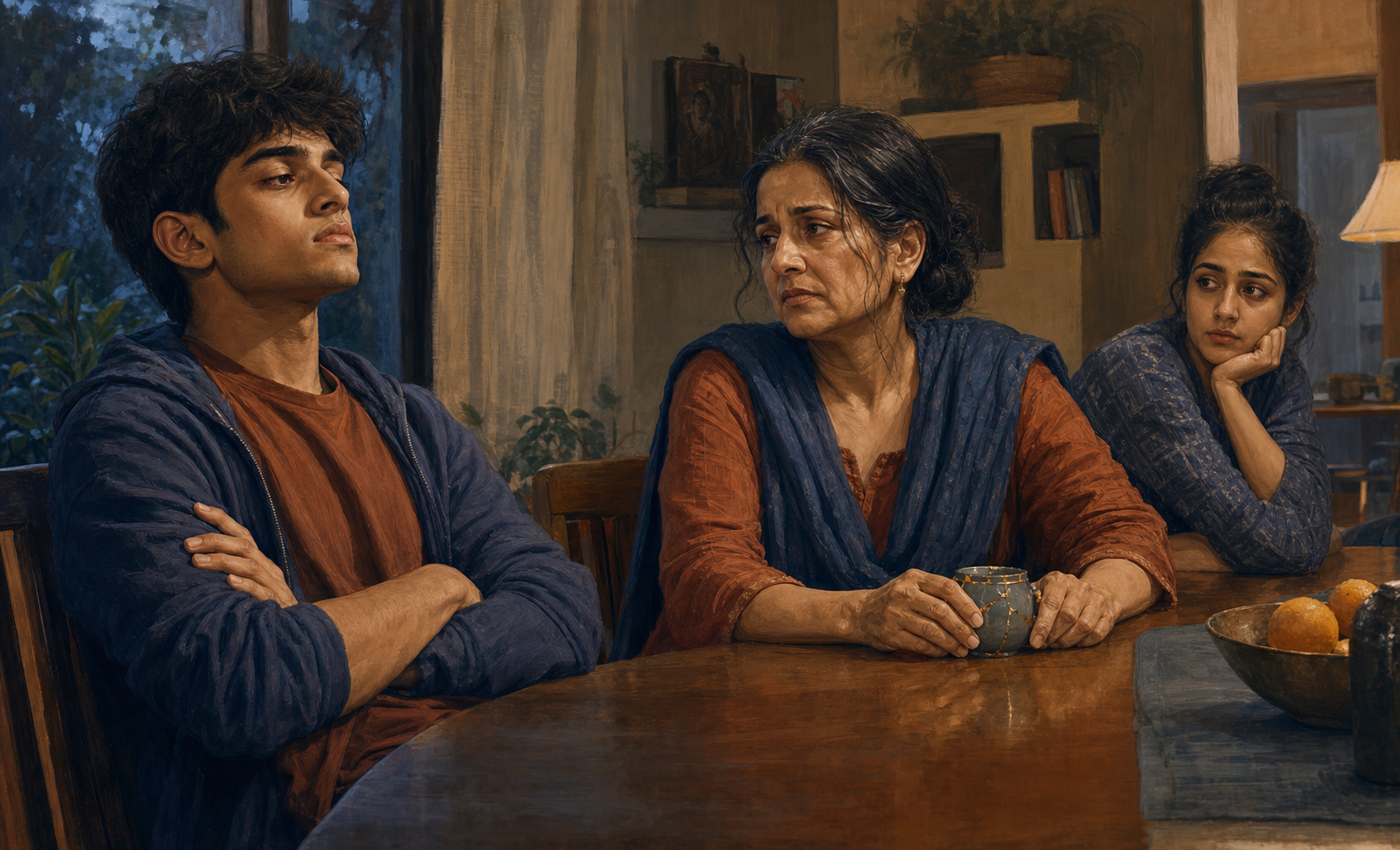
A young adult who disagrees with the family is not necessarily alienated. Leaving a hereditary vocation is not betrayal. Education should widen a person’s choices. The trouble begins when freedom appears to require contempt for the people, skills and obligations that made those choices possible.
Consider the reported case of a Benares boatman in his mid-sixties. His son was studying for a B.A. in Delhi and hoped to become an IAS officer. During the college vacation, the son returned home briefly and then went back to Delhi to join an andolan. He regarded the family’s kula-vrutti, or inherited vocation, as degrading. His father regarded rowing on the Ganga as Ganga Maiyya ki seva.
The son may have had valid reasons not to become a boatman. The work might not have suited his aptitude, health or ambitions. The father’s pain came from something more corrosive than a career decision: the education that promised upward movement appeared to have taught the son to look down upon the life from which he was moving.
One family cannot establish what all students think. It can, however, give you a useful diagnostic. Listen for these distinctions:
- Choice or contempt: Can the young person decline an occupation while still naming the skill, discipline and social value within it?
- Ambition or status fantasy: Does the preferred career produce concrete work now, or does its prestigious title substitute for a plan?
- Conviction or borrowed identity: Can the student explain a political position without reciting labels, heroes and enemies?
- Service or performance: Does concern for society lead to useful work, or only to visible affiliation with a cause?
- Independence or ingratitude: Can the student disagree without assigning moral inferiority to parents, workers or the community?
Do not ask whether the child agrees with you. Ask whether disagreement has become more informed, more responsible and less contemptuous. That is a much better measure of education.
Put every political cause through the five-line test
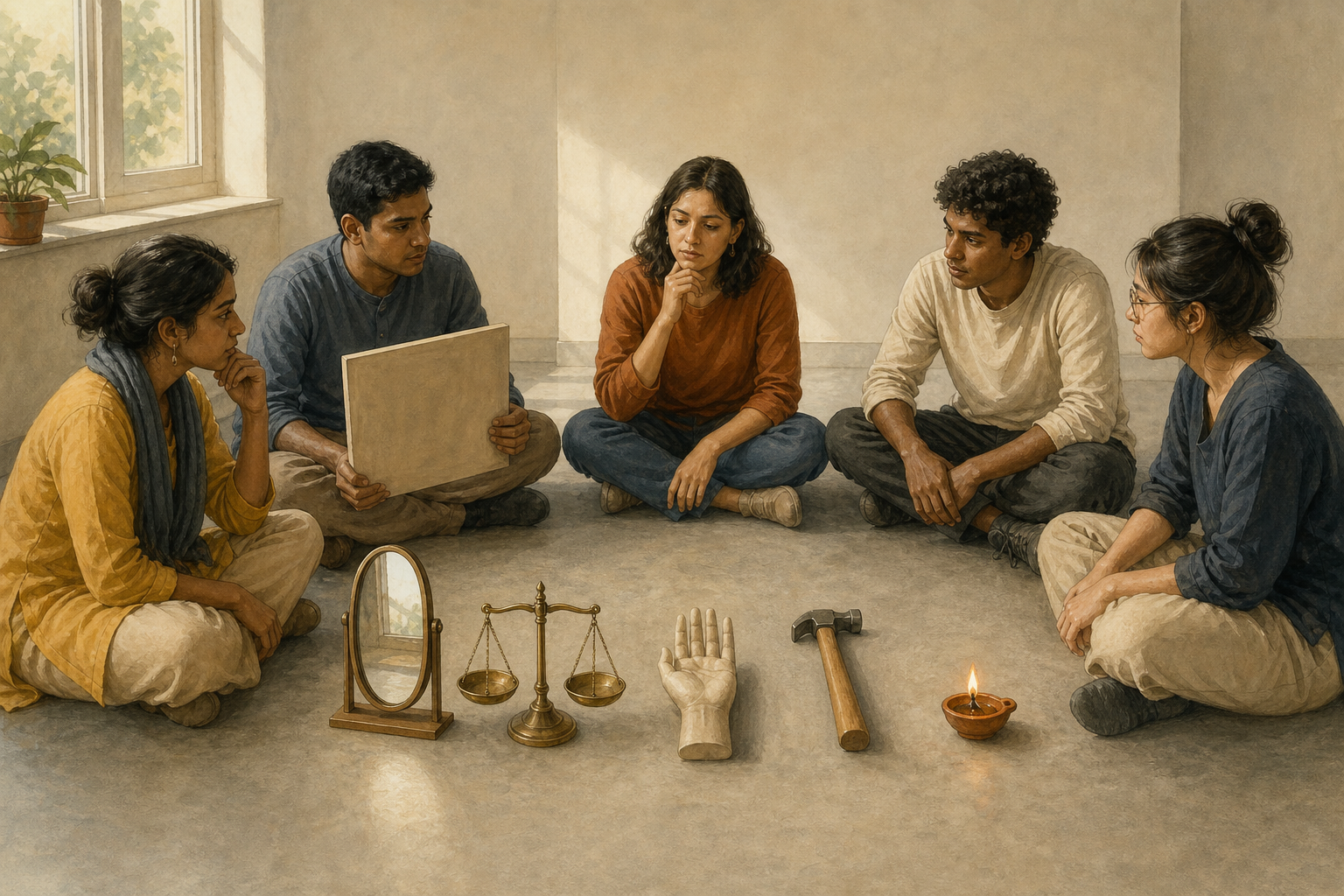
Political education can reveal injustice that a family or institution would rather ignore. It becomes manipulative when it gives a student an enemy before it gives the student evidence, or a crowd before it gives the student a remedy.
Before joining a rally, strike, boycott or campus campaign, write a five-line brief. This is not an essay and it is not a loyalty test. Each answer should be clear enough that a person outside the movement can understand it.
- Grievance: What exactly happened, who was harmed and which act or policy caused the harm?
- Evidence: What do you know directly, what have you verified, and what have you merely heard from an organizer or social-media account?
- Remedy: What specific change are you requesting, and which person or institution has the authority to make it?
- Method: What will participants do, and which means – violence, intimidation, vandalism, coercion or deliberate injury to uninvolved people – are forbidden?
- Accountability: Who is responsible if the claim proves false, the action becomes violent or the campaign imposes costs on people who had no part in the dispute?
Do not grade the student on whether the conclusion matches yours. Grade the clarity of the claim, the quality of the evidence, the proportionality of the method and the willingness to correct an error. Then ask the student to state the strongest argument against the campaign. A person who understands only the weakest version of the opposing case is not yet ready to claim moral certainty.
If the answers collapse into words such as justice, equality, system or revolution, the vocabulary is carrying more weight than the reasoning. Do not respond by declaring the student brainwashed. Say instead: the case is incomplete; let us investigate it before making an irreversible commitment.
Apply the same concreteness to career ambition. If a student says, “I will become an IAS officer,” ask what subject will be studied tomorrow, what work will be completed in the next month, how progress will be tested and what alternative path remains honorable. Ambition is healthy. A prestigious label detached from daily discipline is not a plan.
Dharma disciplines the ruler and the protester
A government does not become righteous merely because it holds office. A crowd does not become righteous merely because it invokes justice. Dharmic political judgement must scrutinize both authority and resistance.
Dharampal’s Civil Disobedience in the Indian Tradition records a useful example from 1810. Citizens in Benares, Bhagalpur and Patna opposed a proposed house tax through a peaceful refusal to work, and the British withdrew the proposal. The example does not prove that one tactic always succeeds. It shows how resistance can possess a defined grievance, disciplined means and a recognizable stopping point.
You can use five ethical checks before supporting an agitation:
- Truth: Are claims stated accurately, without rumors, selective editing or exaggeration designed to inflame?
- Restraint: Does the method avoid injury, threats, destruction and forced participation?
- Proportion: Is the disruption limited to what is needed to press the grievance, or is widespread disorder being treated as proof of seriousness?
- Shared burden: Are participants prepared to bear the cost of their convictions, or are they transferring that cost to shopkeepers, workers, commuters and families outside the dispute?
- Resolution: Is there a condition under which the action ends, or does the movement need permanent anger to preserve itself?
Peaceful resistance is not passive. It can require courage, patience and sacrifice. But burning a vehicle, breaking a shop or terrorizing a bystander does not become seva because someone attaches a noble slogan to it. It makes an unrelated person pay for a grievance that remains unresolved.
If anyone proposes violence or destruction as a tactic, do not participate. Leave the situation, do not carry materials or operational messages for the group, and seek help from a trusted elder or an appropriate authority if danger is imminent. Group loyalty does not remove personal responsibility.
Institutions have corresponding duties. A school, university or government office confronting a grievance should identify the decision-maker, acknowledge the specific complaint, provide a response date and explain its eventual decision. Mutual goodwill cannot survive if authorities offer only silence until anger becomes disorder. Order is not an excuse for official indifference, just as injustice is not an excuse for public violence.
Restore the dignity of inherited work without imprisoning youth in it

Families often fall into a false choice. Either the child must continue the kula-vrutti exactly as previous generations did, or the child must reject it as an embarrassing remnant. A Dharmic education should make room for a third path: understand the vocation honestly, honor the people who perform it, improve what can be improved and then choose responsibly.
Before a student declares a family or community occupation beneath them, complete this exercise:
- Observe one complete work cycle. Accompany the worker from preparation through completion. Do not reduce the occupation to its most visible manual task.
- Inventory the knowledge. Record the tools, judgement, relationships, local conditions, risks and forms of memory required to do the work well.
- Separate hardship from humiliation. Low income, unsafe conditions or physical strain may require change. None of them proves that the worker lacks dignity.
- Make the career decision explicitly. Continue, modernize or leave the vocation for reasons connected to aptitude, livelihood, health and duty – not merely prestige.
- Leave something useful behind. If you choose another career, help preserve knowledge, improve a process, support an apprentice, strengthen safety or contribute to the family in another concrete way.
This exercise does not romanticize hardship. A parent should not weaponize dharma to deny a child’s aptitude or trap the child in unsafe work. A student should not weaponize education to erase the intelligence, sacrifice and sacred meaning within a parent’s life.
If an occupation contains exploitation, identify the exploitative condition: the payment arrangement, unsafe practice, abusive intermediary or lack of choice. Work on that condition. Condemning the worker may offer social distance, but it offers no remedy.
The right to leave and the duty to understand can coexist. Inherited work can be honorable without being compulsory. Education proves its value when it enlarges choice while preserving gratitude.
Use four conversations before the next andolan
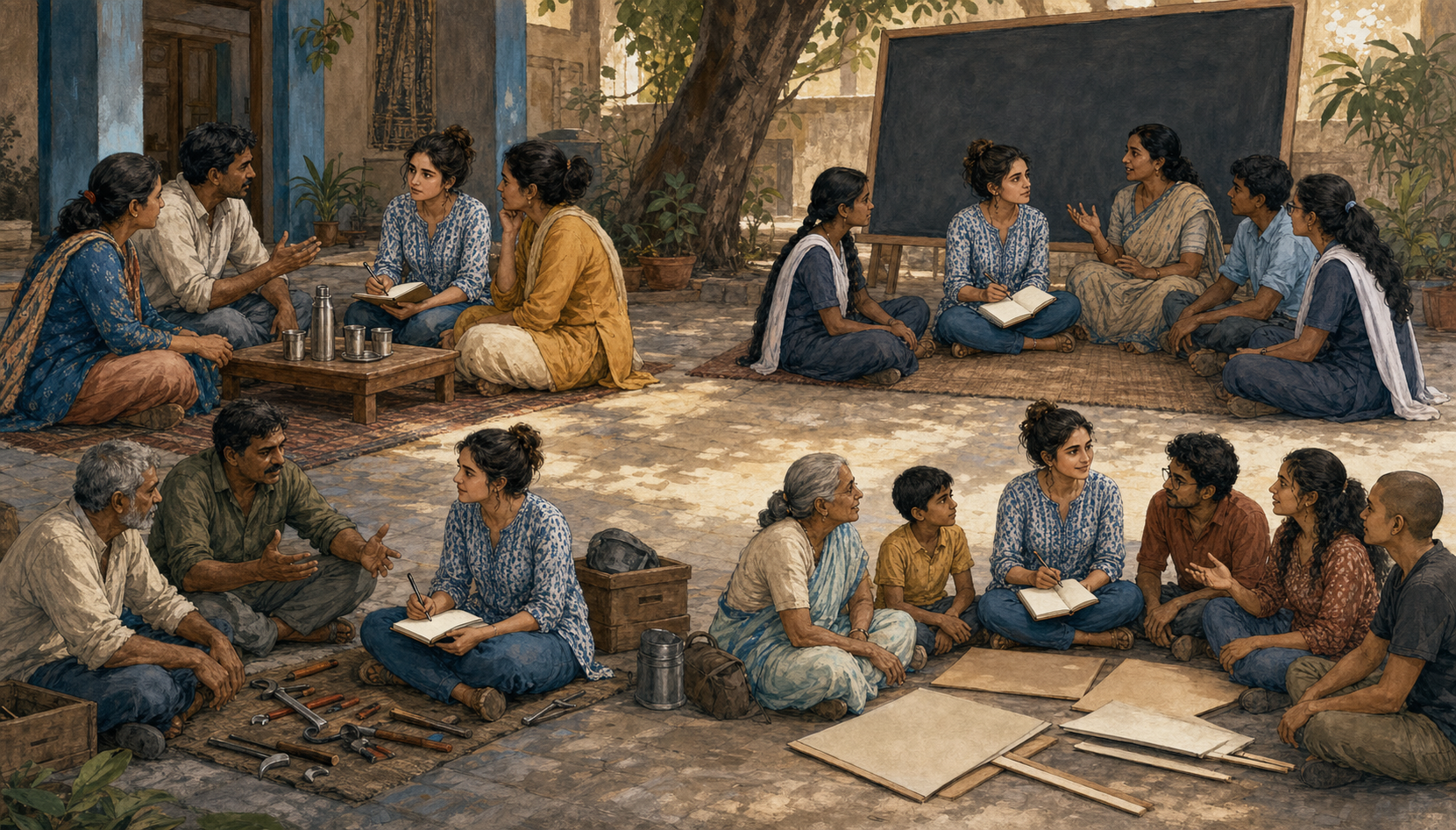
A lecture delivered during an argument is unlikely to reveal much. Use four separate conversations, each focused on one task. A family can hold one per week. A teacher can adapt the same sequence for a tutorial or civic-learning exercise.
- Exchange biographies before ideologies. The elder describes one complete day of work, including decisions that outsiders do not see. The student describes one complete day at college, including academic and political pressures. Each person must name one skill visible in the other’s account.
- Choose one claim. The student prepares the five-line brief for a real issue. The elder asks questions without turning the discussion into a defence of the family, government or tradition. Both sides state what evidence would make them revise their position.
- Convert concern into service. Choose one lawful, non-partisan task related to the stated concern. The point is to discover whether the cause still matters when the work is local, unglamorous and unlikely to earn public approval.
- Make a responsibility agreement. Decide which academic or work duties continue, which methods are forbidden, how personal safety will be protected, who will be contacted if events become disorderly and what condition will trigger withdrawal or review.
With an adult child, the agreement governs shared responsibilities, family resources and conduct in the home; it does not give the parent ownership of the adult’s conscience. With a younger student, the family also has a direct safety responsibility. In either case, threats and humiliation will turn a question of judgement into a contest over control.
A school can reinforce the same habits by requiring evidence briefs, serious counterarguments and precise remedies whenever political issues enter the classroom. Standards should remain the same whether teachers sympathize with a cause or dislike it. Otherwise, education teaches students that favored conclusions do not need intellectual discipline.
Key takeaways
- Youth alienation becomes visible through contempt for family, work and ordinary duty, not through disagreement alone.
- A political cause should survive five questions about its grievance, evidence, remedy, method and accountability.
- Dharmic dissent binds authority as well as protesters: officials must hear specific grievances, while citizens must reject violence and coercion.
- A student may leave an inherited vocation without demeaning it; understanding the work should come before judging its worth.
- The best response to politicized education is more disciplined education: clear claims, verified evidence, useful service and responsibility for consequences.
Before the next rally or family confrontation, schedule the first conversation and ask for the five-line brief. Then arrange one complete work cycle beside a parent, artisan, farmer, boatman, shopkeeper or other community worker. The goal is not to manufacture obedience. It is to make judgement visible. A young person who can honor labor, test claims, bear the cost of conviction and reject violence is better prepared to reform institutions that truly need reform.
References
