
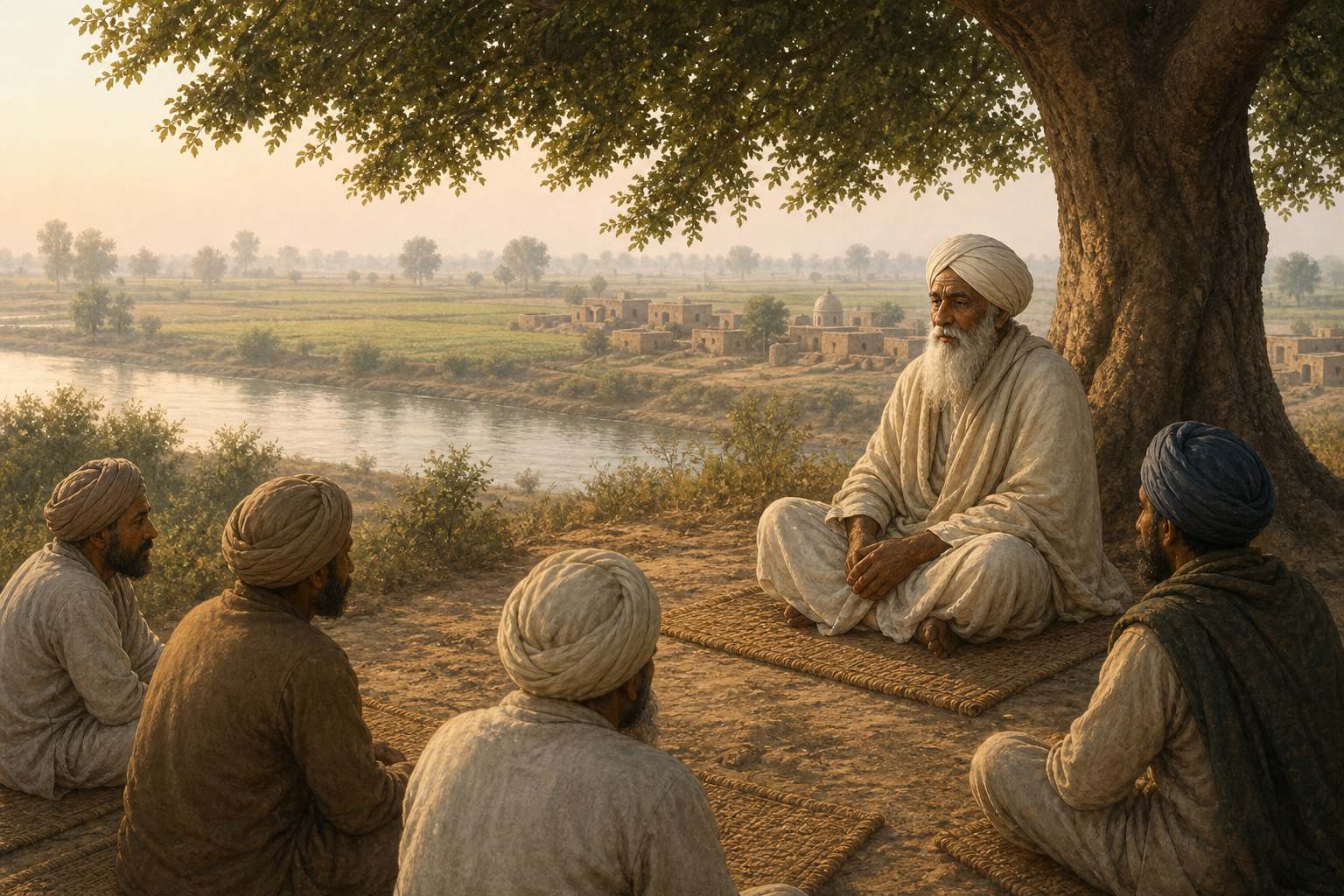
If you know the name Beas but are unsure where Baba Jaimal Singh fits, separate three things that are often collapsed: the man, the discipline he received, and the community he established. That simple distinction prevents both sectarian reduction and vague universalism.
Jaimal Singh’s life follows a clear movement from seeker to disciple to spiritual guide. Following that movement helps you understand the early Beas tradition as a disciplined way of life before treating it as an institution or religious label.
Read his life in the right sequence
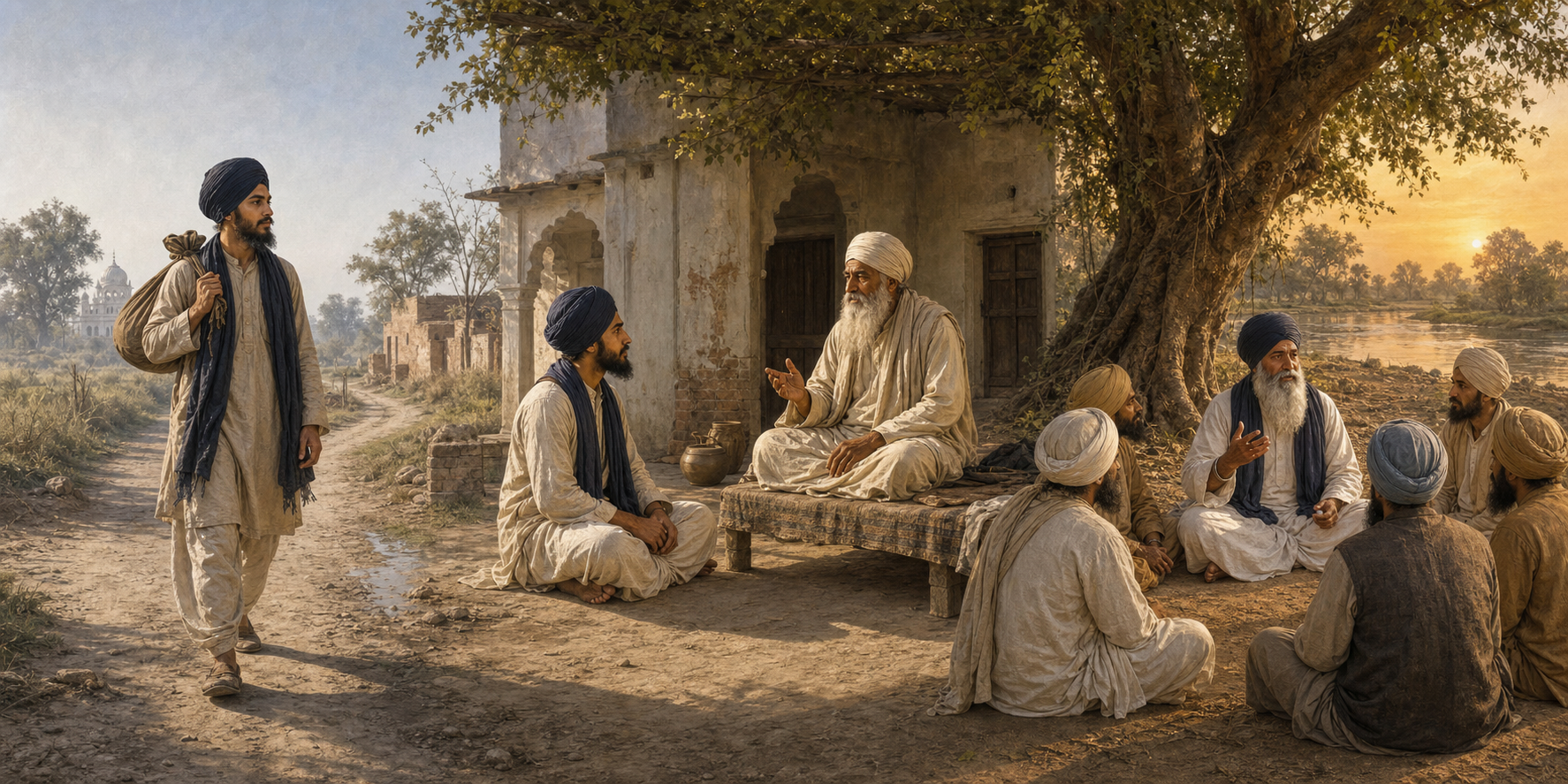
The essential chronology is compact. Jaimal Singh was born in 1838 into a Sikh family, received initiation from Shiv Dayal Singh at the age of 17, and later established a spiritual centre at Beas in Punjab. Shiv Dayal Singh was the founder of the Radha Soami tradition.
Each fact answers a different question. His birth identifies his inherited setting. His initiation identifies the Guru and discipline he consciously accepted. Beas identifies his enduring work as a guide and community builder. No single fact should be made to swallow the other two.
- Sikh formation: His birth into a Sikh family places him within the religious life of nineteenth-century Punjab.
- Radha Soami discipleship: His initiation at 17 joined serious seeking to a particular Guru-Shishya relationship under Shiv Dayal Singh.
- Beas stewardship: By establishing a centre at Beas, he gave disciplined spiritual practice a durable communal home.
This sequence also tells you what not to infer. A Sikh family background does not, by itself, explain the whole of his mature spiritual vocation. Initiation does not make his Punjabi and Sikh formation irrelevant. Establishing a Dera does not mean that institutional expansion was the sole measure of his work.
The chronology establishes an order, not a complete institutional timeline. It does not supply a precise founding year for the Beas centre. When you encounter a more detailed date, distinguish that later historical claim from the basic facts above and ask what evidence supports it.
The early Beas inheritance joined four commitments
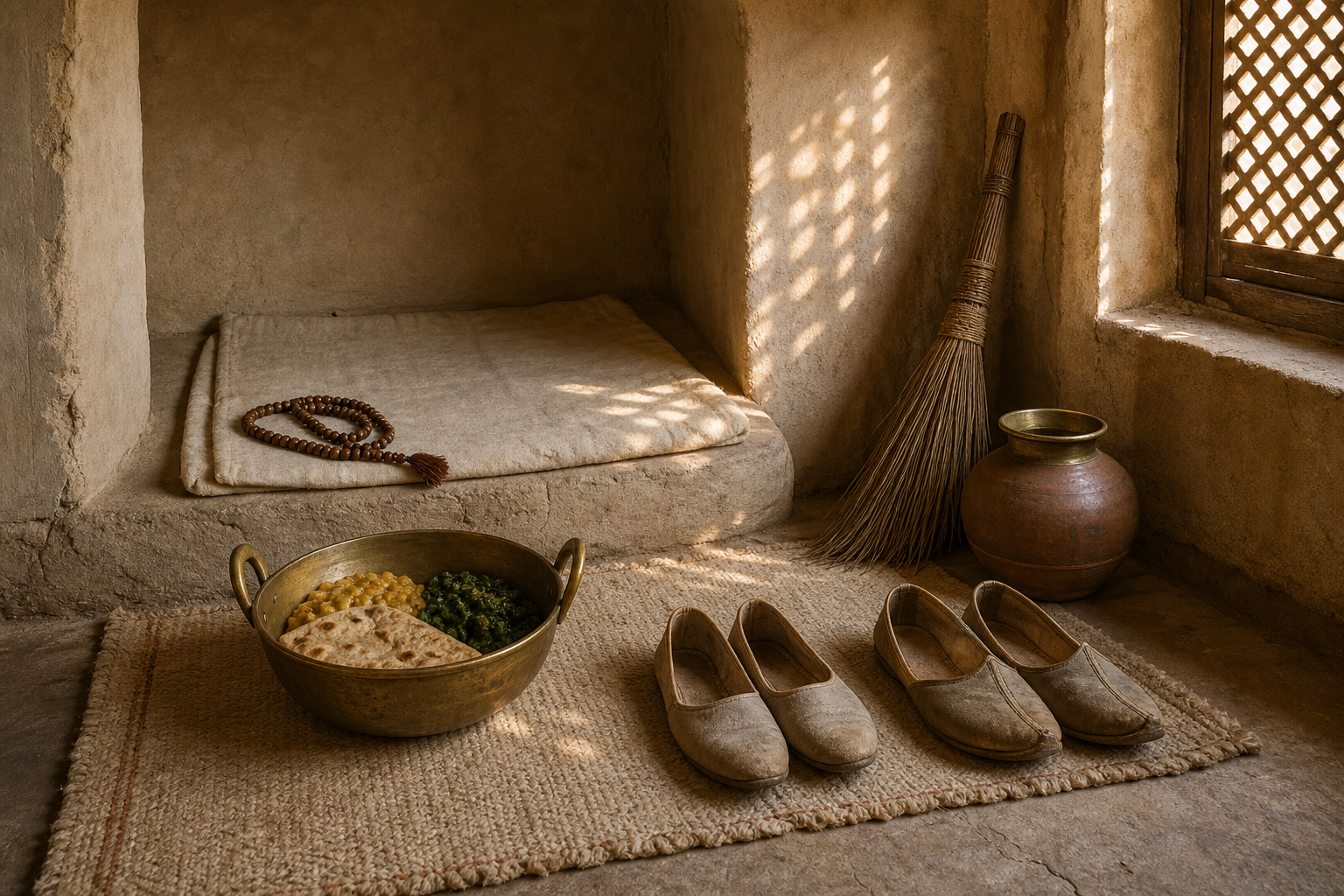
Jaimal Singh’s spiritual emphasis can be understood through four connected commitments. Pulling one away from the others produces a distorted picture.
- Direct inner realization: The purpose of spiritual life was not merely to inherit a name or affirm an outward identity. It was to realize the Divine inwardly.
- Disciplined meditation: Inner realization required steady contemplative effort rather than occasional inspiration.
- Moral clarity: Humility, compassion, and service were not decorative virtues. They were part of the conditions under which spiritual practice became credible.
- The Guru-disciple bond: Guidance came through a respectful relationship between a realized teacher and an earnest disciple, continuing a deeply rooted Indian mode of spiritual transmission.
These commitments correct one another. Meditation without ethical change can turn into private self-absorption. Moral language without practice remains aspiration. Devotion to a Guru without discipline can collapse into attachment to personality. Practice without humility can make every inner impression seem self-validating.
That is why Jaimal Singh’s teaching cannot be reduced to the loose instruction to look within. The operative pattern was inner experience through meditative discipline, supported by moral conduct, compassionate living, humility, service, and respect for the Guru. Experience mattered, but so did the character of the person seeking it.
You can apply this pattern without pretending that a short biography supplies a complete meditation method. Fix a regular time for the contemplative practice proper to your own lineage. Pair it with one recurring act of service that brings no special recognition. Then judge progress partly by ordinary conduct: whether you are becoming more truthful, less reactive, more compassionate, and easier to correct.
No precise initiation practice should be reconstructed from broad principles. If you are pursuing a lineage-specific method, learn it from a qualified teacher within that lineage. The practical lesson available to everyone is the integration of contemplation, ethics, humility, and service.
Why establishing the Dera at Beas mattered
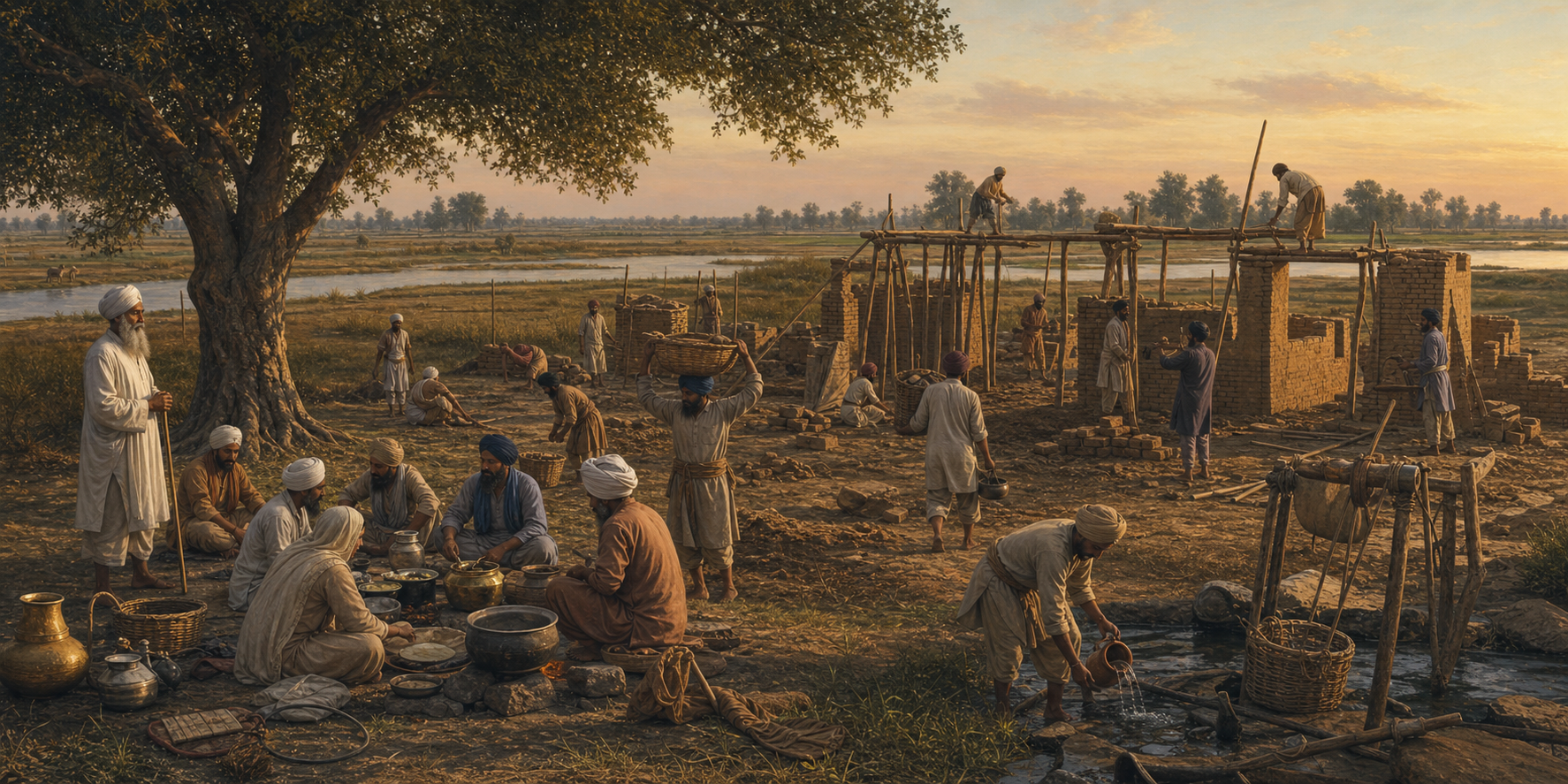
A spiritual centre does more than provide an address. It turns solitary aspiration into a repeatable communal discipline. Seekers can return to a place, receive guidance, practise alongside others, and organize service around something more durable than an individual’s changing enthusiasm.
The early significance of Beas therefore lies in function rather than grandeur. Jaimal Singh conceived the centre as a place for sincere practice rather than sectarian identity. Its purpose was to support introspection, ethical living, devotion, and the formation of an earnest community.
This distinction remains useful whenever you evaluate a religious institution. Ask whether the place serves the discipline or whether the discipline has become secondary to the place. Buildings, membership, and public visibility can preserve a tradition, but none of them proves inner attainment. In the Beas ideal associated with Jaimal Singh, the institution receives its meaning from practice.
You can use three questions when visiting or learning about any Dera, ashram, vihara, gurdwara, or other spiritual community:
- What disciplined practice is this community actually helping people sustain?
- How are humility, compassion, ethical conduct, and service made visible in ordinary life?
- Does reverence for the teacher deepen responsibility, or does it excuse followers from examining their conduct?
Those questions do not require you to dismiss institutions. They help you judge an institution by its spiritual purpose rather than by scale, reputation, or inherited attachment.
Place him within Sikh and wider Dharmic worlds carefully
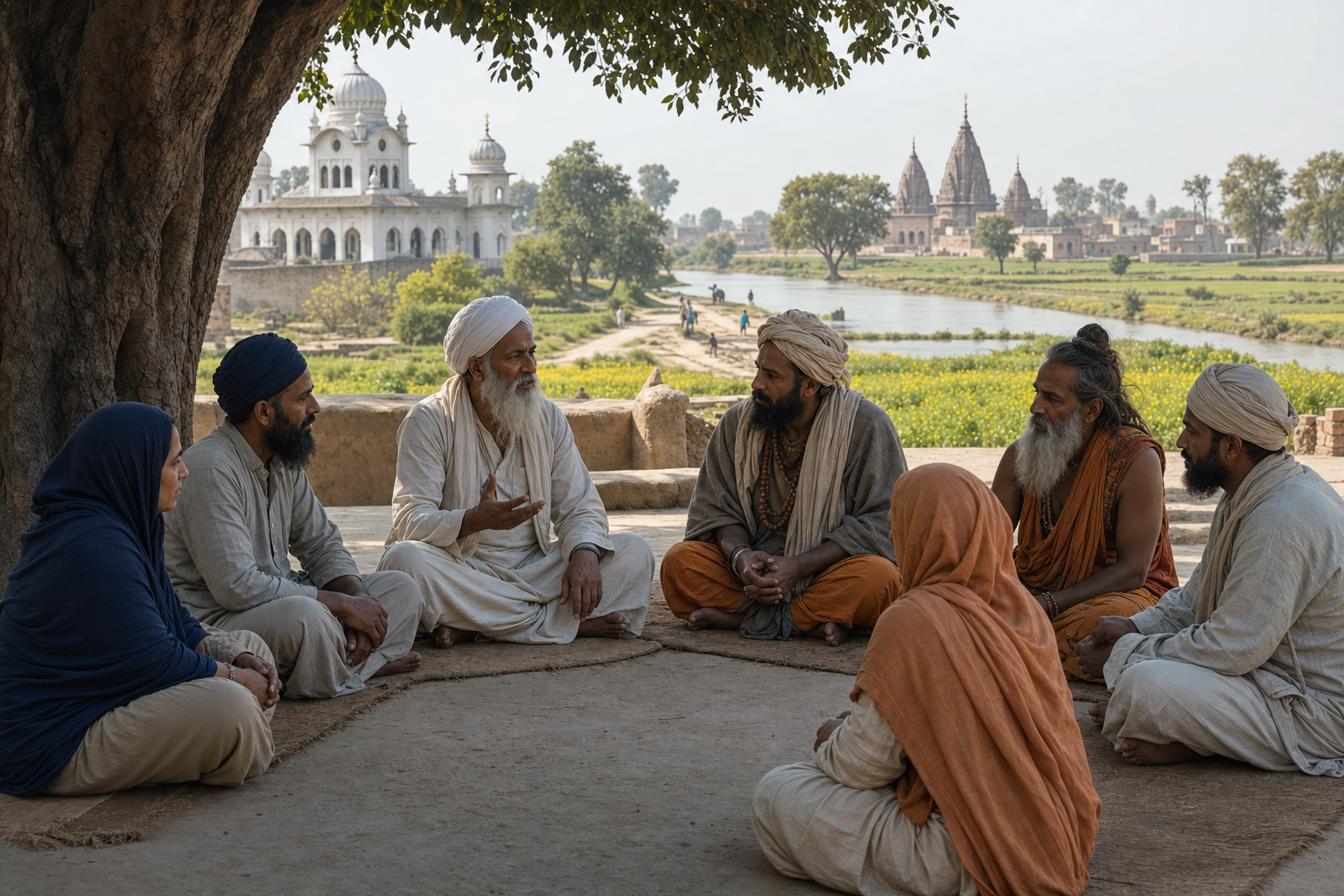
Jaimal Singh’s life sits at a meeting point, and meeting points are easily misdescribed. One mistake is to call him only a Sikh mystic and leave out his initiation under the founder of the Radha Soami tradition. The opposite mistake is to make him a generic universal teacher whose Sikh and Punjabi setting does not matter.
A more accurate description keeps the layers together: he was born into a Sikh family, became a disciple of Shiv Dayal Singh at 17, was widely regarded as a Guru within the Radha Soami tradition, and established the spiritual centre at Beas. This wording does not force a complex life into a single inherited or institutional box.
His legacy also carries recognizably Dharmic themes. Hindu, Buddhist, Jain, and Sikh paths do not teach identical doctrines, but they can share a practical grammar: disciplined contemplation, ethical self-formation, compassion, service, humility, and guidance from those further along the path. Jaimal Singh’s emphasis on inner realization made that grammar intelligible to seekers from different prior affiliations.
Resonance is not identity. Saying that several traditions value compassion does not erase their different understandings of the self, liberation, authority, or ultimate reality. Likewise, describing the Beas centre as welcoming does not prove that every doctrinal boundary disappeared. Inclusivity here is best understood as an invitation to sincere practice without making a seeker’s previous label the sole test of spiritual worth.
This is a useful Dharmic way to approach religious plurality. You do not need to pretend that all paths are the same. You can recognize shared disciplines, honour real differences, and still judge people by sincerity, conduct, and depth of practice.
Key takeaways for reading the Beas tradition responsibly
- Baba Jaimal Singh was born into a Sikh family in 1838 and was initiated by Shiv Dayal Singh at 17.
- His early formation, chosen discipleship, and later work at Beas are distinct parts of one life; none should be used to erase the others.
- The spiritual core associated with him joins inner realization to regular meditation, moral clarity, humility, compassion, service, and the Guru-disciple bond.
- The Dera at Beas mattered because it gave sincere practice and spiritual community a stable home, not because outward scale was itself the goal.
- Shared Dharmic values can explain broad appeal without implying that Hinduism, Buddhism, Jainism, Sikhism, and Radha Soami teaching are doctrinally identical.
When you encounter a claim about the tradition, first ask which level it concerns: Jaimal Singh’s biography, the discipline attributed to him, the early Beas centre, or a later institutional development. Then demand evidence appropriate to that level. A statement about a later organization should not be projected backward merely because it carries the Beas name.
Begin your deeper study with the three-part chronology, and keep practice at the centre of your interpretation. That gives you a firm basis for exploring the later Beas tradition without losing sight of the seeker, disciple, and guide from whom it grew.
References
