
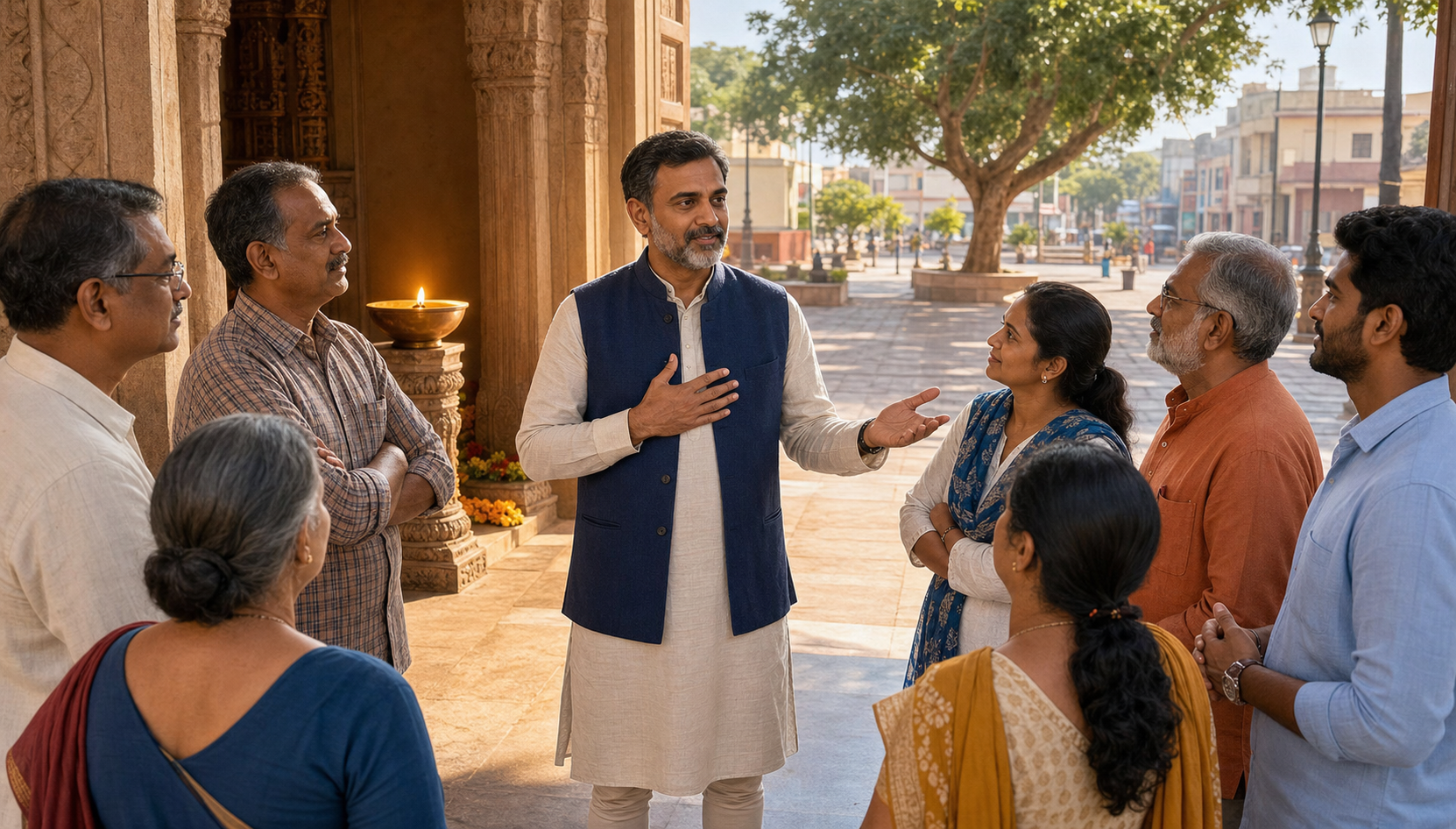
You know the moment: a wrong decision is moving forward at work, a temple committee wants to avoid a difficult issue, or someone in your family is being treated unfairly. If you remain silent, something worth protecting may be abandoned. If you rush in while angry, you may injure the relationship, weaken your credibility, and make the problem harder to solve.
Courageous dharma offers a more demanding path. You steady yourself, establish what is true, identify the duty that is actually yours, and choose a proportionate form of action. The aim is neither withdrawal nor combativeness. It is strength governed by truth, compassion, self-command, and responsibility.
Nonattachment does not require you to withdraw
Spiritual language can conceal avoidance. You may tell yourself that conflict is beneath you, that every disagreement is merely ego, or that concern for an outcome proves attachment. Sometimes that diagnosis is correct. Sometimes it allows you to preserve your comfort while another person carries the cost of your silence.
In the practical synthesis associated with the Bhagavad Gita, nonattachment concerns your relationship to action. You relinquish possessiveness over victory, praise, and results; you do not relinquish discernment or duty. Sri Aurobindo’s reading of Arjuna’s crisis likewise joins inner realization to principled outward action. Arjuna must first see clearly, but clarity is not the endpoint. It enables him to act without being ruled by confusion or private desire.
Three distinctions will keep you from turning a spiritual virtue into an excuse:
- Peace is not passivity. Peace is the condition from which you can respond without panic, hatred, or the need to dominate.
- Nonattachment is not nonparticipation. You can work earnestly for a just result without making your identity depend on getting it.
- Ahimsa is not indifference. Ahimsa disciplines your intention and means. It does not require you to ignore preventable harm when truthful, safe, and lawful help is available.
The opposite error is just as serious. Anger can imitate courage because both create energy. Test the difference by asking what happens when resistance appears. Courage remains capable of listening, correcting a factual mistake, and changing tactics. Reaction demands an enemy, treats humiliation as success, and becomes more reckless when challenged.
This is the modern value of the kshatra ethos. It is not a license for aggression. It is disciplined readiness: the capacity to remain steady under pressure, protect the vulnerable, accept responsibility, and use competent means. Before speaking or acting, ask: Am I protecting something real, or am I merely discharging emotion?
Train for moral pressure before it arrives

Most failures of courage begin before the decisive moment. If your convictions are available only when you feel composed and supported, social pressure can separate belief from conduct. A daily spiritual rhythm closes that gap by making remembrance, discernment, and service habitual.
Prahlada represents this kind of preparation. His devotion remains steady under familial and political pressure because it is rooted in practice rather than approval. The traditional disciplines associated with his teaching – hearing, remembrance, service, and surrender – can become a practical routine for anyone who expects to face difficult choices:
- Sravana, or hearing: Read or listen to a short portion of sacred teaching before entering the day’s arguments. Choose material that clarifies conduct, not content that merely intensifies grievance.
- Smarana, or remembrance: Carry one principle into the day, such as truthfulness, non-harm, steadiness, or protection of the vulnerable. Recall it before sending a contentious message or entering a difficult meeting.
- Seva, or service: Perform useful work for someone who cannot reward your reputation. This trains you to act for a good beyond applause.
- Atma-nivedana, or surrender: Offer the result to the Divine after doing what is yours to do. This limits both vanity after success and despair after failure.
Add a pressure rehearsal when you already know where your next test may arise. Do not rehearse an argument in which you defeat everyone. Rehearse clarity:
- Name the situation you are likely to face without assigning motives you cannot verify.
- Write the principle you must not surrender, such as factual honesty, equal treatment, safety, or fidelity to a legitimate responsibility.
- Draft the calmest sentence that states your concern directly.
- Identify the person, policy, record, or community process that can support responsible action.
- Decide in advance what would make you pause, seek advice, change methods, or withdraw from an unethical demand.
This rehearsal matters because fear often compresses your choices into silence or confrontation. Preparation restores the missing options: a clarifying question, a written objection, a private intervention, a request for evidence, a formal process, or a refusal to participate.
Use a dharmic test before taking a public stand
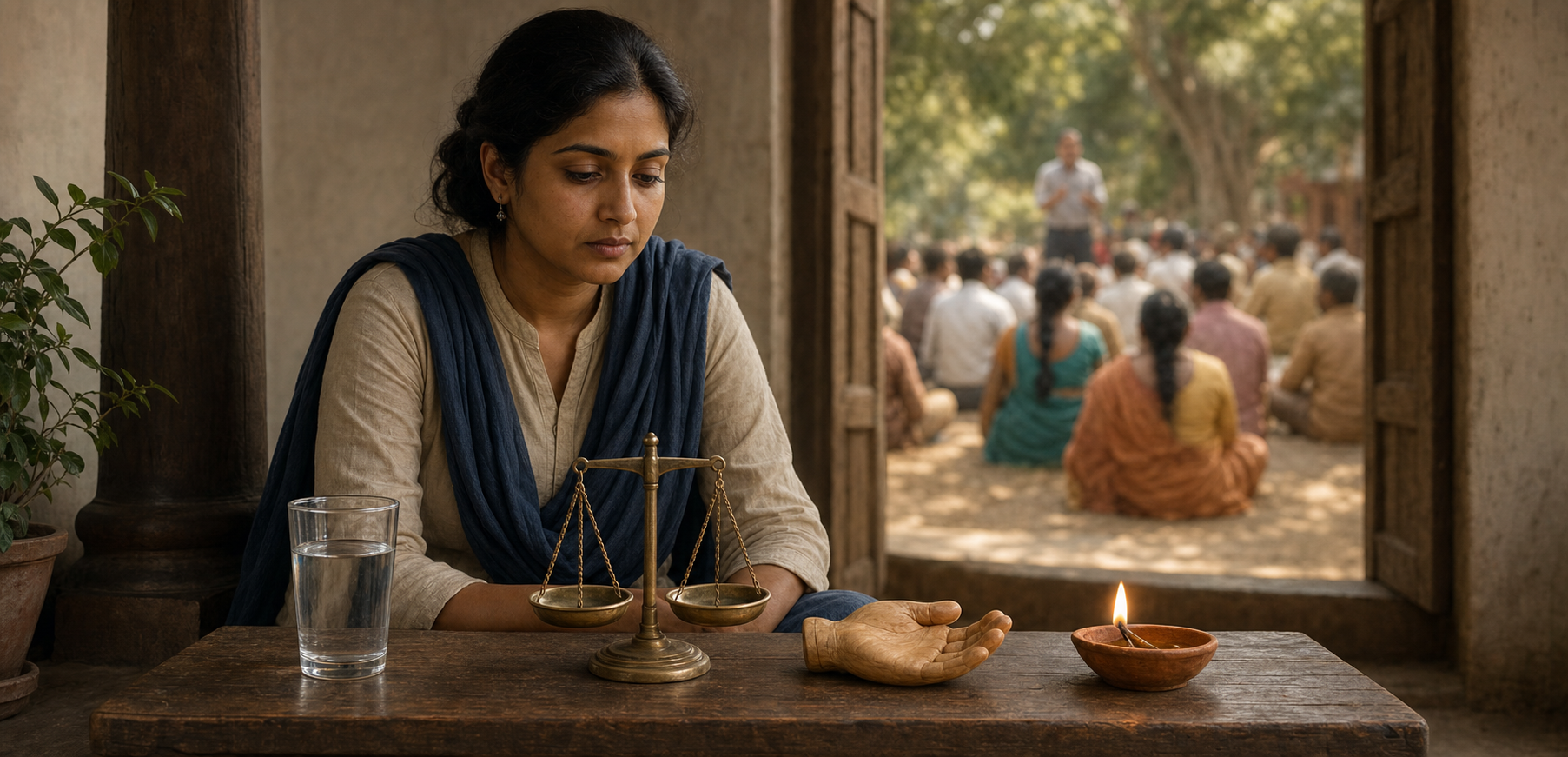
A cause does not become dharmic merely because it uses religious vocabulary. Before you circulate a claim, challenge an institution, organize others, or make a public accusation, pass the proposed action through the following test.
- Duty: What responsibility is actually yours? Name the person, principle, institution, or vulnerable group you are responsible for serving. Concern may be universal, but your authority and competence are not.
- Truth: What do you know directly, what has been documented, and what are you inferring? Keep those categories separate. If a claim would collapse without a dramatic rumor, you do not yet have a sound basis for public action.
- Intention: Are you trying to protect, correct, or restore, or do you mainly want to punish and be seen punishing? Mixed motives are common. Acknowledge them before they choose your methods.
- Means: Is the response proportionate, lawful, and directed at the responsible conduct? Reject threats, dehumanization, deliberate falsehood, collective blame, and humiliation presented as accountability.
- Consequences: Who may bear the cost if you are mistaken? Consider vulnerable people, bystanders, employees, volunteers, families, and the long-term credibility of the cause. Then choose the least harmful method that can realistically address the wrong.
The test should lead to a decision, not endless self-analysis. Act when the relevant facts are sufficiently clear, the responsibility is genuinely yours, and a proportionate step is available. Prepare before acting when the facts, authority, skill, or support are incomplete. Refuse the proposed action when it requires lying, indiscriminate hostility, unlawful harm, or the sacrifice of an innocent person for symbolic effect.
When you need to speak, use a simple structure: state the verifiable fact, name the dharmic value at stake, make a concrete request, and set a boundary. For example: The recorded decision excludes this group from a process that was presented as open. Fairness requires the same published criteria for everyone. Please pause implementation and disclose the criteria. Until that happens, I cannot endorse the decision. This is firmer than vague disapproval and less inflammatory than attacking another person’s character.
Public allegations can create safety, employment, reputational, and legal consequences. If you are considering naming a person, publishing private records, reporting possible offences, or organizing action that may expose participants to retaliation, establish the facts and obtain qualified local legal advice before escalating. Spiritual conviction does not substitute for understanding the law.
Turn devotion into durable civic capacity
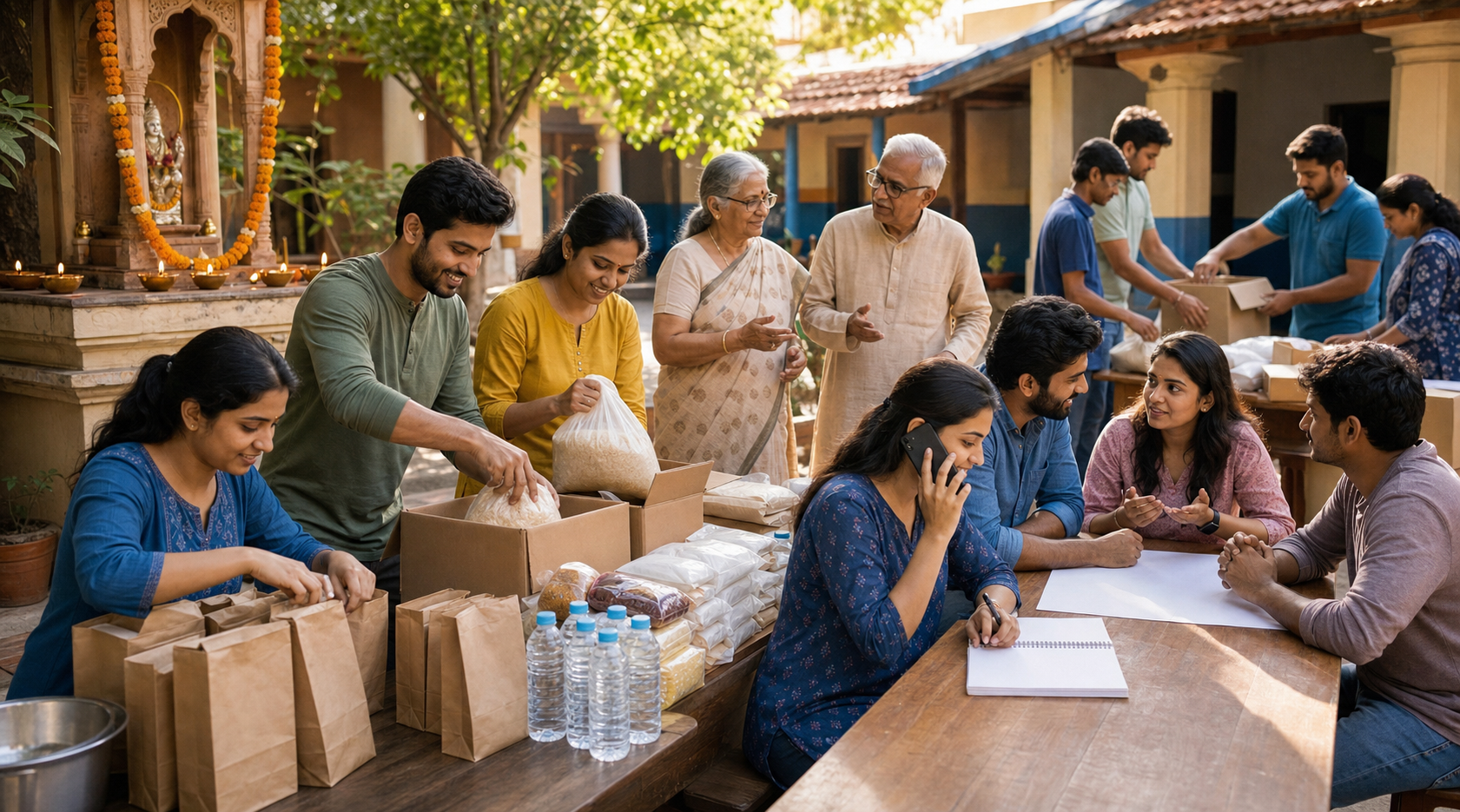
Civic dharma is larger than protest. It includes preserving memory, teaching accurately, serving people in need, improving institutions, preparing younger generations, and maintaining relationships across the dharmic family. A community that mobilizes only when outraged will remain dependent on outrage. A community that develops knowledge, trust, skill, and lawful processes can respond without losing its balance.
Choose one lane in which you or your institution can become reliably useful:
- Documented cultural memory: Build a temple or community exhibit around a clearly defined place, tradition, episode of resilience, or local contribution. Cite claims, distinguish archival evidence from family memory, and have the language reviewed for accuracy and empathy. The purpose is to strengthen knowledge, not transfer guilt to people living now.
- Seva with follow-through: Start from an identified need rather than a photogenic activity. Define who is being served, what practical help is appropriate, who is responsible for delivery, how privacy will be protected, and how recipients can report a problem.
- Legal and educational literacy: Invite a qualified person to explain the rules that affect the community, using realistic scenarios and a clear referral path for individual cases. General awareness is useful; personal legal problems require advice from a competent professional in the relevant jurisdiction.
- Dharmic-family cooperation: Bring Hindus of different sampradayas, Buddhists, Jains, and Sikhs together around a concrete civic need. Shared values such as compassion, self-discipline, service, and respect for plural paths support cooperation without pretending that the traditions are interchangeable.
- Youth readiness: Combine yoga or meditation with physical fitness, teamwork, heritage study, service, careful use of evidence, and practice speaking under disagreement. Young people need both an inner anchor and the competence to carry responsibility.
Large religious gatherings already demonstrate substantial powers of devotion, coordination, and service. Those same capacities can support heritage preservation, civic preparedness, practical seva, and lawful community protection. The change begins when organizers treat public responsibility as a continuing discipline rather than a theme reserved for a special event.
If a temple or community committee resists civic work, replace the broad appeal with a bounded proposal. State the problem, the intended beneficiaries, the activity, the responsible person, the safeguards, and the way the result will be reviewed. For a heritage display, safeguards might include citations, permissions for images, a prohibition on inflammatory generalizations, and review by people who know the history. For a public dialogue, they might include a defined question, a trained moderator, equal speaking rules, and a process for correcting factual errors.
A limited, well-governed initiative gives cautious leaders something concrete to assess. It also tests your own seriousness. If no one is prepared to research, administer, document, or serve, the proposal may be expressing frustration rather than responsibility.
Key takeaways
- Courageous dharma joins inner steadiness to outward responsibility; it rejects both passive withdrawal and uncontrolled reaction.
- Nonattachment releases your claim on praise, victory, and results. It does not erase a duty to act.
- Daily hearing, remembrance, service, and surrender prepare you to keep your principles when authority or social pressure bears down.
- Before public action, test duty, truth, intention, means, and consequences.
- Use the least harmful effective method, and escalate only as your evidence, role, competence, and lawful options justify.
- Build civic strength through documented heritage, sustained seva, literacy, dharmic cooperation, youth preparation, and accountable institutions.
Before your next difficult meeting or public response, write four lines: the fact you can verify, the value at stake, the action you are requesting, and the boundary you will keep. Then enter the situation after remembrance, not rehearsal of resentment. That small discipline is where spiritual conviction begins to become courageous public dharma.
References
- DharmaRenaissance Blog – From Quietism to Courage: Sri Aurobindo on Dharma, Action, and Dharmic Unity
- DharmaRenaissance Blog – Prahlada Gita: Timeless Lessons on Devotion, Fearless Faith, and Dharma for Everyday Life
