
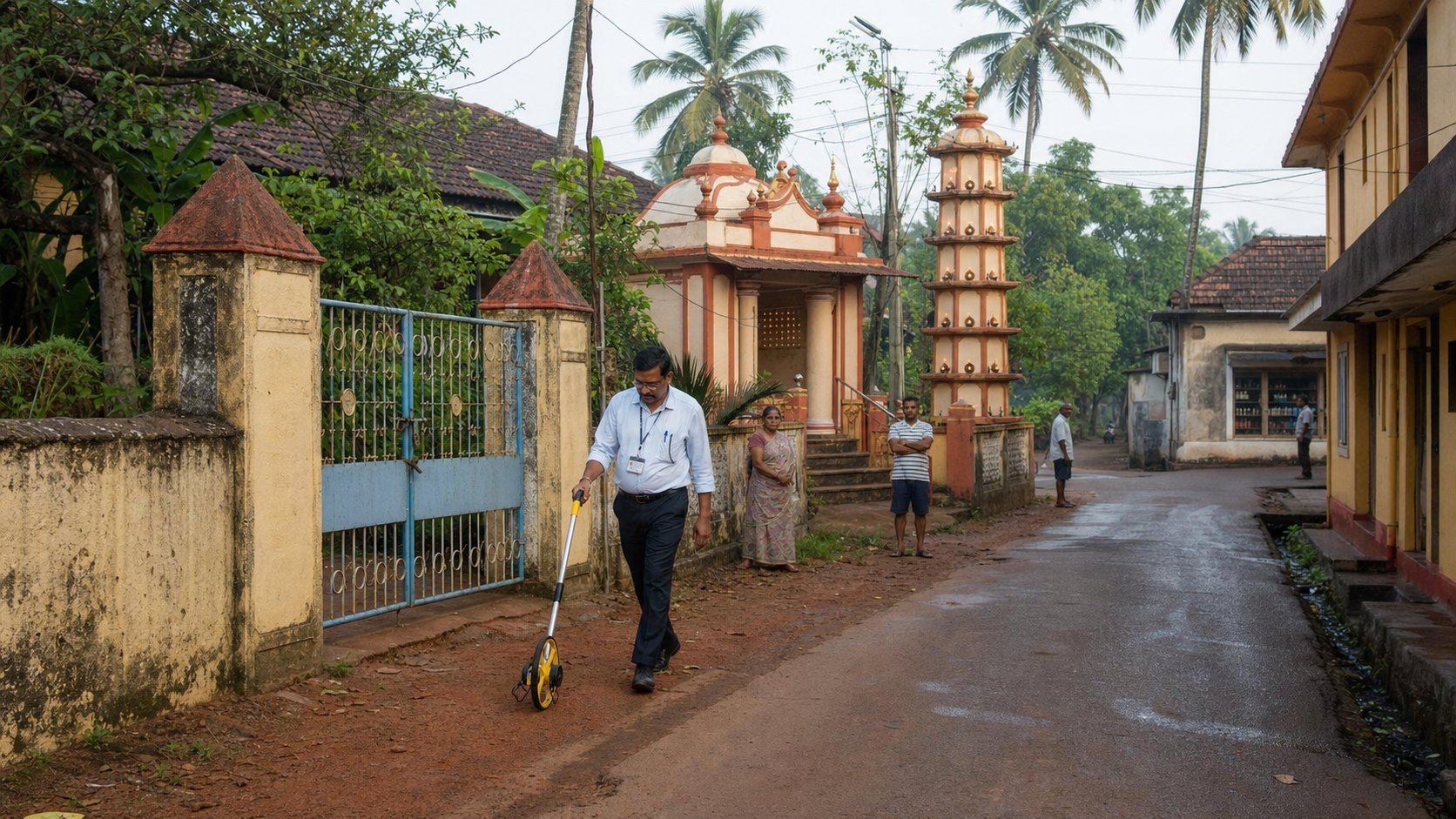
If a liquor outlet sits near your child’s school or beside a temple you help manage, the practical question is not simply whether it belongs there. You need to know what the proposed 100-metre boundary would cover, how the distance would be verified, and which remedy you can reasonably request.
Goa now has a concrete policy demand before its Chief Minister: Hindu Janajagruti Samiti has asked Pramod Sawant to cancel liquor-shop licences within 100 metres of schools and temples. Turning that demand into credible public policy requires more than drawing circles on a map. It requires precise definitions, an official audit, transparent findings and a fair enforcement process.
Start with what the 100-metre proposal actually covers
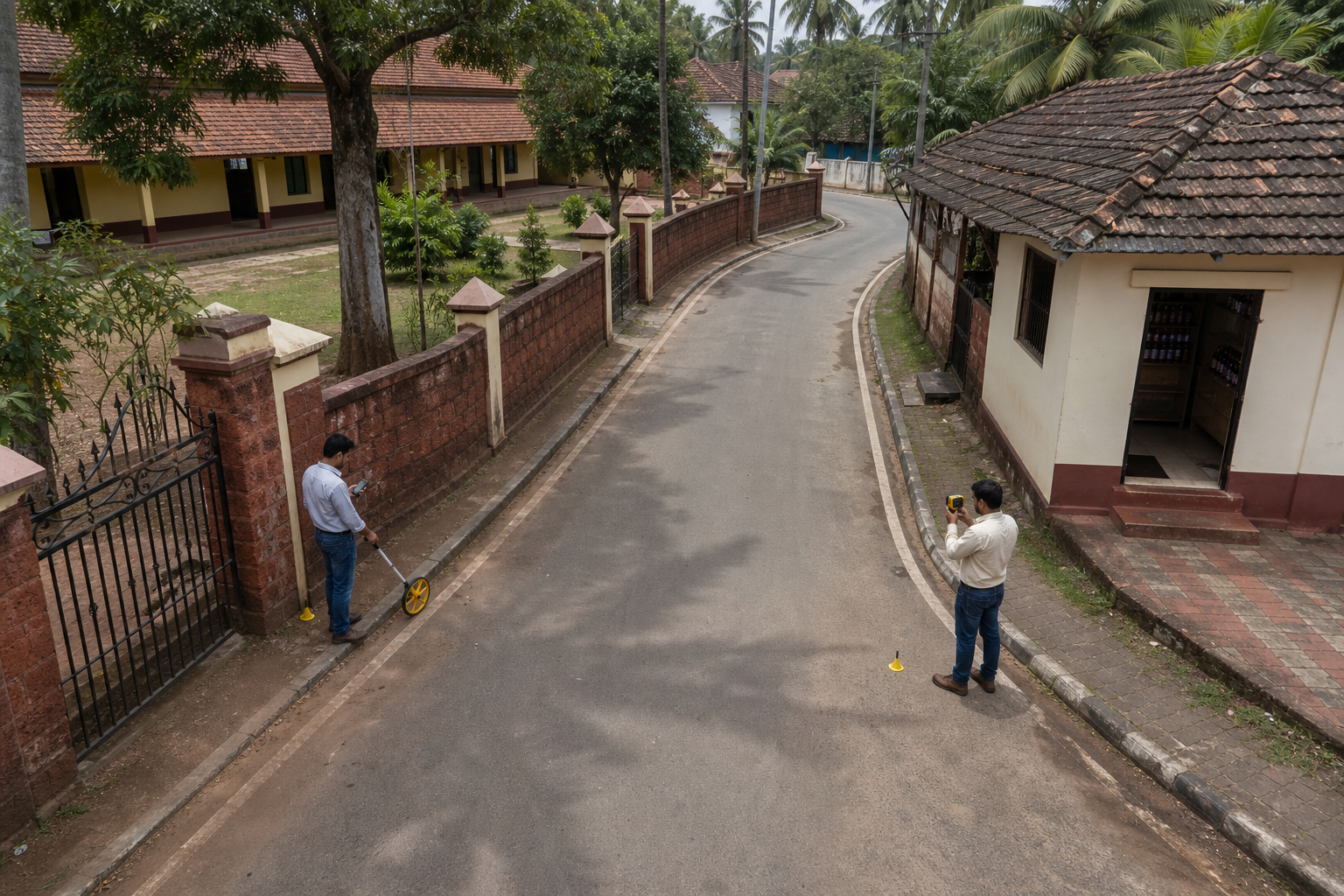
The phrase “liquor-free zone” can imply several different restrictions. The present demand is narrower: it concerns licences for liquor shops operating within 100 metres of schools and temples. It should not be described as a general prohibition on possessing, serving or consuming alcohol throughout every such area unless Goa adopts language that expressly says so.
The same precision matters when discussing its legal status. A formal demand to the Chief Minister is not an operative statewide rule. Until the government issues a binding decision, you should call 100 metres the requested standard, not an existing restriction that every outlet has already violated. That distinction protects the credibility of the campaign and avoids making unsupported allegations against individual businesses.
The figure also answers only one part of the measurement question: how far. It does not by itself establish where measurement begins, where it ends, or whether officials should use a straight line or an accessible route. A school may have several gates. A temple complex may have a compound wall and more than one entrance. A liquor outlet may occupy one unit within a larger property. Any enforceable order must identify the legally relevant points rather than leaving each officer or complainant to choose a convenient method.
There is a further limit worth stating plainly. Schools and temples are the institutions named in the demand. The underlying Dharmic principle can also support respectful surroundings for viharas, derasars and gurdwaras, but those places should be named explicitly if advocates want them included in an eventual rule. Moral similarity does not automatically create administrative coverage.
Schools and temples need protection for different reasons

A common boundary can protect two distinct public goods. Around a school, the concern is the environment students encounter as they arrive, leave and gather nearby. Keeping alcohol commerce at a defined distance reduces its prominence in a space intended for learning and gives parents a clearer assurance about the character of the school surroundings.
This argument does not require claiming that every nearby shop causes a particular incident. The policy question is whether alcohol retail is an appropriate neighbouring use around an institution serving children. A preventive buffer can be justified by the sensitivity of the setting without turning every licensee or customer into an accused person.
A temple presents a different concern. Devotion is shaped not only by the sanctum but also by the approach, entrance, processions, waiting areas and atmosphere surrounding the sacred place. Commercial activity that conflicts with the ritual character of that setting can diminish the calm and dignity devotees reasonably expect.
The broader Dharmic case should be framed around function rather than rivalry among traditions. Hindu temples, Buddhist viharas, Jain derasars and Sikh gurdwaras have distinct disciplines, yet each depends on the ability of a community to maintain a setting appropriate to worship. If Goa considers wider coverage, it can protect that shared function while naming every covered class clearly and applying the same measurement standard to all.
Build a case officials can verify
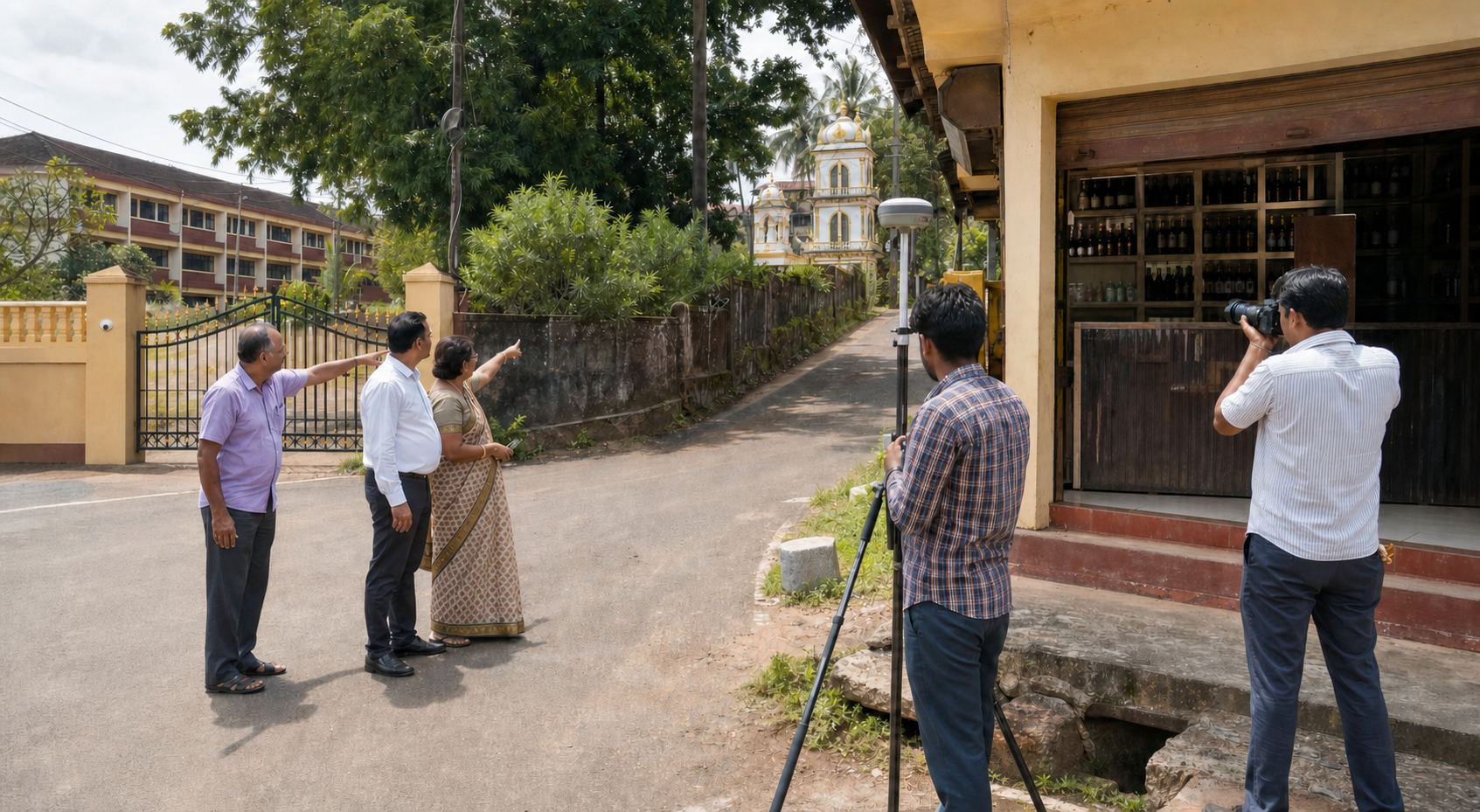
If you believe an outlet is too close to a school or temple, begin with documentation rather than confrontation. A map screenshot or visual estimate may justify asking for an inspection, but it is not an official distance determination and should not be presented as one.
- Identify both premises precisely. Record the names and complete addresses of the school or temple and the liquor outlet. Note which visible entrance or boundary point prompted the concern, without claiming that it is necessarily the point officials must use.
- Document the public setting. From a lawful public location, record signs, entrances and the relationship between the two premises. Avoid trespassing, photographing identifiable children, or publishing accusations against staff and customers.
- Create a preliminary map. Mark the possible boundary points and state which mapping method you used. Label the result as approximate. The purpose is to make an official verification request intelligible, not to replace an authorised survey.
- Ask for licence and distance verification in writing. Request that the relevant excise authority and local body confirm the outlet’s licence status, the measurement method they recognise, and the official distance. Ask for a written response so the result can be checked consistently.
- Coordinate through the institution. A school administration or temple management committee can verify the institution’s boundaries, designate one contact person and consolidate evidence. One factual submission is usually easier to examine than several conflicting complaints.
- Request a defined remedy. If no binding buffer has yet been adopted, ask for the location to be included in a policy audit. If an applicable restriction exists, ask for a written finding and action under that rule. Do not jump from an approximate pin to a demand that a named business be punished as a proven violator.
This process keeps the focus on the location, licence and public standard. It also protects you from the central weakness of informal campaigns: a disputed measurement can eclipse the underlying concern and allow authorities to avoid the policy question entirely.
A workable rule needs more than a radius
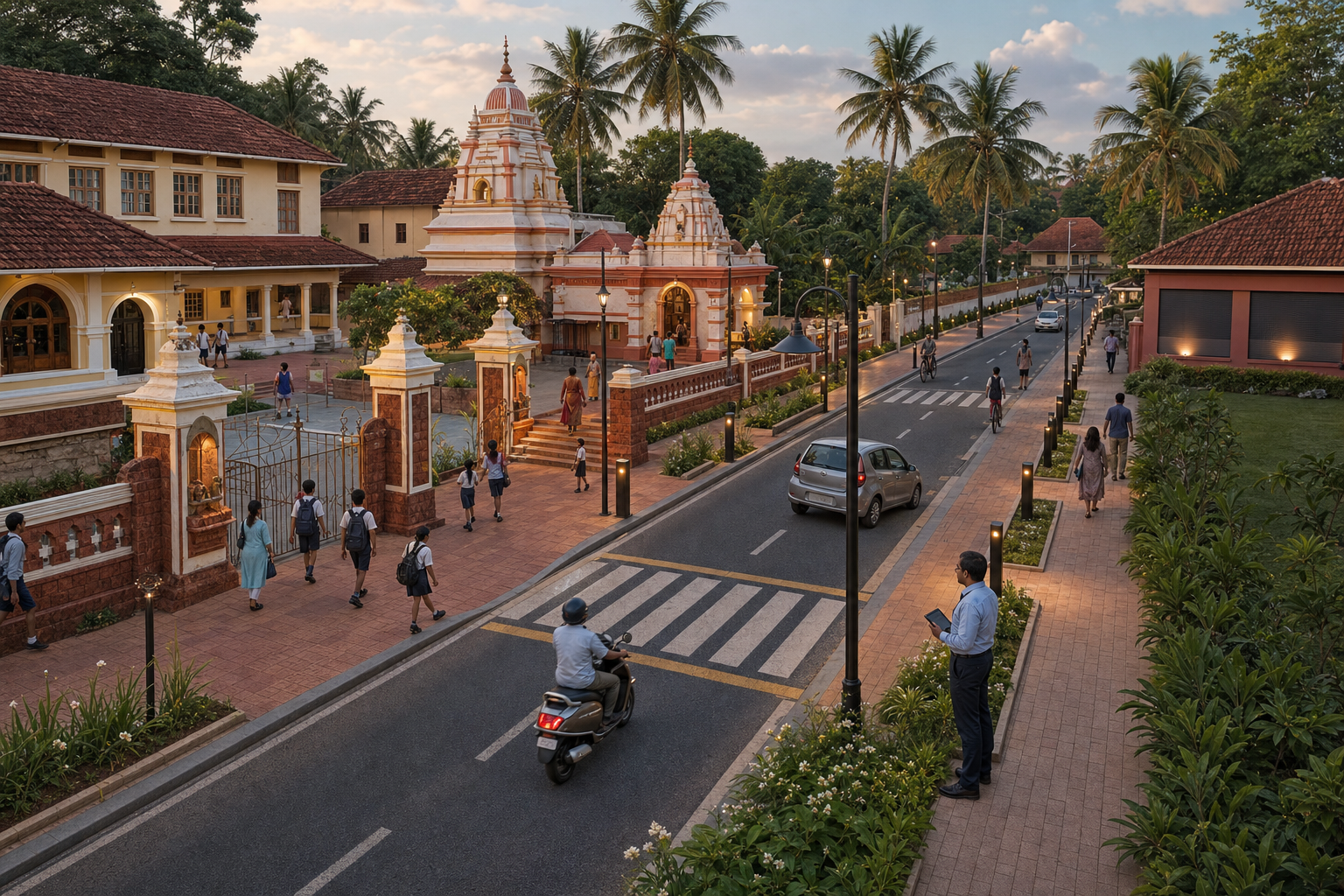
If Goa adopts a buffer, implementation should separate three tasks: mapping the premises, deciding whether a licence falls within the rule, and choosing the lawful remedy. Combining all three in an opaque inspection invites inconsistent outcomes.
- Create a common inventory. Excise authorities, local bodies, school administrations and temple committees should work from the same list of institutions, outlets and addresses. Each record should have a stable identifier so corrections do not create duplicate cases.
- Publish one measurement rule. The government should define the relevant school or temple boundary, the relevant point of the shop, the method of measurement and the treatment of complexes with multiple entrances.
- Verify disputed locations jointly. Where records or measurements conflict, the responsible authorities should produce one reviewable finding instead of giving the institution and licensee contradictory answers.
- Report the result by status. A public register can distinguish outlets found inside the buffer, outside it, awaiting measurement or subject to review. That is more informative than announcing a total without showing how individual cases were classified.
- Explain the enforcement path. Notices, review opportunities and final decisions should follow a published procedure. If policy allows relocation or phased compliance, the eligibility conditions and deadlines should be stated clearly rather than negotiated case by case.
- Screen future applications before approval. Once protected sites are mapped, the same database should be checked when a new liquor licence or relocation is considered. Prevention is simpler than discovering a conflict after a business has begun operating.
Consistent enforcement matters as much as the boundary itself. Selective action would weaken trust among parents, devotees and licensees alike. Transparent mapping allows the public to see that the same rule is being applied regardless of a business owner’s influence or a sacred institution’s prominence.
Fair treatment of livelihoods does not require abandoning the protective purpose. Where authorities have the power to offer relocation guidance or a phased transition, doing so can reduce avoidable hardship. At the same time, transition arrangements must not become indefinite exceptions that leave the sensitive zone unchanged. The order should state who qualifies, what must happen and by when.
Key takeaways
- The 100-metre figure is a proposed licensing buffer around schools and temples, not automatically a general ban on alcohol throughout those areas.
- A formal request to Goa’s Chief Minister should not be described as settled law unless the government adopts it.
- The rule cannot be enforced consistently until it defines the protected boundary, the shop measurement point and the method used to calculate distance.
- A resident’s map is useful for requesting an inspection, but an official measurement and licence review should determine compliance.
- Extending protection to viharas, derasars and gurdwaras would require explicit wording, even though the same principle of respect for sacred surroundings supports their inclusion.
- Transparent results, a published enforcement process and carefully bounded transition measures can protect sensitive spaces without treating livelihoods casually.
If a nearby outlet concerns you, assemble a one-page location record and ask for written verification from the responsible authorities. If you are advocating for a statewide policy, insist that the final language define the institutions, measurement method, decision-maker, public reporting process and remedy. A sacred-space policy earns respect when it is firm enough to protect the setting and precise enough to be enforced fairly.
References
