
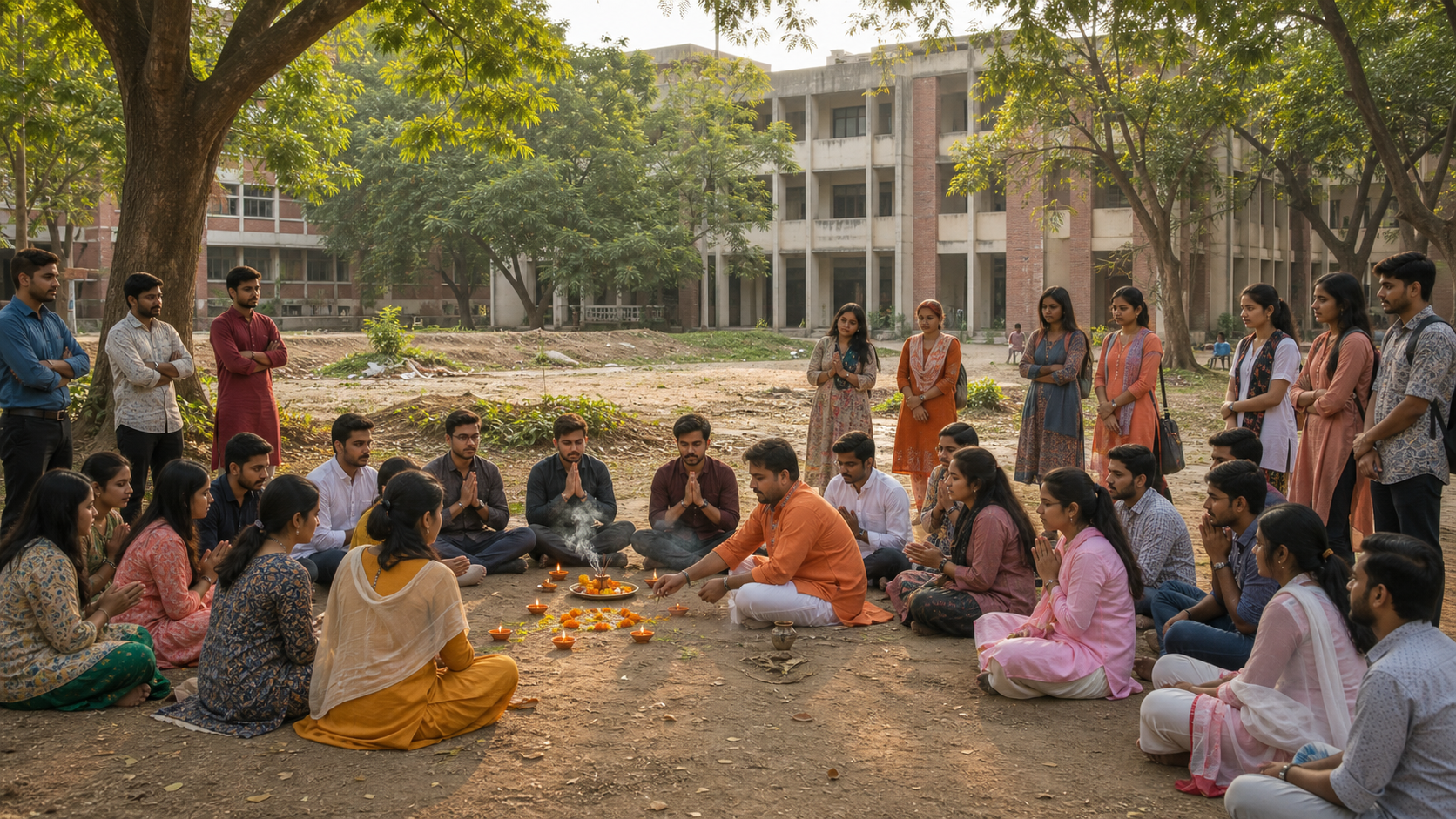
If you saw that a Central Temple had been “inaugurated” at Jagannath University in Dhaka and wondered whether the campus now has an officially approved temple, keep one distinction in view: the students’ action was symbolic. Formal university authorization had not been established.
That does not make the action empty. On February 6, 2026, Hindu students held a day-long peaceful demonstration, offered prayers and ceremonially marked the proposed site. They turned a longstanding request for a recognized place of worship into a visible campus question. The campaign’s next task is to convert that visibility into a documented decision process.
What the symbolic beginning achieved—and what it did not
The students established three things through their conduct. They made the need visible, showed that Hindu worshippers were prepared to organize collectively, and kept the demonstration peaceful. Those achievements matter because an orderly campaign is harder to dismiss as a passing complaint or portray as a threat to campus life.
The symbolic beginning did not, by itself, settle the temple’s administrative status. At the time of the action, students said that no definitive university response had been issued. A proposed site is not necessarily an approved site, a ceremony is not a construction authorization, and public support is not a substitute for written institutional recognition.
This distinction is not pedantry. If supporters describe the temple as fully approved when it is not, administrators can avoid the underlying request by disputing the wording. The more accurate formulation is also the stronger one: Hindu students have symbolically begun the Central Temple campaign at a proposed location and are awaiting a definite, transparent response.
- Confirmed: Hindu students conducted a peaceful, day-long demonstration and prayer observance on February 6, 2026.
- Confirmed: they symbolically marked the beginning of a proposed Central Temple.
- Reported by participants: the demand followed longstanding requests for a formal Hindu worship space.
- Still unresolved: final approval, location, governance arrangements, an interim facility and a timetable for the permanent space.
Equal accommodation must support actual Hindu practice
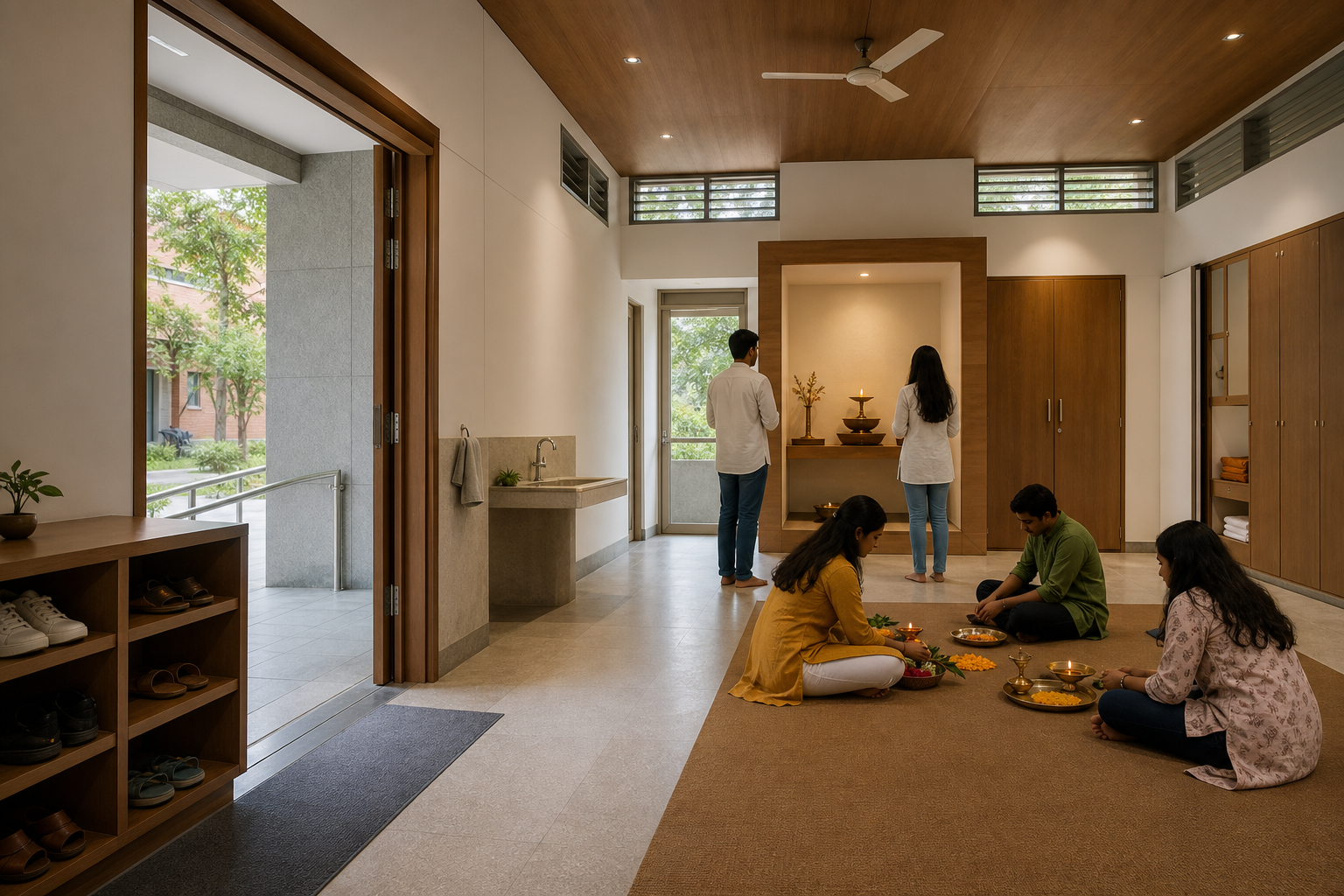
A recognized temple is not merely a room with a religious label. The practical question is whether Hindu students can worship with dignity in a suitable, dependable space under clear campus rules. A nominal facility that cannot accommodate the practices for which it was requested would not answer the need.
Campaigners should therefore define what “Central Temple” means before administrators define it for them. Is the principal request for a Hindu temple that welcomes respectful participation from other Dharmic communities, or for a shared Dharmic facility with distinct provisions for different traditions? Would the space support murti worship, puja, arati, offerings, quiet prayer and festival observances? Who would manage access, cleanliness, scheduling and relations with the university?
These questions are not obstacles to unity. They prevent an attractive but vague promise from replacing meaningful accommodation. Hindu, Buddhist, Jain and Sikh traditions share civilizational affinities, yet they are not interchangeable. Inclusion works when each community can describe its needs rather than being absorbed into an undefined multi-faith arrangement.
The students’ call for a representative committee involving Hindu, Buddhist, Jain and Sikh students offers a workable starting point. Such a committee should consult each community without obscuring the Hindu-led origin and stated purpose of the campaign.
The campaign now needs a written decision trail

Another ceremony may create attention, but attention alone cannot identify who must decide, what information is missing or when the next step is due. The most useful move now is procedural: turn the demand into a record that cannot be indefinitely acknowledged without being answered.
- Fix the factual record. Record the date, purpose, proposed location and peaceful nature of the February 6 action. Keep photographs, notices and public statements with their original dates and wording.
- Submit one consolidated memorandum. State the permanent request, the need for an interim prayer space, the proposed consultative committee and the request for a published timetable. Multiple inconsistent demands make it easier for an institution to claim that the request is unclear.
- Obtain proof of receipt. Record when the memorandum was delivered, which office accepted it and who is responsible for the next response. An oral assurance should be followed by a written summary requesting confirmation.
- Separate interim relief from the permanent project. A suitable temporary worship space can meet immediate needs while location, policy and management questions for the Central Temple are considered. Acceptance of an interim room should be documented as temporary so it does not silently replace the permanent request.
- Ask for decision stages, not a vague promise. The university should identify the responsible authority, consultation stage, site-assessment process, next scheduled action and manner in which a final decision will be communicated.
- Publish accurate updates. Tell supporters what has been requested, received and left unanswered. Remove private contact details and signatures before circulating documents, but preserve the operative wording.
How to recognize a substantive university response
A meeting is useful only if it advances a decision. A credible response should contain more than appreciation for student concerns. Look for these elements:
- a written acknowledgment of the Central Temple request;
- a named office or committee responsible for considering it;
- a clear arrangement for interim worship while the permanent request is pending;
- consultation with the affected Hindu students and relevant Dharmic representatives;
- transparent criteria for choosing a suitable location and managing the facility;
- a published sequence of next steps with identifiable dates; and
- written reasons for the eventual decision.
If a communication contains none of these, it may be courteous engagement, but it is not yet an accountable process. Students can respond calmly by asking which specific item will happen next and when.
Peaceful discipline protects both dignity and credibility
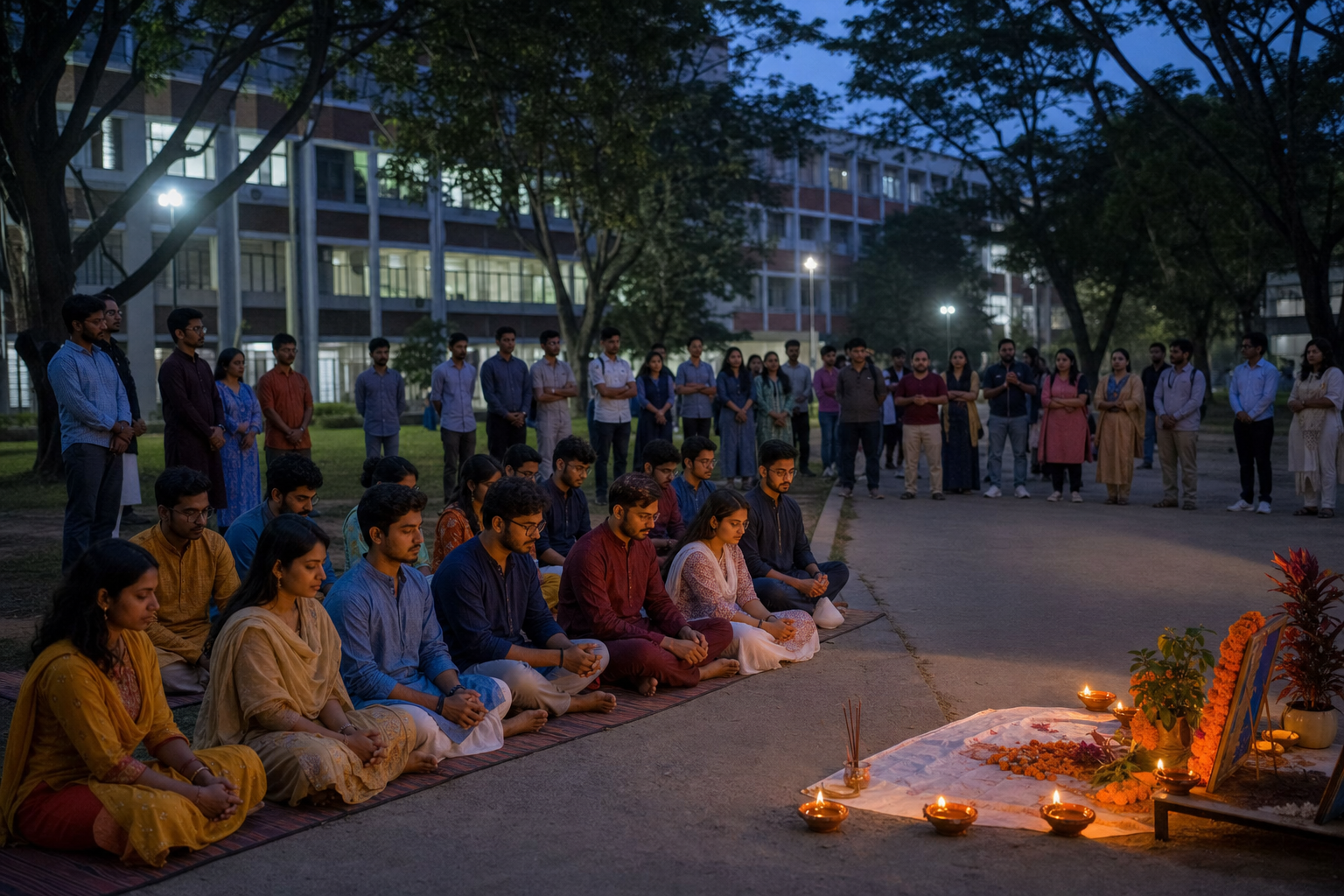
The February 6 demonstration drew its strength from prayer, order and non-violence. Preserving that character is not a concession. It keeps attention on the university’s responsibility to answer a concrete request and denies provocateurs an opportunity to recast the campaign as a conflict between students.
Campaign organizers can protect that discipline with a few practical rules:
- Use three labels consistently: “confirmed,” “requested” and “awaiting response.” Do not turn expectation into fact.
- Designate authorized communicators. Their updates should use the same description of the temple, the proposed site and the current administrative status.
- Set conduct expectations before every gathering. Prayer, speeches and delegation meetings should have agreed coordinators and a clear end point.
- Reject hostility toward other communities. The demand concerns equal dignity for Hindu students; it does not require diminishing anyone else’s worship or security.
- Correct supporters without humiliating them. When an exaggerated claim spreads, replace it promptly with the exact status and a link to the documented demand.
- Keep dialogue open without accepting indefinite delay. Civility and accountability belong together. Students can attend consultations while continuing to request written decisions and dates.
Supporters outside the university have a role too. Share the students’ defined request rather than adding unrelated political claims. Ask for the latest verified status before declaring victory or rejection. Public attention helps most when it makes administrative delay visible without making campus dialogue harder.
Key takeaways and the next useful act
- The February 6 action was a peaceful symbolic beginning of a proposed Central Temple, not established proof of final university approval.
- The demand should remain specific: a recognized space capable of supporting actual Hindu worship, with respectful consultation across Dharmic communities.
- An interim prayer space and a permanent temple process are separate needs; progress on one should not quietly cancel the other.
- The campaign’s decisive test is now procedural: a responsible authority, written acknowledgment, defined next steps and a published timetable.
- Accurate language and non-violent discipline protect the students’ credibility while keeping the focus on equal dignity.
If you are supporting the campaign, ask for three items before circulating the next update: the latest consolidated memorandum, proof that the university received it, and the next dated administrative step. If one is missing, help the students secure it. If all three exist, amplify their exact wording rather than an embellished version.
The symbolic beginning has already made the aspiration visible. The next achievement should be harder to evade: a transparent university process that ends in a clear decision and provides Hindu students a dignified place to worship while that decision is pursued.
References
