
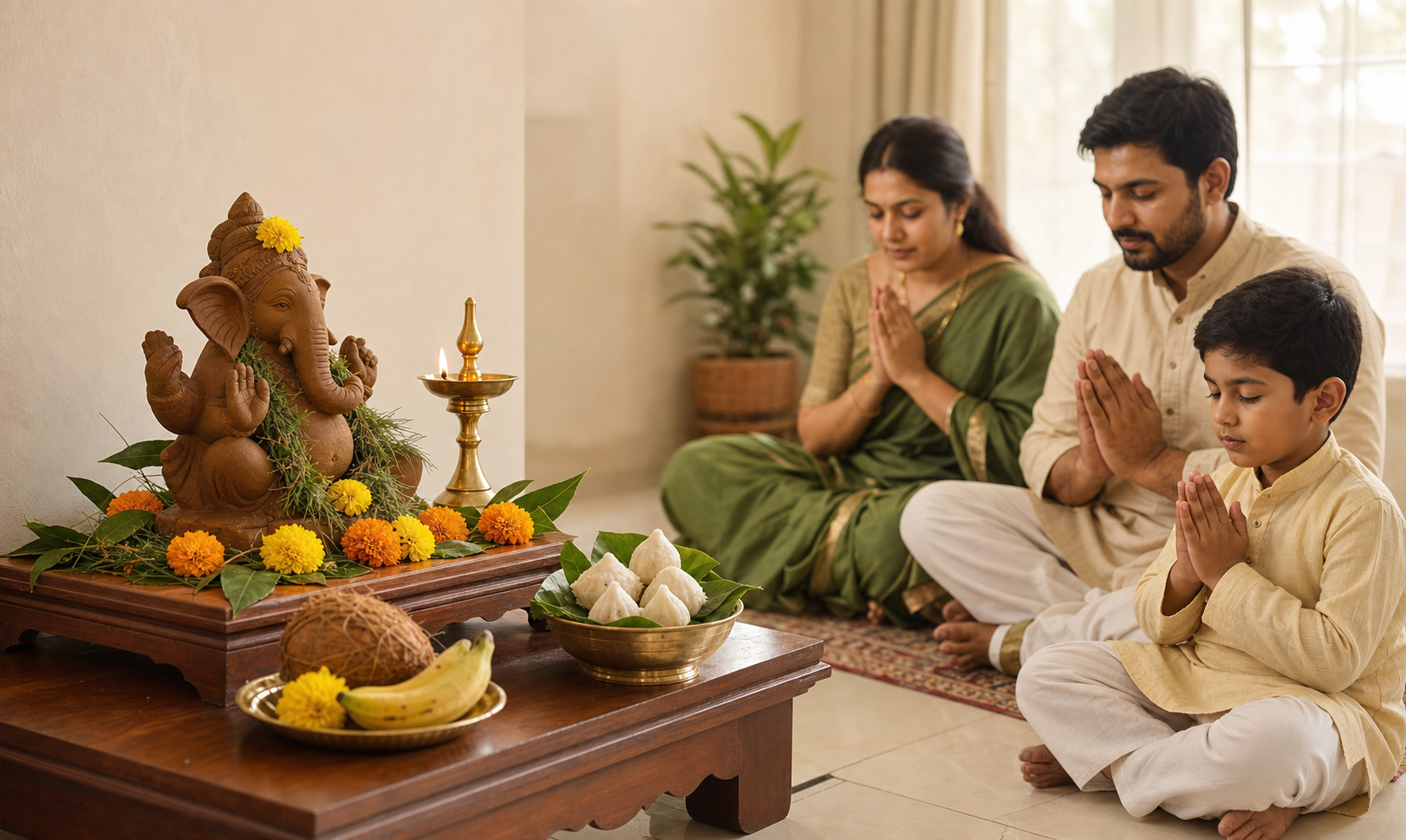
If you plan to observe Putra Ganapati Vratam in 2026, the first decision is not how elaborate your altar should be. It is which local date and family procedure you will follow. Telugu households do not all use one universal timetable or an identical puja sequence.
Whether you are praying to welcome a child or seeking protection and virtuous growth for children already in your family, you can keep the vrata with clarity. Fix the date locally, make an honest sankalpa, prepare a simple altar, and let the discipline continue in the way you conduct your home.
Know what you are asking – and promising
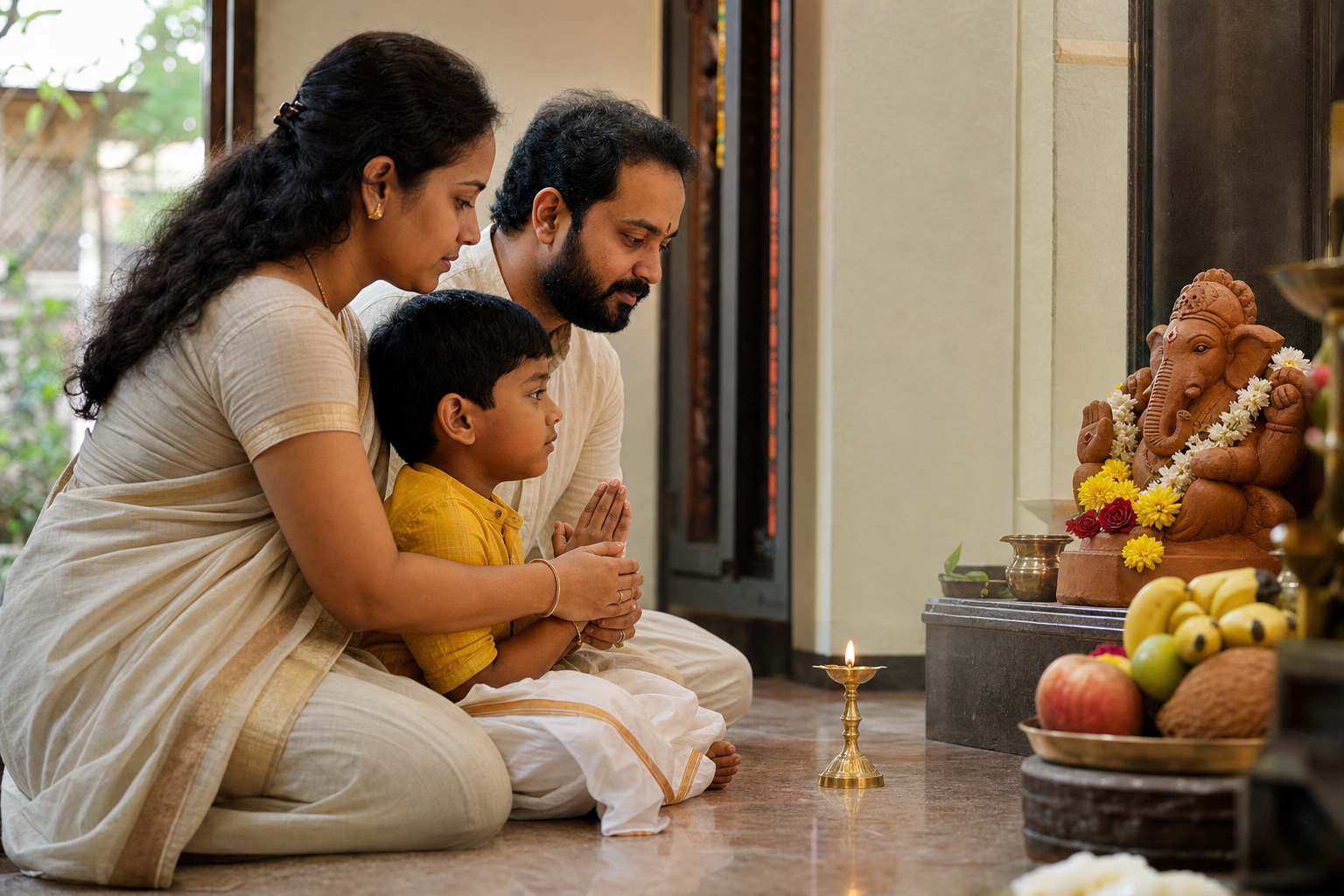
Putra Ganapati Vratam is a chosen discipline of worship directed to Putra Ganapati, the compassionate aspect of Lord Ganapathi associated with progeny and household auspiciousness. It is especially rooted in the household traditions of Andhra Pradesh and Telangana.
Married couples seeking the blessing of children may undertake the vrata. Parents and other families may also observe it while praying for the health, protection, and good character of their children. Decide which of these intentions is truly yours before the puja begins. A precise sankalpa keeps the worship from becoming a vague request for general good fortune.
The word putra should not shrink your prayer into a demand for a preferred sex or turn the ritual into a transaction. Approach the vrata as a prayer for a child and an acceptance of the responsibilities that come with parenthood. Those responsibilities include creating a home grounded in compassion, honesty, service, patience, and mutual respect.
This worship is not a medical treatment for infertility, and no ritual should be presented as a guarantee of conception. If you are pursuing a medical evaluation or treatment, continue it under qualified professional care. Prayer and medical care address different needs and can remain alongside one another.
Fix the local date before buying puja materials
A single date copied from a calendar for another city may not settle when your household should observe the vrata. The relevant Chaturthi tithi, its relationship to local sunrise, and any recommended muhurta can vary by location and calendar convention. For 2026, use a dependable regional Panchang for the place where you will perform the worship.
If your family has an established practice, confirm the date with the elder or priest who maintains it. Otherwise, consult a local temple almanac or a priest familiar with Telugu observances. Ask concrete questions rather than simply asking for an auspicious day:
- Which civil date corresponds to the Chaturthi tithi used for Putra Ganapati Vratam in our location?
- What local time should the sankalpa and puja begin?
- Does our family follow Panchopachara or Shodashopachara worship for this vrata?
- Is a kalasha customary in our household procedure?
- What form of fasting, if any, is expected?
Write down the answers together. This prevents a common household problem: one person follows an online calendar, another remembers a family custom, and the disagreement begins just before worship. Calendar accuracy and family continuity should support one another.
Prepare the altar, offerings, and sankalpa
Cleanliness here is both physical and mental. Prepare the worship area, bathe and wear clean clothing according to your custom, and reduce avoidable noise and conflict in the home. A sattvic atmosphere is expressed through calm speech, truthfulness, and respect, not merely through a well-decorated altar.
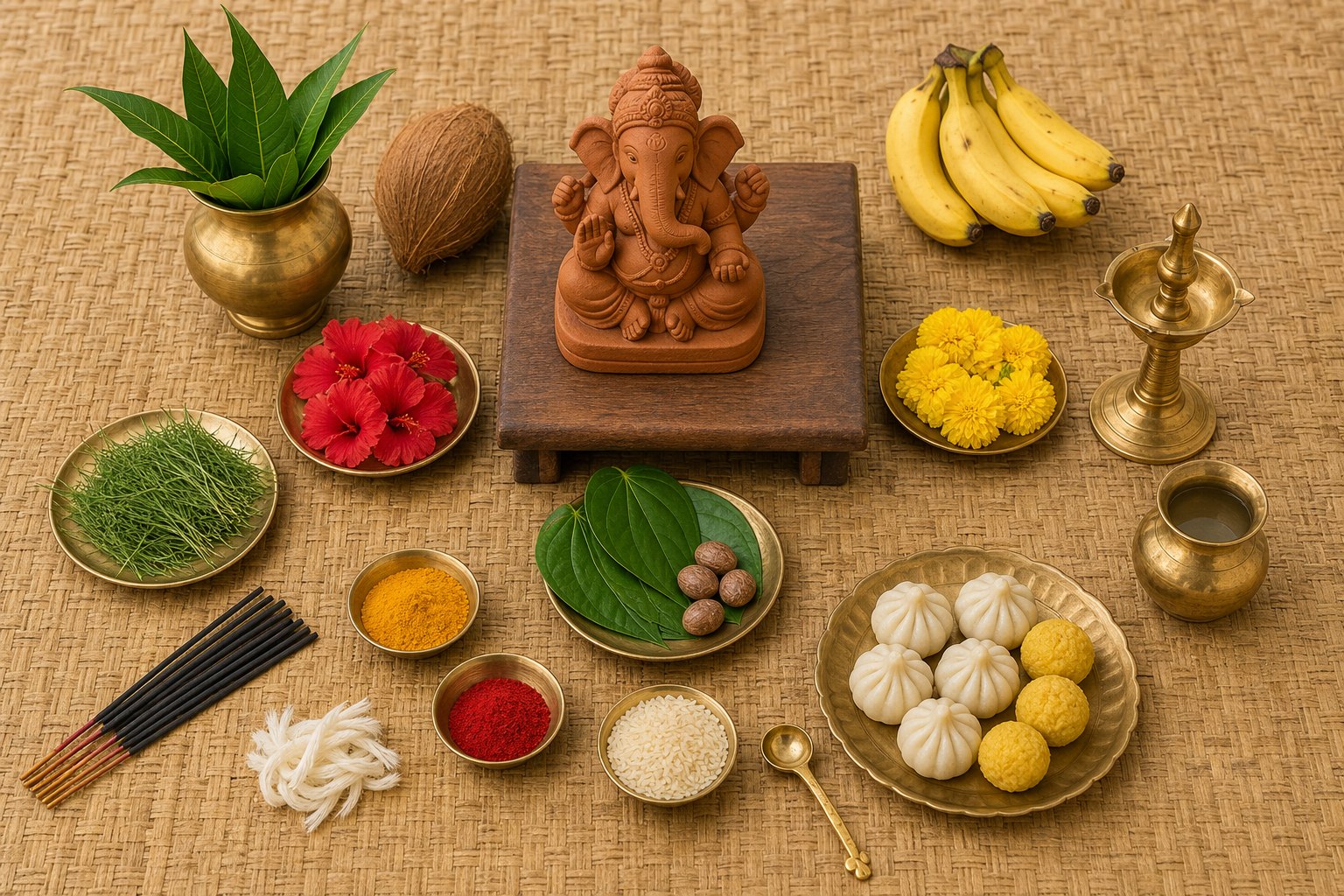
A common home arrangement uses an image or murti of Lord Ganapathi placed on a clean red cloth. Keep a lamp and incense ready. Add a kalasha only when it belongs to your family practice or the procedure you have been given.
The customary offerings include durva grass, modakam, jaggery, coconut, bananas, and red flowers. Gather them beforehand, but do not treat the shopping list as a test of devotion. If a customary item is unavailable, ask the person guiding your observance about an acceptable local substitute instead of inventing a rule.
Your sankalpa should name the purpose without becoming theatrical. In your own language, identify the vrata, invoke Lord Ganapathi, state whether you seek the blessing of a child or the well-being of your children, and commit yourself to a harmonious and responsible family life. A couple may speak this intention together when both are able to participate.
Choose any fast according to health and personal capacity. Do not stop medication, ignore symptoms, or undertake a restrictive fast that conflicts with pregnancy, diabetes, or another medical condition. A non-fasting devotional observance is safer when fasting is medically unsuitable; ask a qualified clinician about your individual circumstances and your priest about the ritual adjustment.
Perform the puja in a steady, recognizable sequence
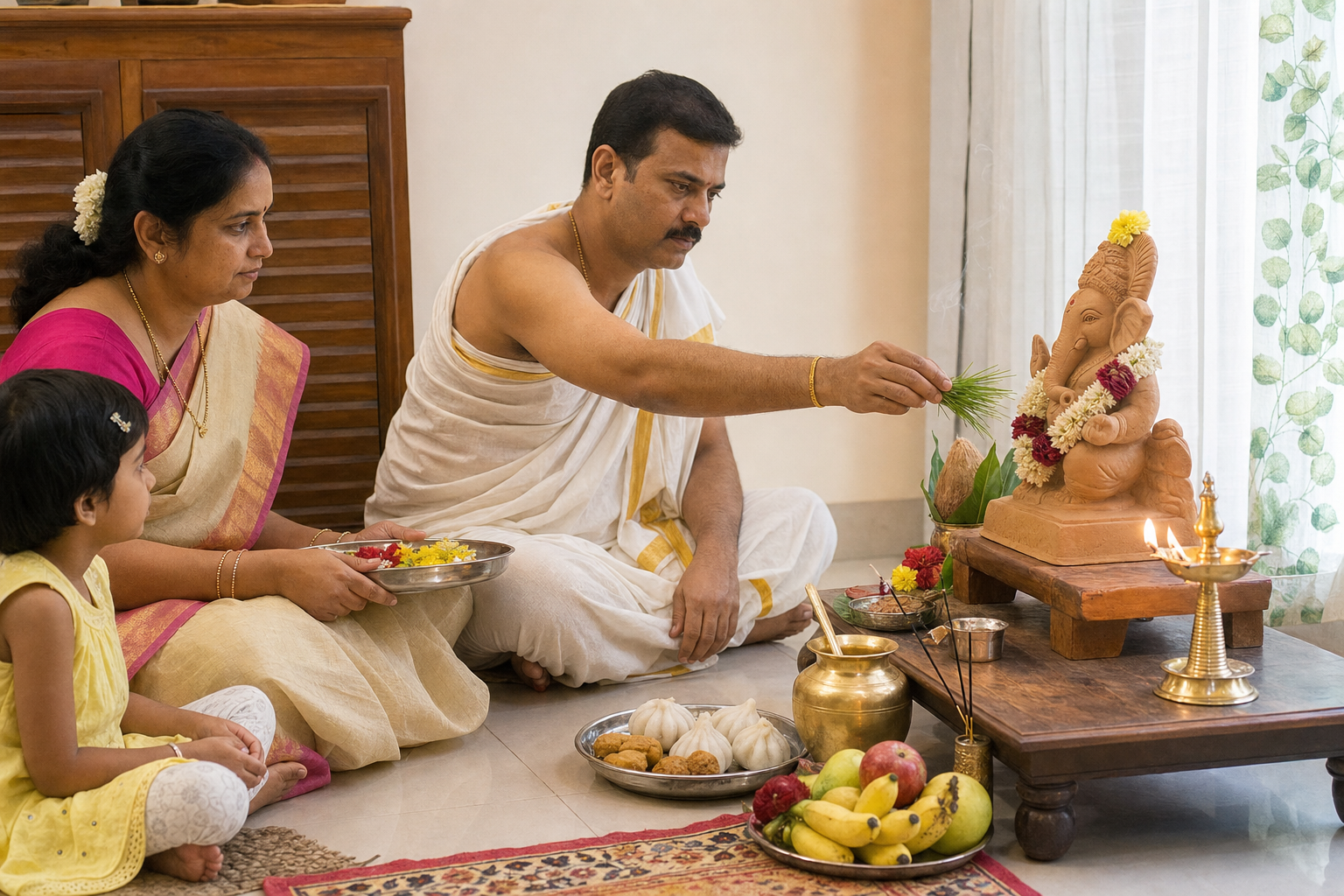
The precise paddhati belongs to your family or priestly tradition, but the following sequence gives you a clear framework for a simple household observance:
- Settle the worship space. Place the image or murti on the red cloth, arrange the offerings, and keep the atmosphere quiet.
- Light the lamp and incense. Begin with recollection of Lord Ganapathi rather than rushing immediately into requests.
- Make the sankalpa. State the purpose of the vrata and the family duties you accept with it.
- Perform dhyana and invoke Lord Ganapathi with focused attention.
- Offer Panchopachara or Shodashopachara worship according to the procedure you know. If you have not learned the fuller sequence, follow the simpler family-approved form rather than guessing at missing steps.
- Offer durva grass, red flowers, and the other prepared items reverentially.
- Chant “Om Gam Ganapataye Namah” with attention. Follow any repetition count given by your family tradition or priest; do not turn an arbitrary number found elsewhere into a universal requirement.
- Recite a Ganesh stotra or Ashtottara used in your household. Choose a text you can follow properly instead of collecting several unfamiliar recitations.
- Offer modakam, jaggery, coconut, bananas, or the naivedya prepared for the occasion.
- Conclude with aarti, offer your final prayer, and distribute prasadam respectfully.
Elaboration is not the same as attention. If you must choose between a long procedure performed anxiously and a simpler recognized procedure performed carefully, follow the form you have actually received from your family or priest. The aim is disciplined devotion, not display.
Let the sankalpa continue after aarti
Seek the blessings of elders if that is possible in your circumstances. Set aside a manageable act of dana, and carry it out without turning charity into a performance. Continue prayer in the form your household can sustain.
Most importantly, do not let the vrata become a tool for blaming one spouse when conception is delayed or family life is difficult. A shared sankalpa requires shared patience, truthful communication, and mutual respect. The worship loses its ethical center when ritual precision coexists with cruelty at home.
If you are already raising children, translate the prayer for their virtuous growth into visible habits. Let them see adults speak honestly, settle disagreement without humiliation, serve others, and treat prasadam and dana with reverence. This is where a household vrata meets the wider Dharmic purpose of shaping conduct.
Key takeaways
- Use a reliable regional Panchang for your location in 2026, then confirm the Chaturthi timing and household procedure with a local temple, priest, or knowledgeable family elder.
- Make the sankalpa specific: pray for progeny, a child’s health and protection, virtuous growth, or household harmony while accepting the duties attached to that prayer.
- A simple altar may include a Ganapathi image or murti, a clean red cloth, lamp, incense, and customary offerings; use a kalasha when your tradition calls for it.
- Keep the order clear: sankalpa, dhyana, the appropriate upachara puja, offerings, mantra and stotra recitation, naivedya, aarti, and prasadam.
- Adjust or omit fasting when health requires it. The vrata should accompany appropriate medical care, never replace it.
- Complete the ritual intention through elders’ blessings, dana, consistent prayer, ethical conduct, and a respectful home.
Your next step is practical: confirm the local date and puja method, write down your sankalpa, and gather only the materials that method requires. Enter the vrata with one honest intention and a definite plan for dana. The most durable offering begins after the lamp is lowered, in the kind of family life you build from that day forward.
References
