
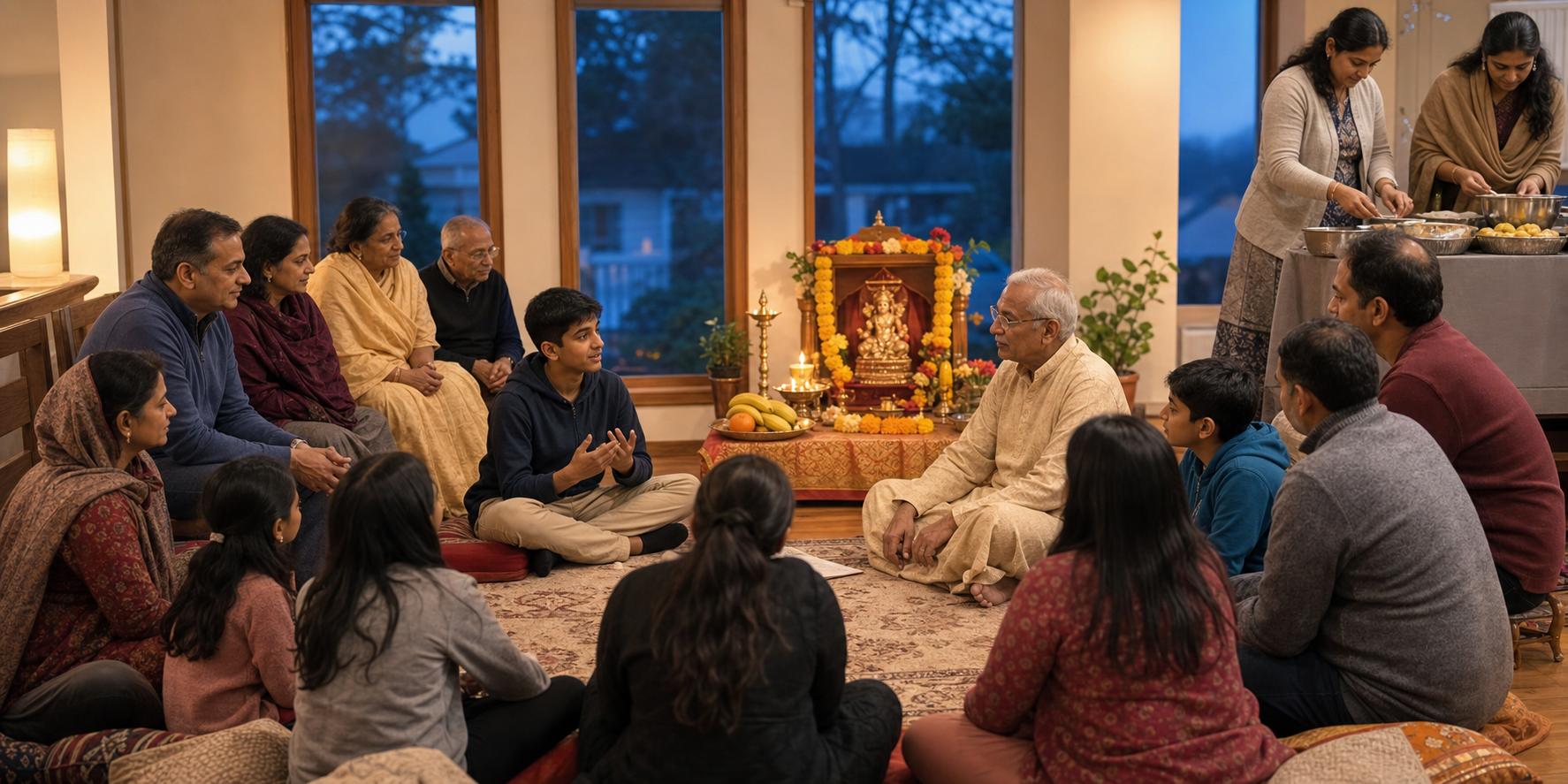
Your local Hindu community may already celebrate festivals well. The harder test comes during ordinary weeks: who checks on an isolated family, teaches children why a practice matters, gives a teenager meaningful responsibility, or turns concern for Dharma into useful work?
A weekly satsang can become the community’s smallest durable institution. It does not need a large hall, a famous speaker, or an elaborate programme. It needs a dependable rhythm in which people pray, learn, practise Dharmacharan, make decisions, and serve together.
Resilience is built during ordinary weeks
A community is resilient when its relationships, cultural memory, and capacity to act survive pressure. That capacity cannot be assembled at the moment a family needs help, young people begin drifting away, or a local institution faces a problem. People must already know one another. They must know whom they can trust, what they can contribute, and how the group makes decisions.
This is why a weekly rhythm matters. A festival may gather a crowd, but a recurring meeting builds familiarity and responsibility. The call emerging from VHP-convened Hindu Sangam gatherings across Karnataka connects weekly meetings with Dharmacharan and coordinated community action. The useful principle is simple: continuity creates the conditions in which trust can become practical cooperation.
Decide what your satsang is for before choosing its programme. Is it primarily a shared spiritual practice, a study circle, a place to coordinate seva, or a meeting that deliberately combines all three? A gathering without a clear centre easily becomes a succession of speeches. A gathering with a purpose can tell whether it is actually helping the community.
Give every gathering the same dependable shape
Consistency does not mean rigidity. It means that participants know the gathering will move from inward attention to understanding and then to action. A repeatable order also makes the satsang easier to lead when the usual organiser is unavailable.
- Enter shared attention. Begin with a prayer, bhajan, mantra, or period of silence appropriate to the tradition of the group. Keep the opening participatory rather than turning it into a performance.
- Learn something specific. Take up a short passage, a festival practice, an ethical question, or the life of a Dharmic teacher. Explain unfamiliar terms and distinguish inherited teaching from the facilitator’s personal opinion.
- Connect teaching with conduct. Ask where truthfulness, self-discipline, compassion, duty, or restraint has become difficult in family, school, work, or public life. Discuss the principle without pressuring anyone to reveal private matters.
- Choose a concrete act of seva. The need may concern a family, temple, cultural class, neighbourhood, or community event. Name the task clearly enough that completion will be visible.
- Assign responsibility. Give the action an owner and decide when the group will hear the outcome. A proposal with no owner is still only a wish.
- Close the loop. Confirm the next gathering and restate every commitment before people disperse. At the following satsang, review those commitments before adding new ones.
This pattern prevents two common failures. Spiritual discussion does not remain detached from life, and community work does not lose its ethical centre. Both become parts of the same practice.
Make Dharmacharan observable without making it intrusive
Dharmacharan is not merely agreement with Hindu values. It is the repeated practice of Dharma in conduct. In community life, that includes truthful behaviour, seva, financial responsibility, and learning across generations. A satsang becomes useful when participants can see how these commitments change what the group does.
- For truthfulness: correct rumours before discussing them, separate verified facts from interpretation, and acknowledge when the group does not know enough to reach a conclusion.
- For seva: choose work that answers an identifiable local need, rather than announcing a grand campaign that nobody can sustain.
- For financial responsibility: state what contributions are for, record what is received and spent, and report the balance to participants. Trust weakens quickly when money is treated casually.
- For intergenerational learning: let elders provide memory and context while younger participants ask questions, handle suitable responsibilities, and contribute the forms of communication they understand.
- For accountability: review unfinished tasks without humiliation. Identify whether the obstacle was unclear ownership, excessive scope, missing resources, or simple neglect, and then revise the commitment.
Do not turn this into surveillance or compulsory confession. Participants do not owe the gathering details about family disputes, health, finances, or other private matters. Discuss patterns of conduct and shared obligations. The aim is disciplined practice, not control over one another.
The same boundary applies to grievances. A real problem should not be suppressed, but repeating anger without establishing facts or choosing a responsible action trains the group in helplessness. Ask: what happened, what do we know, what is within our legitimate control, and who will do the next useful thing?
Give young people ownership, not ceremonial visibility
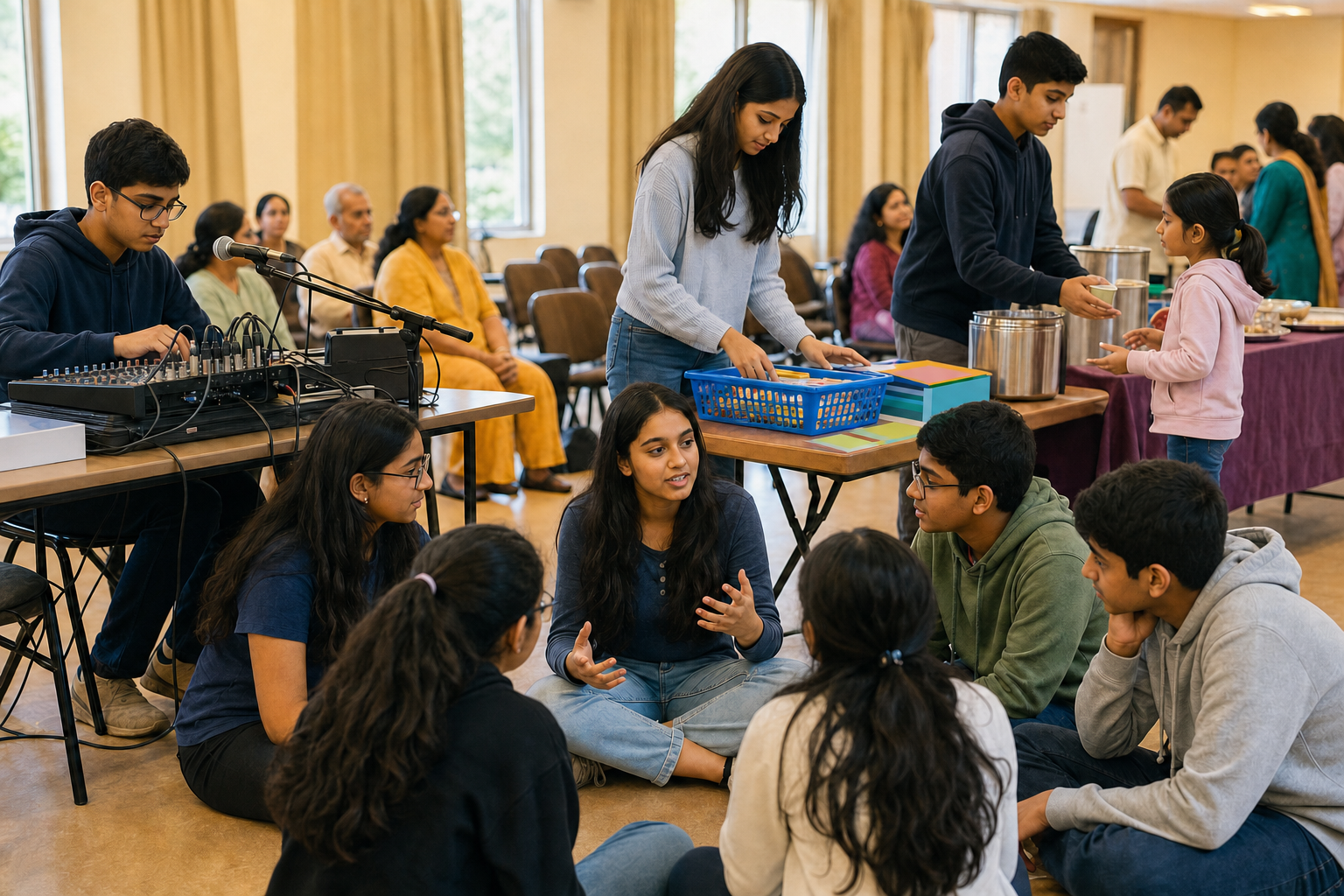
Inviting young people to sit in the room is not the same as integrating them into community life. Cultural continuity becomes credible when a younger participant is trusted with work that matters and receives guidance without being micromanaged.
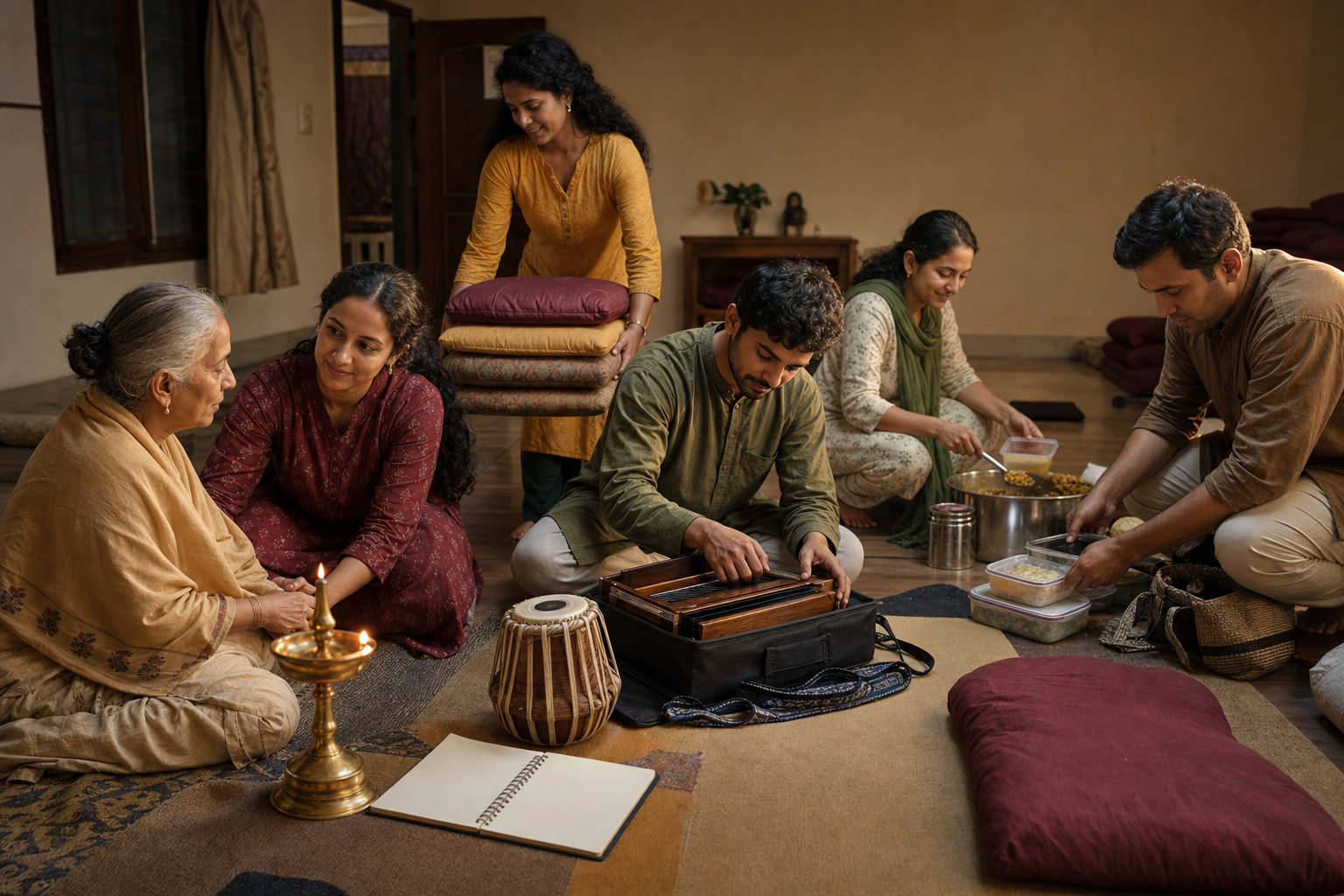
Suitable responsibilities include preparing an invocation, introducing a reading, organising ritual materials, documenting a local tradition, coordinating outreach, teaching a cultural art, or reporting on a seva task. These are not decorative roles. They connect learning with contribution and allow ability to grow through practice.
Match responsibility to readiness, explain the expected result, and make an experienced participant available for support. Afterward, discuss what worked and what should change. Do not silently redo the young person’s work and then conclude that youth are unreliable. Instruction, responsibility, and review belong together.
Also make room for genuine questions. A young person who asks why a ritual is performed is not necessarily rejecting it. If nobody can explain the practice, say so honestly and return with a considered answer. Intellectual seriousness strengthens transmission; defensiveness makes inherited knowledge appear fragile.
Build unity without erasing Dharmic differences
A Hindu satsang does not have to become doctrinally vague in order to welcome people from different sampradayas. State the gathering’s orientation plainly, pronounce names and terms carefully, and do not use the platform to belittle another deity, guru, sect, language, caste, or regional custom. Unity built by demanding sameness will break as soon as a real difference appears.
The broader Dharmic family also contains distinct Hindu, Buddhist, Jain, and Sikh teachings and institutions. Collaboration is strongest when it rests on shared ethical ground such as compassion, truthfulness, self-discipline, and seva while respecting those distinctions. A local service effort can unite neighbours without pretending that their philosophies or forms of worship are interchangeable.
Keep spiritual teaching, community administration, and cultural advocacy distinguishable even when they occur in the same gathering. A teacher may guide a discussion, but decisions about money and shared projects still need transparent procedures. Advocacy may be legitimate, but factual claims should be checked before the group repeats or circulates them. Reverence is not a substitute for governance.
Measure the satsang by more than attendance. Notice whether commitments are completed, help reaches people who need it, younger participants acquire responsibility, another facilitator can lead, disagreements remain civil, and households return without constant chasing. A large gathering can still be brittle. A modest gathering that keeps its word is already building capacity.
Key takeaways for starting the weekly rhythm
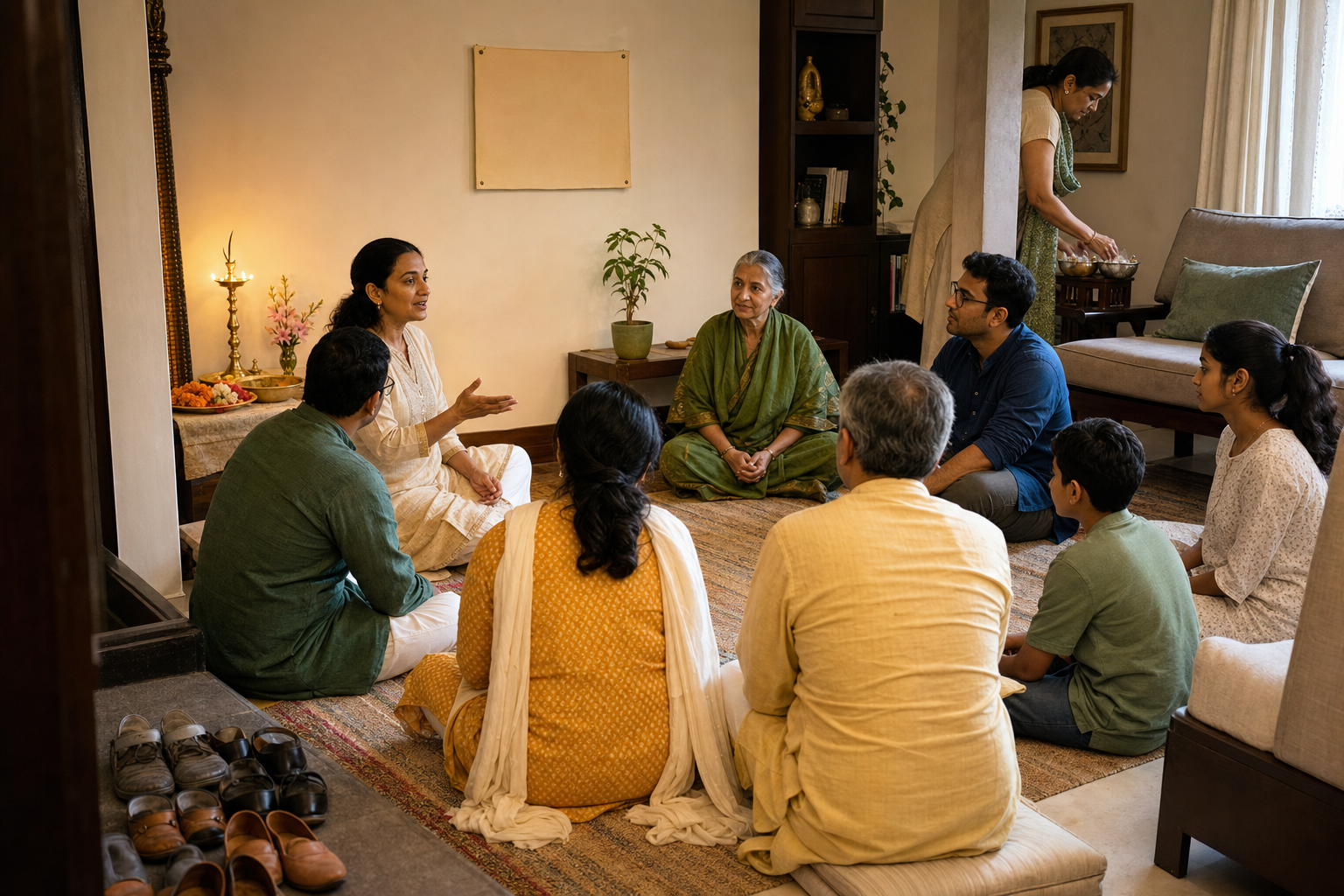
- Fix a dependable weekly time and a practical location, whether in a temple, home, or neighbourhood meeting space.
- Use a recurring sequence of shared practice, focused learning, ethical reflection, seva, assigned responsibility, and follow-up.
- Translate Dharmic values into visible habits such as truthful communication, transparent finances, and reliable service.
- Give young people real work, clear expectations, guidance, and a chance to review what they learned.
- Welcome diversity without flattening differences among sampradayas or among Hindu, Buddhist, Jain, and Sikh traditions.
- Judge progress by trust, completed commitments, transferable leadership, and the community’s ability to respond constructively.
Do not wait for an ideal hall or a large committee. Before your present gathering disperses, fix the next weekly meeting, name its facilitator, choose the learning focus, and identify a manageable act of seva. When people repeatedly pray, learn, serve, and keep their word together, resilience stops being a slogan and becomes a local capability.

References
