
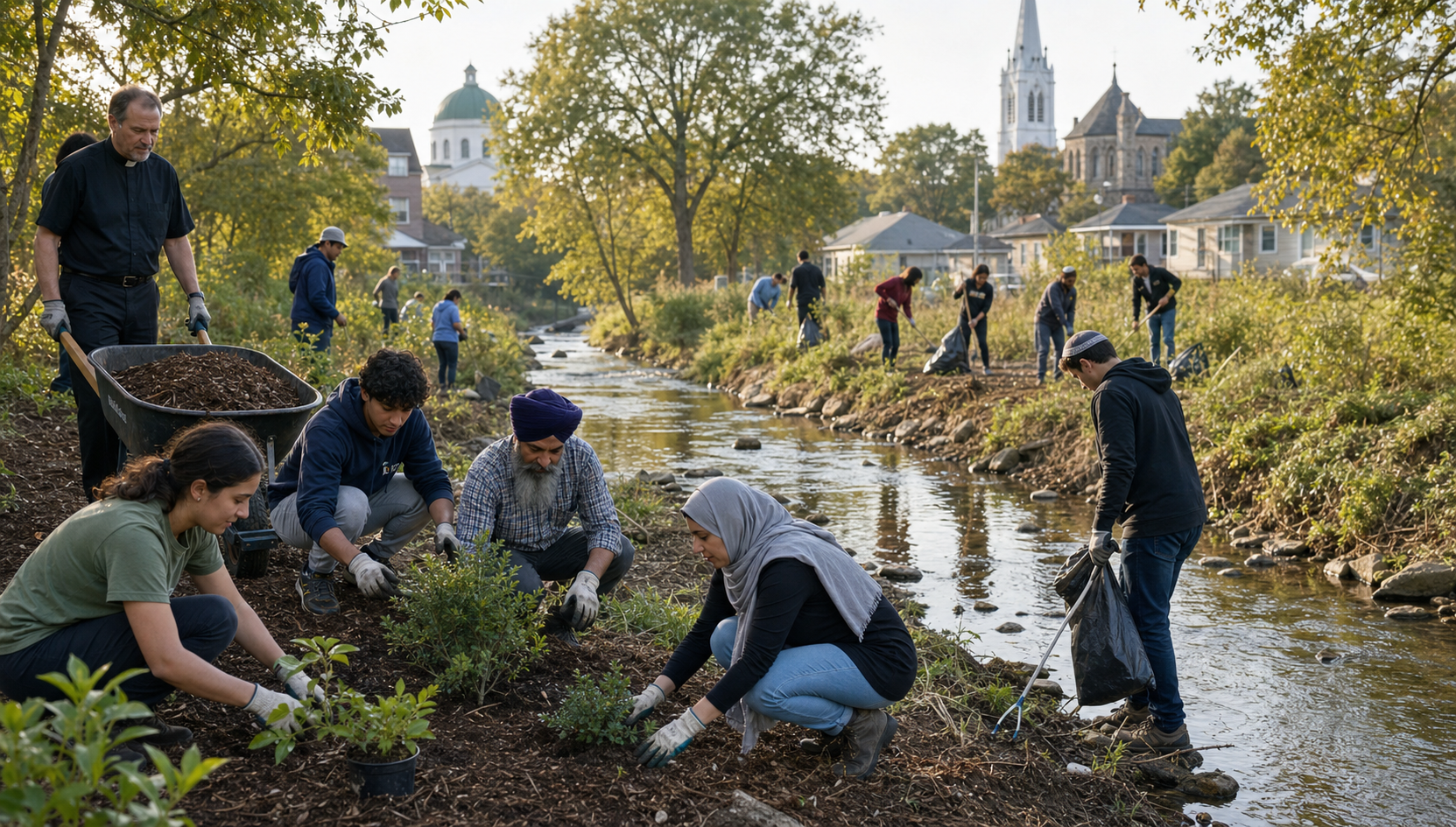
You want nearby faith communities to care for a shared place, but you do not want another ceremonial gathering that ends when the photographs are taken. You may also worry that interfaith language will blur genuine differences between traditions.
A good environmental project avoids both failures. It gives people useful work, protects each community’s religious voice, assigns responsibility for what happens afterward, and creates a clear reason to meet again. You do not need a universal theology of nature. You need a shared task and an honest agreement about who will carry it forward.
Begin with work your neighbors can own together
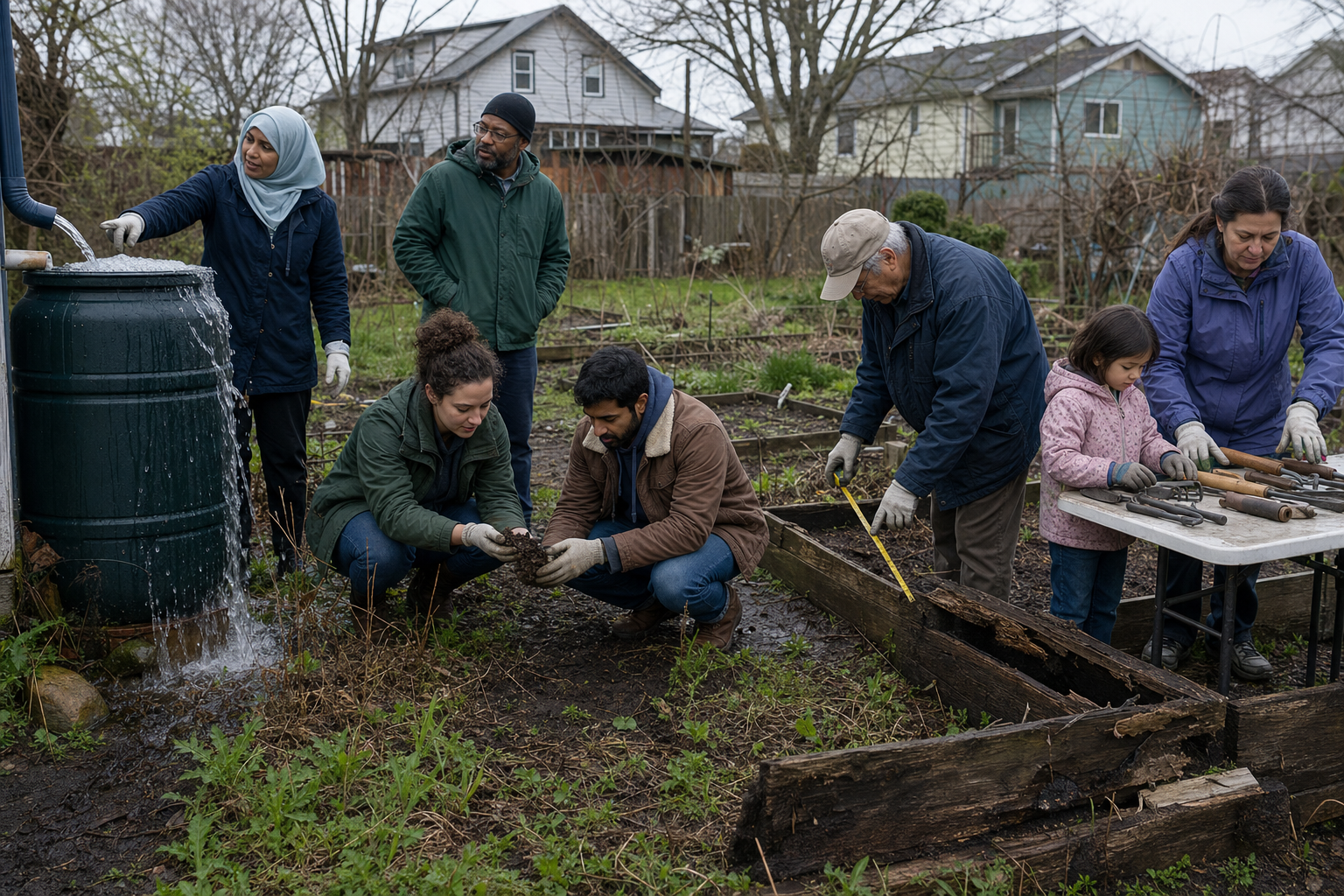
A shared task gives interfaith dialogue a concrete center. Participants do not have to settle doctrinal questions before they can plant, restore, clean, conserve or care for something that serves the wider community.
A useful local model emerged on 2 February, when Bhaktivedanta Manor representatives joined a Tu BiShvat tree-planting celebration with civic leaders, faith representatives and community members. Tu BiShvat brought Jewish themes of renewal and tree planting into the gathering. Dharmic participants could meet that invitation through their own language of reverence for nature and seva.
The point is not that every interfaith group should copy a tree-planting ceremony. The stronger principle is that an identifiable tradition can host a practical act of service without making its guests pretend to share the same theology. The host explains why the occasion matters. Guests explain why service matters within their own paths. Everyone then performs work whose public value is intelligible without religious agreement.
Choose the project by examining the place before choosing the symbolism. A neglected garden, littered public area, damaged habitat, waste problem or tree-care need may offer an appropriate starting point. Ask the person responsible for the site what help is actually wanted. That prevents an enthusiastic committee from solving an imagined problem while overlooking the real one.
- Public value: Identify who benefits beyond the participating congregations and institutions.
- Demonstrated need: Confirm that the landowner, site custodian or affected community wants the proposed work.
- Permission: Establish who can authorize changes to the site before announcing the event.
- Religious accessibility: Make sure people can contribute without being required to perform another tradition’s worship.
- Continuity: Decide what care will remain after the gathering and who will provide it.
Tree planting passes this test only when the location has been approved and someone has accepted responsibility for ongoing care. If those conditions are absent, a cleanup, repair effort or conservation-awareness activity may be more responsible. Do not select a living symbol merely because it will photograph well.
Build stewardship into the project, not just the ceremony
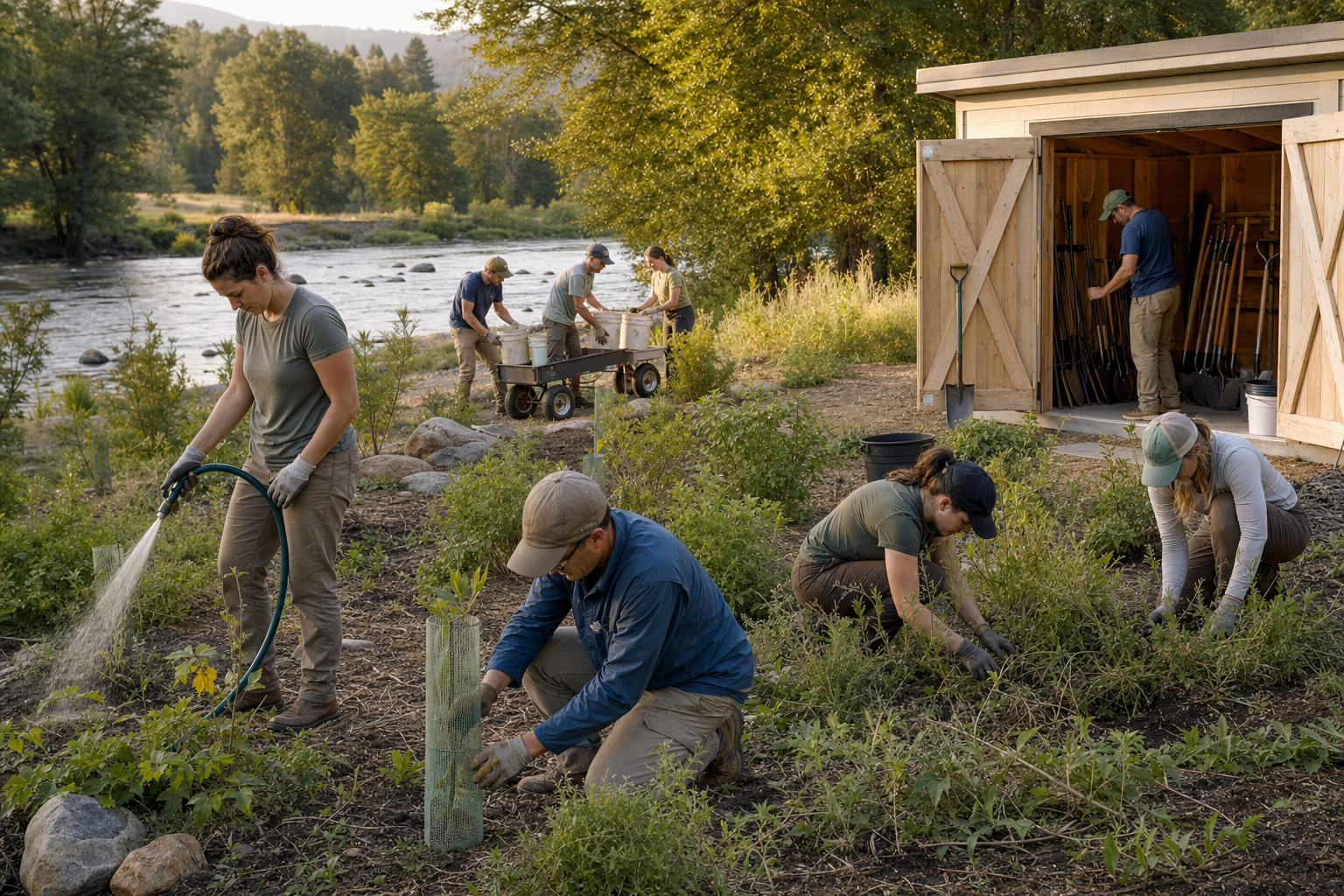
The public moment and the environmental responsibility are not the same thing. Planting a sapling starts an obligation; it does not complete one. The same distinction applies to a garden, restored space or waste-reduction effort. Stewardship begins where the event schedule ends.
Give every participating organization a short project brief before invitations go out. It should be plain enough for a volunteer to understand and definite enough for an organizer to use when something is unclear.
- Outcome: State the physical change the project is meant to produce.
- Boundary: Record what is included, what is excluded and which permissions govern the work.
- Site custodian: Name the person or role that controls the location after the event.
- Work owners: Assign responsibility for logistics, environmental care and interfaith communication.
- Evidence: Decide how completion and later upkeep will be confirmed.
- Handoff: Record the next review or decision before volunteers disperse.
An institution’s name is not an owner. Record a named role, a reliable contact route and a backup contact. If responsibility changes, partners should know where the obligation moves. This small administrative step separates stewardship from aspiration.
Do not begin physical work when permission, site responsibility or safe handling of tools and materials remains unclear. Use the gathering to inspect the location and settle the plan instead. A postponed intervention can be resumed; an unauthorized or poorly managed change may be difficult to reverse.
Environmental care also needs an honest definition of completion. The ceremony may be complete when volunteers leave, while the project remains open until the site custodian confirms the work and the care owner accepts the handoff. Put both milestones in your internal record so that a successful event is not mistaken for a completed responsibility.
Keep faith visible without blending distinct traditions
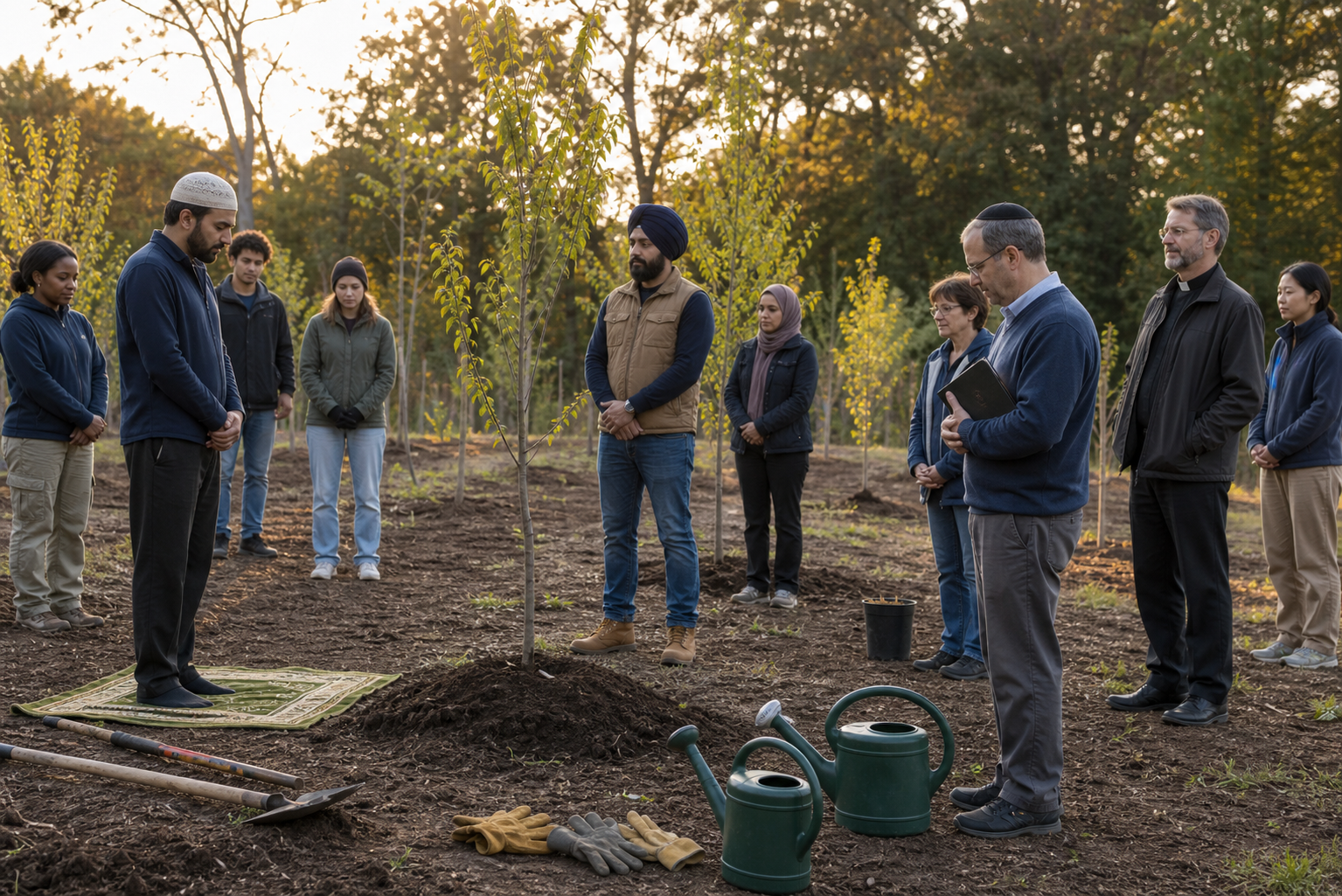
Unity does not require theological sameness. In fact, claiming that every religion teaches exactly the same thing can turn living traditions into decorative versions of one another. Shared action should be common; religious explanation should remain plural.
Dharmic communities can speak about compassion, non-harm, seva and responsibility toward living systems. Hindu, Buddhist, Jain and Sikh participants should still describe those commitments in their own terms rather than receiving a single explanation written for all of them. Jewish hosts should likewise be free to explain Tu BiShvat through their own heritage. Mutual respect becomes credible when nobody has to surrender the words that make the duty meaningful.
- Let the host community explain the religious occasion before other speakers interpret it.
- Ask every participating tradition to describe its own reason for joining the service.
- Do not treat ahimsa, compassion, seva, stewardship and renewal as interchangeable slogans.
- Distinguish clearly between religious observance, respectful witnessing and practical volunteer work.
- Give guests a way to join the service even if they do not join a ritual element.
- Ask each community to approve how its name, teachings and representatives will appear in public communication.
A moderator can express the common ground precisely: participants share responsibility for the place and the work, while their theological reasons remain their own. That sentence is modest, but it carries more integrity than a sweeping claim that differences have disappeared.
This distinction also protects the environmental purpose. When every speech tries to prove doctrinal agreement, the practical task becomes a backdrop. Keep formal remarks tied to the work: why the host chose it, what each community is contributing, who will care for the result and what the public can expect afterward.
Turn one gathering into a durable civic relationship
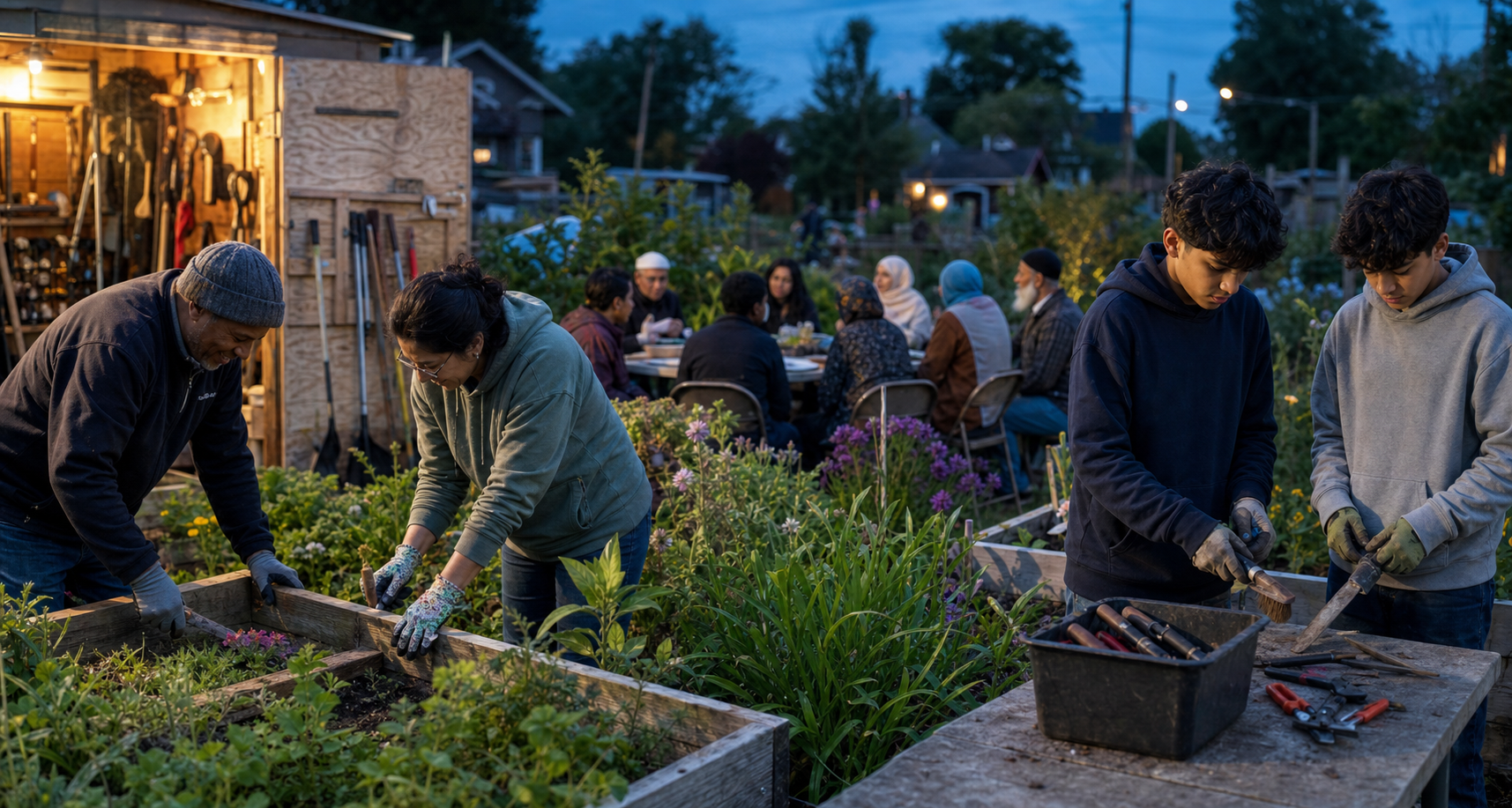
The easiest outcome to record is attendance. It is also one of the least revealing. A crowded event does not show whether the site improved, whether promised care occurred or whether partners can still reach one another when a practical problem arises.
Keep a simple stewardship ledger that follows the obligation rather than the publicity.
| Question | What to record |
|---|---|
| What changed? | The site, task completed and any unfinished work |
| Who owns continuing care? | The responsible person or role and a working contact route |
| How will care be confirmed? | A site check, custodian confirmation or other agreed evidence |
| What continues between partners? | The next practical decision, contact or service opportunity |
Before participants leave, read back the handoff. The site custodian should be able to flag unfinished work. The care owner should be able to repeat the obligation. Every community should know whom to contact about the site and whom to contact about religious representation. Those may be the same person in a small group, but the responsibilities should not be confused.
Keep public claims proportional to what you can verify. You can say that communities worked together, completed a defined task and established a care plan. Do not declare a permanent environmental benefit before the result has endured, and do not claim theological agreement that participants never made. Credibility grows when later communication confirms what happened, notes what remains and identifies who is still responsible.
The relationship outcome should also be concrete. A continuing partnership may mean that contacts respond, a site problem reaches the correct owner, another community is able to host in its own way, or partners choose a further service project. It does not require a permanent council or a grand declaration. Start with the civic connection the work genuinely created.
Key takeaways
- Start with a verified local need, not a symbolic activity selected in advance.
- Choose work that people can perform together without requiring common doctrine or shared worship.
- Let every tradition explain its environmental duty in its own language.
- Assign permission, site care, communication and follow-up to identifiable owners.
- Measure the environmental result and the continuing relationship separately.
- Report only the cooperation and benefits you can actually confirm.
At your next interfaith meeting, put a local task on the table before proposing a declaration. Identify the site custodian, ask what help is wanted, and invite each tradition to state its own reason for serving. If you can agree on the work, its owner and the next review, you have enough to begin.
References
