
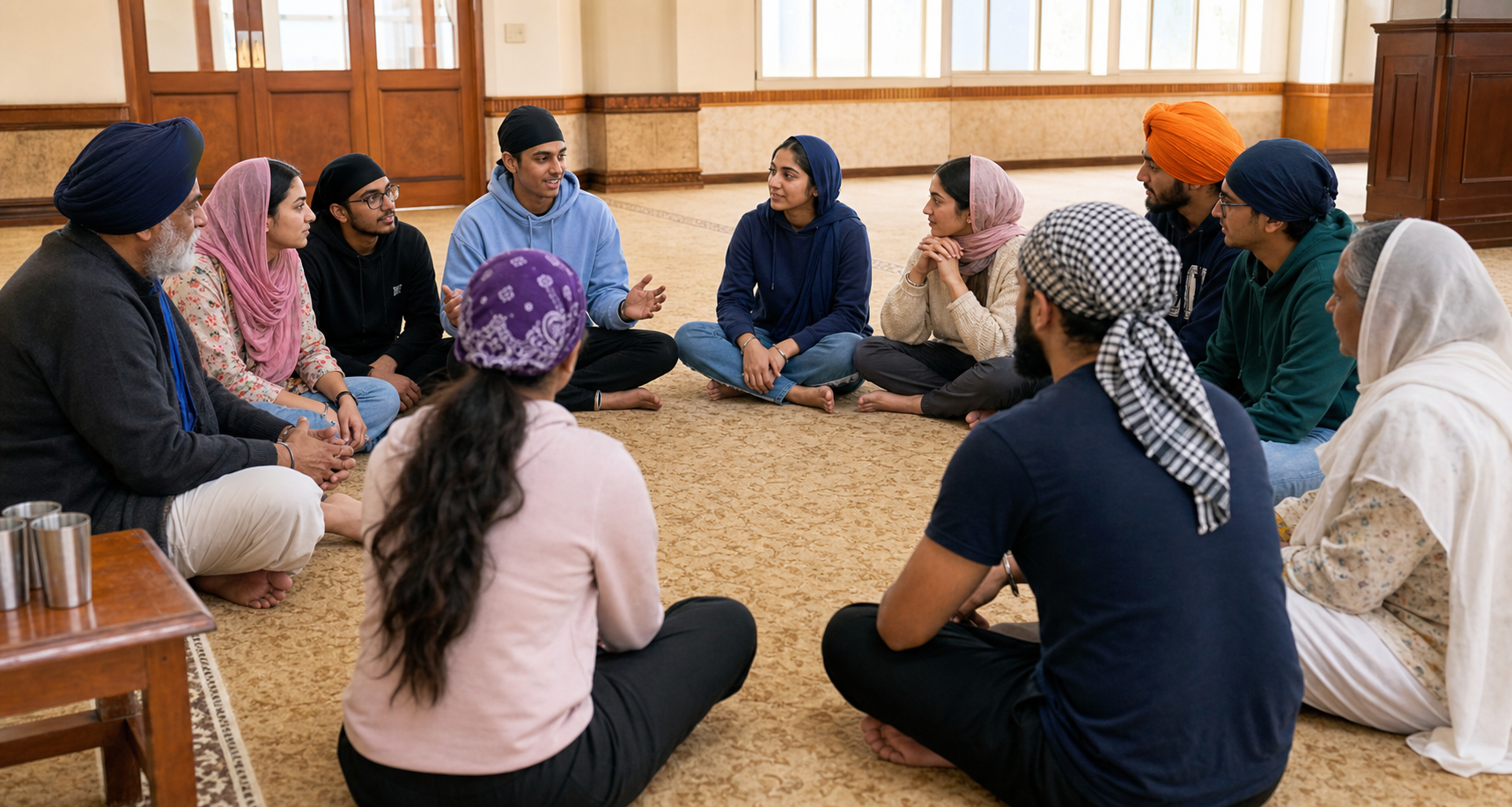
If young people appear at the gurdwara only when family pressure brings them there, do not begin by asking how to improve attendance. Ask what their distance is telling you about trust. A young Sikh can care deeply about Sikhi while avoiding a setting where questions are treated as disrespect, responsibility remains closed, or public values do not match lived conduct. In many cases, distance reflects a trust deficit rather than indifference.
That changes the work before you. The goal is not to market tradition more cleverly or make a religious programme look fashionable. It is to build a sangat in which young people can encounter Gurmat, reason through difficult questions, practise what they learn, and carry real responsibility. When belonging grows from truth, seva, and shared accountability, engagement becomes more than attendance.
Make Gurmat visible in the culture, not just the curriculum
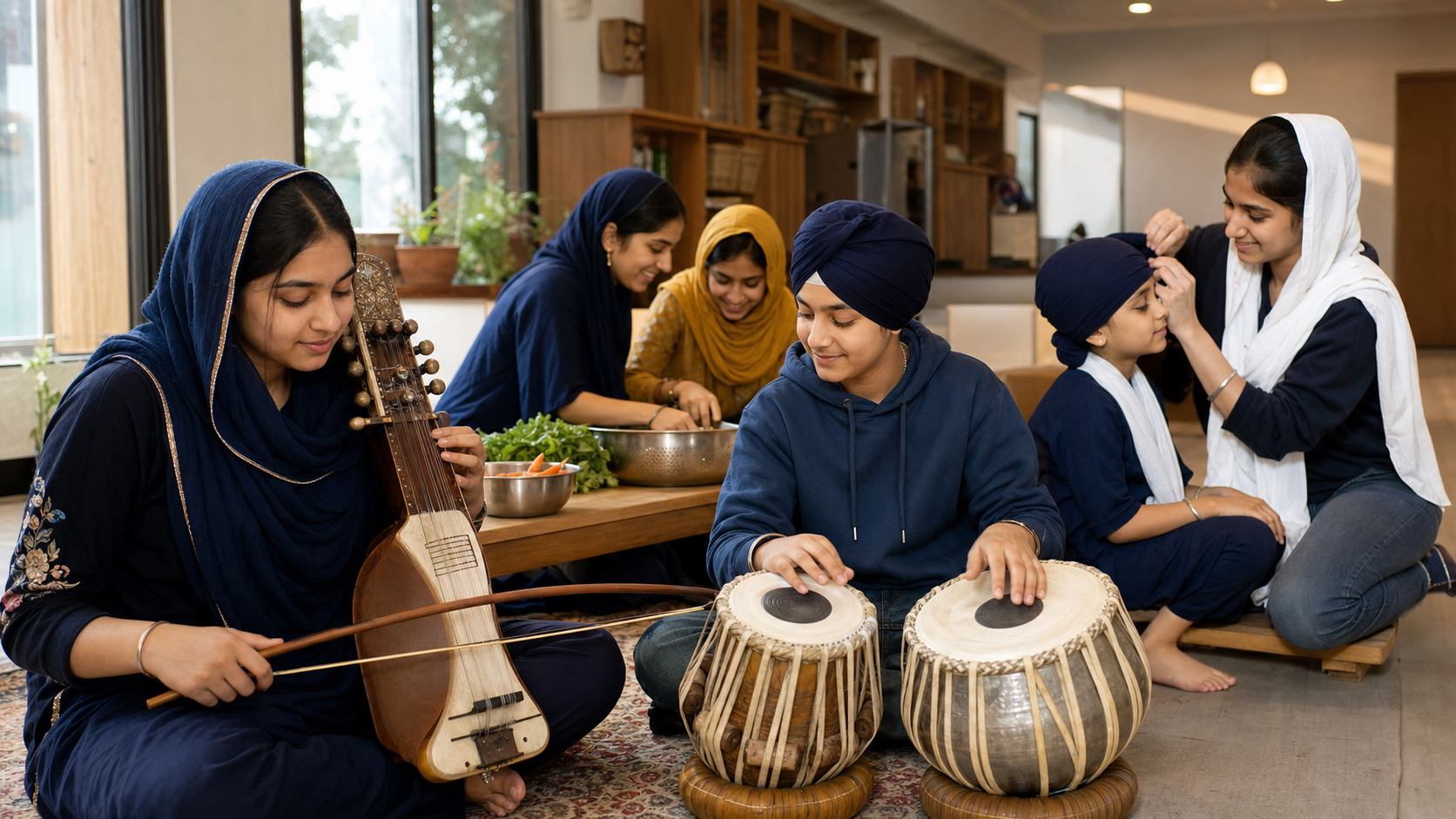
A community cannot teach Gurmat convincingly through classes while governing through secrecy, gatekeeping, or fear of disagreement. Young people notice the gap between the lesson and the institution around it. If that gap remains, adding more lectures will not repair the deeper problem.
Gurmat offers a practical test for communal life. Naam calls you toward remembrance rather than ego-centred performance. Kirat joins spiritual integrity to honest work. Vand Chhakna turns sharing into a social discipline. Sat requires truthful speech. Nimrata shapes the use of authority, while himmat gives people courage to ask, answer, and act. Seva directs effort away from status, and sarbat da bhala places the good of all above factional advantage. Alignment with hukam requires these principles to appear in conduct, not remain devotional vocabulary.
Before launching a youth initiative, ask what its structure teaches. Are its purpose, constraints, and decisions explained truthfully? Can a young participant question a decision without being labelled disloyal? Does the work give participants responsibility, or only instructions? Will the result serve the sangat beyond the programme itself? An activity may be busy, educational, and well attended while still failing these Gurmat tests.
Key takeaways
- Treat withdrawal as information about trust before treating it as a failure of commitment.
- Welcome sincere questions into arth vichaar instead of demanding agreement before discussion begins.
- Give youth defined authority over meaningful seva, not merely a place on the volunteer rota.
- Make decisions, budgets, responsibilities, and conflict-resolution processes visible to the sangat.
- Measure belonging, continued participation, mentorship, and responsibility alongside attendance.
- Anchor every change in Gurmat and panthic maryada so inclusion strengthens Sikh distinctiveness rather than obscuring it.
Find the actual break in trust before scheduling a programme
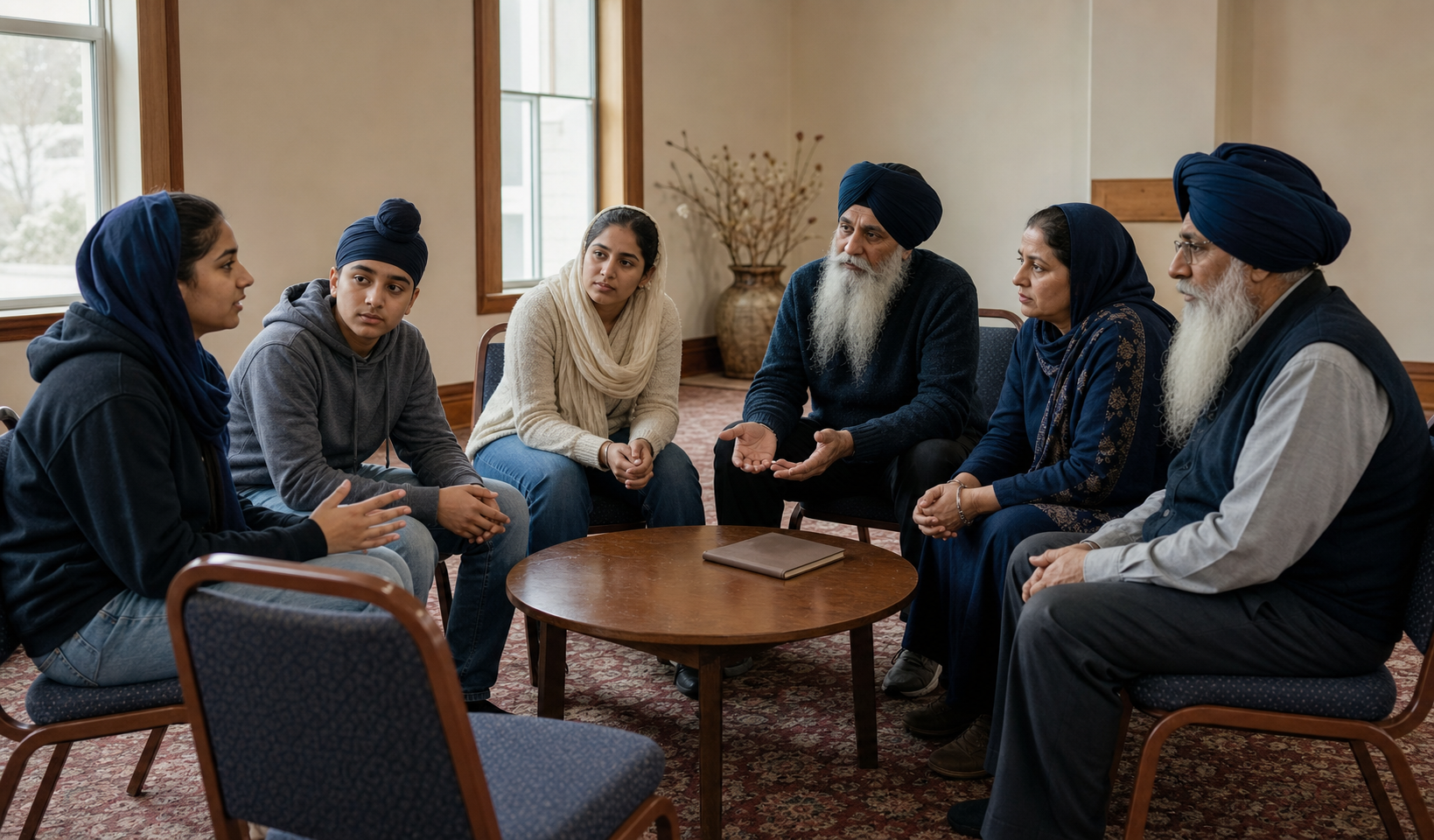
You cannot respond well to disengagement if every absence is interpreted as laziness, assimilation, or lack of faith. Several different fractures can produce the same outward behaviour. Each needs a different response.
- Questions without a safe room: A young person may want serious arth vichaar but expect difficult questions to be dismissed. The answer is a facilitated space where inquiry is treated as sincere seeking and unresolved questions can remain open for further study.
- Gatekeeping and moral inconsistency: A participant may hear humility and equality praised while seeing access, recognition, or authority controlled informally. The response must include transparent criteria and accountable conduct, not another appeal for obedience.
- Performance without inner connection: A young Sikh may know what to do in a religious setting without understanding how the practice shapes thought, work, relationships, or ethical choices. Shabad vichaar should therefore connect outward observance with inner transformation.
- Complex identity outside the gurdwara: School, work, and diaspora life can place Sikh identity in situations that a conventional lesson never addresses. Young people need room to examine those situations through Gurmat rather than being offered slogans that do not travel beyond the institution.
- Fragmented digital authority: Sensational clips and disconnected claims can become a substitute for patient learning. Digital literacy must teach participants to check context, distinguish evidence from provocation, and consider whether an online response reflects sat, nimrata, and responsibility.
Begin with listening as seva. Ask where young people feel expected to perform rather than understand, which questions feel unsafe, where the community says one thing but rewards another, and what responsibility they would willingly own. Do not interrupt each answer with a defence of current practice. Record themes without attaching names, then return with a clear account of what leadership will change, what must remain because of Gurmat or panthic maryada, and why.
This last step matters. A listening gathering followed by silence can look like extraction rather than seva. Trust begins to move when participants can trace a concern from honest speech to a visible decision, even when the final answer is not the one they preferred.
Build a path from arth vichaar to seva and stewardship
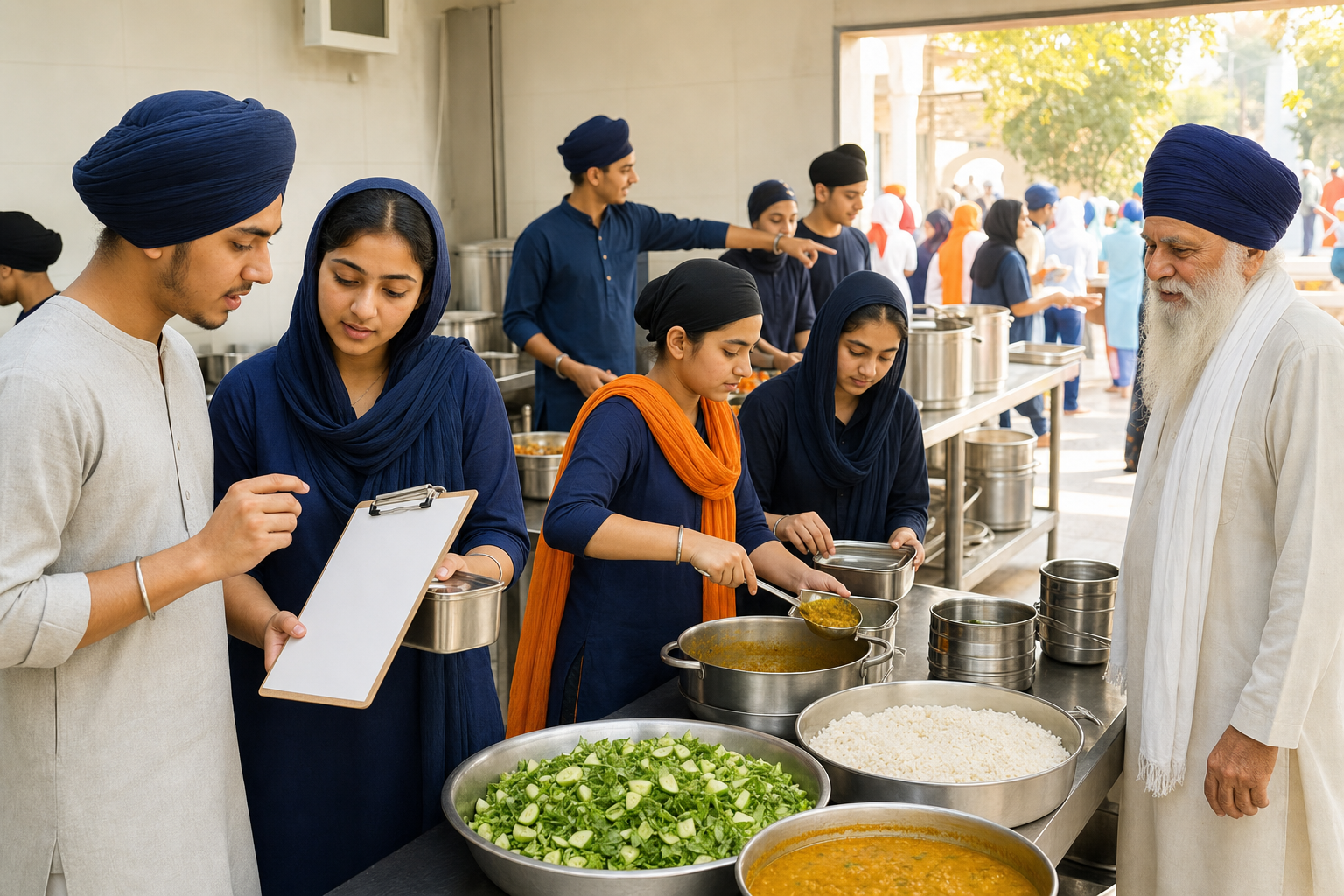
A useful youth programme should move through a complete Gurmat cycle: question, reflection, practice, responsibility, and accountability. If it stops at discussion, participants may enjoy the conversation without finding a durable place in the sangat. If it begins with work but excludes interpretation, seva can feel like unpaid labour assigned by somebody else.
- Start with a question that is already alive: Let young participants identify a tension involving identity, conduct, work, family, online speech, or communal life. Choose relevant Gurbani for careful arth vichaar. A facilitator should clarify meanings and preserve the Sikh frame without turning the gathering into a test of conformity.
- Connect meaning to practice: Ask what the reflection changes in a real decision. A discussion of Kirat should reach questions of honest work. A discussion of Vand Chhakna should lead into sharing resources. A discussion of nimrata should examine how authority is exercised when people disagree.
- Transfer bounded stewardship: Give participants ownership of a seva project, an aspect of langar management, or a participatory budget. State the financial, safety, and maryada constraints at the beginning. Within those boundaries, let youth propose, decide, carry out the work, and report the outcome.
- Pair responsibility with mentorship: Match learners with people whose ordinary lives demonstrate Kirat and seva. The mentor’s role is to listen, help the young person reason through choices, and model accountability. It is not to monitor private life or act as a moral enforcer.
- Teach digital discernment as a Gurmat practice: Examine how a claim has been framed, what context is missing, whether reliable support exists, and what conduct an impulsive response might produce. The aim is not merely to win online arguments. It is to engage without surrendering truthfulness, humility, or courage.
- Make care speakable: Chardi kala should not be used to demand that a struggling person conceal distress. Ardas and sangat can sustain spiritual care, while conversations about mental health can reduce stigma. Neither spiritual practice nor community support should be presented as a substitute for qualified mental-health care when someone needs it.
Language learning belongs in this pathway because it deepens access to shabad and inherited wisdom. It should not become a gate through which a young person must pass before being allowed to ask, serve, or belong. Meet learners at their present level, explain important terms carefully, and let growing understanding create the desire for deeper study.
Join home, gurdwara, and Dharmic service without dilution
Youth engagement weakens when the household, educational setting, and gurdwara communicate incompatible expectations. A family may demand visible observance but close down questions. A class may teach Sikh values as historical identity markers without showing how they govern current choices. A committee may invite volunteers while reserving every meaningful decision for established insiders. Young people are then asked to integrate a tradition that the adults around them have divided into compartments.
At home, make room for simran, questions, and shabad vichaar without turning every conversation into an examination. A parent or elder can admit uncertainty and help seek a grounded answer. That act of nimrata teaches more than an improvised reply delivered with false certainty. Families can also practise inclusive sangat by welcoming sincere seekers and showing that hospitality, honest work, sharing, and seva belong to ordinary life.
Educators and facilitators can help youth carry Gurmat into study, employment, friendships, and civic life. Instead of asking only whether a learner can repeat a principle, ask how that principle changes a choice. What does sat require when misinformation benefits your own side? How does Kirat guide ambition? What does sarbat da bhala ask of you when your immediate group gains at another’s expense? These questions make Sikh learning usable without reducing it to generic self-help.
Cooperation with Hindus, Buddhists, and Jains can extend this formation through shared service. Food security, environmental stewardship, and disaster relief provide settings in which dana and seva, satya and dharma, compassion and ahimsa, or simran and mindfulness can motivate practical solidarity. These terms arise within distinct traditions and should not be flattened into identical doctrines.
Before beginning a cross-Dharmic project, write a short common charter. Name the Sikh grounding of the work, invite partners to name their own grounding, define the shared public task, and state any religious or panthic boundaries that must be respected. Young Sikhs can then experience Dharmic unity as confident cooperation rather than theological erasure. Distinct roots and common service can reinforce each other.
Measure whether responsibility and belonging are growing
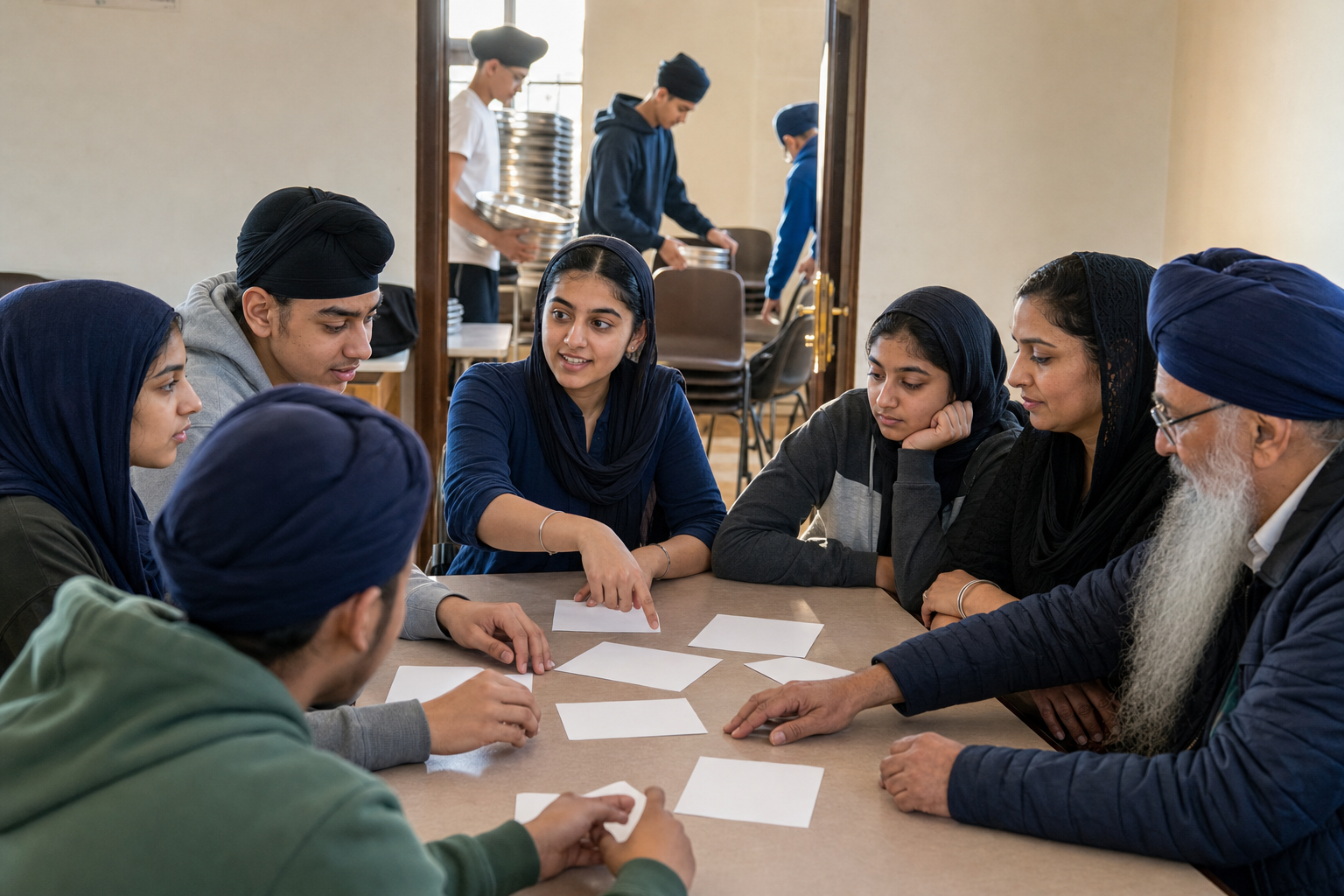
Attendance alone cannot tell you whether a young person came through pressure, curiosity, friendship, commitment, or a desire to serve. It can show reach, but not trust. A Gurmat-centred community therefore needs a broader and more transparent account of what is changing.
- Participation and retention: Look at who returns after an initial encounter and whether continued participation reaches different age groups. Do not treat a crowded special event as proof of durable belonging.
- Meaningful responsibility: Track volunteer sign-ups alongside the responsibilities participants actually accept and complete. Note whether youth are helping decide, manage, and reflect, or are only carrying out instructions.
- Mentorship: Record whether proposed matches become active relationships and whether learners feel able to bring real questions to them. A match on a spreadsheet is not yet mentorship.
- Belonging and trust: Use periodic, privacy-conscious feedback to ask whether participants can question respectfully, understand how decisions are made, report concerns, and see a place for themselves in the sangat.
- Conflict resolution: Record when an issue is raised, who owns the response, how long resolution takes, and what outcome can be shared. The purpose is not to expose private disputes but to show that concerns do not disappear into silence.
- Cross-Dharmic seva: Note the quality of collaborative service, the responsibility youth carried, and what participants learned about both common values and religious distinctions.
Publish a plain-language account of these measures, including what did not work and what will change. Protect personal information and report collective patterns rather than ranking individuals or trying to quantify spirituality. Transparency is useful because it lets the sangat compare stated commitments with visible conduct. It also gives young participants evidence that their effort and feedback enter communal memory.
Invite youth, elders, educators, and sevadars to interpret the results together. Consultation does not require leadership to abandon responsibility. It requires leaders to explain constraints, hear disagreement, and show how a decision relates to Gurmat and the good of the sangat. Authority gains dignity when it can account for itself.
Begin with the smallest complete cycle your community can sustain. Welcome an honest question, build arth vichaar around it, give young people genuine authority over a related act of seva, and publish what was decided and learned. Then repeat the practice consistently. When youth can see sat in communication, nimrata in leadership, himmat in disagreement, and seva in the use of authority, Gurmat stops appearing as a demand imposed on them and becomes a path they can inhabit and help carry forward.
References
