
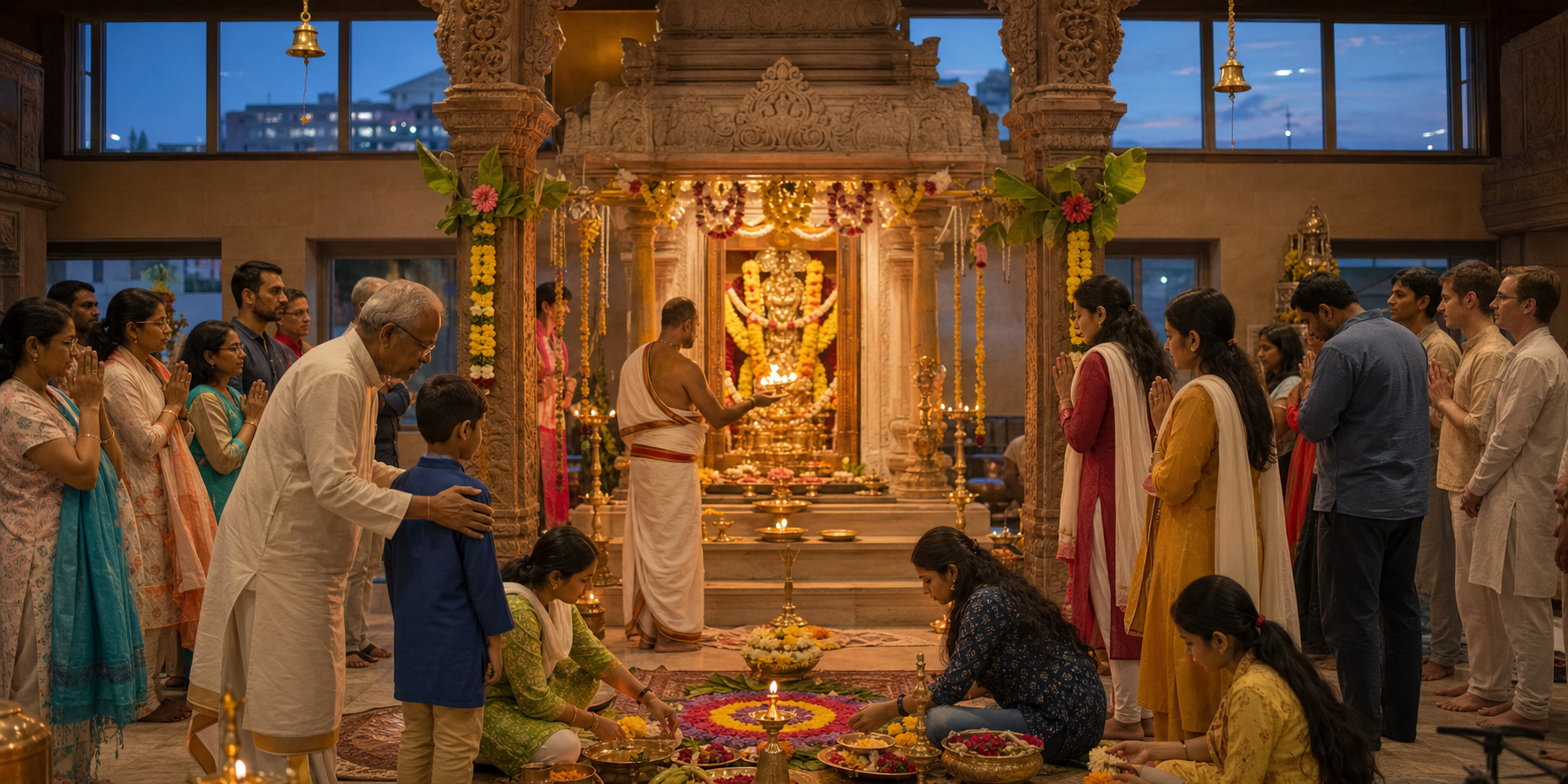
If you live outside Bharat, a temple may have to carry far more than worship alone. It may be where your children first hear a mantra in its proper setting, where a festival becomes part of family memory, or where a curious neighbour encounters Hindu tradition without a hostile or exoticising filter.
The practical question is not merely which mandir is famous or beautiful. It is how you can recognise a living centre of dharma, enter it respectfully, understand what it preserves, and help that inheritance pass forward.
First decide what kind of sacred place you are entering
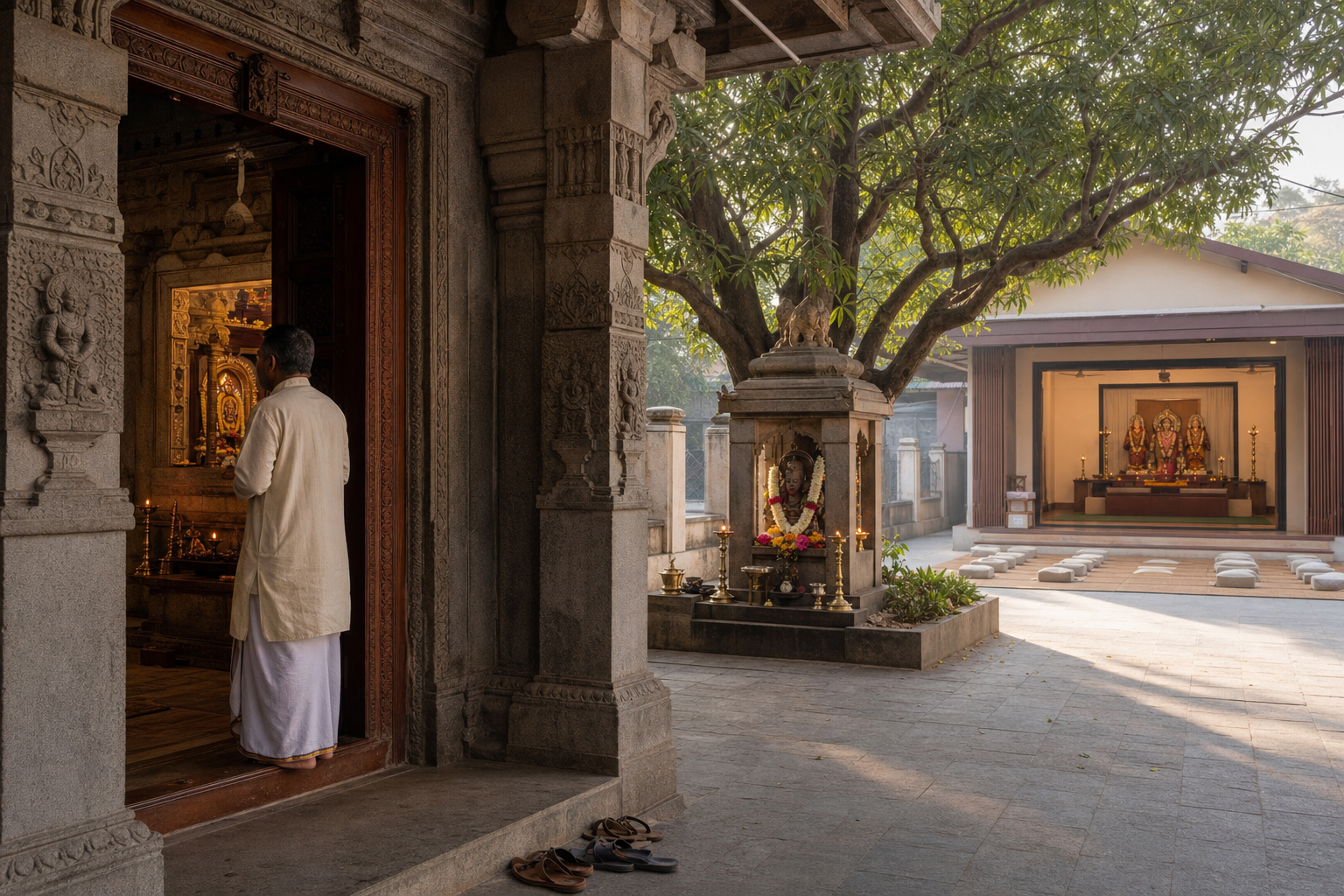
A Hindu sacred site abroad may function as a living mandir, a historic monument, a community institution, or some combination of the three. Those roles overlap, but they are not interchangeable. A place maintained primarily for worship asks something different of you from an archaeological complex visited mainly as cultural heritage.
Before visiting, answer a few basic questions:
- Is regular worship taking place, or is the site principally preserved as a monument?
- Who is the presiding deity, and which sampradaya, lineage, or local tradition shapes the worship?
- Does the temple identify an Agamic or other ritual framework that visitors should know about?
- Which areas are open to visitors, and which are reserved for priests or initiated participants?
- Has the site passed through more than one religious or cultural phase?
- Are you arriving during darshan, a festival, a class, a cultural performance, or ordinary visiting hours?
Angkor Wat shows why these distinctions matter. It was originally dedicated to Lord Vishnu, later developed deep connections with Buddhist practice, and stands as the world’s largest religious monument and a national symbol of Cambodia. Its Hindu origin, Buddhist history, architecture, national importance, and present heritage status all belong in an honest account.
Reducing such a place to a picturesque ruin strips it of sacred memory. Describing it only through its earliest identity can also conceal the history that followed. The responsible approach is chronological: name the foundation, acknowledge later transformations, and learn how the site is understood by the people who care for it now.
Read a temple through devotion, form, transmission, and service
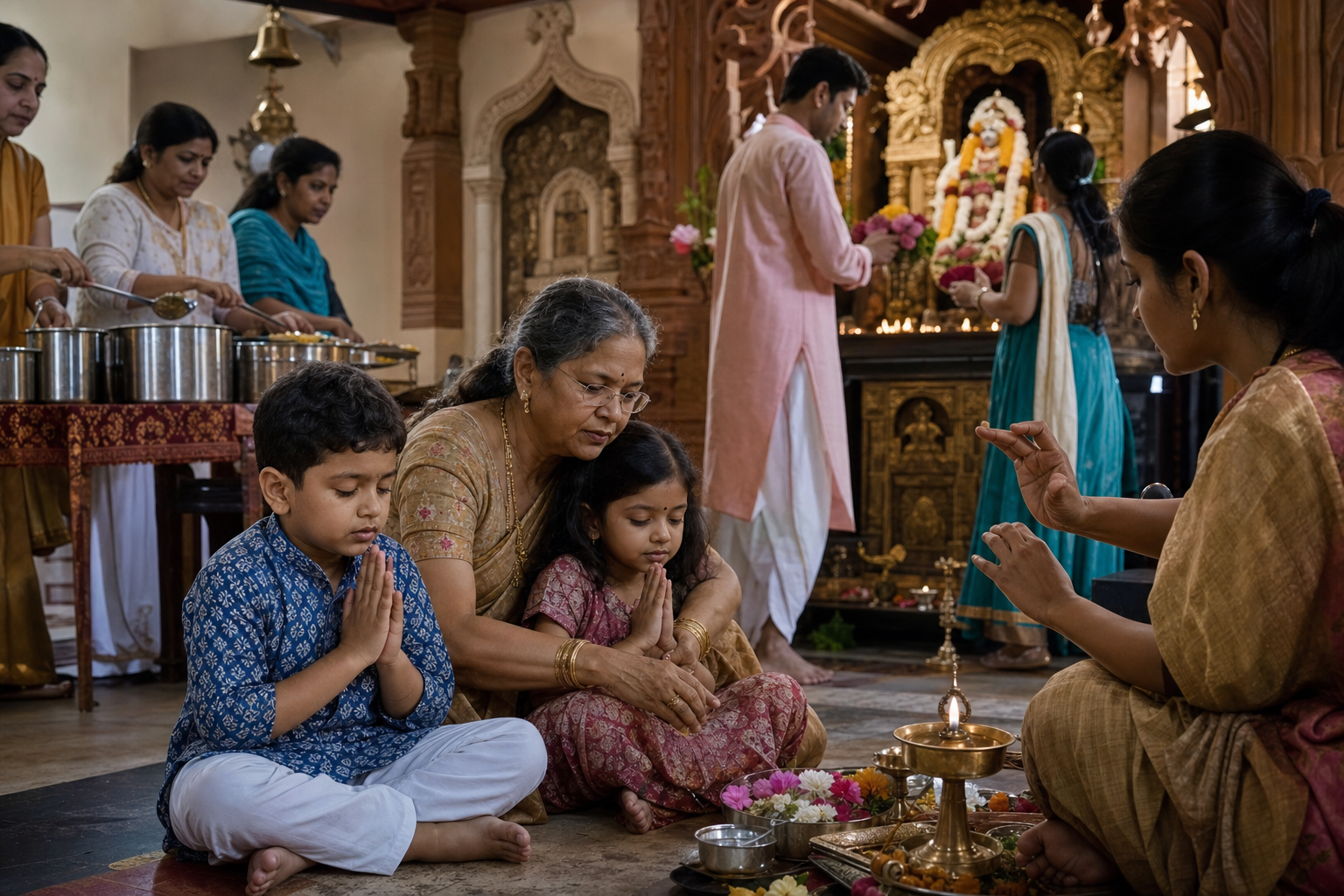
Temple architecture attracts the eye first, especially when towers, enclosures, gateways, sculpture, or ornament evoke the sacred forms of Bharat. Yet architecture is only the visible layer. To understand whether heritage is alive, look for four connected forms of continuity.
- Devotion: Identify the deity, the form of worship, and the rhythm of ritual life. Notice whether the murti is approached as a living divine presence rather than treated as decoration. Ask locally before assuming that familiar practices from another temple apply here.
- Sacred form: Look beyond size and visual splendour. Ask how the plan, orientation, sanctum, procession route, iconography, or sequence of spaces directs attention from the outer world toward the sacred centre.
- Transmission: Find out where people learn the meanings behind what they perform. Language classes, scriptural teaching, music, dance, festival preparation, and instruction in ritual conduct can turn inherited forms into understood practice.
- Service: Notice what the institution does for people beyond major observances. Community assistance, education, cultural programs, and respectful interfaith engagement can make a mandir a stable civic presence without displacing its religious purpose.
This framework prevents two common mistakes. The first is judging a temple only by architectural grandeur. A modest diaspora mandir may possess little monumental ornament yet sustain disciplined worship, serious teaching, and strong community bonds. The second is treating any busy cultural centre as a temple simply because it hosts Indian festivals. Sacred continuity requires more than a recognisable stage performance or an occasional crowd.
After a visit, test what you actually noticed. Can you name the deity and the temple’s living practice? Can you explain a feature of its sacred form? Do you know how knowledge reaches younger participants? Can you identify a service offered to the wider community? If an answer is missing, you have found the question for your next visit.
Visit as a participant or guest, not as a collector of images
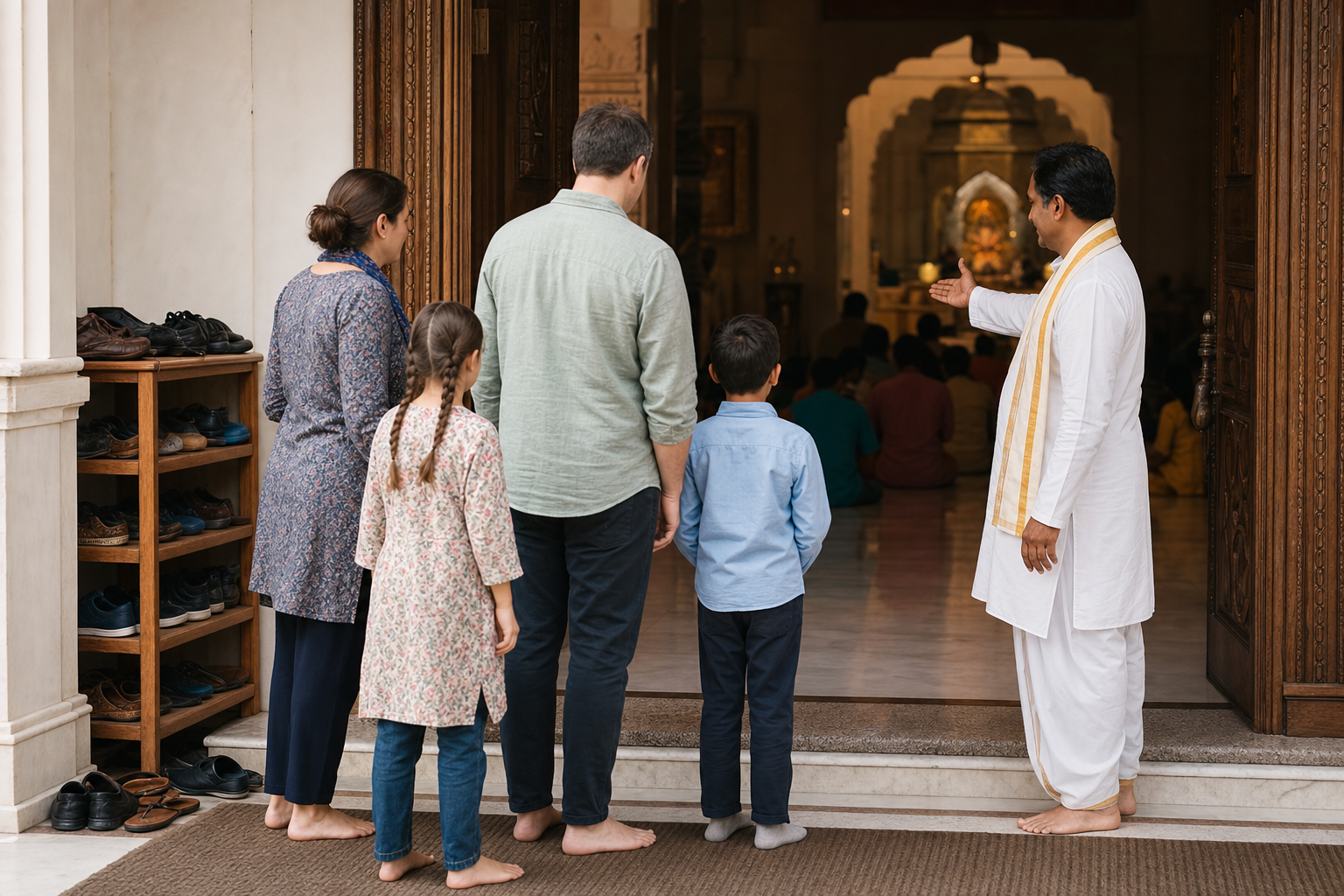
Respectful conduct begins before you reach the doorway. Temple customs differ, so local instructions take precedence over a universal checklist. Check the institution’s visitor guidance, event description, dress expectations, footwear arrangements, photography policy, and rules for entering shrine areas. If the guidance is unclear, ask rather than copy another visitor.
Once inside, let the purpose of the place set your pace:
- Pause at the threshold and observe before moving through a ritual in progress.
- Keep conversation quiet near worship and teaching, even if other parts of the building are social spaces.
- Do not photograph a murti, priest, devotee, ceremony, or child merely because nobody has stopped you. Seek permission where the rule is not explicit.
- Do not enter a sanctum, cross a barrier, touch an object, or imitate a ritual action unless the temple’s practice clearly permits it.
- When asking questions, begin with the place itself: its deity, observance, history, or community. Avoid forcing the host to defend Hinduism against an unrelated stereotype.
- If you are unfamiliar with an offering or gesture, attentive observation is more respectful than improvised participation.
If you bring a non-Hindu friend, prepare them before arrival. Explain that a mandir is not an ethnic museum and that a murti is not simply a sculpture. Tell them which parts of the visit are devotional, which are educational, and where they should follow local direction. That small preparation allows welcome without turning worshippers into exhibits.
Festivals and public programs can support intercultural understanding, but openness does not erase boundaries. A sacred space can welcome the curious while retaining its own discipline, vocabulary, authority, and ritual order. Good hospitality and clear limits strengthen one another.
Build Dharmic solidarity without flattening distinct traditions
Hindu, Buddhist, Jain, and Sikh communities have long histories of interaction and can meet around contemplation, ethical living, service, learning, and mutual respect. That relationship is worth cultivating abroad, where smaller communities often face the same pressures of cultural amnesia and public misunderstanding. But solidarity becomes shallow when it treats every Dharmic path as a different label for the same doctrine.
You can practise a more durable form of unity:
- Use the tradition’s own name for its sacred figures, texts, teachers, institutions, and practices.
- Let the host community explain what a space means instead of imposing a convenient all-Dharmic interpretation on it.
- Distinguish shared values from identical theology. Agreement about ethical conduct does not eliminate real differences in metaphysics, ritual, authority, or liberation.
- Build cooperation around education, cultural preservation, service, and honest dialogue rather than inventing a blended ritual that belongs fully to no tradition.
- When a site has changed religious identity over time, describe the sequence instead of recruiting its entire history into a present-day ownership claim.
This approach is neither timid nor apologetic. Hindu origins should be named clearly where they are established, just as later Buddhist, Jain, Sikh, regional, or civic meanings should be acknowledged where they belong. Unity worthy of dharma does not require historical vagueness or doctrinal sameness.
Support what happens between major festivals
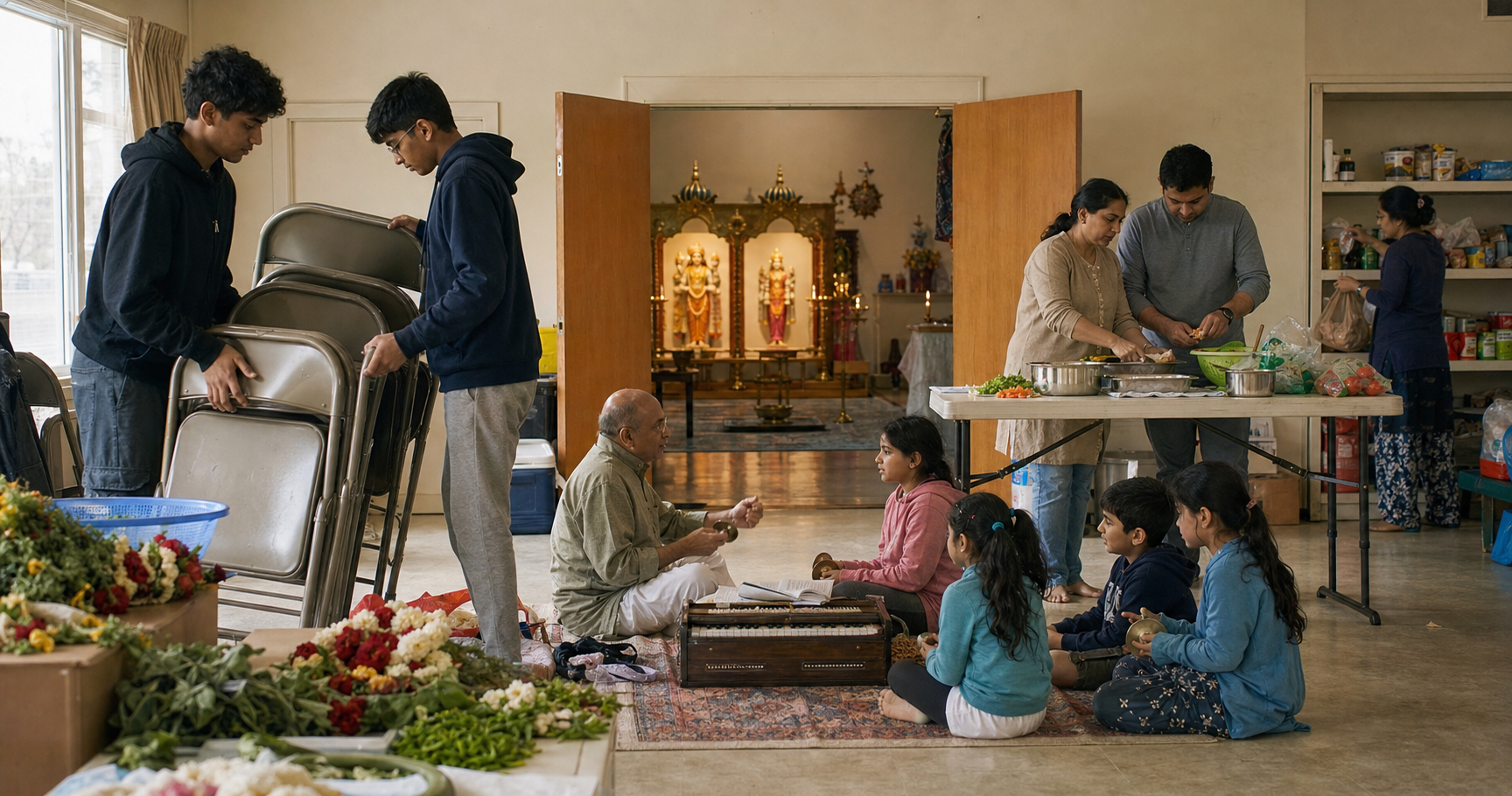
A crowded festival can demonstrate visibility, but continuity is built during ordinary weeks. Repeated worship, patient teaching, traditional arts, community service, and relationships across generations are what turn a building into a durable institution. Mandirs abroad commonly carry these devotional, educational, cultural, civic, and intercultural roles together.
If you are deciding where to contribute your time, attention, or resources, look beyond the size of the next celebration. Ask:
- Is worship maintained predictably, with clear guidance for devotees and visitors?
- Does teaching explain the meaning of practices, or does it stop at memorisation and performance?
- Are music, dance, language, and other traditional arts taught as disciplines rather than displayed only for special occasions?
- Are younger members trusted with meaningful preparation, service, and leadership under guidance?
- Does community service arise from the institution’s Dharmic character rather than replace that character?
- Can a newcomer discover how to move from attending an event to belonging to a community?
You do not need to solve every institutional problem. Choose a recurring practice you can sustain. Attend worship beyond headline festivals. Learn enough to explain the deity and observance accurately to your family. Help with a task the temple has actually identified. Enrol in teaching rather than relying on fragments encountered online. Introduce a respectful guest only after preparing them for the sacred setting.
Do not judge a diaspora mandir solely by how closely its building resembles a temple in Bharat. Local adaptation can be necessary; careless dilution is not. The useful test is whether the adaptation helps devotion, knowledge, ethical conduct, art, and community responsibility continue without obscuring what they are.
Key takeaways
- Identify whether you are visiting a living mandir, a heritage monument, a community institution, or a place combining those roles.
- Read the temple through four layers: devotion, sacred form, transmission, and service.
- Follow local rules for dress, access, ritual conduct, and photography; familiarity with another temple is not permission here.
- Support Dharmic cooperation while naming the differences among Hindu, Buddhist, Jain, and Sikh traditions honestly.
- Measure continuity by what happens between festivals: regular worship, understood teaching, disciplined arts, service, and responsibility across generations.
Your next step can be simple. Find the nearest mandir or Dharmic heritage site, learn its living status and presiding tradition, read its visitor guidance, and choose a recurring act of worship, learning, or service. Heritage survives abroad when admiration becomes informed participation.
References
