
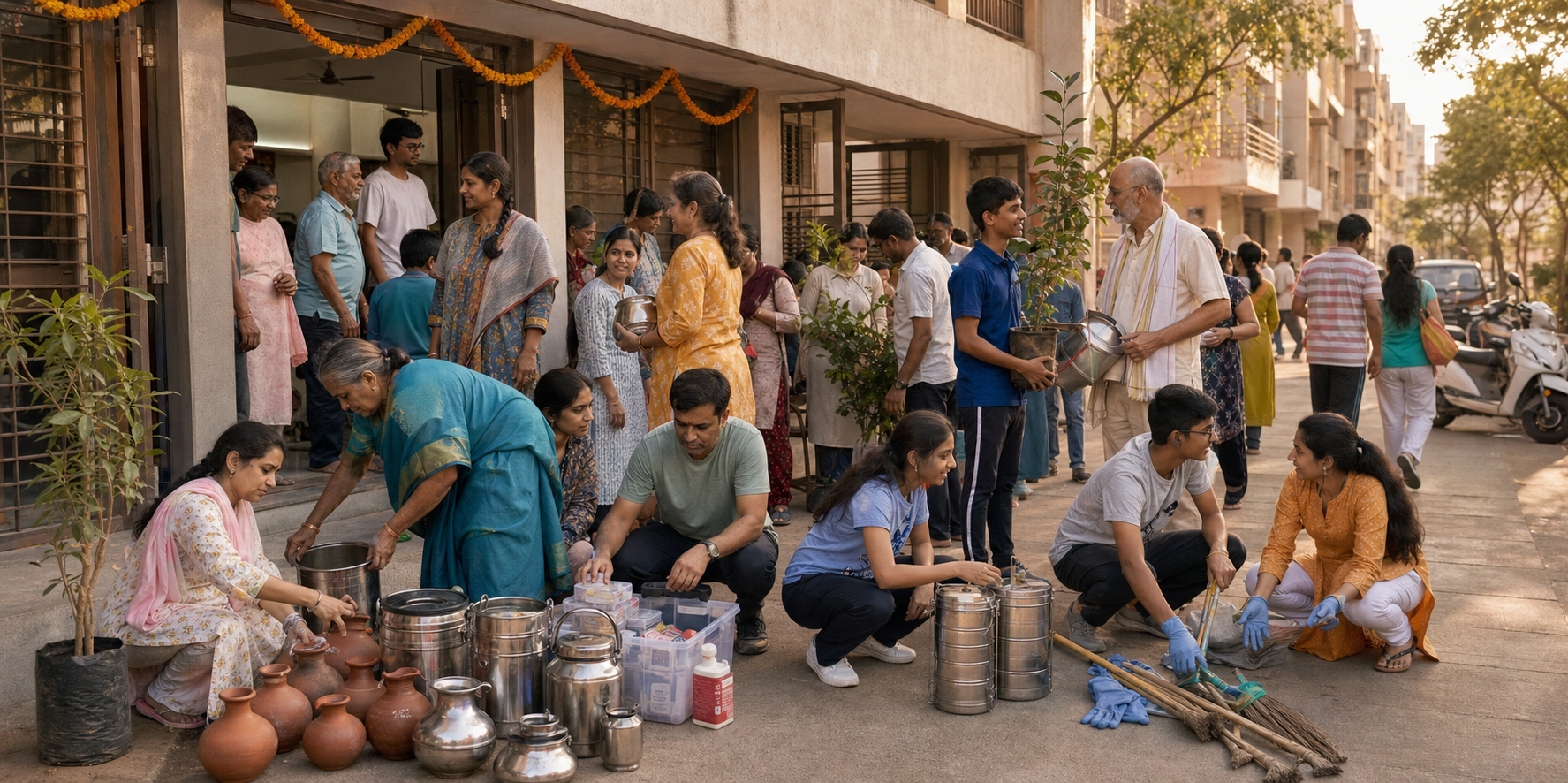
You are not looking for another crowded evening if your real goal is a stronger Hindu community in Hadapsar. You need a gathering that helps neighbours recognize one another, gives younger people meaningful responsibility, and leaves everyone with a credible next step.
That is why the Mahadevwadi sabha offers a useful starting point. More than 150 Hindus attended the gathering organized by the Hindu Rashtra Samanvay Samiti, with families, youth, and elders represented. The turnout demonstrates local interest. It does not, by itself, create a durable network. That begins when attention becomes relationship, relationship becomes seva, and seva becomes dependable civic participation.
Read the turnout correctly
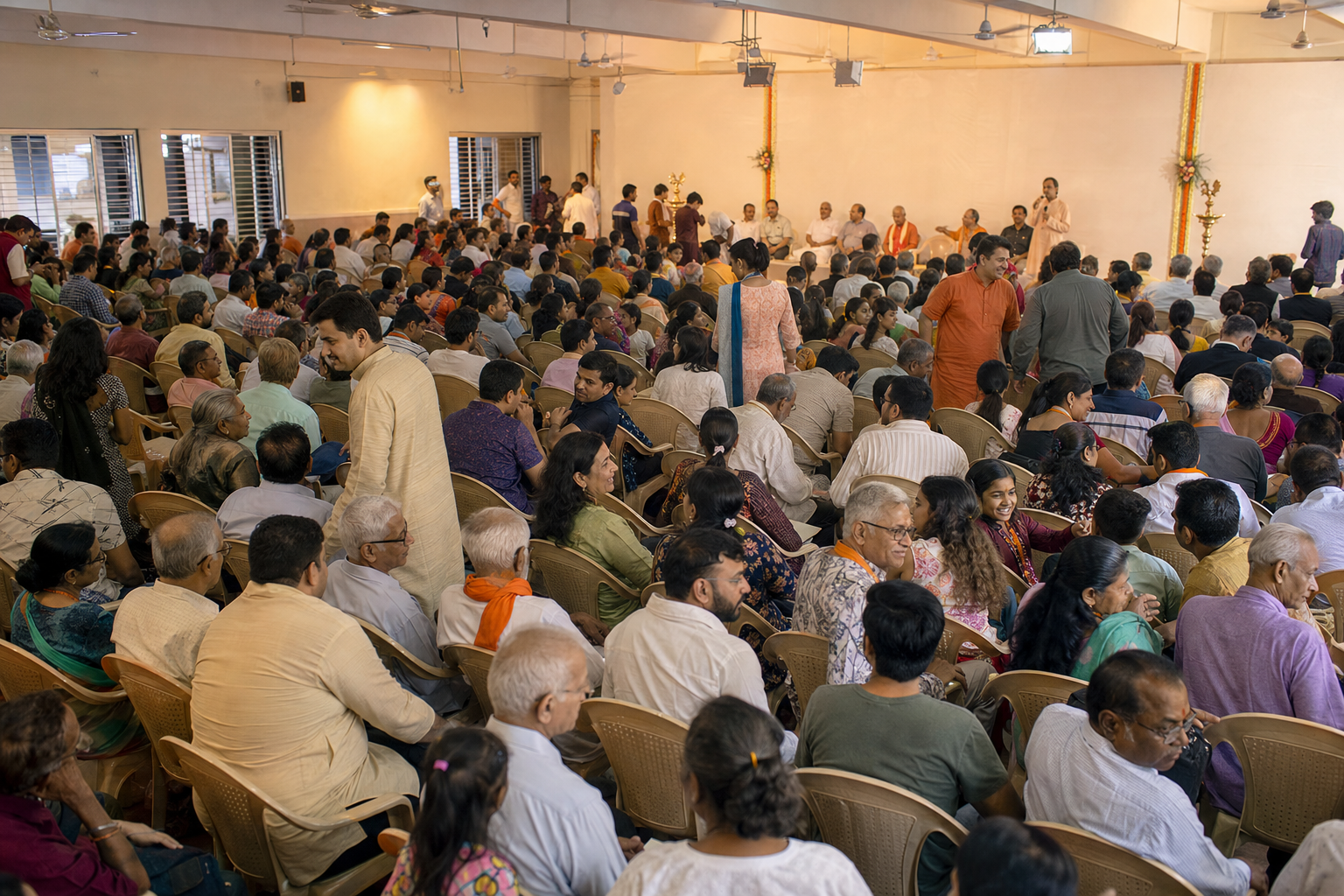
A count above 150 is meaningful because it shows that organizers could bring a substantial local audience into the same room. It also establishes a baseline against which future participation can be understood. But headcount alone cannot tell you whether attendees formed new relationships, found useful roles, or intend to return.
If you are organizing the next gathering, record the dimensions that matter after the chairs have been put away:
- Reach: Which Hadapsar neighbourhoods and community institutions were represented, and which were absent?
- Participation: Who asked questions, offered skills, or volunteered for a defined responsibility?
- Connection: Did attendees meet people outside the family, age group, or local circle with which they arrived?
- Consent: Who explicitly asked to receive future information, and through which channel?
- Action: What work was offered, who owns it, and how will participants know whether it was completed?
This is the difference between an audience list and a community map. An audience list tells you whom you can contact. A community map tells you which relationships, abilities, and local gaps can support the next piece of work. Collect only the information you genuinely need, explain how it will be used, and never treat attendance as consent to join a messaging group or publicity campaign.
Give every generation real work
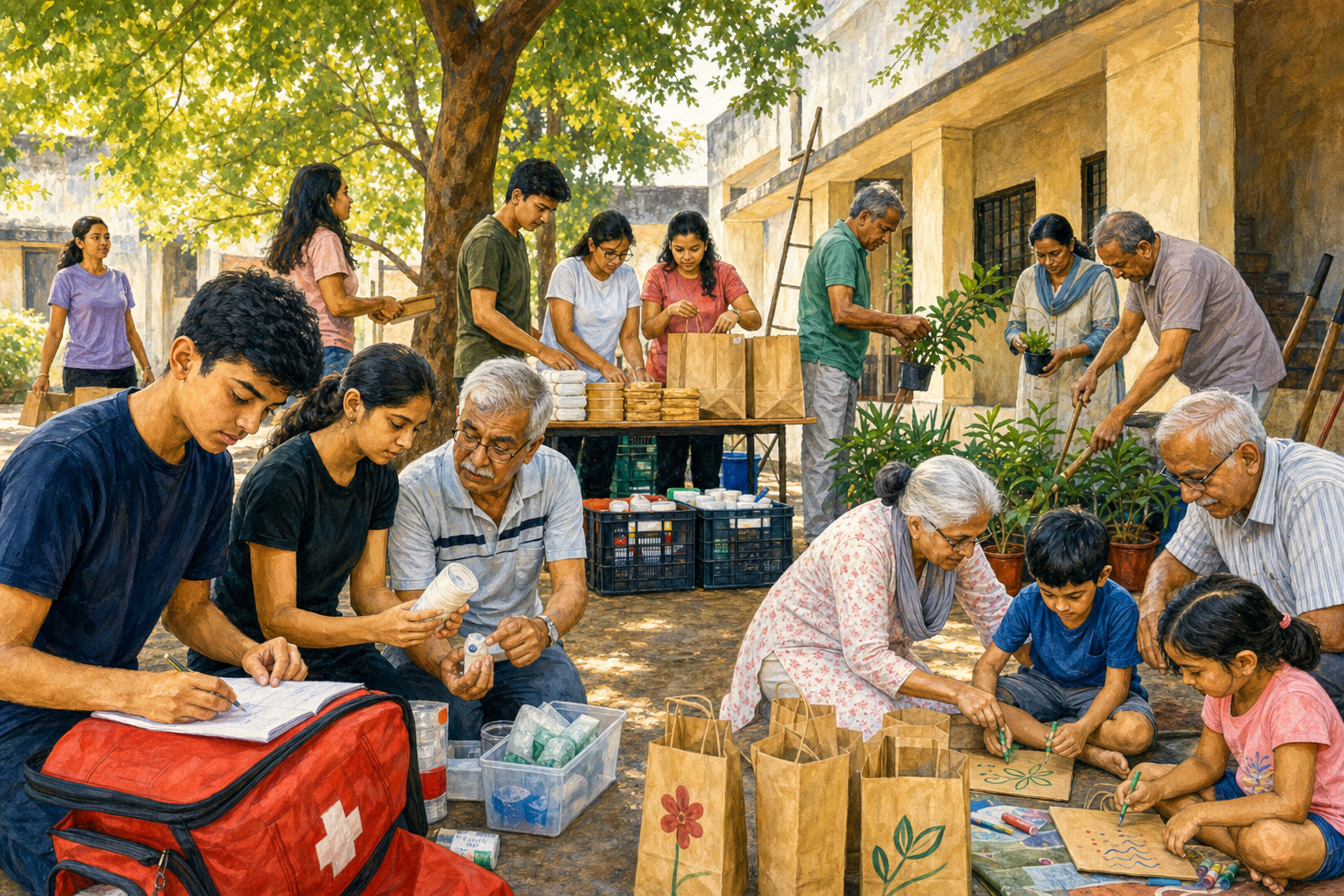
The presence of families, youth, and elders should shape the program, not merely decorate it. A multigenerational gathering loses much of its value when younger participants are treated only as an audience and elders appear only for ceremonial recognition.
- Invite elders who wish to contribute to explain local history, practices, institutions, and earlier community efforts. They can also review cultural material for accuracy.
- Give younger volunteers bounded ownership of documentation, moderated communications, cultural education, or a seva activity. Tell them what decision they may make rather than asking them vaguely to become more involved.
- Ask adults and families to lead hospitality, neighbourhood contact, event logistics, and follow-through. These roles often determine whether a gathering feels open to ordinary residents or confined to an established circle.
- Make the format usable for families. Publish the purpose and schedule clearly, maintain courteous language, and account for the practical needs of children and elders.
Mentorship should end in shared work, not just advice. An elder and a younger volunteer might jointly prepare a local heritage session, document a temple tradition, or coordinate a service activity. The task gives knowledge a route across generations, while shared responsibility prevents mentorship from becoming a one-way lecture.
Do not assign roles solely by age. Ask what each person knows, what they want to learn, and what they can reliably undertake. Intergenerational unity becomes credible when people can see that their contribution is needed and that another person is depending on it.
Turn dharmic values into standards of conduct
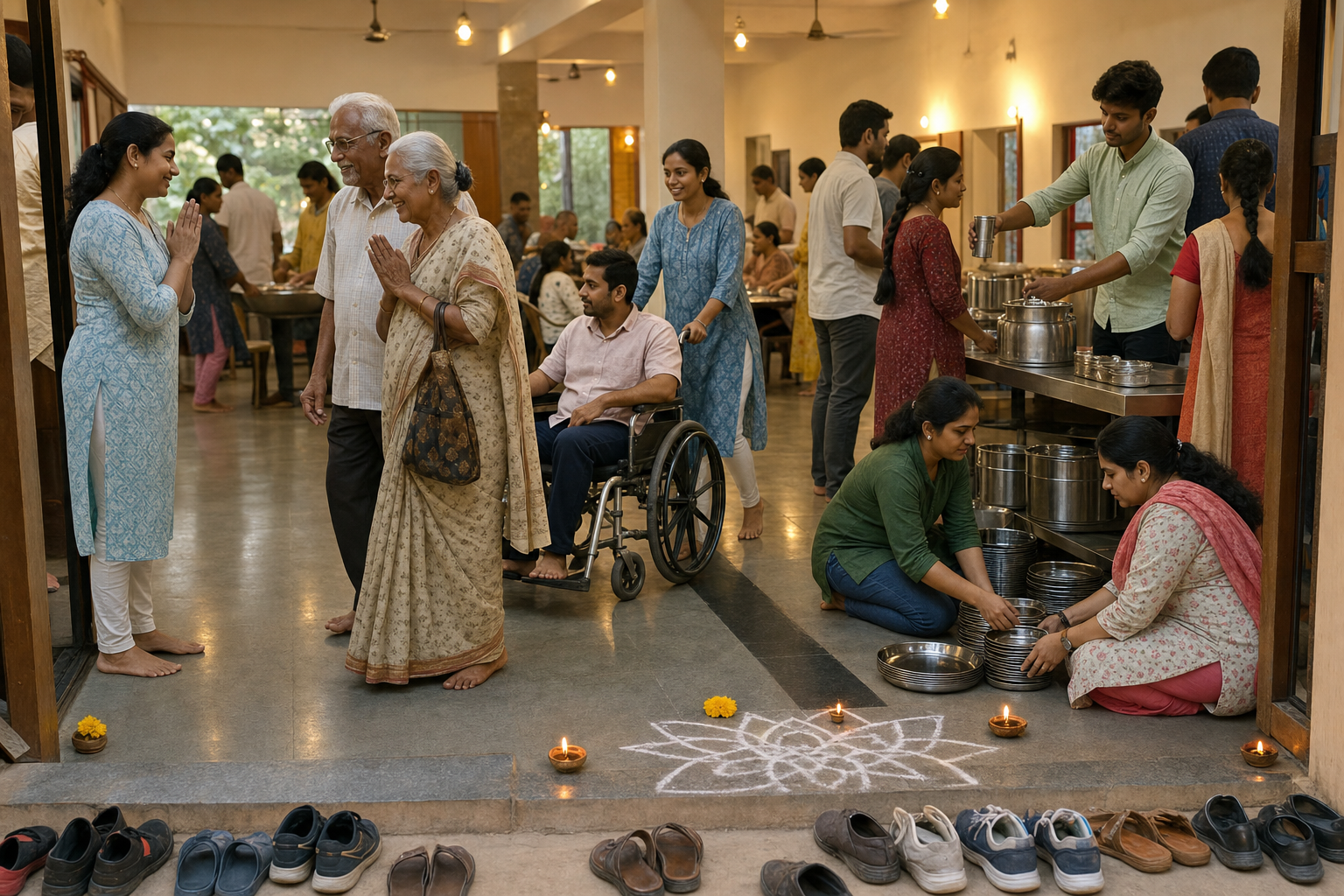
The gathering emphasized compassion, non-violence, truthfulness, self-discipline, and seva. These values give Hindu organizers a practical vocabulary for cooperation with Buddhists, Jains, and Sikhs while preserving the distinct doctrines, lineages, and institutions of every tradition. Dharmic unity does not require pretending that all traditions are identical.
The useful question is not whether a value appeared in a speech. It is whether the organizing method can pass a test based on that value.
| Dharmic value | Operational test for organizers |
|---|---|
| Compassion | Does the activity preserve the dignity of participants, neighbours, and people who disagree? |
| Ahimsa | Can the community state its position firmly without intimidation, humiliation, or dehumanizing language? |
| Truthfulness | Have names, quotations, images, and surrounding context been checked before a claim is circulated? |
| Self-discipline | Are organizers punctual, consistent, financially accountable, and willing to correct their own mistakes? |
| Seva | Does the gathering lead to useful work whose completion can be seen by the community? |
Truthfulness matters most when a claim appears to favour your own side. Before forwarding an allegation or a provocative image, identify where it came from and whether the wording matches the underlying event. If you cannot verify it, do not build mobilization around it. If your group makes a mistake, correct it in the same channel in which it spread. Cultural advocacy becomes stronger when people know that accuracy outranks momentary excitement.
Operational clarity matters especially when a program uses the language of Hindu Rashtra. Tell people what they are actually being invited to support in Hadapsar: cultural education, temple cooperation, youth mentorship, seva, civic awareness, or lawful public advocacy. These are different workstreams. Naming them prevents a broad civilizational aspiration from becoming an undefined test of loyalty.
Design the follow-through before the sabha begins
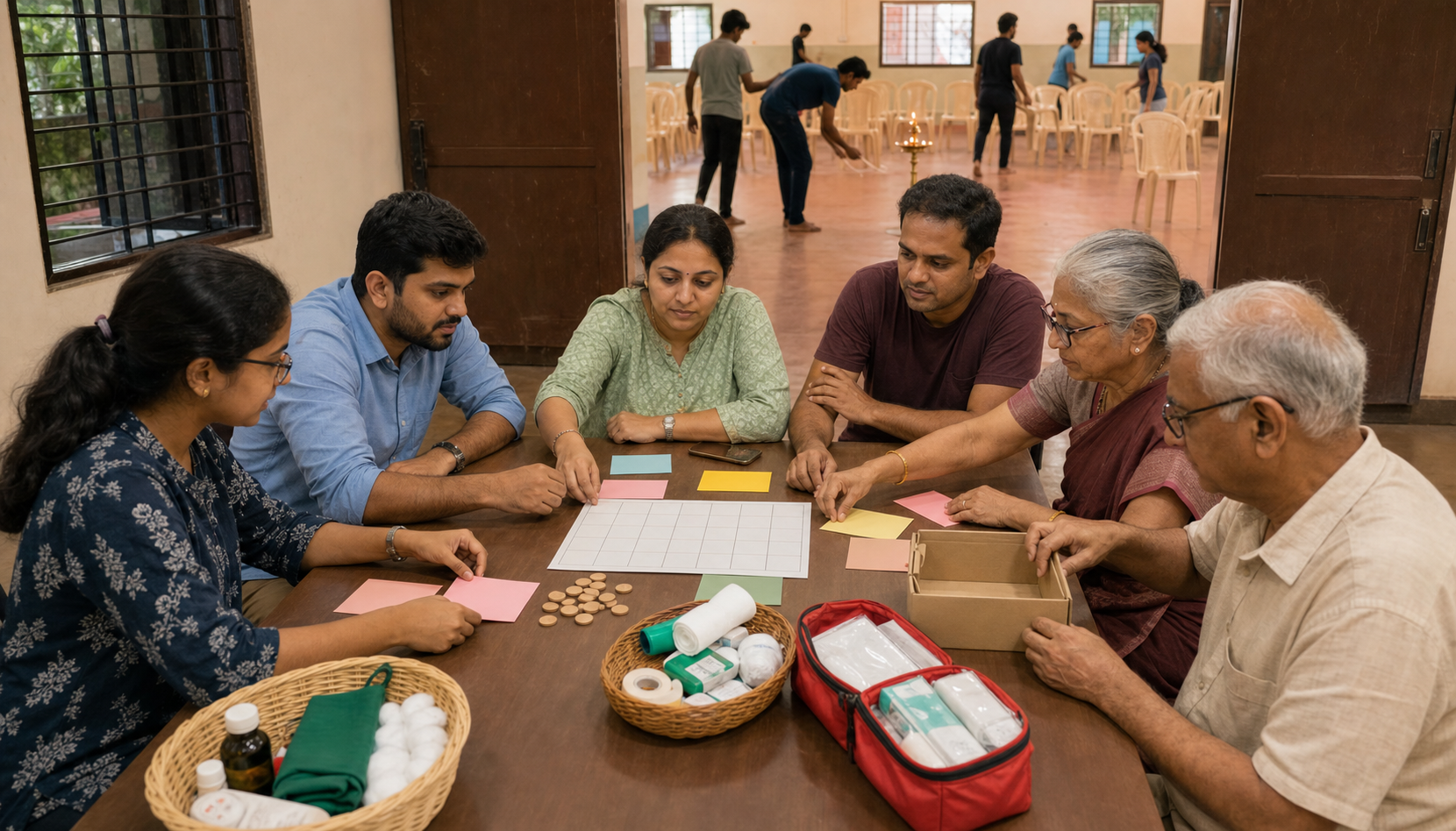
Follow-through should not be improvised after an event. Build it while preparing the invitation, because the purpose of the gathering determines what information, roles, and commitments will be needed.
- Write a plain purpose statement. An awareness meeting, a cultural class, a seva initiative, and a civic advocacy forum require different participants and different forms of follow-up.
- Ask attendees what kind of contribution interests them. Useful choices might include cultural education, event support, youth mentoring, communications, documentation, or service.
- Offer defined activities rather than a general appeal to stay involved. Each activity needs a responsible coordinator, a clear scope, and an explanation of what a volunteer is agreeing to do.
- Keep announcement channels separate from working groups. People who want occasional information should not be forced into the volume or obligations of an organizing channel.
- Use an accessible, familiar local setting whenever possible. Mahadevwadi gave the Hadapsar gathering a recognizable community anchor; future activity can retain that local logic even when the venue changes.
- Report what happened after every activity. State what was completed, what remains open, and how any collected money was used. Do not inflate attendance, reach, or impact.
- Ask permission before publishing identifiable photographs or personal details, especially where children are involved. Participation should not carry an unspoken publicity requirement.
Use a few hard questions to test the plan. Can an attendee explain the next task without asking for another speech? Is a named person responsible for receiving volunteers? Will the community be able to see what was completed? If the answer is unclear, the follow-through is still too vague.
A messaging group is not the outcome. It is only infrastructure. The outcome is a trustworthy pattern in which people receive accurate information, accept realistic responsibilities, complete useful work, and know where to bring the next concern.
Questions participants and organizers should ask
Does attendance above 150 prove that mobilization will last?
No. It proves meaningful reach for that gathering. Durability must be established through voluntary return, completed responsibilities, new local relationships, and visible community work. Treat the turnout as an opening, not a guarantee.
Can Hindu purpose remain clear while building wider dharmic unity?
Yes. State the Hindu purpose plainly, identify the shared ethical ground for a particular activity, and avoid claiming doctrinal sameness. Cooperation on seva, truthfulness, non-violence, cultural continuity, or civic responsibility does not require any tradition to surrender its identity.
What should you do if no concrete next step was offered?
Ask the organizer which defined activity needs help, who coordinates it, and how completion will be reported. If no such activity exists, propose one that matches your capacity and local need. Keep the scope manageable, identify who is responsible, and agree on what finished work will look like before recruiting others.
If you are preparing the next Hadapsar gathering, write the follow-through sheet before finalizing the speech agenda: purpose, consent, responsible person, defined task, and report-back. A sabha becomes mobilization when people can carry dharma out of the hall and into dependable local work.
References
