
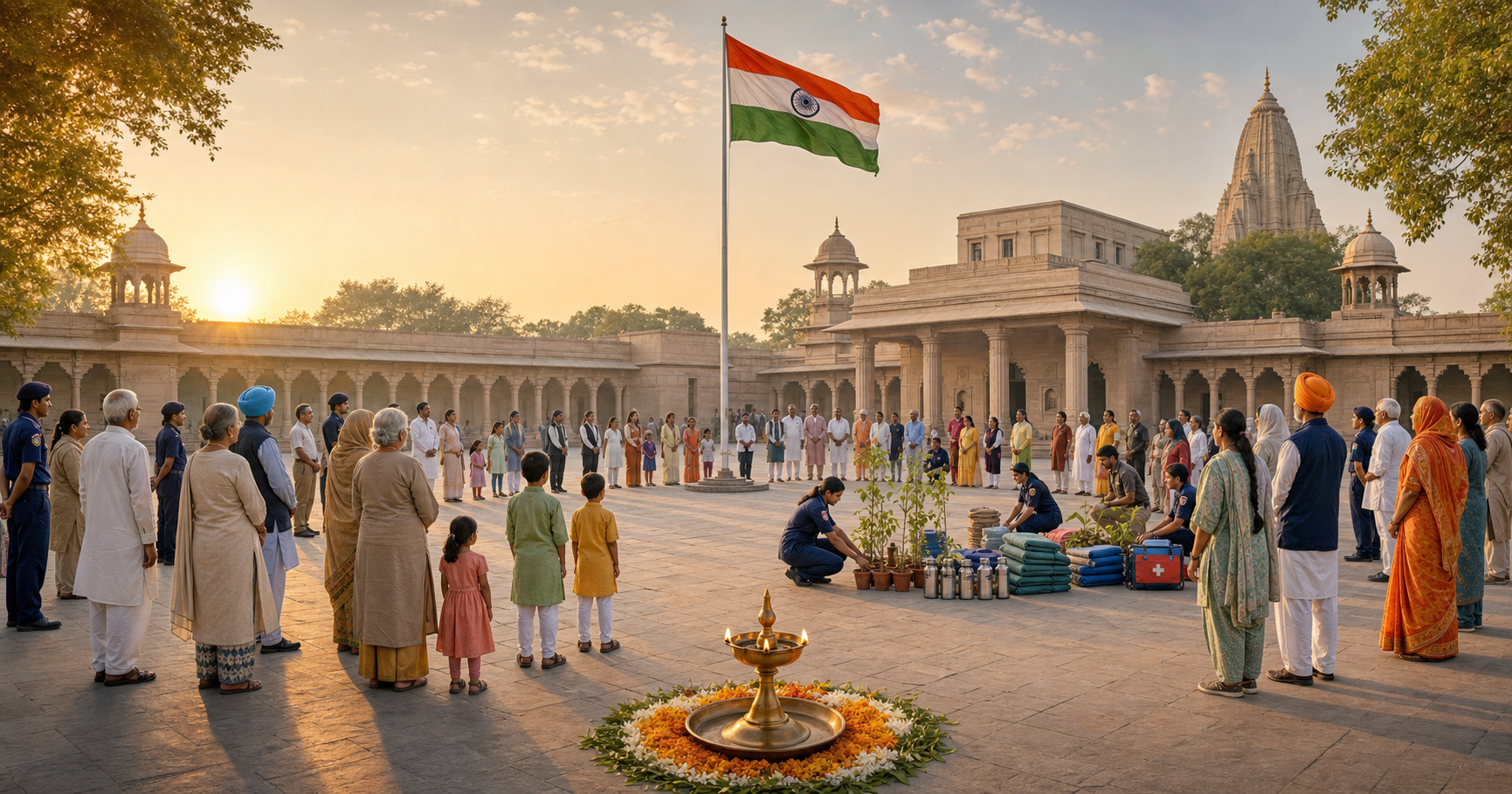
You have been asked to help organise a Shri Ram Temple anniversary, a shobha yatra, an Independence Day programme, or a government ceremony. Filling the stage is the easy part. The harder decision is what the gathering will ask people to belong to, and what it will ask them to do after they leave.
A sound ceremony joins cultural memory to civic responsibility. It honours Bharat without demanding uniformity, makes Dharmic values visible without reducing different traditions to one formula, and converts collective emotion into work that can be seen and measured.
Start with a civic purpose, not a crowded programme
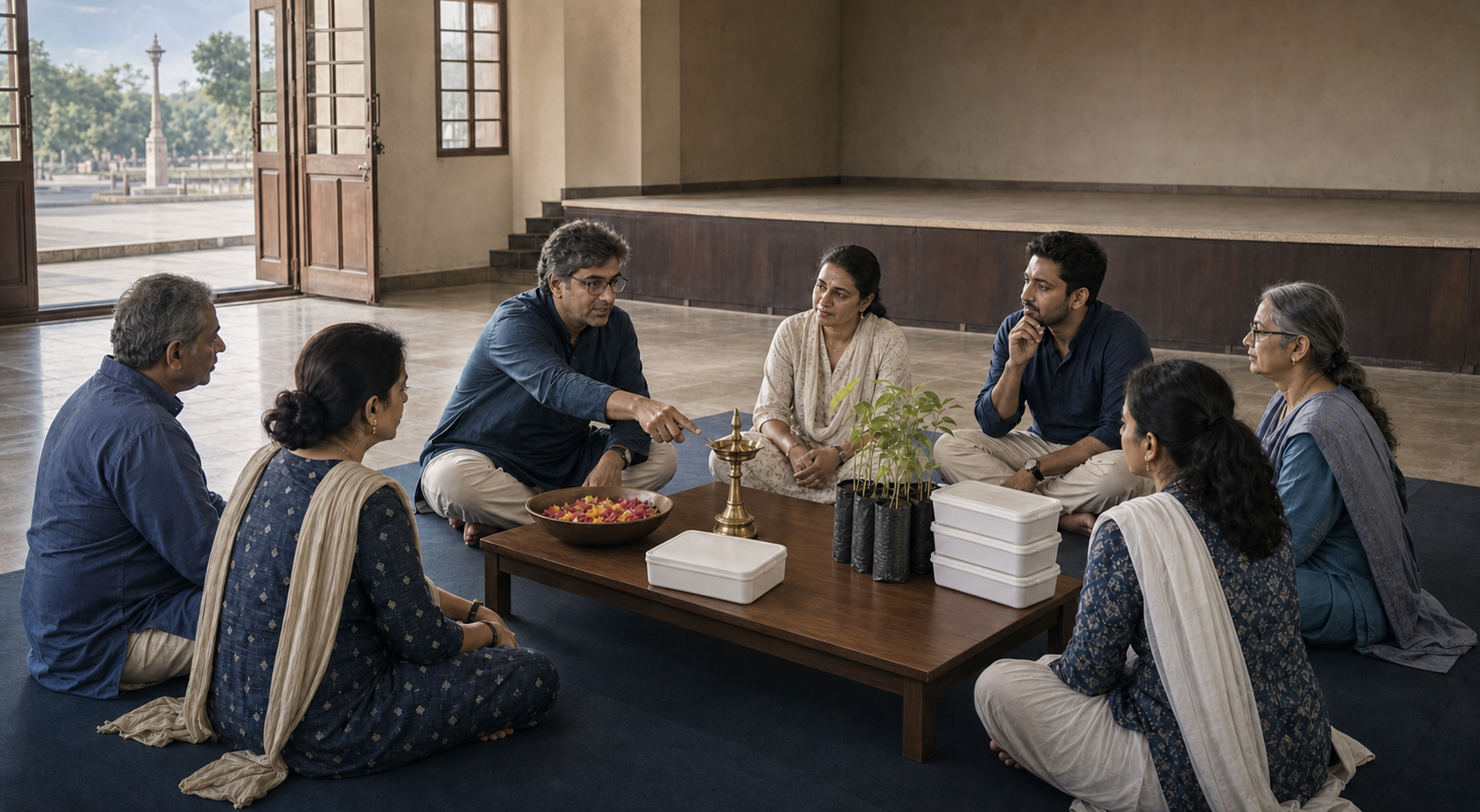
A ceremony is compressed civic education. The language on the invitation, the people given responsibility, the order of the programme, and the treatment of someone who does not participate in the expected way all teach the audience who belongs.
Before discussing performers, banners, or chief guests, complete this sentence: “We are gathering to remember ______, affirm ______, and undertake ______.” The first blank identifies the inheritance. The second names the common ethic. The third prevents the event from ending at applause.
- Remember: Name the person, sacrifice, sacred place, freedom-era memory, or civilisational milestone being honoured.
- Affirm: Choose a public ethic such as truthful conduct, restraint, non-harm, justice, service, or care for the vulnerable.
- Undertake: Select a defined civic outcome such as heritage documentation, youth education, environmental stewardship, legal literacy, relief work, or an ongoing seva programme.
This distinction matters because attendance is not the same as unity. A procession can create recognition and trust, but durable unity appears only when participants can cooperate after the route has emptied. In Pratapgarh, a commemorative shobha yatra linked the Shri Ram Temple anniversary with an organised call toward Ram Rajya. The useful lesson for your event is the connection between remembrance and continuing work, not the size of the procession alone.
Use three tests when approving any programme item. Does it serve the declared purpose? Does it preserve the dignity of everyone present? Does it lead toward the promised civic outcome? A speech, slogan, or performance that fails those tests is consuming attention without strengthening the gathering.
Use shared Dharmic ethics without flattening traditions
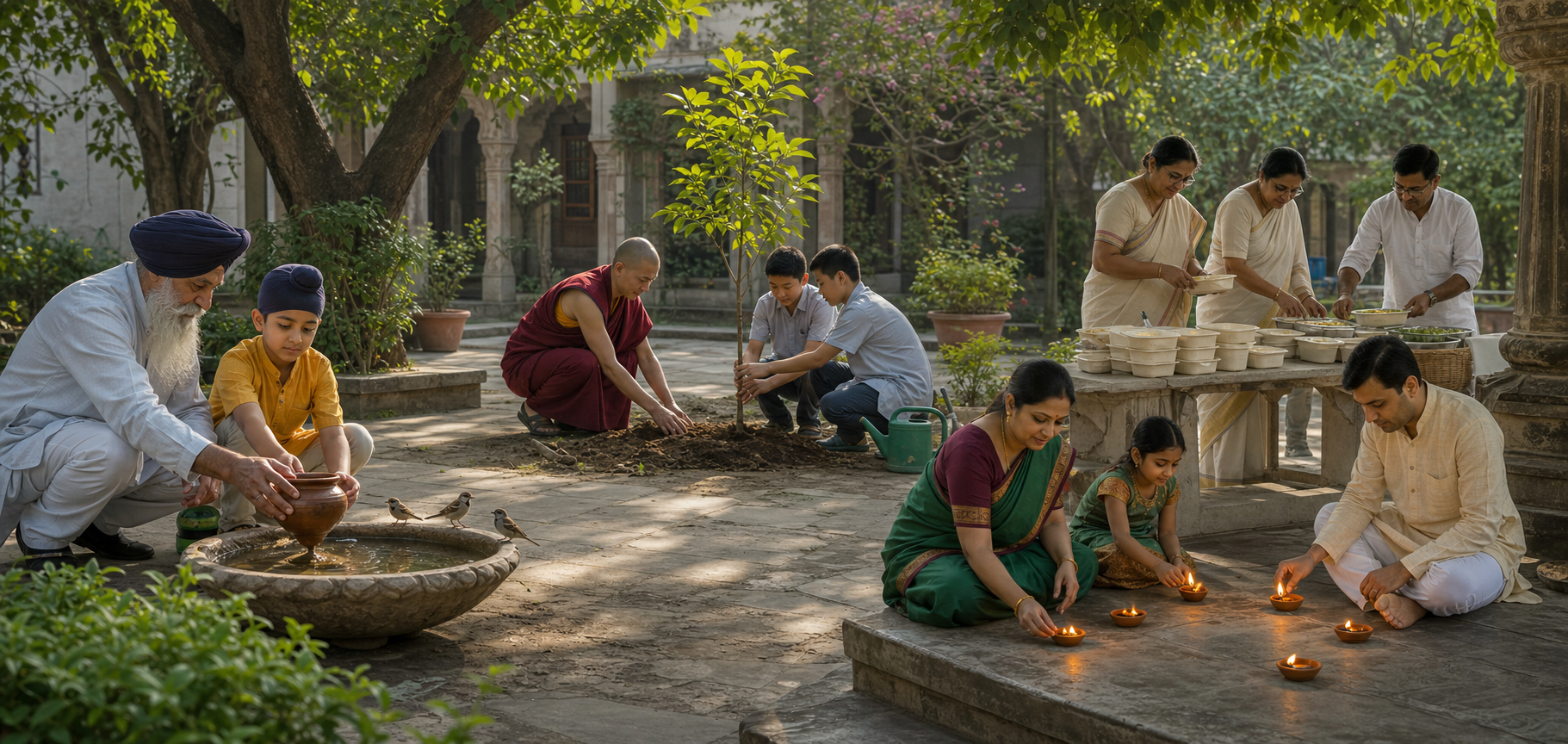
Ram Rajya can provide a rich civic vocabulary when it is presented as rule disciplined by dharma: nyaya in public decisions, maryada in conduct, satya in speech, sarvodaya in social welfare, and antyodaya in care for those most easily neglected. This is more demanding than using Ram Rajya as a decorative slogan. It gives organisers standards by which their own behaviour can be judged.
The wider Dharmic family offers related resources: ahimsa and aparigraha in Jain traditions, karuna and skilful responsiveness in Buddhist traditions, and seva and sarbat da bhala in Sikh tradition. These are points of ethical resonance, not proof that Hinduism, Buddhism, Jainism, and Sikhism have identical theology. Civic solidarity requires principled overlap; it does not require erasing the identities that make dialogue meaningful.
Your introductory note should therefore name both unity and distinction. A usable formulation is: “We gather from distinct traditions and communities, united by duties of truth, restraint, non-harm, service, and responsibility to the land and its people.” That sentence tells participants what is shared without pretending every belief is interchangeable.
| Dharmic principle | Ceremonial expression | Proof after the event |
|---|---|---|
| Nyaya | Transparent criteria for speakers, volunteers, and participating organisations | Decisions and grievance responses follow the same published rules |
| Maryada and satya | A conduct charter and a historically accurate context note | Errors are corrected and misconduct is addressed rather than concealed |
| Ahimsa and karuna | Non-targeting language, respectful disagreement, and accessible participation | Accommodation requests and complaints receive a documented response |
| Seva and sarbat da bhala | A specific public-service commitment announced from the stage | Volunteer effort, service coverage, and the next milestone are reported |
| Antyodaya | The needs of vulnerable people are considered in the project design | The impact record shows who was reached, not merely how many people attended |
This table exposes a common weakness. Organisers often speak about elevated values while running the event through opaque invitations, unmanaged disputes, or inaccessible facilities. If the process contradicts the message, the audience will remember the contradiction.
Keep state protocol and personal participation distinct
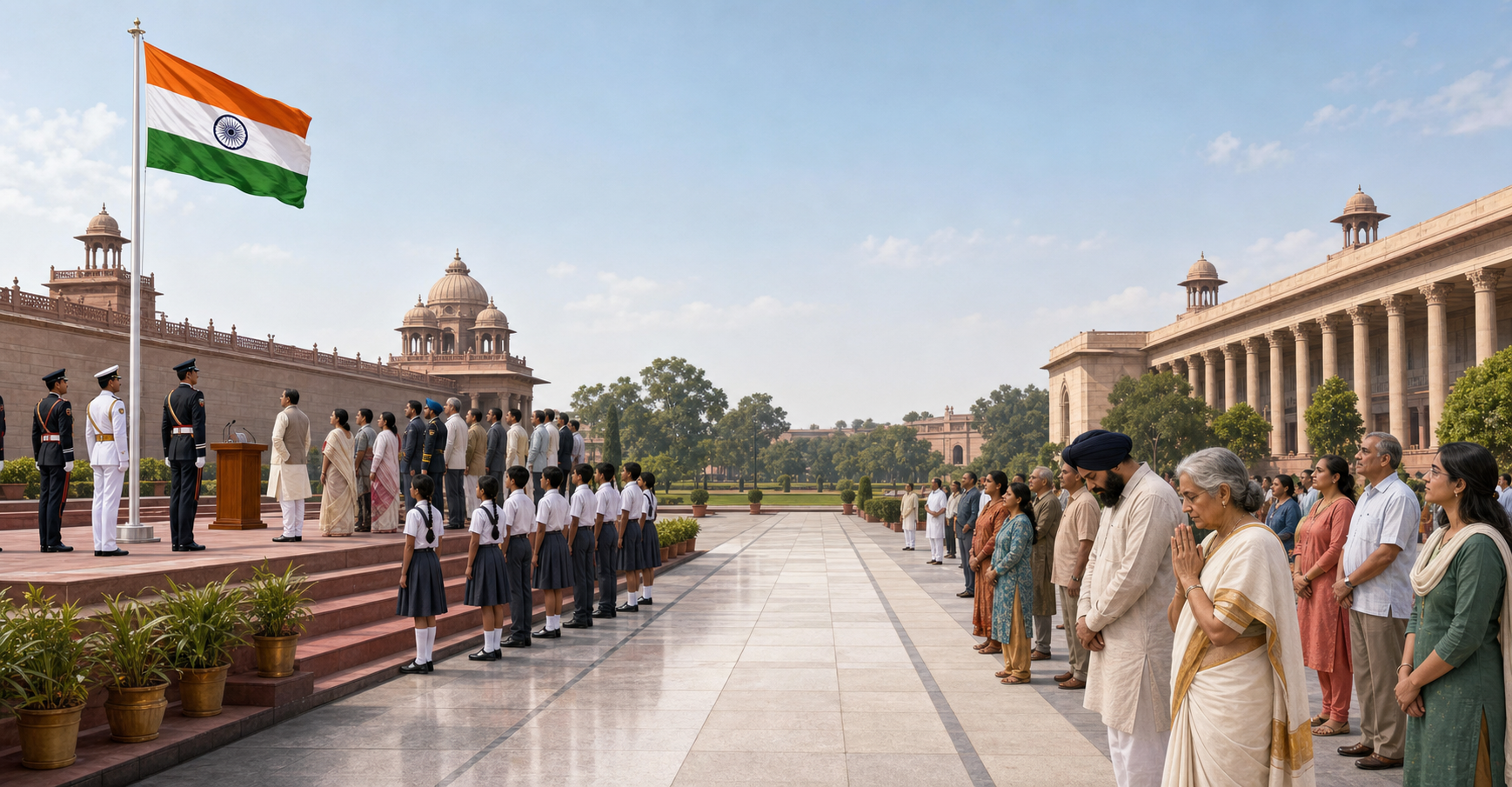
If Vande Mataram forms part of the programme, begin with one practical question: is this a specified government function governed by an official protocol, or a voluntary community gathering choosing its own ceremonial form? Do not extend a rule written for notified state functions to every temple, school, association, or individual.
For specified government functions, the Union Home Ministry has prescribed a full six-stanza rendition lasting 3 minutes and 10 seconds. An administrator responsible for such a function should obtain the operative circular, authorised audio, notation, and department-specific sequence from the competent office. A circulating recording or an old event script is not a safe substitute for the official material.
The historical introduction should be concise but accurate. Bankim Chandra Chattopadhyay composed Vande Mataram in the late nineteenth century, and its place in Anandamath helped carry it into the anti-colonial movement. On 24 January 1950, the Constituent Assembly affirmed the honoured place acquired by Vande Mataram through the freedom struggle, while Jana Gana Mana became the National Anthem. The Constitution itself does not use the designation “national song,” and the first two stanzas have been the form commonly encountered in many educational and civic settings.
Protocol for the programme and compulsion upon a person are also different questions. In Bijoe Emmanuel v. State of Kerala (1986), the Supreme Court protected people who respectfully stood for the National Anthem but did not sing because of sincerely held beliefs. That case concerned the National Anthem, so it should not be turned into a blanket answer for every dispute involving Vande Mataram. Its practical warning is still important: respect cannot simply be measured by vocal participation.
If you manage a government institution and anticipate a contested case, settle the procedure with the responsible administrative or legal authority before the ceremony. Do not improvise a confrontation in front of an audience. For a voluntary gathering, communicate expectations in advance and provide a dignified way for a person to remain respectful without being publicly singled out.
- Confirm whether the event falls within the notified scope of a government protocol.
- Use the authorised 3:10 rendition when the full-version requirement applies, and reserve that exact time in the run sheet.
- Test the reference audio, microphones, screens, and live ensemble together rather than as separate systems.
- Circulate an accurate transliteration, translation, and pronunciation aid before rehearsal.
- Provide captioned lyrics in a high-contrast format; arrange sign-language interpretation and large-print or Braille material where required.
- Tell participants the sequence, expected conduct, and route for requesting an accommodation before they arrive.
- Check whether Vande Mataram belongs in the opening or central portion of the programme and whether Jana Gana Mana is to conclude it under the applicable official sequence.
Uniform timing can produce ceremonial coherence. It cannot, by itself, create understanding. A brief explanation of the song’s freedom-era place and its image of reverence for the motherland gives people a reason to participate beyond mere compliance.
Build a path from cultural memory to accountable seva
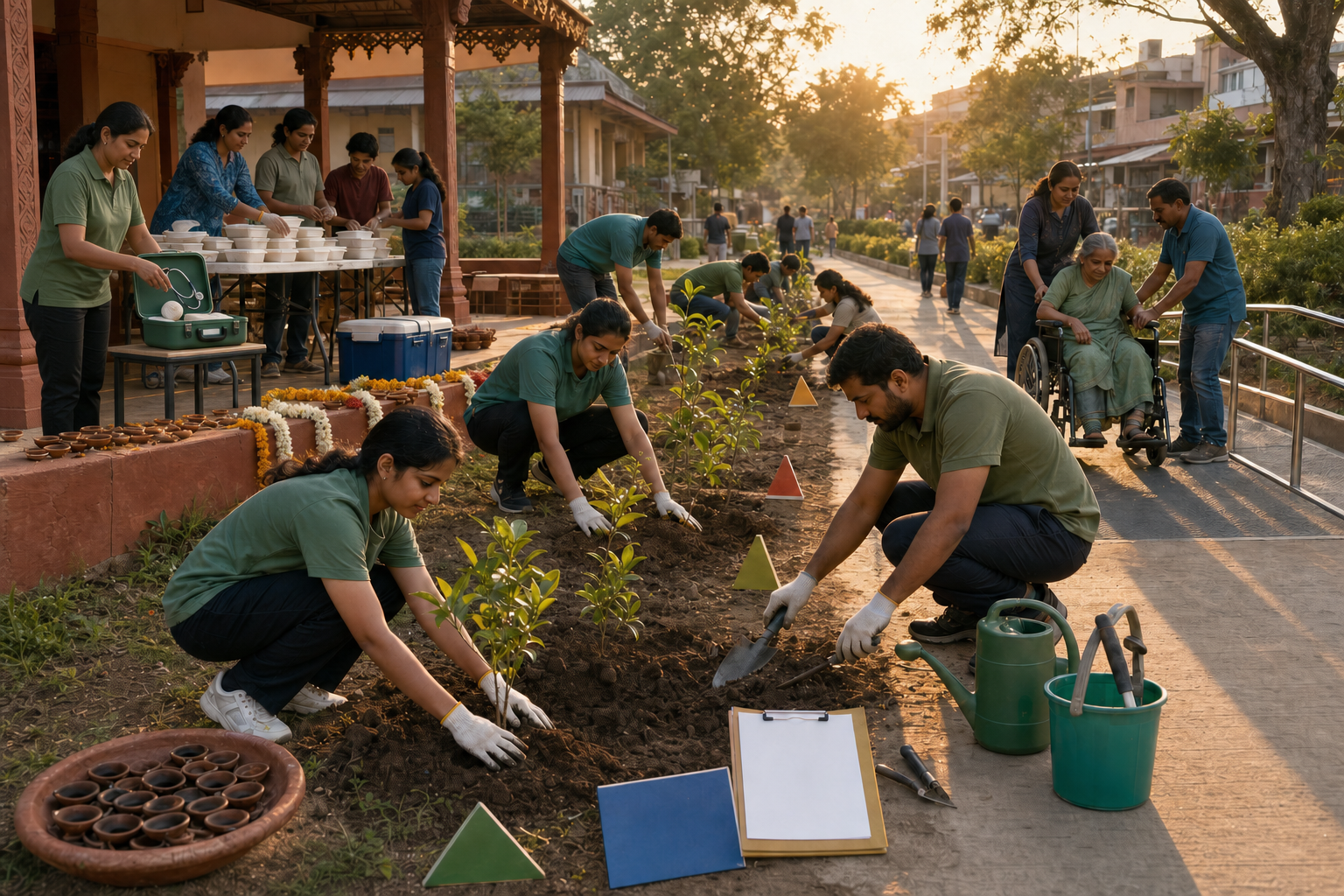
Before the ceremony
Write a one-page charter and send it to every participating organisation. It should state the purpose, decision-making authority, standards of non-violence and lawful conduct, policy against targeting communities, accessibility commitments, and the contact responsible for grievances. Require participating groups to name both a decision-maker and a volunteer coordinator. This prevents urgent questions from disappearing into a chain of ceremonial titles.
Choose one principal service commitment. A ceremony that announces several unrelated ambitions usually leaves each one without an owner. Suitable fields include ethical education for young people, preservation of local heritage, environmental care, welfare or disaster relief, legal-literacy work, and dialogue across communities. Record who owns the work, how volunteers join, and when progress will next be reported.
During the ceremony
Arrange the programme as a sequence of meaning rather than a queue of dignitaries:
- Memory: Explain the person, place, sacrifice, or milestone being commemorated.
- Expression: Present the relevant song, procession, prayer, music, or symbol with proper context and decorum.
- Ethic: State the Dharmic duties the gathering accepts, including truth, restraint, non-harm, justice, and service.
- Commitment: Announce the selected civic project, its responsible team, and the practical route for joining it.
- Accountability: Tell participants where progress, grievances, and the next milestone will be published.
This sequence keeps cultural pride from becoming a performance directed against someone else. Bharat does not become more worthy of reverence when another community is humiliated. A slogan that targets neighbours, an undisciplined confrontation, or pressure on a conscientious non-singer weakens the very maryada the ceremony claims to defend.
Volunteer training should cover more than crowd movement. Volunteers need to know the charter, the accessibility plan, who can make an operational decision, where a complaint goes, and how to lower the temperature of a disagreement. If they know only the route and schedule, they are not prepared to protect the moral purpose of the gathering.
After the ceremony
Publish a compact impact record. Include volunteer effort, service coverage, participation across organisations, accessibility measures delivered, grievances received and resolved, and the next project milestone. These measures were identified before the event, so the report should not quietly replace an unmet promise with a more flattering statistic.
An impact record is not administrative decoration. It gives participating organisations a shared memory of work completed, gives the public a way to test claims, and allows the next ceremony to begin from accumulated trust rather than another round of declarations. Attendance, photographs, and social-media reach can describe visibility; they cannot prove that seva occurred.
Key takeaways
- Write the ceremony’s purpose as remembrance, shared ethic, and civic undertaking before building the programme.
- Present Ram Rajya through standards such as nyaya, maryada, satya, sarvodaya, and antyodaya, not as an undefined slogan.
- Use common Dharmic values to support cooperation while preserving real differences among Hindu, Buddhist, Jain, and Sikh traditions.
- Verify whether government protocol applies before using the six-stanza, 3:10 version of Vande Mataram as a requirement.
- Protect both ceremonial dignity and freedom of conscience; respectful presence is not always identical to singing.
- Carry devotion into one owned, measurable seva commitment and publish what happened afterward.
Before your next planning meeting, draft the single sentence that names what you will remember, what duty you will affirm, and what work you will undertake. Then give the civic undertaking an owner before you give the stage a chief guest. That order is how a national ceremony begins to build unity that survives the ceremony itself.
References
- DharmaRenaissance Blog – Pratapgarh Sanatan Rashtra Shankhnaad Shobha Yatra: A Powerful Call for Ram Rajya and Dharmic Unity
- DharmaRenaissance Blog – Full ‘Vande Mataram’ Mandatory at Govt Functions: MHA’s 3:10 Unified Version for National Unity
