
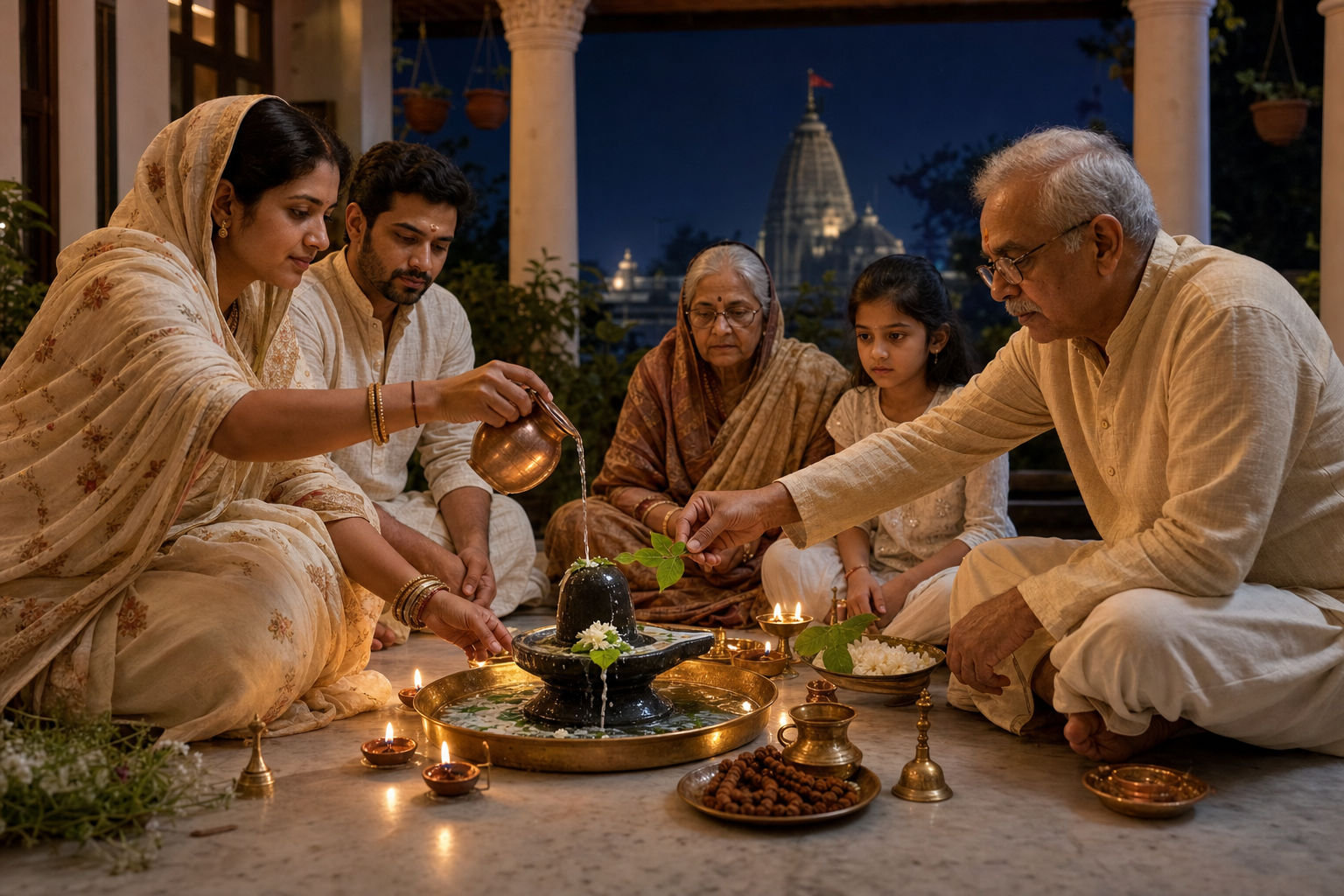
If you came looking for what devotees actually did on Maha Shivaratri 2026, beyond the crowds and festival photographs, the answer is a disciplined sequence: choose a fast suited to your capacity, divide the night into four prahars, offer abhisheka and mantra-japa, and let the outer ritual lead you toward inner stillness.
On the night of 15 February 2026, this sequence joined households and pilgrimage centres across India and Nepal. You do not need to reproduce the scale of Kashi or Pashupatinath at home. You need a clear sankalpa, a sustainable vrata, and enough order that distraction does not consume the night.
Start with the tithi, not only the printed date
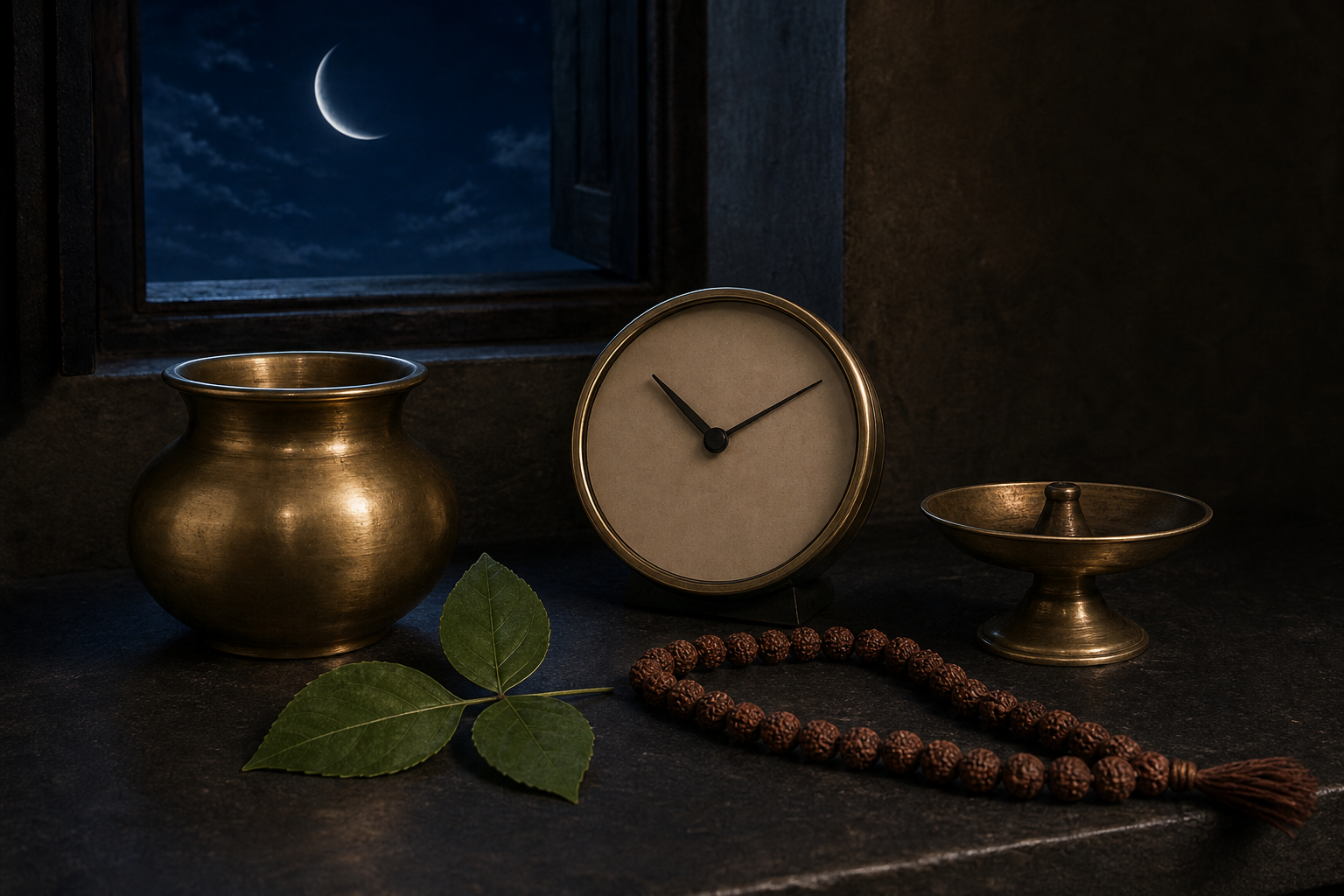
Maha Shivaratri is observed on Krishna Paksha Chaturdashi, the penultimate night of the waning lunar fortnight. The lunar month may be called Magha or Phalguna depending on whether a regional calendar follows amanta or purnimanta reckoning. That difference in the month name does not change the decisive element: the Chaturdashi tithi.
This distinction matters because Nishita Kaal worship is tied to the local midnight period, not to one universal clock time copied from a distant city. Temples therefore announced location-specific Nishita Kaal windows for the 2026 observance. If you are planning a household puja, use the panchang followed by your family or the timing issued by a trusted temple in your location. Do not combine a tithi from one region, a midnight window from another, and a family custom from a third without noticing the mismatch.
Nishita Kaal is the focal point, but it is not the whole vrata. The night is traditionally organised into four prahars. That structure keeps the vigil from becoming an endurance exercise with a hurried puja at midnight. Each prahar becomes another return to worship, japa, silence, or contemplation.
Key takeaways for observing the sacred night well
- Confirm Krishna Paksha Chaturdashi and the local Nishita Kaal window before making your schedule.
- Choose nirjala, phalahara, or a simple satvik fast according to your actual capacity; severity is not the measure of devotion.
- Divide the vigil into four prahars so that prayer and attention are renewed throughout the night.
- Keep abhisheka measured and purposeful. Water, Panchamrita, bilva, vibhuti, and sandal are offerings, not a display of quantity.
- Use mantra, silence, breath awareness, and meditation to prevent jagaran from becoming mere wakefulness.
- At a major temple, follow the queue, offering, transport, and safety arrangements rather than expecting household-style freedom at the sanctum.
Choose the vrata by capacity, not prestige
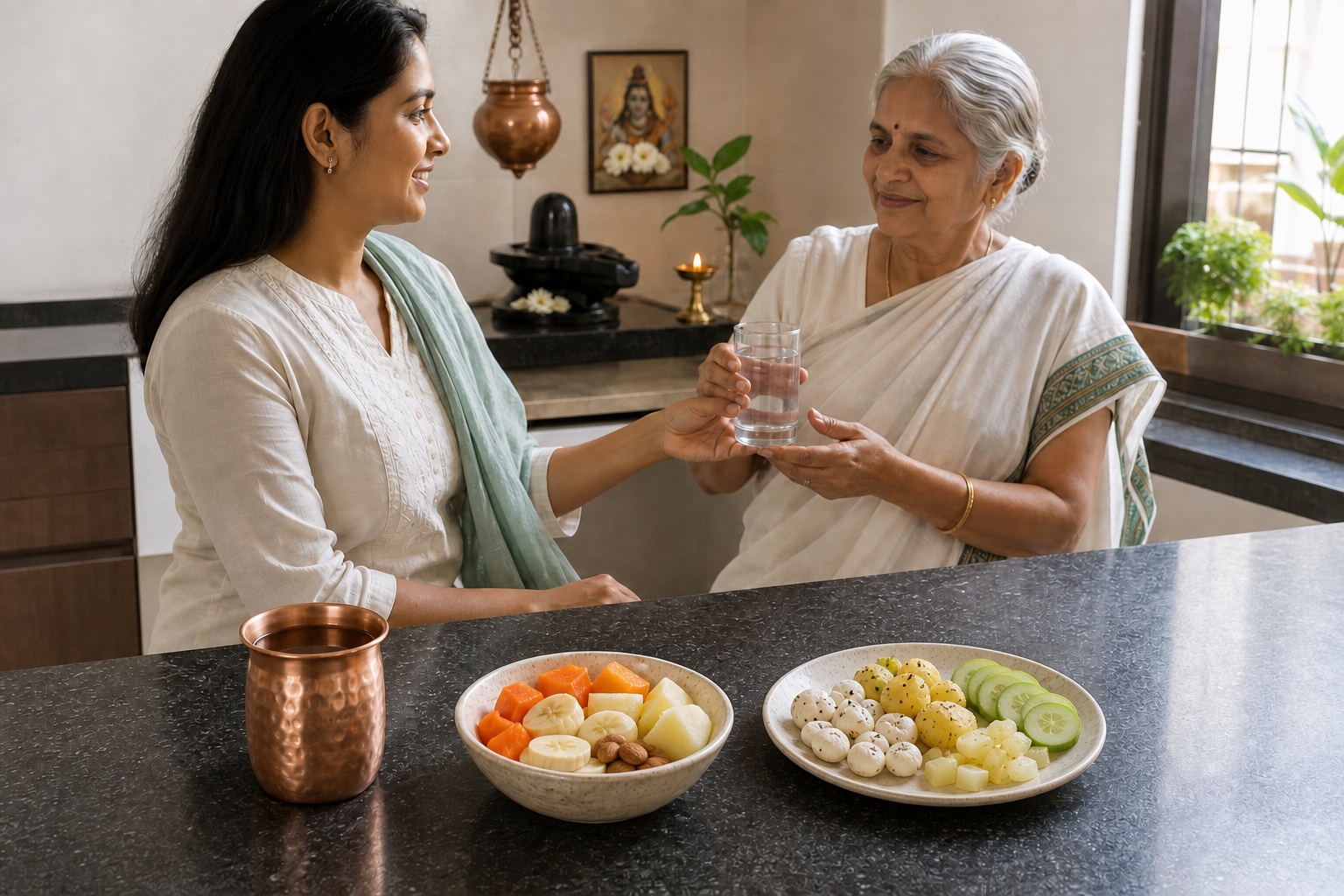
The 2026 observances included nirjala fasting, phalahara, and satvik upavasa. Nirjala means abstaining from both food and water. Phalahara permits a limited diet centred on fruit and other foods accepted within the devotee’s tradition. A satvik fast uses simple vrat food in moderation; regional preparations may include sabudana, kuttu, or singhara.
These are not three ranks in a spiritual competition. Dietary restraint is meant to reduce distraction and support one-pointed attention. If the fast leaves you preoccupied with your discomfort, unable to perform the puja, or physically unwell, it is no longer serving that purpose. Decide before the vrata which form you will keep, what it permits, and when you will conclude it. Changing the rules repeatedly during the night creates more mental bargaining than discipline.
If food or fluid restriction, medication timing, pregnancy, a health condition, or a history of fainting makes strict fasting unsafe, do not attempt nirjala. The same caution applies to an all-night vigil when sleep loss could put you at risk. Choose a gentler vrata and obtain qualified medical guidance where needed. A sincere phalahara observance, shortened vigil, or period of quiet japa is safer than turning austerity into preventable harm.
Jagaran also requires a decision about how you will remain awake. Devotional singing, stotra recitation, seated meditation, and alternating quiet and vocal japa help sustain attention without making the night depend on stimulants. The point is not simply to defeat sleep. It is to remain inwardly awake. If you spend the intervals scrolling through a phone and return to the altar only when a timer rings, you have preserved the timetable but lost much of the practice.
Build the four prahars around worship and stillness
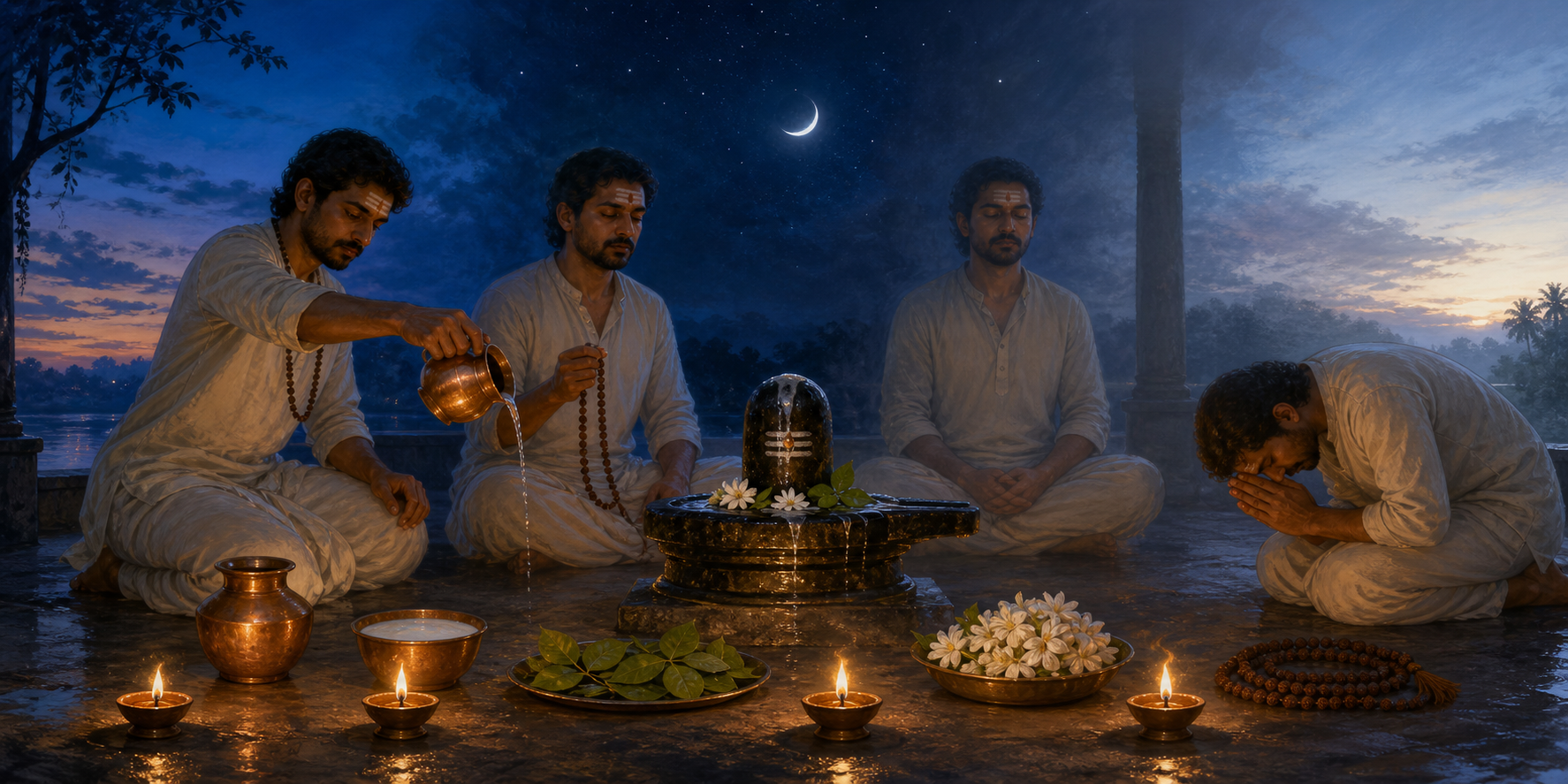
Shaiva households and temples do not all use an identical sequence. Follow your guru, Agama, temple tradition, or inherited family paddhati where one is established. If you do not have a detailed household procedure, the following is a workable framework rather than a claim that every lineage must perform the night in the same way.
- First prahar: make the sankalpa and settle the mind. Clean the worship place, light the lamp safely, state the vrata you intend to keep, and begin with a measured water abhisheka. Establish a steady round of the Panchakshari, “Om Namah Sivay,” instead of rushing through many unrelated prayers.
- Second prahar: deepen the offering. Perform Panchamrita abhisheka if it belongs to your practice and the materials can be handled without waste. Offer bilva leaves, vibhuti, or sandal paste. Continue japa, or recite a Shaiva stotra with attention to its meaning.
- Third prahar: give Nishita Kaal your clearest attention. Centre the midnight worship on Rudrabhisheka, Panchakshari japa, Sri Rudram from the Yajurveda, or the Maha Mrityunjaya Mantra according to your competence and tradition. Leave room for silence after the offerings rather than filling every moment with sound.
- Fourth prahar: move from ritual into contemplation. Return to a simple water offering, quiet japa, breath awareness, or meditation. End the vigil deliberately, with gratitude and a resolve that can survive the return to ordinary life.
The materials of abhisheka are meant to educate attention. Water points toward clarity. Milk represents nurturing purity, ghee tejas, honey cohesion, and sugar the sweetness of realised knowledge. The three leaflets of bilva carry several Shaiva associations, including Shiva’s triune powers and the three gunas that sadhana seeks to transcend. Remembering one meaning while offering carefully is more valuable than mechanically emptying every vessel.
A home altar does not need to imitate a large temple’s volume of offerings. Measure what you will use, keep the space clean, and plan responsible disposal of ritual remnants. The 2026 emphasis on biodegradable offerings, water conservation, and post-festival cleanliness belongs inside the vrata, not beside it. Reverence for Shiva cannot be separated from care for the river, street, courtyard, or household shrine receiving the consequences of our worship.
If a full recitation of Sri Rudram is not part of your training, do not turn the night into a performance of speed or uncertain pronunciation. You can keep a stable Panchakshari japa, recite a stotra already known to you, or listen attentively within your tradition. Shivamahimna Stotra and Shivanandalahari were among the literary currents heard during the observance. Depth comes from sustained attention, not from accumulating the longest programme.
Temple pilgrimage and home worship need different plans
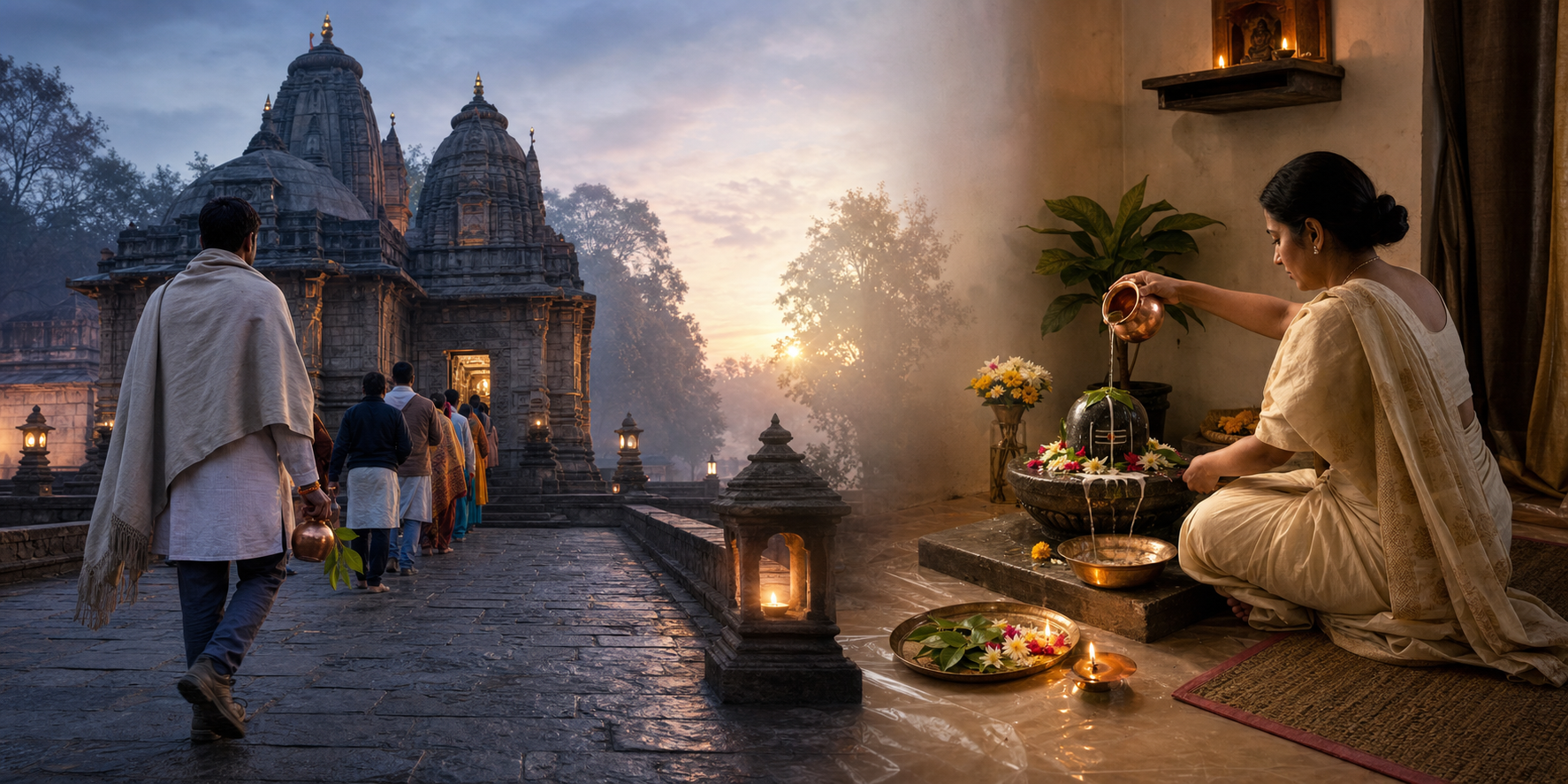
If you are going to a major temple
Kashi Vishwanath in Varanasi, Mahakaleshwar in Ujjain, Somnath, Srisailam, Lingaraj in Bhubaneswar, and Pashupatinath in Kathmandu drew immense devotional movement in 2026. The experience at such a centre is shaped by sacred geography and collective worship, but it is also shaped by queues, route controls, transport schedules, and the needs of thousands of other pilgrims.
Multi-lane queue systems, drinking-water stations, mobile clinics, lost-and-found counters, route lighting, temporary shelters, and volunteer assistance helped sustain the major gatherings in India and Nepal. Treat those arrangements as part of the pilgrimage discipline. Check the temple’s current rules before leaving, carry only what is permitted, use designated approaches, and follow public announcements even when a shorter-looking route tempts you.
If you are travelling with children or elders, agree on a meeting point before entering the densest area. Keep essential contact information available independently of one person’s phone. Do not count on completing an elaborate personal abhisheka at a sanctum operating under heavy crowd controls. Let darshan, collective mantra, and patient conduct become your offering; perform a longer household puja before departure or after returning if necessary.
If you are observing at home
Home worship gives you control over pace, silence, materials, and family participation. Write down the four-prahar sequence before the evening begins. Place the required items together, decide who will lead each recitation, and keep the periods between pujas free from ordinary entertainment. This small amount of preparation prevents the night from dissolving into repeated searches for a missing vessel, text, or recording.
Live darshan streams allowed distant devotees in 2026 to align their prayer with Nishita Kaal. Use a stream as a doorway into worship, not as continuous background media. Watch the intended darshan or puja, then turn back to your own japa and silence. The screen should connect you to the sacred rhythm, not become the centre of the room.
Families can distribute the night according to capacity. An elder may transmit a familiar cadence of Sri Rudram; another person may lead bhajan; a child may count a manageable round of japa or remain awake for one prahar. Forcing every family member through the same austerity can replace devotion with resentment. Give each person a real role while preserving the shared sankalpa.
Let the vigil reach beyond the ritual
Maha Shivaratri becomes thin when it is reduced to fasting, ingredients, and staying awake. The Linga Purana and Shiva Purana place special weight on the night vigil and Nishita worship, while Lingodbhava points toward the infinite that cannot be contained by measurement or form. The Shivalinga gives the mind a focus without confining Shiva to an ordinary human image.
Shiva as Nataraja expresses another dimension of the same insight through five cosmic acts: srishti, emanation; sthiti, sustenance; samhara, withdrawal; tirobhava, concealment; and anugraha, grace. You can use the intervals after abhisheka to notice these movements within experience: a thought arises, remains, dissolves, disappears from view, and leaves awareness itself untouched. The ritual then becomes a method of inquiry rather than an object placed outside you.
Silence is especially useful here. A segment of mauna, supported by breath awareness or mala-counted japa, exposes how quickly the mind seeks novelty. When restlessness appears, do not treat it as failure. Return to the mantra, the breath, or the presence of the Shivalinga. That repeated return is the practical heart of abhyasa.
The 2026 night also revealed a wider Dharmic fellowship. Some Buddhist, Jain, and Sikh families entered temple precincts as cultural participants or marked the hours through their own contemplative reading, meditation, and remembrance of the Divine. Shared respect for restraint and inward attention need not erase the theological distinctions among traditions. It can instead teach us how civilisational kinship survives through hospitality, disciplined participation, and respect for another community’s sacred practice.
When the vigil ends, carry one discipline into the following days. Continue a fixed round of “Om Namah Sivay,” keep a brief daily period of silence, moderate one habit that scatters your attention, or help clean and protect a sacred space. For your next Maha Shivaratri, begin with the local panchang, select a vrata you can keep honestly, and prepare the four prahars in advance. Then the night will not merely pass around you; it will have a chance to work within you.
References
