
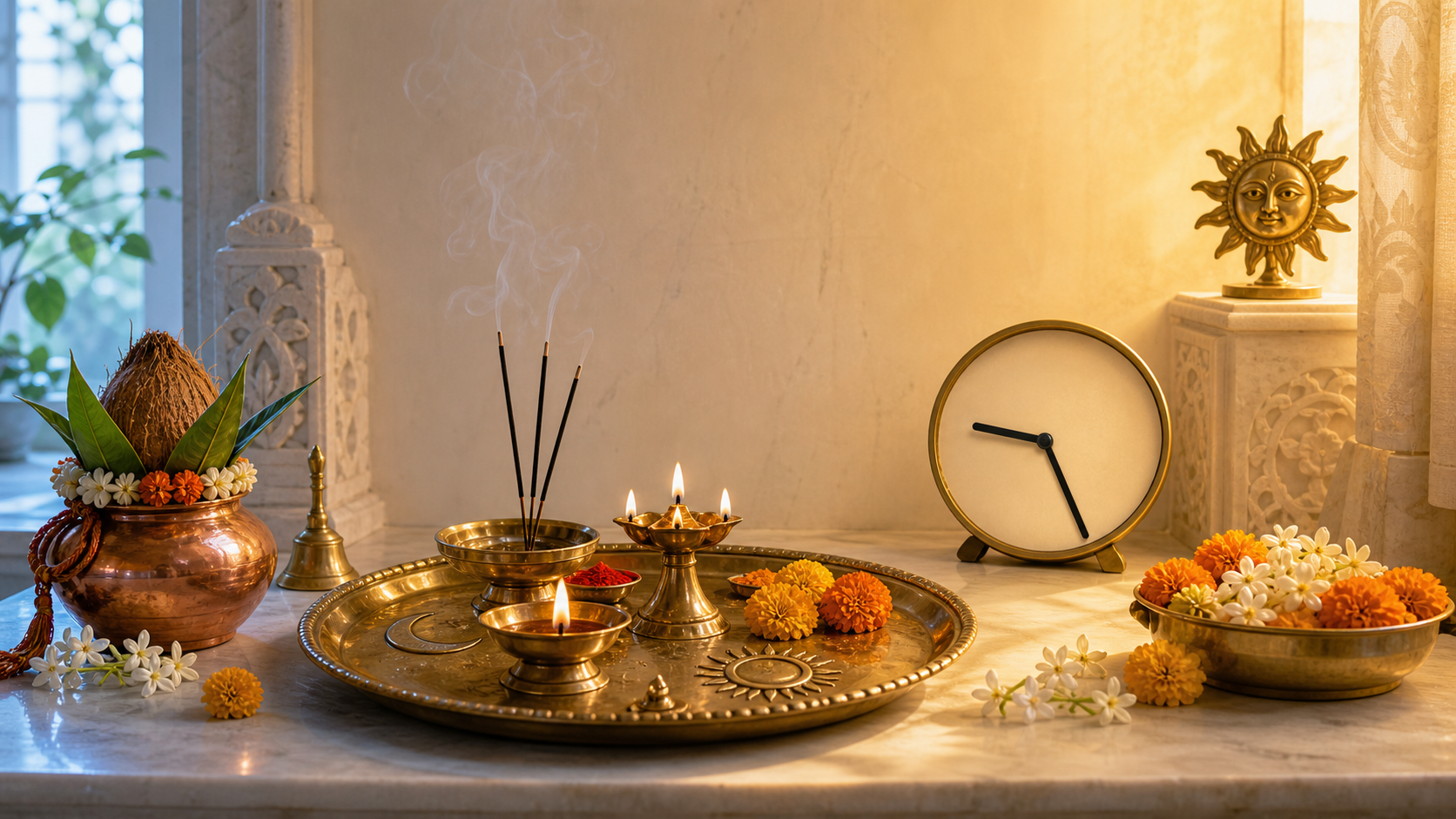
If you are arranging worship on Monday, February 23, 2026, one moment determines the day’s sequence: 09:26 AM IST. Shukla Paksha Sashti is active before that time, and Shukla Paksha Saptami begins afterward.
You do not need to suspend ordinary work when the tithi changes. The practical task is narrower: complete worship specifically intended for Sashti before the boundary, place Saptami observances after it, and use a location-specific Panchang before assigning any muhurta to a ceremony or important beginning.
Key takeaways for February 23
- Shukla Paksha Sashti continues until 09:26 AM IST; Shukla Paksha Saptami follows.
- Complete Sashti-specific prayer or vrata before 09:26 AM. Begin Saptami-focused worship after the transition and during daylight.
- Sashti can be observed through devotion to Subrahmanya, Skanda, or Murugan. Saptami supports Surya upasana, including arghya and Surya namaskara.
- Because the date is a Monday, Shiva worship can accompany the tithi observance without replacing it.
- Do not copy 09:26 AM as local wall time outside the IST context. Confirm the transition, sunrise, sunset, and muhurta intervals for the place where the observance will occur.
- For a new undertaking, avoid Monday’s locally calculated Rahu Kalam. Abhijit Muhurta may provide a general midday option when a bespoke muhurta is unavailable.
Why the day changes from Sashti to Saptami

A tithi is not a date label fixed at midnight. It measures the changing angular distance between the Moon and the Sun. Each tithi occupies a 12-degree interval: Shukla Paksha Sashti corresponds to a separation from 60 to 72 degrees, while Shukla Paksha Saptami covers 72 to 84 degrees.
The Moon does not move at an absolutely uniform apparent speed. A tithi can therefore last roughly 19 to 26 hours, rather than matching a civil date or running neatly from one sunrise to the next. That is why February 23 contains part of two tithis.
Treat 09:26 AM as a ritual boundary, not as a declaration that one part of the day is good and the other bad. Before it, Sashti supplies the tithi context. After it, Saptami does. Whether a particular activity is auspicious still depends on the other limbs of the Panchang and, where relevant, the rules of your sampradaya.
- Confirm that the observance is being planned in an IST-based location. If it is not, open a Panchang configured for the actual location instead of treating 09:26 AM as local time.
- Separate ordinary duties from tithi-specific worship. Work, study, meals, and routine travel generally do not require minute-by-minute Panchang refinement.
- Place the principal Sashti prayer, offering, or vrata conclusion before the transition.
- Begin the Saptami-specific practice only after the transition if tithi concordance is important to your observance.
- Apply a fuller muhurta check before a samskara, formal temple rite, major journey, engagement, or consequential transaction.
A workable worship sequence for the day
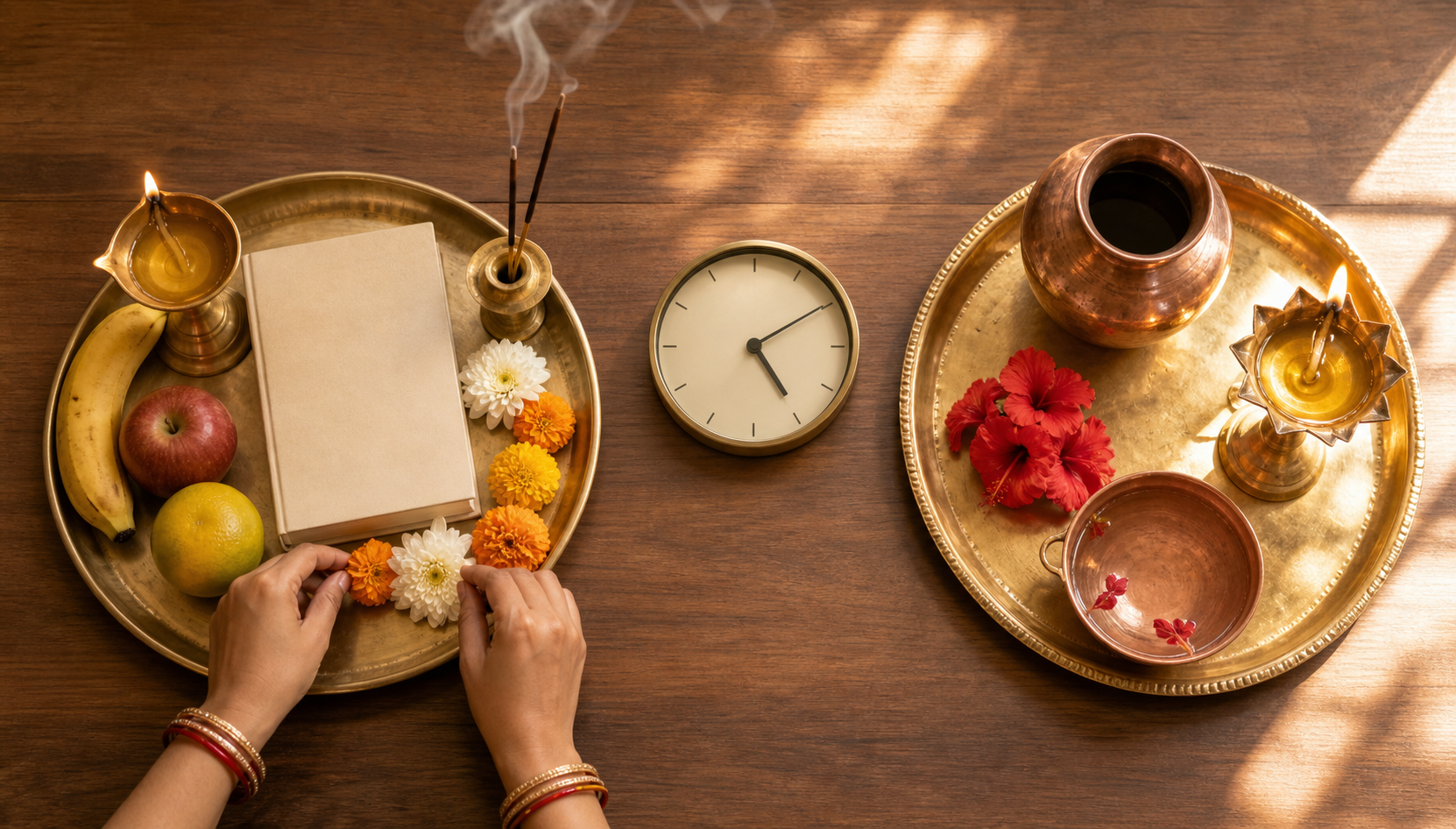
Before 09:26 AM: complete the Sashti observance
Use the early morning for a simple Sashti practice. Devotees who follow Subrahmanya, Skanda, or Murugan traditions may offer prayer, keep their customary vrata, or direct their sadhana toward courage and clarity. The essential planning point is to finish the Sashti-specific portion before 09:26 AM IST.
Do not construct unfamiliar fasting rules from the tithi name alone. A vrata may differ by family, temple, region, and lineage. Follow the form you have received from your household or sampradaya; if no such rule has been received, a sincere and restrained prayer is more coherent than an improvised austerity.
After 09:26 AM: turn toward Surya during daylight
Once Saptami has begun, the day’s lunar emphasis shifts toward Surya upasana. You can offer arghya, recite your established Surya prayer, or perform Surya namaskara as part of your normal practice. Because Saptami starts after sunrise on this date, place the tithi-specific solar observance later in the morning or at another suitable daylight time after 09:26 AM.
This timing distinction matters. Sunrise may be the natural daily occasion for Surya worship, but Saptami is not yet active at sunrise on February 23 under the stated IST timing. If your intention is specifically a Saptami observance, waiting until the tithi begins keeps the ritual intention aligned with the calendar.
Keep the Monday layer without creating a conflict
February 23 falls on Somavar. Shiva devotion can therefore remain part of the day alongside the tithi practice. You might keep your established Monday Shiva prayer while giving the early tithi-specific period to Sashti and the later daylight period to Saptami and Surya.
Vaar and tithi answer different calendrical questions. Monday supplies the weekday’s devotional association; Sashti or Saptami identifies the active lunar day. You do not have to choose one and discard the other.
Calculate Monday’s Rahu Kalam from local daylight
A tithi transition alone cannot establish a shubha muhurta. Panchanga shuddhi considers five elements: Vaar, Tithi, Nakshatra, Yoga, and Karana. An important beginning should be tested against that fuller combination rather than being scheduled merely because it falls after 09:26 AM.
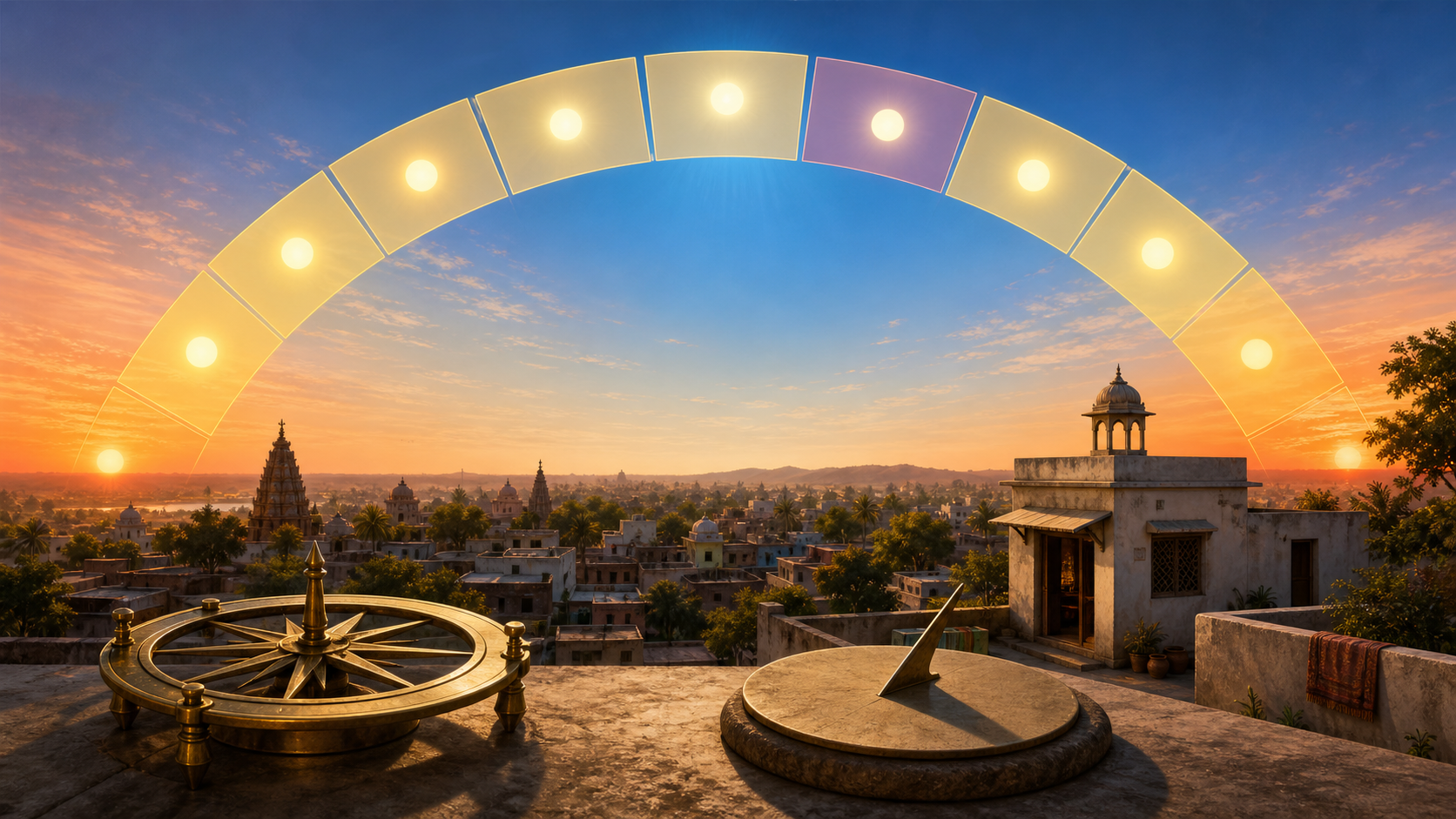
Rahu Kalam is especially easy to misuse because fixed clock-time charts assume particular sunrise and sunset times. The sounder method is to calculate it from the daylight span at the location of the activity.
- Find the local sunrise and sunset for February 23.
- Calculate the total interval from sunrise to sunset.
- Divide that interval into eight equal segments.
- Because February 23 is Monday, identify the second segment after sunrise as Rahu Kalam.
- Avoid initiating the new undertaking during that segment. Routine work already in progress does not need to be treated as a fresh beginning each time the interval arrives.
In compact form, if sunrise is S and the daylight duration is D, one segment is D divided by 8. Monday’s Rahu Kalam runs from S plus one segment to S plus two segments. This method adjusts automatically for the season and location.
Yamaganda and Gulika Kalam also occupy daylight segments and should be checked in the same local almanac when the undertaking warrants closer scrutiny. Their names alone do not provide clock times; sunrise and sunset are indispensable inputs.
Abhijit Muhurta is centered around local midday and is commonly treated as a supportive interval when an initiative cannot wait for a specially selected muhurta. It is a general aid, however, not a universal override. A samskara or ceremony governed by detailed lineage rules still deserves a complete calculation from a regional Panchang and guidance from a qualified priest.
Do not guess the Nakshatra or Chandra Rashi
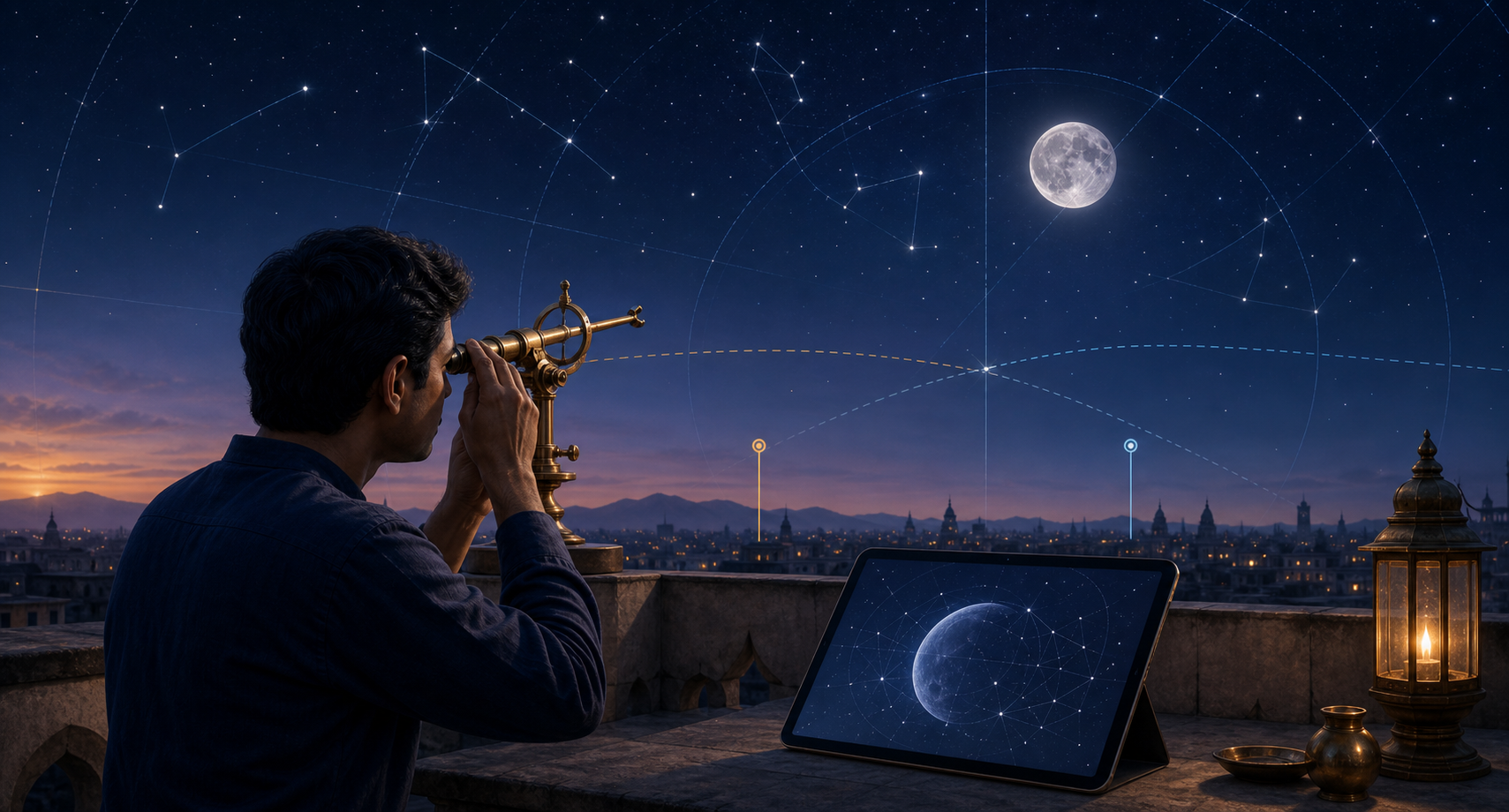
Tithi tells you the angular relationship between the Moon and the Sun. It does not, by itself, tell you the Moon’s exact place against the stellar zodiac. You therefore cannot reliably derive the day’s Nakshatra or Chandra Rashi merely from the fact that Sashti becomes Saptami.
The Nakshatra system divides the Moon’s path into 27 portions of 13 degrees and 20 minutes each. Chandra Rashi uses twelve zodiacal portions of 30 degrees each. Both depend on the Moon’s position at the time being examined, so the correct value must come from a location-aware Panchang or ephemeris.
Karana adds another layer. It is a half-tithi subdivision and may be used to refine timing for travel, transactions, and engagements. Yoga is also part of the fivefold Panchang assessment. These refinements are useful when the decision is genuinely time-sensitive; they need not turn every household duty into a muhurta exercise.
Before fixing an important time, verify all of the following in one trusted regional almanac:
- The city or precise locality for which the Panchang is calculated.
- Local sunrise and sunset on February 23.
- The local tithi transition time and whether it agrees with the 09:26 AM IST reference.
- The Nakshatra active at the planned time, including any transition during the day.
- The Moon’s Rashi at the planned time.
- The active Yoga and Karana.
- Rahu Kalam, Yamaganda, Gulika Kalam, and any usable Abhijit interval.
Slight differences can appear among regional almanac traditions. For personal sadhana, consistency with the Panchang your household normally follows is usually more useful than switching systems to obtain a preferred answer. For a samskara or formal ceremony, let the officiating priest determine which convention governs the rite.
Match the precision to the decision
For daily prayer, the practical division is straightforward: complete the Sashti emphasis before 09:26 AM IST and undertake Saptami-focused Surya worship afterward in daylight. Add your normal Somavar Shiva devotion where it naturally belongs in your routine.
For a flexible new beginning, add the local daylight calculation, avoid Monday’s Rahu Kalam, and consider Abhijit Muhurta only after checking the remaining Panchang elements. For a samskara or another rite with lasting religious significance, do not self-certify the time from this single transition. Take the location, intended rite, and preferred regional almanac to the priest who will conduct it.
Before you put the observance in your calendar, make one concrete check: confirm the tithi boundary for your actual location. Then reserve an early Sashti period and a post-09:26 daylight period for Saptami. That small act of precision lets the Panchang guide the day without making the day unmanageable.
References
