
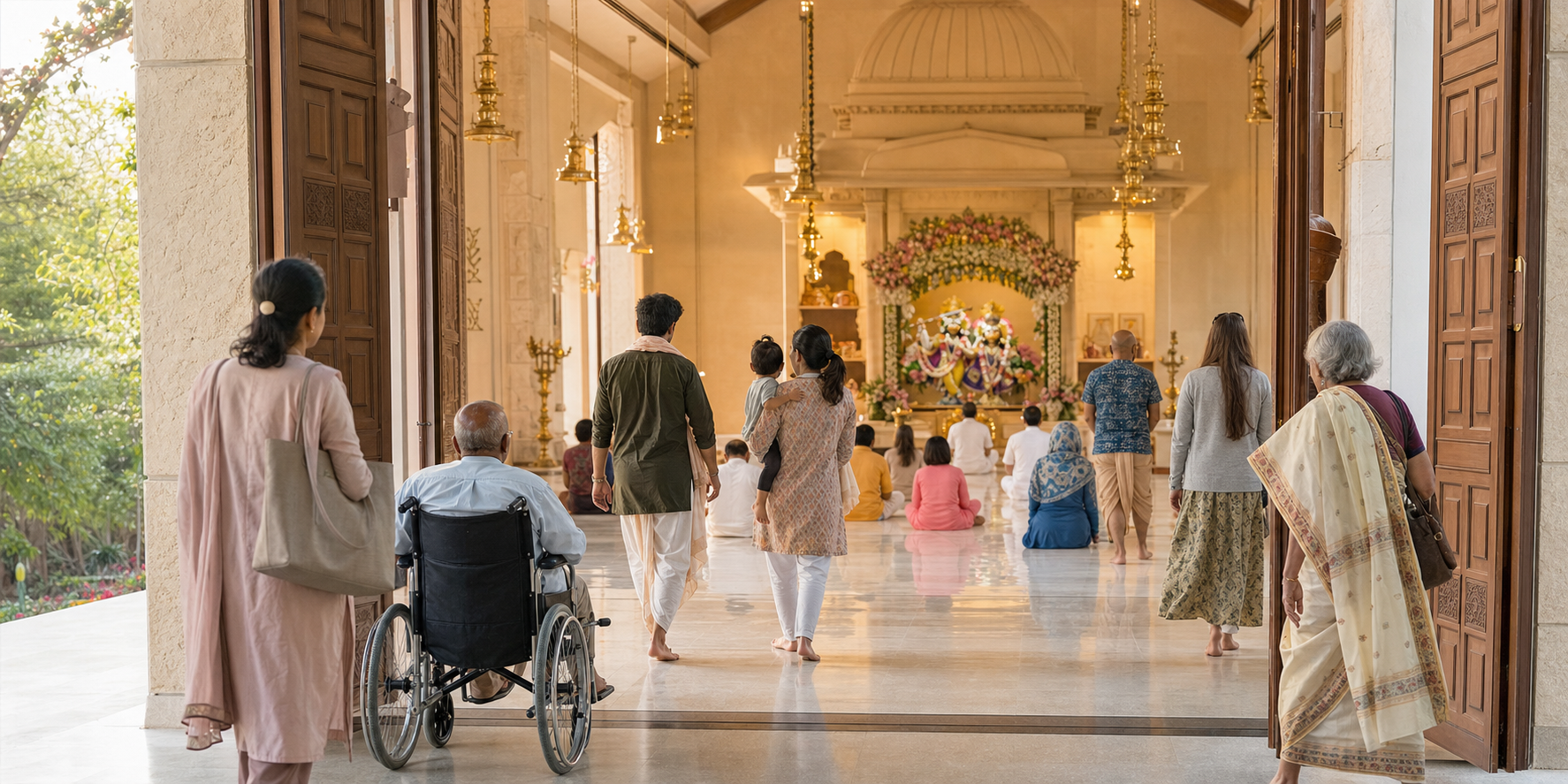
If your nearest ISKCON temple has closed, moved beyond easy reach, or become difficult to enter because of health, mobility, language, or family responsibilities, devotional access can begin to feel like an all-or-nothing question. It isn’t. You can preserve a serious bhakti practice while rebuilding a path toward physical darśana and community.
Keep one distinction clear from the beginning: convenience does not create sacredness, and a screen does not turn your room into a geographical dhāma. Yet access can be extended intelligently. A temple gathers deity worship, kīrtana, śāstra, prasādam, sevā, and human relationships under one roof. When that roof is unavailable, your task is to keep those functions connected rather than replacing devotional life with a stream of religious content.
Start with the form of access you actually need

“I cannot get to the temple” may conceal several different problems. Naming the missing element gives you something concrete to solve. Work through these questions before deciding that devotional life is inaccessible:
- Do you need darśana? Find out whether a reachable temple, temporary shrine, festival venue, or hosted gathering offers public worship. Ask for the exact entrance, timetable, accessibility arrangements, and whether someone can meet you on arrival.
- Do you need congregational kīrtana? A home satsanga or responsibly hired community hall can carry chanting even when a permanent temple is unavailable. Look for a regular gathering with a named host, a reliable schedule, and clear arrangements for children, elders, transport, and prasādam.
- Do you need teaching? Join a guided Bhagavad-gītā or other śāstra study circle in person or online. A live group in which you can ask questions is more useful than accumulating disconnected talks.
- Do you need sevā? Ask about cooking, prasādam distribution, welcoming newcomers, setting up a hall, transport assistance, communications, or support for elderly devotees. Sevā can reconnect you to a community before a permanent building exists.
- Do you need pilgrimage and remembrance? Use a structured virtual parikramā rather than browsing random images of holy places. A defined route, scriptural context, and reflective practice give the session a devotional direction.
This diagnosis also prevents a misleading debate. You do not have to decide whether online worship is “the same as” standing before the altar. Ask instead which accessible form can carry hearing, chanting, remembrance, service, or prayer now, and what would help you regain fuller participation later.
Build a four-layer devotional network

Resilient access does not depend on a single address. It uses four connected layers, each doing work that the others cannot completely reproduce.
<!– wp:list {