

If April 1 is marked as Chaitra Chaturdashi on your 2026 calendar, the date alone does not tell you what to worship. Two distinct traditions meet on that Wednesday: Damanak Chaturdashi in the Jagannath tradition and Hatkeshwar Jayanti in particular Shaiva and Kula Devata traditions.
Your family lineage, sampradaya, temple calendar, location, and the paksha named in your regional panchang determine the right observance. Once you identify that tradition, the ritual plan becomes simple. The main mistake to avoid is blending the two festivals merely because they share a civil date and the word Chaturdashi.
Key takeaways for April 1, 2026
- April 1, 2026, is a Wednesday, but the Gregorian date is not a substitute for local tithi and pradosha timings.
- Damanak Chaturdashi is a Chaitra Shukla Paksha observance associated with Lord Jagannath at Puri and the offering of aromatic Dayana leaves.
- Hatkeshwar Jayanti honors Hatkeshwar Mahadev. In many regional panchangas, especially Gujarati ones, it is identified with Chaitra Vad Chaudas and emphasizes Shiva worship, Kula Devata remembrance, and pradosha.
- Dayana and Bilva are not interchangeable. Dayana belongs to the Damanak observance; Bilva is the characteristic offering in Hatkeshwar worship.
- If both traditions genuinely belong to your household, observe them separately, with distinct sankalpas, offerings, mantras, and ritual settings.
First identify which Chaturdashi your household follows
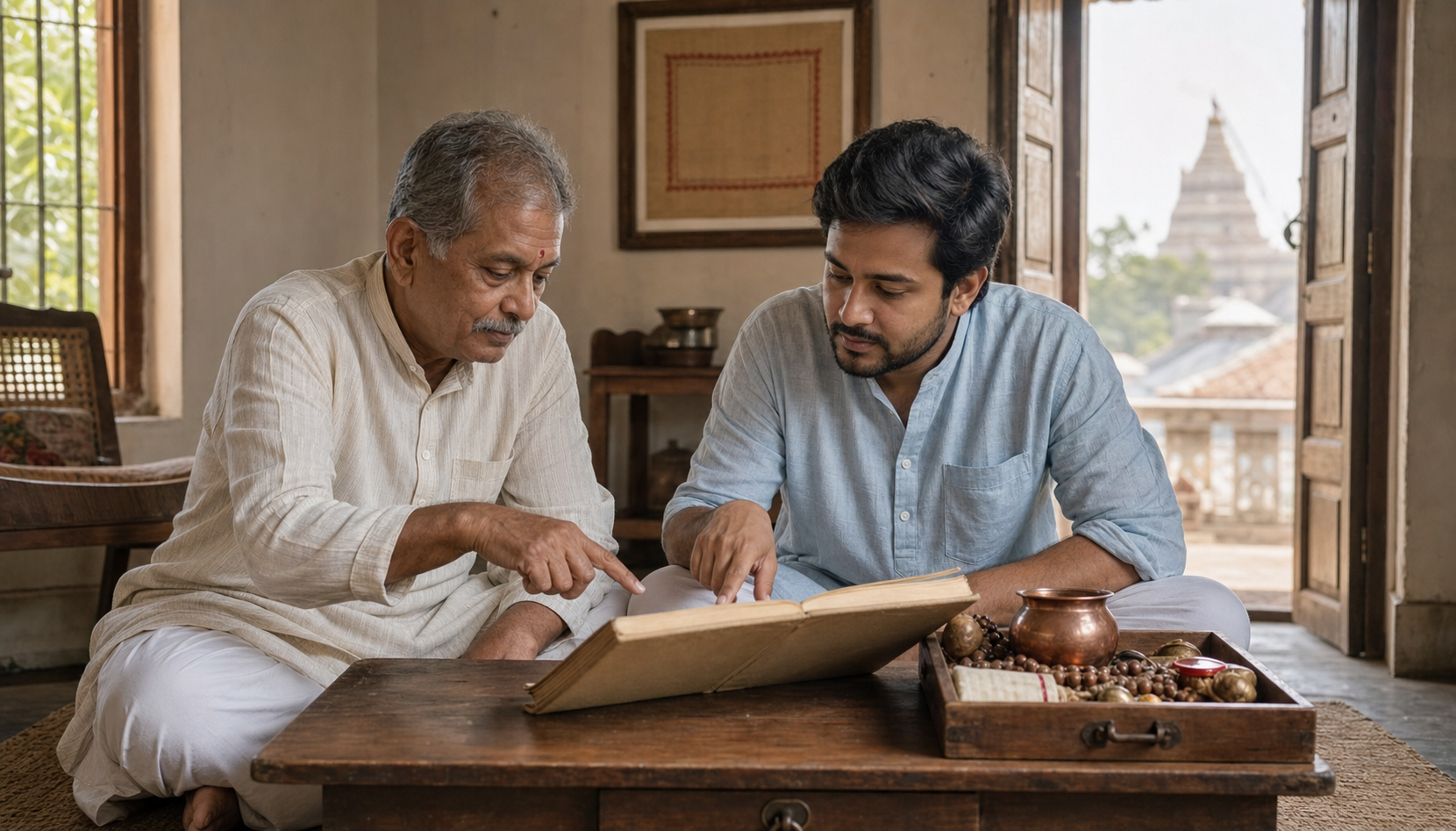
Chaturdashi means the fourteenth lunar day, but that description is incomplete unless you also know the fortnight. At Puri, Damanak Chaturdashi is observed on Chaitra Shukla Paksha Chaturdashi, the fourteenth day of the bright fortnight. Hatkeshwar Jayanti is also called Chaitra Chaudas, while many Gujarati calendars identify it as Chaitra Vad Chaudas, in the dark fortnight.
These are not two names for one universal ceremony. They arise from different regional calendars, devotional lineages, and ritual purposes. A date-only festival list can alert you to an observance, but it cannot decide your sankalpa, deity, sacred leaf, mantra, or puja period.
- If Hatkeshwar Mahadev is your Kula Devata, follow the practice transmitted by your family, community, or Kula Devata temple.
- If your observance comes through Jagannath devotion or an Odia temple calendar, follow the Damanak Chaturdashi sequence.
- If your local temple gives a different civil date, check whether it is applying the tithi to local sunrise, pradosha, or another ritual period. Do not replace that decision with an India-based clock time copied from the internet.
- If you have no inherited obligation, you may still worship Jagannath or Shiva respectfully. Choose one coherent practice rather than claiming a lineage or mixing ritual objects whose meanings differ.
For devotees outside India, this check is essential. A tithi can begin or end on a different civil date depending on location. Ask a trusted regional panchang or the temple you actually follow whether Chaturdashi prevails during its required worship period in your city.
Damanak Chaturdashi: offer fragrance with restraint
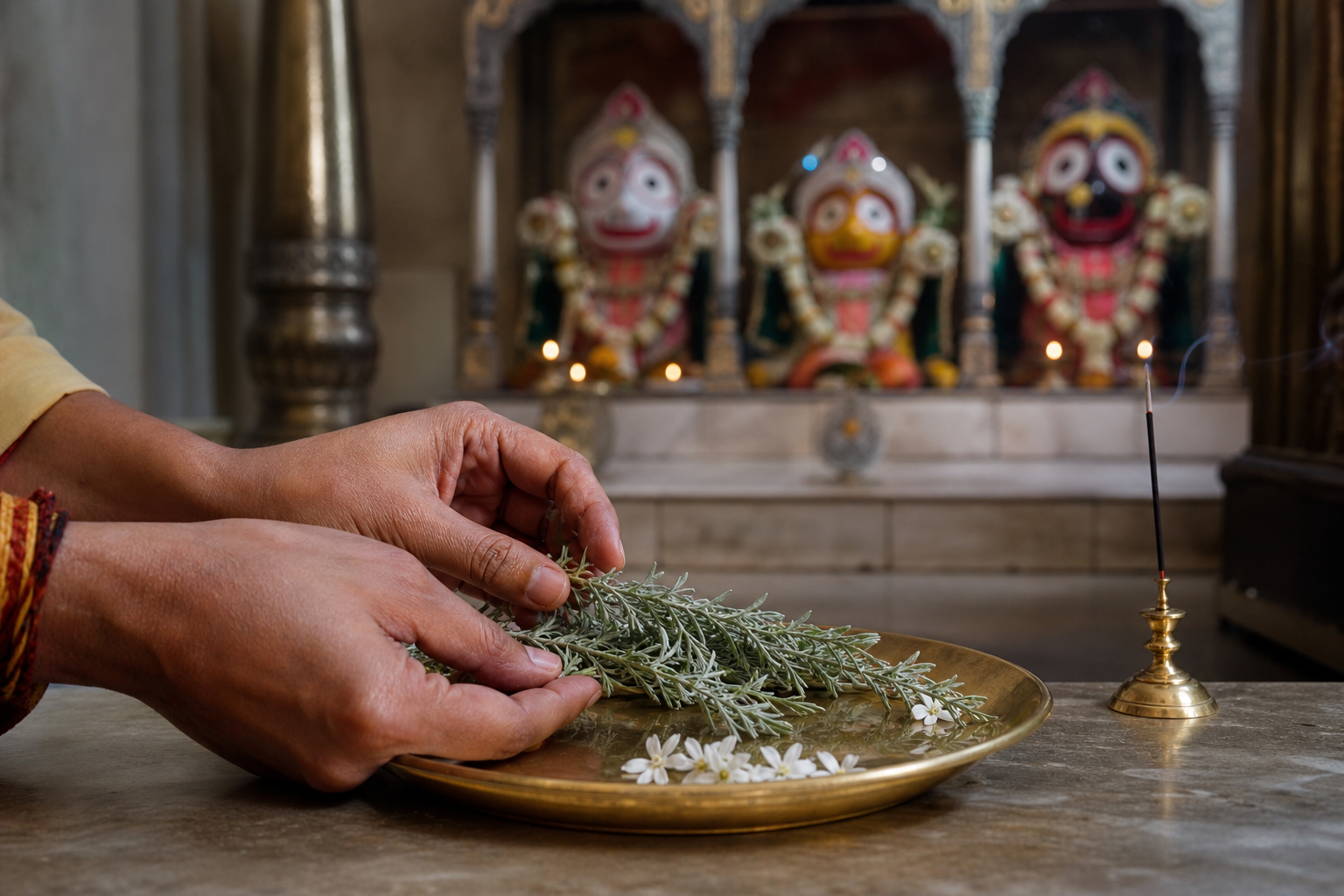
Damanak Chaturdashi belongs to the spring ritual cycle of the Puri Srimandir. Its defining material is Dayana, or Damanaka, an aromatic plant commonly identified as Artemisia indica. At the temple, fresh sprigs are offered to Lord Jagannath, Lord Balabhadra, and Goddess Subhadra. They are incorporated into floral adornment and fashioned into leafy ornaments or bracelets.
The fragrant leaf is more than seasonal decoration. Damanaka is interpreted through the idea of subduing agitation and the inner afflictions of kama, krodha, lobha, moha, mada, and matsarya: uncontrolled desire, anger, greed, delusion, pride, and envy. The offering therefore gives you a precise vrata for the day. Name the tendency that most disrupts your conduct, and pair the external offering with one concrete restraint against it.
Temple lore remembers a dramatic collection of Dayana from a garden for the Lord. Treat that episode as sacred ritual drama expressing divine sovereignty, not as permission to take plants or property without consent. Ethical sourcing is part of the observance: obtain only what you need, avoid damaging a living plant, and return used leaves to the earth through respectful composting where practical.
A simple Damanak observance at home
- Clean the altar and place an image or murti of Lord Jagannath, or of Jagannath with Balabhadra and Subhadra, according to your household practice.
- Light a lamp, offer water, and make a brief sankalpa for clarity, disciplined speech, compassionate conduct, and the welfare of the community.
- Offer a small quantity of ethically obtained Dayana. If genuine Dayana is unavailable, Tulasi is a familiar Vaishnava offering in many households. A locally available aromatic leaf may serve as a symbolic substitute where your tradition permits, but do not misidentify it as Dayana or present it as ritually identical.
- Recite the Jagannath Ashtakam, Vishnu Sahasranama, or the Hare Krishna mahamantra. Select what you can chant attentively; length without attention does not strengthen the vrata.
- Offer fruit or another light, sattvic seasonal preparation as naivedya, then share it as prasada.
- Complete the observance with seva. Food assistance, support for a community need, or care for a shared natural space turns the vrata outward without changing its Jagannath-centered character.
Dayana’s place in this ritual does not make it a do-it-yourself medicine. Artemisia species have traditional Ayurvedic uses, but ingestion or therapeutic use should be guided by a qualified practitioner. For this observance, the leaf can remain exactly what is required: a reverent botanical offering.
If you are going to Puri
Plan for participation, heat, and queues rather than assuming that the special vesha will be available at a time convenient to you. The Dayana offering and vesha schedule is set by the temple administration and may be confirmed near the observance. Check notices from the Shree Jagannath Temple Administration and current local guidance shortly before travel.
- Aim to arrive early in the morning so that queues and rising heat do not consume the day.
- Wear modest clothing, carry water where permitted, and follow current security and temple instructions.
- Do not make your devotion depend on reaching a particular point inside the complex. Prayer near the Simhadvara and circumambulation of the Meghanada Pacheri are meaningful alternatives for devotees who cannot enter the inner complex.
- Confirm transport, accommodation, access rules, and the temple’s announced ritual schedule close to April 1; these practical details should not be inferred from the festival date alone.
Hatkeshwar Jayanti: unite Shiva worship and lineage memory
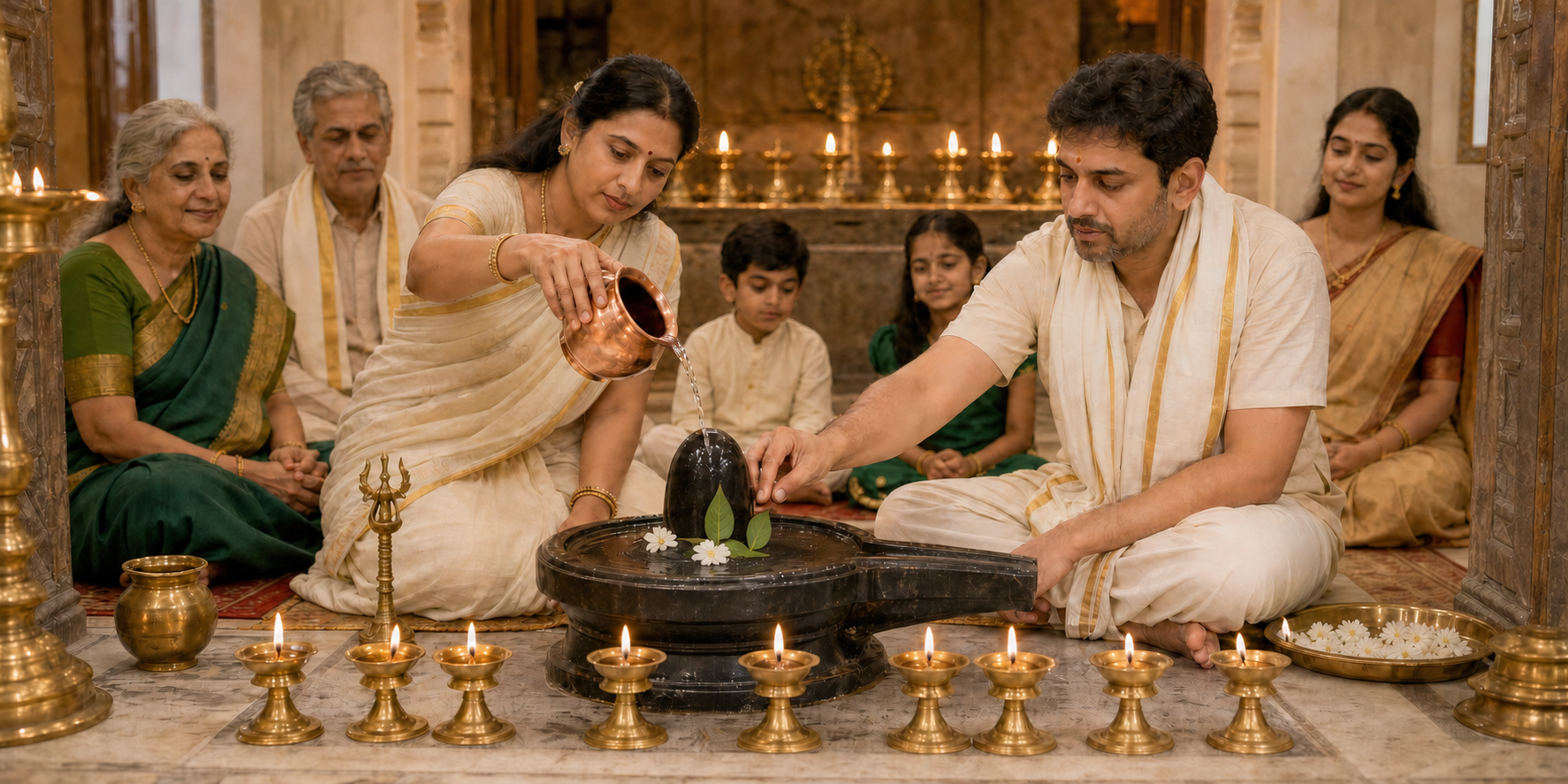
Hatkeshwar is a form of Lord Shiva revered across parts of Western and Central India. He is especially honored as Kula Devata by many Nagar families connected with Gujarat and communities in Rajasthan and Maharashtra. The day therefore carries two duties: worship of Shiva and honest remembrance of the lineage through which the observance reached you.
The Hatkeshwar Mahadev Temple at Vadnagar is an important center for families connected with Gujarat. The Hatkeshwar Mahadev Temple beside the Kharun River at Raipur is another focus of abhisheka, Rudra recitation, and annadana. If your household takes ritual direction from either shrine or from a community temple, its local timetable should guide you.
A practical Hatkeshwar puja sequence
- Begin with a sankalpa naming your place, date, purpose, and intention to honor Hatkeshwar Mahadev, uphold dharma, and seek the welfare of family and community.
- Perform achamana and the customary purification of the worship space according to your household tradition.
- Offer abhisheka to the Shivalinga with clean water. Panchamrita may be used where your sampradaya follows it. Accompany the offering with Sri Rudram if you know the recitation, or with steady repetition of Om Namah Shivaya.
- Offer fresh Bilva leaves gathered without injuring the tree. If your household custom directs it, place the stalk away from the linga. Do not substitute Dayana merely because Damanak Chaturdashi appears on the same calendar date.
- Recite the Maha Mrityunjaya Mantra, Shiva Mahimna Stotra, Lingashtakam, or an inherited family hymn.
- Offer sattvic naivedya, perform arati, and distribute prasada.
- Extend the worship through annadana or another defined act of service, such as helping a gaushala, charitable clinic, community cleanup, or tree-care effort.
Many Shaiva households place the main worship in pradosha, the twilight period associated with Chaturdashi worship. Do not invent an exact hour from the date alone. Confirm whether Chaturdashi prevails at local pradosha; if it does not, follow the date and ritual window recognized by your temple or community.
A full fast or phalahara may form part of the vrata, but food restriction is a means of discipline, not a test of worth. If fasting is medically unsuitable, conflicts with required medication, or would impair your ability to function safely, keep a simpler food discipline and concentrate on mantra, restraint, and seva. Seek professional medical guidance when you are uncertain about fasting with a health condition.
Use the lineage dimension of the day deliberately. Before April 1, ask an elder which gotra, pravara, inherited stotra, temple connection, and family practice should be remembered. Record what you learn accurately. If those details are unknown, do not invent them; simple Shiva worship is more honest than a fabricated genealogy.
Make a coherent plan before April 1
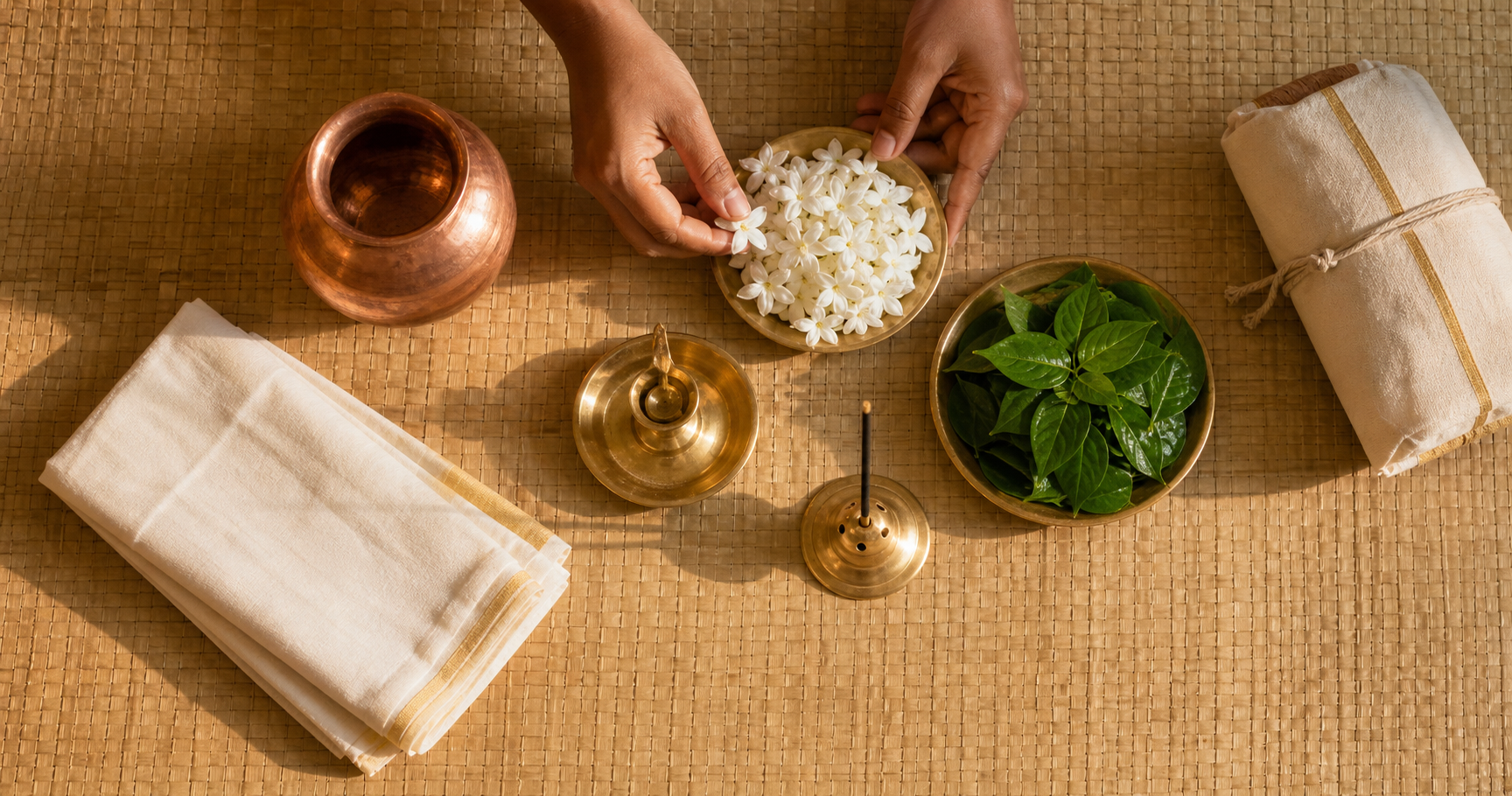
If both Jagannath devotion and Hatkeshwar Kula Devata worship genuinely belong in your home, you do not have to choose one and neglect the other. Keep each observance intelligible. Give each its own sankalpa, deity-specific offering, and recitation. Follow your local panchang for timing, and retain the distinction between Dayana for the Jagannath observance and Bilva for Shiva worship.
The traditions can meet in conduct without being collapsed in ritual. Ahimsa, self-restraint, reverence for nature, dana, and seva are recognizable across the Dharmic family. A shared charitable act after the separate pujas can express that common ethic while preserving the integrity of each path.
- Confirm the Chaturdashi tithi and, for Hatkeshwar worship, local pradosha timing.
- Ask whether your family has a Kula Devata obligation or an inherited Jagannath practice.
- Contact the temple whose calendar you follow if its published date differs from a general calendar.
- Source Dayana, Tulasi, or Bilva ethically and in a modest quantity appropriate to the chosen rite.
- Select one recitation you already know or can prepare properly before the day.
- Decide the specific seva in advance, including who will receive it and how you will complete it.
- If traveling to Puri, recheck official notices, access conditions, and the announced ritual schedule near the date.
Set those decisions in place before the end of March. Then April 1 can be spent in worship rather than in last-minute uncertainty about the deity, leaf, fast, or clock.
References
- DharmaRenaissance Blog — Sacred Damanak Chaturdashi 2026 at Puri Jagannath: Date, Dayana Rituals, Meaning, Travel Tips
- DharmaRenaissance Blog — Hatkeshwar Jayanti 2026: Auspicious Date, Powerful Rituals, and Kuladevata Heritage
