
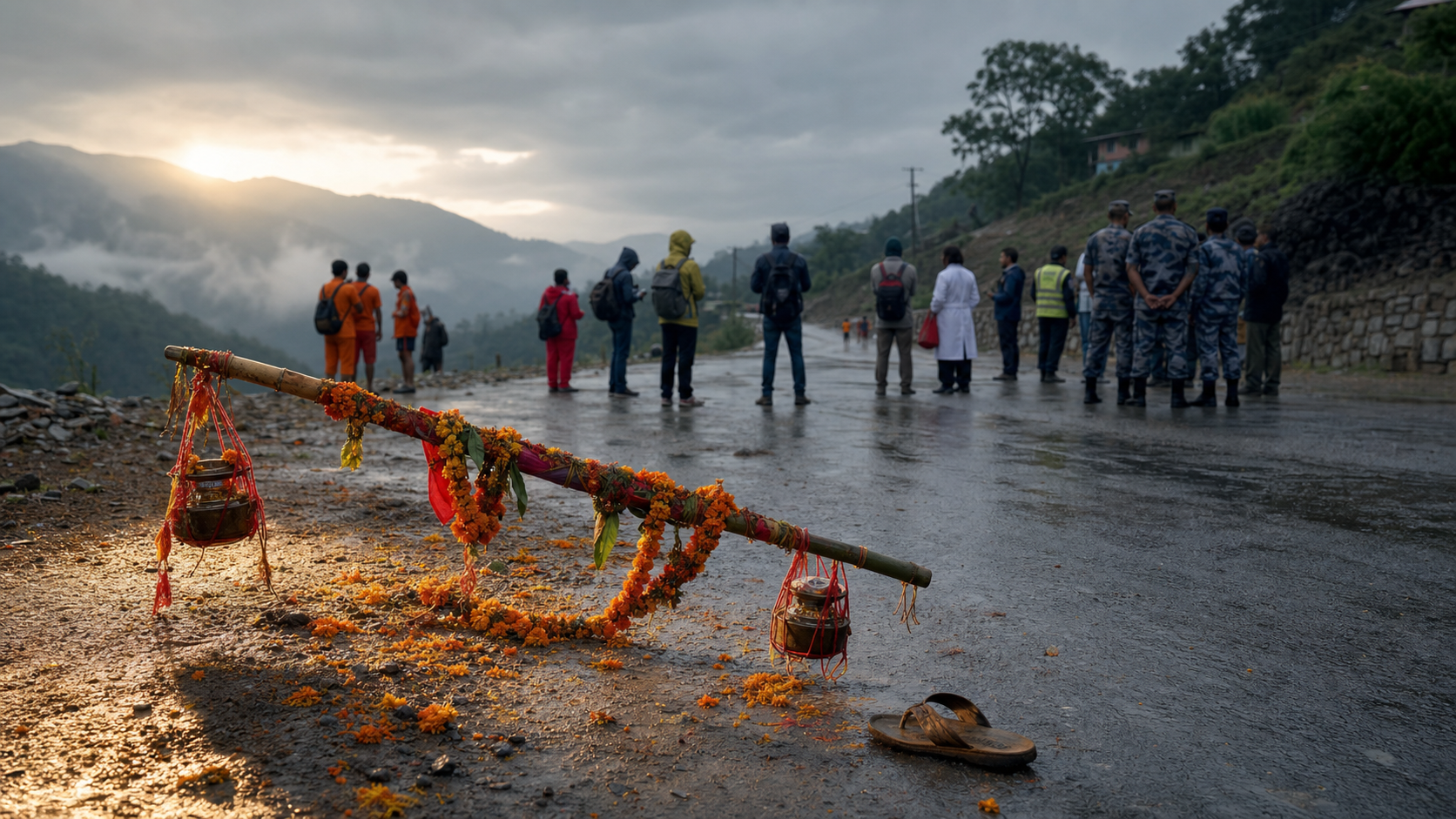
You may have reached this page after seeing a disturbing video or a headline about Hindu pilgrims, communal clashes, and police gunfire in Nepal. Before you forward it or argue from it, you need to know which claims are supported, which questions remain open, and what accountability should now look like.
A responsible Hindu response has two duties at once: refuse to minimize an attack on a religious procession, and refuse to turn incomplete information into collective accusation. Precision protects the victims. It also makes the demand for justice much harder to dismiss.
What can responsibly be stated about the violence
The defensible public account is presently narrow. In Sunsari district of Nepal’s Koshi Province, violence was reported to have begun when Muslims attacked a Hindu Kanwar Yatra following a dispute over DJ music. The confrontation then widened into clashes involving Hindu and Muslim groups.
Police opened fire while trying to disperse the crowd. Three people died and about two dozen were injured. The dead were identified as 24-year-old Om Prakash Mehta, 22-year-old Jai Prakash Mehta, and 19-year-old Ganesh Yadav.
The disturbance did not remain confined to its initial location. Protests and violence were also reported in Siraha and Dhanusha, including arson, vandalism, stone-pelting, damage to shops, vehicles, and private property, and confrontations with security forces. Curfews were imposed in sensitive areas. Police, the Armed Police Force, and the Nepal Army were deployed, while helicopters monitored the situation.
That record establishes the seriousness of the episode, but it does not settle every allegation. Still unanswered are the exact sequence of the first confrontation, the identities and conduct of individual attackers, the warnings given before police opened fire, the officer who authorized firing, the ammunition used, and the cause of each fatal injury. No named organization or command structure has been established in the information presently available. Describing the alleged attackers as members of a community is therefore not evidence of a coordinated ideological operation.
Keep those levels of certainty separate. You can say that an attack on the yatra was reported, that communal clashes followed, that police fired, and that people died. You cannot responsibly claim to know the full chain of command, the intention of every participant, or the weapon responsible for each death until evidence establishes those points.
DJ music may explain the trigger, but it cannot excuse violence
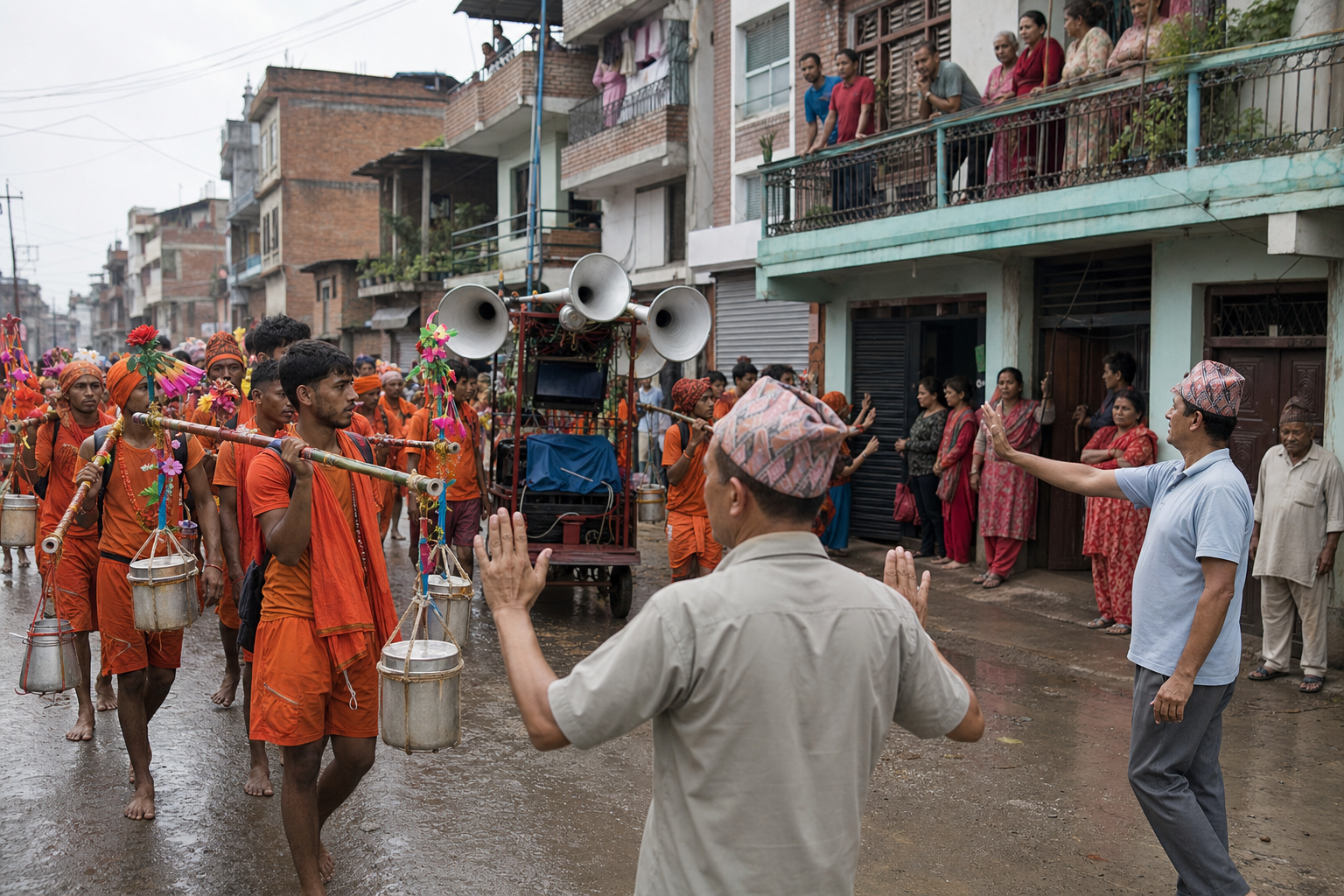
The reference to DJ music matters because it helps identify the immediate dispute. It must not be allowed to become a justification for attacking a procession. Noise, route, and timing disagreements belong with a neutral civil authority. A crowd has no right to replace lawful enforcement with threats, stones, arson, or physical assault.
Two principles can stand together. Kanwar yatris are entitled to practice and public safety without being attacked because they are Hindu. Procession organizers are also responsible for following any lawful, equally applied route and sound conditions. Even if an administrative rule was broken, that would not confer a right of violent enforcement on residents or another religious group.
The vocabulary you use matters. An attack identifies alleged initiating violence. A clash describes the later stage in which people from opposing groups confront one another. Police firing identifies state action. Collapsing all three into the vague phrase “communal tension” conceals the questions that investigators need to answer: who initiated violence, who retaliated, who damaged property, and who authorized potentially lethal force.
Communal context must not become collective guilt. If individuals attacked the yatra, prosecute those individuals on evidence. If other people later committed retaliatory violence or arson, apply the same standard to them. That approach is not moral equivalence. It is how you protect Hindu religious freedom while preserving a credible demand for justice.
Police gunfire requires a separate, evidence-led inquiry
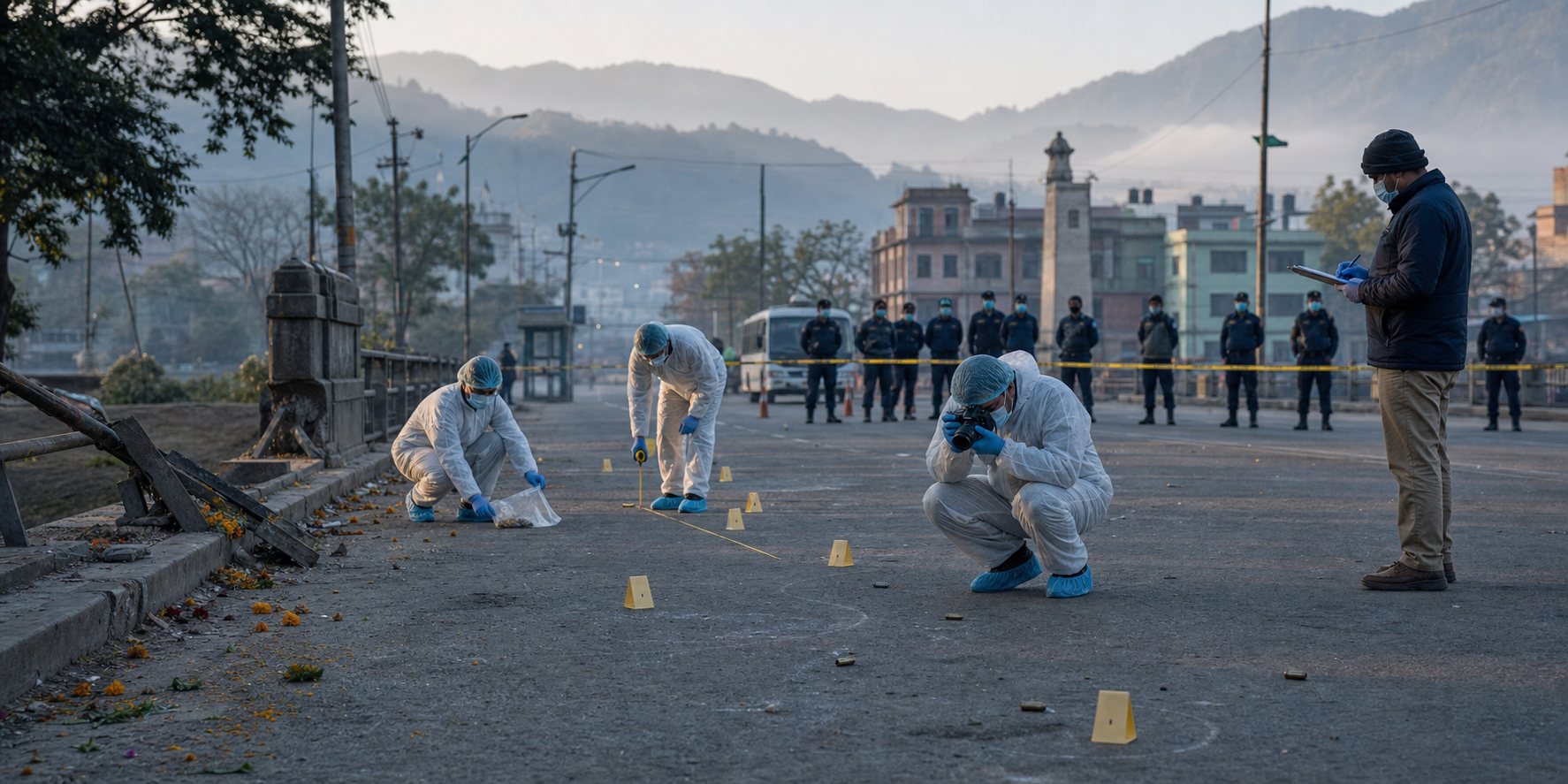
The firing cannot be treated as a footnote to the communal confrontation. Police may have faced a dangerous crowd and an urgent duty to restore order. Yet the deaths of three young men make the necessity, authorization, direction, and proportionality of the firing central public questions.
The fact that police fired and people died does not, by itself, prove which round or weapon caused each death. That connection requires medical and ballistic evidence. Conversely, the existence of a riot does not answer whether firing was necessary or properly controlled. A credible investigation should therefore preserve and reconcile several kinds of evidence:
- A minute-by-minute chronology of the procession, initial objection, first violence, police warnings, and firing.
- The name and rank of the officer who authorized firing, along with the operational order and rules given to personnel.
- The number and type of rounds issued, discharged, and returned by each security unit.
- Unedited CCTV, mobile-phone footage, police radio traffic, deployment logs, and vehicle records.
- Post-mortem findings, recovered projectiles, wound trajectories, and ballistic comparison where possible.
- Individualized arrest and charge records showing the alleged conduct of each accused person rather than relying on communal identity.
Om Prakash Mehta and Jayaprakash Mehta underwent post-mortem examinations at Koshi Hospital before their final rites. Their bodies were taken home and then carried in a large funeral procession to the shooting site in Kaptanaganj, where cremation rites were performed under continued security deployment. The dignity and safety of those rites mattered, but neither a peaceful funeral nor a heavy security presence substitutes for answers about the deaths.
The state should also document damaged homes, shops, and vehicles claim by claim. Mixing deaths, injuries, property loss, communal assault, and police conduct into one political settlement makes individual responsibility disappear. Separate records allow separate remedies: criminal prosecution for attackers, scrutiny of police conduct, medical assistance for the injured, and a transparent process for documented property losses.
How to respond without feeding rumor or further violence
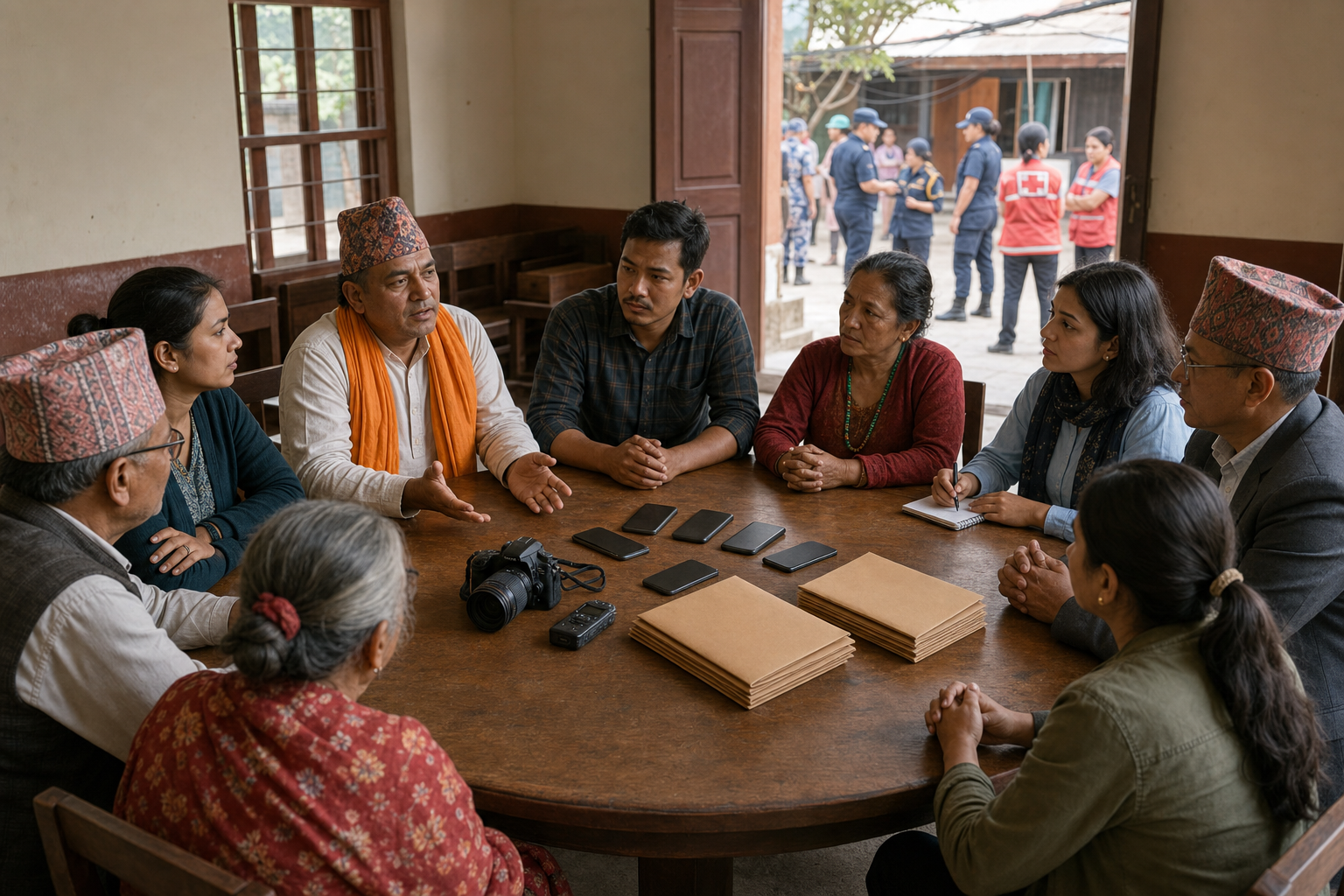
If you are outside the affected districts, your most useful contribution is disciplined communication. If you are nearby, your first responsibility is physical safety. Do not approach a crowd, police cordon, or procession route to obtain dramatic footage. Follow curfew directions, move away from the line between a crowd and security personnel, and do not encourage anyone else to gather at a sensitive site.
Before sharing a video, image, casualty claim, or appeal, use this sequence:
- State only what the material shows. A clip of running people may show panic, but it does not prove who began the violence. Gunfire on an audio track does not identify the weapon or shooter.
- Preserve the original. Keep the first file you received. Make a duplicate before trimming, adding text, changing speed, or compressing it. An edited copy can circulate publicly while the unaltered file remains available for verification.
- Record provenance separately. Note who sent the file, when it was received, the claimed location, and whether the sender personally recorded it. Do not turn a forwarded claim into an eyewitness statement.
- Label uncertainty in the caption. If time or location has not been verified, say so directly: “Claimed to show the Sunsari violence; exact time and location not independently verified.”
- Protect witnesses. Remove private phone numbers, home addresses, vehicle plates, and identifiable faces when disclosure could expose a witness or uninvolved person to retaliation. Preserve an unredacted copy for a legitimate investigator or legal representative.
- Correct errors where they spread. If you shared a wrong name, location, or casualty figure, correct the original post rather than quietly deleting it and leaving copies unchallenged.
Do not circulate graphic images of the dead merely to intensify anger. Naming Om Prakash Mehta, Jai Prakash Mehta, and Ganesh Yadav preserves their place in the public record. Turning their bodies into decontextualized social-media material does not add evidence and can deepen the suffering of their families.
When you address an official, journalist, community organization, or elected representative, ask answerable questions. “Why are Hindus unsafe?” expresses a real concern but permits a vague response. “Who authorized firing in Kaptanaganj, what warnings were recorded, and when will the post-mortem and ballistic findings be disclosed?” demands specific information. The same precision should govern questions about the initial attack: who has been identified, what conduct is alleged, and what evidence supports each charge?
Key takeaways
- Treat the reported attack on the Kanwar Yatra, the subsequent communal clashes, and police firing as three connected but distinct matters.
- Defend the yatris’ religious freedom without assigning guilt to an entire community.
- Demand a public chronology, firing authorization records, post-mortem findings, ballistics, and preserved video evidence before accepting a final account of the deaths.
- Share only what a video or photograph actually proves, and label unverified time, location, and attribution.
- If you are in an affected area, respect curfews and stay away from crowds and security lines; documentation is not worth risking another injury.
If you speak about this violence, make every statement do three things: name the reported attack without euphemism, honor the dead without inventing evidence, and demand a documented answer for the police firing. Pressure built on facts is harder to evade and less likely to endanger another family.
References
