

If you came here wanting a simple answer – whether India’s missing soldiers are still imprisoned in Pakistan – the honest answer is that the public evidence does not justify certainty. The men commonly remembered as the “Missing 54” remain part of an unresolved set of cases arising from the 1965 and 1971 wars. That does not prove that all 54 survived in Pakistani custody. It also does not give either government permission to treat unanswered questions as closed.
You can understand this issue without choosing between blind belief and official silence. The useful task is to separate what is known, what is alleged, and what evidence could still settle each individual case. Once you do that, the path forward becomes concrete: reconstruct the battlefield record, open the relevant archives, obtain neutral verification, examine unidentified remains, and report publicly on every unresolved name.
What the “Missing 54” name proves – and what it does not

“Missing,” “missing in action,” and “prisoner of war” are not interchangeable descriptions. A missing service member has not been conclusively accounted for. A confirmed prisoner of war has been reliably identified as having entered enemy custody. A person may also have died in battle without recoverable remains, been captured under an incorrectly recorded name, or left a fragmentary trail that never reached the institutions responsible for tracing prisoners.
This distinction matters because public discussion often jumps from “not accounted for” to “secretly imprisoned for decades.” The first can be established by an incomplete case record. The second requires evidence of capture, survival, continued detention, or deliberate concealment. Anyone asserting that every missing man was definitely held alive is claiming more than the available evidence establishes. Anyone asserting that no unresolved custody question remains is also claiming too much.
The historical setting explains why the question persists. The conflicts of 1947-48 and 1965 produced prisoners and missing personnel, while the 1971 Liberation War created a far larger repatriation problem. India held about 93,000 Pakistani military personnel after the 1971 surrender, and the vast majority of prisoners from that war had been returned by 1974. The 1999 Kargil conflict involved much more limited ground-level capture, but again raised the duties owed to combatants who fall into enemy hands.
The successful movement of tens of thousands of prisoners after 1971 shows that governments can resolve even a vast wartime custody problem when political agreements and administrative machinery work together. It does not establish what happened to any particular Indian service member. Each missing person still needs an individual chain of evidence.
When you assess a particular name, begin with four questions:
- What were the person’s full name, rank, service number, unit, and last confirmed location?
- Was the person merely absent after combat, or did a witness see a capture?
- Does any contemporaneous Indian, Pakistani, or ICRC record place the person in custody?
- What was the latest verifiable trace, and what government action followed it?
A case with unanswered questions remains worthy of investigation. It should not be promoted to confirmed captivity merely because the uncertainty is painful. Precision protects the missing men because it keeps weak claims from discrediting strong ones.
The law turns a moral demand into specific obligations
The Third Geneva Convention of 1949 gives a captured combatant more than a general promise of humane treatment. A prisoner must be registered and protected against coercion, and information about the capture must move through designated channels. The framework includes a National Information Bureau, capture records, family correspondence, the ICRC’s Central Tracing Agency, and independent humanitarian oversight. Once active hostilities have ended, prisoners are to be repatriated without delay. India and Pakistan are States Parties to the Geneva Conventions.
Those duties tell you what evidence should exist if a combatant entered an orderly prisoner-of-war system: a capture card, a register entry, a transfer record, correspondence, a visit log, a medical or administrative file, or a repatriation entry. A failure to notify, register, permit access to, or repatriate a known prisoner would violate the Convention’s protective purpose. But alleging such a violation in an individual case still requires proof that connects the missing person to the custody system or to evidence of concealed detention.
That is why a serious legal demand should ask for identifiable records rather than rely on a general accusation. The practical requests are straightforward: produce the relevant capture registers; disclose prison admission, transfer, death, and release ledgers; match them against ICRC holdings; and explain discrepancies person by person. If a ledger is missing, the responsible authority should state when it disappeared, who held it, and what substitute records were searched.
Bilateral commitments reinforce the humanitarian law framework. The 1972 Shimla Agreement and the 1973 Delhi Agreement provided the principal political structure for returning prisoners and civilian internees after the 1971 war. Bangladesh was part of the regional settlement created by the war and the repatriation process. Its historical role is a reminder that humanitarian resolution need not be trapped inside every other India-Pakistan dispute.
If credible evidence showed that a wartime captive was deliberately kept outside the prisoner system, procedures concerning enforced disappearance might also become relevant. That route cannot be invoked as a slogan. Jurisdiction, admissibility, the applicable legal period, and the evidence for continued state custody would all have to be examined by qualified legal professionals.
Use an evidence ladder to judge sightings and captivity claims

Families and veterans have reported alleged sightings at Kot Lakhpat Jail in Lahore, Mianwali, Multan, and Attock Fort. Such testimony should be recorded and investigated, not mocked or treated as conclusive. A sighting is a lead. Its value depends on the witness’s opportunity to identify the person, the date, the detail preserved at the time, and whether an independent record supports it.
Time makes verification harder. Wartime aliases, inconsistent transliteration across scripts, misspelled names, damaged ledgers, transfers between civil and military facilities, and incomplete dates can all hide a genuine match. The same problems can also produce a false match. A familiar surname or a prisoner’s resemblance to an old photograph is not enough by itself.
A practical evidence ladder helps you keep the categories clear. This is not a substitute for a court’s evidentiary rules; it is a disciplined way to decide what should happen next:
- Contemporaneous custody records: a capture card, authenticated prison register, ICRC visit record, transfer entry, or official communication identifying the service member. These can directly establish custody at a particular time.
- Matched official records: Indian war diaries, casualty lists, unit reports, and missing-person files that align with Pakistani prison, military, hospital, or burial records.
- Authenticated personal evidence: a dated photograph, letter, recorded message, or testimony from a released prisoner containing details unlikely to have been guessed.
- Specific retrospective testimony: a named witness, identifiable place and date, description of the circumstances, and a documented chain showing when the account was first recorded.
- Unverified repetition: anonymous claims, recycled social-media images, lists with no case files, and stories that cannot be traced beyond a later retelling.
Lower-level evidence is not worthless. It tells investigators where to look. It should not be described as proof until corroboration moves it higher. A sincere witness can be mistaken, and an incomplete government file can omit a real event. Both possibilities are reasons to investigate methodically.
When a captivity claim appears online, pause before sharing it and check five things: Is a specific missing person named? Is the claimed record contemporaneous with the war? Can the image or quotation be traced to an identifiable custodian? Does the date fit the person’s known movements? Has later evidence contradicted or clarified the claim? If these details are absent, describe it as an allegation and ask for the underlying material.
Do not publish a family’s private correspondence, address, medical information, or genetic data to make a campaign more persuasive. Public exposure cannot substitute for authentication, and it can create lasting harm. Preserve the material, record its provenance, make a secure copy, and submit it through a responsible veterans’ organization, lawyer, archive, or government channel.
A credible closure mission needs six connected tracks
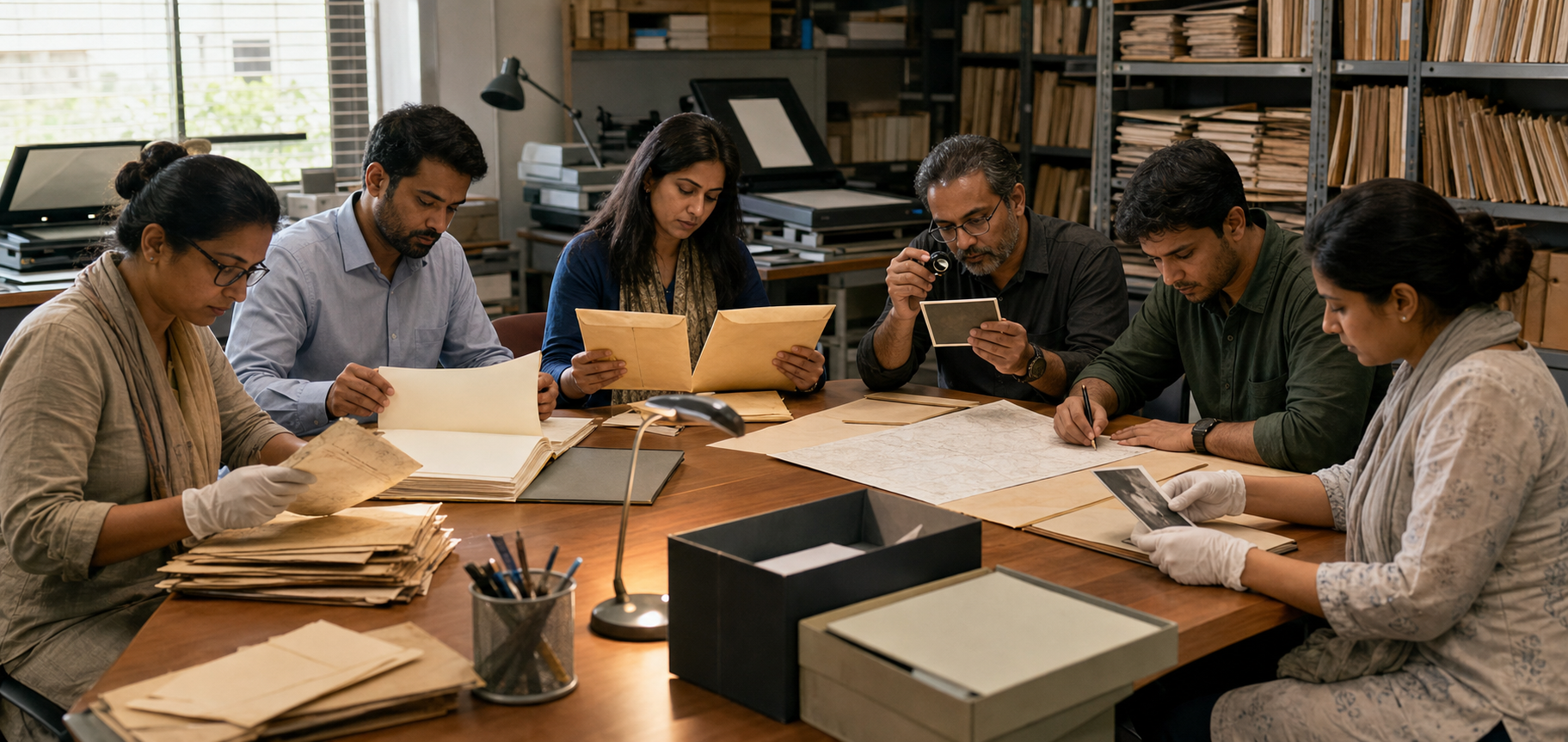
No single prison visit will resolve decades of uncertainty. If the relevant person died, was transferred under an alias, or never entered a formal prison, a delegation looking only at current cells will find nothing. The investigation has to connect battlefield reconstruction, custody records, humanitarian access, and forensic identification.
- Create one authoritative case ledger. Every person should have a stable case number, confirmed biographical identifiers, last-seen information, present classification, evidence inventory, unanswered questions, requests sent, responses received, and the date of the next action. “Missing,” “probable capture,” “confirmed capture,” “repatriated,” and “identified deceased” must not be collapsed into one status.
- Digitize and cross-reference the archives. War diaries, unit after-action reports, casualty lists, ICRC correspondence, prison ledgers, hospital records, burial records, and repatriation rolls should become searchable data. The matching system must retain alternative spellings, transliterations, aliases, ranks, units, dates, and capture locations rather than treating a name as the only identifier.
- Seek neutral, time-bound verification. India and Pakistan should agree on precisely defined archive searches and, where relevant, access to named detention sites. ICRC facilitation would give both sides a neutral channel for sensitive information. Each request should carry a deadline and require a written result, including a description of records searched when no match is found.
- Build a voluntary DNA reference programme. Families who freely consent could provide reference samples for comparison with unidentified remains. The programme needs strict rules on purpose, access, retention, security, correction, and withdrawal. DNA can identify remains or exclude a proposed match; it cannot, by itself, prove that a person survived in detention.
- Restore a standing humanitarian mechanism. The India-Pakistan Judicial Committee on Prisoners, formed in 2007 with retired judges, established a model for prison visits and humanitarian recommendations. The 2008 Agreement on Consular Access also created exchanges of custody lists on January 1 and July 1 each year. Those arrangements mainly address civilian detainees, so they are not a complete answer to legacy prisoner-of-war cases. Their habits of regular lists, access, verification, and written follow-up can nevertheless be adapted.
- Publish an annual case-status report. A public report should show, for every unresolved person, whether the file changed during the year, which archive or authority was approached, whether a response arrived, and what happens next. Sensitive personal material can remain protected. The government should not be able to substitute a general statement for case-level progress.
These tracks work only as a system. A digitized name match may trigger an archive request. A prison transfer entry may identify a burial site. A forensic comparison may resolve a family case even when the custody history remains incomplete. Conversely, a negative search of one jail proves only that the searched records contained no match; it does not settle every possible route through which the missing person could have moved.
Predictable procedure already helps India and Pakistan manage civilian detainees, including fishermen who cross maritime boundaries. Identity documents, consular notification, regular lists, and periodic releases reduce the chance that a person disappears into an administrative backlog. Legacy military cases need the same procedural discipline, combined with the deeper archival work demanded by their age.
What you can demand without turning grief into spectacle
The families have lived with ambiguous loss: grief without a confirmed death, hope without dependable evidence, and public attention that rises and falls with politics. Communities have answered with remembrance, sewa, prayer, and material support across regions and religious identities. Those acts matter, but compassion should lead to better investigation rather than louder speculation.
A dharmic understanding of duty is especially relevant here. The ethic of dharma-yuddha protects those who surrender or can no longer fight. Ahimsa and karuna require concern for the captive, while dharma also requires truthfulness. That combination rules out two easy failures: abandoning a missing soldier because the case is old, and presenting an unverified story as fact because it offers emotional certainty.
If you write to an elected representative, veterans’ body, or the relevant ministry, do not ask merely for “action.” Ask whether an authoritative case ledger exists; when each file was last reviewed; whether ICRC holdings were checked; which Pakistani register or archive was requested; whether the family was offered a secure DNA process; and when the next public status report will appear. A request containing names, records, deadlines, and responsible offices is harder to answer with a ceremonial assurance.
You can also help preserve evidence. Keep original letters, envelopes, photographs, service details, and notes of early witness statements. Record who created each item, when the family received it, and whether it has been altered or copied. Do not write on the original. A dramatic clipping with no provenance may be unusable; a plain envelope with a date, postal mark, and custody history may become important.
Key takeaways
- The “Missing 54” identifies an unresolved national concern; it does not independently prove that all 54 men remained alive in Pakistani prisons.
- Missing in action and confirmed prisoner-of-war status are different. Every name needs a case-specific chain from the battlefield to any alleged place of custody.
- The Third Geneva Convention supplies concrete tests: registration, notification, humanitarian access, correspondence, records, and repatriation after hostilities.
- Reported prison sightings deserve investigation, but they become proof only when identity, time, place, and custody are corroborated.
- The most useful public demand is a case-level process combining archives, ICRC-facilitated verification, voluntary DNA comparison, bilateral access, and annual reporting.
India does not honour its missing personnel by choosing a convenient conclusion. It honours them by refusing both erasure and exaggeration. The next time this issue enters public debate, ask for the ledger, the archive request, the neutral verification, and the deadline. Decades of uncertainty cannot be undone, but disciplined truth-seeking can still give families an answer worthy of the service that created the debt.
References
