
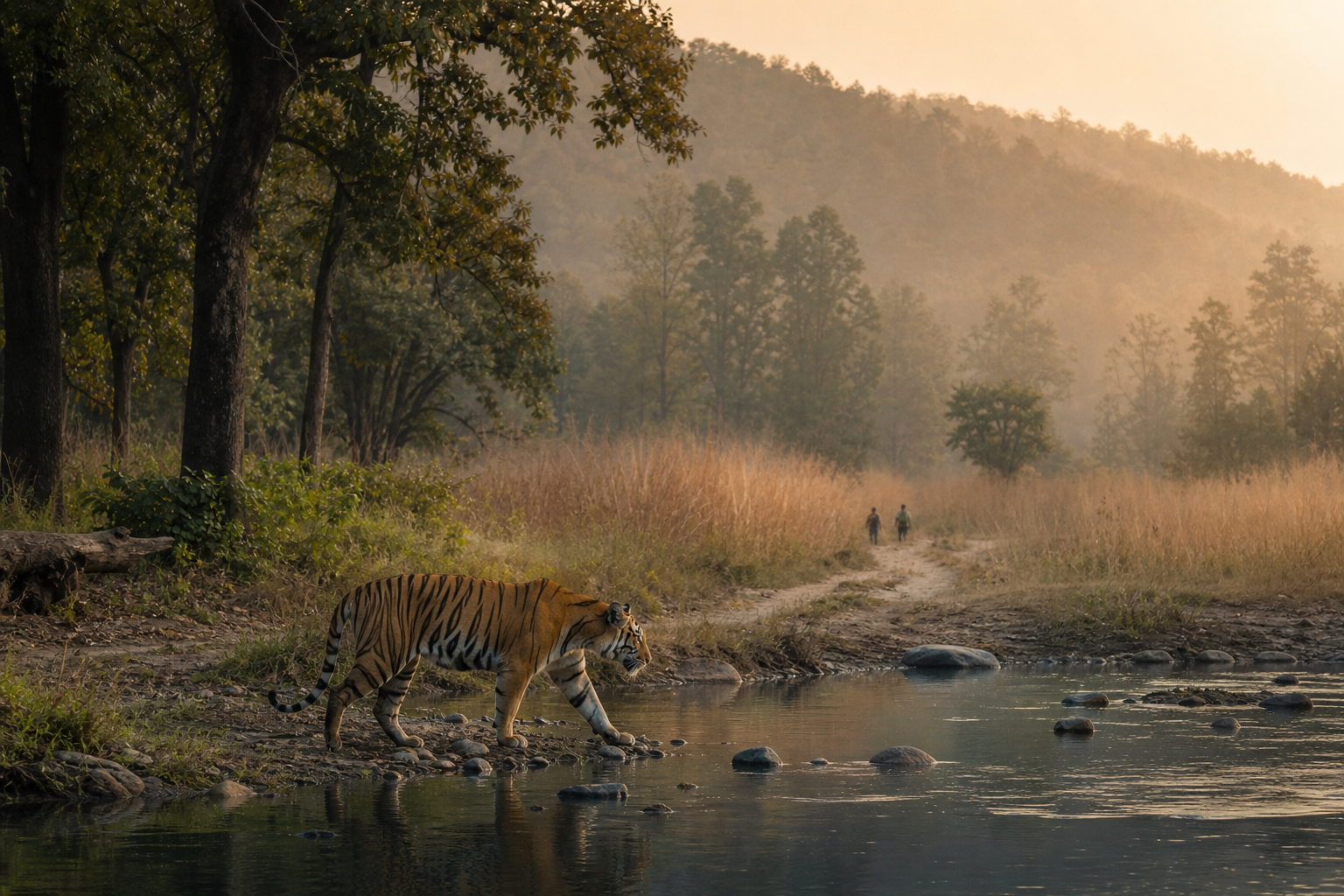
If you have seen the claim that Bharat holds most of the world’s tigers, the useful question is not whether the number deserves pride. It is what that responsibility requires next – and how you can tell whether a policy, tourism project, donation appeal or public campaign is actually helping.
On Global Tiger Day in July 2026, Prime Minister Narendra Modi said Bharat was home to almost 70 per cent of the global tiger population. That concentration makes Bharat indispensable to the animal’s future. It also means that a reassuring national percentage must never become a substitute for examining habitats, local populations, human safety and the condition of the communities living beside tiger landscapes.
Read the 70 per cent figure correctly
A share of the global population answers one question: how much of the world’s tiger population is found in Bharat. By itself, it does not tell you whether tiger numbers are rising, whether every landscape is doing equally well, whether habitats remain connected or whether nearby communities are carrying an unfair burden.
There is another important distinction. A country’s global share can change because of events inside that country, changes elsewhere, or both. You therefore cannot use the 70 per cent figure alone to infer a trend. Whenever someone presents it as proof that the work is finished, ask for the underlying population direction, the period being compared and the method used.
Key takeaways
- Bharat’s large share of the global tiger population is a responsibility, not a finish line.
- A national total can conceal major differences between individual tiger landscapes.
- Real progress must be visible in populations, habitat, connectivity, community participation and development decisions.
- Dharmic respect for nature becomes credible when it produces restraint, honest measurement and fair treatment of people living with wildlife.
Judge progress through four linked tests
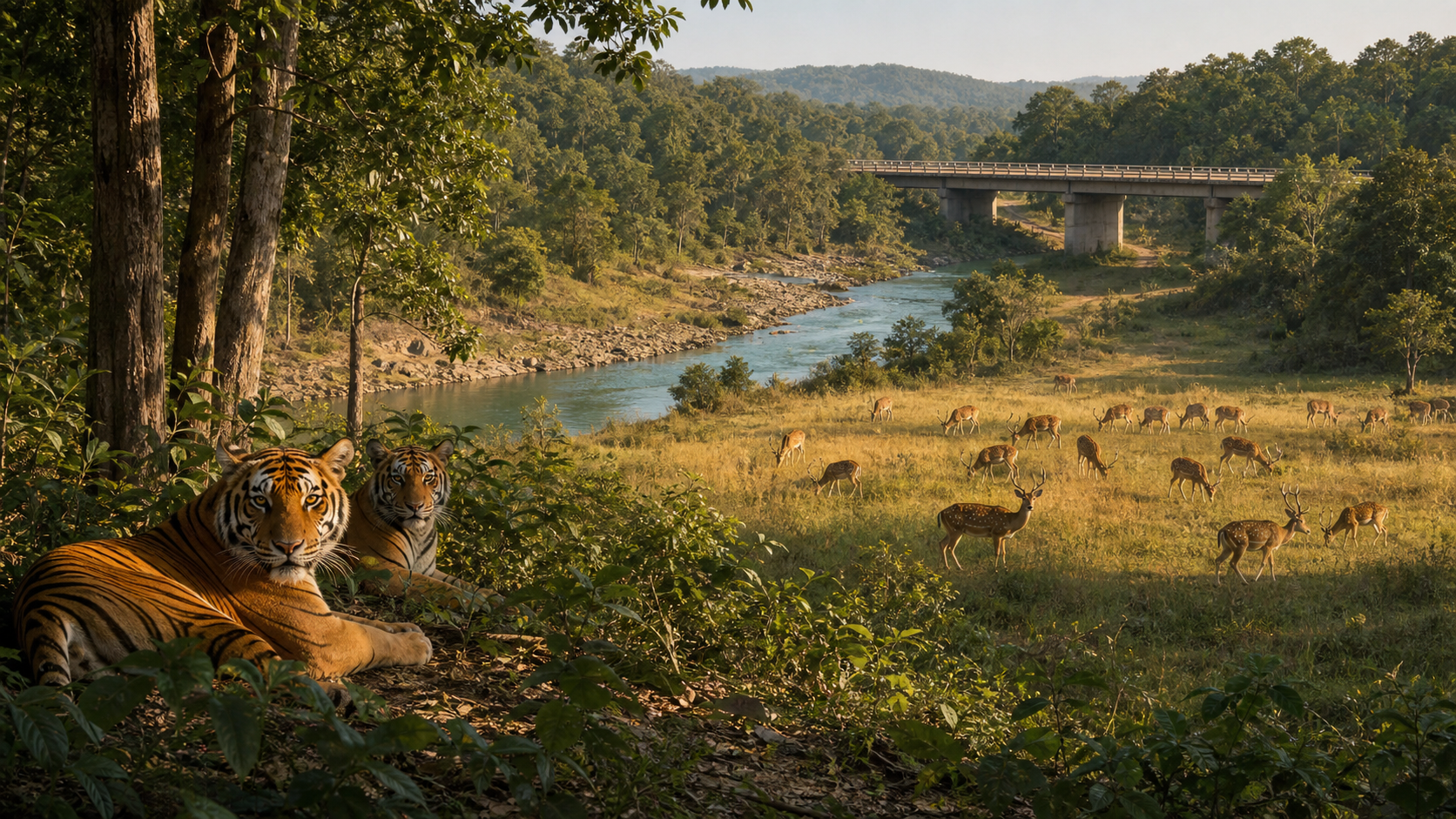
The strongest conservation claim is not the one with the largest headline number. It is the one that survives several connected tests. If one test is missing, the apparent success may be temporary or narrowly distributed.
1. Are tiger populations being measured consistently?
Science-based conservation begins with measurements that can be compared over time. When you encounter a population claim, look for four things: the geographical area covered, the period of comparison, the monitoring method and an honest statement of uncertainty. A precise-looking total without that context is difficult to interpret.
Distribution matters as much as aggregation. A stable or improving national result does not prove that every local population is secure. Ask whether the gains are spread across landscapes or concentrated in a few well-known reserves, and whether places showing deterioration receive the same attention as places producing encouraging numbers.
2. Do tigers have functioning landscapes, not isolated islands?
A tiger needs more than a line drawn around a protected area. Conservation depends on habitat, adequate prey and the ability of wildlife to move through a wider landscape. Roads, settlements and other development can affect that movement even when no protected core is formally removed.
When assessing a proposal near tiger habitat, do not stop at the question, “Is it inside the reserve?” Also ask whether it affects a buffer, a movement corridor, water, prey habitat or the connection between protected areas. The map beyond the reserve boundary may determine whether the reserve remains ecologically viable.
3. Are nearby communities treated as partners?
The benefits of tiger conservation are often celebrated nationally, while the daily costs are experienced locally. Those costs can include fear, restrictions on resource use, livestock loss and disruption after a dangerous encounter. Community participation cannot mean asking residents to approve a decision after its important terms have already been settled.
Look for participation before decisions, a clear way to report conflict, timely institutional response, locally credible prevention measures and a transparent grievance process. Where a policy provides compensation or shared economic benefits, examine whether eligible residents can actually access them without prohibitive delay or complexity.
4. Does development preserve the conditions conservation needs?
Sustainable development is not a decorative label attached after a project has been designed. In a tiger landscape, it requires ecological costs to be identified while routes, sites and operating rules can still be changed. Once a movement path is severed or intense disturbance becomes routine, later mitigation may be weaker and more expensive than avoiding the damage at the design stage.
You do not have to assume that every project and conservation goal are automatically incompatible. You should insist, however, that alternatives be compared openly. Ask what route or site options were considered, what cumulative pressure already exists in the landscape, how impacts will be monitored and what happens if the predicted safeguards fail.
Turn community participation into a practical checklist
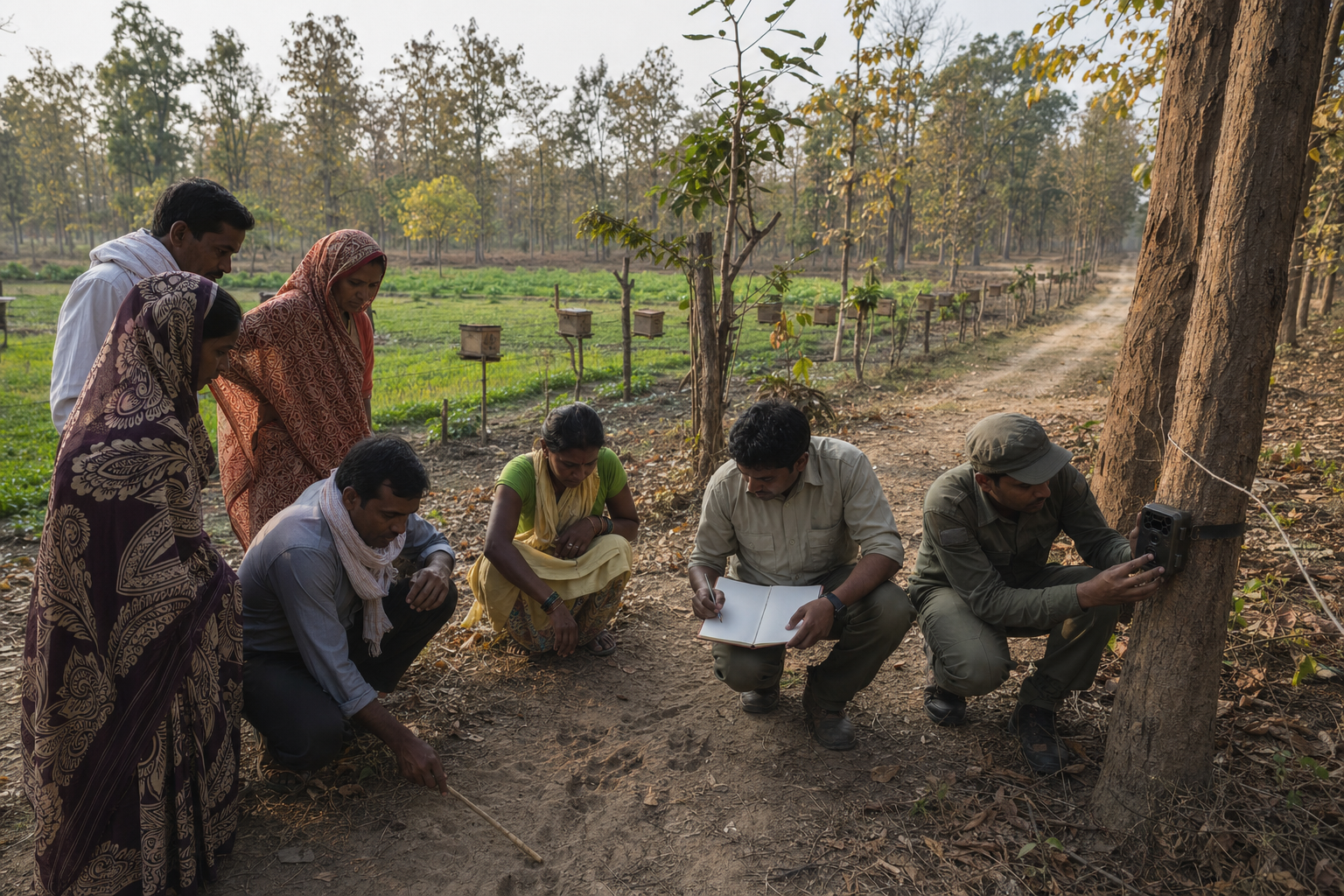
“Community participation” is easy to praise because it can mean almost anything. Before accepting the phrase, ask questions that reveal who has influence, who bears risk and who receives the benefits.
- Who was heard? Check whether people living closest to the affected forest were consulted early enough to alter the decision.
- Who bears the cost? Identify the households most exposed to livestock loss, access restrictions, crop damage or threats to personal safety.
- What happens after a conflict report? There should be a known contact, a response procedure and a way to review delays or failures.
- Are local people doing paid, skilled work? Monitoring, habitat care, guiding, conflict prevention and other conservation roles should not treat residents merely as unpaid supporters.
- Can residents challenge a bad decision? Participation without an accessible grievance channel is consultation in name only.
- Are results public? Communities should be able to see what was promised, what was delivered and how decisions will change when a measure does not work.
This approach is not separate from protecting tigers. A conservation system depends on information, cooperation and legitimacy across the wider landscape. Residents are also the people most likely to notice an emerging problem quickly. Institutions should make it safe and worthwhile for them to report it.
If a tiger is reported near a settlement, do not travel there for photographs, form a crowd, chase the animal or circulate its exact location as an invitation to spectators. Keep your distance and alert the relevant local forest authorities. Curiosity can obstruct trained responders, increase stress on the animal and put people in danger.
Make the Dharmic case more than a slogan
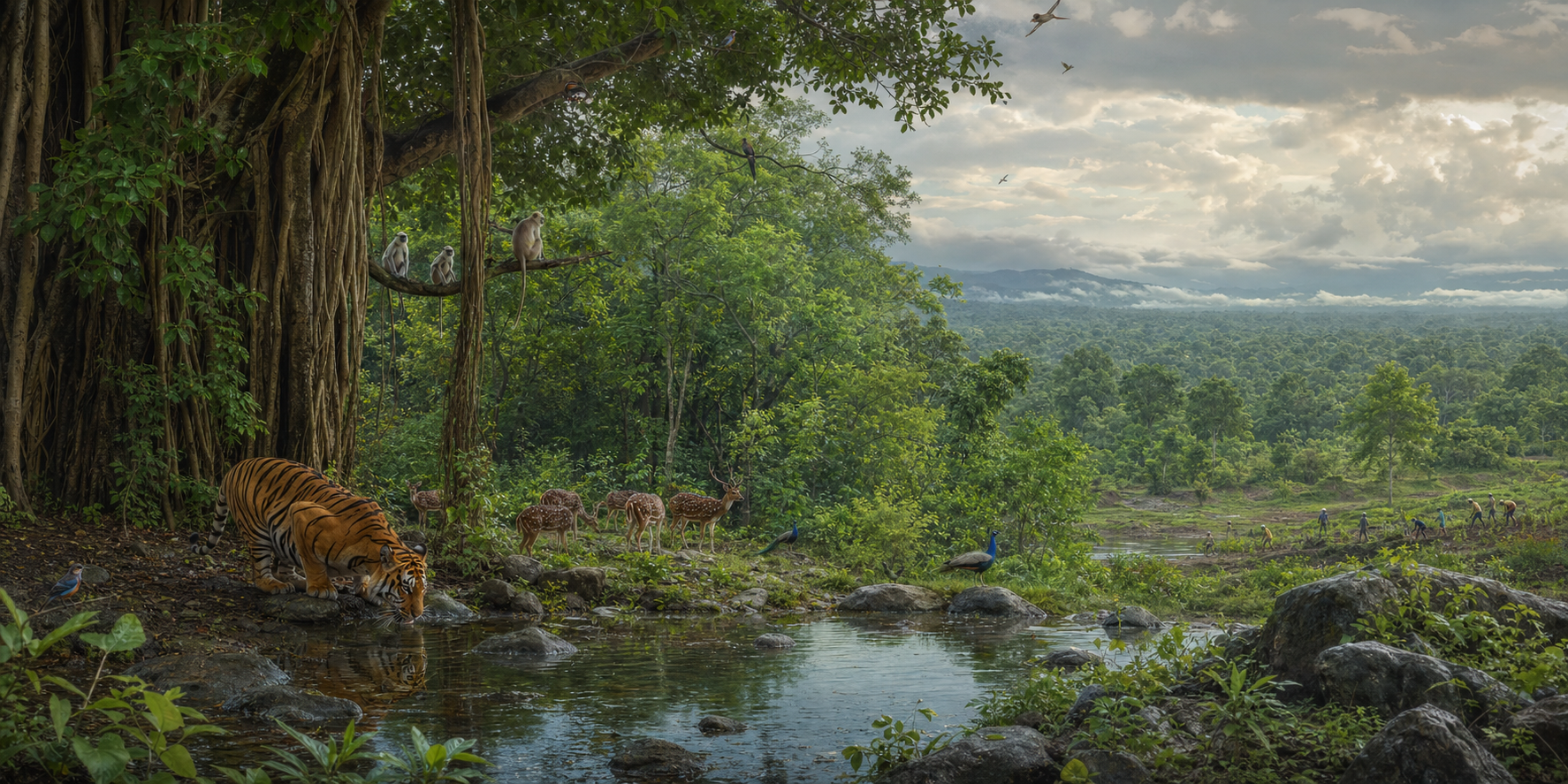
Bharat’s public commitment to tiger conservation has been framed in terms of a centuries-old culture of living in harmony with nature. That inheritance can provide a moral vocabulary, but cultural pride does not automatically protect a corridor, resolve a conflict or produce reliable monitoring. It has to be translated into conduct and institutions.
Ahimsa does not require pretending that life beside a large predator is free of danger. It asks us to avoid needless harm while taking human safety seriously. In practice, that means preventing conflict where possible, responding without spectacle, refusing cruelty disguised as crowd control and listening to families who live with risks that distant admirers do not.
A Dharmic understanding of interdependence also corrects an overly narrow image of conservation. You cannot care for the tiger while ignoring the prey, vegetation, water, movement routes and human relationships that sustain its landscape. The charismatic animal may attract attention, but the whole ecological web needs protection.
Finally, dharma implies duty alongside reverence. The honest expression of national pride is willingness to accept the disciplines that conservation demands: credible data, limits on disruptive behaviour, scrutiny of development, competent institutions and fairness toward affected communities. Without those duties, the tiger risks becoming a cultural emblem whose living conditions are someone else’s problem.
Use your choices to reward credible conservation
You do not need to become a wildlife biologist to make better decisions. You need a repeatable way to test claims and avoid adding pressure to tiger landscapes.
- Interrogate numbers before sharing them. Ask what was measured, where, when, by what method and against which baseline. Do not turn a global share into a population trend without the missing evidence.
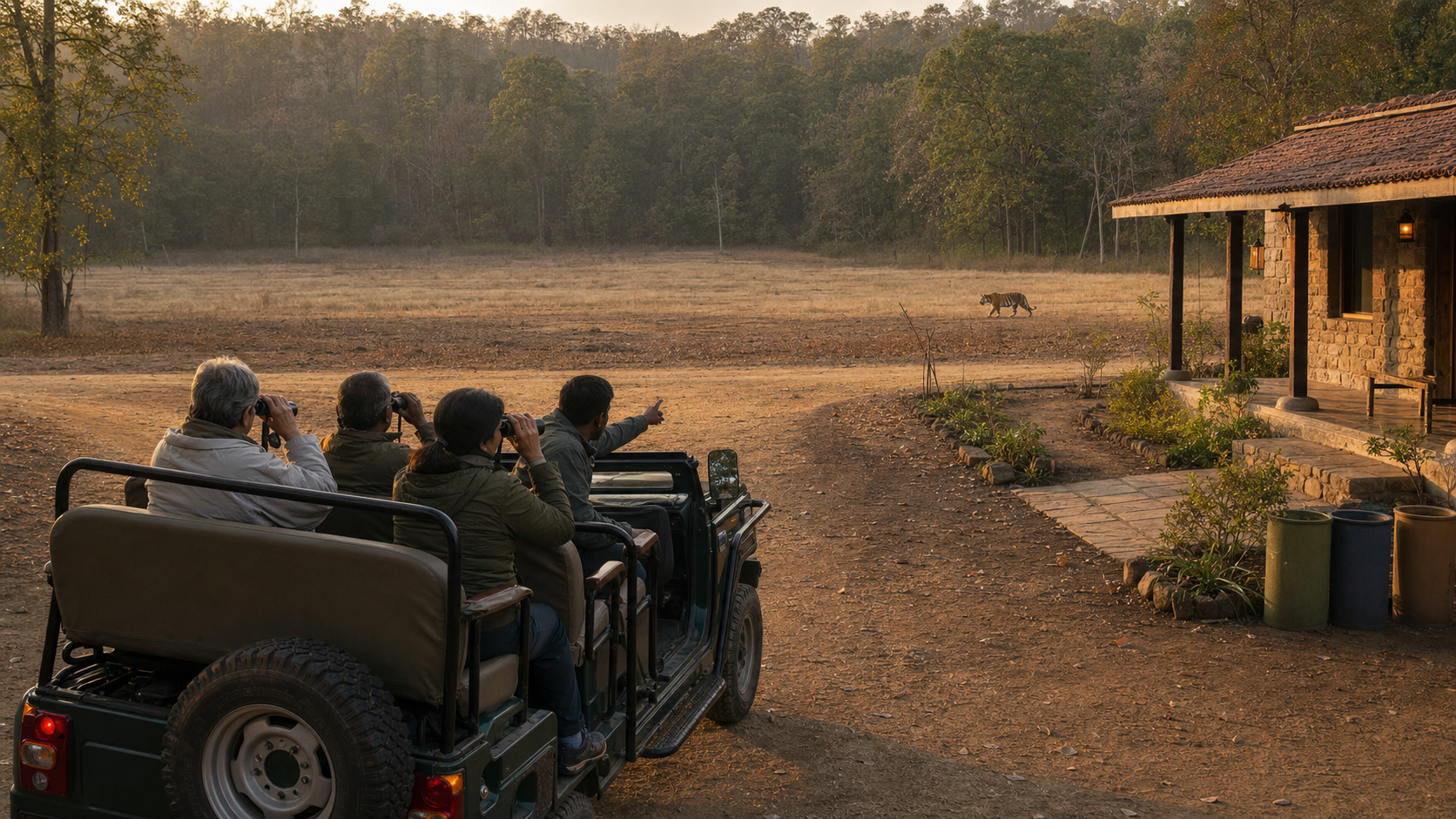
- Choose responsible wildlife tourism. Use lawful, regulated operators; obey distance and access rules; keep noise down; and never pressure a guide to crowd, bait or pursue an animal for a sighting.
- Protect sensitive location information. Do not publish precise, real-time locations when doing so could attract crowds or interfere with management.
- Examine a donation before making it. Ask which landscape will benefit, what activity the money supports, how local residents participate and what outcome will be reported. A tiger image is not an operating plan.
- Follow land-use decisions, not only wildlife celebrations. Pay attention when infrastructure or intensive development is proposed around reserves, buffers and movement routes. Ask for the ecological assessment, alternatives and monitoring commitments while change is still possible.
- Listen to people who share the landscape. A campaign that speaks warmly about tigers but dismisses local safety or livelihood concerns is missing a central part of conservation.
The next time you meet a proud tiger statistic, let it begin your inquiry rather than end it. Ask where the animals are thriving, whether their landscapes remain connected, how nearby residents are treated and which development choices are being made now. Those questions turn admiration into stewardship – and give Bharat’s exceptional responsibility a practical form.
References
