
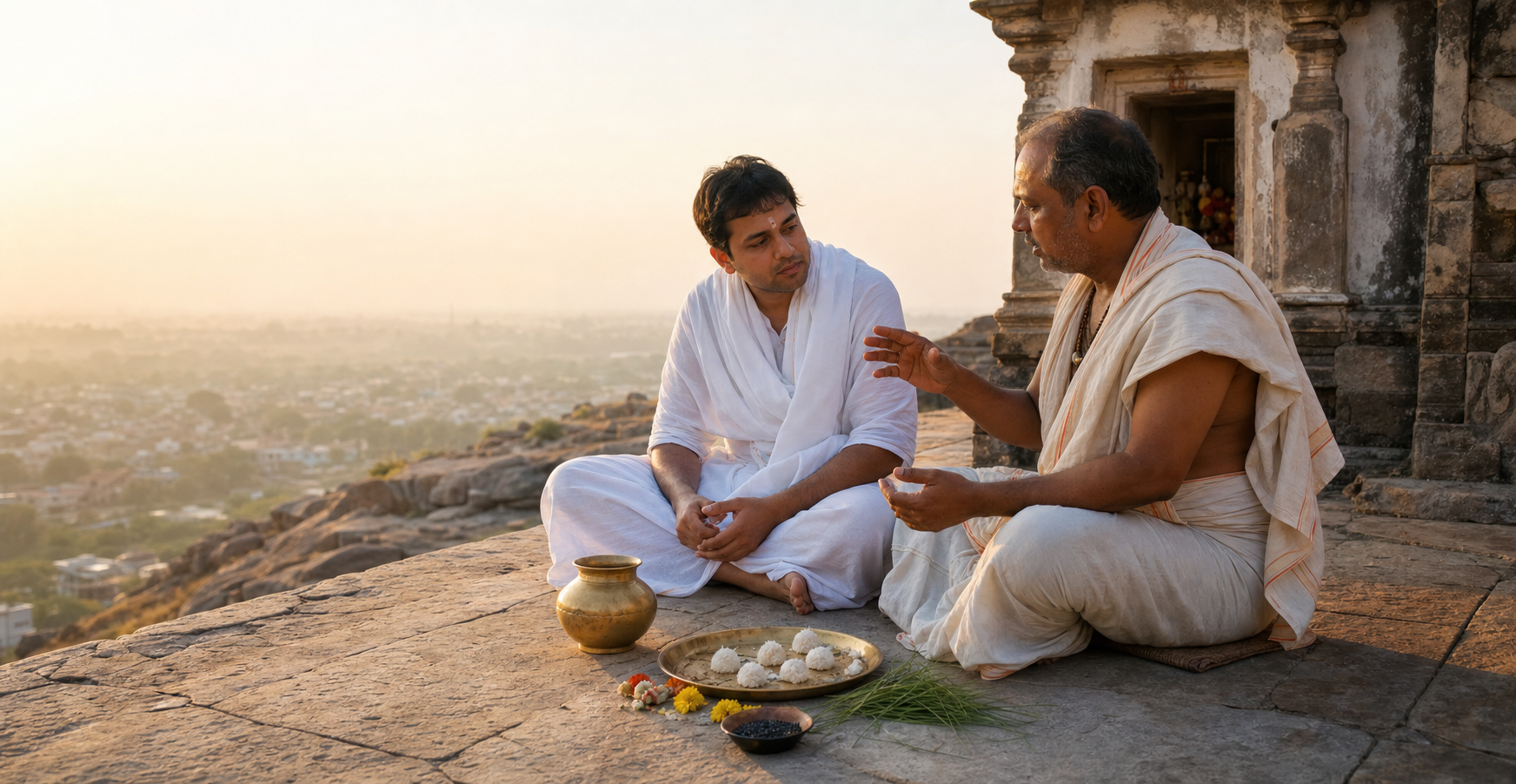
If you are considering Atma Shraddha because you have no children, no dependable surviving kin, or no confidence that your final rites will be performed, the first step is not to book a ritual package. First establish whether this exceptional rite fits your circumstances and whether a qualified Gaya priest will perform it under an accepted paddhati.
Gaya Janardan Temple is traditionally associated with self-directed Pinda Daan by a living person. It stands on Bhasma Koot Mountain, north of Mangala Gauri Temple, within the larger Gaya tirtha-kshetra. That gives you a definite place to begin, but not a universal ritual script: eligibility, mantras, timing, materials, and the required vedis can differ by sampradaya and family tradition.
First decide whether Atma Shraddha is actually your rite
Ordinary Shraddha is performed by descendants for departed Pitru. Atma Shraddha reverses the immediate direction of that responsibility: while alive, you undertake an obsequial offering intended for yourself. The purpose is not to stage your death or withdraw from your family. It is to address a foreseeable gap in future rites through a conscious act of dharmic responsibility.
The clearest reason to ask about Atma Shraddha is the absence of someone who can reasonably be expected to perform your posthumous rites. This may apply if you have no children, no surviving close relatives, or family circumstances that make future observance genuinely uncertain. Emigration or long-term separation from one’s ritual community can create a similar concern, although distance alone does not automatically make Atma Shraddha necessary.
People preparing for vanaprastha or a major renunciatory transition may also consider it. Sannyasa traditions, however, can have their own symbolic self-rites before initiation. If you are approaching sannyasa, consult the acharya responsible for your initiation before arranging a separate ceremony at Gaya. Do not assume that two rites with similar language are interchangeable.
Prayaschitta is another possible context, but it is not a label you should apply to yourself casually. An expiatory discipline requires guidance about the act being addressed, the appropriate sankalpa, and the form of correction. A general feeling of guilt, fear of death, or anxiety about the future is not enough to determine the ritual.
Atma Shraddha also does not automatically cancel your existing duties toward ancestors. Gaya is pre-eminent in the sacred geography of ancestral observance, with Vishnupad, the Falgu River, Akshayavat, Pretshila, Brahmayoni, Mangala Gauri, and other vedis forming parts of its ritual landscape. Ask explicitly whether your proposed ceremony concerns only your future rite, includes Pitru offerings, or should be accompanied by a separate Gaya Shraddha for your lineage.
Women should not assume that an older male-heir norm settles the question. Regional practices in Gaya may permit women to perform Shraddha when no male heir is available or circumstances warrant it. That is not a promise that every officiant follows the same rule. State your situation before travelling and obtain an unambiguous answer from the priest who would conduct the rite.
Settle the priest, paddhati, date, and costs before travelling
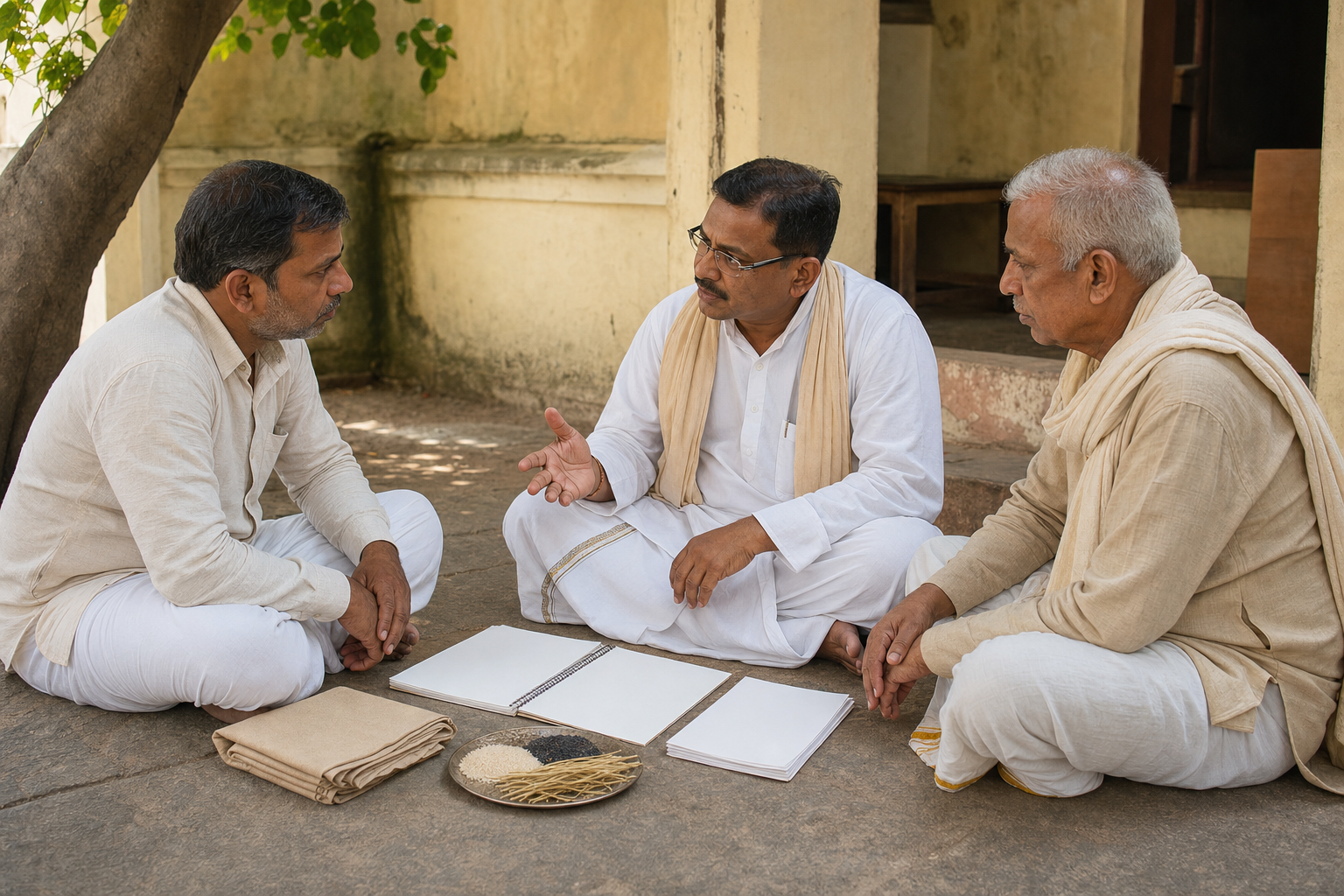
Your most useful first conversation is with an authorized temple priest or a reputable Gaya pandit who knows both the Janardan Temple practice and the wider Gaya Shraddha circuit. Say plainly: “I am considering Atma Shraddha for myself while I am living. Does your paddhati permit it for someone in my circumstances?” A vague request for “Pind Daan at Gaya” can lead to an ordinary ancestral ceremony rather than the self-directed rite you intend.
- Explain why you are considering Atma Shraddha: absence of descendants, lack of surviving kin, a renunciatory transition, emigration, or another specific circumstance.
- Give your name, gotra, pravara if known, family region, and sampradaya. If you do not know your gotra or pravara, say so; do not invent either one.
- Ask for the exact wording and intention of the sankalpa in plain language before agreeing to the rite.
- Confirm whether the priest accepts a performer of your sex, marital status, and life circumstance under the applicable custom.
- Ask which locations are required. Janardan Temple may be the central locus for Atma Shraddha, while other stops in the Gaya circuit may serve distinct ancestral purposes.
- Confirm who supplies rice, black til, barley flour, ghee, kusha grass, the kusha pavitra, water vessels, clean ritual cloth, and any panchamrita the paddhati requires.
- Ask how much time the full sequence requires and where you must meet. Do not infer the duration from an ordinary temple visit.
- Request a clear account of expected expenditures, including materials, priestly dakshina, Brahmana feeding, dana, annadana, and any movement between vedis.
Pitru Paksha, culminating in Mahalaya Amavasya, is especially associated with Shraddha at Gaya. Monthly Amavasya may also be used, while Bharani nakshatra can matter in some local customs. These are possibilities, not a date-selection formula. The appropriate tithi, nakshatra, and muhurta should be settled only after the priest has considered your ritual purpose and tradition.
Do not choose a date solely because flights are cheaper or a booking agent calls it universally auspicious. If you want to travel during Pitru Paksha, confirm priest availability and the required sequence before committing to transport or accommodation. Conversely, do not assume that missing Pitru Paksha means waiting an entire year; ask whether an Amavasya or another accepted date is available.
Clarity about money is part of sound preparation, not disrespect. Agree on the scope and expectations in advance, retain basic booking or payment documentation where it is provided, and keep your expenditure proportionate. Dana offered freely has a different inner character from money extracted through fear. Be wary of anyone who promises a guaranteed metaphysical result, threatens misfortune if you refuse an upgrade, or will not explain what an added ceremony is for.
Know the ritual sequence without trying to conduct it yourself
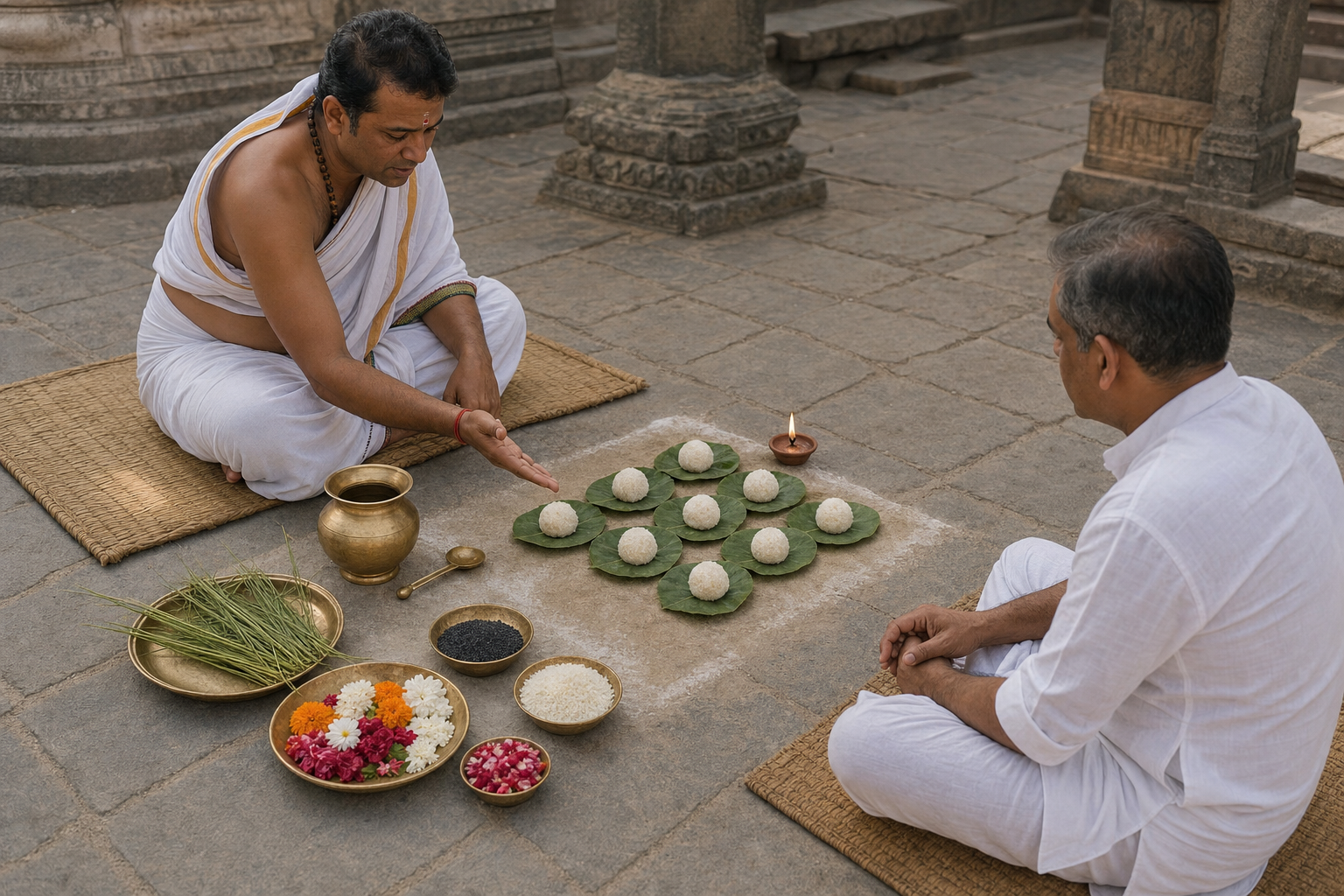
The following sequence gives you enough understanding to recognize the main stages and ask sensible questions. It is not a substitute for the mantras and procedural directions of the officiating priest. Smarta, Vaishnava, Shakta, regional, and family traditions can frame the same stage differently.
- Purification: The rite begins with snana and personal preparation. Bathing may take place in or near the Falgu River when local conditions and the prescribed practice permit it. Follow current local directions rather than assuming that a particular water location will always be usable.
- Sankalpa: You state your identity, gotra where known, the place of performance, and the precise intention. In Atma Shraddha, this is the decisive distinction: the priest must frame the offering as a rite undertaken by you for yourself within the accepted ritual grammar.
- Tarpana: Water and til are offered with invocations connected to the Pitru. Ask beforehand how the ancestral invocations relate to the self-intended portion of your ceremony, especially if you are also performing lineage Shraddha.
- Preparation of the pindas: Pindas are generally formed from cooked rice with materials such as black til, barley flour, and ghee. Kusha marks ritual sanctity, while the pavitra ring is worn as directed. Do not buy a standardized kit until your priest confirms the actual list.
- Pinda offering: The pindas are offered with the prescribed mantras and gestures. Listen carefully to instructions about posture, hand use, direction, and repetition instead of anticipating the next action from a video or another family’s ceremony.
- Feeding and giving: Brahmana feeding, dakshina, and dana customarily follow. Annadana to people in need may also accompany the rite where feasible. Confirm beforehand what the officiant regards as integral, customary, or optional.
- Completion: Kshama-yachana seeks forgiveness for errors in performance. The rite then closes with an inward resolve to live more responsibly, compassionately, and truthfully.
If your priest changes the order or uses different ingredients, ask for an explanation rather than declaring the ceremony defective. Living ritual traditions are not identical everywhere. The important safeguard is coherence: the sankalpa, mantras, materials, officiant, and location should belong to a recognized paddhati rather than being assembled from unrelated internet instructions.
The materials are not mere props. Rice carries the meaning of nourishment and continuity; black til is associated with austerity and the absorption of sorrow; kusha establishes a ritually bounded space and a connection between ordinary and sacred action. Knowing this should deepen your attention, not tempt you to improvise the ceremony.
Prepare your records, conduct, money, and state of mind

Write a one-page ritual brief before you leave home. Include your full name, gotra and pravara if known, family place of origin, sampradaya, reason for undertaking Atma Shraddha, chosen date, priest’s name, meeting location, agreed ritual circuit, materials arrangement, and expenditure expectations. Carry a copy and send one to a trusted person. This prevents a hurried conversation at the tirtha from changing the purpose of your visit.
If your gotra, pravara, or family practice is uncertain, investigate through older relatives or your family purohit before the trip. When the information cannot be recovered, tell the Gaya priest exactly what is unknown. Honest uncertainty can be handled within guidance; a guessed lineage detail can distort the sankalpa.
Ask about dietary and purity observances for the period immediately before the rite. A simple satvik routine, restraint from distractions, clean vastra, and a quiet mind are generally more aligned with the purpose than a severe discipline you invented yourself. Follow any fasting or food requirement given for your tradition without turning the preparation into a display of hardship.
Set aside time to remember your lineage even though the central offering is for yourself. Recall names where you know them, the care you received, unresolved duties, and the qualities worth carrying forward. This keeps self Shraddha from becoming a fearful transaction concerned only with what might happen after death.
The deepest preparation is to choose one living commitment that will remain after the ritual. You might establish a regular practice of dana, give more attentive care to an elder, preserve family memories, reconcile where doing so is safe, or become more reliable in a duty you have neglected. Atma Shraddha is ethically framed as preparation by the living; its meaning thins out if nothing in your conduct changes.
Approach claims about spiritual fruit with both shraddha and discernment. Hindu tradition receives Gaya Shraddha as spiritually potent, and texts and traditions associated with the Garuda Purana, Gaya Mahatmya, Dharmashastra, and Grihya Sutras provide its larger sacred frame. The fruit of a rite is nevertheless not a product that another person can demonstrate or guarantee on demand. Correct intention, qualified guidance, and responsible conduct are firmer grounds for your decision than fear-based promises.
Key takeaways before you go
- Atma Shraddha is an exceptional self-directed obsequial rite, not the default form of Shraddha for every pilgrim.
- Begin with your circumstance and sampradaya, then ask a qualified Gaya priest whether the Janardan Temple paddhati applies to you.
- Confirm eligibility, sankalpa, tithi, required vedis, materials, duration, and every expected category of giving before booking the journey.
- Do not guess an unknown gotra or copy mantras from an unrelated ritual. State what you know and let the officiant handle the ritual form.
- Carry the rite back into life through a specific commitment to dana, remembrance, care, truthfulness, or family responsibility.
Your next action is simple: prepare your one-page brief and use it for a direct conversation with the priest who would actually conduct the ceremony. Travel only when the answer to “Is this the correct rite for me?” is clear in terms you understand.
References
