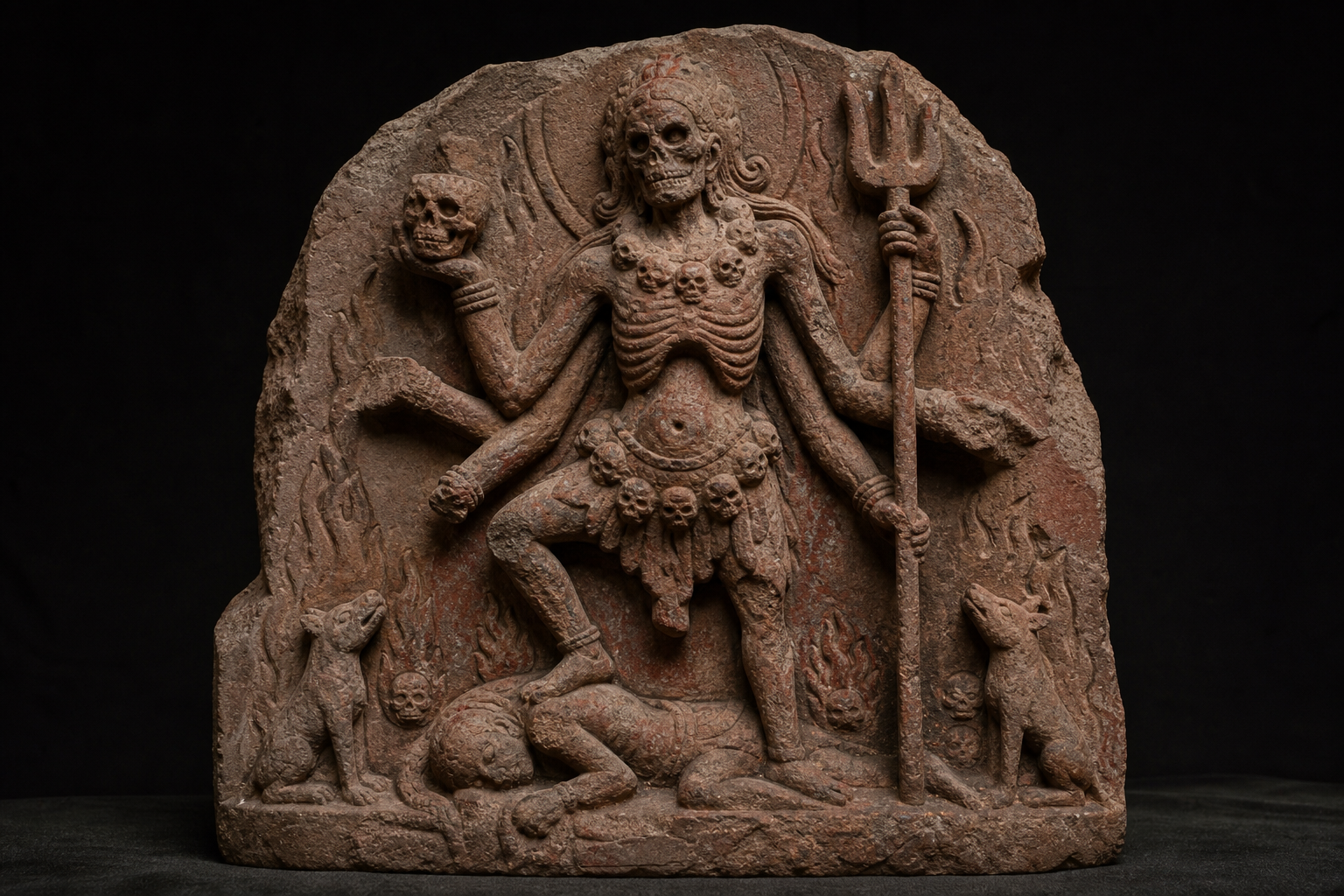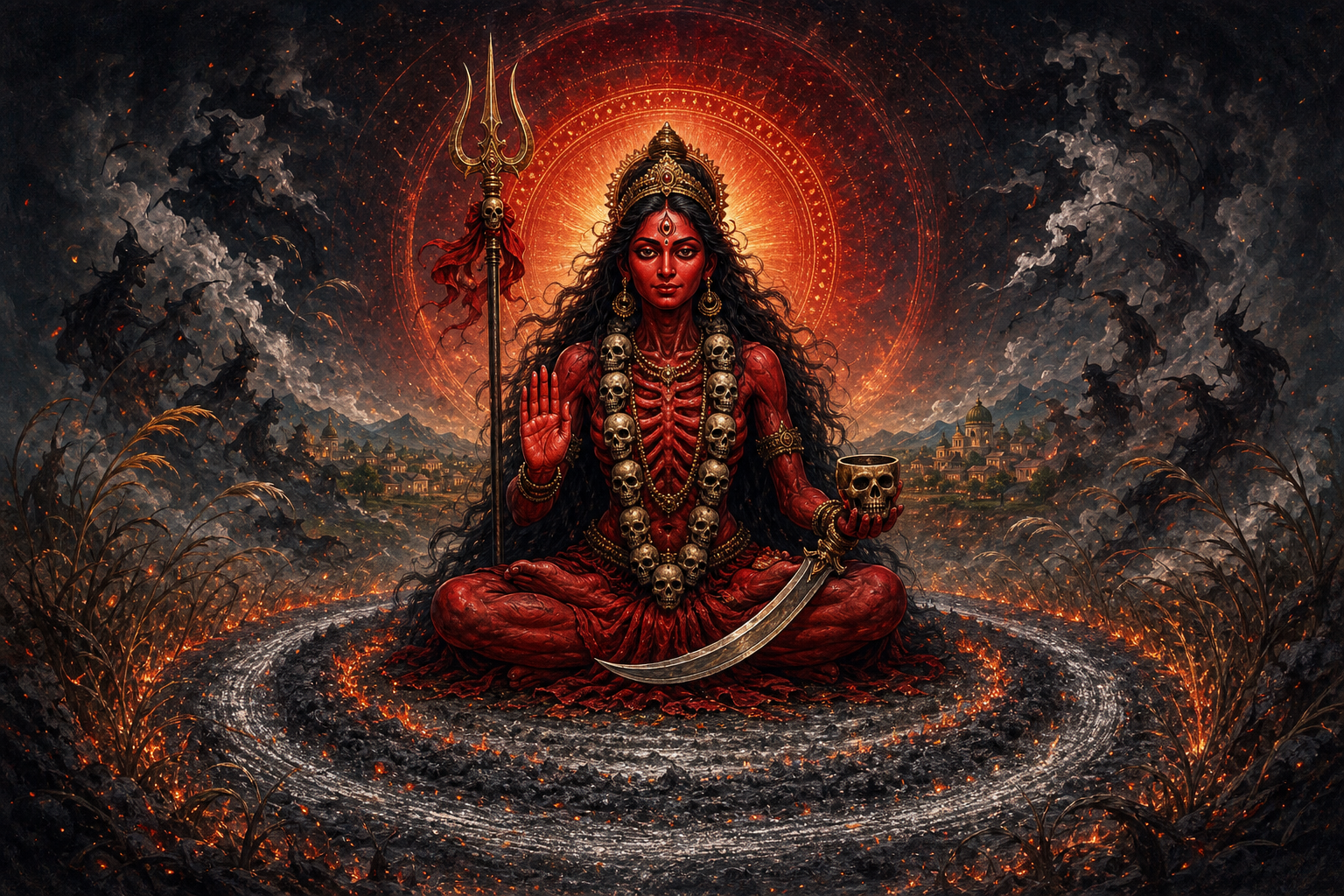
You may be standing before a red, skeletal goddess with a skull-cup and wondering what you are actually seeing. Is she Kali, Chamunda, one of the Matrikas, or specifically Rakta Chamunda? And do the corpse, severed heads, and cremation ground celebrate violence, or do they teach something more disciplined?
The honest answer does not come from redness or any other single feature. You have to read the body, implements, posture, setting, companions, and local form together. Once you do, the frightening image becomes a coherent map of protective Shakti: force directed against delusion, fear, destructive passion, and whatever prevents dharmic action.
Key takeaways
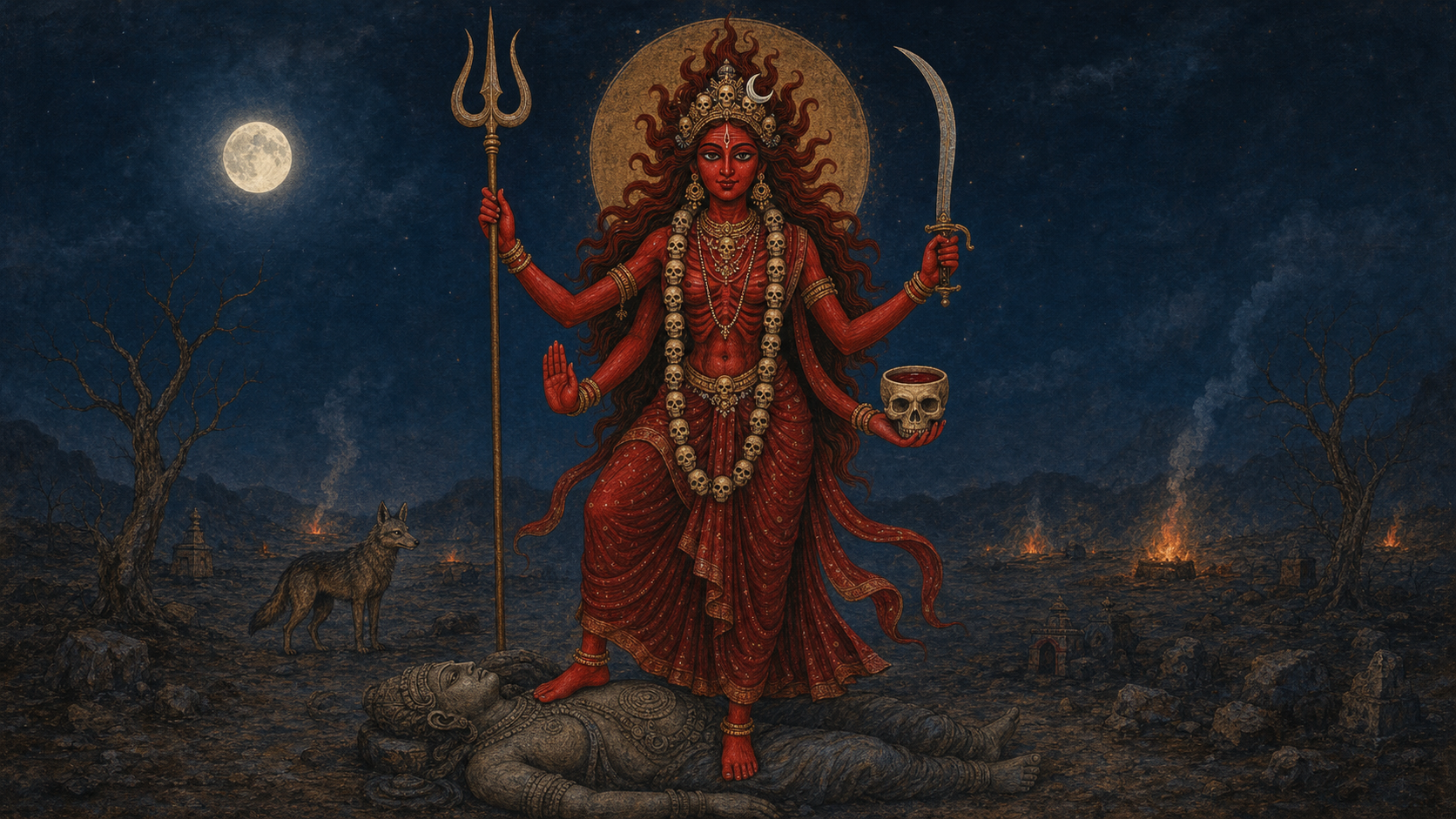
- Do not identify Rakta Chamunda by color alone. Look for a cluster that includes Chamunda’s gaunt or intensely fierce body, skull imagery, weapons, a corpse or cremation-ground base, and sometimes jackals.
- Rakta means more than red pigment. In this form it can point to vitality, rajas, prāṇa, and tapas: dynamic energy that must be governed and placed in the service of dharma.
- The weapons are not interchangeable decorations. The sword, trident, noose, and skull-cup express different operations upon ignorance, the three guṇas, egoic instability, and dispersed energy.
- The corpse beneath the goddess is best read as inert consciousness, unexamined tendencies, or ego deprived of mastery. It is not a license to treat the image as a celebration of death.
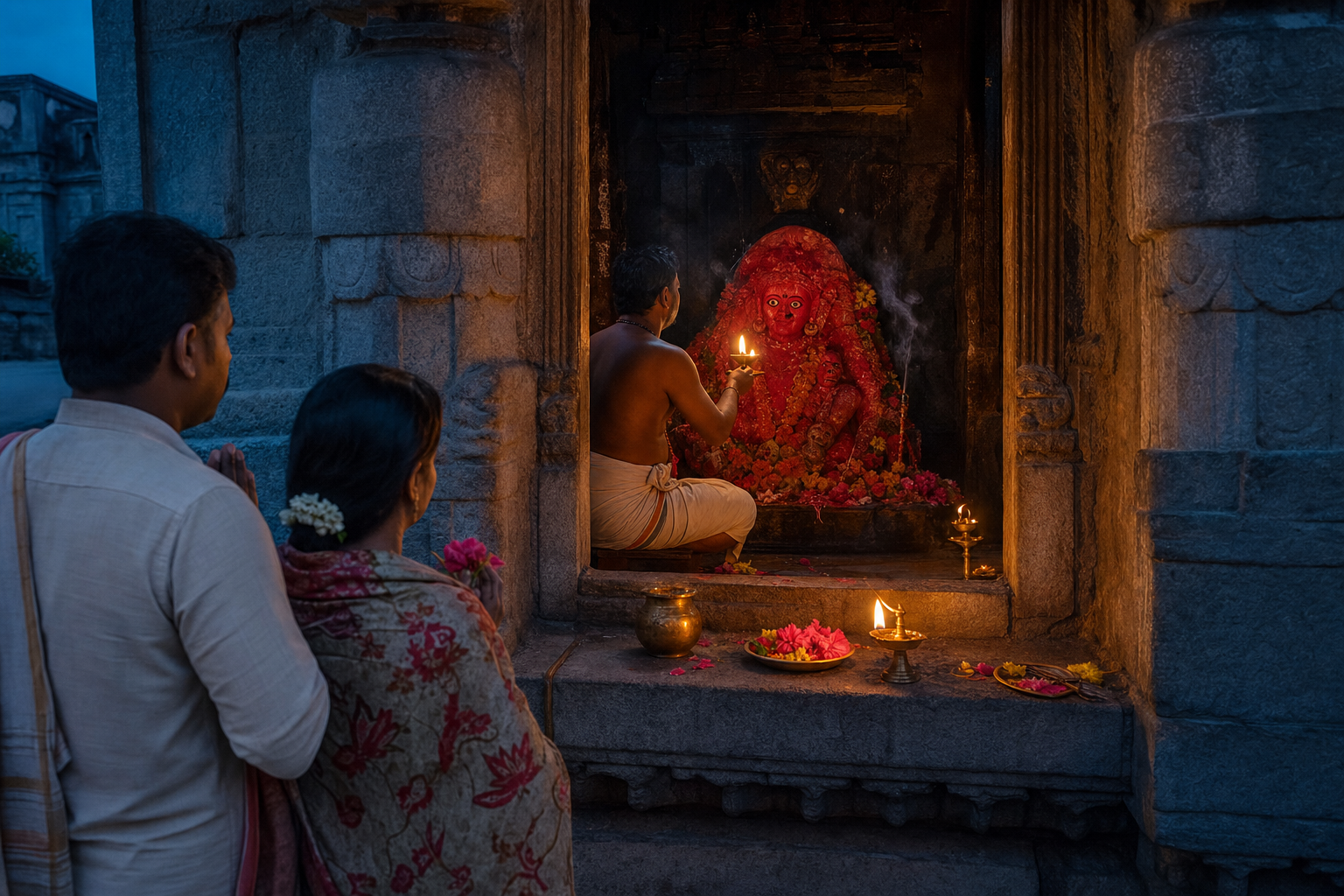
- Public worship and esoteric practice are not the same thing. Follow the offerings, recitations, and boundaries of the living temple or lineage rather than reverse-engineering a ritual from the icon.
- Similar fierce-protector themes occur across Dharmic traditions, but resonance is not equivalence. Preserve the doctrinal and regional identity of the form in front of you.
Identify the goddess by a cluster, not a single emblem
The name supplies the first anchor. Rakta carries the senses of red, blood, and vitality. Chamunda is the goddess who destroys the demons Chanda and Munda in the Devi Mahatmya and receives her name from that victory. The Rakta form places a chromatic and energetic emphasis upon Chamunda’s ferocity. Because her appearance varies by region and textual lineage, however, that emphasis does not produce one universally fixed arrangement of limbs and objects.
Start by making an inventory of what is physically present. Do this before assigning meanings. A reliable inspection moves from the figure outward:
<!– wp:list {