
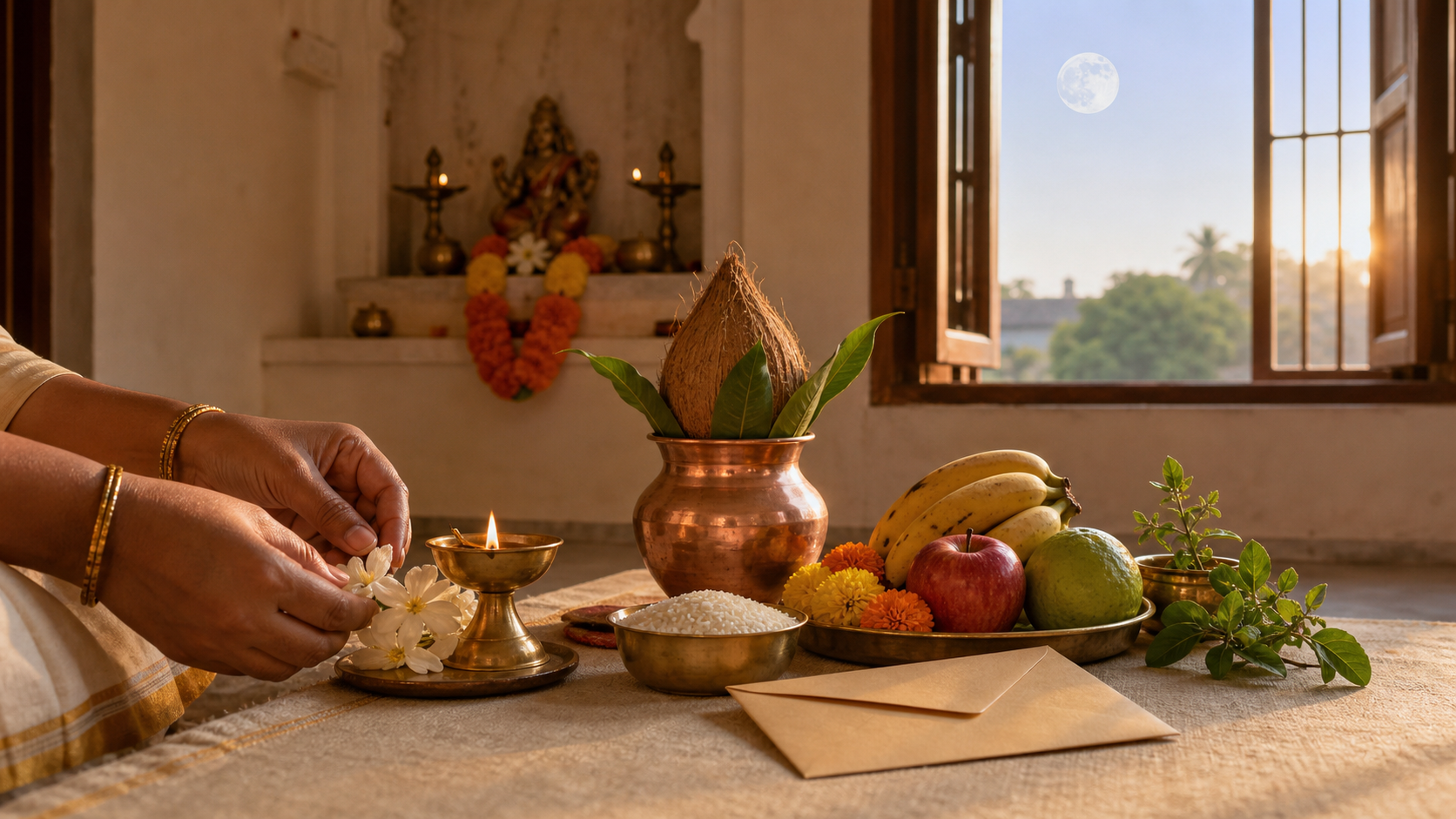
If you are trying to decide when to fast, perform Satyanarayan Puja, visit a temple, or make your Purnima donation in March 2026, the important detail is not simply the date. Purnima Tithi ends during the afternoon of Tuesday, March 3, and that affects how you should schedule the observance.
For most households using the sunrise-based date, March 3 is the practical observance day. Complete time-sensitive worship before 4:33 PM IST, preferably in the morning or forenoon. If your family follows the Pradosha-vyapini rule, confirm whether the vrata belongs on the preceding civil date instead of applying the sunrise rule automatically.
The timing that controls your observance
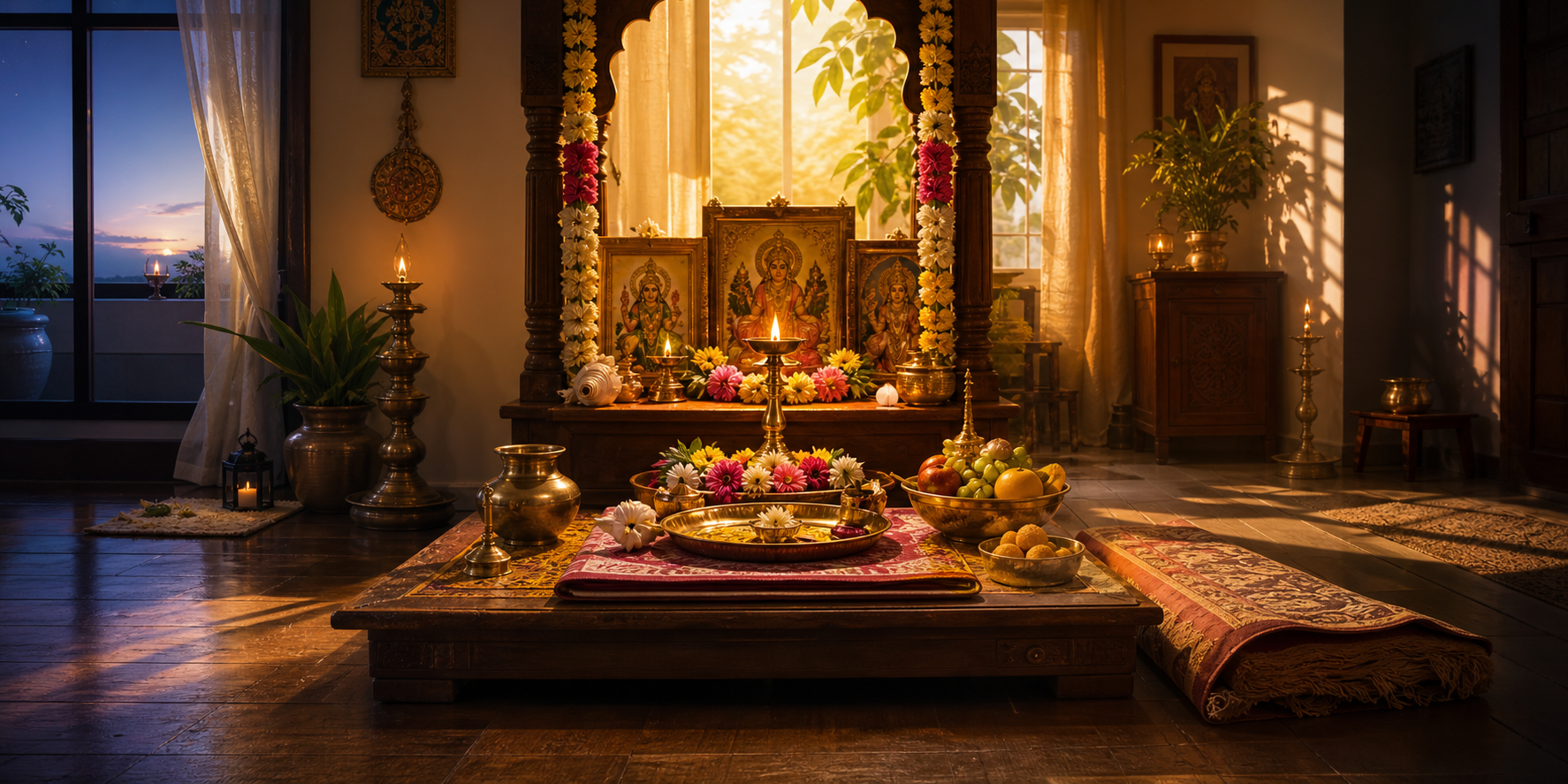
Purnima is a Tithi, not a midnight-to-midnight civil day. A Tithi is calculated from the changing longitudinal separation of the Sun and Moon. Each Tithi covers 12 degrees of that separation, with Purnima occurring around the point at which the Moon is 180 degrees from the Sun. This is why Purnima can end in the middle of an ordinary Tuesday rather than at sunset or midnight.
| Period | Tithi | What it means for you |
|---|---|---|
| March 3, before 4:33 PM IST | Purnima | Use this period for rites that must be completed while Purnima Tithi prevails. |
| March 3 from 4:33 PM IST | Krishna Paksha Pratipada begins | The waning fortnight has started, so do not assume that an evening activity still falls within Purnima. |
| March 4 until 4:15 PM IST | Krishna Paksha Pratipada continues | Use this period for the first-day disciplines of the waning fortnight. |
The two transition points are 4:33 PM IST on March 3 and 4:15 PM IST on March 4. For people outside India, those moments are approximately 11:03 UTC on March 3 and 10:45 UTC on March 4. Convert the UTC transition into your own time zone, and then verify it against a Panchang calculated for your city.
Key takeaways
- Tuesday, March 3, 2026 is the main Purnima civil date for households following the sunrise-based convention.
- Purnima Tithi ends at 4:33 PM IST, so morning and forenoon are the least ambiguous periods for home worship, recitation, daana, and temple visits.
- Do not postpone a Tithi-dependent rite until Tuesday evening merely because the Moon will be visible then. Krishna Paksha Pratipada will already have begun.
- Families following a Pradosha-vyapini rule may assign the fast or principal rite to the preceding civil date. Follow your parampara or local temple determination.
- Outside India, use the UTC transition as a starting point and obtain a city-specific Panchang before fixing the local date.
Choose the civil date by parampara, not convenience
The most likely source of confusion is the difference between sunrise-based and evening-based observance rules. Both exist within living Hindu traditions, and neither should be silently substituted for the other.
Under a sunrise-based convention, the Tithi prevailing at sunrise normally assigns the observance to that civil date. That points to March 3. Under a Pradosha-vyapini convention, the relevant Tithi must continue into the evening twilight. Because Purnima ends at 4:33 PM IST on March 3, a tradition applying that rule may place the fast or key worship on March 2. The exact decision belongs to the vrata rule and the family or temple tradition, not to personal preference.
- Check the date followed by your own family, sampradaya, monastery, gurdwara, Jain sangha, Buddhist community, or regular temple. Continuity of practice matters when more than one calendrical convention is valid.
- If the calendar gives March 2 and March 3 different roles, ask one precise question: Is this observance assigned by sunrise, or must Purnima prevail during Pradosha?
- If you are arranging Satyanarayan Puja, tell the priest that Purnima ends at 4:33 PM IST on March 3. Ask whether the complete puja must finish before that transition or whether your parampara uses the preceding evening.
- If you live outside India, do not copy the Indian civil date without conversion. Find the local time corresponding to 11:03 UTC on March 3, then check whether Purnima is present at your local sunrise or Pradosha as required.
- If no inherited rule applies, use one reputable city-specific Panchang consistently. Combining the date from one convention with the muhurta from another can produce an answer that belongs to neither system.
Regional month names can also make two correct calendars look contradictory. Purnimanta calendars, common in North India, end the lunar month on Purnima. Amanta calendars, used in parts of South India, end it on Amavasya. The same full moon may therefore be labelled Phalguna Purnima in one system and Magha Purnima in another. Before concluding that a calendar is one month wrong, check which lunar-month convention it uses.
A practical March 3 home observance
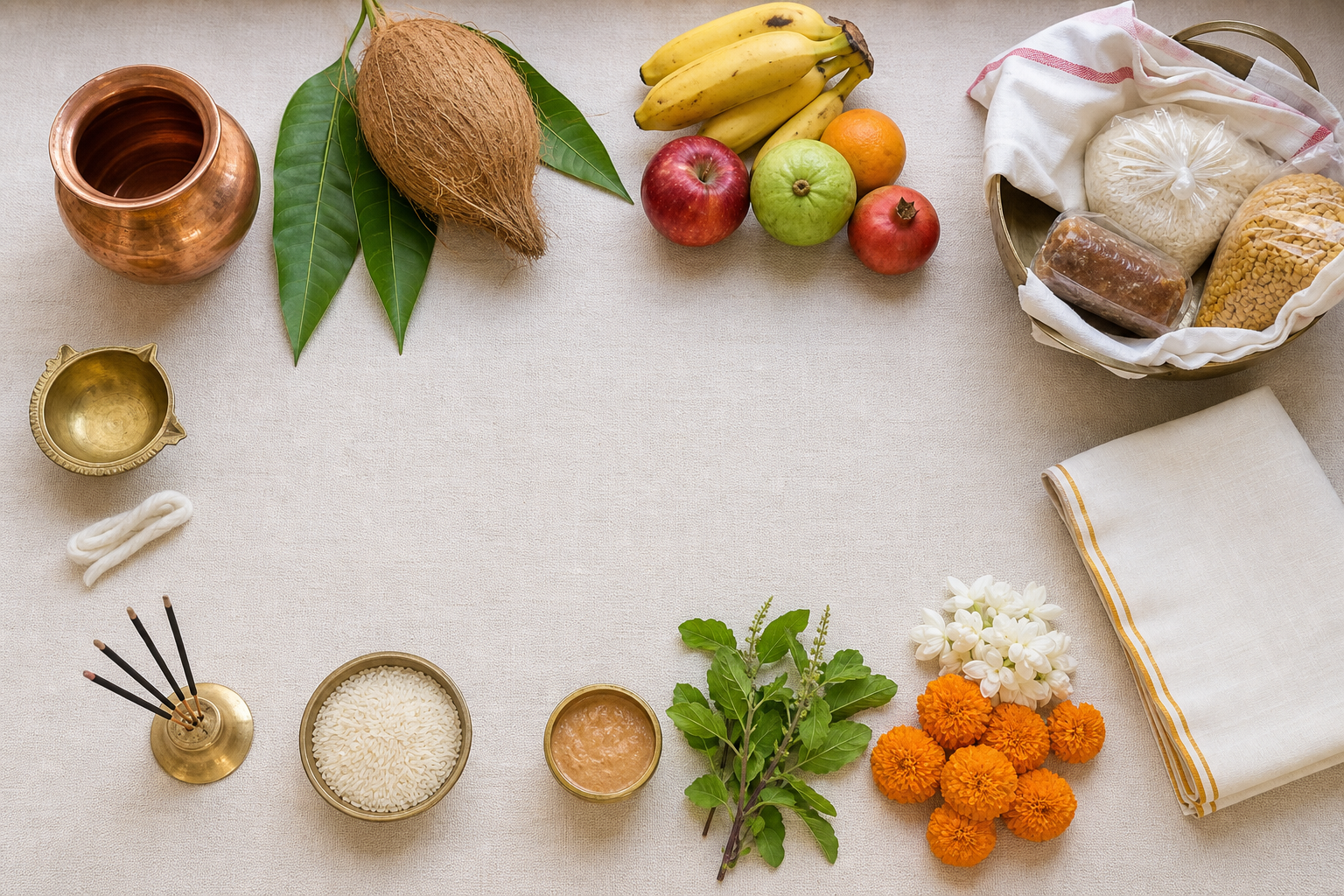
A useful Purnima plan should be simple enough to complete without rushing and specific enough that the afternoon transition does not catch you midway through a time-bound rite. You do not need to perform every possible practice. Choose a coherent vrata that fits your tradition, duties, and health.
- Prepare on March 2. Confirm your observance date, set aside puja materials, decide what you will give in daana, and check the temple schedule. Full-moon days can bring longer temple queues, so do not build a tightly timed home ritual around an uncertain return journey.
- Make the sankalpa on the accepted observance morning. State the vrata or discipline you are actually able to keep. A modest vow completed attentively is more meaningful than an elaborate plan abandoned through poor timing.
- Place the principal worship in the morning or forenoon. Depending on your tradition, this may include Satyanarayan Puja, japa, dhyana, Bhagavad-Gita recitation, or Vishnu Sahasranama. Follow your inherited liturgy for the sequence and offerings rather than improvising a universal ritual from unrelated customs.
- Complete daana while Purnima prevails if your intention ties the gift specifically to the full moon. Food distribution, support for a community need, and other useful giving express the ethical purpose of the day more clearly than accumulating ceremonial items that will not be used.
- Leave a margin before 4:33 PM IST. If your city-level Panchang shifts the transition slightly, or the puja takes longer than expected, a morning start protects the observance from avoidable uncertainty.
- After the transition, close the day quietly. Continue ordinary japa, reflection, seva, or study, but recognise that the calendrical phase has changed to Krishna Paksha Pratipada.
If you keep a food fast, use the form accepted in your tradition and compatible with your health. Do not override medical guidance for the sake of a stricter fast. When food restriction is not appropriate, the vrata can be expressed through disciplined recitation, restraint, charity, meditation, or service rather than through an unsafe practice.
Shared rhythm, distinct forms
The full moon also creates a recognisable rhythm across the wider dharmic family. Hindu households may observe vrata, puja, recitation, pilgrimage, and daana. Buddhist communities may mark full-moon Uposatha through intensified meditation and communal discipline. Jain practitioners may give greater time to svadhyaya, meditation, and charity. Sikh families who note Pooranmashi may emphasise simran, seva, and paath.
You can honour this shared orientation toward clarity, compassion, and self-discipline without pretending that all four traditions have the same theology or liturgy. If you are organising an inter-community activity, make service or silent contemplation the common ground and allow each community to retain its own prayers and observance rules.
How to choose a good time without misusing the Panchang
Purnima Tithi tells you an important part of the day, but it does not by itself establish a Shubh Muhurat. Classical selection considers the five limbs of the Panchang: Tithi, Vara or weekday, Nakshatra, Yoga, and Karana. Sunrise-based periods and, where relevant, the participant’s Tara Bala and Chandra Bala may refine the choice further.
For ordinary japa, study, charity, and a flexible temple visit, the morning Purnima window is a practical choice. For a sensitive samskara, initiation, major transaction, or rite that explicitly requires a particular Nakshatra, Karana, or Moon sign, obtain a calculation for the exact city. An all-India date is not a substitute for local muhurta work.
- Verify the city and local sunrise used by the Panchang. Rahu Kaal, Yamaganda, Gulika Kaal, and Abhijit Muhurta are derived from local daylight or solar timing, so copied clock times can be wrong.
- Confirm that Purnima still prevails for the entire required rite, not merely when it begins.
- Check Nakshatra and Rashi separately. They come from the Moon’s position among the lunar mansions and sidereal signs and can change independently of the Tithi.
- Check Yoga and Karana when the ritual prescription calls for them. A Karana is half a Tithi and can distinguish suitable action periods within the same lunar day.
- Apply Tara Bala and Chandra Bala only if your tradition or adviser uses personal birth-star considerations. They are refinements, not universal requirements for every act of worship.
Abhijit Muhurta is centred around local solar midday and is often treated as a generally favourable interval when no specialised muhurta is available. It should still be checked against the other Panchang factors for a rite with strict requirements. Do not assume that noon on the wall clock is automatically Abhijit Muhurta.
Tuesday’s Rahu Kaal illustrates why generic clock charts are risky. In a nominal 12-hour daylight period, the seventh division falls at approximately 3:00-4:30 PM. Actual timing changes with sunrise, sunset, season, and longitude. On March 3, that nominal interval also lies close to the 4:33 PM end of Purnima, making the final afternoon a poor place to squeeze in a new undertaking based on a rough timetable. Schedule earlier or obtain the exact local calculation.
Do not derive Nakshatra or Rashi from the Tithi
A common mistake is to assume that every Purnima has one fixed Nakshatra or Moon sign. Tithi measures the angular relationship between the Sun and Moon, while Nakshatra and Rashi describe the Moon’s own sidereal position. The three factors can change on different schedules. If a ritual requires a named Nakshatra or Rashi, look it up for your location and intended clock time rather than inferring it from the word Purnima.
Carry one discipline into Krishna Paksha
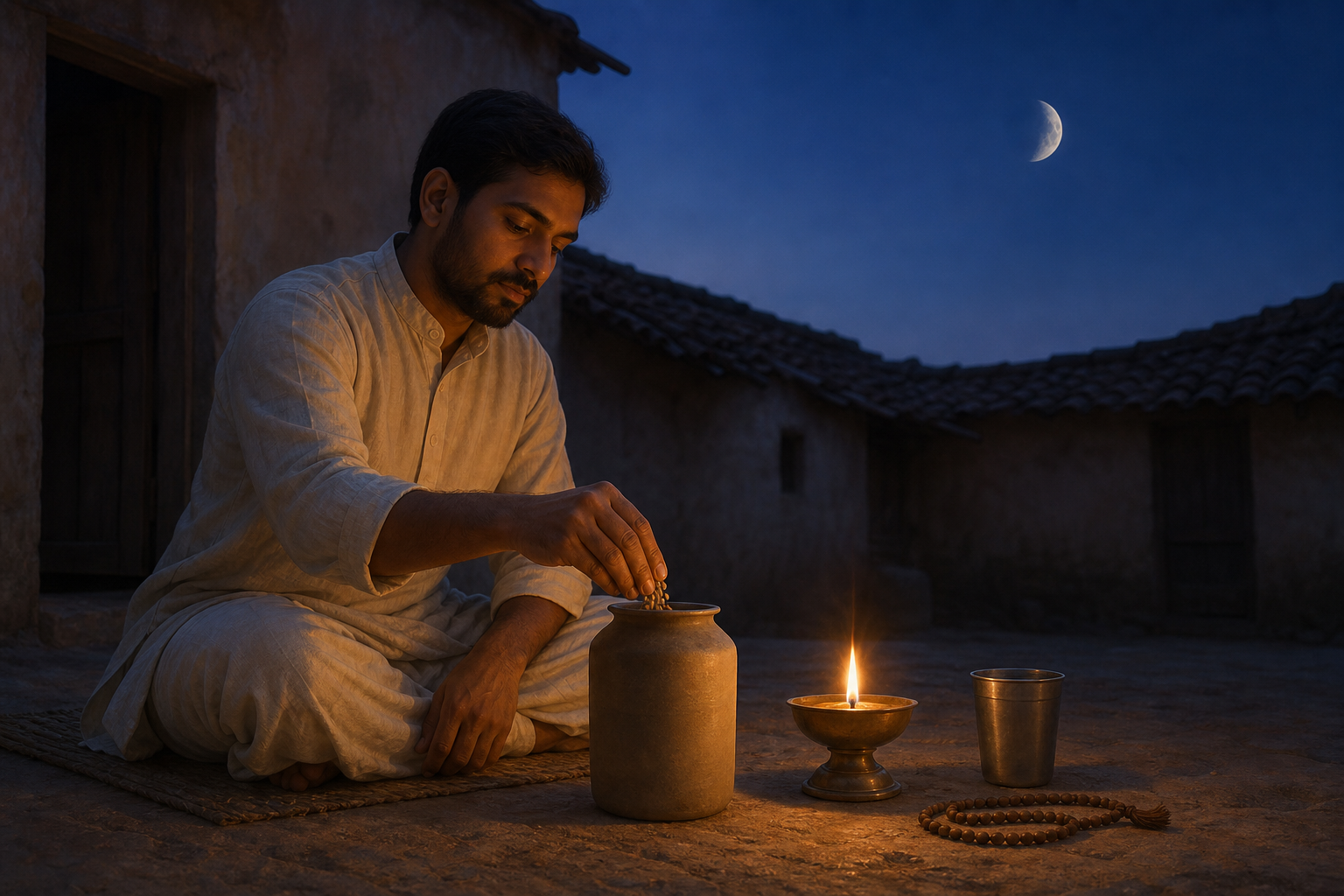
The transition at 4:33 PM IST is more than a technical end time. Purnima traditionally represents fullness and fruition; the waning fortnight turns attention toward simplification, inward examination, and steady tapas. Let the change of Paksha alter something concrete in your schedule.
Before March 3 ends, write down one discipline you will maintain through the waning phase toward Amavasya. It might be a fixed daily period of japa, a short passage of scriptural study after morning worship, one avoidable commitment removed from your calendar, or a recurring act of seva. Give it a defined place in the day. A vague intention to be more spiritual rarely survives an ordinary week; a practice attached to a time and action can.
You can also use the turn of the fortnight to review the sankalpa made on Purnima. Ask whether it produced greater clarity, compassion, restraint, or usefulness to others. Keep the part that did. Simplify the part that became display or burden. That is a practical way to let the lunar calendar shape conduct rather than merely label dates.
Put three details in your calendar now: the civil date accepted by your parampara, the local deadline for Purnima Tithi, and the one practice you will carry into Krishna Paksha. Once those are settled, the observance can remain attentive instead of becoming a last-minute argument with the clock.
References
