
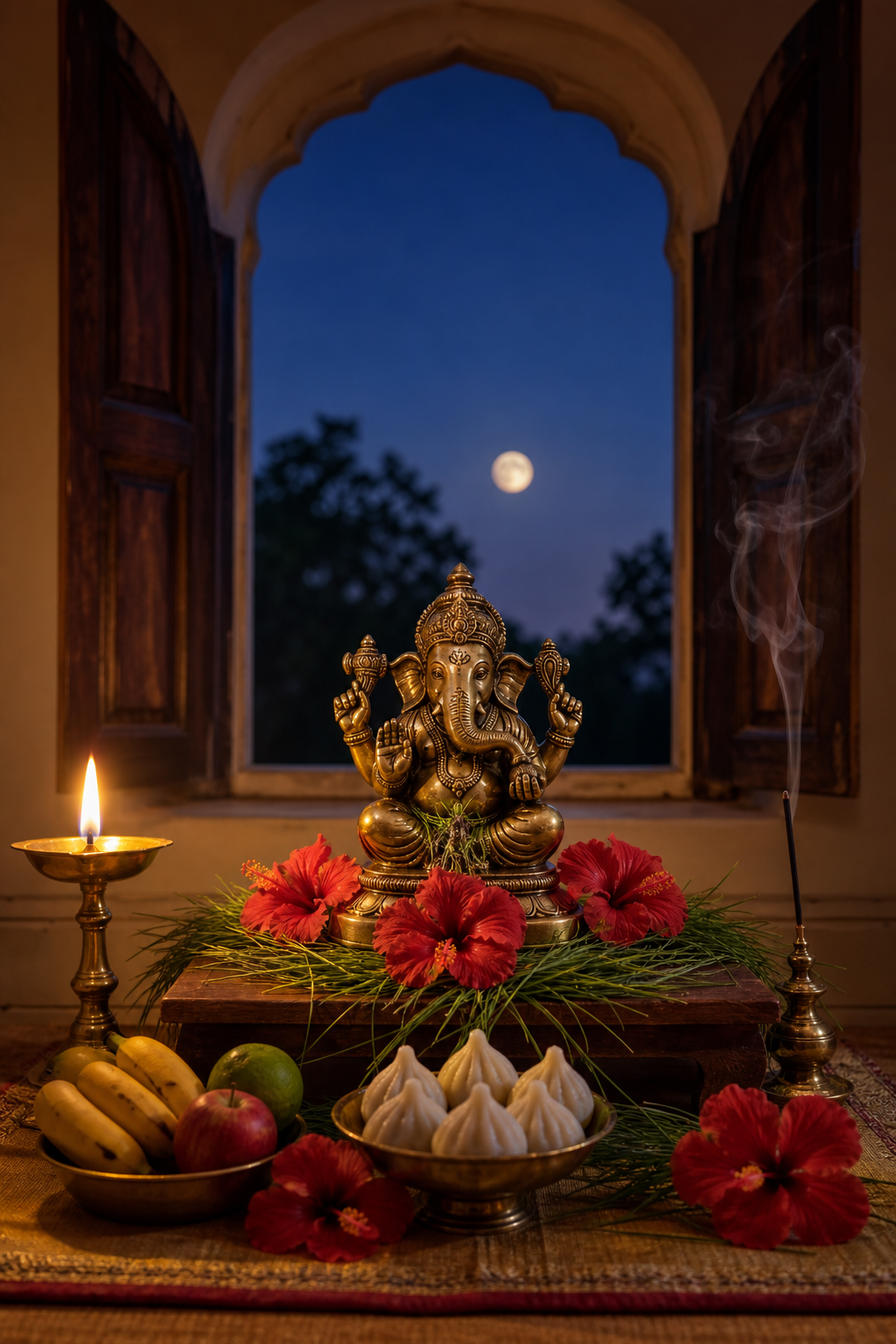
If you are planning a Sankashti fast or an evening Ganesha puja on March 7, the practical question is not merely which tithi appears beside the date. You need to know whether Chaturthi is still active at your location when you intend to worship and when the Moon rises.
Saturday, March 7, 2026 is listed as Krishna Paksha Chaturthi until 6:28 PM, followed by Krishna Paksha Panchami. Use that transition as the day’s central planning point, but confirm the corresponding local time before making a tithi-bound sankalpa.
Key takeaways for March 7
- March 7, 2026 falls on a Saturday.
- Krishna Paksha Chaturthi continues until the stated transition at 6:28 PM; Panchami follows for the remainder of the evening.
- Many Hindu traditions associate this monthly Chaturthi with Sankashti observance and Ganesha worship.
- If you are keeping the vrata, check both the local Chaturthi end time and local moonrise. The relationship between those two times affects how some traditions conclude the fast.
- Do not copy Rahu Kalam, Abhijit Muhurat, Choghadiya, Nakshatra, or Moon-sign timings from another city. These must be calculated for your location.
Why the 6:28 PM transition needs a local check
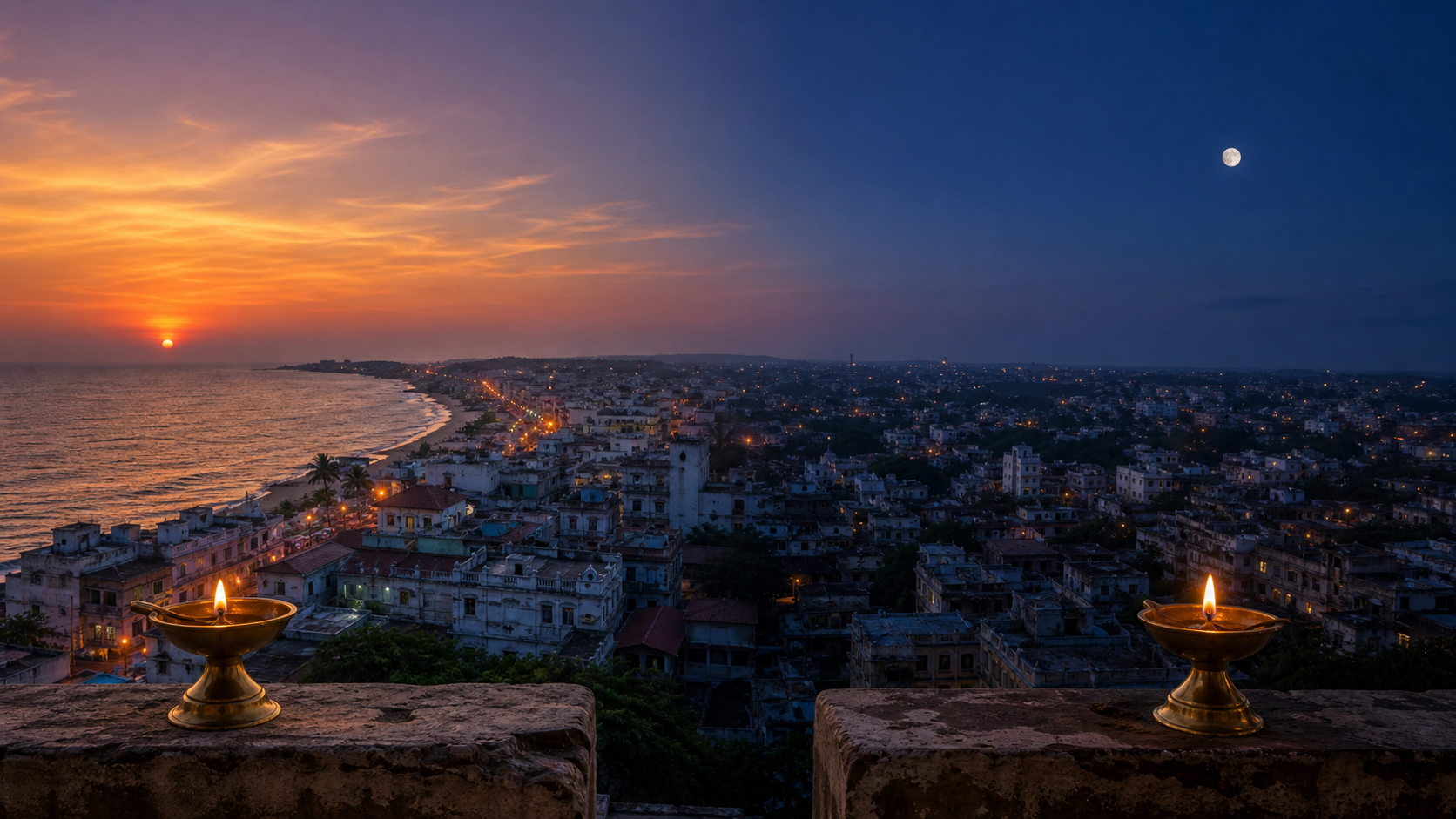
A tithi does not begin or end at midnight. It is determined by the changing angular relationship between the Sun and Moon, with each tithi covering 12 degrees of relative movement. The change from Chaturthi to Panchami therefore occurs at an astronomical boundary rather than at a convenient civil-clock boundary.
The stated 6:28 PM transition should not be treated as a portable clock time for every place in Bharat or the diaspora. Time zones, geographical coordinates, local sunrise and the conventions used by a particular Panchang can produce a different displayed time or observance decision. A calendar prepared for one city is not automatically valid in another.
Before arranging your puja, open a reputable Panchang set to the city where you will actually perform it. Record these four items together:
- The local ending time of Krishna Paksha Chaturthi.
- The local moonrise time.
- The Nakshatra operating during your intended puja.
- Any Rahu Kalam, Yamaganda, Gulika, Abhijit or Choghadiya periods that your family normally observes.
If your local listing differs from 6:28 PM, follow the locally calculated time. If two local calendars disagree in a way that changes the vrata, use the calendar followed by your temple, guru, family tradition or sampradaya rather than switching between systems to obtain a preferred result.
How to plan the Sankashti Chaturthi observance
Sankashti Chaturthi centres the day on Bhagavan Ganesha, removal of obstacles and the cultivation of steadiness. The outer discipline can vary, but your plan should settle three things in advance: the form of fasting, the time of worship and the condition under which the vrata will be concluded.
- Make a clear sankalpa consistent with your parampara. Decide whether you are keeping the customary fast, a modified fast or a devotional observance without fasting.
- Prepare for worship before the local Chaturthi endpoint. Keep the altar and offerings ready so that avoidable household delays do not push a tithi-bound puja past the transition.
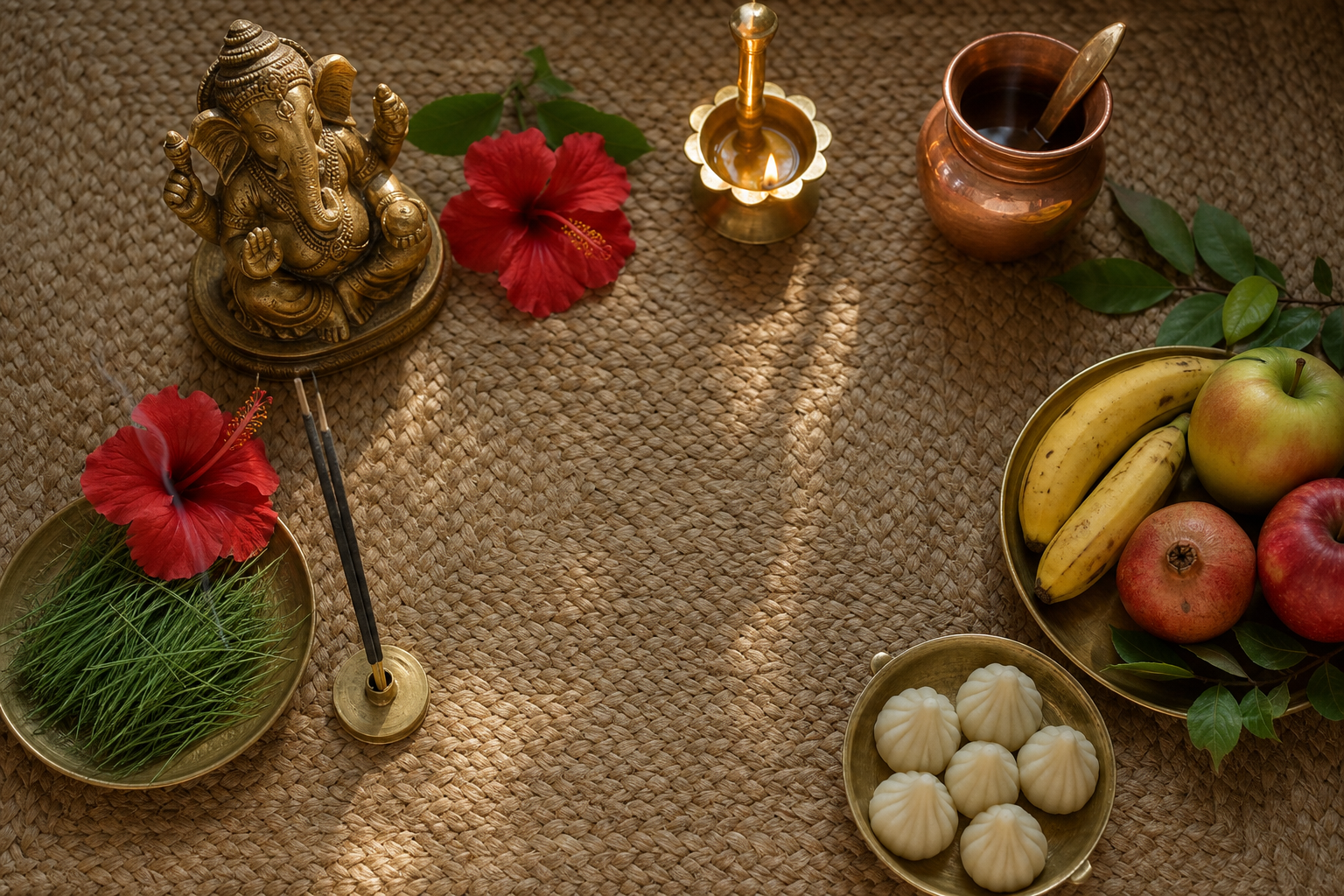
- Worship Ganesha in the manner taught in your home or temple. Durva grass and modaka may be offered where they are customary; a simple diya and Ganesha dhyana are appropriate when an elaborate puja is not practical.
- Check whether Chaturthi remains at local moonrise. Where it does, many devotees sight the Moon, offer arghya and then conclude the fast.
- If Chaturthi ends before local moonrise, follow your inherited rule. Some traditions permit completion as the tithi ends, while others continue to give moonrise the decisive role.
- Close with a sattvic offering or meal, gratitude and, where possible, an act of daana or seva.
Do not quietly combine two incompatible rules when Chaturthi ends before moonrise. Concluding at the tithi boundary and concluding after Chandrodaya represent different customary approaches. The sound decision is the one rooted in your parampara and a locally valid calendar.
A vrata should also be undertaken responsibly. Anyone for whom fasting may be unsafe because of illness, medication, pregnancy, age or another health condition should follow appropriate medical guidance and choose a form of observance that does not create harm. Ganesha worship, japa, daana and disciplined conduct remain meaningful even when a food fast is not appropriate.
Choose Muhurat only after fixing the place and purpose
There is no single universal “good time” on March 7. A suitable window depends on what you are doing, where you are doing it and which Panchang factors your tradition applies. The tithi may determine the ritual day, while Muhurat tools refine the time within that day.
Abhijit Muhurat is a midday auspicious interval. Day or night Choghadiya may identify favourable segments such as Labh and Shubh. Many households also avoid Rahu Kalam, Yamaganda and Gulika for selected undertakings. None of these should be assigned a clock time until local sunrise and sunset have been taken into account.
- Set the Panchang to the location where the act will occur, not to your birthplace or the city of the temple you usually follow online.
- Name the act precisely: Ganesha puja, daana, travel and the beginning of an important undertaking need not be treated as the same decision.
- Protect the required tithi first when the rite is tithi-bound.
- Within that valid period, consider Abhijit or favourable Choghadiya if your custom uses them.
- Exclude Rahu Kalam, Yamaganda or Gulika only according to the rules you actually follow; do not accumulate every available restriction without regard to tradition.
- Confirm the Nakshatra and Moon’s Rashi at the time of the act if they matter to your sankalpa. Both can change as the Moon moves, so a date-only label is insufficient.
This order prevents a common Panchang mistake: choosing an attractive generic Muhurat while overlooking that the relevant tithi has already ended. For a Sankashti observance, the Chaturthi boundary and moonrise relationship deserve attention before secondary refinements.
A simple practice when you cannot keep the full vrata
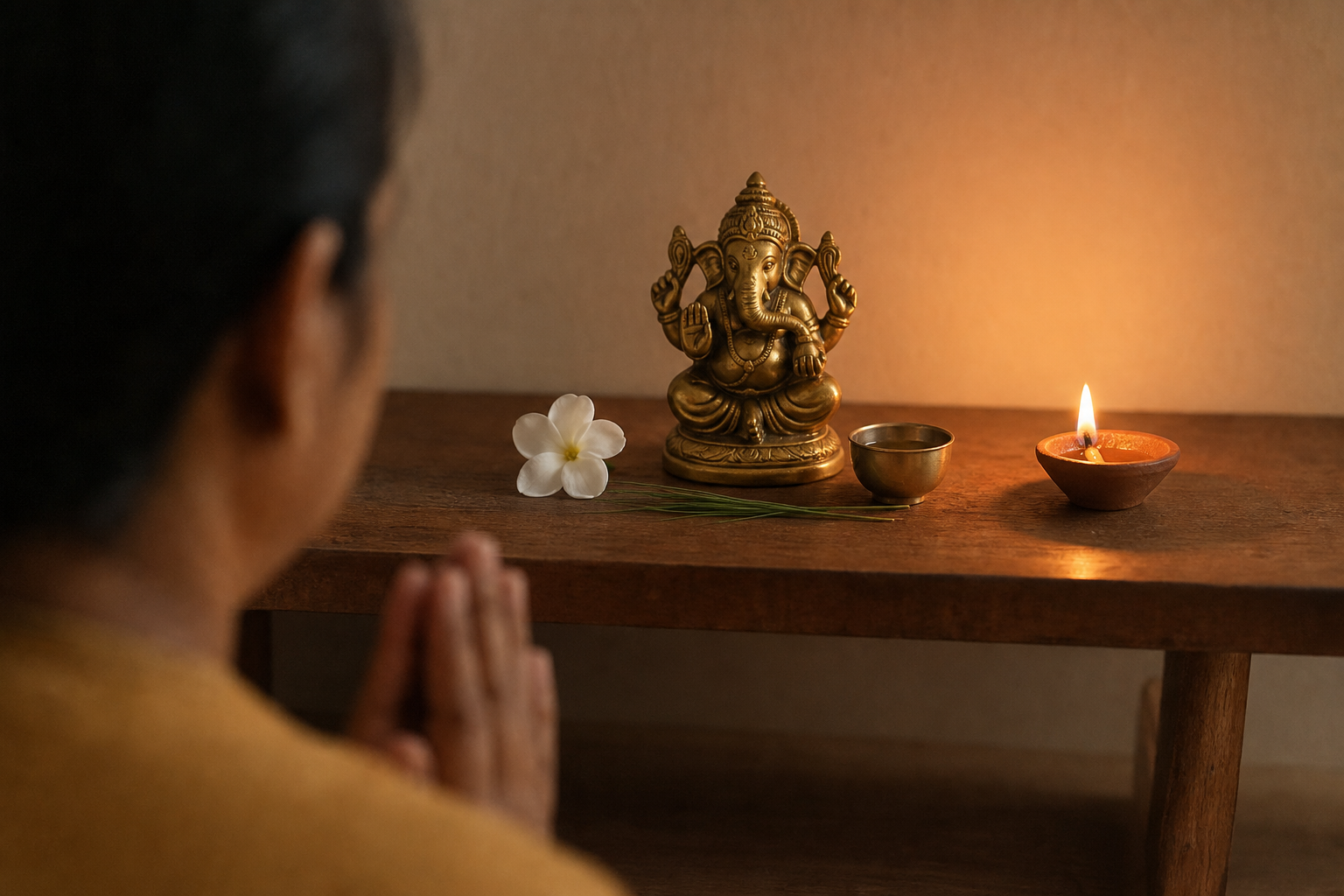
You do not need an elaborate household ceremony to let the Panchang shape the day. If work, health or family duties prevent a full fast, keep the observance coherent rather than abandoning it or performing it hurriedly.
- Begin with quiet meditation or japa before sunrise if your routine permits.
- Identify one obstacle you are meeting through distraction, fear or poor discipline, and include the corrective intention in your sankalpa.
- Set aside an uninterrupted evening period for Ganesha dhyana before the locally applicable Chaturthi endpoint.
- Light a diya at dusk and make the offering customary in your home.
- Turn prayer into conduct through daana, seva or a deliberate act of patience.
- Take a sattvic meal with gratitude if that is the form of observance appropriate for you.
The lunar cadence also reaches beyond one Hindu household. Jain observances make extensive use of tithi, several Buddhist communities organise practices around lunar phases, and Sikh calendar history includes the Bikrami system alongside contemporary use of the Nanakshahi calendar. These traditions are not interchangeable, but noticing their shared attention to sacred time can deepen respect without erasing their distinctions.
Before March 7, save your city’s Chaturthi endpoint and moonrise beside your puja checklist. That small act of preparation will let you spend the evening in worship instead of trying to resolve calendar rules after the boundary has arrived.
References
