

Your August 2026 calendar may show several observances crowded into the final days of Shravan. The challenge is not finding enough time for every possible puja. It is deciding which observances belong to your region and parampara, which date governs each one, and whether a clock time copied from another place applies where you live.
The late-Shravan sequence becomes manageable once you separate three things: the tithi, the named festival date, and your own household or temple practice. Use the plan below to make those decisions before the week begins.
Put the late-Shravan dates on one calendar

Start with the sequence rather than treating August 26 and August 28 as unrelated festival entries. Shiva Pavitraropan comes first, followed by the Purnima window and the two observances assigned to Shravan Purnima.
| Date or window | Observance | What you need to decide |
|---|---|---|
| August 26 | Shiva Pavitraropan on Shravan Shukla Paksha Trayodashi | Whether this regional Shaiva observance belongs to your temple, family, or inherited practice |
| August 27 at 9:08 a.m. to August 28 at 9:48 a.m. | Shravan Purnima tithi | Which local panchang and location-specific timing you will follow |
| August 28 | Raksha Bandhan and Hayagriva Jayanti | How to give family observance and knowledge-centered worship their own clear place |
Shiva Pavitraropan is observed mainly in Odisha, Andhra Pradesh, and Karnataka. Its distinctive offering is the pavitra, described here as cotton threads offered to Shiva. That regional concentration matters. A festival appearing on a national calendar does not automatically create an obligation for every Hindu household.
If Pavitraropan is part of your community’s living practice, ask your temple or family priest about the expected preparation before August 26. If it is not, you need not improvise an elaborate ceremony from a brief calendar entry. You can retain your customary Shravan worship of Shiva without claiming to perform a rite you have not received or learned.
Read the Purnima window without confusing it with the festival date

A tithi does not begin and end at civil midnight. In this case, Shravan Purnima begins at 9:08 a.m. on August 27 and ends at 9:48 a.m. on August 28. Raksha Bandhan is assigned to August 28. Those facts are compatible: a tithi can cross two civil dates, while the festival is observed on the date selected by the applicable calendrical rule.
Do not read the beginning of Purnima on August 27 as permission to shift every Purnima observance to that date. Festival determination may depend on sunrise, the required portion of the day, and the rules followed by a particular tradition. The named observance date here is August 28.
The clock times should also be treated as planning markers until you check them for your location. This is especially important if you live outside Bharat: the same astronomical boundary appears at a different local clock time in Toronto, London, Singapore, or Sydney. Even within one country, a local panchang is preferable when a tithi ends during the morning.
Before adding a ritual time to your calendar, verify three fields:
- Your city or the city where the ritual will actually be performed.
- The panchang convention followed by your family, sampradaya, or temple.
- The temple’s announced gathering time, which may be arranged around both tithi requirements and practical access.
Keep the tithi window and the gathering time as separate entries. Writing only August 28, 9:00 a.m. can make a practical meeting look like a universal muhurta. A clearer calendar entry says what the time represents: local tithi boundary, home puja, temple programme, or family gathering.
Choose the devotional center instead of forcing every observance together
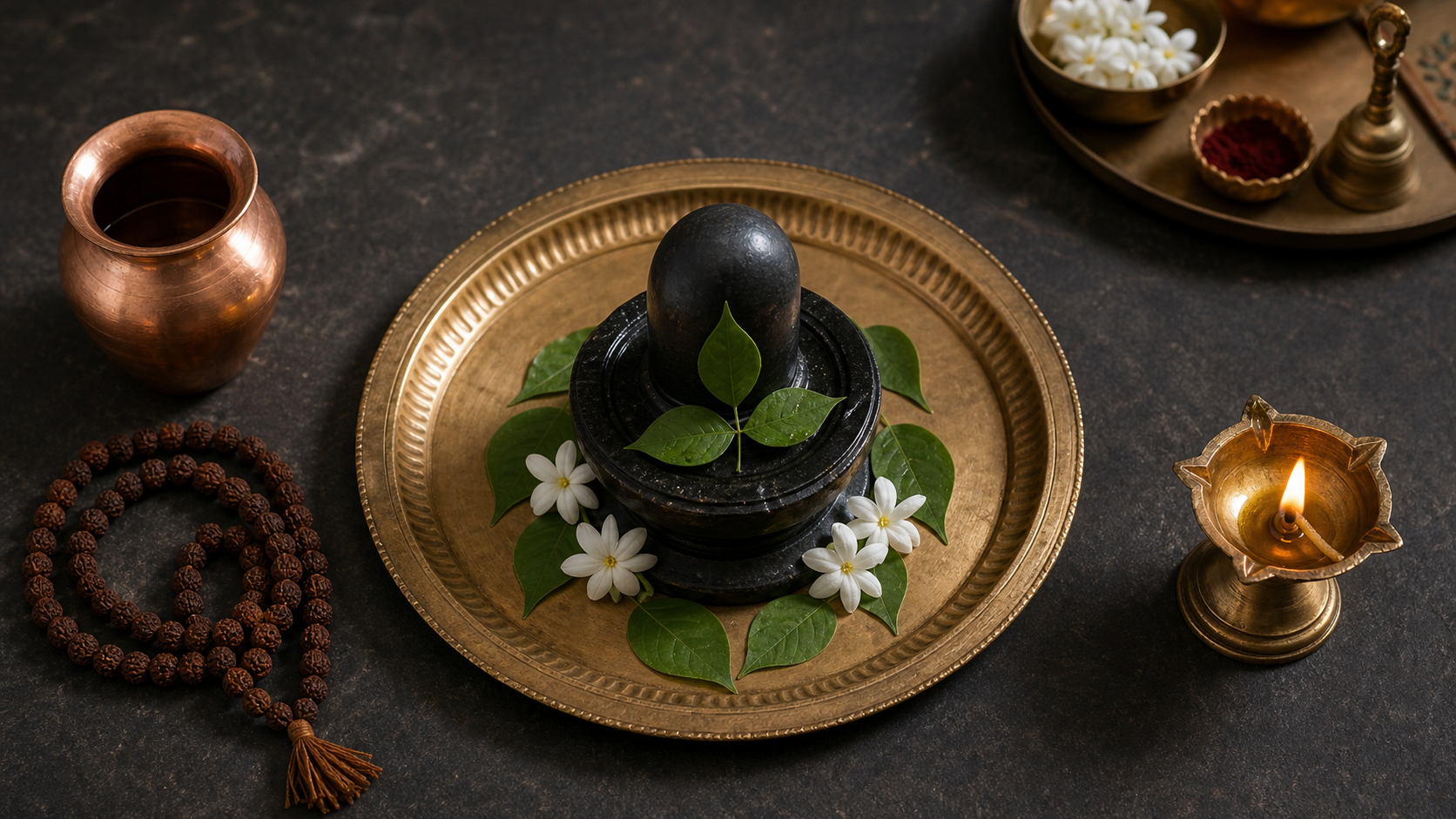
The shared calendar date does not erase the identity of each practice. Pavitraropan is Shaiva and regionally concentrated. Raksha Bandhan belongs to a family and relationship setting. Hayagriva Jayanti turns attention toward Bhagavan Hayagriva as the deity of wisdom and knowledge. You may observe more than one, but each should retain its own intention.
If Shiva Pavitraropan belongs to your tradition
Prepare for August 26 rather than waiting for Purnima. Confirm whether your temple supplies the pavitra or expects devotees to bring clean cotton threads. Follow the form of Shiva worship already known in your household, and ask for instruction before adding unfamiliar mantras or ritual stages. The calendar tells you the occasion; it does not replace a transmitted procedure.
If you are observing simply at home, keep the act proportionate to what you know: clean the worship space, make the thread offering with reverence, use a familiar Shiva prayer, and close the worship as your family normally does. Present that as your household observance, not as a complete temple-scale Pavitraropan ceremony.
If Raksha Bandhan is your principal observance
Reserve August 28 for the people involved before you plan additional rites. Confirm who will be present, whether anyone is travelling, and which family customs need to be prepared. Let your inherited practice decide the sequence, prayers, food, and other materials rather than replacing it with a generic online checklist.
If relatives are separated by distance, settle the practical arrangement early. A brief remote participation planned with care is better than discovering on the morning of August 28 that the relevant people are unavailable. The relationship should remain the center of the observance; the calendar reminder is only its container.
If Hayagriva Jayanti is central to your worship
Hayagriva Jayanti falls on Shravan Purnima, August 28, and honors Lord Hayagriva as the deity of wisdom and knowledge. That gives you a concrete way to connect devotion with disciplined learning.
A modest home observance can place the work you genuinely need to undertake before the deity: a scripture passage, a school text, a language notebook, or another serious course of study. Use the prayer or name already familiar in your tradition. Then write down one measurable commitment, such as the chapter you will finish or the regular study period you will protect. This practical commitment is an editorial suggestion for carrying the devotional intention forward, not a claim that it is a mandatory ritual step.
If your temple has a formal Hayagriva observance, follow its procedure and timing. If it does not, simplicity is preferable to assembling fragments from unrelated traditions. Knowledge-centered worship should cultivate attention and humility, not anxiety about reproducing an elaborate ceremony.
Use a four-step plan from August 25 to August 28
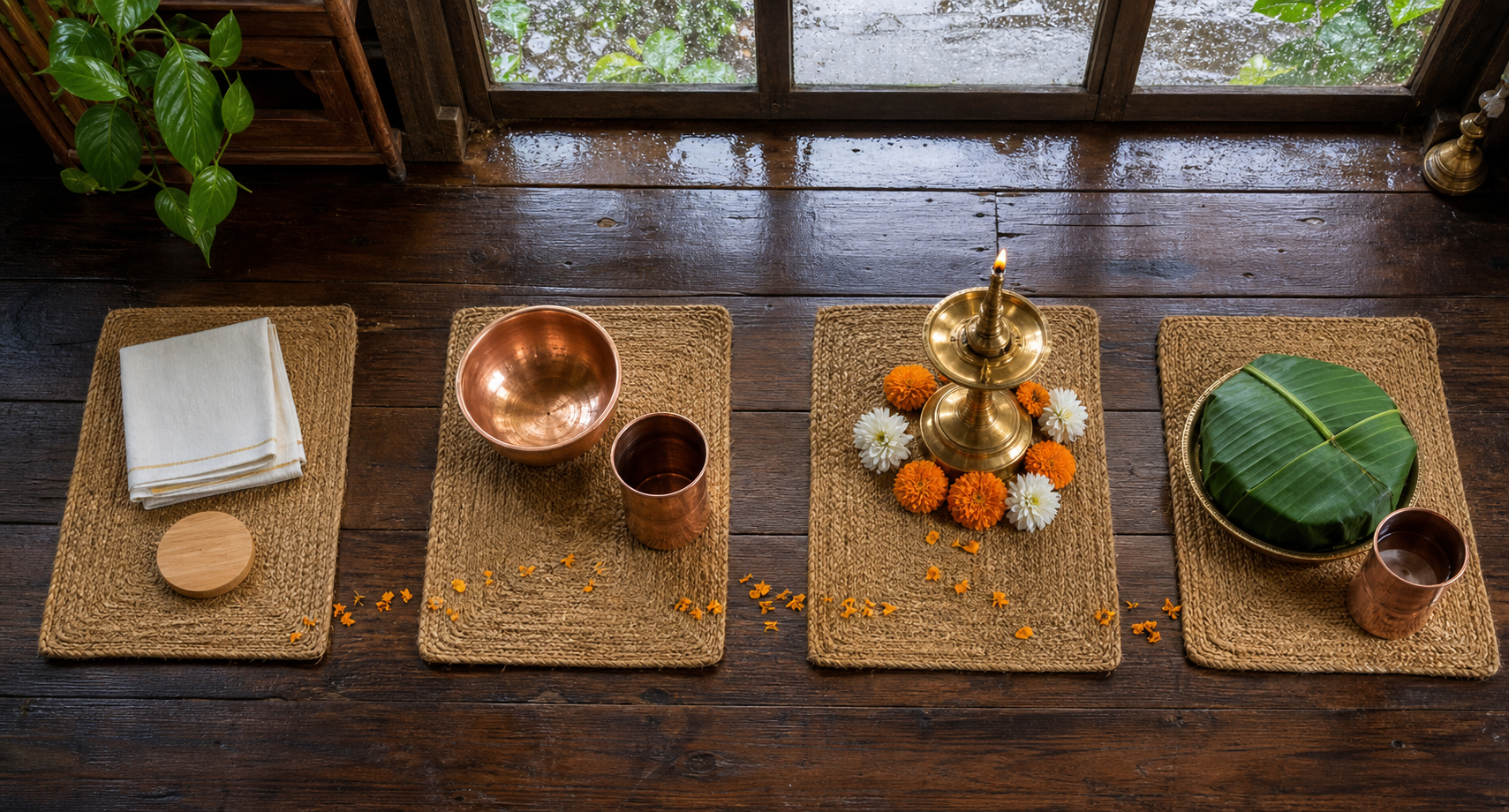
The observances are close enough that delay creates confusion. A short written plan keeps preparation, timing, and intention from collapsing into one hurried morning.
- By August 25, decide which observances actually belong to your household. Check your local panchang and any temple announcement. If you are unsure about Pavitraropan, contact the relevant Shaiva temple before buying or preparing materials.
- On August 26, observe Shiva Pavitraropan if it is part of your practice. Keep the cotton-thread offering and the form of worship aligned with the instruction you have received. If it is not your practice, continue your customary Shravan worship without feeling required to imitate a regional rite.
- On August 27, prepare for Purnima without automatically moving the August 28 festivals forward. Confirm family availability for Raksha Bandhan, arrange the materials customary in your home, and select the text or learning commitment you will place at the center of Hayagriva worship.
- On August 28, give each observance a distinct moment. Complete the time-sensitive worship according to your local panchang, hold the family observance according to family custom, and make the Hayagriva prayer and study commitment without blending their purposes into an indistinct festival routine.
If work, travel, health, or caregiving limits what you can do, use a clear priority rule: honor an established family or initiated practice first, join the local community observance where feasible, and add optional practices only when you can perform them attentively. The number of festival names on a calendar is not a measure of devotion.
The same rule helps when temple and household schedules overlap. Decide in advance which rite requires communal participation and which can be observed quietly at home. Do not wait until the tithi is ending to negotiate travel, family calls, and study commitments.
Key takeaways
- August 26 is Shiva Pavitraropan, a Shravan Shukla Trayodashi observance found mainly in Odisha, Andhra Pradesh, and Karnataka, with cotton threads offered to Shiva.
- Shravan Purnima is listed from 9:08 a.m. on August 27 to 9:48 a.m. on August 28, but those clock times must be checked against a panchang for the place where you will worship.
- Raksha Bandhan and Hayagriva Jayanti are observed on August 28.
- Hayagriva Jayanti can anchor a serious commitment to learning, while Raksha Bandhan should retain its family-centered purpose.
- You do not need to perform every listed observance. Give priority to your parampara, family custom, and local temple practice.
Open your calendar now and make three separate entries: the local tithi window, the people or temple involved, and the preparation each observance requires. That small distinction will let you enter late Shravan with attention instead of spending its final morning sorting out dates.
References
- Hindu Pad – Purnima August 2026 date, Time | 28 August 2026
- Hindu Pad – Shiva Pavitraropan 2026 | Shiva Pavitraropanam
- Hindu Pad – Hayagriva Jayanti 2026 | Lord Hayagreeva Jayanthi
