
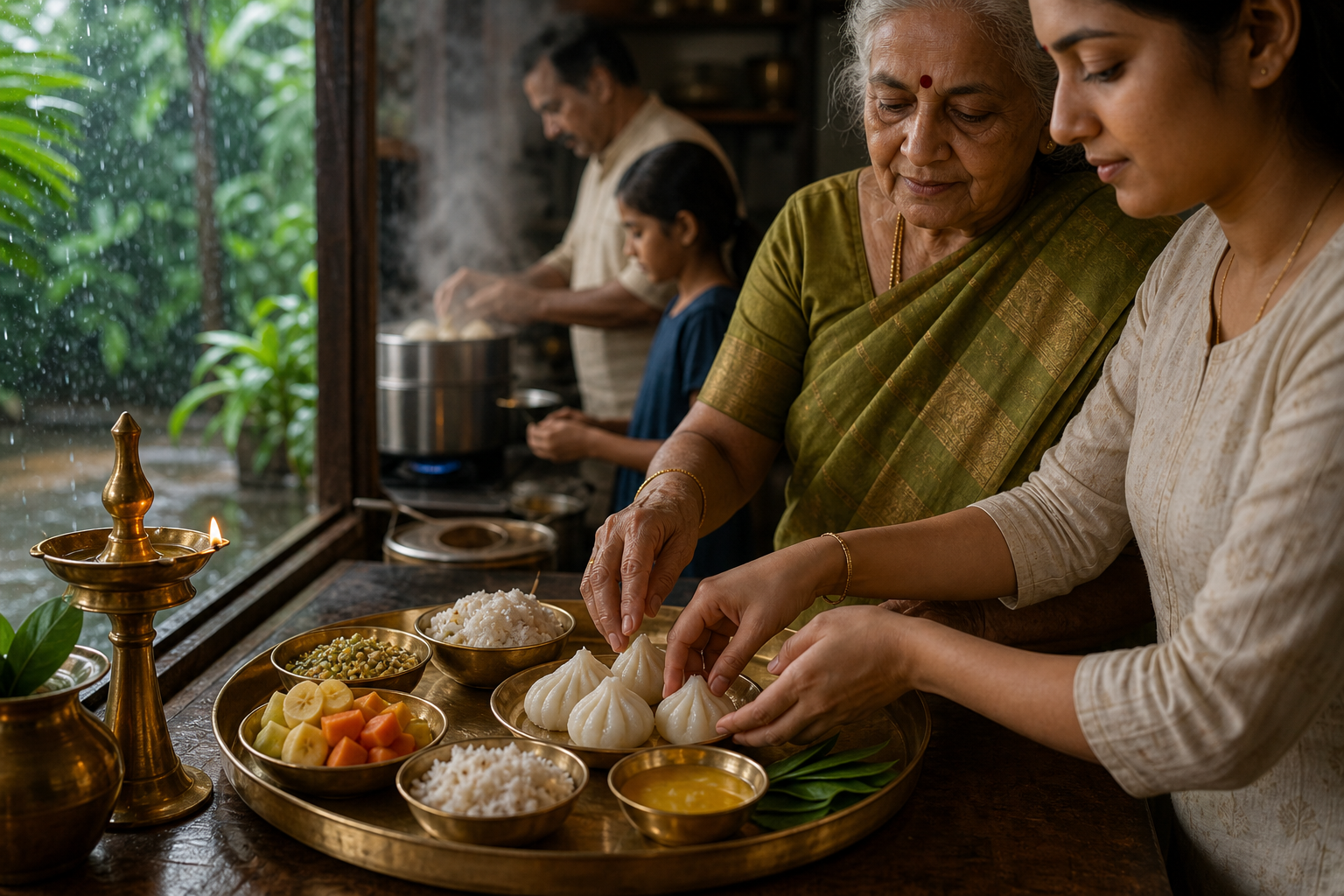
You know the festival, but you are not sure what belongs on the offering plate, what can be eaten during the vrata, or which family recipe is essential. A generic list of festive dishes will not solve that problem. It may leave you with an impressive meal that has little connection to the observance you meant to honour.
Begin with the ritual purpose of the food. Then recover the regional practice, the household sequence and the meaning carried by each preparation. That method will help you plan a sincere monsoon-festival meal even when part of your family knowledge has been lost.
Why one monsoon-festival menu will mislead you
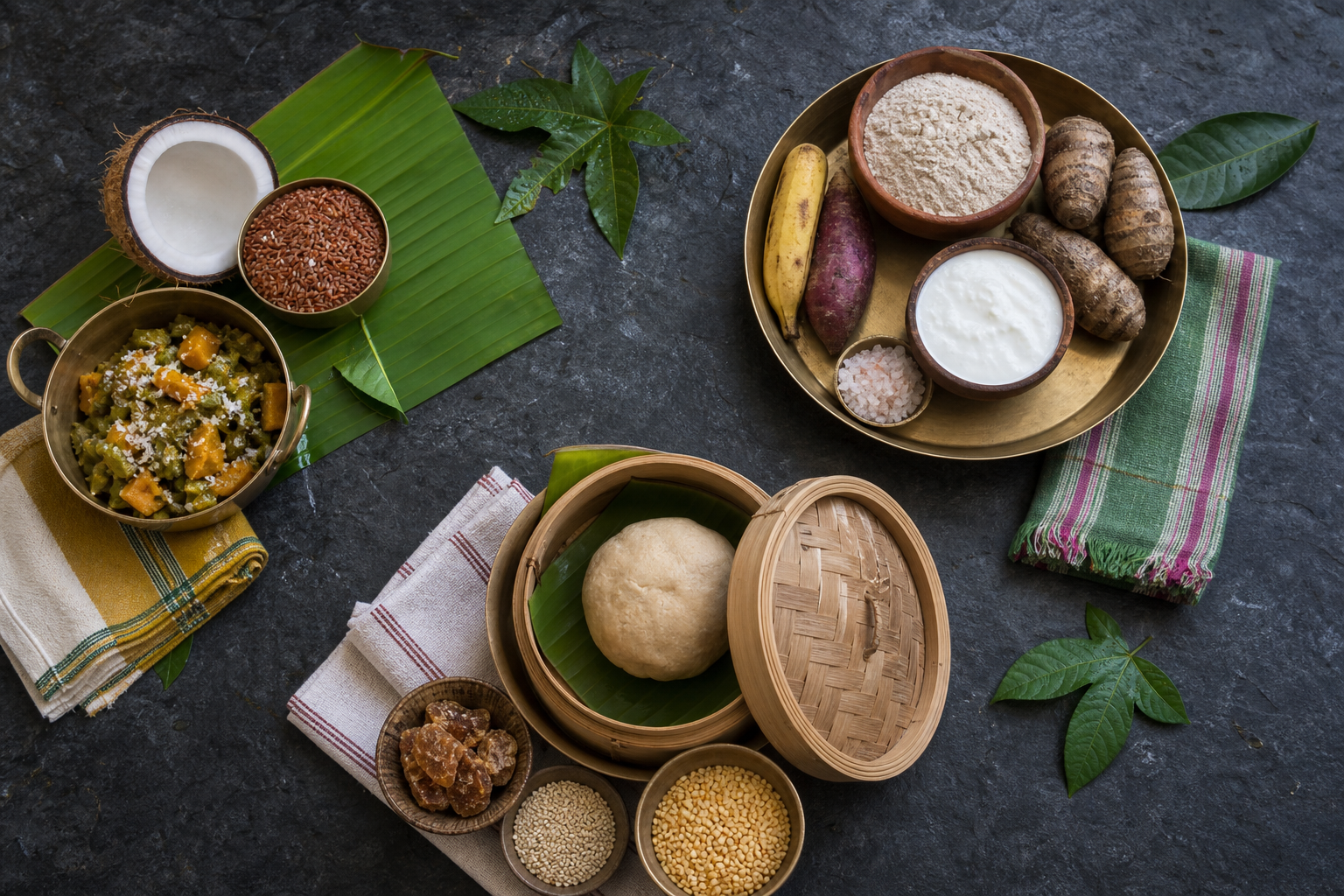
Hariyali Teej and Nag Panchami both belong to the sacred atmosphere of the monsoon, but they do not have the same devotional grammar. Hariyali Teej is cherished across northern India as a festival dedicated to Goddess Parvati and Lord Shiva. Its kitchen traditions join devotion, festive preparation and family participation.
Nag Panchami falls on the fifth day of the bright half of Shravan and honours the serpent deities, whose protection and blessings are sought. Its foods therefore belong to a different ritual relationship. Sharing a season does not make the two observances interchangeable.
This distinction matters whenever you encounter a confident claim that one dish is the authentic monsoon-festival food. Authentic for which festival, region, community and household? A preparation may be central in one place, supplementary in another and absent somewhere else. Variation is not evidence that the tradition lacks coherence. It shows how Dharma lives through particular families and localities.
Write three coordinates at the top of your planning page before you choose a recipe: the exact observance, the region whose practice you are following, and the family or community that transmitted it. If you do not know the third, say so plainly. Follow a trusted local practice without presenting it as the single rule for every Hindu household.
A sacred preparation has a ritual job
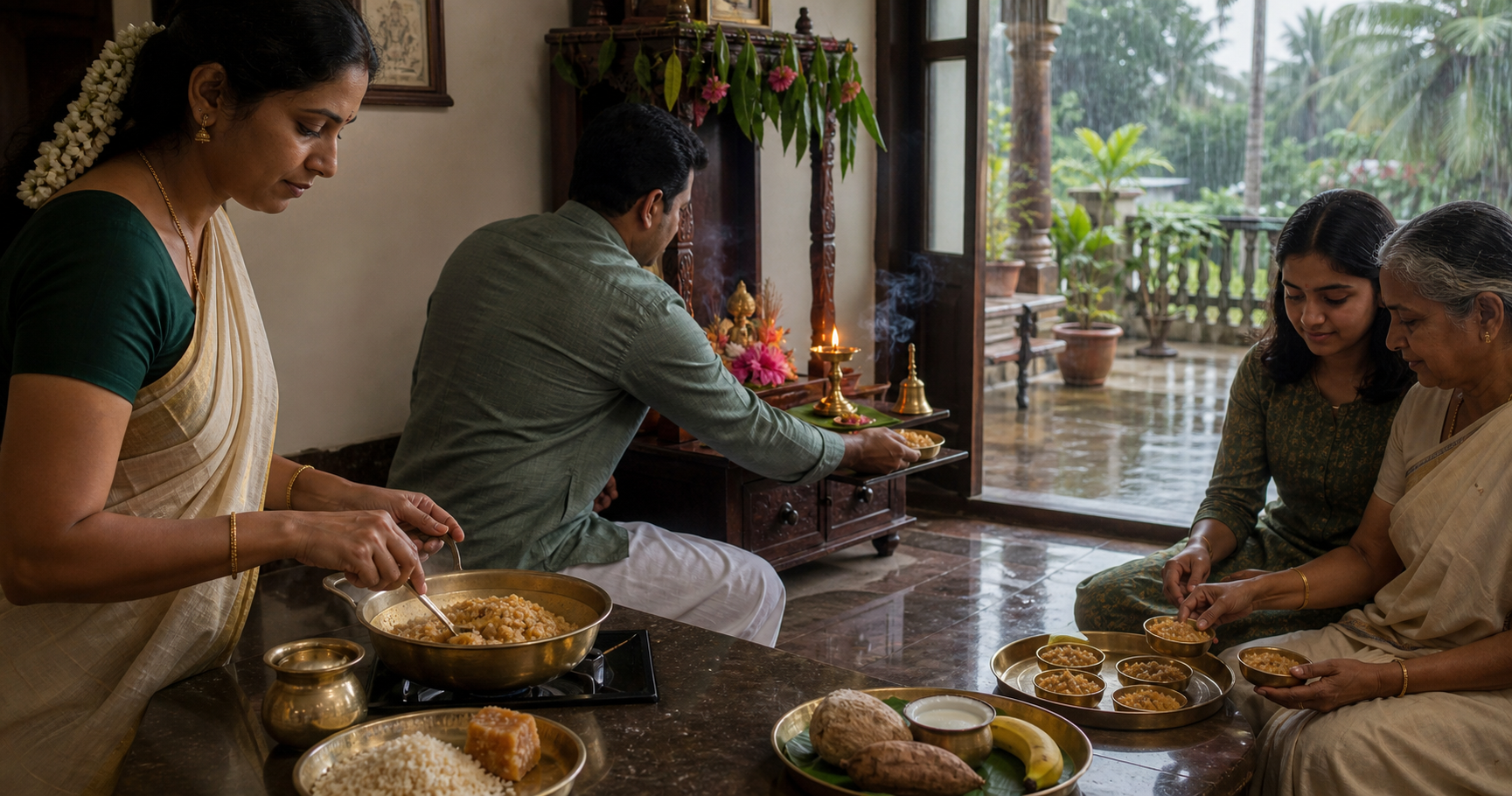
Sacred food is not defined by expense, complexity or an exotic ingredient. Its meaning comes from what it is prepared for, how it enters worship and what happens to it afterward. The same preparation can have different significance depending on its place in that sequence.
First, food may be prepared as naivedya, an offering presented to the deity. Second, a preparation may belong to a vrata and conform to the rules observed by the person keeping that vow. Third, offered food may be received and distributed as prasada. Finally, the wider festive meal may extend hospitality and renew relationships among relatives and neighbours. These roles can overlap, but you should not assume that every item on the dining table belongs on the offering plate, or that every offering is intended as a fasting food.
Ask four questions before shopping: What will be offered? What may the person keeping the vrata consume, and at what point? What will be distributed as prasada? What belongs only to the meal shared after worship? Those answers reveal more than a long recipe catalogue because they restore the order in which the food becomes meaningful.
Process matters as well. Find out whether the household has rules about tasting during preparation, particular vessels, who prepares the offering, when the first portion is set aside, and how it is served. Do not turn a local answer into a universal command. Record it as the discipline of the tradition you are actually following.
This also prevents a common mistake: treating appearance as a substitute for ritual fitness. A beautifully decorated preparation is not automatically appropriate for naivedya. A simple family food, made according to the inherited rule and offered with attention, may carry far more continuity.
How to rebuild the meal when family knowledge is incomplete
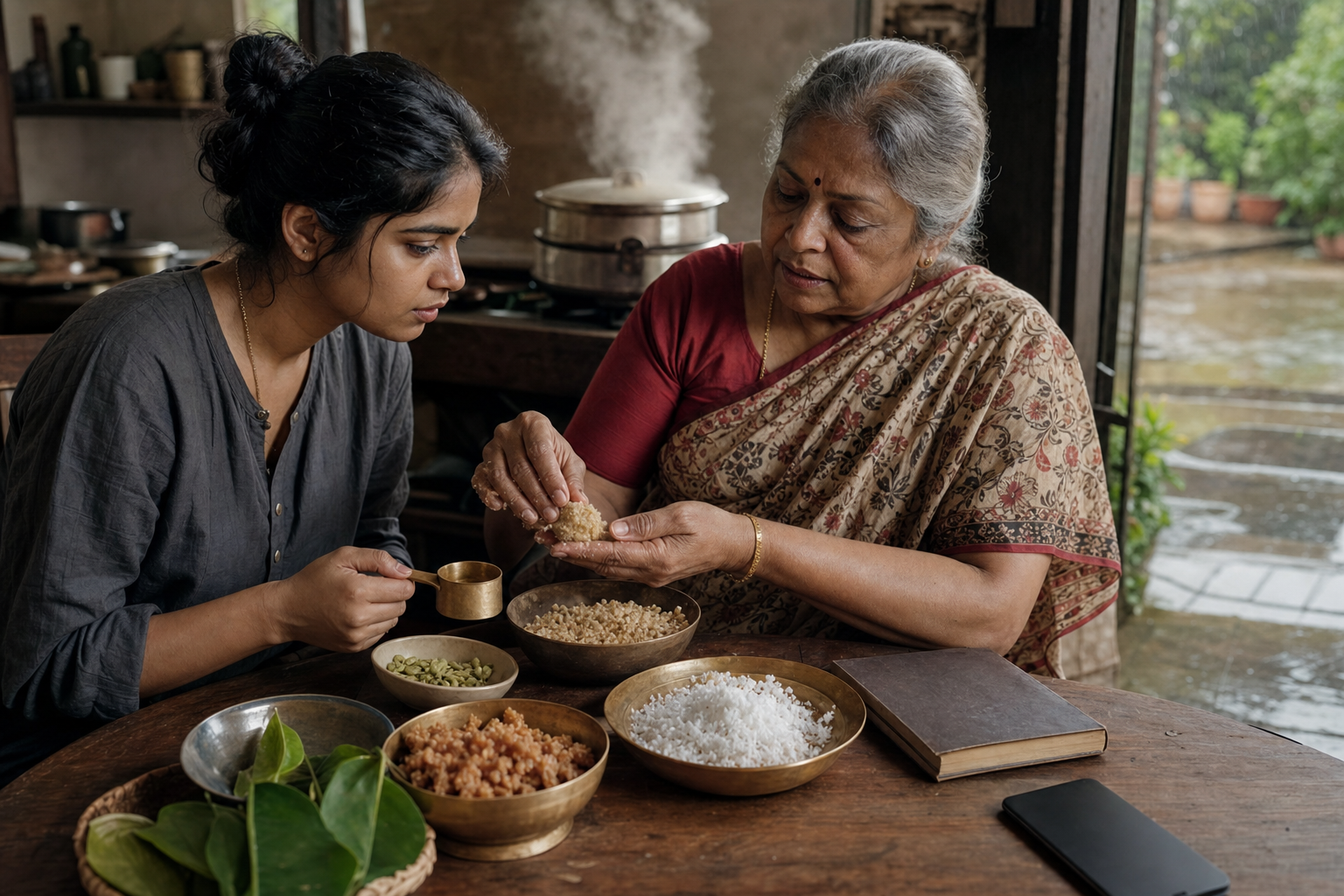
You do not need to manufacture certainty when a recipe or custom has disappeared from family memory. Reconstruct the observance carefully and label later adaptations honestly.
- Fix the observance before fixing the menu. Record its local name, lunar timing and associated deity. This keeps similarly timed festivals from being blended into one seasonal celebration.
- Ask for the sequence, not merely the dish names. A knowledgeable elder, temple practitioner or community member should be able to tell you what is prepared for worship, what is eaten under the vrata, what is shared, and in what order. Sequence preserves meaning that an ingredient list cannot.
- Separate requirements from additions. Make two columns in your notes: required by the practice you are following, and optional family celebration. This stops an attractive extra from displacing the actual offering.
- Clarify the vrata rules before buying ingredients. Fasting disciplines vary. Do not infer one household’s permitted foods from another festival or family. If fasting would conflict with a health need, do not force the practice; seek appropriate medical guidance and ask a trusted practitioner how the observance can be adapted.
- Plan the ritual plate and shared meal separately. Decide which portion is reserved before serving begins, where it will be kept and who will present it. This avoids discovering at puja time that the intended offering has already been tasted or mixed into the general meal.
- Keep the first reconstructed observance manageable. One carefully prepared offering, an appropriate vrata preparation where applicable, and a modest meal to share are better than a crowded menu assembled from conflicting customs.
- Create a household festival record. Note the person who taught you, regional affiliation, foods prepared, ingredients avoided, cooking order, offering procedure, time the vrata was concluded, and any substitution you made. Add corrections after the observance while everyone still remembers them.
When two trusted people give you different instructions, do not average them into a hybrid. Ask whether they represent different regions, lineages or household vows. Choose the practice connected to your family where that connection is known. If it is not known, choose one coherent local tradition for the observance and document that choice.
This method also changes how you use recipes found online. A recipe can explain technique, but it cannot establish your family’s ritual rule by itself. Confirm the dish’s role first. Only then use a recipe to help with quantities and preparation.
Preserve the monsoon meaning, especially away from Bharat
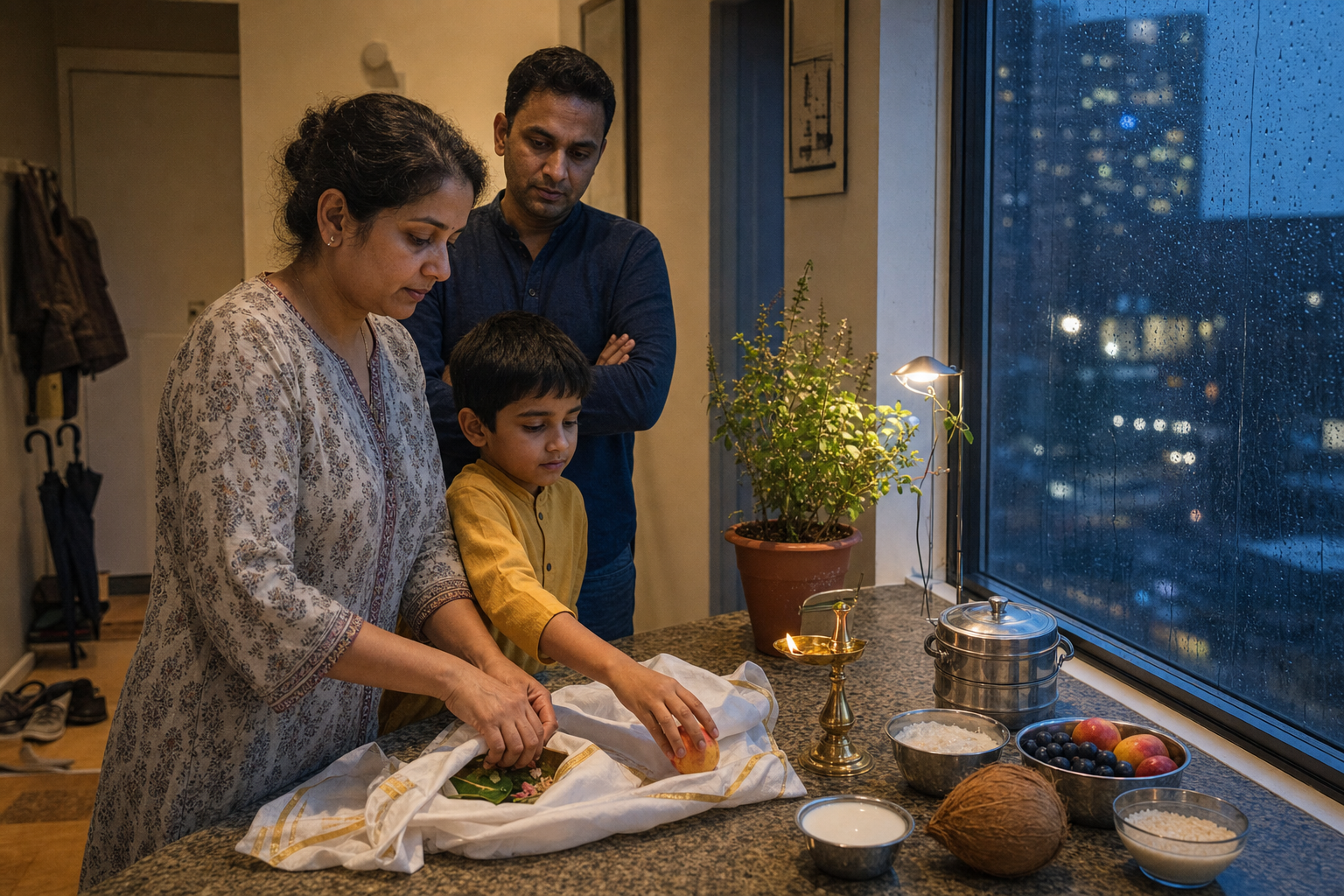
Monsoon festivals arise within a seasonal world, not an abstract religious calendar. Hariyali Teej joins devotion to Parvati and Shiva with the arrival of the rains and the renewed green landscape. Nag Panchami occurs within Shravan and directs reverence toward serpent deities and their protective presence. The foods participate in those relationships; they are not merely themed refreshments.
You can honour the seasonal setting by using locally available ingredients when the ritual allows, avoiding waste, preparing only what can be offered or shared respectfully, and letting the meal follow worship rather than overwhelm it. Seasonal suitability is a practical consideration, but it should not silently replace a prescribed offering.
Nag Panchami also requires interpretive care. Reverence for serpent deities can deepen attentiveness toward the living world, but the deities should not be reduced to ecological symbols. The devotional relationship comes first. Ecological responsibility can follow from that reverence without being substituted for it.
If you live outside Bharat and cannot obtain a customary item, first determine whether the item itself is ritually required or whether it is part of the surrounding family feast. For a required offering, seek guidance before substituting. For a customary festive food, preserve its function as closely as possible: the place it occupies in the meal, the method of preparation and the way it is shared. Record the change instead of presenting the adaptation as ancient or universal.
Children and younger relatives can take part without being given a lecture. Give them one defined responsibility: washing an ingredient, arranging the offering plate, carrying prasada to relatives, or writing the festival entry in the household record. Explain whom the food honours and why the first portion is not ordinary serving food. Participation turns an explanation into memory.
Key takeaways for your next observance
- Start with the festival, region and family practice, not a universal recipe list.
- Distinguish naivedya, vrata food, prasada and the wider celebratory meal before planning quantities.
- Do not merge Hariyali Teej and Nag Panchami simply because both belong to the monsoon season.
- Ask about prohibited ingredients, preparation rules and serving order before you begin cooking.
- When a customary item is unavailable, find out whether it is ritually required before choosing a substitute.
- Record the practice, the person who transmitted it and every adaptation so the next generation inherits more than a dish name.
For your next festival, make one call before you make a shopping list. Ask an elder or trusted practitioner what is offered first, what the vrata permits, and what your family used to prepare. Write down the answers. That small act can turn a meal planned for one monsoon into a tradition your household knows how to carry forward.
References
- Hindu Blog – Hariyali Teej Special Foods: Traditional Indian Delicacies
- Hindu Blog – Special Foods for Nag Panchami Celebrated Across India
