
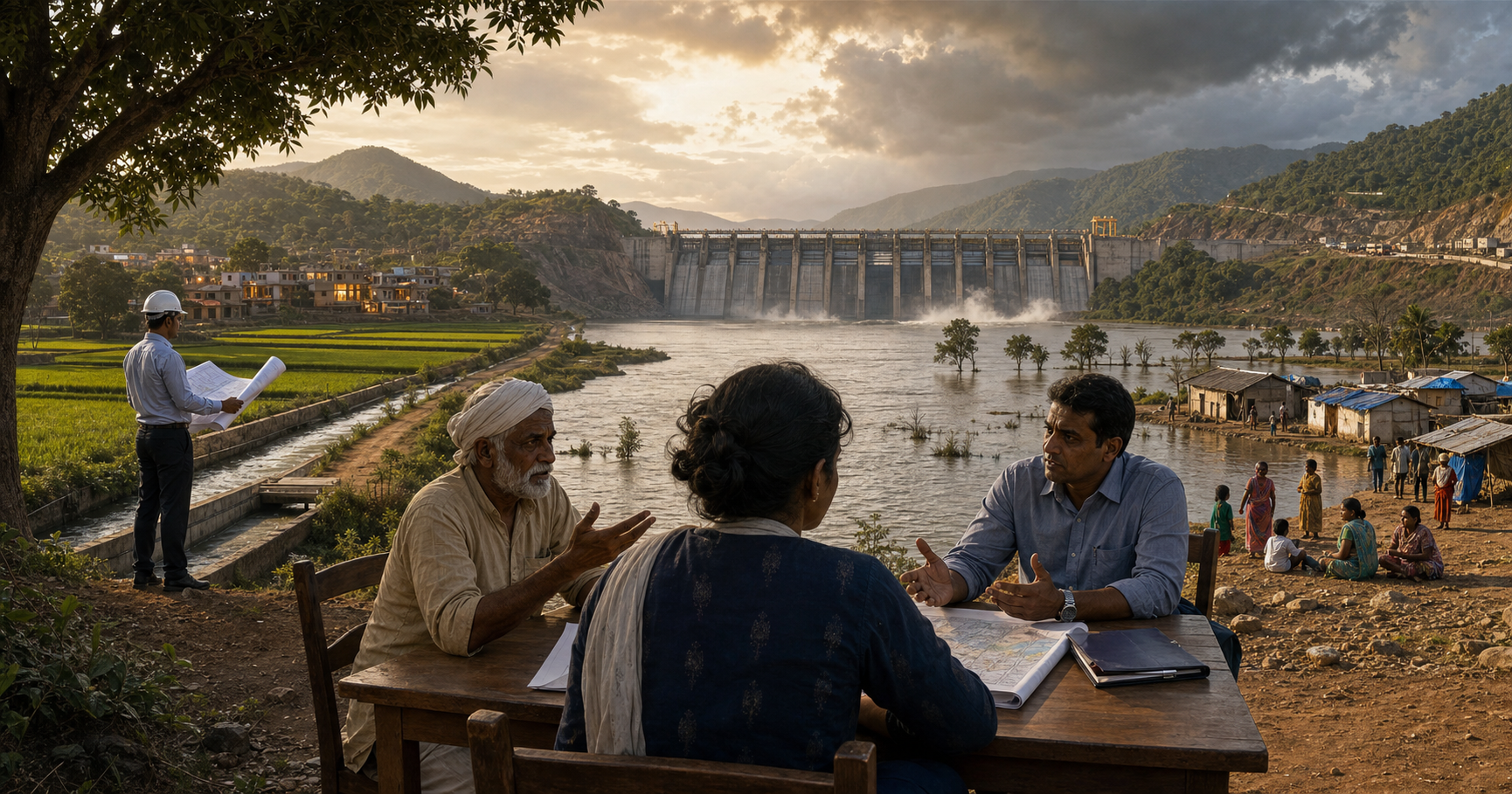
If you are trying to decide whether Medha Patkar should be remembered as a defender of vulnerable communities or as an obstacle to Bharat’s development, slogans will not get you there. The real question is harder: did her activism turn legitimate grievances into workable remedies, or did it make delay and obstruction ends in themselves?
You can answer that without treating every infrastructure project as sacred or every protest movement as virtuous. Judge the project, the remedy, the evidence, the consequences of delay and the accountability of everyone claiming to act for the public.
Start with the Sardar Sarovar record, not the Patkar persona
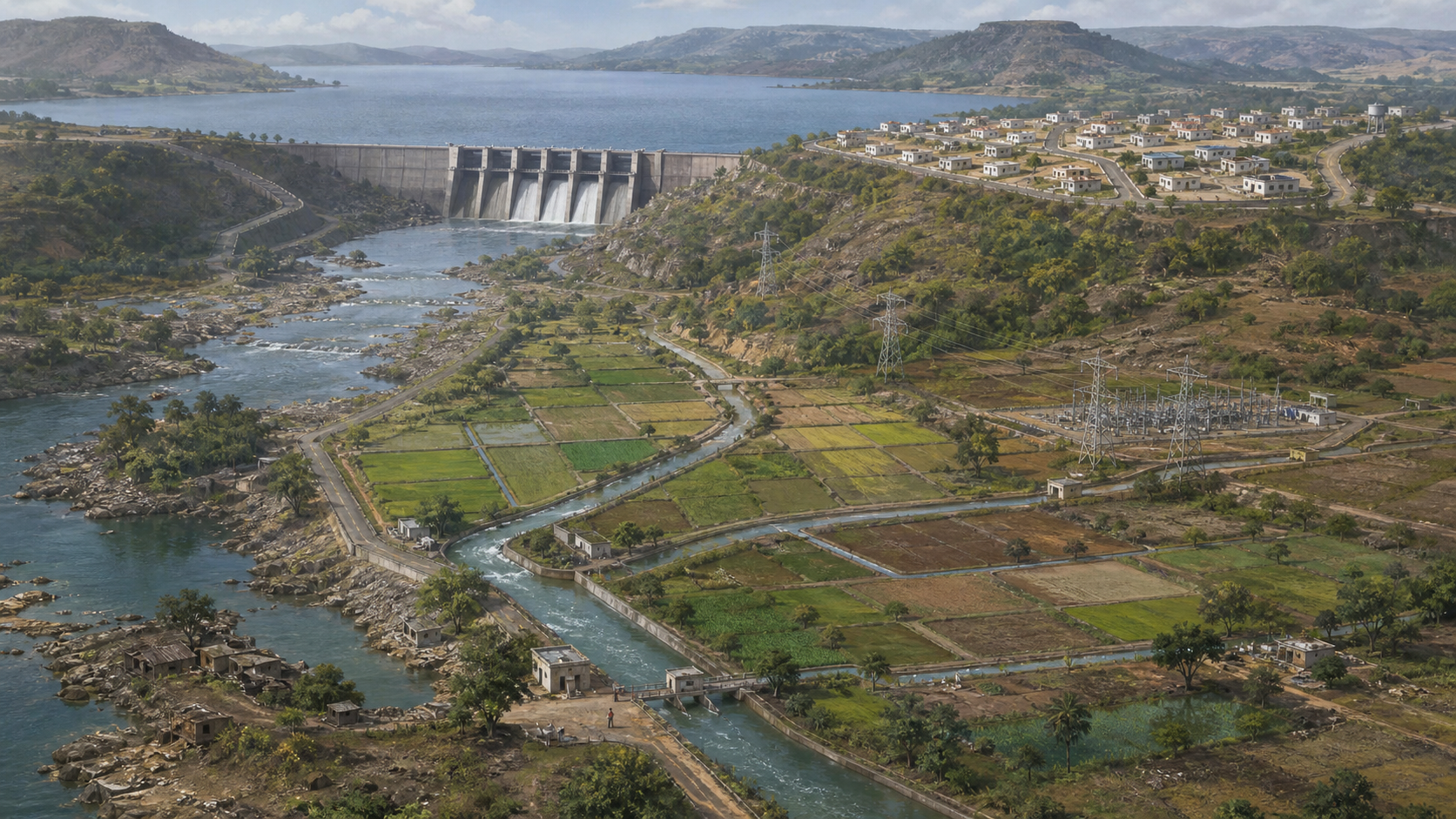
Medha Patkar rose to national prominence through the Narmada Bachao Andolan, which organised protests and fasts against the Sardar Sarovar Dam on the Narmada River. Litigation and procedural interventions became important parts of that struggle, while critics blame the campaign for a prolonged delay in infrastructure intended to deliver water and other public benefits.
That history presents two kinds of harm. Displacement and inadequate rehabilitation, where established, fall heavily on identifiable families and communities. Delayed infrastructure distributes its costs across people who may never appear at a protest: farmers waiting for water, settlements waiting for reliable services and taxpayers carrying the burden of a project that remains unfinished. A serious assessment must count both.
Begin by building a causal timeline rather than repeating that the movement either saved the Narmada or stopped Gujarat’s water. For each major phase, record five things:
- The project milestone that was expected to occur.
- The precise objection raised against it.
- The evidence offered for that objection.
- The remedy demanded by the movement.
- The resulting decision, correction or attributable delay.
Do not assign every lost year to one activist merely because she became the public face of opposition. Separate time consumed by litigation, official review, administrative failure, construction problems and public agitation. By the same standard, do not treat the existence of an aggrieved community as proof that stopping an entire project was the only possible remedy. Ask whether compliance, redesign, compensation, rehabilitation or another bounded correction could have allowed work to proceed.
This distinction matters because attention is not the same as resolution. A movement may succeed in making suffering visible while failing to specify a workable settlement. Conversely, a government may promise large public benefits while failing its duty toward the people who bear the project’s immediate cost. Neither side earns a blank cheque.
Use six tests to distinguish redress from an anti-development veto

Opposition to one dam does not automatically make an activist anti-development. The label becomes credible when a campaign cannot describe any conditions under which a project may proceed, offers no comparable alternative and treats delay as morally free. Apply these six tests to Patkar’s campaigns or to any movement confronting a major national project.
- The defined-harm test: Can the movement identify who is harmed, how the harm occurs and what evidence establishes it? Broad language about people or nature is not enough when a decision affects an actual construction schedule.
- The remedy test: Does it seek a correction proportionate to the established harm, or does every grievance lead directly to cancellation? Rehabilitation, procedural compliance and project redesign are different demands with different consequences.
- The stopping-condition test: What verified action would end the protest or legal challenge? If every concession produces a new, undefined standard, the campaign functions as a permanent veto rather than a route to redress.
- The alternative test: If the project must not proceed, what will deliver comparable public benefits, on what timetable and at whose cost? An alternative need not be identical, but it must be concrete enough to evaluate.
- The delay-ledger test: Who bears the cost while the dispute continues? Count the intended beneficiaries as well as affected families, and distinguish delay required to correct a violation from delay that produces no remedy.
- The accountability test: Are the movement’s funding, spending, representations and internal decisions open to scrutiny? Moral language cannot exempt an organisation from standards it rightly demands of the state.
Mass mobilisation demonstrates an ability to command attention; it does not by itself establish the merits of every demand. Filing litigation proves that a dispute exists; it does not prove that every allegation was upheld. Equally, the scale or national importance of a project does not prove that its execution was fair. The decisive evidence lies in findings, remedies, compliance and outcomes.
The most revealing question is often the third one: what would have been enough? Development-conscious activism should be able to say, in advance, that construction can continue once named safeguards are verified. If no safeguard can ever be sufficient, the stated concern for affected people may be concealing an objection to development itself.
Treat the allegations against Patkar as an evidence problem

Patkar’s critics have connected her public record with allegations of financial irregularities, foreign-funded agitation networks and diversion of money intended for tribal children. They also cite a criminal-defamation conviction and report that the court characterised the conduct as deliberate and malicious. These are serious matters, but they are not interchangeable and should not be repeated as though one claim proves all the others.
A criminal conviction in one dispute does not establish unrelated claims about funding or project delays. Foreign funding, by itself, does not prove unlawful or anti-national conduct; the relevant questions are whether it was lawful, disclosed, accurately represented and used for its declared purpose. A claim involving money intended for children requires a traceable financial record, not an inference based on political dislike.
Before relying on any such accusation, ask for the primary record:
- For a court matter, obtain the court’s name, case number, operative order and present procedural status. Check whether the ruling is final, appealed, stayed or modified.
- For an official report, identify the issuing body, date, scope and exact finding. A reference to government reports is not a substitute for the reports themselves.
- For a financial claim, trace the donor, recipient entity, bank or audited entry, declared purpose and final beneficiary.
- For a delay claim, identify the planned milestone, the intervention that prevented it, the duration attributable to that intervention and the outcome it produced.
- For a quotation from a judge or official, read the surrounding passage. A strong phrase can concern one act without validating every political conclusion drawn from it.
This discipline protects development as much as it protects the accused. Weak or exaggerated allegations allow a movement to dismiss substantive criticism as propaganda. A documented chain of causation is much harder to evade. If Patkar’s interventions caused preventable delay, show where and how. If funds were misused, show the transaction and finding. If a challenge forced a necessary correction, record that outcome too.
A Dharmic ledger must count visible and dispersed harm

A Dharmic outlook does not declare every dam righteous or every resistance sacred. It asks who holds power, who carries responsibility, who pays for a decision and whether public claims are truthful. The state has a heavier duty because it can acquire land and exercise legal authority. An activist movement still has duties because it can influence policy, delay public works, raise funds in vulnerable people’s names and shape how Bharat is understood at home and abroad.
| Public duty | What the state or project authority must show | What the activist movement must show |
|---|---|---|
| Protection of affected families | Who is affected, what is owed and how rehabilitation or compensation will be verified | Which cases remain unresolved, what evidence supports them and what remedy would resolve them |
| Service to beneficiaries | The promised benefit, delivery milestones and reasons for any slippage | How its demands affect delivery and what alternative protects the same public interest |
| Truthfulness | Accessible records, defensible claims and correction of material errors | Evidence for accusations, accurate representations and correction of material errors |
| Stewardship | Transparent costs, contracts, changes and oversight | Transparent funding, spending, governance and beneficiary claims |
| Closure | Measurable compliance and a working grievance process | A clear condition under which opposition will end |
This is not an assertion that the two sides possess equal power. They do not. It is a demand that both face moral examination. National development cannot excuse broken commitments to families in a project’s path. Good intentions cannot excuse opaque finances, unsupported accusations or obstruction without a feasible end point.
For a pro-Bharat position, the cost of non-development must be made visible. Water, transport, power and other public infrastructure expand national capacity only when projects can move from announcement to delivery. Keeping a project suspended indefinitely does not preserve moral purity; it transfers costs to people who had little role in creating the dispute. Responsible activism therefore has to improve development, not merely acquire the power to stop it.
Key takeaways
- Judge Patkar’s role in the Sardar Sarovar dispute through a causal timeline, not through her public image or her critics’ strongest labels.
- Legitimate development activism identifies a specific harm, proposes a proportionate remedy and states what verified action will end its opposition.
- A campaign seeking cancellation should provide an alternative capable of delivering comparable public benefits on a credible timetable.
- Delay is not neutral. Count the burden on intended beneficiaries as well as the harm borne by families directly affected by construction.
- Financial, foreign-funding and criminal allegations require separate primary evidence; no single accusation proves the rest.
- A Dharmic assessment demands rehabilitation and truth from the state, while also demanding transparency, proportionality and accountability from activists.
If you need to form a view of Medha Patkar, keep the verdict tied to evidence. Ask for the original milestone, the objection, the proposed remedy, the attributable delay, the achieved correction and the final outcome. Where that chain shows necessary redress, acknowledge it. Where it shows obstruction without remedy, name it plainly as anti-development activism. That one-page ledger will tell you more than another round of hero worship or denunciation.
References
